

This statement is entirely uninteresting, because ALL commodities under a wage labor system contain some exploitation, even a $500 shirt.
So how do we measure ‘degree of exploitation’? 🧵
So how do we measure ‘degree of exploitation’? 🧵
China, despite being a communist country, has not yet progressed beyond wage labor, and thus still has a form of exploitation intrinsic to capitalism, in which the ‘surplus value’ that labor produces is appropriated by capital.
Surplus value is the new value a worker produces in a day *in excess of what they’re paid in wages*.
Under capitalism, this surplus is called profit.
Under capitalism, this surplus is called profit.
In order to measure the ‘rate of exploitation’, we need to know how much value is being produced and what portion of that total is being siphoned off as profit.
Put another way, rate of exploitation is simply the ratio between the surplus, or profit, divided by wages paid.
Put another way, rate of exploitation is simply the ratio between the surplus, or profit, divided by wages paid.
For example, a bespoke suit that is priced at $2,500 but costs only $500 in labor and $1,000 in materials+expenses would have a rate of exploitation of:
$1,000 profit
—————— = 200%
$500 labor
So for every $1 that the worker earns, the capitalist appropriates $2 of surplus.
$1,000 profit
—————— = 200%
$500 labor
So for every $1 that the worker earns, the capitalist appropriates $2 of surplus.
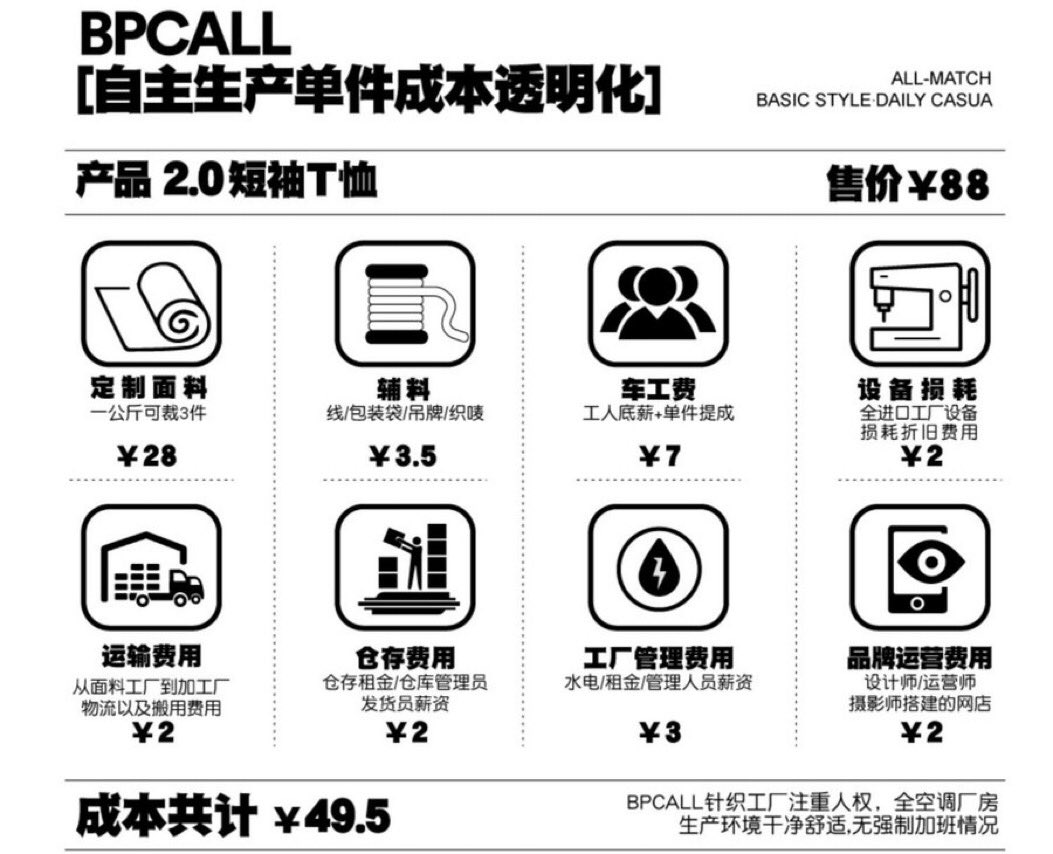
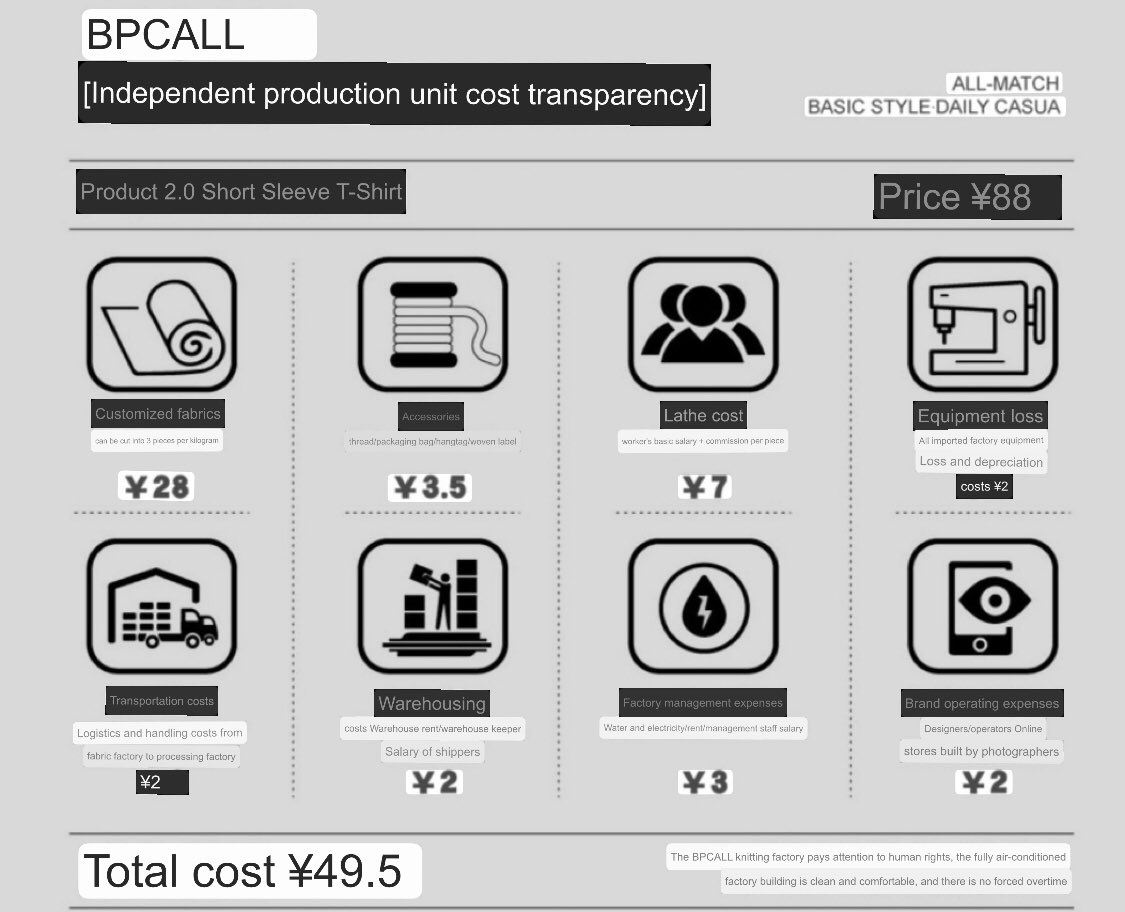
Contrast this with an ¥88 t-shirt that costs only ¥7 in labor, but ¥42.5 in material+expenses:
¥38.50 profit
—————— = 550%
¥7 labor
For every ¥1 that the worker earns, the capitalist appropriates ¥5.50 of surplus.
¥38.50 profit
—————— = 550%
¥7 labor
For every ¥1 that the worker earns, the capitalist appropriates ¥5.50 of surplus.
Does that mean that a t-shirt mass produced in China has a higher rate of exploration that a bespoke suit made on Savile Row?
Of course!
But does it also mean one contains exploitation while the other doesn’t?
Not at all. They both do!
Of course!
But does it also mean one contains exploitation while the other doesn’t?
Not at all. They both do!
But for the entirety of the global south, the biggest siphoning of surplus value doesn’t actually occur at the employer-employee interaction.
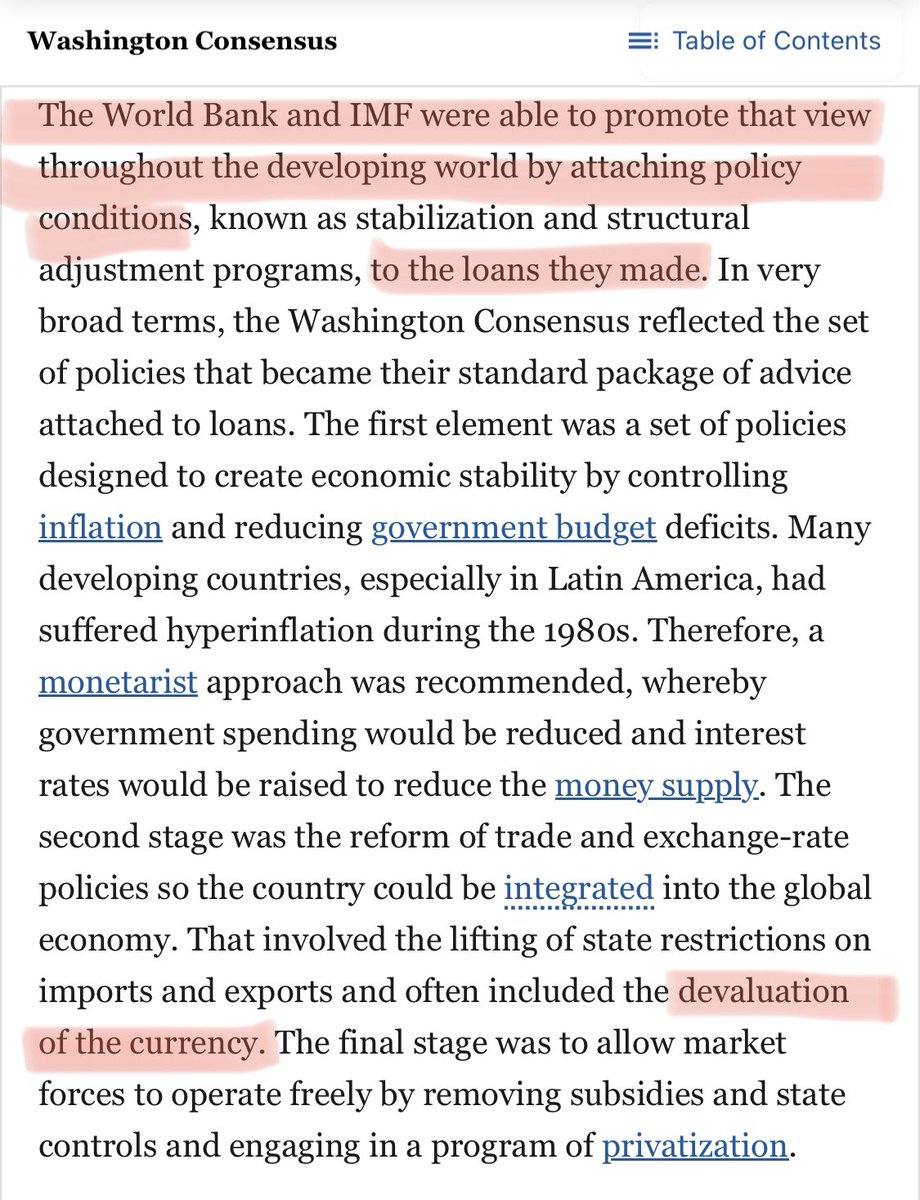
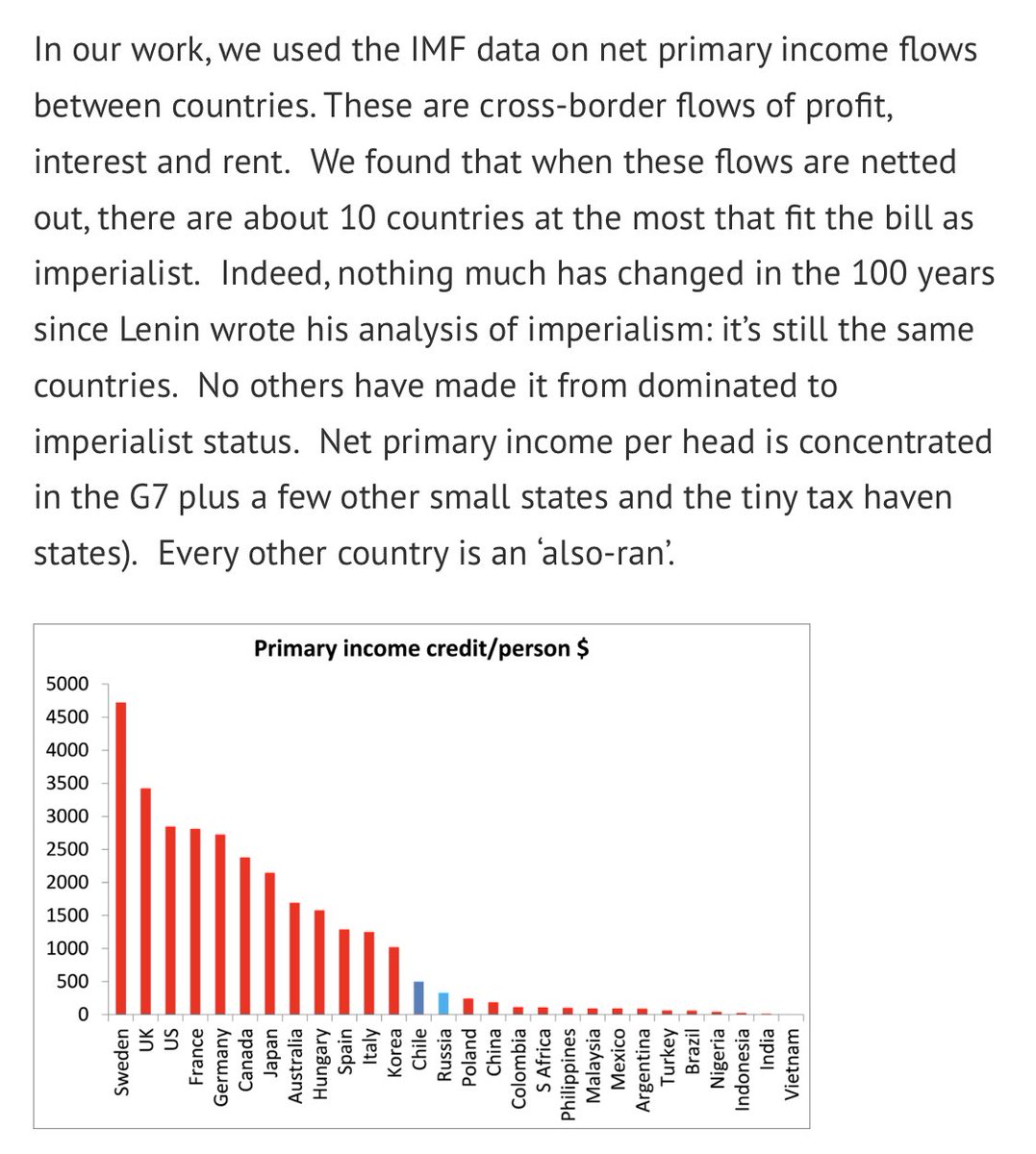
It occurs as a result of their devalued currencies, a disparity which is maintained as a pillar of imperialist exploitation by the west.
It occurs as a result of their devalued currencies, a disparity which is maintained as a pillar of imperialist exploitation by the west.
Loading suggestions...