

ISLAM & SCIENCE: 🧵
Islam actually paved the way for scientific advancements. Here is one example of the relationship between Islam and astronomy.
Since Muslim ulema was critical of astrology due to its religious implication, it was always looked down upon. But this led to-
1/
Islam actually paved the way for scientific advancements. Here is one example of the relationship between Islam and astronomy.
Since Muslim ulema was critical of astrology due to its religious implication, it was always looked down upon. But this led to-
1/

scholars focusing on strict empirical observation and leaving behind the metaphysical and ideological baggage that a lot of people in pre-islamic times used to bring with the study of celestial bodies and stars.
2/
2/
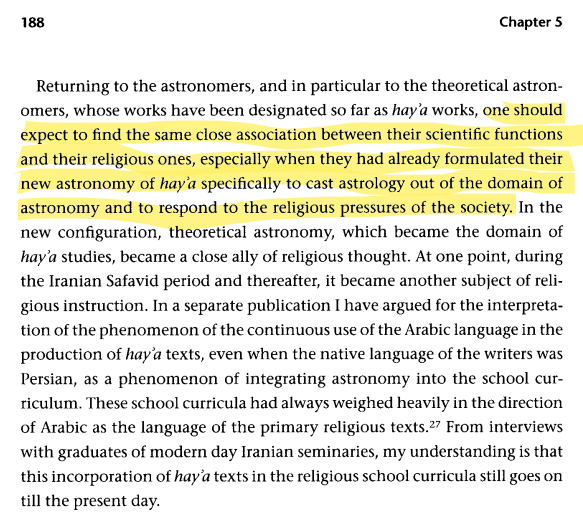
This antagonism towards astrology and its need to be removed from the general public, Muslim ulema took it upon themselves to study and refine astronomy (or ilm al-haya [the sciences of the heavenly bodies])
3/
3/
..it is important to recount that the religious critiques not only produced two different scientific disciplines but had a general impact on the other sciences. The simple requirement to face Mecca definitely required the solutionon of one of the most sophisticated-
4/
4/
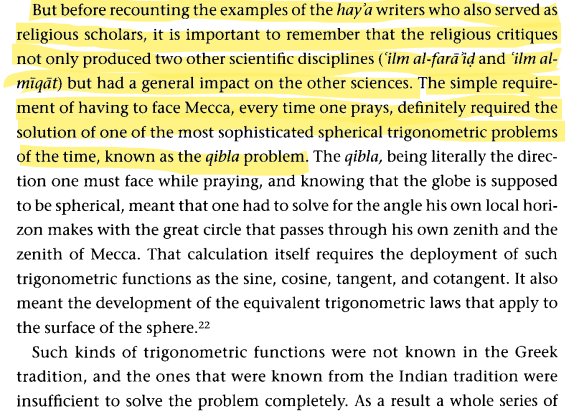
spherical trigonometrical problems, known as the qibla problem[...] Such kind of trignometric functions was not known to Greeks" (p. 186-7)
5/
5/
![spherical trigonometrical problems, known as the qibla problem[...] Such kind of trignometric functi...](https://pbs.twimg.com/media/Fzn-nZ6WwAEzeox.png)
In short, the discipline of trigonometry is the best example that demonstrates the intersection of interests between the practice of one's religion and the scientific thinking that had to be developed as a result of that practice."
6/
6/
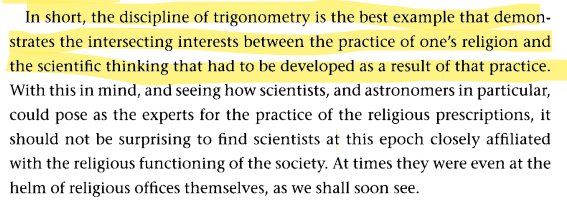
The close association between religion and scientific thinking in Islam:
7/
7/
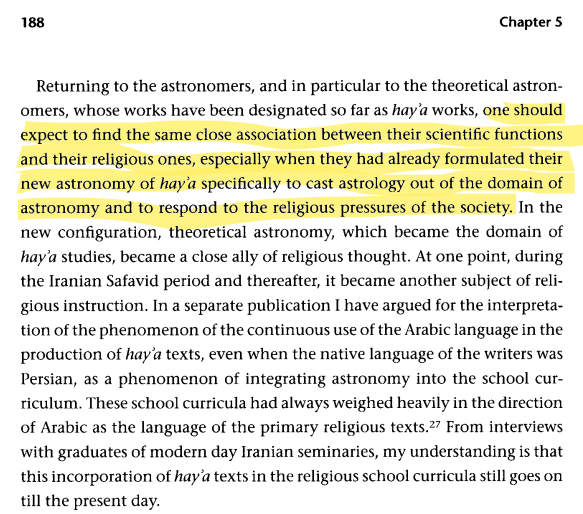
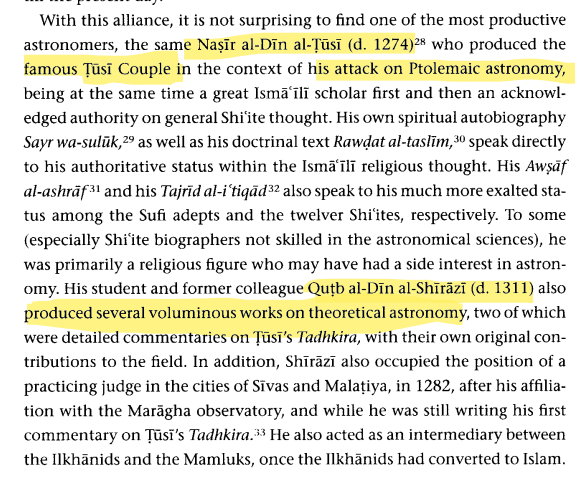
That's why all of the great scientists were ulema as well. Read the examples in these screenshots. It includes Al-shattir (who, along with Shirazi, Tusi and Khafri, inspired Copernicus), Tusi, Khaafri, Qushji, Shirazi, Iji etc.
8/
8/
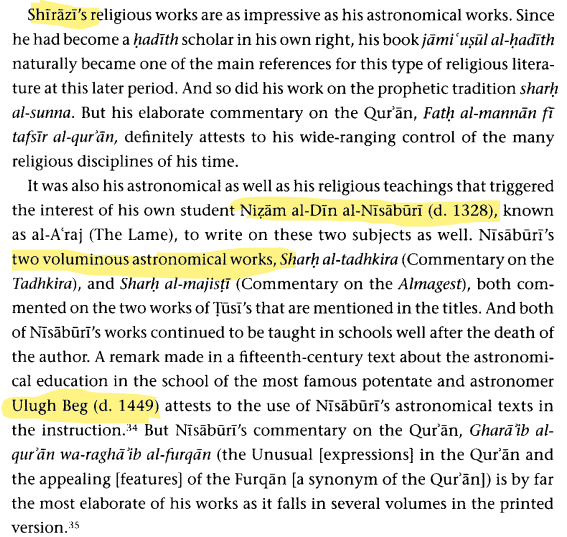
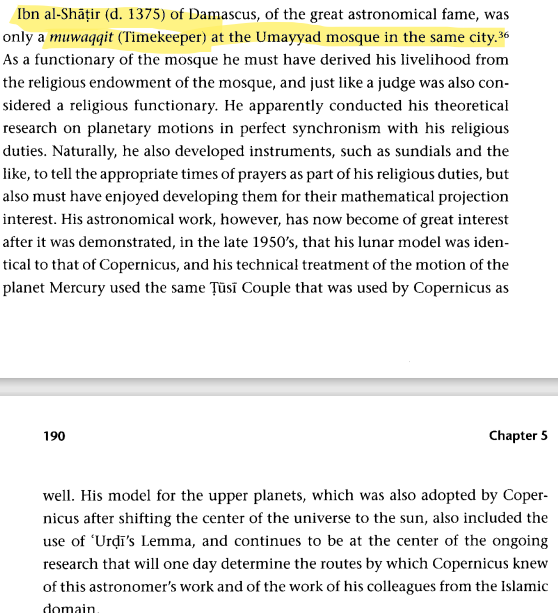
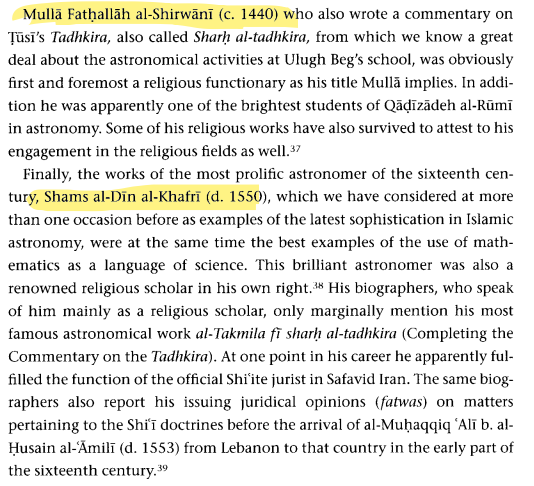
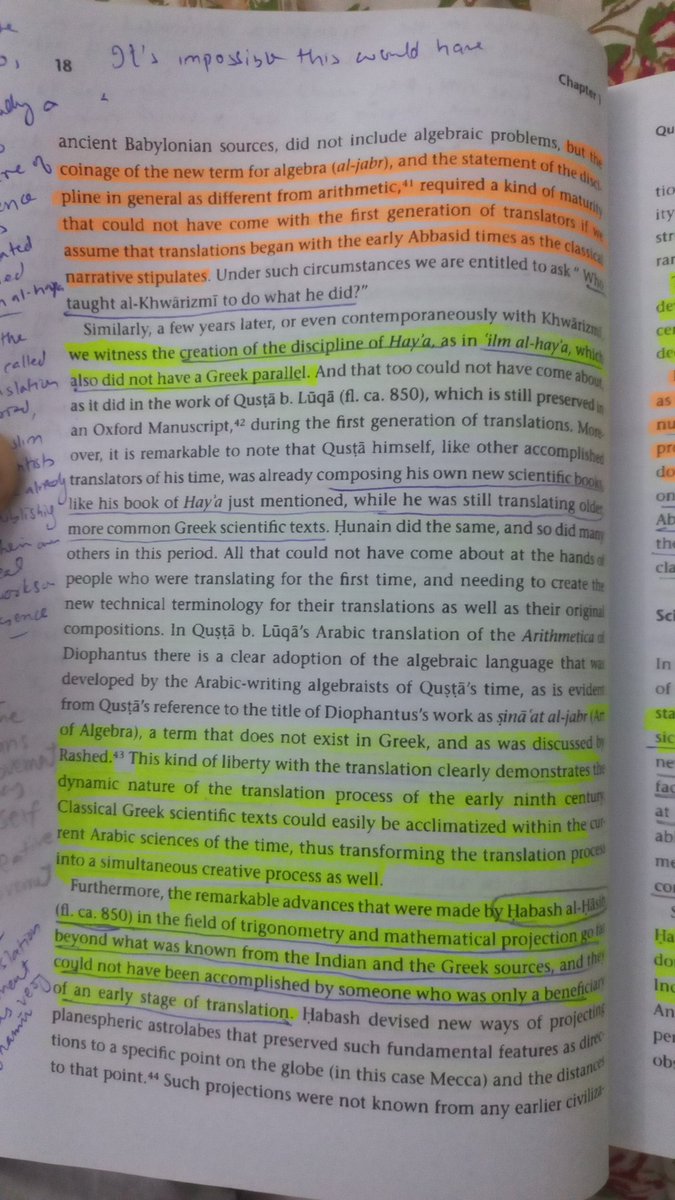
Islam actually led to the formulation of new sciences, like the 'ilm al-hay'a, " which also did not have Greek parallel." (pic 2,p.18)
Reference:
–Geroge Saliba, Islamic Science and the Making of the Renaissance
Reference:
–Geroge Saliba, Islamic Science and the Making of the Renaissance
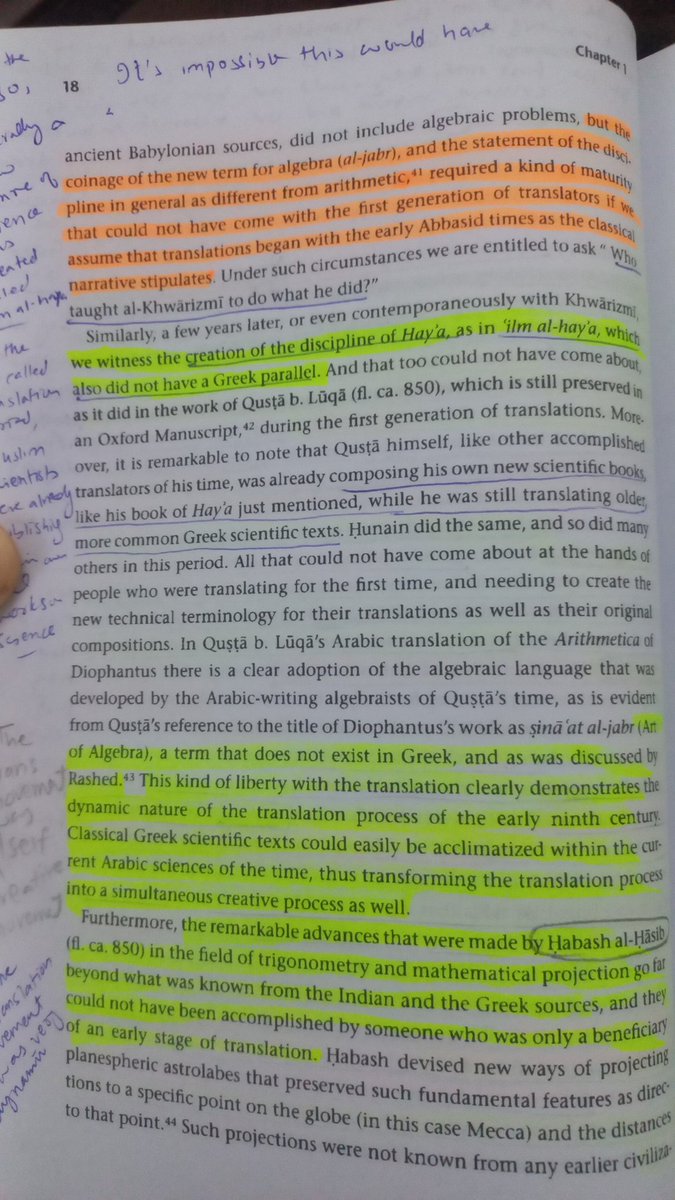
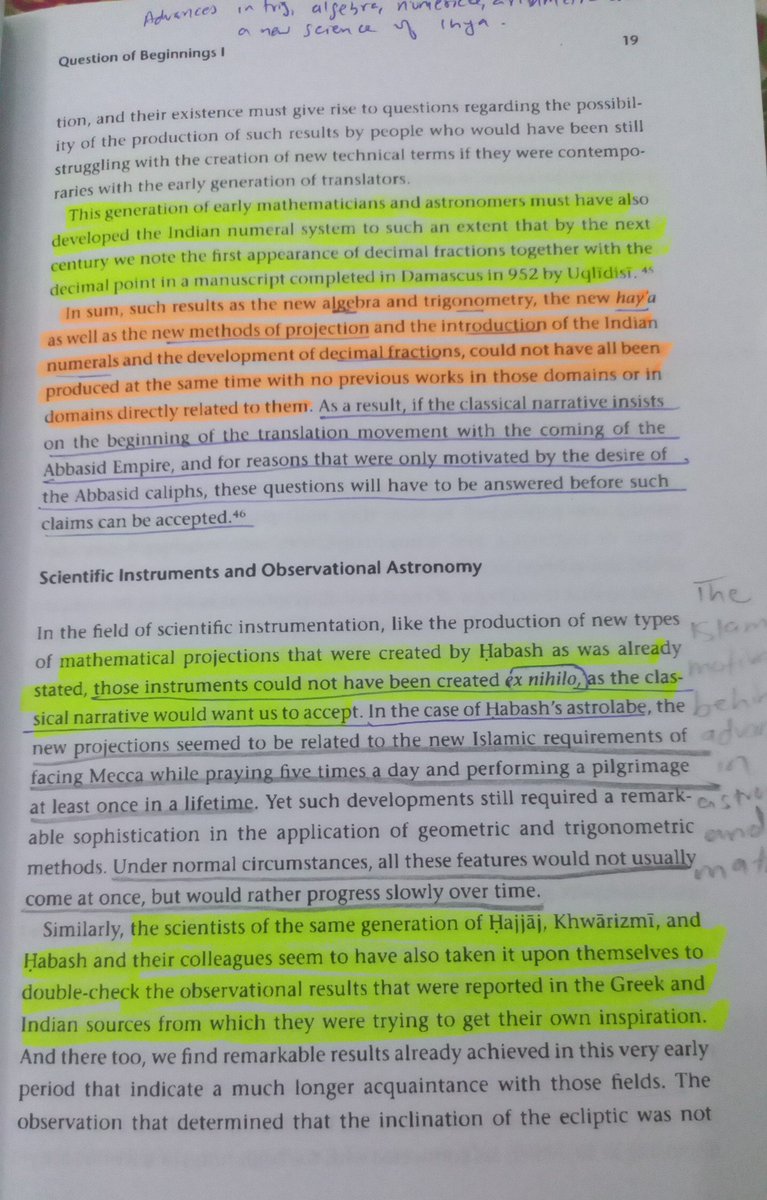
Habash al-Hāsib (ca. 850) invented the astrolabe, which is "related to the new Islamic requirements of facing Mecca while praying 5 times a day and performing pilgrimage." (p.19)
Habash also made advancements in the field of trigonometry, "which go far beyond Indian & Greek.."
Habash also made advancements in the field of trigonometry, "which go far beyond Indian & Greek.."
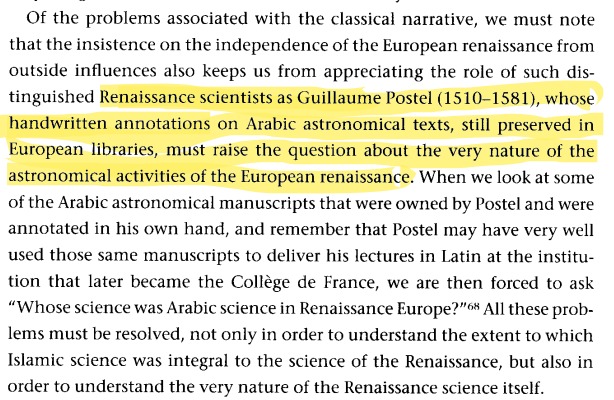
A Renaissance scientist Guillame Postek (d. 1581) had Arabic astronomical texts, which are still preserved in European libraries.
(p.22)
(p.22)
Loading suggestions...