

Wanna know how the books get cooked? 🧑🍳📚
Silly question. Of course you do…
Here’s how: 👇👇👇
Silly question. Of course you do…
Here’s how: 👇👇👇

First things first.
Let’s clarify some definitions.
I often see people confuse ‘creative accounting’ with fraud.
There are levels to this game.
Let’s clarify some definitions.
I often see people confuse ‘creative accounting’ with fraud.
There are levels to this game.
FTX weren’t accounting creatively.
They stole ordinary people’s money and used it for personal gain (allegedly).
That’s fraud. Not f*cking cool.
They stole ordinary people’s money and used it for personal gain (allegedly).
That’s fraud. Not f*cking cool.

Enron didn’t cook the books.
They built a web of accounting lies so big it torched $74bn of shareholder money and brought down a whole audit firm.
Yes, the Big 4 were once the Big 5.
That’s fraud. Not f*cking cool.
They built a web of accounting lies so big it torched $74bn of shareholder money and brought down a whole audit firm.
Yes, the Big 4 were once the Big 5.
That’s fraud. Not f*cking cool.
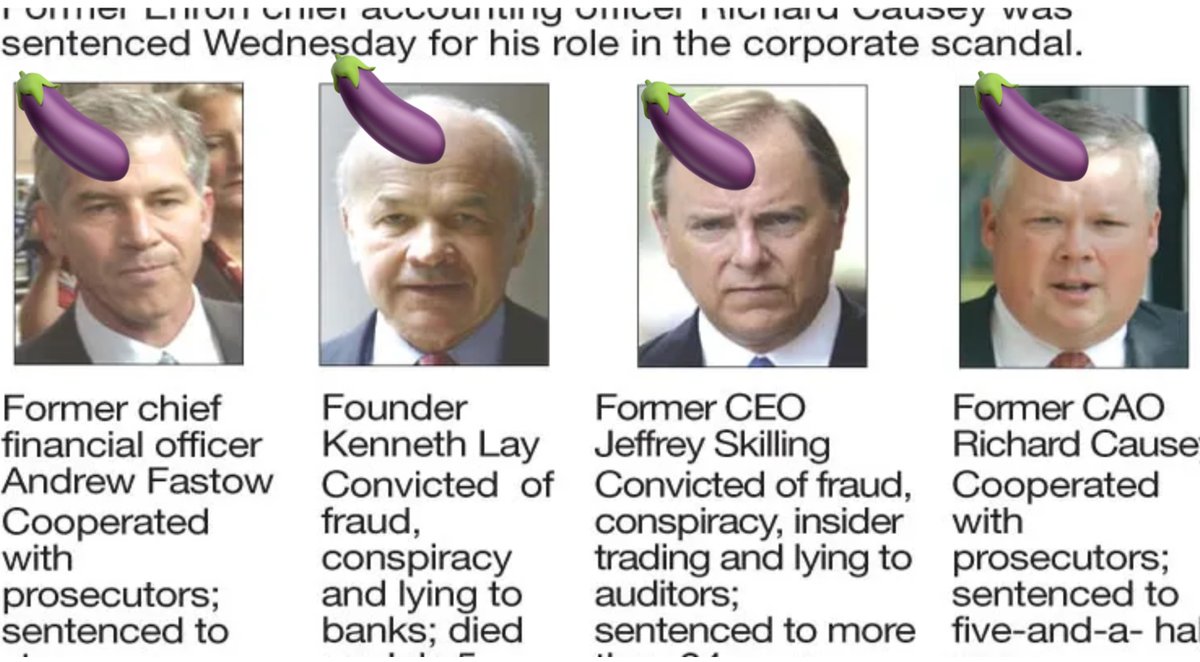
Whilst these are interesting and make good movies. They aren’t that common. If they were, the financial system would grind to a halt..
Creative accounting is much more common place. But not as catastrophic
It means using the accounting rules to get the answer you want.
Creative accounting is much more common place. But not as catastrophic
It means using the accounting rules to get the answer you want.
Much of accounting requires judgments.
Assumptions.
- Expected value of redundant inventory
- Expectations of future warranty claims
- Future bad debt levels
- Accruals for uninvoiced costs
- Useful life of owned assets
There are just examples, there are dozens more.
Assumptions.
- Expected value of redundant inventory
- Expectations of future warranty claims
- Future bad debt levels
- Accruals for uninvoiced costs
- Useful life of owned assets
There are just examples, there are dozens more.
These ‘known unknowns’ are part of accounting life.
One of the critical part of the CFO’s role is to make judgments and assumptions for these known unknowns.
It’s a position of trust.
And the mandate is to report using your best independent judgment at a point in time.
One of the critical part of the CFO’s role is to make judgments and assumptions for these known unknowns.
It’s a position of trust.
And the mandate is to report using your best independent judgment at a point in time.
Each of those assumptions will lie on the scale of doomsday pessimism to unreal optimism.
And somewhere in the middle will be a reasonable range.
Creative accounting is all about selecting convenient assumptions to get the outcome you want.
And somewhere in the middle will be a reasonable range.
Creative accounting is all about selecting convenient assumptions to get the outcome you want.
Let’s say the quarter has been great
Better than investors expect.
Well done big dog. You nailed it.
Better than investors expect.
Well done big dog. You nailed it.

But next quarter is expected to be a bit tougher.
And no-one wants to shit their pants in front of Wall Street.
And no-one wants to shit their pants in front of Wall Street.
Those ups and downs from quarter to quarter are just so … you know … inconvenient.
Wouldn’t it be easier if we could move a bit of profit out of this quarter and into next?
Well that's happens ... A LOT.
Wouldn’t it be easier if we could move a bit of profit out of this quarter and into next?
Well that's happens ... A LOT.
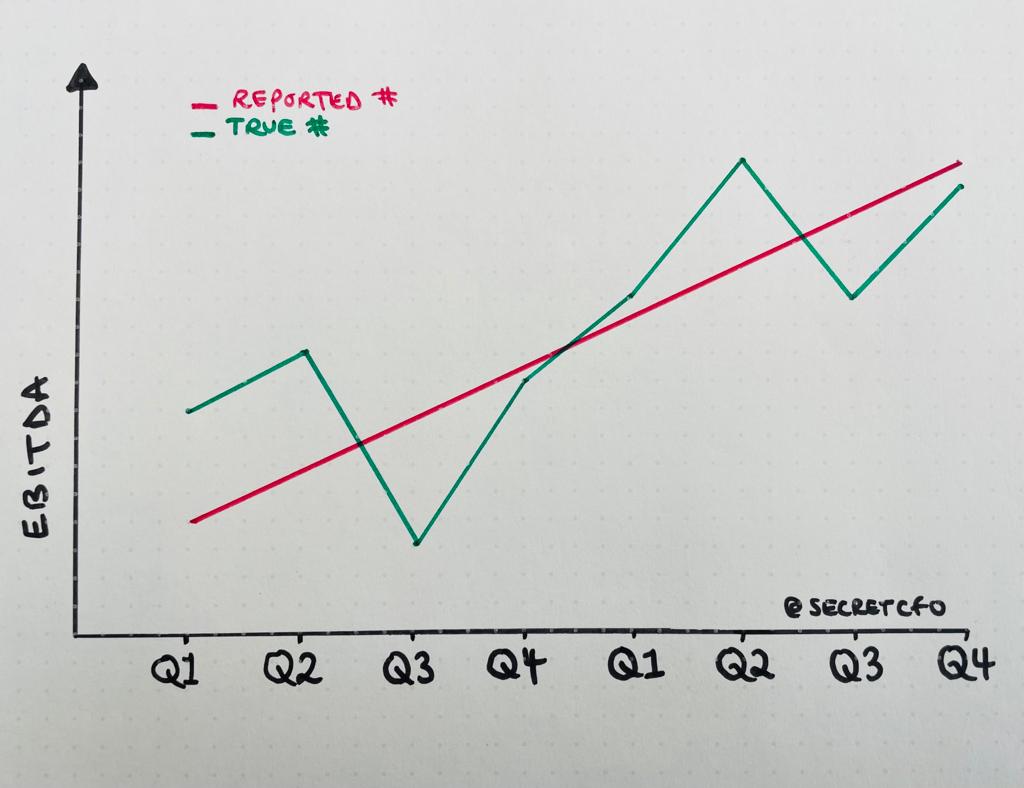
Result: Showing the nice smooth QoQ improvement that gives Wall Street a dollar shaped boner.
The issue is that assumptions are being backsolved from the answer management want.
The tail is wagging the dog.
It's not my style.
But it’s common as hell & plenty of CFOs do this.
The issue is that assumptions are being backsolved from the answer management want.
The tail is wagging the dog.
It's not my style.
But it’s common as hell & plenty of CFOs do this.
Quick side note: Can you imagine an actual dog being wagged by its tail?
Hilarious.
Doggo flapping side to side, slobber going everywhere.
Tail perfectly still.
I’d love to see that.
Anyway … back to work
Hilarious.
Doggo flapping side to side, slobber going everywhere.
Tail perfectly still.
I’d love to see that.
Anyway … back to work
So, how do CFOs use 'creative accounting'. Well the list is long, but I’ve captured it under 5 headings.
Let’s take each in turn
Let’s take each in turn
But before we do ...
Important disclaimer: I don't advocate using any these techniques
Manipulating reporting is 100% "small boy stuff"
But if you are going to get better at reading or preparing financials, you've got to understand what games can be played.
Important disclaimer: I don't advocate using any these techniques
Manipulating reporting is 100% "small boy stuff"
But if you are going to get better at reading or preparing financials, you've got to understand what games can be played.

1. Convenient Classification
This refers to the classification of Income Statement and Balance Sheet items.
E.g. classifying certain costs as being ‘below EBITDA’ in the Income Statement.
This refers to the classification of Income Statement and Balance Sheet items.
E.g. classifying certain costs as being ‘below EBITDA’ in the Income Statement.
Management know investors will focus on EBITDA. And so, may not apply as much focus to such costs beneath EBITDA in the Income Statement
Or they could even be convinced to 'think about them as one-off costs'.
Or they could even be convinced to 'think about them as one-off costs'.
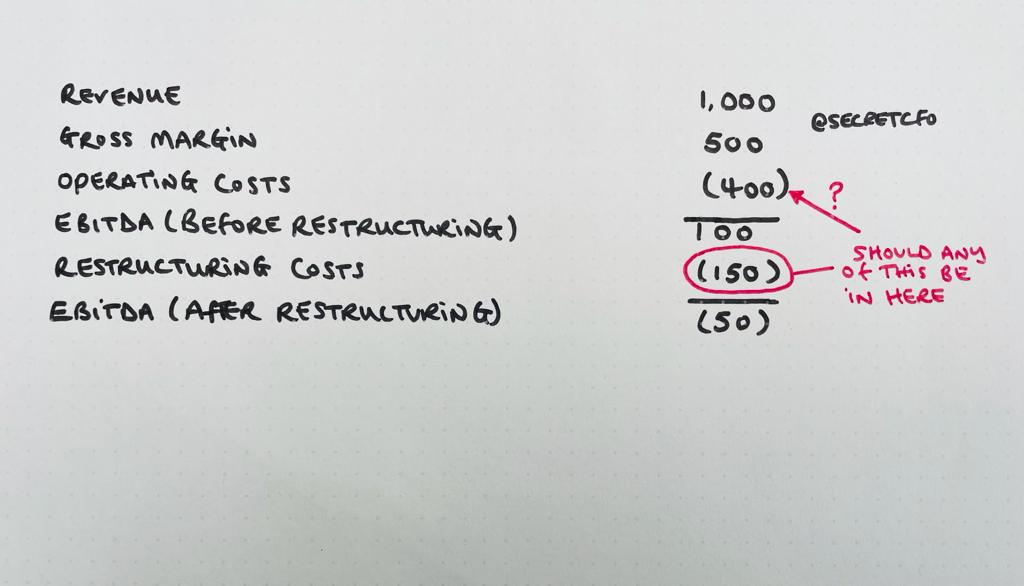
It’s particularly common in businesses with recent M&A.
Very easy to bury real operating costs in restructuring cost lines.
Especially when the CEO wants that acquisition to look as good as possible.
Very easy to bury real operating costs in restructuring cost lines.
Especially when the CEO wants that acquisition to look as good as possible.
Beware also items that are debt in substance.
But hiding outside of the debt definition on a technicality.
Lurking…
But hiding outside of the debt definition on a technicality.
Lurking…

2. Revenue recognition
Measuring revenue in fast moving businesses (retail, consumer, leisure, etc) is easy. Generally speaking, it’s the total you rolled through the checkout, or invoiced / dispatched.
It’s factual.
Measuring revenue in fast moving businesses (retail, consumer, leisure, etc) is easy. Generally speaking, it’s the total you rolled through the checkout, or invoiced / dispatched.
It’s factual.
But, what about businesses where revenue is spread over more than one year?
Think warranty sales, software, long term contracts, heavy manufacturing, construction, etc.
These all need assumptions on how revenue is spread over each reporting period.
Think warranty sales, software, long term contracts, heavy manufacturing, construction, etc.
These all need assumptions on how revenue is spread over each reporting period.

Isn’t it tempting to tweak the assumptions to find the profit answer you are looking for?
Not in my house.
Not in my house.
3. Expense Shifting
This is happening every day in large businesses.
Accountants use prepayments and accruals to match costs to the period in which they are incurred.
This is different to the invoicing and cash payment profile.
This is happening every day in large businesses.
Accountants use prepayments and accruals to match costs to the period in which they are incurred.
This is different to the invoicing and cash payment profile.
It's easy to shift costs from one period to another to suit.
This can get out of hand if the internal controls are poor.
In the worse case, it can turn into under accruals, and unsupported prepayments.
That means an Income Statement with under reported costs.
Can be serious.
This can get out of hand if the internal controls are poor.
In the worse case, it can turn into under accruals, and unsupported prepayments.
That means an Income Statement with under reported costs.
Can be serious.
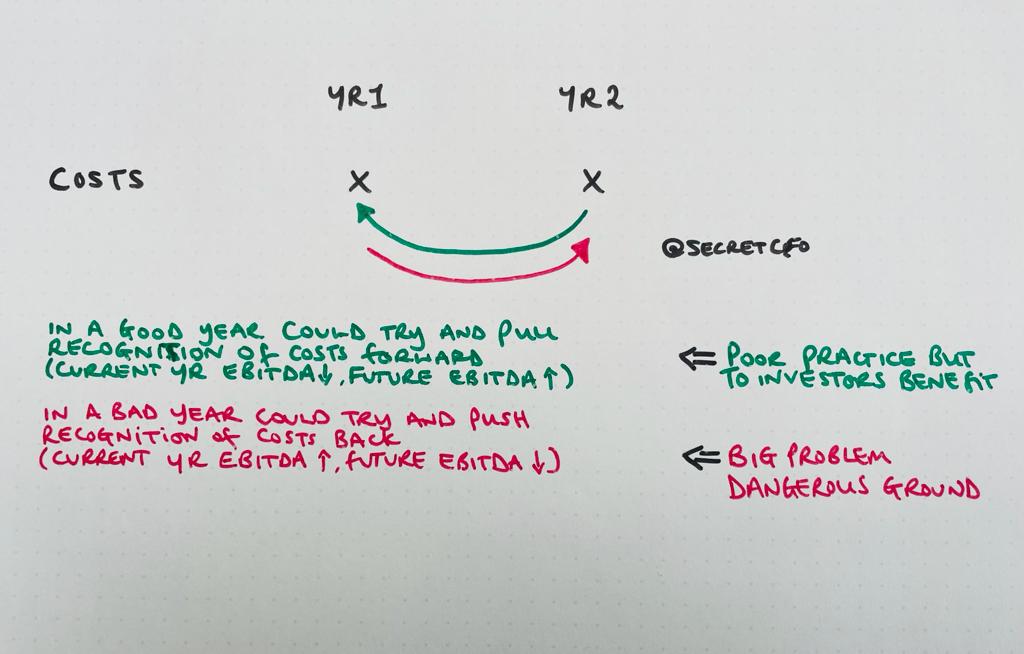
I once walked into a business to find $25m of under reported costs. The business had been repeatedly shifting costs into ‘tomorrow’ .
And guess what, tomorrow never came…
Well it did when I showed up.
NOT IN MY HOUSE
And guess what, tomorrow never came…
Well it did when I showed up.
NOT IN MY HOUSE

4. Cashflow manipulation
This one is a dirty secret. Sorry my CFO brothers and sisters.
For public companies. It is common to use short term working capital levers to manipulate year end or quaternary end cash balance to the desired answer.
This one is a dirty secret. Sorry my CFO brothers and sisters.
For public companies. It is common to use short term working capital levers to manipulate year end or quaternary end cash balance to the desired answer.
Simple example.
Let’s imagine you pay $10m of supplier payments every Friday.
But on the weekend of the year end / quarter end you make that payment on the following Monday.
So the $10m outflow falls the other side of the year end.
Let’s imagine you pay $10m of supplier payments every Friday.
But on the weekend of the year end / quarter end you make that payment on the following Monday.
So the $10m outflow falls the other side of the year end.
That means your cash is temporarily $10m higher than expected.
And it’s real cash so that’s ok right?
Well yes. But what if you do the same next quarter, and the quarter after, etc…
Aren’t you building an expectation that your cash balance is higher than it truly is by $10m?
And it’s real cash so that’s ok right?
Well yes. But what if you do the same next quarter, and the quarter after, etc…
Aren’t you building an expectation that your cash balance is higher than it truly is by $10m?
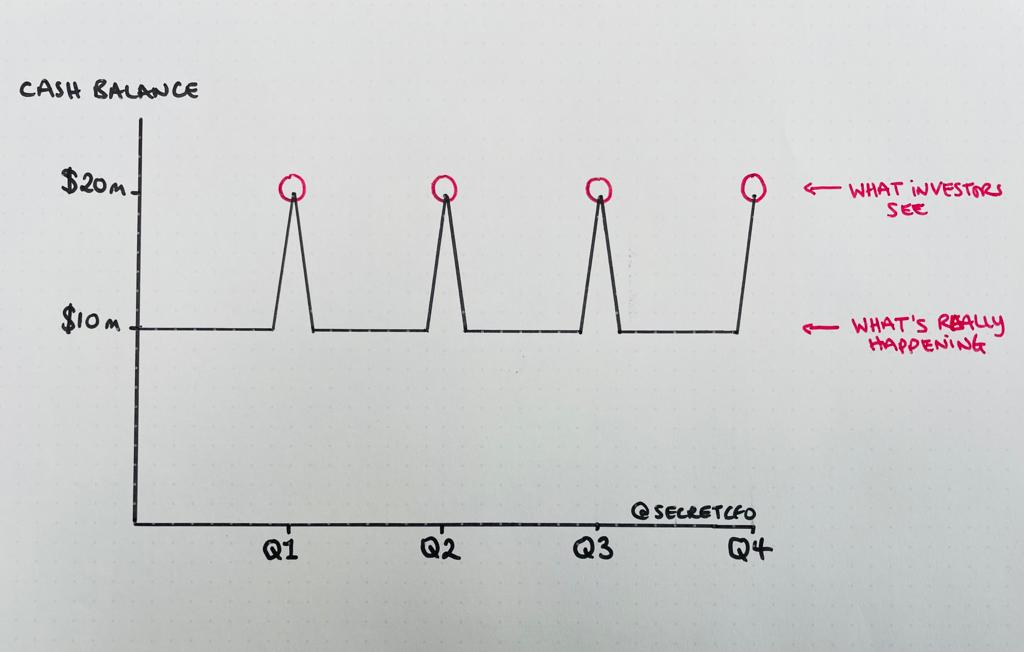
And given cash is a component of your net debt metric (and thus leverage), that’s pretty important right?
A one line disclosure in the analyst presentation would be fitting, but no one ever does.
See also use of accounts receivable and accounts payable borrowing platforms.
A one line disclosure in the analyst presentation would be fitting, but no one ever does.
See also use of accounts receivable and accounts payable borrowing platforms.
These are often classified as working capital items rather than debt.
Giving the impression of excellent working capital management, when in fact it's just debt funded, (and the opposite is true.)
The regulators are sleeping at the wheel here, and companies take advantage.
Giving the impression of excellent working capital management, when in fact it's just debt funded, (and the opposite is true.)
The regulators are sleeping at the wheel here, and companies take advantage.

5. Metric Manipulation
Don’t like the metrics Wall Street are using to decide whether you are a winner or a loser?
Well why not make your own up!
Don’t like the metrics Wall Street are using to decide whether you are a winner or a loser?
Well why not make your own up!
Whilst the annual reports are subject to audit, the analyst presentations, etc, are not.
This is where management can go a bit 'improv jazz' on some of the metrics they use
This is where management can go a bit 'improv jazz' on some of the metrics they use
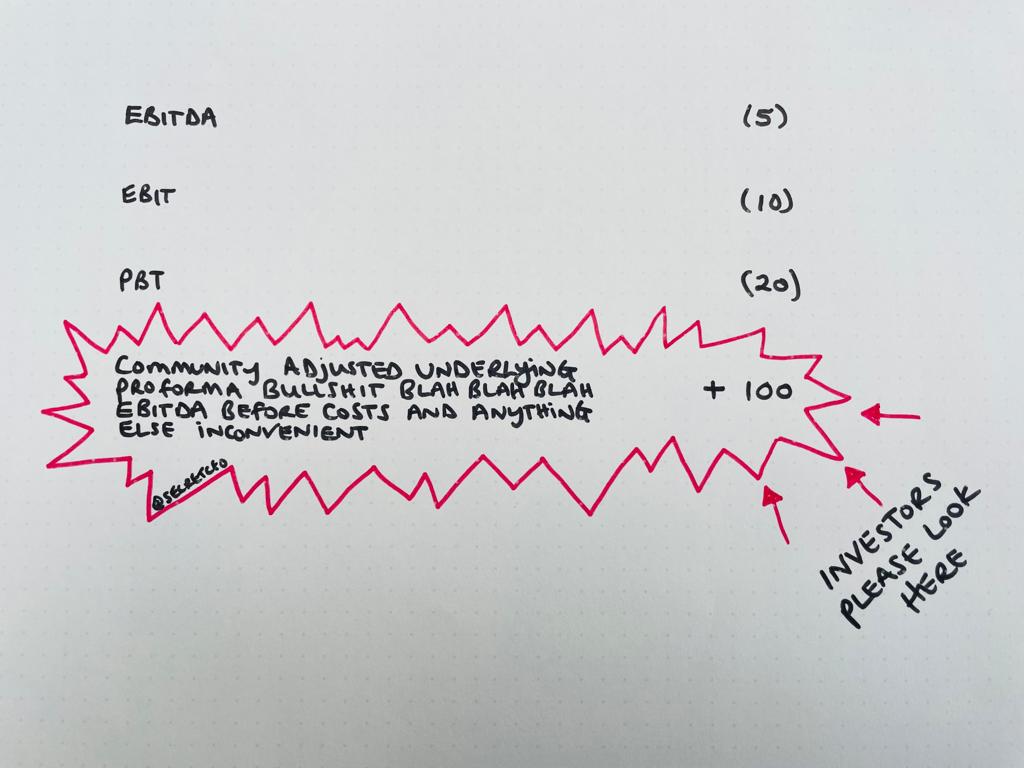
Regulators are finally waking up to this.
They are tightening up on how ‘Alternative Performance Measures’ are described in the annual reports.
This is a good thing for investors.
More transparency.
They are tightening up on how ‘Alternative Performance Measures’ are described in the annual reports.
This is a good thing for investors.
More transparency.
I’ve simplified the techniques into the 5 buckets above. But the cookbook for the budding CFO Chef is pretty large.
To be clear again, I don’t condone using the above.
But it’s important to understand these techniques. Because they can happen in different scales at any level of the organization.
But it’s important to understand these techniques. Because they can happen in different scales at any level of the organization.
But also, remember creative accounting isn’t fraud.
No good CFOs commit fraud (I do hope this is not a controversial statement).
But plenty of decent CFOs use creative accounting.
No good CFOs commit fraud (I do hope this is not a controversial statement).
But plenty of decent CFOs use creative accounting.
The best CFOs (in my view) commit to transparent reporting. and use that transparency to drive accountability back into the business.
And in turn drive business performance.
Which turns into better reported results.
This is the proper way (also the hard way).
And in turn drive business performance.
Which turns into better reported results.
This is the proper way (also the hard way).
Transparency is important for investors. So they can understand the business & make good decisions.
As CFO I work for them.
That’s right, ole uncle secret is a straight shooter.
As CFO I work for them.
That’s right, ole uncle secret is a straight shooter.

And if I spot someone who doesn’t have those same values, I get them out quickly.
Not in my house.
And if they are particularly bad...
Well, I photoshop an eggplant onto a picture of their face.
Not in my house.
And if they are particularly bad...
Well, I photoshop an eggplant onto a picture of their face.
That's cooking the books! If you liked it, please RT the tweet below to share this thread with your audience.
And follow @secretCFO for more like these (or you'll get the eggplant treatment too)
And follow @secretCFO for more like these (or you'll get the eggplant treatment too)
Forgot about this guy

Loading suggestions...