
In the last 7 months, I've been obsessed with metacognition ~ AKA learning how to learn
After 137+ hours of practicing and improving my techniques
I found 3 simple habits that helped me learn basically anything faster, and easier:
After 137+ hours of practicing and improving my techniques
I found 3 simple habits that helped me learn basically anything faster, and easier:

Traditional learning is full of debunked MYTHs
Old way
• Re-read notes
• Highlight and underline
• Flashcards for everything
New way
• Ask questions
• Solve problems
• Find relationships
(P.S. the most popular techniques are HARMING you)
Here's the solution:
Old way
• Re-read notes
• Highlight and underline
• Flashcards for everything
New way
• Ask questions
• Solve problems
• Find relationships
(P.S. the most popular techniques are HARMING you)
Here's the solution:
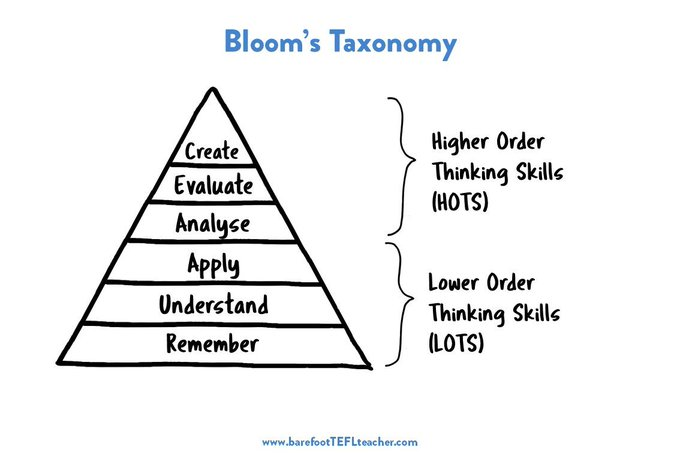
My aim when learning is to understand things deeply (HOTS), not memorization (LOTS).
AIM for HOTs = auto fill LOTs
That's why I despise flashcards.
Lots of LOTs with dry, tedious unsustainable memorization.🤮
Instead, here're 3 simple habits I use to get in the HOTS zone:
AIM for HOTs = auto fill LOTs
That's why I despise flashcards.
Lots of LOTs with dry, tedious unsustainable memorization.🤮
Instead, here're 3 simple habits I use to get in the HOTS zone:
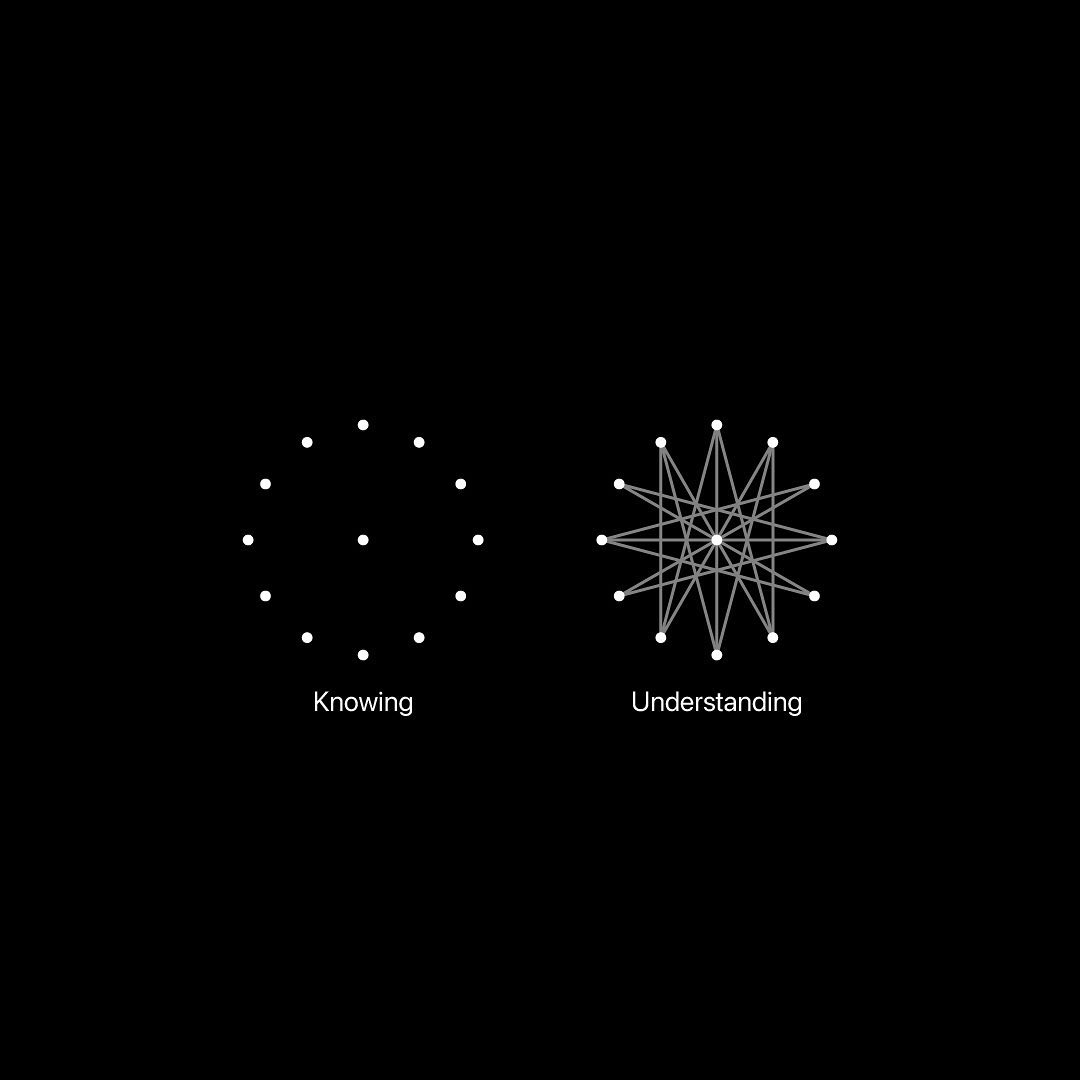
1/ Seeing knowledge as a network
With more natural connections comes better memory.
To find the connections between concepts, use questions like:
• How X related to Y?
• How is X without Y?
• How is X differ from Y?
These questions is a launchpad for your explorations.
With more natural connections comes better memory.
To find the connections between concepts, use questions like:
• How X related to Y?
• How is X without Y?
• How is X differ from Y?
These questions is a launchpad for your explorations.
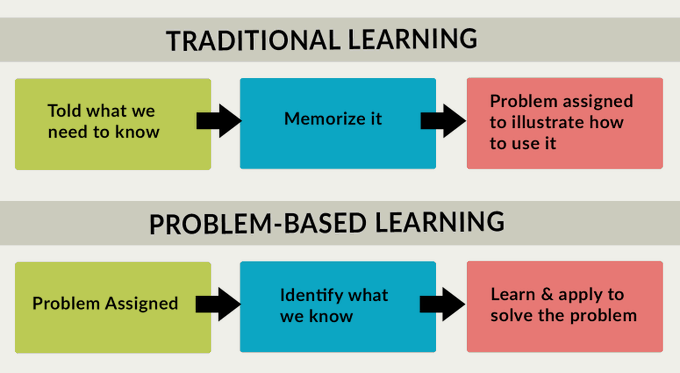
2/ Put on the problem solving hat
Think of a caveman theory, if you learn for a problem it naturally be deemed as important -- more memorable.
The personal problems are best:
• Love or s*x
• Life and death
• Scenario based
And if you don't have a problem, imagine them.
Think of a caveman theory, if you learn for a problem it naturally be deemed as important -- more memorable.
The personal problems are best:
• Love or s*x
• Life and death
• Scenario based
And if you don't have a problem, imagine them.
3/ Chunking information
Analogy: If you are organizing your clothes, which would be easier to find your stuff:
• Throw things randomly
• Put in specific shelfs
Exactly, same for the brain
Take time to think about the relationship and categorize them into chunks (2-4 items)
Analogy: If you are organizing your clothes, which would be easier to find your stuff:
• Throw things randomly
• Put in specific shelfs
Exactly, same for the brain
Take time to think about the relationship and categorize them into chunks (2-4 items)
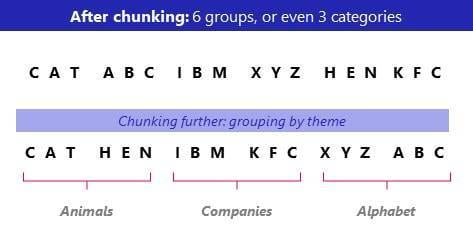
The best chunks are naturally intuitive and logical.
Example of intuitive chunks;
If I say Left you say.......Right
If I say Cause you say.......Effect
If I say Problem you say.......Solution
If you feel like you have to rote memorize the chunks, it's not intuitive.
Example of intuitive chunks;
If I say Left you say.......Right
If I say Cause you say.......Effect
If I say Problem you say.......Solution
If you feel like you have to rote memorize the chunks, it's not intuitive.
And how do you create these chunks?
Yes you got it! The questions you asked and Higher Order Thinking.
Once asked the open ended questions; DON'T stick with the 1st answer
Get a few and evaluate which is most relevant for you.
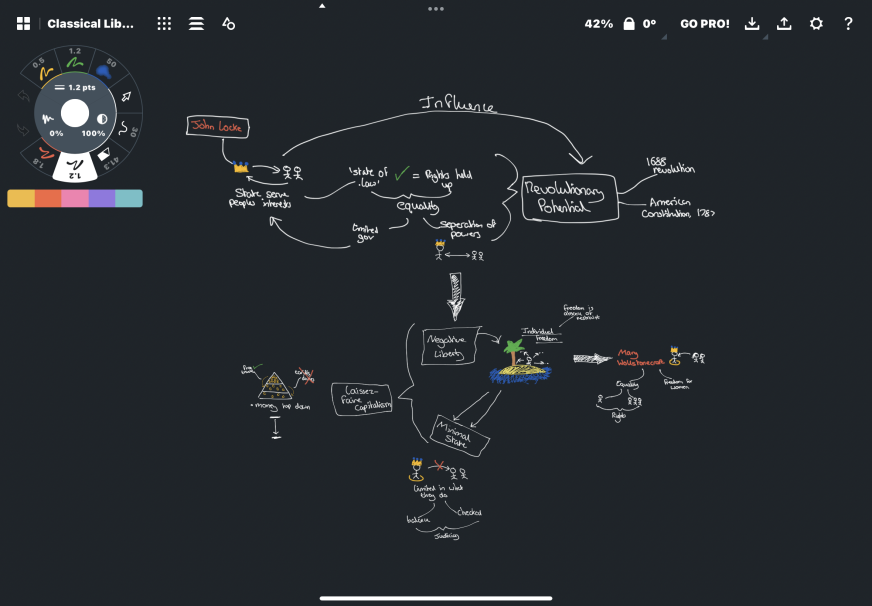
From there represent it with a mindmap like this:
Yes you got it! The questions you asked and Higher Order Thinking.
Once asked the open ended questions; DON'T stick with the 1st answer
Get a few and evaluate which is most relevant for you.
From there represent it with a mindmap like this:
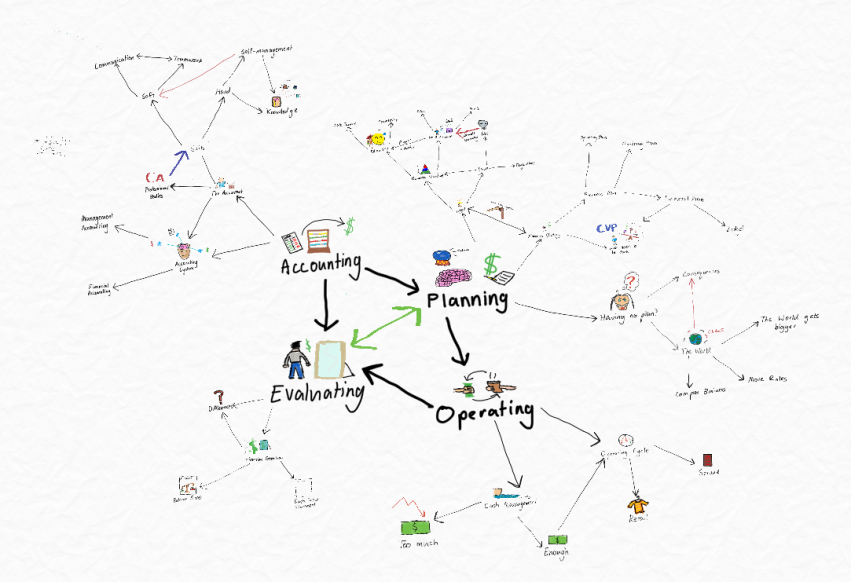
Action step:
When you learn something new;
Remember these 3 habits:
1/ Seeing knowledge as a network (knowledge schemas)
2/ Put on the problem solving hat (Turn on natural instinct)
3/ Chunking information (Organize into groups of 2 - 4.)
Finally draw out those chunks!
When you learn something new;
Remember these 3 habits:
1/ Seeing knowledge as a network (knowledge schemas)
2/ Put on the problem solving hat (Turn on natural instinct)
3/ Chunking information (Organize into groups of 2 - 4.)
Finally draw out those chunks!
Bonus:
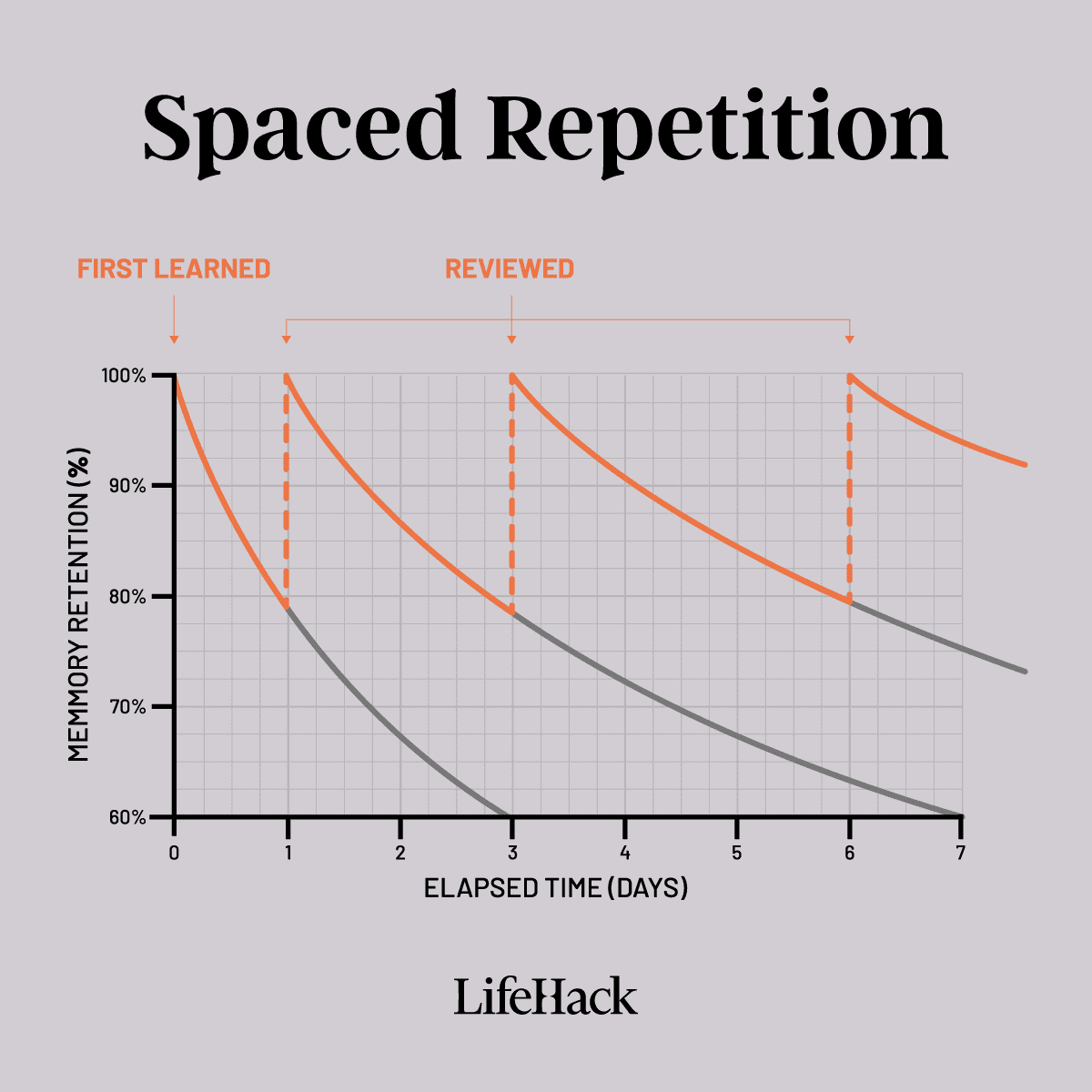
Use basic active recall to test your memory by simply teaching an imaginary friend.
When teaching remember:
• Reorganize it your way
• Target your weakness
• Try using analogies
Recall completely from memory → note struggled → relearn & repeat until mastery.
Use basic active recall to test your memory by simply teaching an imaginary friend.
When teaching remember:
• Reorganize it your way
• Target your weakness
• Try using analogies
Recall completely from memory → note struggled → relearn & repeat until mastery.
If you have read it this far...
You will seriously enjoy my Learning Lab Newsletter.
One actionable, evidence based, idea to help you learn and grow into the best version of your self.
Have a look here: learninglab.beehiiv.com
You will seriously enjoy my Learning Lab Newsletter.
One actionable, evidence based, idea to help you learn and grow into the best version of your self.
Have a look here: learninglab.beehiiv.com

Final notes:
If you want to learn everything I know about metacognition and learning science, enroll in the ICANSTUDY learning course.
They are opening registration in the next 3 days:
Use this link for $15 off your sign up (affiliated)
`icanstudy.com`
If you want to learn everything I know about metacognition and learning science, enroll in the ICANSTUDY learning course.
They are opening registration in the next 3 days:
Use this link for $15 off your sign up (affiliated)
`icanstudy.com`

I hope you've found this thread helpful.
My account exists to help people learn faster, so they have the skill and time to achieve greatness in life.
Follow me @LearningToan if this resonated with you.
Like/Retweet the tweet below to spread the words. 👇
My account exists to help people learn faster, so they have the skill and time to achieve greatness in life.
Follow me @LearningToan if this resonated with you.
Like/Retweet the tweet below to spread the words. 👇
If you liked this, please RT the first tweet. Follow along as we post content about:
- How to learn faster📚
- How to be more productive🧠
- How to fix the education system ⚙️
@LearningToan
- How to learn faster📚
- How to be more productive🧠
- How to fix the education system ⚙️
@LearningToan
If you enjoyed this thread, please RT the tweet below and follow me
@LearningToan
This account exists to help students:
• Learn systems + mental models
• Study faster and gain back your life
Your friend,
Toan
@LearningToan
This account exists to help students:
• Learn systems + mental models
• Study faster and gain back your life
Your friend,
Toan
Loading suggestions...