

HOW TO MAKE A MONSTER for your horror script! I'm going to walk back not giving unsolicited horror-writing advice while on strike because I need to feel fulfilled. So here's a thread on cooking up and then writing something horrific and evil! 1/25
Horror stories can hinge on how scary, unique, fun, cool, and/or violent the villain is. Are they a tentacled beast from the depths of the sea? An old cosmic space god? A rotting dude in coveralls that won't die? A regular person that's murder-y? Possessed doll? Murder-car? 2/25
Be they ghosts, vampires, masked slashers, drug-addled critters, or some beast yanked from mythology, knowing your antagonist is essential before breaking your story. In a horror film, the goal is to be scary, and you do that with tension, mystery, danger, and violence. 3/25
This means that generally speaking, your characters are going to be at a disadvantage until the end of the movie. Horror stories belong to the thing that is the source of the horror-- even if we don’t see them. In fact we SHOULDN’T see them too much in the first half… 4/25
…but that doesn’t mean we aren’t seeing a world affected by their existence. This is why you have to know your monster. The best thing about monsters is that you can make literally anything up, you can use something from mythology, or you can put a new spin on an old trope. 5/25
It’s also been repeatedly proven that you can take a very traditional, maybe even over-used monster like a vampire, a slasher, or a zombie and completely change the known rules and tropes. Remember when zombies didn’t run and vampires didn’t sparkle? Do what you want! 6/25
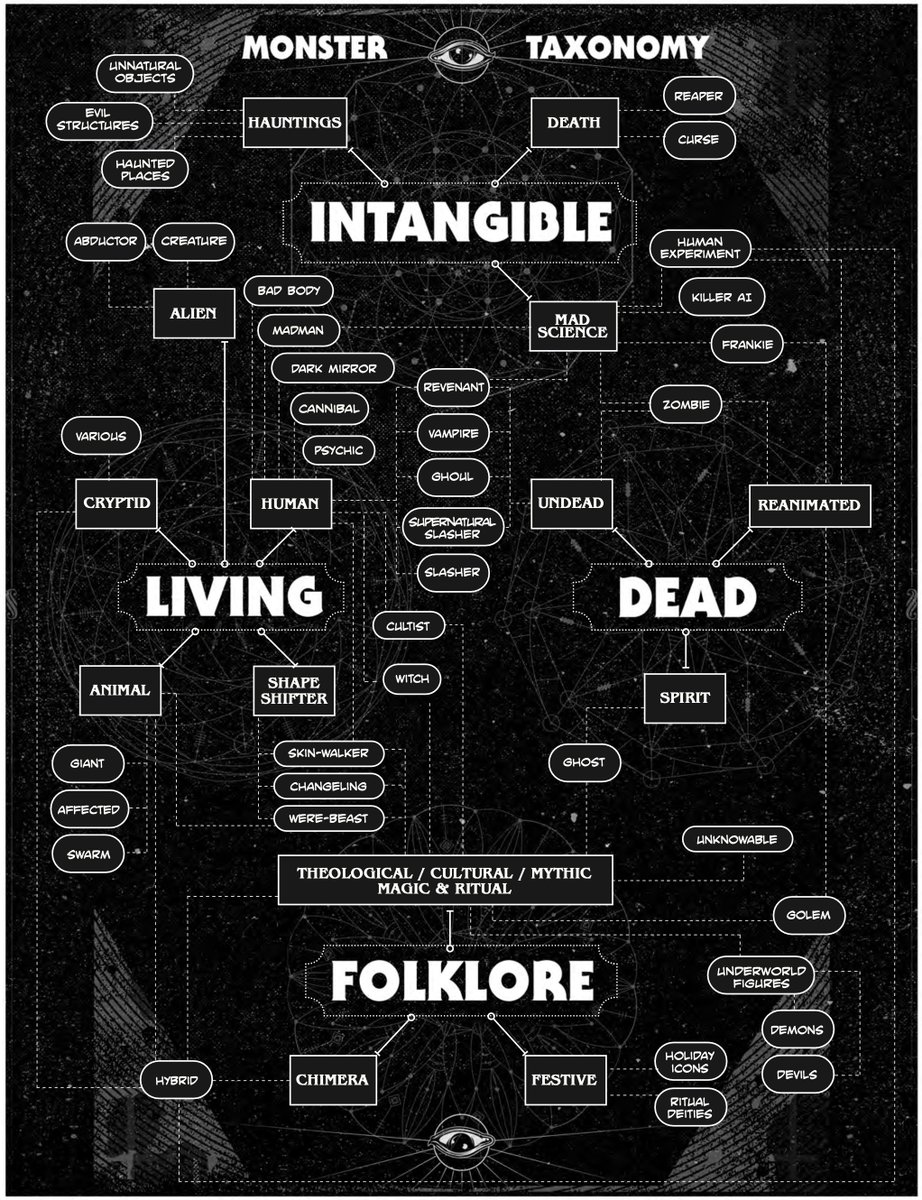
So what if you don’t know what you want? Lucky for you, I’ve over-thought this so many times. I’m of the opinion that all monsters/antagonists in horror films can fight into a pretty tight taxonomy... which I have designed for myself an put on my wall. 7/25
At the top level, there’s 4 categories: THE INTANGIBLE, THE LIVING, THE DEAD, and stuff from FOLKLORE. THE INTANGIBLE covers conceptual evils: bad vibes, the notion of death, science gone wrong, or the essence of evil sans a personality that imbues structures or objects. 8/25
THE LIVING covers all many of bad humans, animals, cryptids, and shapeshifters. People with powers or magic on their side, shapeshifters, anything that has a heart that pumps blood. 9/25
THE DEAD is obvious— it covers reanimation, the undead, ghosts, spirits, anything that was once living, and is somehow still around after not being living anymore. 10/25
FOLKLORE is a wide classifications as it includes mythology, theology, specific cultures, religions— so anything from demons and devils to chimera and monstrous legends to unknowable otherworldly space Gods. 11/25
Obviously, there is all sorts of overlap between these things, and the categorizations are kinda loose. Like I said, I’ve actually made a chart:
So what kind of monster does your story need? Despite this complicated and super expertly-organized chart, when it comes to writing your monster there’s really only four different ways to go about portraying them. 13/25
A lot of these choices dictate which paradigm to follow, but also feel free to choose the one that best fit the kind of story you want to tell. A few outliers aside, most every monster/antagonist in a horror film every seen fits into one of these “villain paradigms.” 14/25
A. The Bad Guy-- Despite a monstrous nature, this creature has the mind of a human. Like any good antagonist, they should think they are the hero of the story, or at the very least, need something that they consider more important than human lives. 15/25
The best way to develop this kind of character is to put them through the same sort of arc-planning as your lead character. Give them motivation. 16/25
B. The Unstoppable Force-- Great for slashers, survival horror, and creature features, this angle treats your monster as something propelled by a SINGLE motivator. What’s fun is the audience could know what that motivator is, or not. 17/25
What did The Blob want other than to absorb people and get bigger? All we really know is that they don’t stop. Generally you want to find an arc where they may be more mysterious or weak at first and grow (perhaps literally) as the story chugs along. 18/25
C. From Darkness-- This strategy is all about the monsters that hide in the dark. It’s possible they are smart like a person, but most likely are some sort of lesser in- telligence. Smart enough to know how to track, hunt, and strike at just the right moment. 19/25
Think snatch and grab, you want isolated kills. Its arc should lead to it being more like an unstoppable force in the 3rd act of your story. Generally they have a task or habit they are enacting, or are satisfying some sort of need. 20/25
D. Cause and Effect. Something has started the evil on its path and will continue until it is put away again or stopped. It starts quiet, and stay hidden (sometimes in plain sight) or look innocent at first, becoming more overtly evil and dangerous as the story progresses. 21/25
If intelligence is a factor it will get more clever as time passes. It usually wants something very specific, and will get it by any means necessary. 22/25
Whether we are talking about a giant monster stomping a city to bits, a possessed doll hiding in a child’s room, or a ghost with a grudge, the final piece is point of view. The more an audience sees and knows, the less scary things are, so always remember to arc tension-- 23/25
--around a monster. That, and… you know, drop some bodies! Killing off characters that the audience likes or super-hates is always a great way to keep people invested emotionally. 24/25
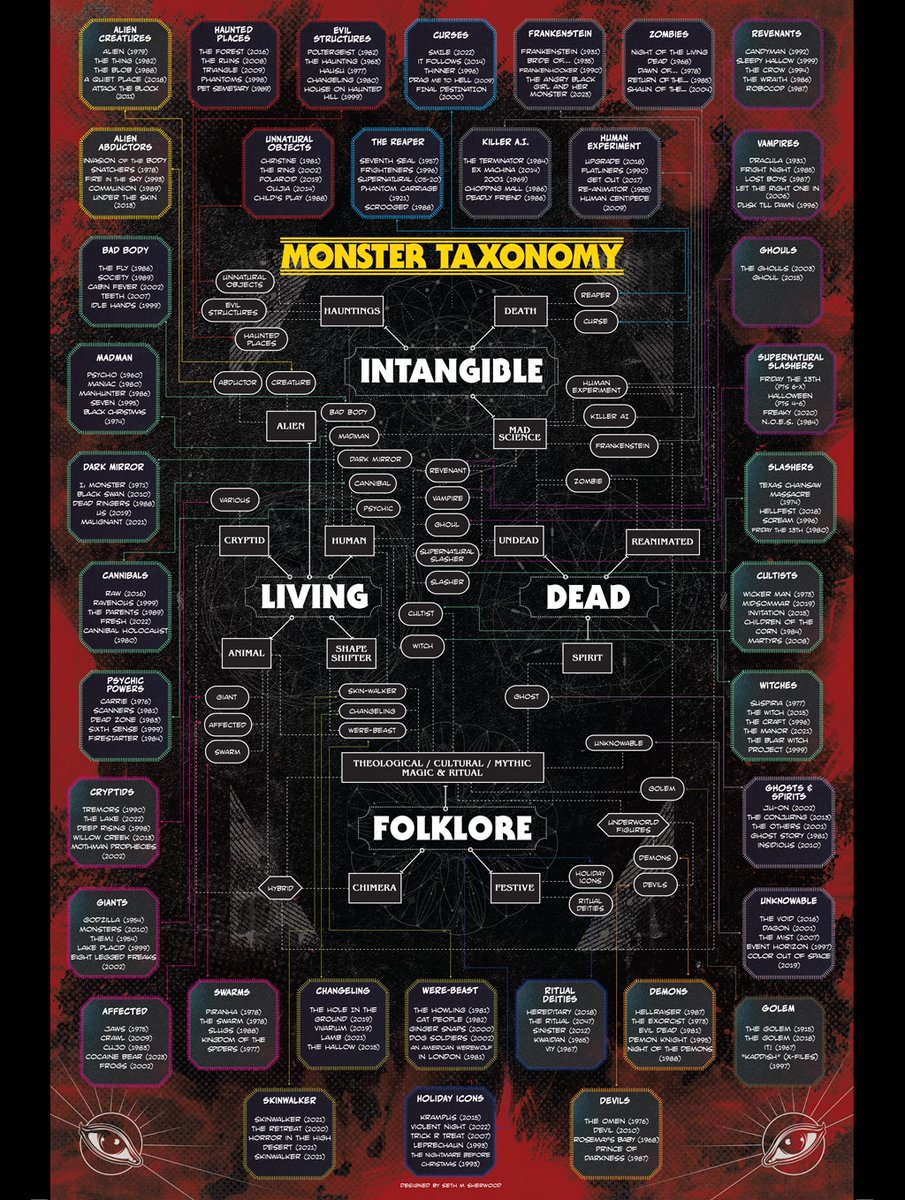
ALSO- The taxonomy chart is available as a poster with movie examples! I only have 45 of them to sell. Profits will be donated to the Entertainment Community Fund, which is helping industry people in need during the WGA/SAG strike. Buy here: py.pl 25/25.

Loading suggestions...