

1 | 🇺🇸 U.S. Army Long-Range Surveillance Company (LRSC) from about 2009-10, before they were all deactivated by 2017/18. They provided "operational" commanders (Division/Corps/JTF) a surveillance, reconnaissance & interdiction unit capable of operating deep behind enemy lines.

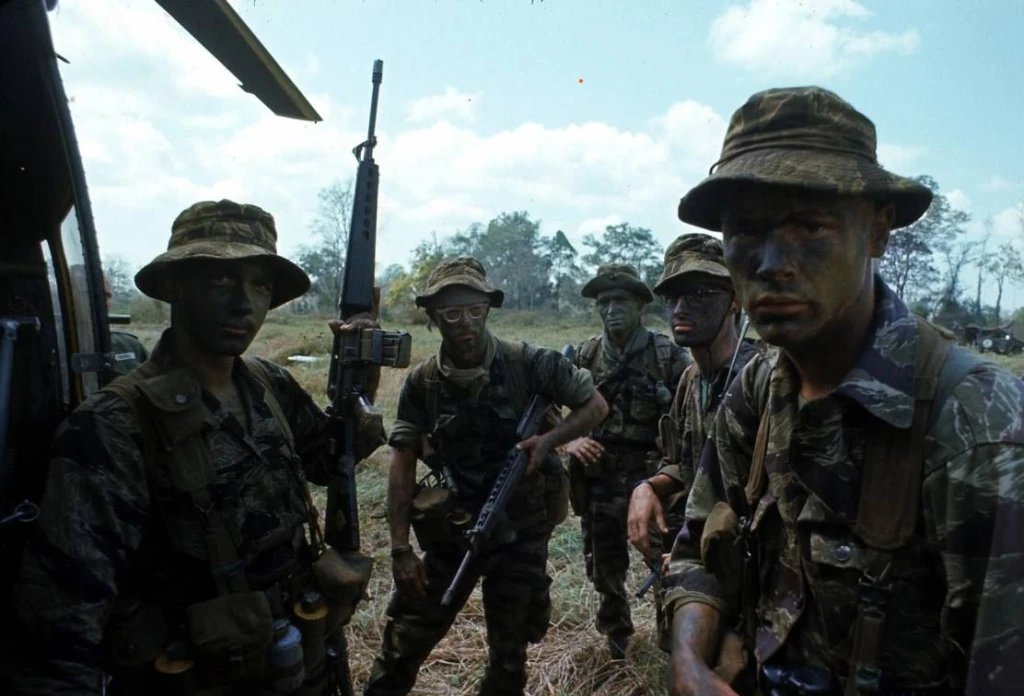
2 | Although the 75th Ranger Regiment assumed the lineage of the Vietnam-era Long-Range Recon Patrol companies or LRRPs (because the various companies were reflagged as part of the 75th Infantry in 1969), the LRS Companies were the LRRPs' actual tactical successors
3 | By TOE, the LRS Co had 3 platoon-sized LRS Detachments, each with 5 LRS Teams. The teams were doctrinally intended to plan and operate independently in the field. This went as far as the LRS manual discouraging teams from contacting each other to avoid giving themselves away

4 | But METT-TC could dictate that the LSR Detachment act as a platoon in the field, with a central patrol base and multiple surveillance sites. The LSRD would act as a forward sustainment base and QRF if an LRS team was compromised.
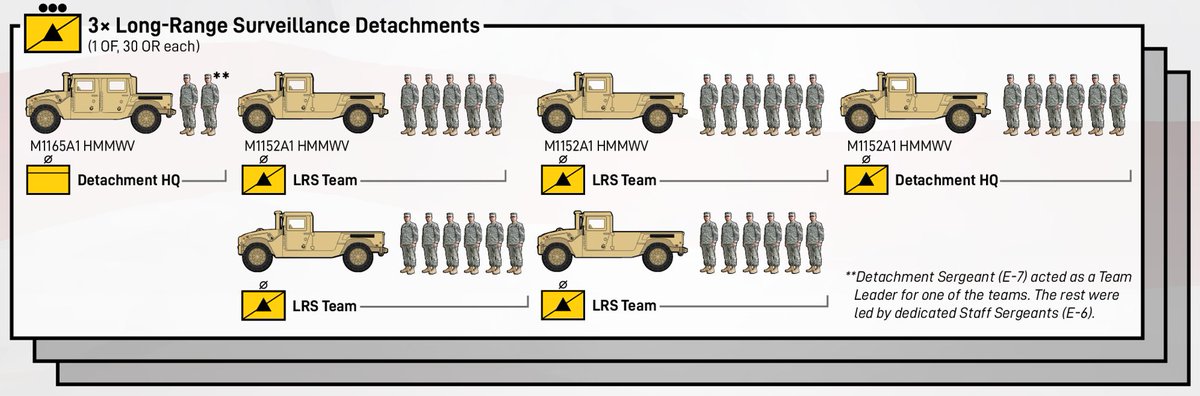
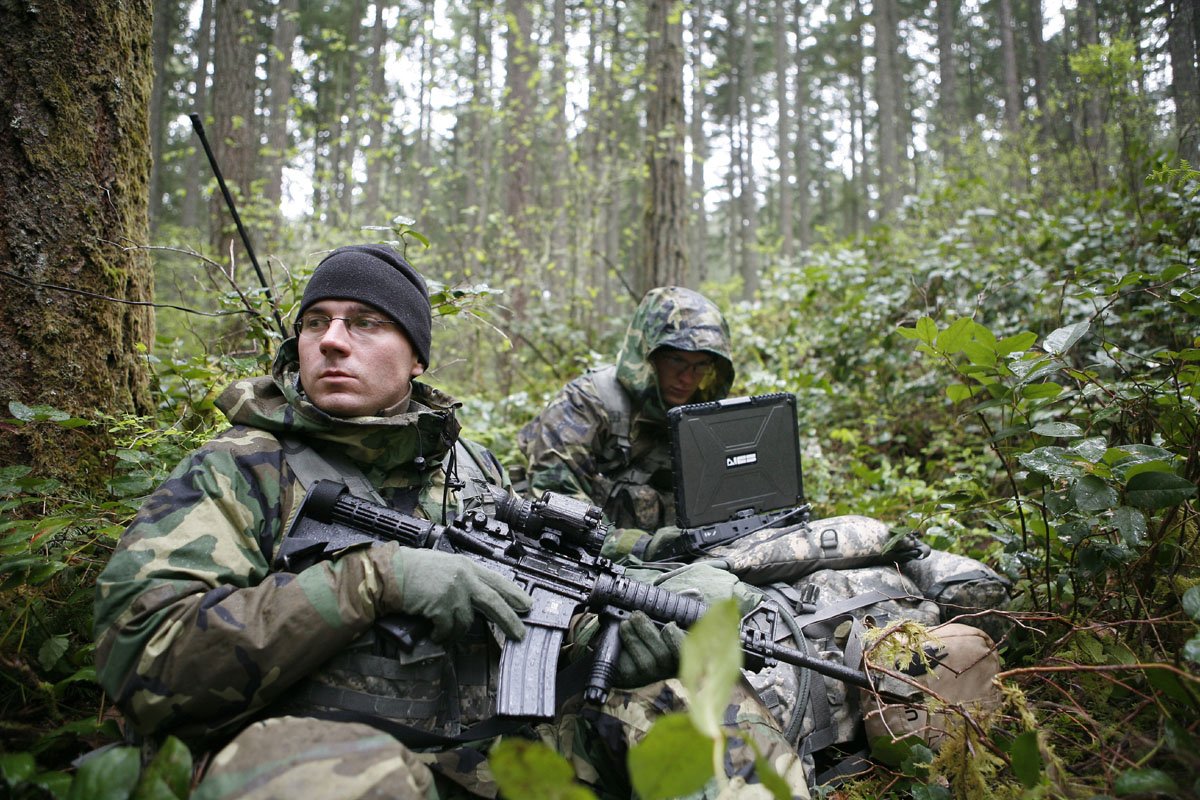
5 | Each team consisted of 6 soldiers by TOE, with a Team Leader, Assistant TL, 3 Scouts, and 1 RTO. They were all 11Bs. Three to six additional soldiers could be attached as a "mule team" to carry surveillance site construction materials and water
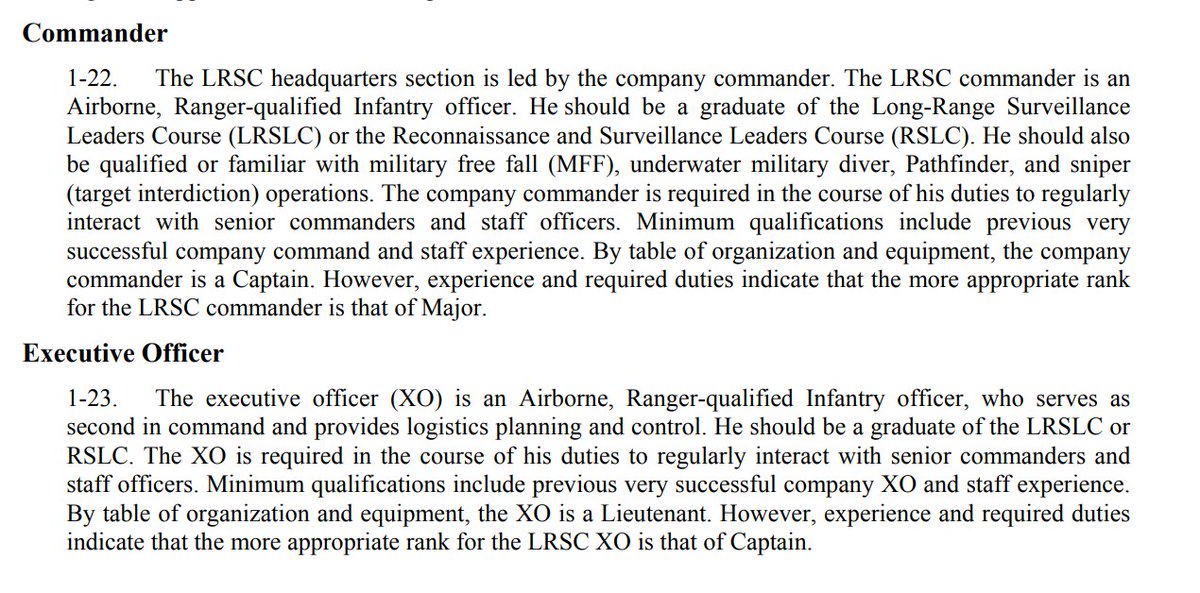
6 | While the TOE listed Captains and Lieutenants for the Company Commander and Detachment Leader billets, the manual (FM 3-55.93) listed Majors and Captains respectively as preferable.
7 | They had a Commo Platoon with 4 base radio stations for establishing long-range communications between the LRS Teams and the company operations base (COB) or mission support site (MSS). The Vietnam-era LRRP Co had 3 base radio stations supporting 24 patrols (1 per platoon)
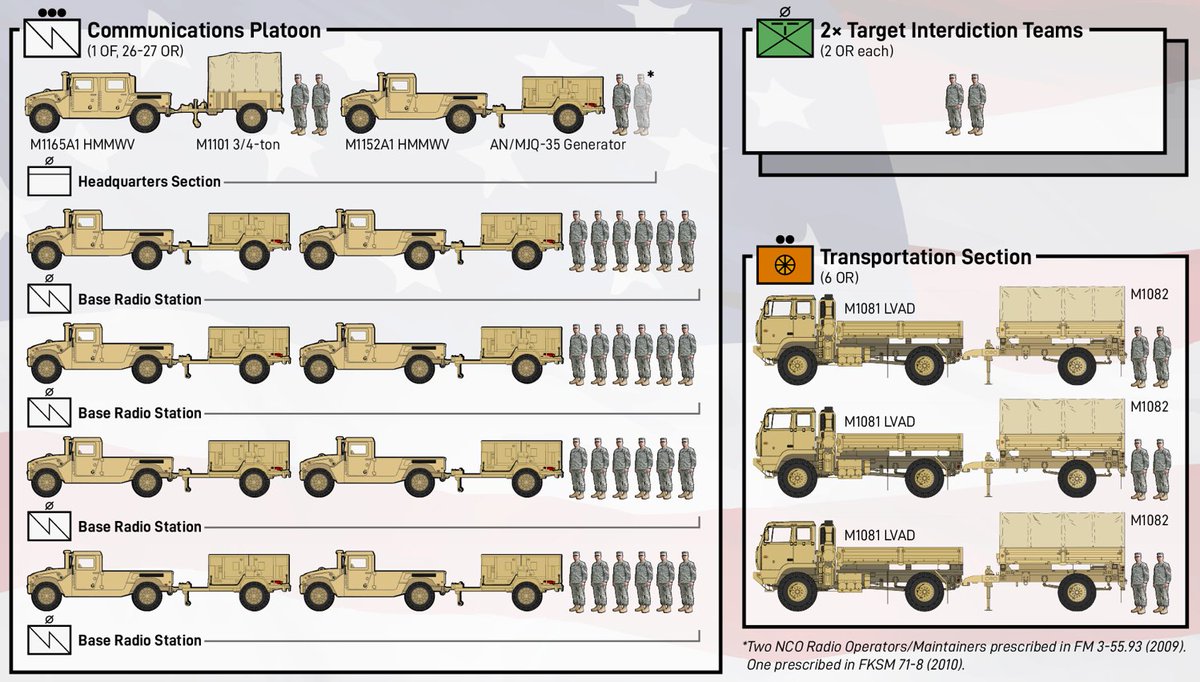
8 | As an airborne unit, the LRSC's LMTV and MTV cargo trucks were the LVAD versions designed to be air dropped from a C-130.

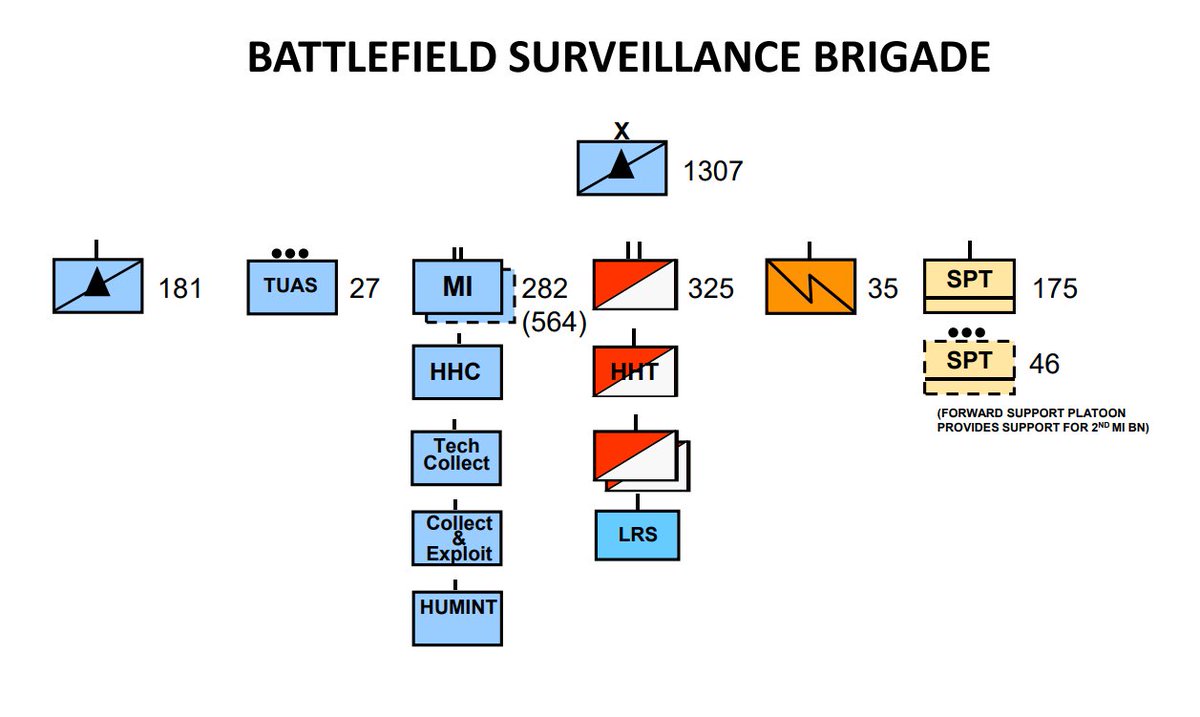
9 | At the time, LRS Companies were organic to the Reconnaissance & Surveillance Squadron of the Battlefield Surveillance Brigade (BFSB). Although those short-lived brigades have long since been converted (e.g. into Expeditionary MI Brigades and MEBs) or deactivated.
Loading suggestions...