

Barcelona and Arsenal shared strikingly similar tactical plans in their recent matchup. However, there was one not-so-secret ingredient that Arsenal possessed due to the Premier League, while Barcelona struggled with it.
Tactical Thread 🧶
Tactical Thread 🧶
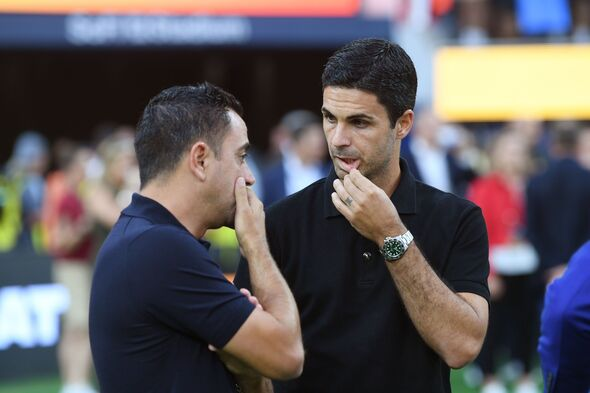
Formations:
Arsenal 4-3-3
Barcelona 4-3-3
Off the ball:
Arsenal 4-2-3-1
Barcelona 4-2-3-1
Arsenal 4-3-3
Barcelona 4-3-3
Off the ball:
Arsenal 4-2-3-1
Barcelona 4-2-3-1
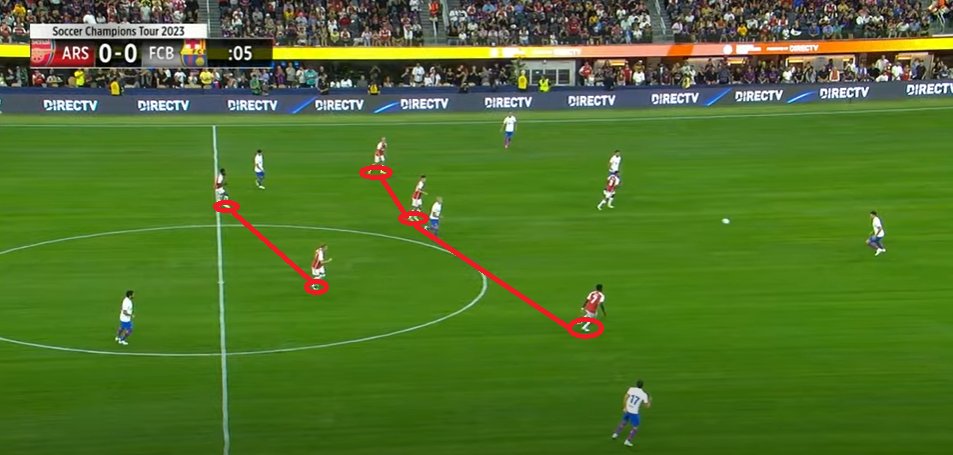
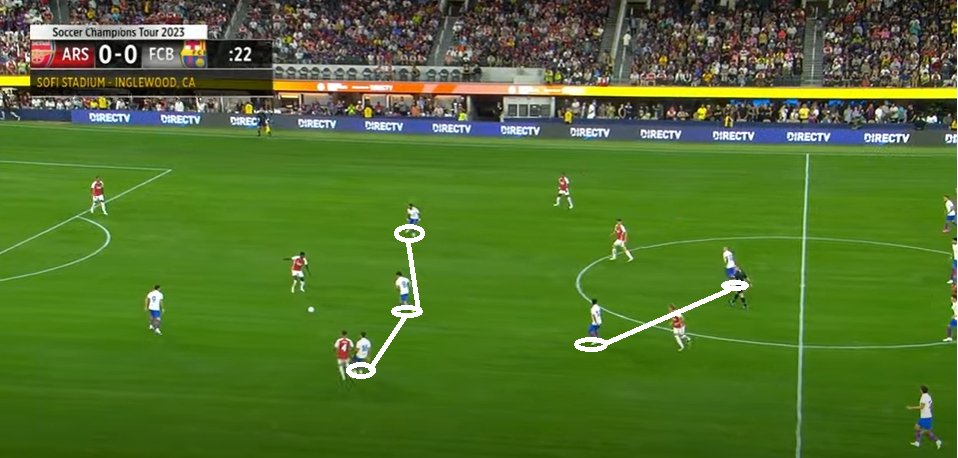
Barcelona's tactics had intricate triangular passing patterns, but they focused on switching the ball out wide to stretch the opposition. Pedri played a crucial role by dropping deep to initiate the build-up, while Gundogan made dynamic vertical runs to create attacking opps.
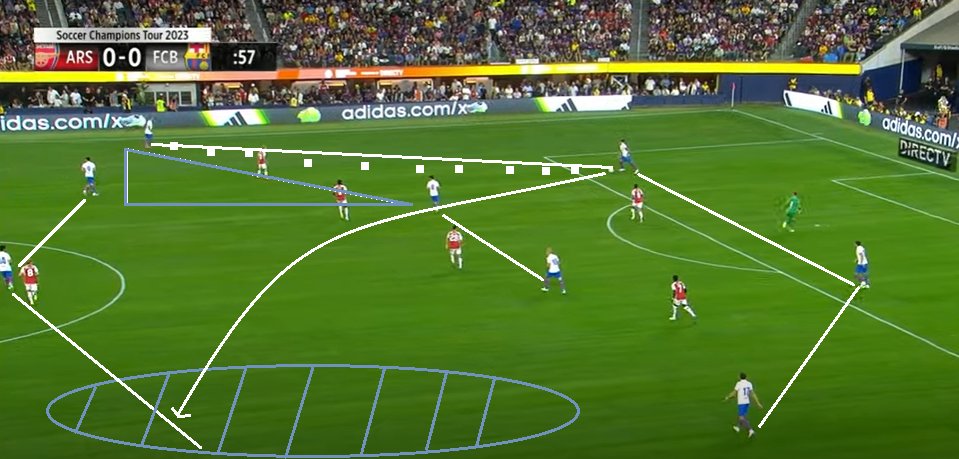
Similarly, Odegaard fulfilled a similar role for Arsenal, making intelligent forward runs to support their offensive play. To provide width in the attack, Abde and Saka were instrumental for their respective teams, hugging the flanks and stretching the opposition's defense.
Here, again we can see Oriol Romeu with a switch out wide. On the right side Sergino Dest provided Barca the flank width while Raphinha tucked inside.
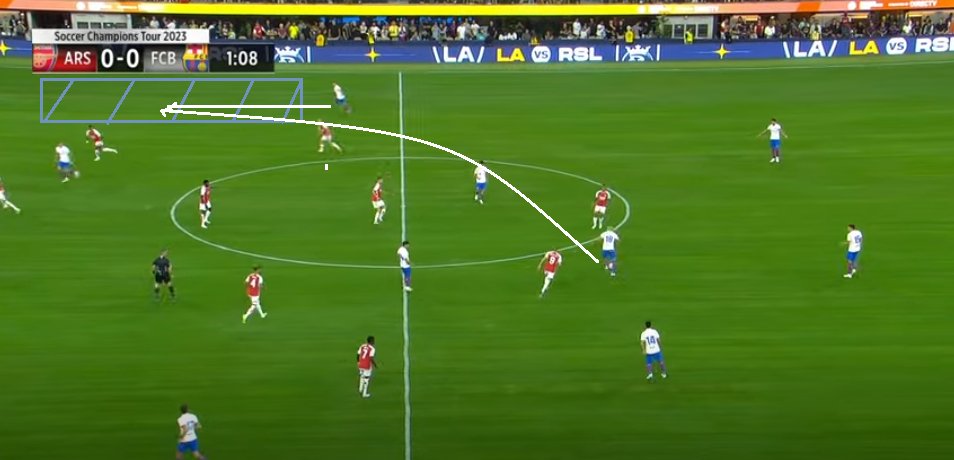
As early as the eighth minute, it became evident that using traditional positional references for this Arsenal side was futile. Gabriel Jesus, the designated striker, was frequently found hugging the left touchline.
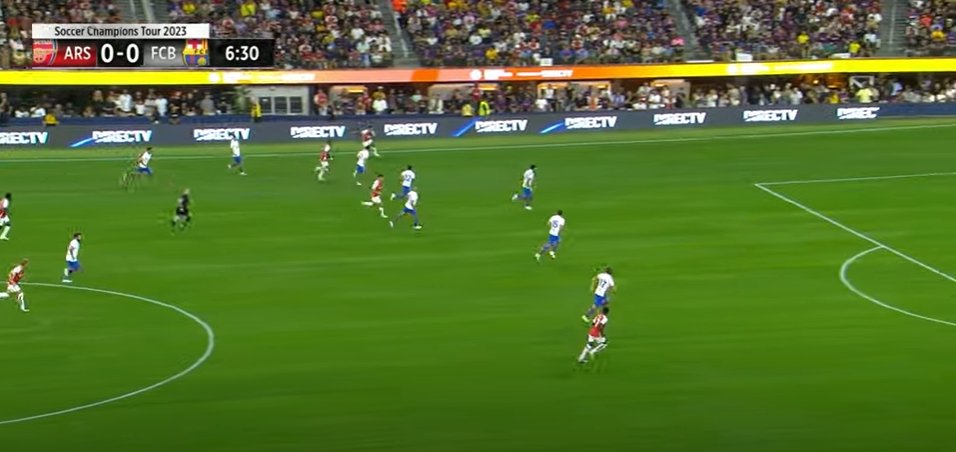
Trossard, supposed to be on the left wing, was operating in central midfield. Meanwhile, Kai Havertz, initially positioned as the left No 8, had assumed the role of the main attacking focal point. The fluidity and versatility of Arsenal's players was key to dominating the game.
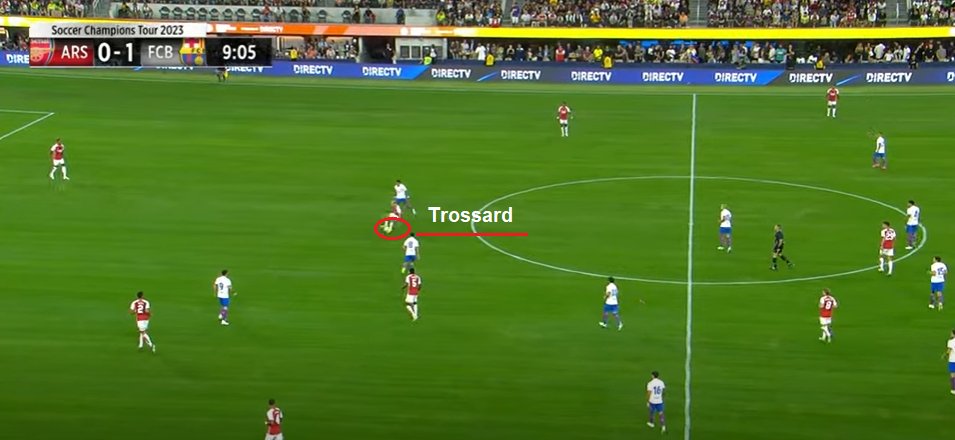
Despite the tactical complexities, it was Barcelona who drew first blood. Abde showcased his counter-pressing skills by dispossessing Odegaard and swiftly embarking on a blistering run with the ball.
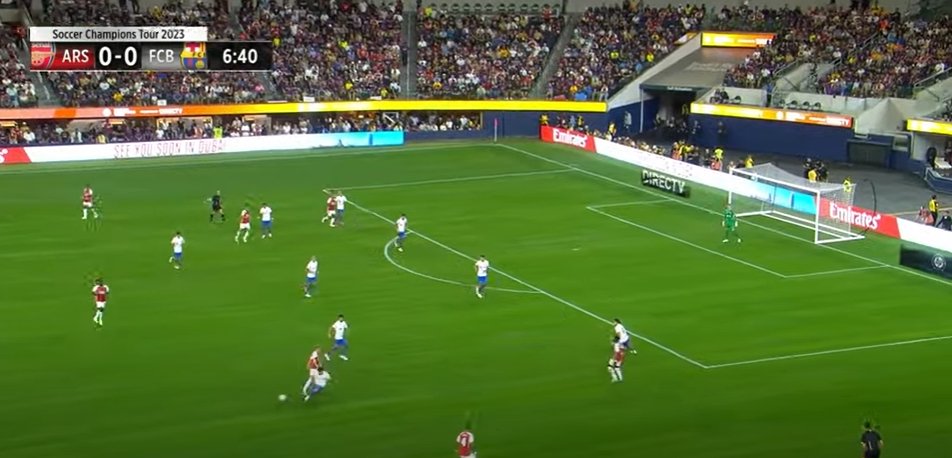
He cleverly squared it to Raphinha during the counter-attack, and Lewandowski got the easy tap-in on the rebound to secure the opening goal. Barcelona's execution on the break demonstrated the deadly combination of speed and precision in their attacking play.
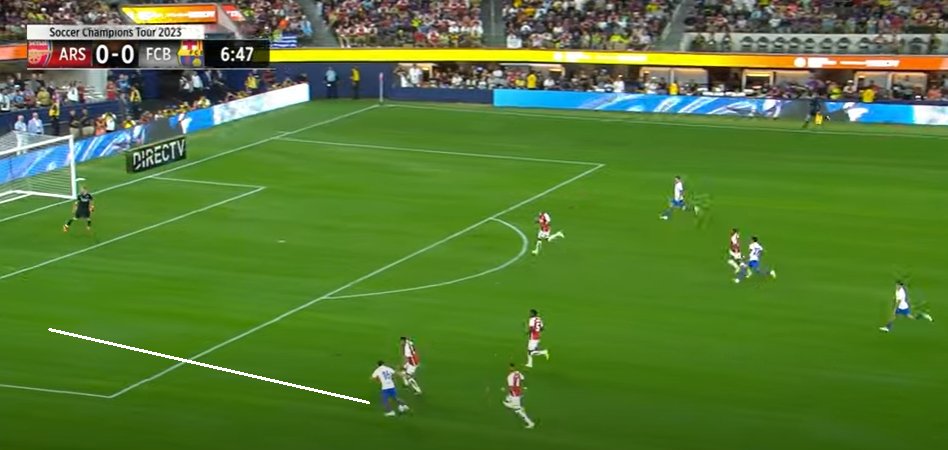
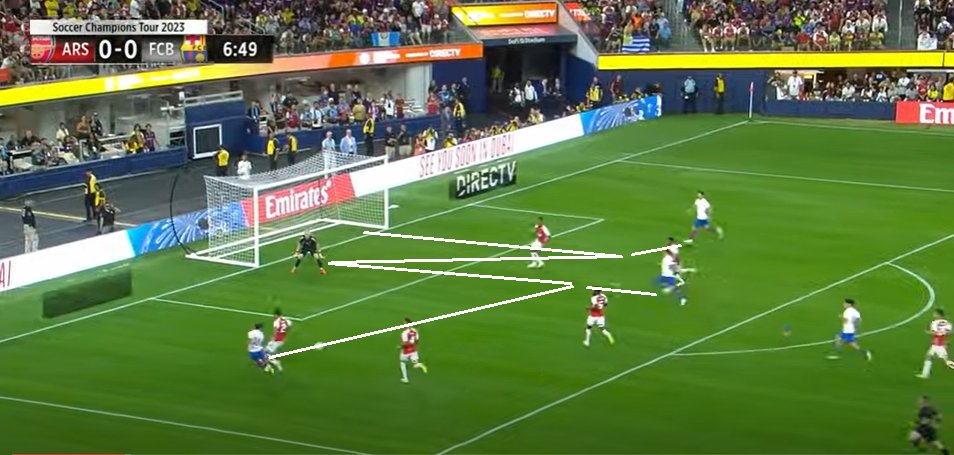
Returning to Arsenal, rotations have become an integral part of this team's identity. Gabriel Jesus's tendency to roam around the pitch in search of the ball brings a welcomed variation to their play. His ability to inject pace into their attacks and find gaps is commendable.
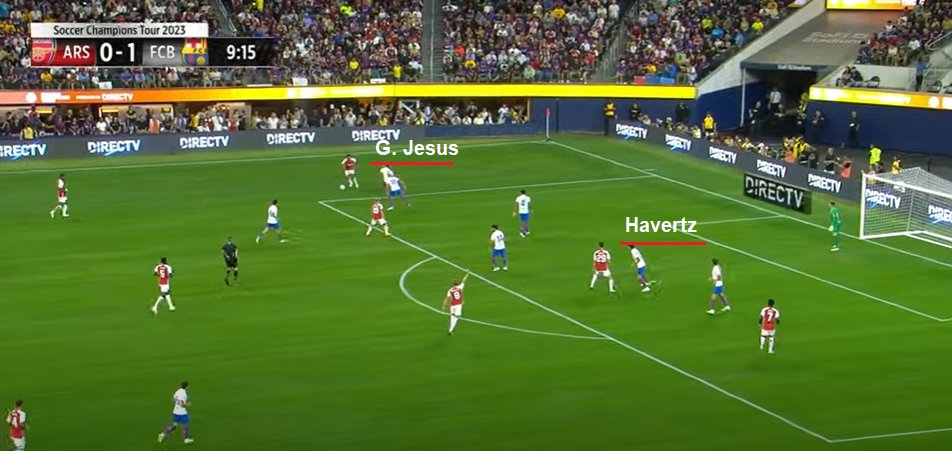
Barcelona are a team that's not seen the same level of rotation in their DNA so far. They do switch positions, for example, the midfielders with swap positions or the wingers will switch sides, but it's not the type of thing we see with Arsenal or Manchester City.
Lewandowski will also drift out wide and create space for the third man runs, but it's nothing more than that at this point. There could be a reason for that.
Xavi is a structurally well disciplined coach and the downside is that at times, there is a lack of players filling vacated space by the striker and attacking the box when facing the goal.
Striking the perfect balance between creative freedom and maintaining offensive threats in the box is vital for both Arsenal and Barcelona's attacking success. Arsenal has already had a head start in developing this attribute, integrating rotations seamlessly into their gameplay.
On the other hand, Barcelona is still working on fine-tuning their model, especially geared towards the challenges of the Champions League. While they seem to be performing well in La Liga, adapting their approach to the more demanding European competition remains a priority.
Mastering this balance will be a key factor in their quest for success on both domestic and international fronts.Indeed, in Arsenal's impressive 5-3 victory over Barcelona in Los Angeles, the Gunners demonstrated their superiority in terms of structure and possession.
They consistently found success by getting down the sides of Barcelona's defense, exploiting their vulnerabilities time and time again. The significant reminder was the diversity in Arsenal's players reaching the touchline and receiving cutbacks.
Arsenal's aspirations rely on distributing the goalscoring responsibilities among multiple players. At Barcelona, this has been a challenge so far. On occasions, Bukayo Saka showcased his versatility by dribbling down the line with his right foot, adding a different dimension.
Notably, he twice set up Martin Odegaard by expertly slipping him in behind the full-back with well-timed darting runs.
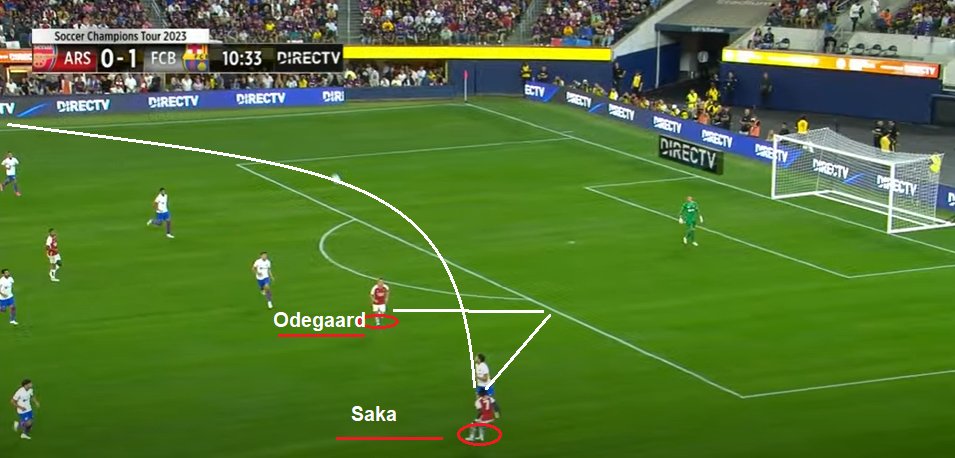
While Granit Xhaka used to make late runs, providing an additional attacking threat, it appears that Kai Havertz is poised to become a more regular presence in the penalty area this season, interchanging with Gabriel Jesus as a striker.
But what was that secret ingredient Arsenal had because of the Premier League that Barcelona lacked?
It was advice from one of his Bayern Munich players that alerted Pep Guardiola to one of the unique traits of Premier League football.
It was advice from one of his Bayern Munich players that alerted Pep Guardiola to one of the unique traits of Premier League football.
Pep Guardiola in 2016: “I was in Munich and I spoke with (former Liverpool midfielder) Xabi Alonso. He said, ‘You have to adapt, (it’s) the second ball, the second ball’.”
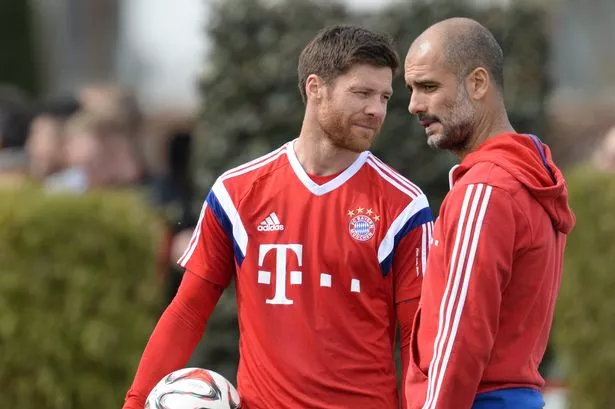
Pep: “I thought, ‘It’s OK, second ball, OK’. But really, you have to adapt to the second ball, and the third ball, and the fourth. I never before was focused on that, never.”
So when Arsenal played against Manchester United a few days before the Barcelona game, they weren't utilizing the long aerial balls effectively and from that winning the second balls. Against Barcelona they executed this perfectly as there wasn't much build up space in the center
At Barcelona, winning second balls has been an unknown concept, as it is not emphasized in La Liga matches. This was the secret ingredient in the Gunners' victory. The ability to capitalize on those loose balls and gain possession is what Xavi has to work on.
Loading suggestions...