

(1/26) Let's talk about the Tor.

(2/26) Work on the Tor ('Torus') complex began in Feb 1975 under chief designer Efremov of NPO Antey. Antey was responsible for the overall system, but various institutions would actually develop the subsystems (e.g. Fakel under Grushin designed the missiles).


(3/26) Efremov had designed the Osa (as well as the Kub and Krug complexes), thus he was the natural choice for Tor, its successor as the Soviet divisional-level SAM.


(4/26) By the 1970s, NATO PGMs were mature enough to be considered a significant threat. One of the requirements for the Tor complex was to be able to protect Soviet divisions against NATO air-launched PGM strikes.
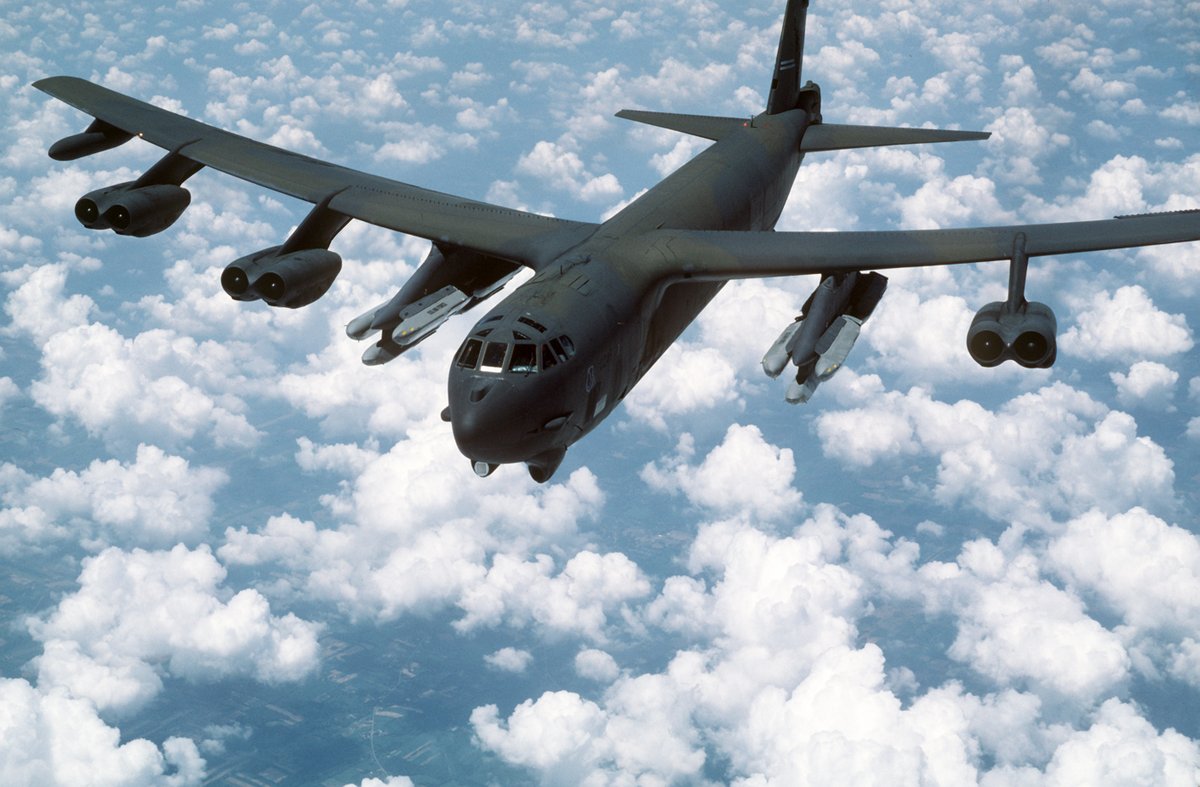
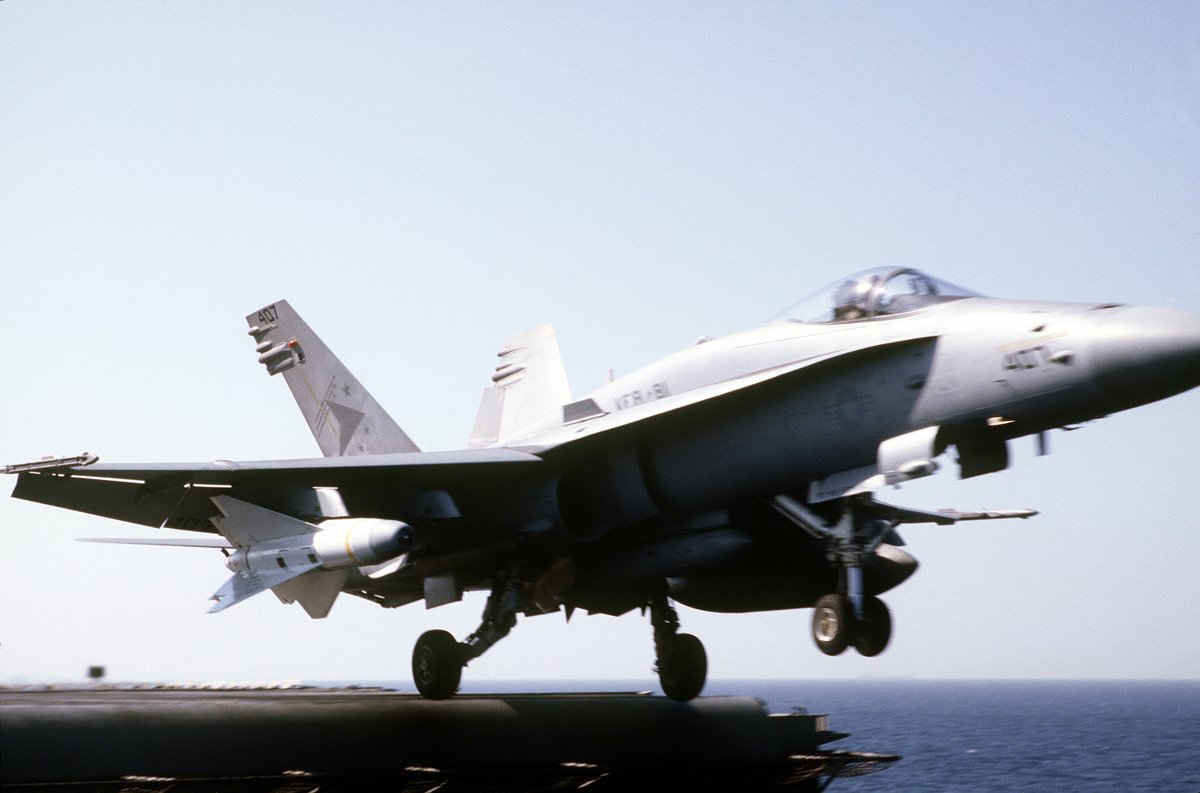
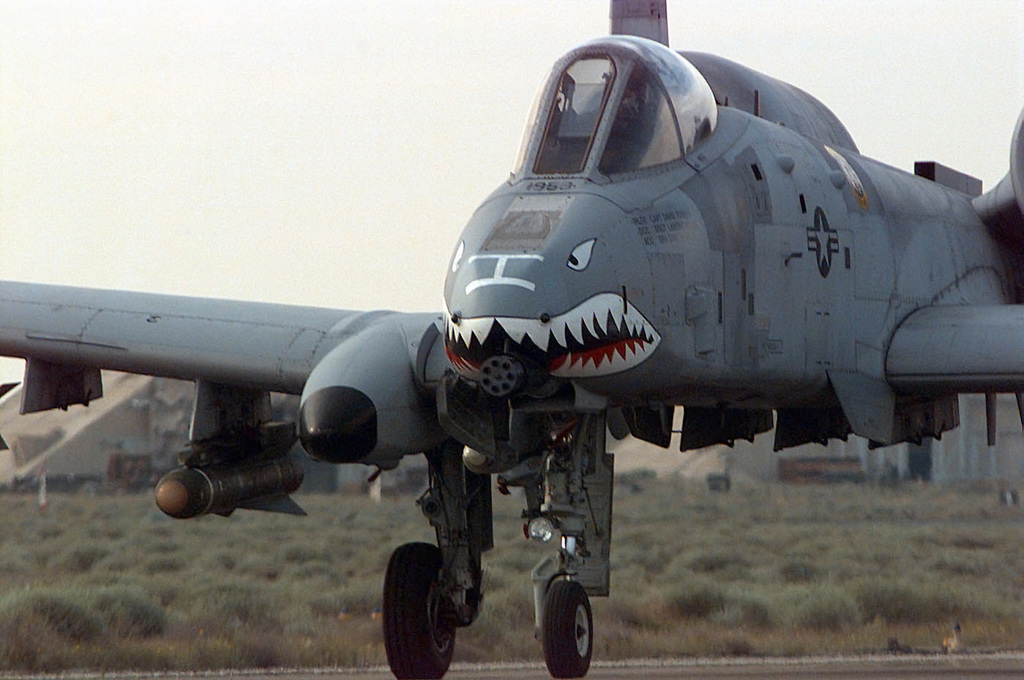
(5/26) Among the most dangerous of these was the Maverick, which could outrange any Soviet SHORADS and was carried on a wide variety of aircraft. Anti-PGM capability would require an unprecedented amount of automation in order to achieve the necessary reaction times.
(6/26) At the same time, it was decided that amphibious capability was now superfluous. The new system would have to keep up with tanks and BMPs, and this necessitated a tracked chassis.
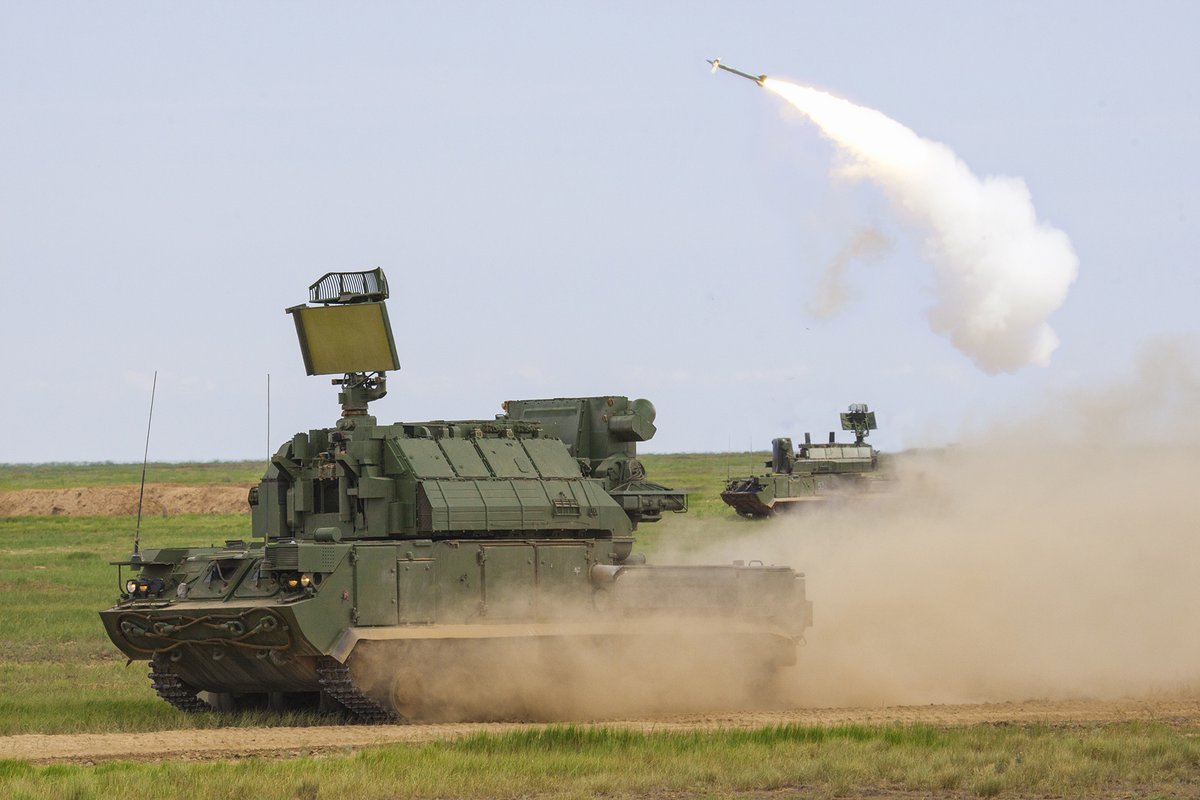
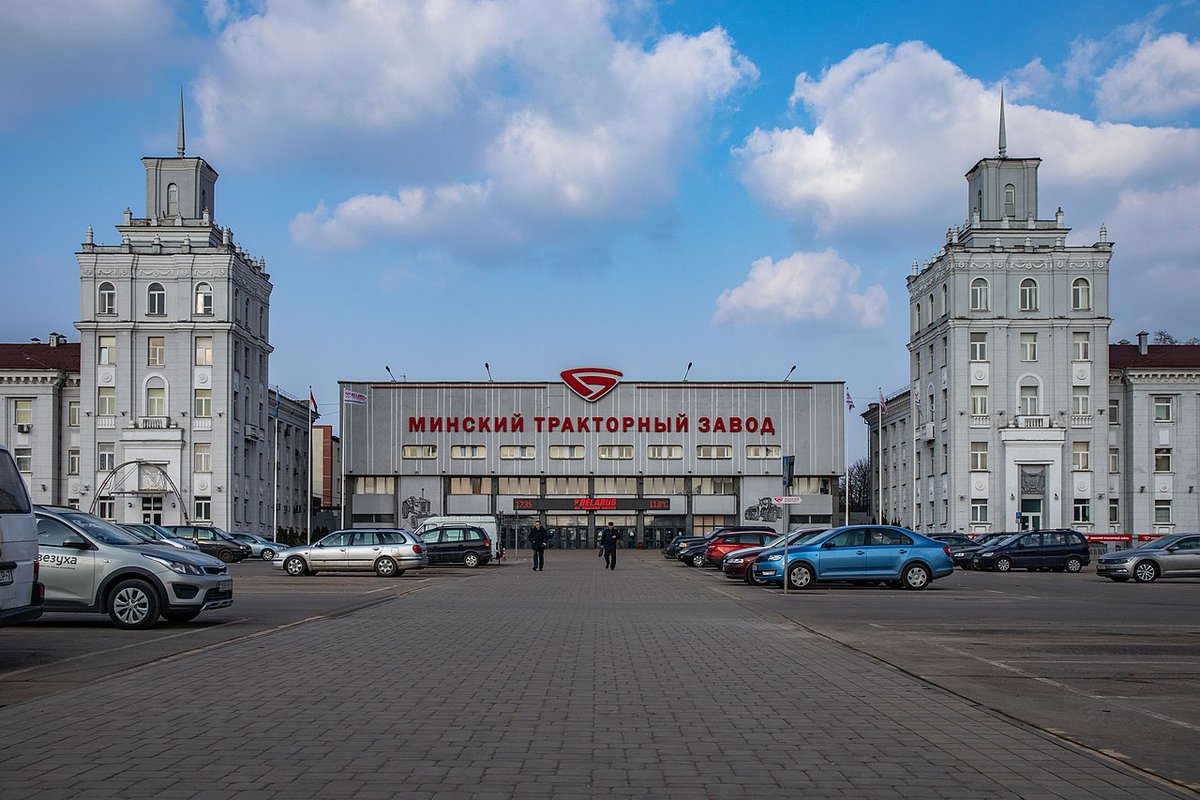
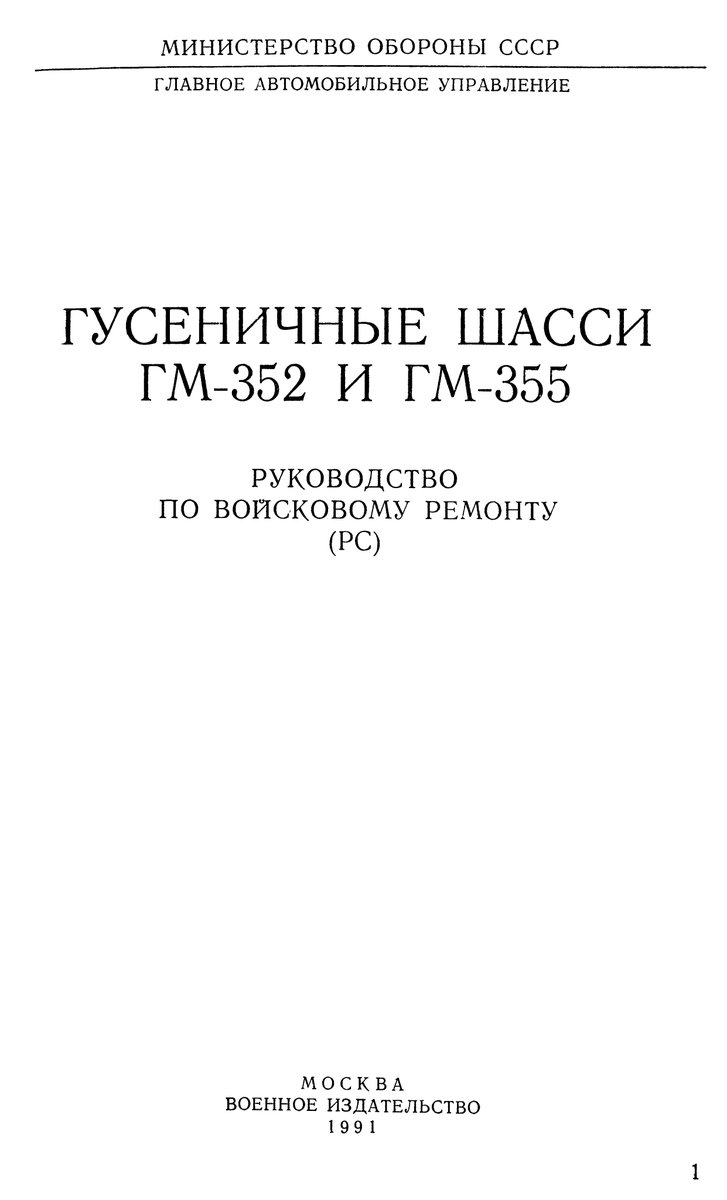
(7/26) The chassis chosen for the original Tor's 9A330 TLAR was the GM-355 developed by the Minsk Tractor Factory. It is unified with the GM-352 chassis used for the 2S6 Tunguska. They are so similar that they share the same repair manual.
(8/26) Both the original Tor GM-355 and Tunguska GM-352 chassis use torsion bar suspensions with 6 roadwheels per side.
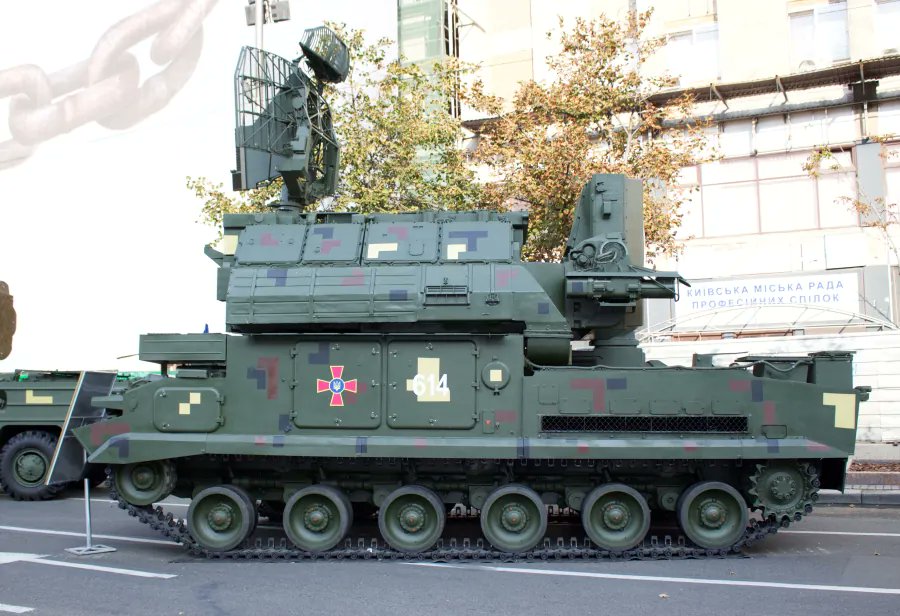
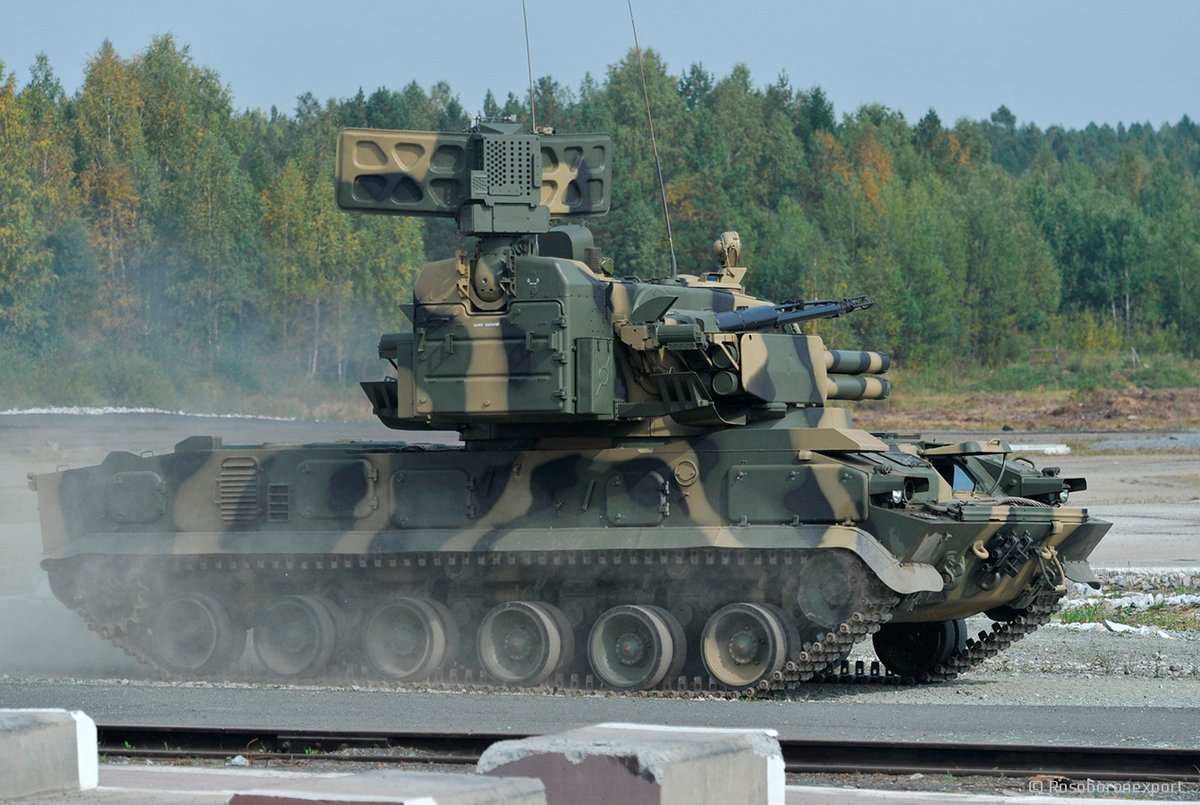
(9/26) They are powered by the 780 hp V-46-2S1 V-12 engine derived from the T-72. This gave a top speed of 65 km/h.

(10/26) Early versions of the modernised Tor-M1's 9A331 TLAR continued to use the GM-355 chassis. However, after the USSR's breakup, the Russians began using the domestic 7-wheeled GM-5595 made by Metrovagonmash, who also produces the GM-569 chassis used by the Buk systems.
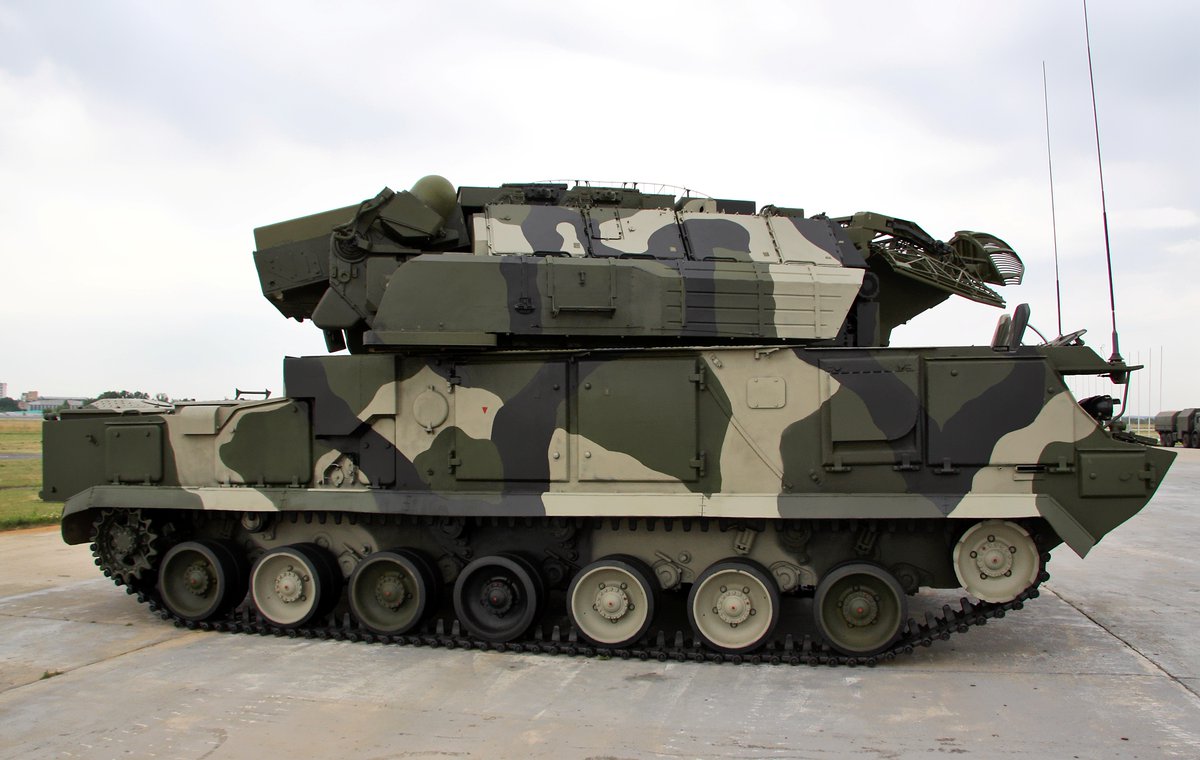
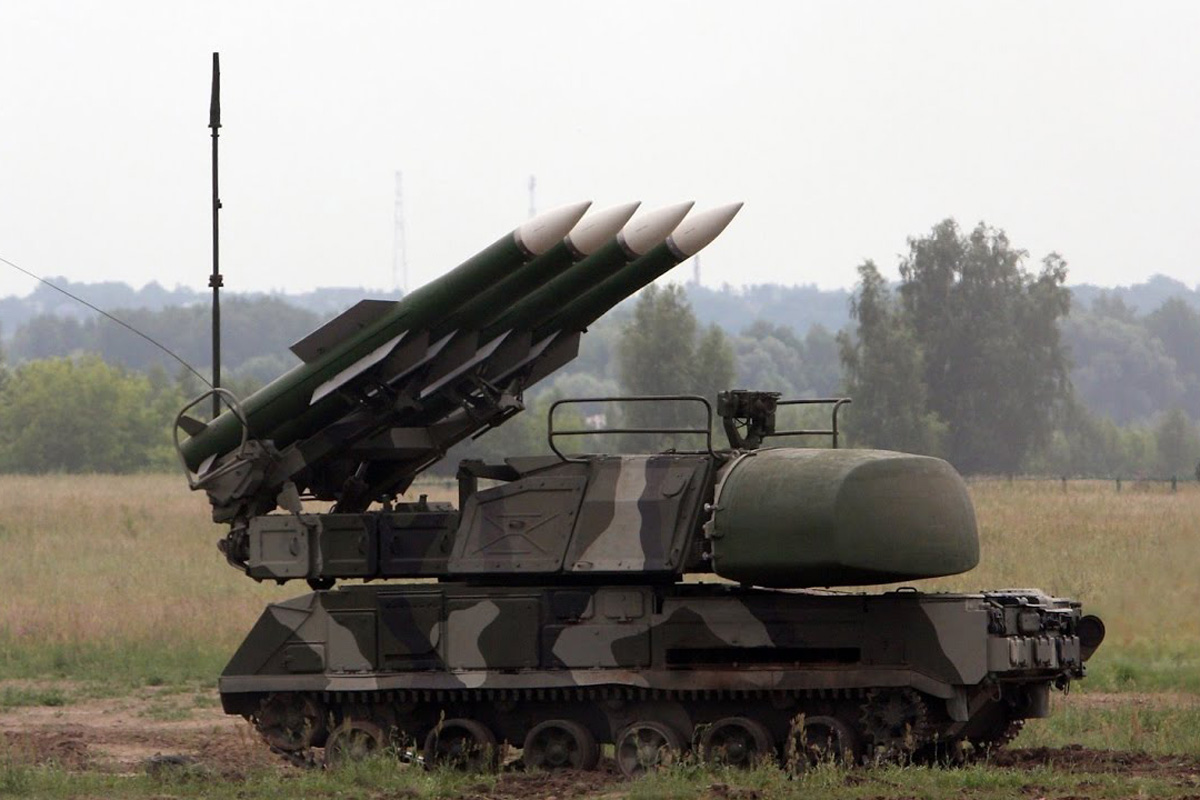
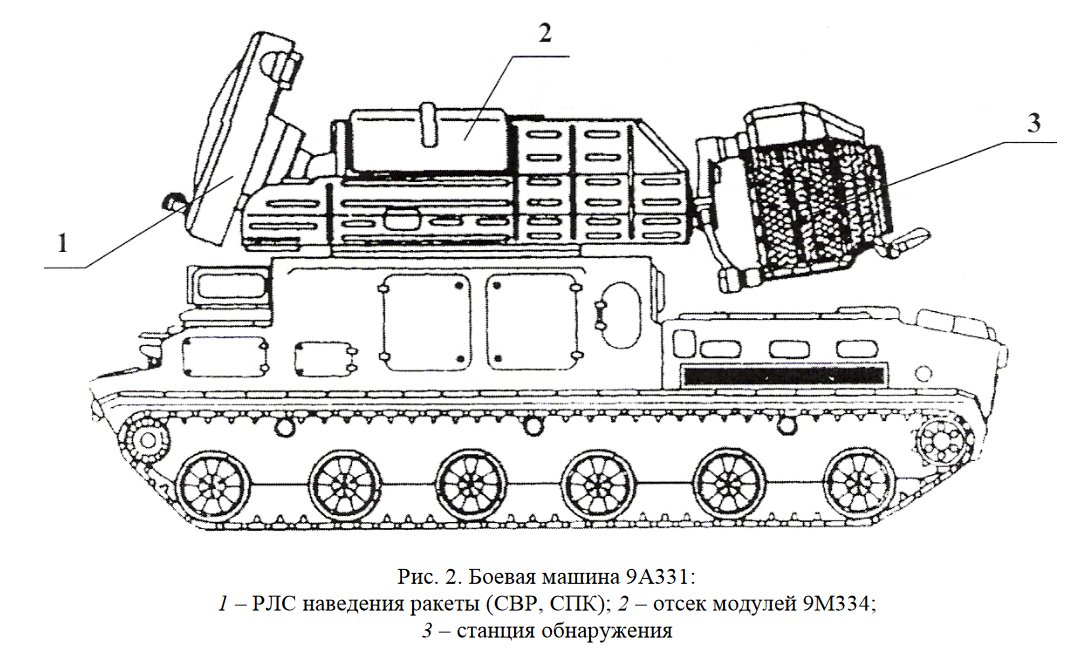
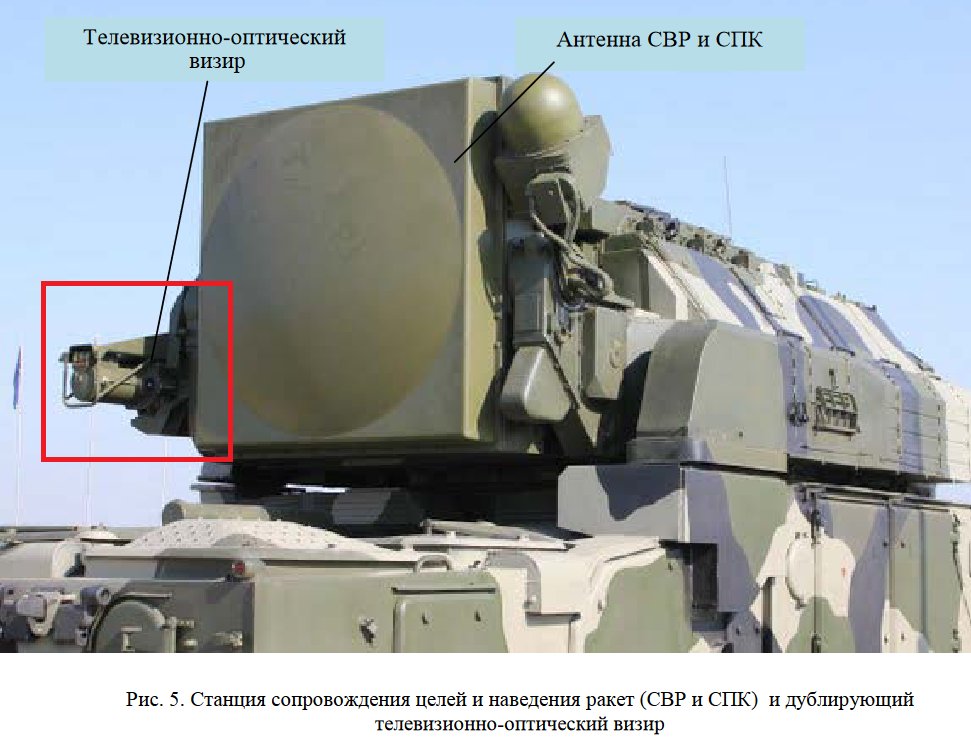
(11/26) Like the Osa, Tor's search radar is stabilised, but it must come to a stop to fire its missiles because the target tracking phased array radar (white) is unstabilised. There is also a TV camera (red), which can be used to conduct engagements instead of the radar.
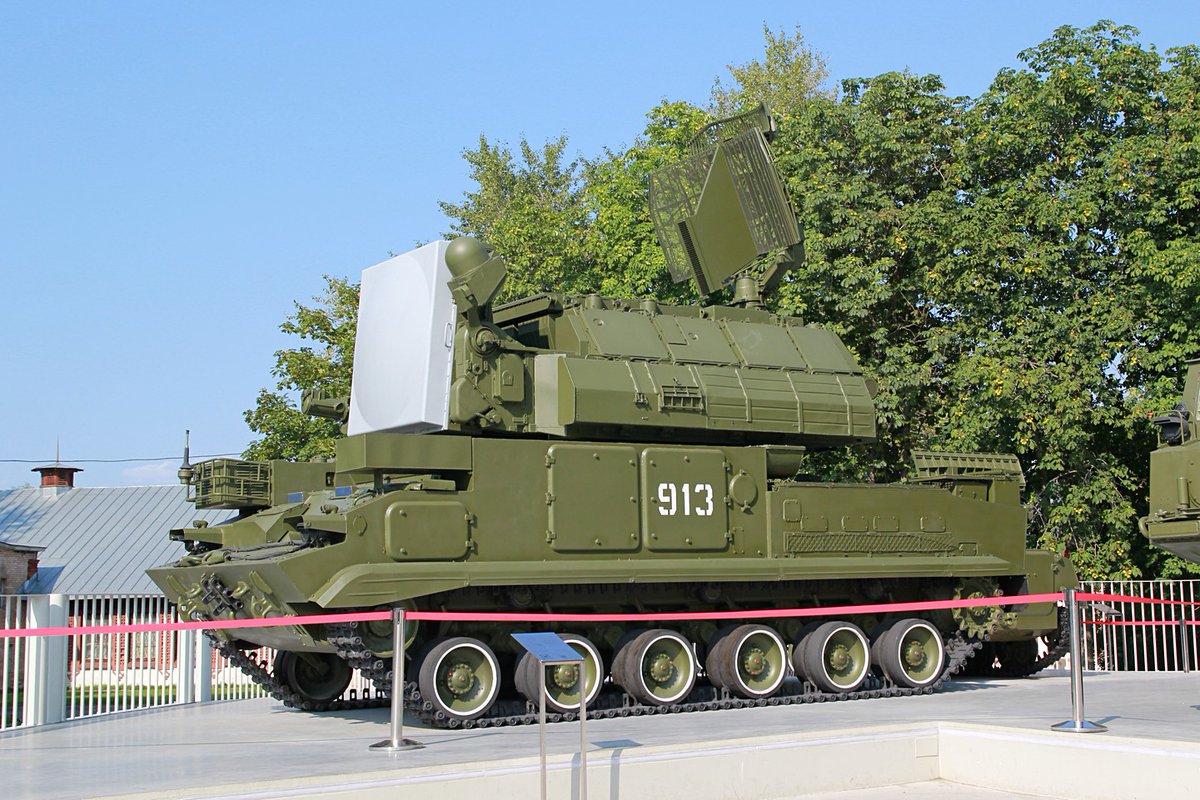
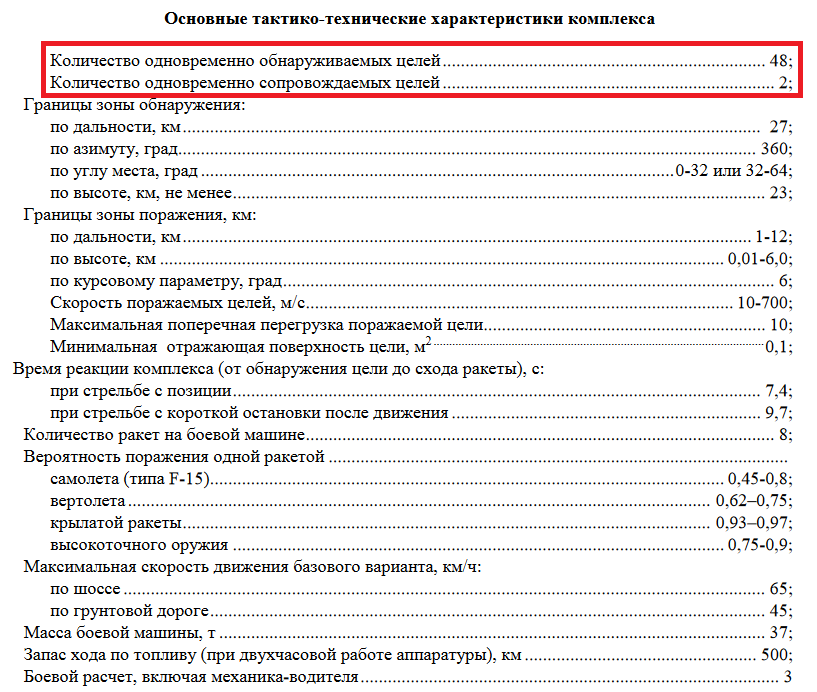
(12/26) On the original Tor system, there is only one target channel and two missile channels, like on Osa. On the Tor-M1, a second target channel was added, allowing it to engage 2 targets simultaneously. Its search radar can detect up to 48 targets simultaneously.
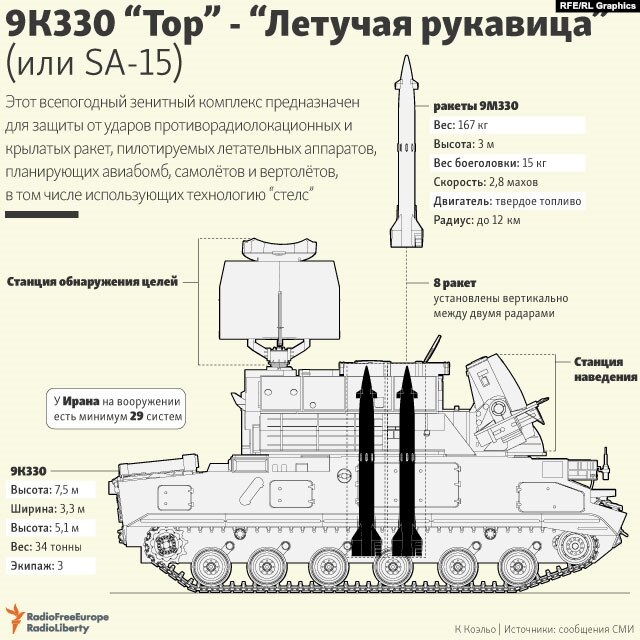
(13/26) Tor and Tor-M1 carry 8 missiles per 9A330/9A331 TLAR. The missiles occupy the entire height of the vehicle, from the hull floor to the turret roof.
(14/26) The 9M330 (Tor) and 9M331 (Tor-M1) missiles utilise command-to-line-of-sight (CLOS / '3-point') guidance. There is a special CLOS control law for low-altitude targets (zenithal angle < 3°).
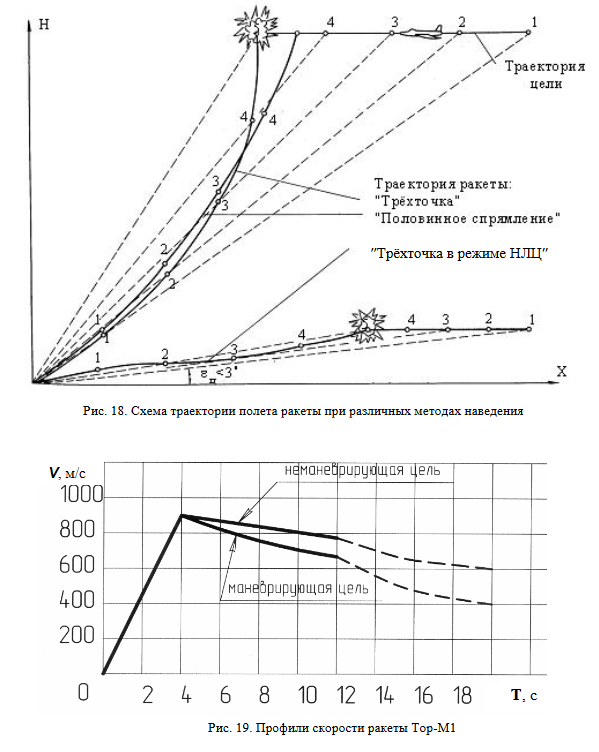
(15/) Dr. Kopp on AusAirPower claims the Tor missile dives on low-flying targets, similar to Osa, but this is not supported by Yeltsin's (not *that* Yeltsin) textbook on the Tor-M1, where the above diagram is from.
ausairpower.net
ausairpower.net


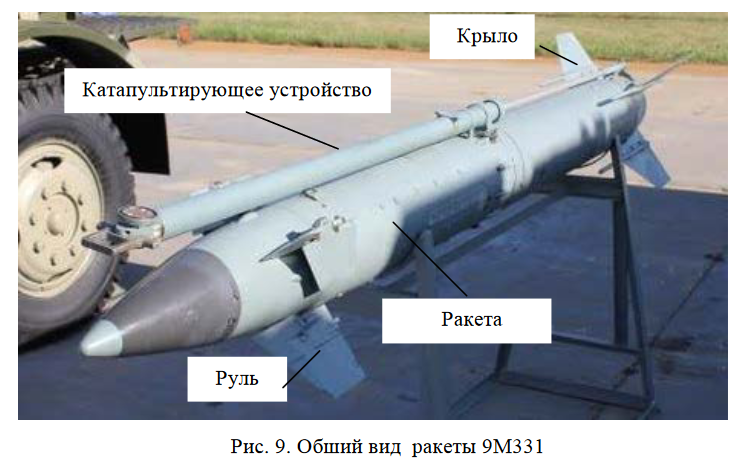
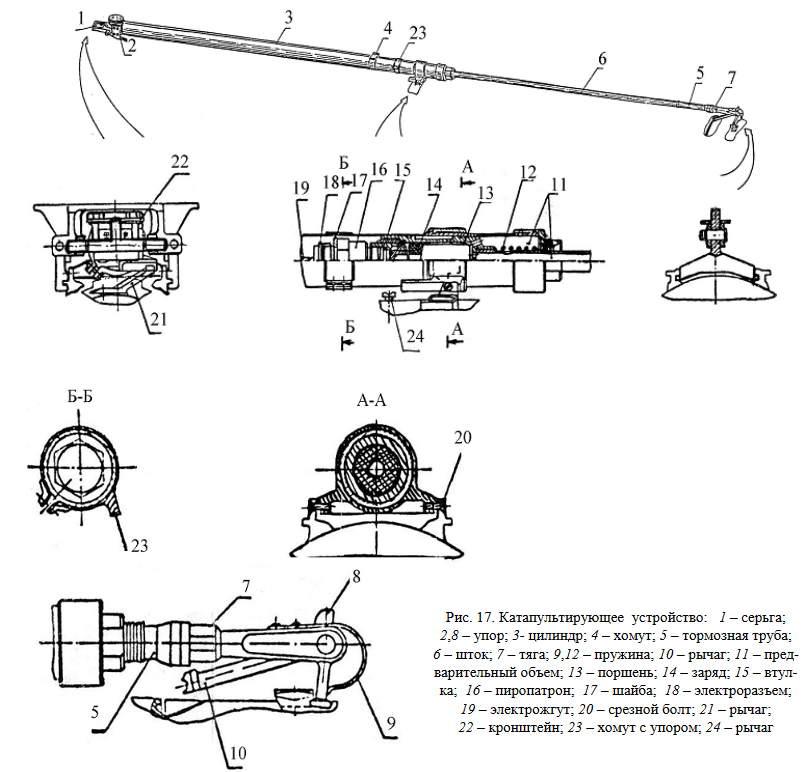
(16/26) The Tor's missiles are cold-launched using a 'catapult device'. This mainly consists of a cylinder and rod with a powder charge (14) at one end and a lever (10) at the other. Upon launch, the lever will eject the missile at 25 m/s.
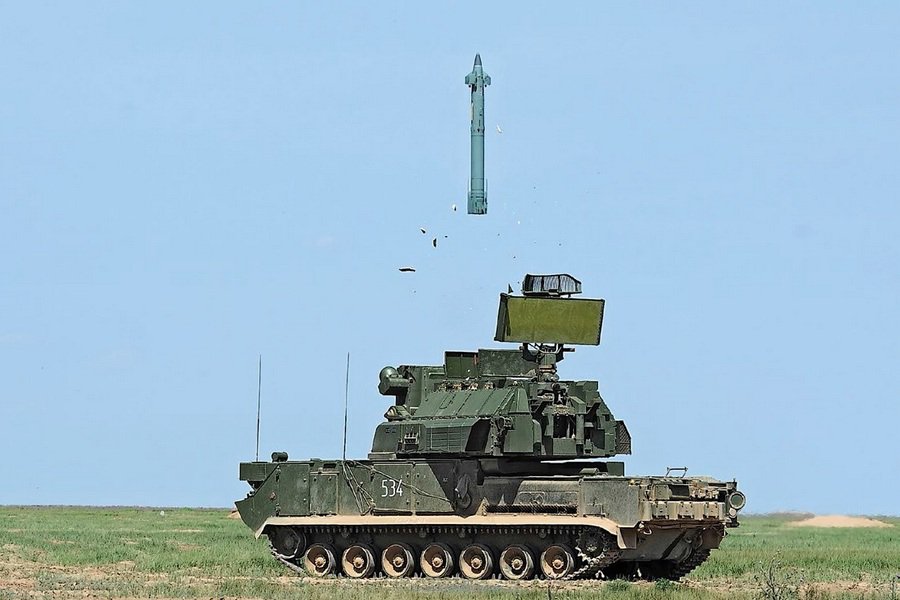
(17/26) Once it has cleared the TLAR, the missile will pitch in the direction of the target using thrust vector nozzles in the nose. After 1 s or if the missile declination reaches > 50°, the rocket motor will ignite, accelerating the missile to 700-800 m/s over 1.5 km.

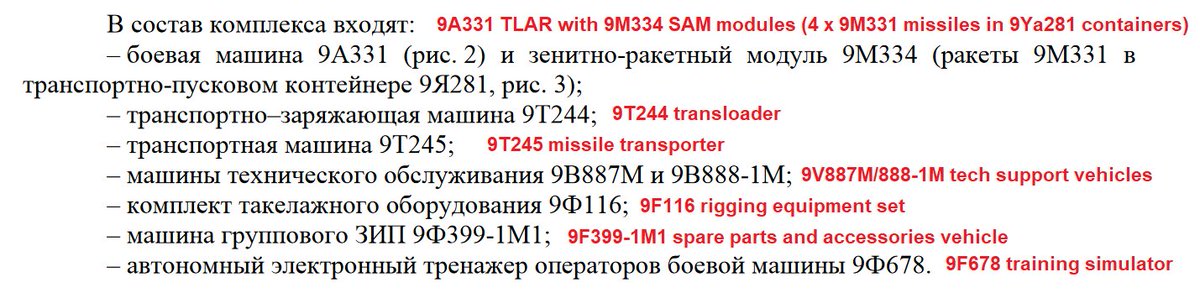
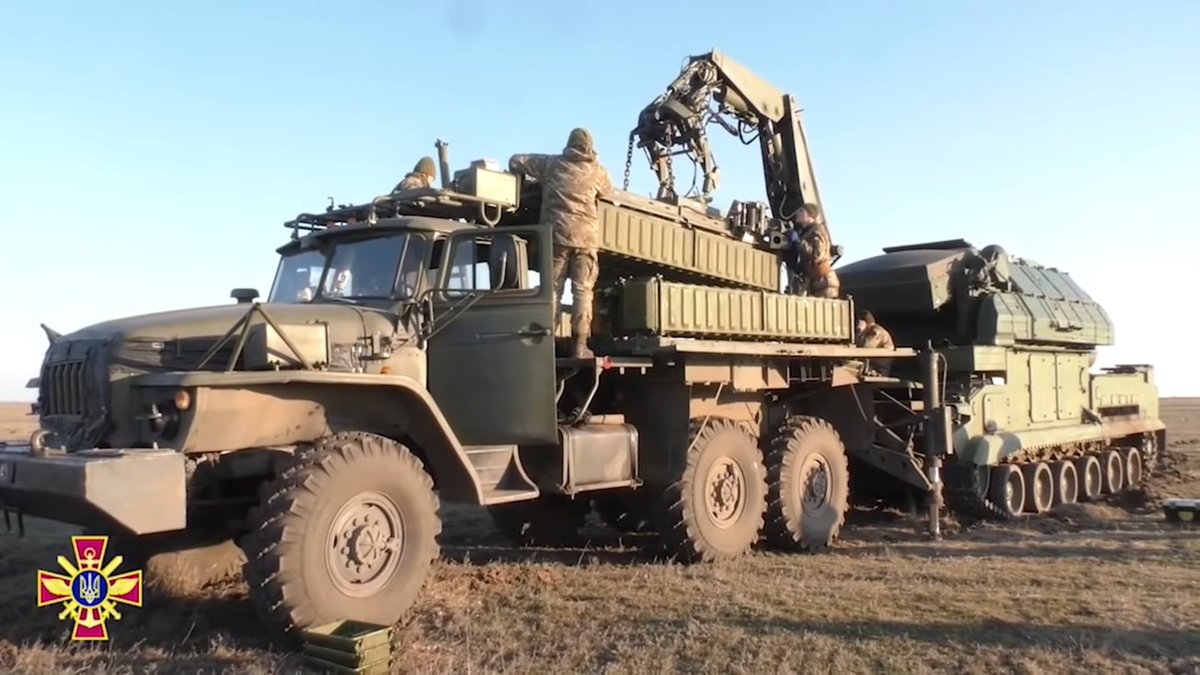
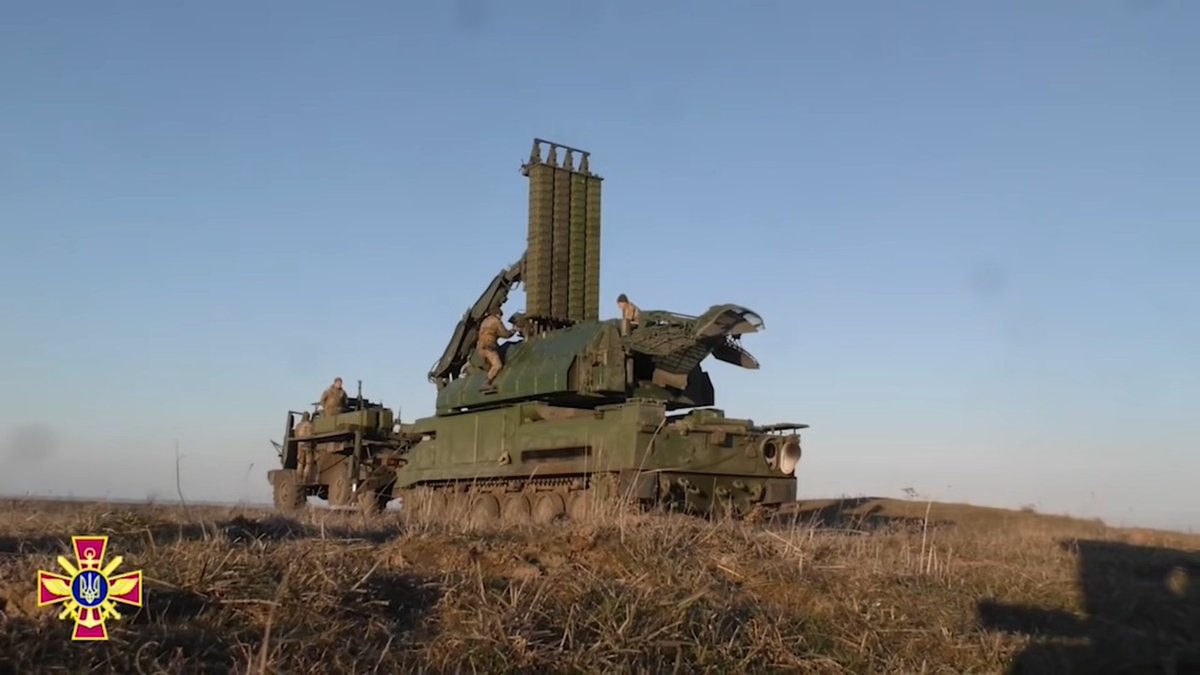
(18/26) The full 9K331 Tor-M1 complex consists of the following. The 9T244 transloader is based on the Ural 4320 truck and it loads in SAM modules (sets of 4 missiles) with its crane.
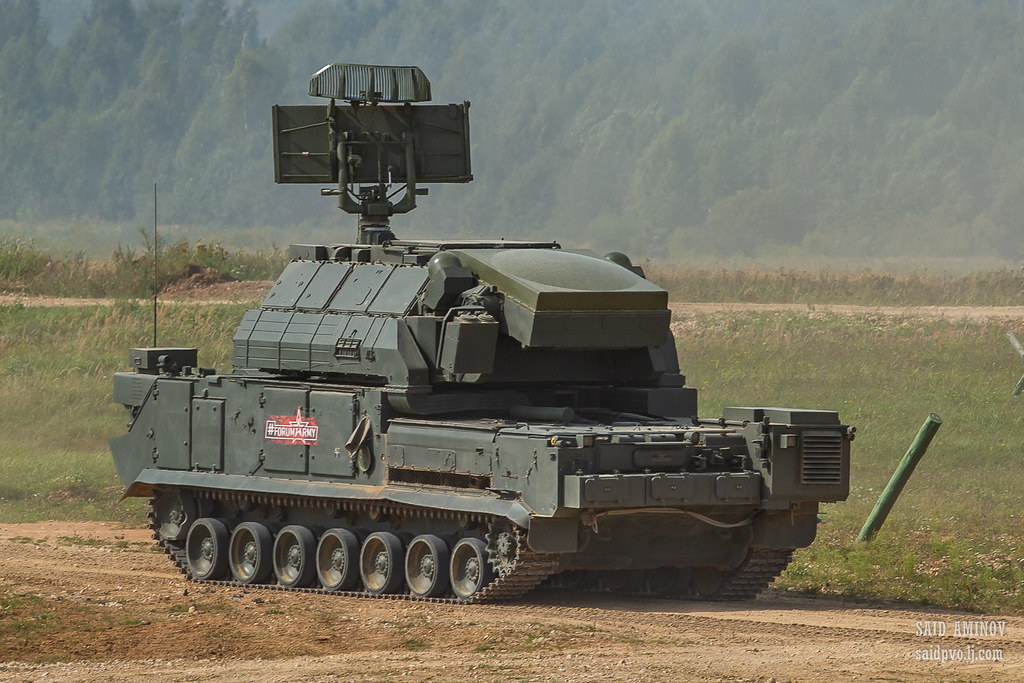
(19/26) The modernised Tor-M2 has some significant changes, most noticeably the new flat search radar. I do not have anything really to add more than there is on AusAirPower, so I will direct you to read their article on it instead.
ausairpower.net
ausairpower.net
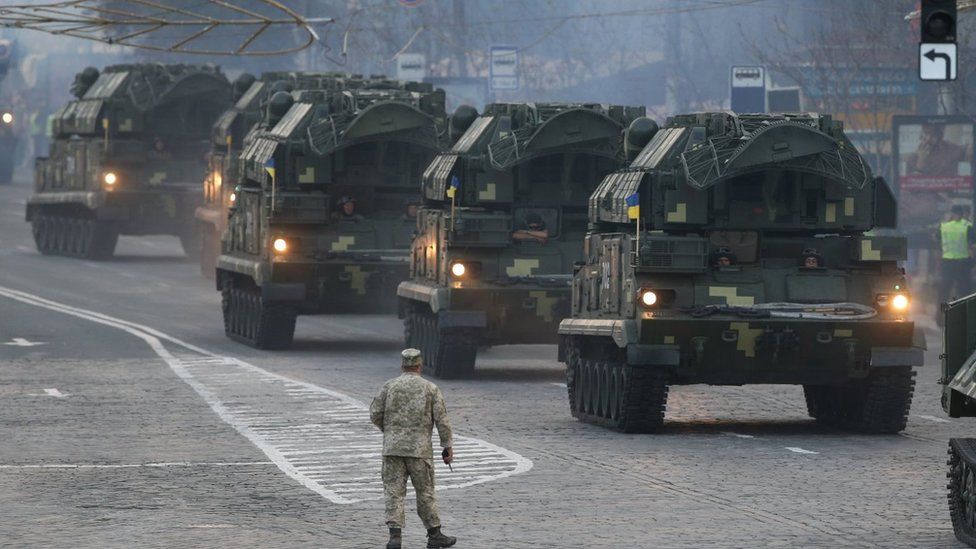
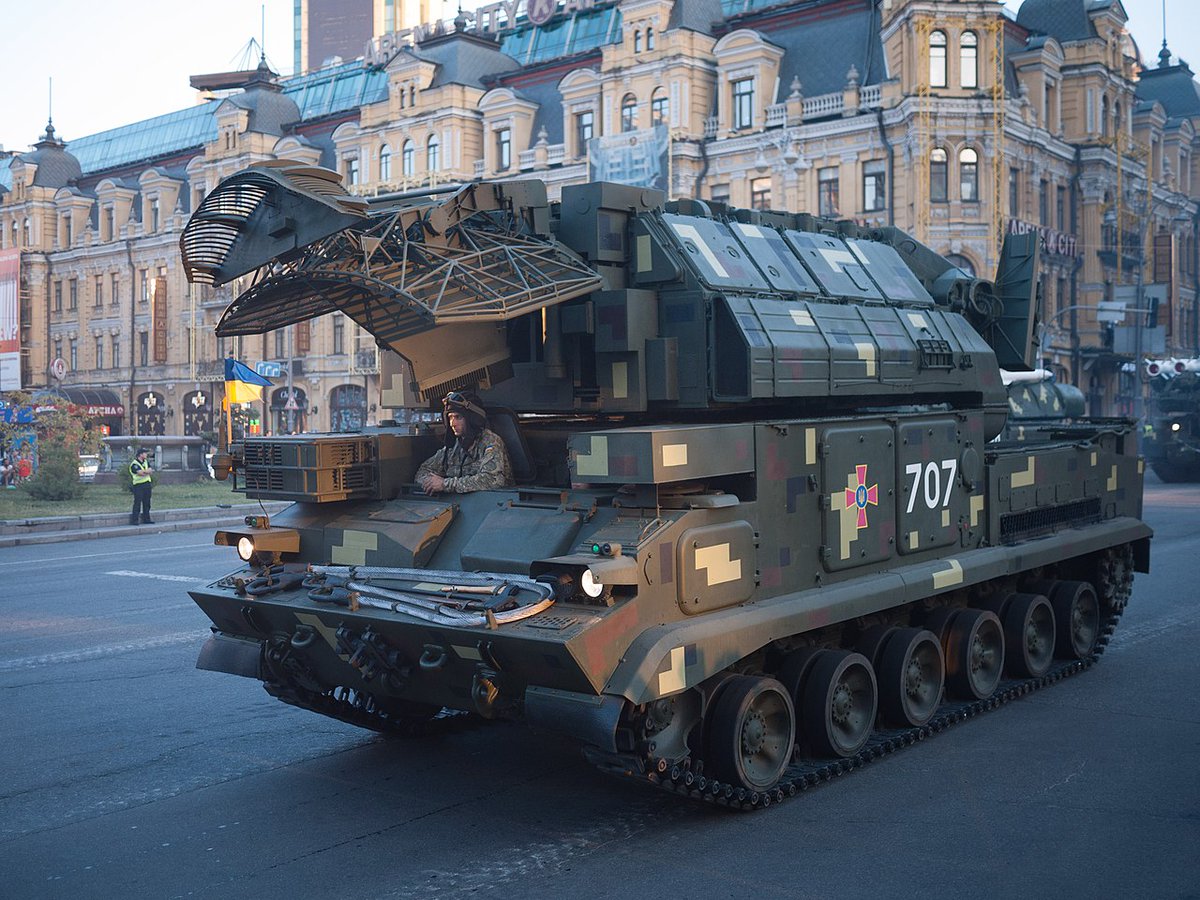
(20/26) Ukraine is known to operate at least 16 (one regiment) of the original Tor 9A330 TLARs. They were reactivated in 2017 and modernised sometime before 2019. There is very little information about their deployment or their combat record so far.
oryxspioenkop.com
oryxspioenkop.com

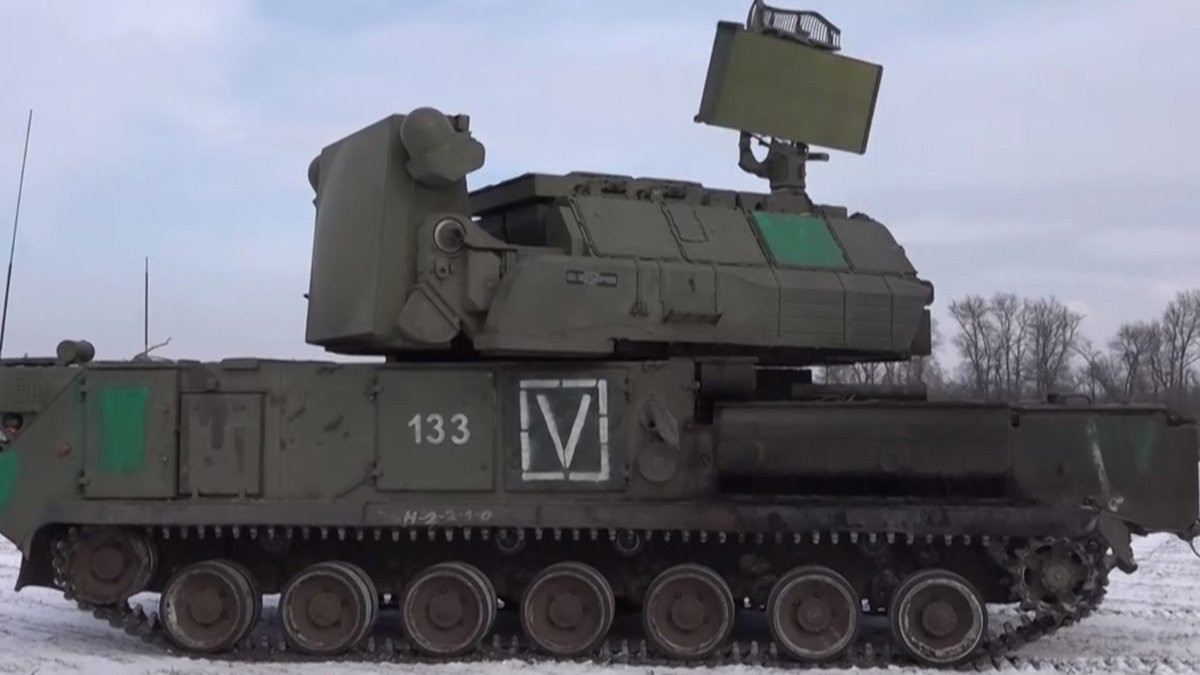
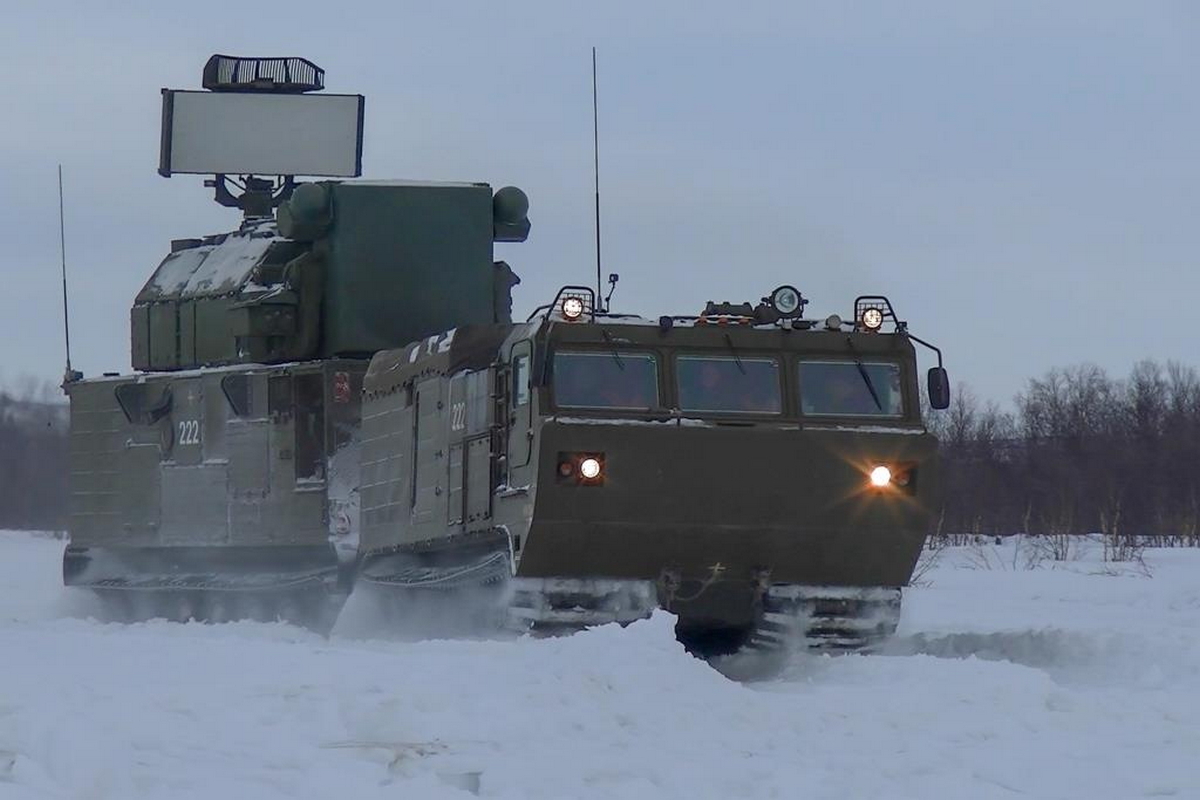
(21/26) Russia is the biggest user of the Tor, mostly a mix of Tor-M1 and various Tor-M2 family systems. Because it entered service only in the late 80s (Tor-M1 in 1991), Tor never actually fully replaced the Osa, which Russia still uses too.
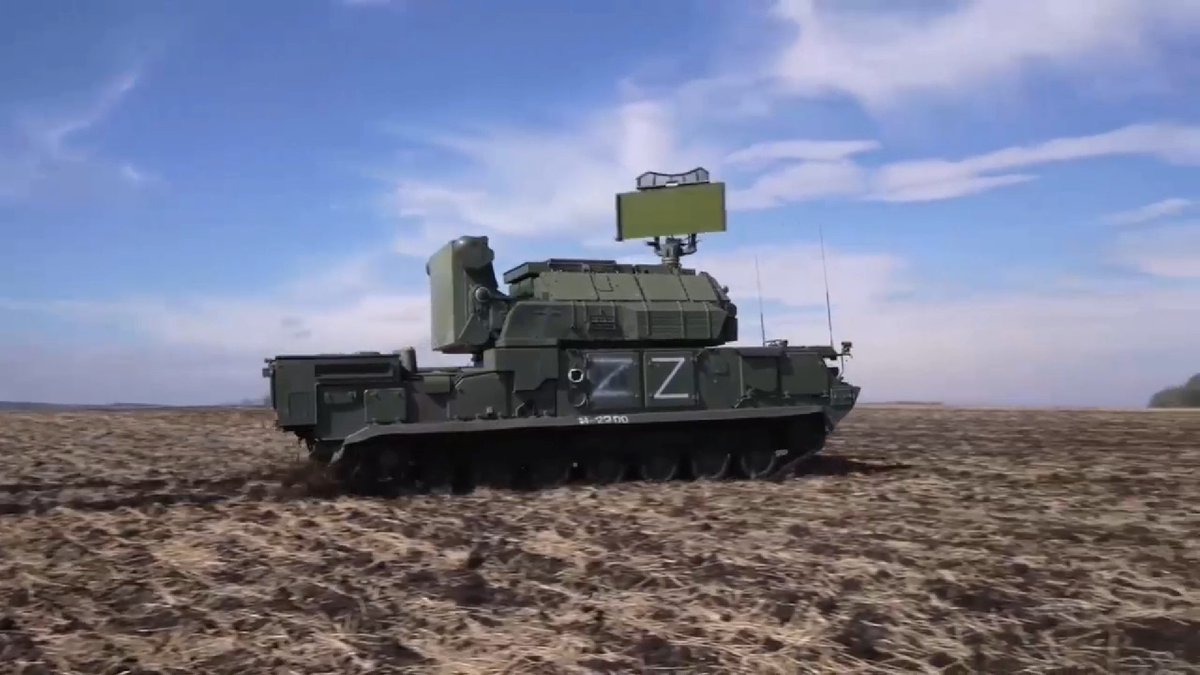
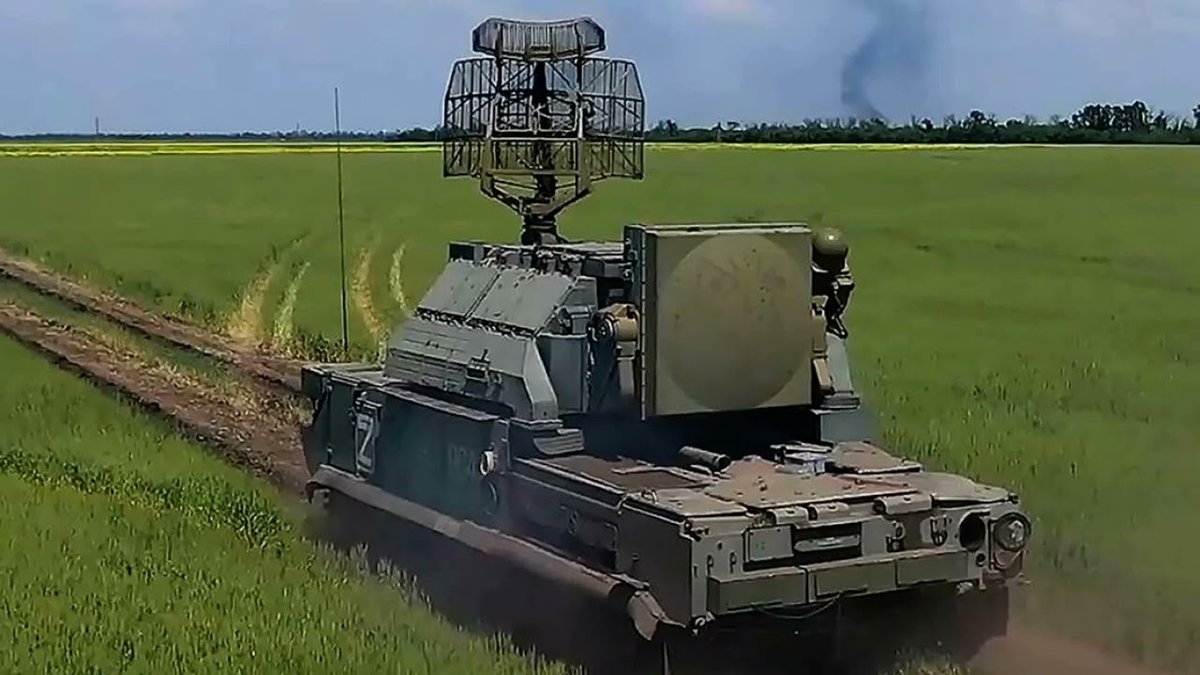
(22/26) The PLA bought a few Tor-M1 batteries. Frustratingly for the Russians, the Chinese only really wanted a few systems so they could copy and improve on it as the HQ-17. You can read more about it in this thread.
(23/26) Tor's combat record is rather mixed. There have been some rather embarrassing failures against targets that it *should* have been able to detect and destroy. It's hard to say why they occurred, possibly poor operators, bad luck, or other factors.
(24/26) Still, it is the most modern Russian SHORAD system today in Ukraine and I don't think it should be dismissed lightly.
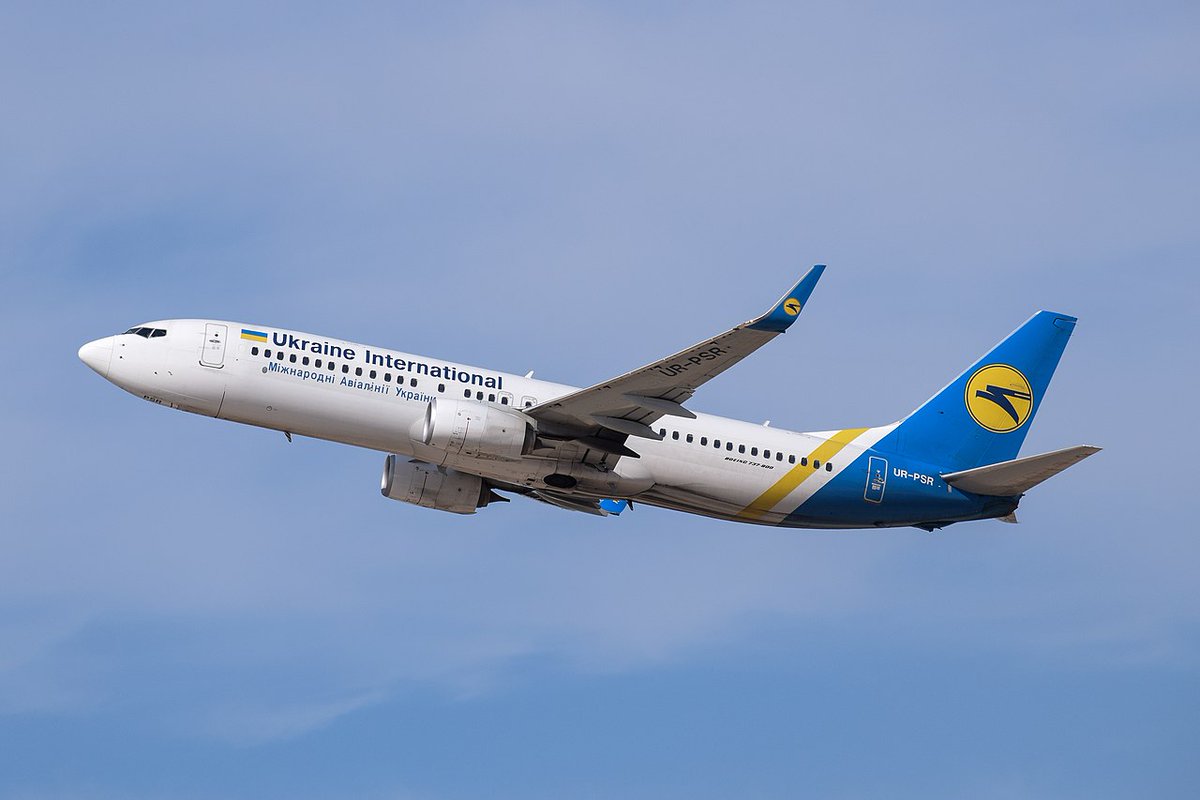
(25/26) Of course, one cannot really talk about Tor without mentioning the tragic incident with PS752. What can I say? Trigger happy, questionably trained operators in a high tension scenario rarely leads to happy endings, as history has often shown.
en.wikipedia.org
en.wikipedia.org

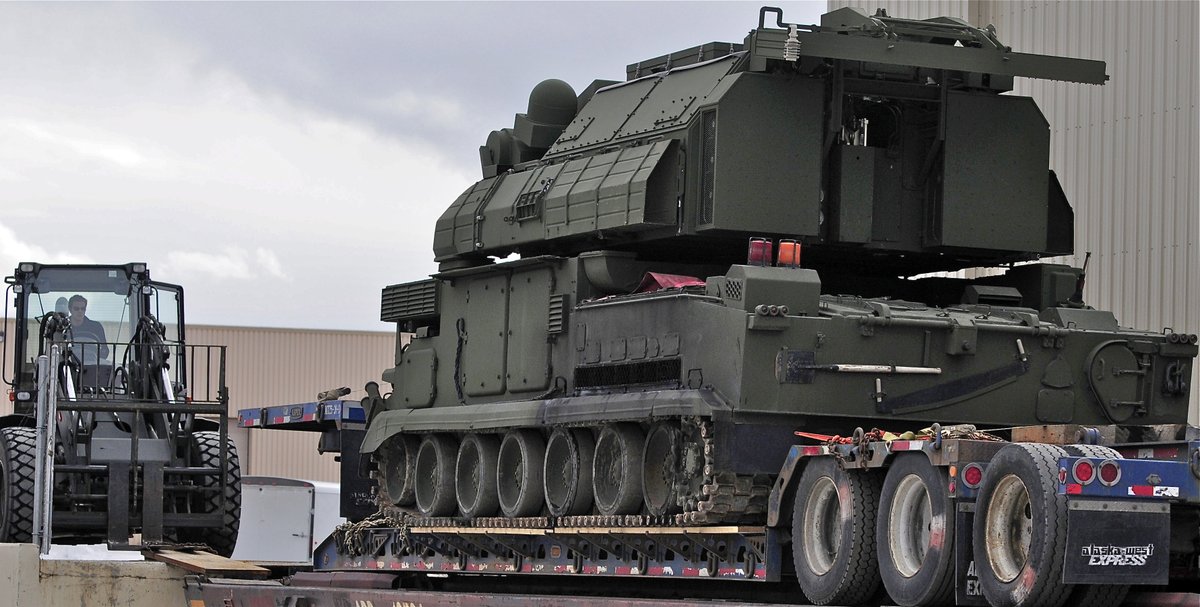
(26/26) The US also has a Tor system that they got from...somewhere. Don't ask me.
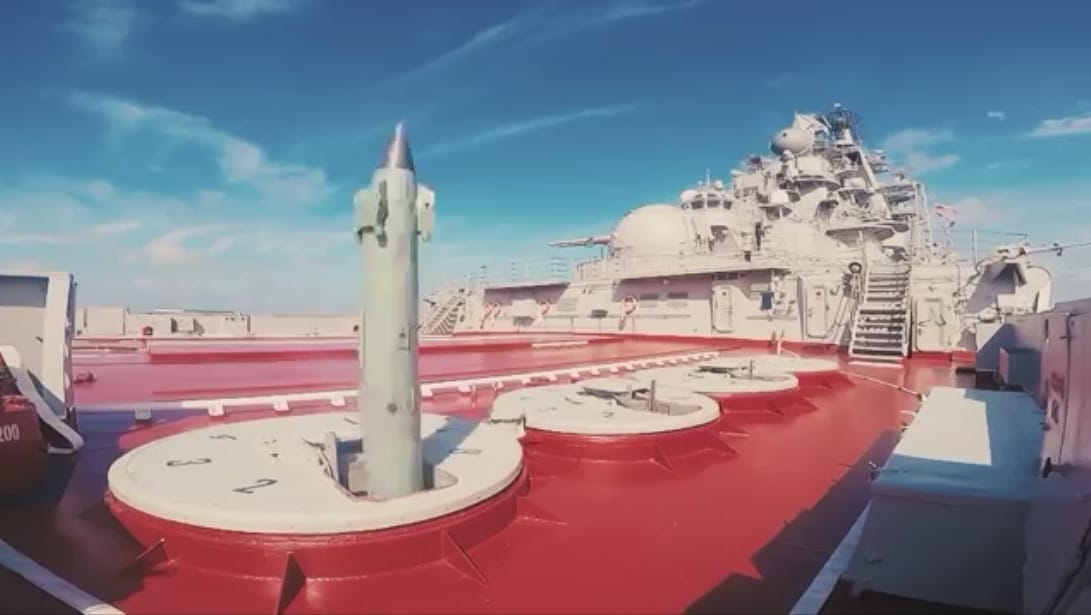
(27/26) For completeness, there is a naval equivalent of Tor. However, it has enough differences that it goes under a different name, 3K95 Kinzhal (not to be confused with the *other* Kinzhal, the aeroballistic missile).
(28/26) CORRECTION: they use a hydropneumatic suspension. Have been reading too much of MBT torsion bars.
CORRECTION: hydropneumatic, not torsion bars.
There is a third mode here called 'half-straightening', which I am not so familiar with.

Loading suggestions...