

Since World War I, International Relations Theory can be seen as a perpetual debate between "Idealism" and "Realism".
This is well captured in the work of H.J. Mackinder. Time to #KeepRealismReal.
[THREAD]
This is well captured in the work of H.J. Mackinder. Time to #KeepRealismReal.
[THREAD]
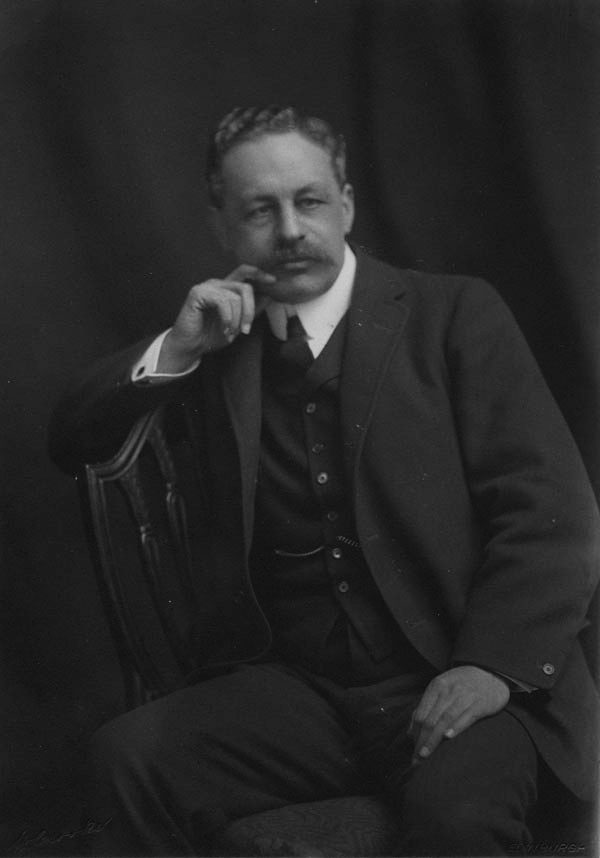
I'm specifically referring to his 1919 book, "Democratic Ideals and Reality"
google.com
google.com

At the time it was published, the book wasn't widely read (though it was reviewed in @Nature)
nature.com
nature.com
Other work published at that time, most notably John Maynard Keynes' "Economic Consequences of the Peace", gained A LOT more attention.
google.com
google.com
But that would eventually change. During the early part of World War II, the book was republished to a much wider readership...
foreignaffairs.com
foreignaffairs.com
By the time of its 50th anniversary in 1969, the book was seen as "remarkable"...
jstor.org
jstor.org
...an assessment echoed when the book turned 100.
fpri.org
fpri.org

Indeed, at the onset of Russia's full invasion of Ukraine in 2022, the book was once again seen as prescient.
realcleardefense.com
realcleardefense.com

So why was the book eventually seen as so important and influential?
The book builds on an earlier work by Mackinder, his 1904 paper "The Geographical Pivot of History"
jstor.org
jstor.org

That paper introduced "Heartland Theory" and "World Island" as explanations for world politics. These ideas deserve their own 🧵. The TL,DR version of these concepts serve as the foundation for "geopolitics", the idea that geography is a key driver of world politics.
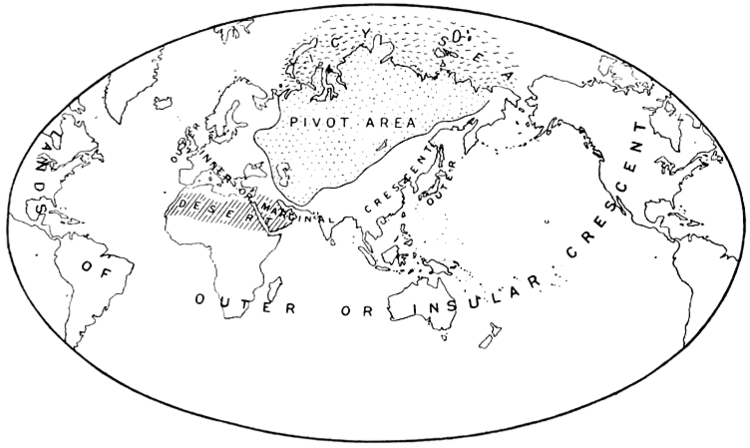
The book's focus on geography as central to world politics, especially that geography greatly shapes relations between Germany and Russia, influenced the German Geographer Karl Haushofer, who then developed the idea "Geopolitik" and applied it to the idea of "Lebensraum"...
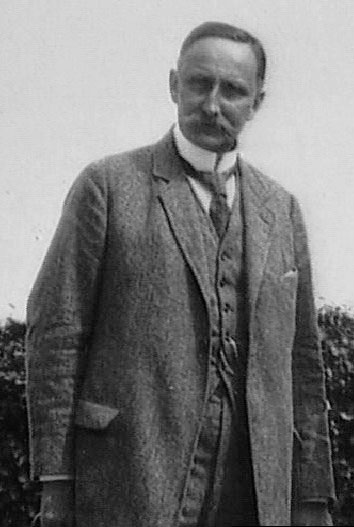
...which was famously embraced by Hitler's Nazi regime.
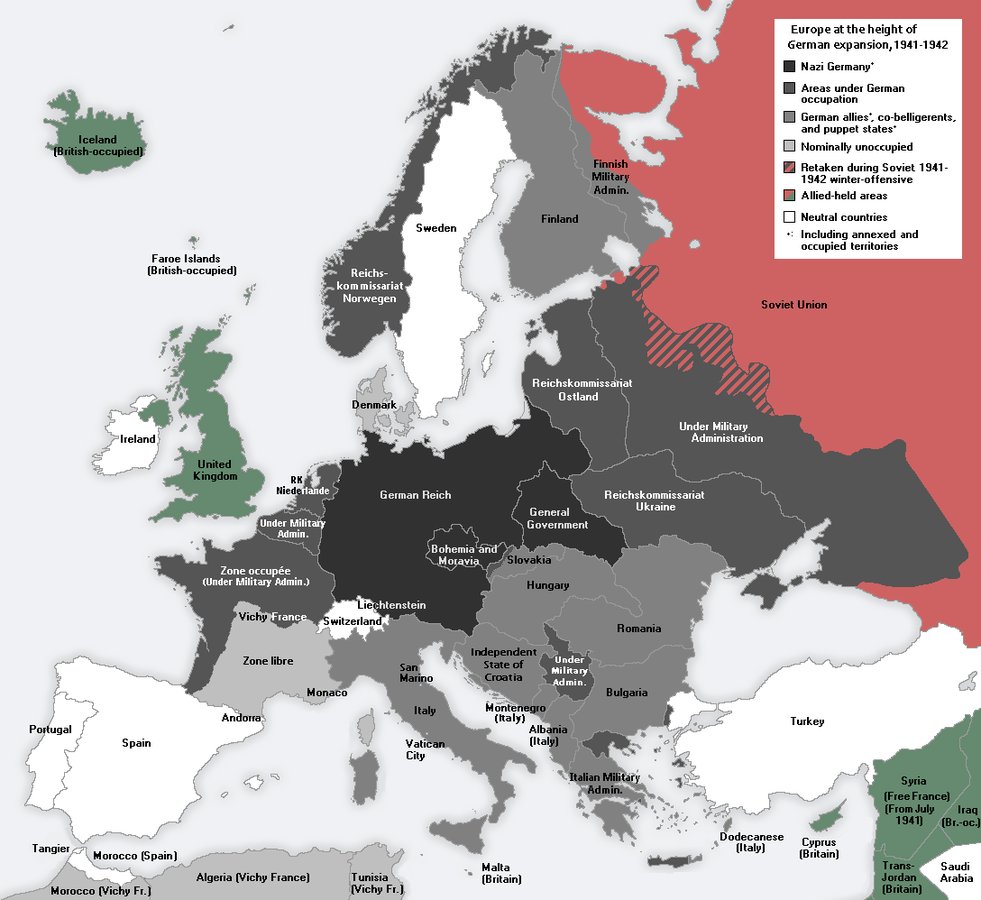
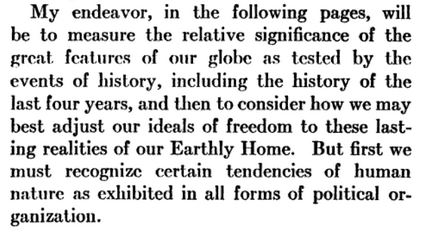
The purpose of this 🧵 is to look at the broader intellectual debate captured in Mackinder's book (indeed, it's in the subtitle): Idealism v Realism
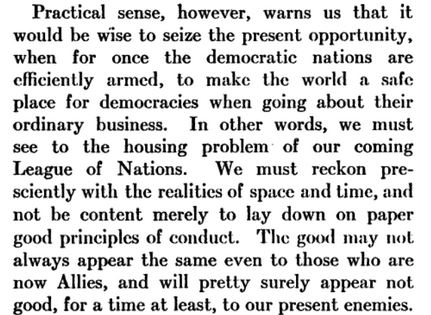
That debate was quite prominent during the "interwar period", something I covered in 👇 🧵. Notice the reference to "practical people". Those are the "realists".
What did Mackinder have to say about the debate? In short, that law and freedom cannot ignore the reality of how geography drives human behavior.
In a key passage (page 30), Mackinder lays the problem out: ideals will not always be shared by all states, so expecting shared ideals alone to unify and prevent conflict is not "practical" (that word again). You must "reckon" with "the realities of space and time"
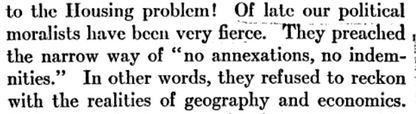
What are those realities of "space and time"? They are "geography and economics"
Stated differently, there is only so much land and people will want and need to control it. This is a key reason why "territory" was and continues to be seen as a key driver of conflict & war.
warontherocks.com
warontherocks.com

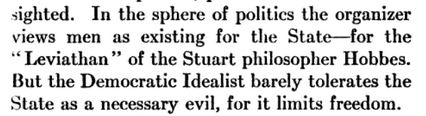
For Mackinder, the focus of world leaders should not be on promoting "ideals", but on achieving stability & order. This leads to a famous line (p. 19), "The great organizer is the great realist". The realist preference for "order" is well captured when he invokes Hobbes.
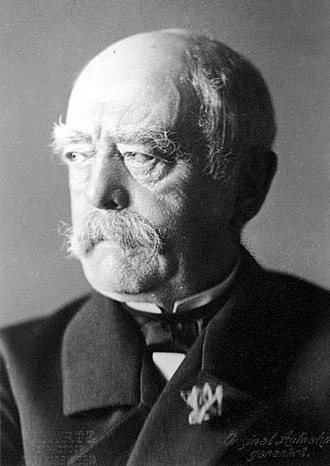
Mackinder's archetype for the "great organizer" was the "blood and iron" or Bismarck, who he contrast with the hubris of Napoleon
This leads Mackinder to conclude the book by stating that the only way to preserve the peace is to take similar measures as during war: control via a overarching Leviathan.
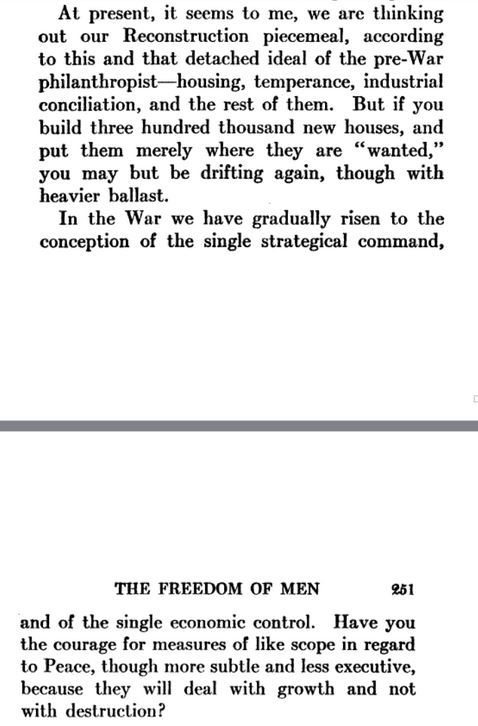
This echoes where other Realists would go: the only hope for global peace is, ultimately, a global state.
There is more that we could unpack from this important book. But the core lesson is that Mackinder 1919 well captures the subsequent debate between those wanting international politics to be shaped by ideals and those who thought that wasn't practical.
[END]
[END]
Loading suggestions...