

Initiating a new position after a stock has undergone a SHAKE-OUT could help you improve your win rate.
In this thread, We'll break down what they are, why they matter, and how they work.
So, let's dive right in. x.com
In this thread, We'll break down what they are, why they matter, and how they work.
So, let's dive right in. x.com
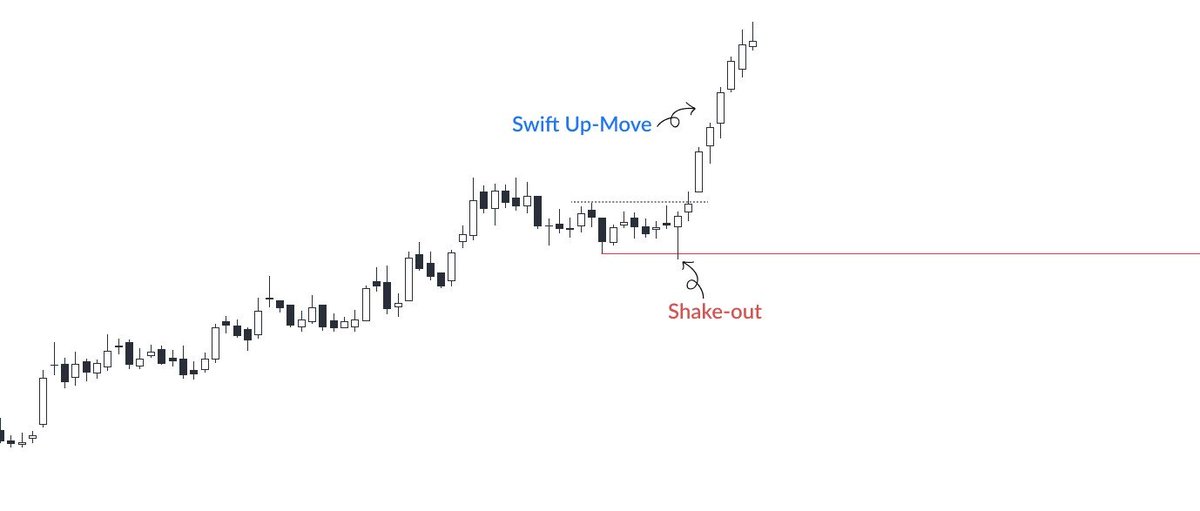
Let's first start by understanding what a shake-out is.
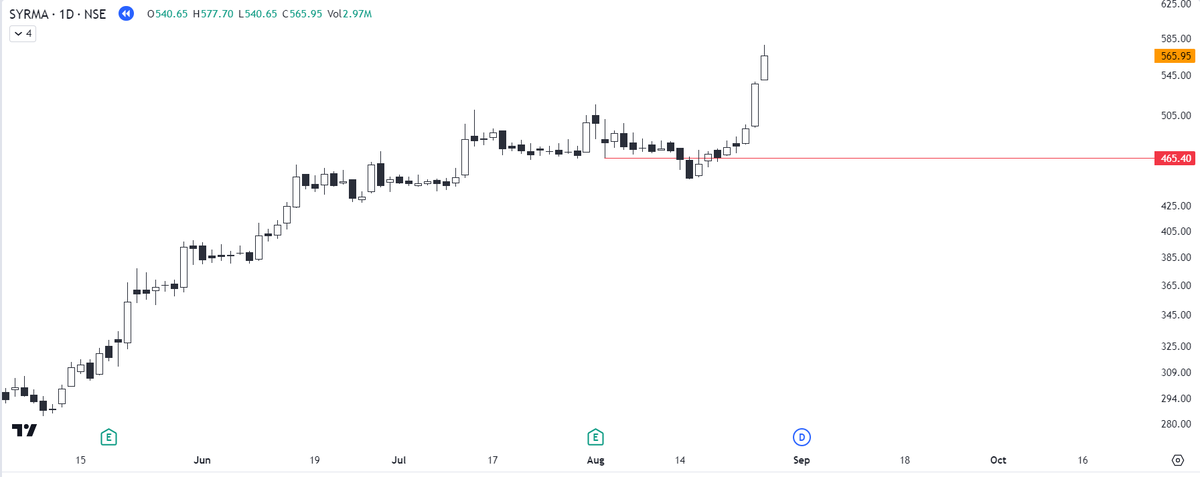
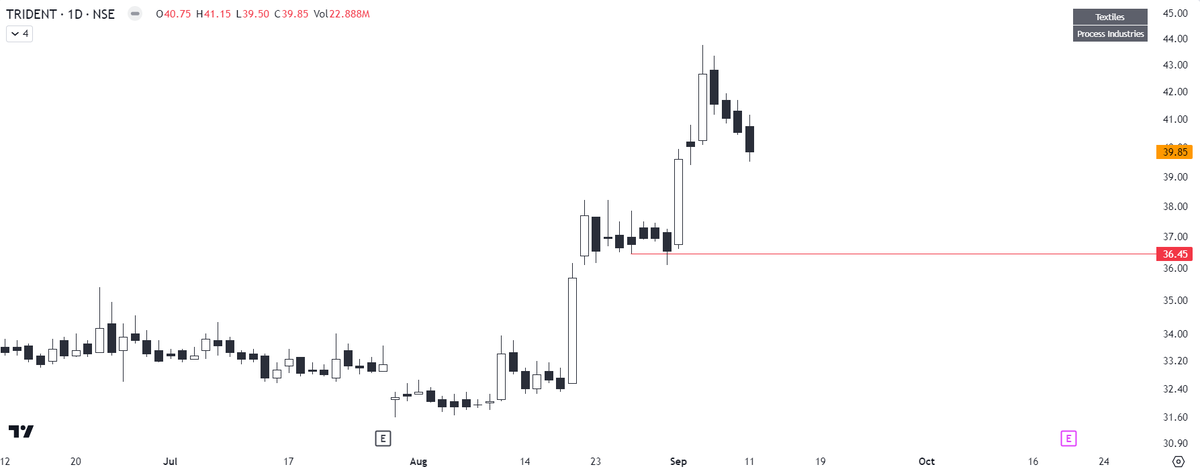
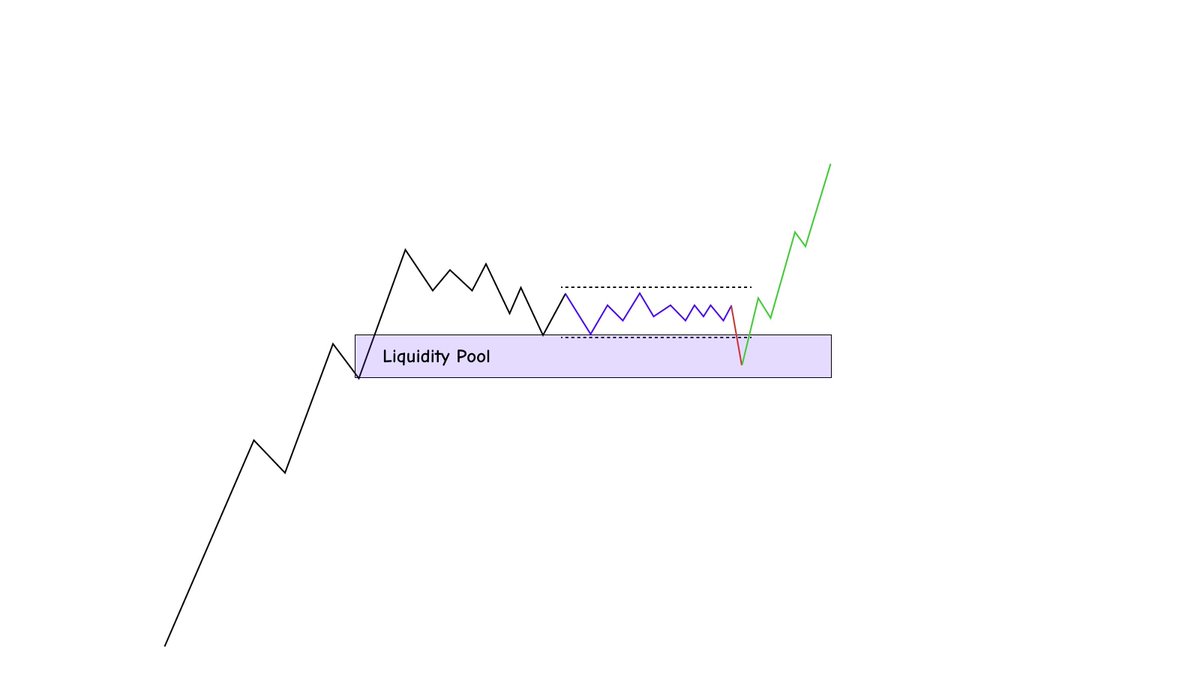
When a stock breaks a major swing level on the downside and then bounces back up on the same day or in the next few sessions, that's considered to be a shake-out. x.com
When a stock breaks a major swing level on the downside and then bounces back up on the same day or in the next few sessions, that's considered to be a shake-out. x.com
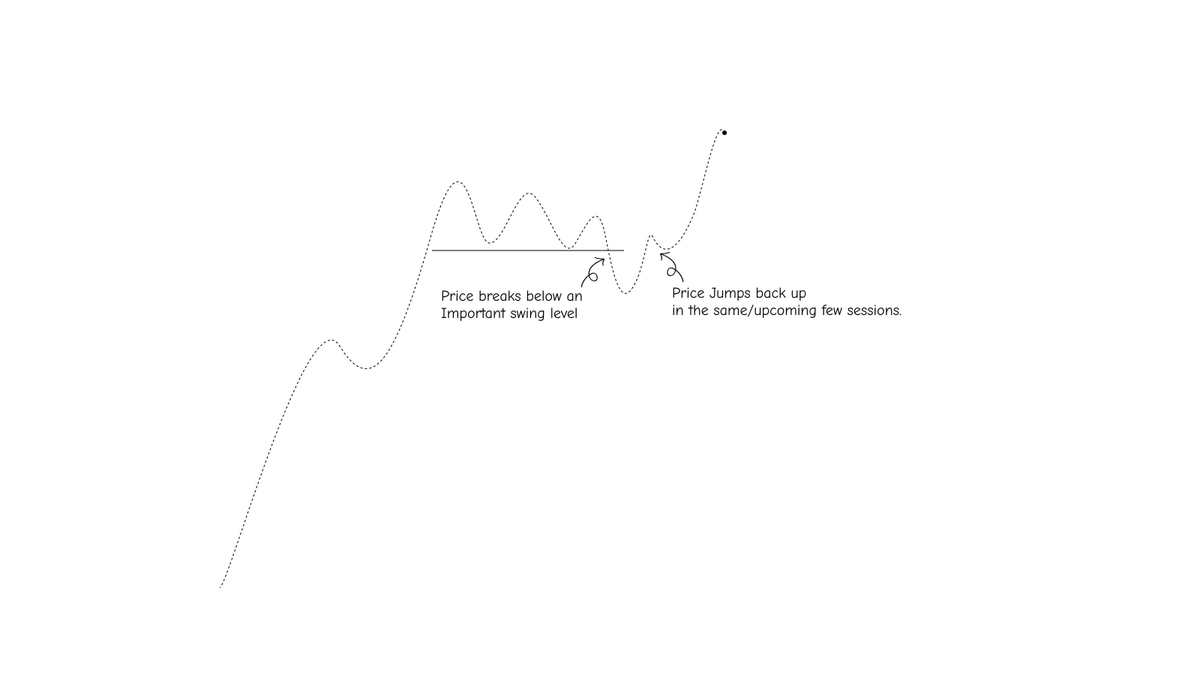
What is its significance?
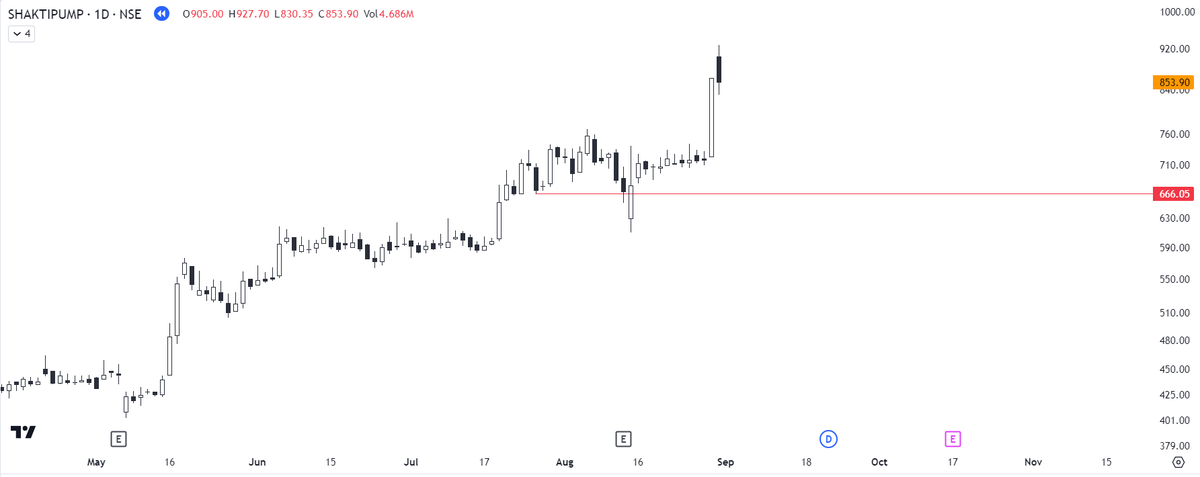
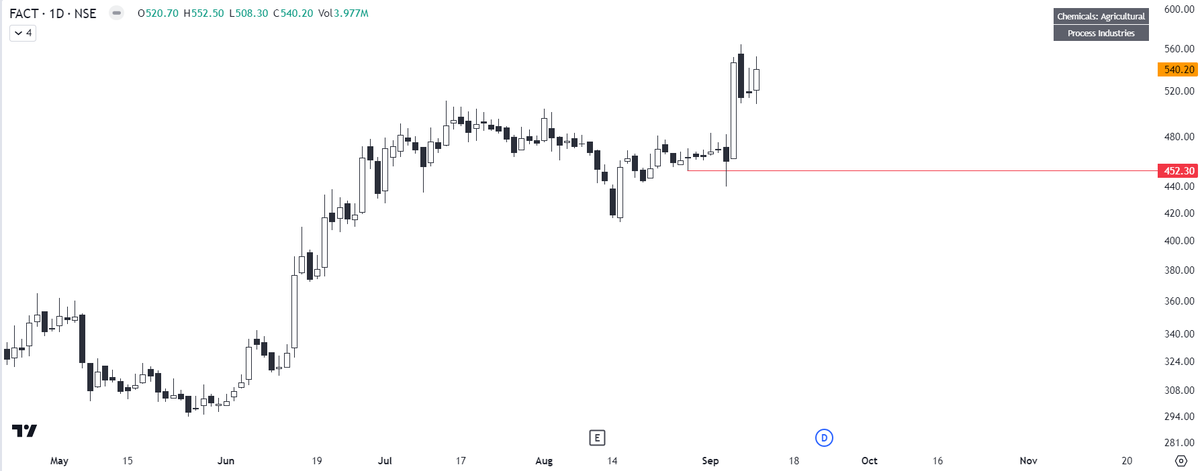
It's usually seen that once a strong stock that's been going through a basing period undergoes a shake-out move, it tends to give a trending move if the shake-out move resolves on the upside.
Some examples: x.com
It's usually seen that once a strong stock that's been going through a basing period undergoes a shake-out move, it tends to give a trending move if the shake-out move resolves on the upside.
Some examples: x.com
But why does it happen? What's so special about shakeouts?
We've noticed that many people have misconceptions; they think it's just the "operator" pushing the weak hands out of the stock, or it is the algos hunting their stop loss orders. This couldn't be farther from the truth. x.com
We've noticed that many people have misconceptions; they think it's just the "operator" pushing the weak hands out of the stock, or it is the algos hunting their stop loss orders. This couldn't be farther from the truth. x.com

There are two concepts that we need to delve into to understand shakeouts: supply and demand, and liquidity pools. x.com

First, let's start by understanding what liquidity pools are.
These are price "zones" where passive orders are placed.
Remember, we as retail traders mostly deal with market orders, because we trade with a relatively smaller size. x.com
These are price "zones" where passive orders are placed.
Remember, we as retail traders mostly deal with market orders, because we trade with a relatively smaller size. x.com
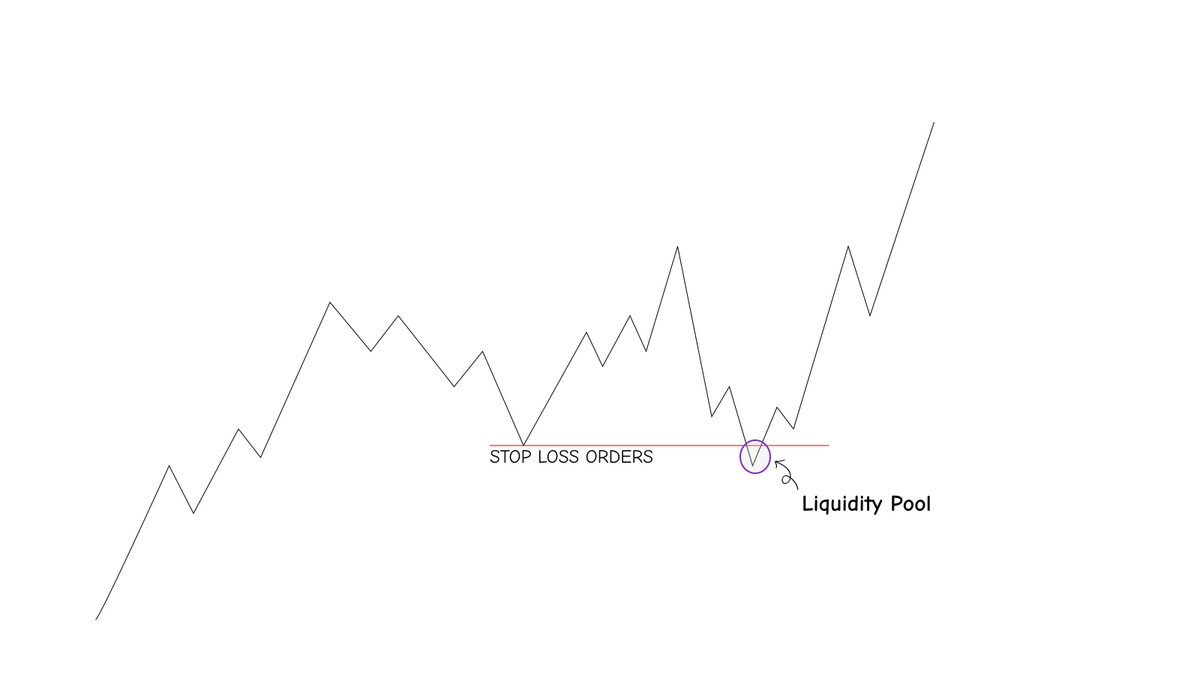
Now, when it comes to players who trade with very high volume, i.e., institutions and HNIs – they can't just go into the market and place a market order.
The reason being that they will get very poor fills at a much more expensive price than what they would've wanted.
The reason being that they will get very poor fills at a much more expensive price than what they would've wanted.
Retail traders generally place their stop orders at obvious swing points or at support levels from where the price has bounced back multiple times, or at an arbitrary percentage like 2-8% from their entry.
Now, to understand what happens afterward, we need to understand the concept of supply and demand.
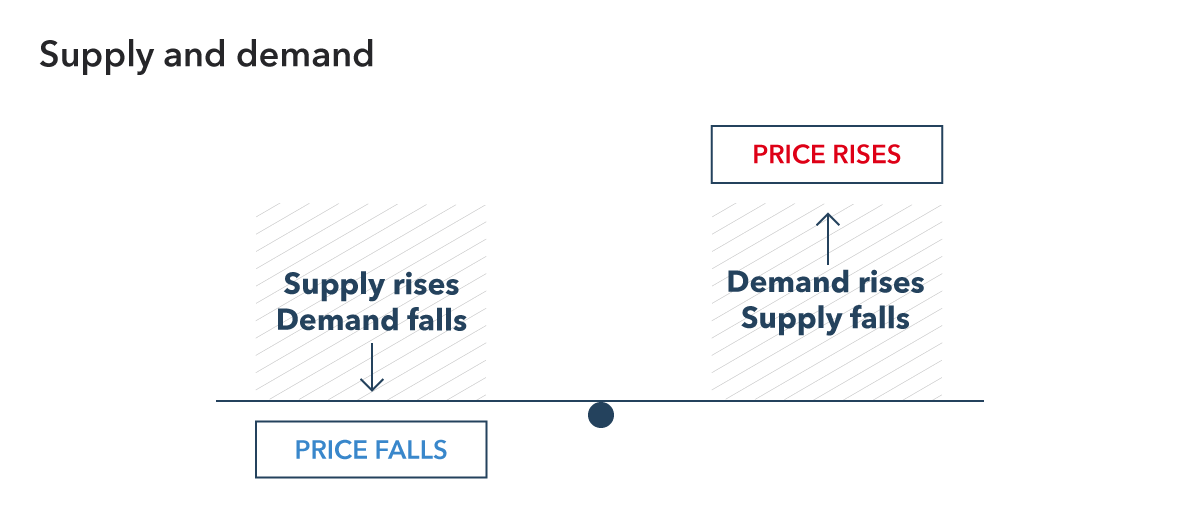
It simply states that when demand dominates supply, we see a surge in the price of the security.
And when supply dominates demand, we see a fall in the price of a security. x.com
It simply states that when demand dominates supply, we see a surge in the price of the security.
And when supply dominates demand, we see a fall in the price of a security. x.com
The reason for this imbalance of supply and demand does have a strong reason behind it, that is, the perceived value of the security.
When the perceived value is higher than the current price, there is high demand, and when the perceived value is lower, there is high supply. x.com
When the perceived value is higher than the current price, there is high demand, and when the perceived value is lower, there is high supply. x.com
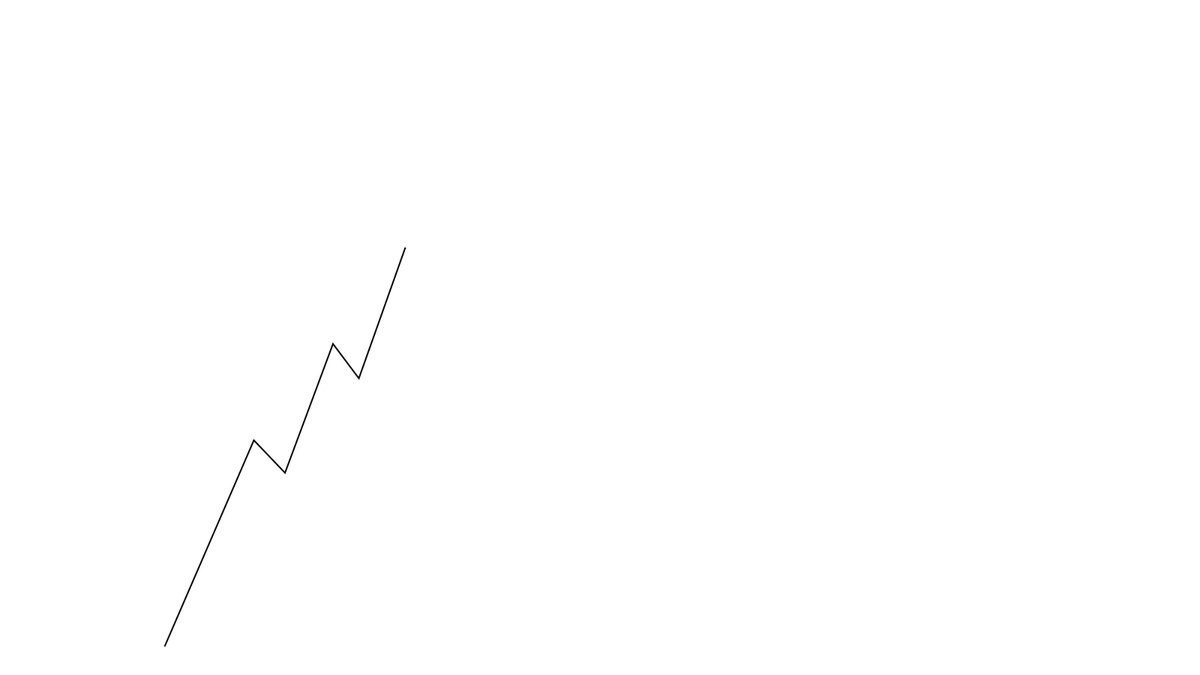
Now, let's say a security named XYZ Corp has a catalyst (that could be news, sector strength, fundamentals, etc.) and thus there is high demand for its stock. The price is rising, and in just a few days, the security has risen by more than 50%. x.com
Now, there's a diverse spectrum of market participants that are dealing in security; some are in it for the short term and have a relatively small size, some are long-term traders, and then there are institutions and HNIs.
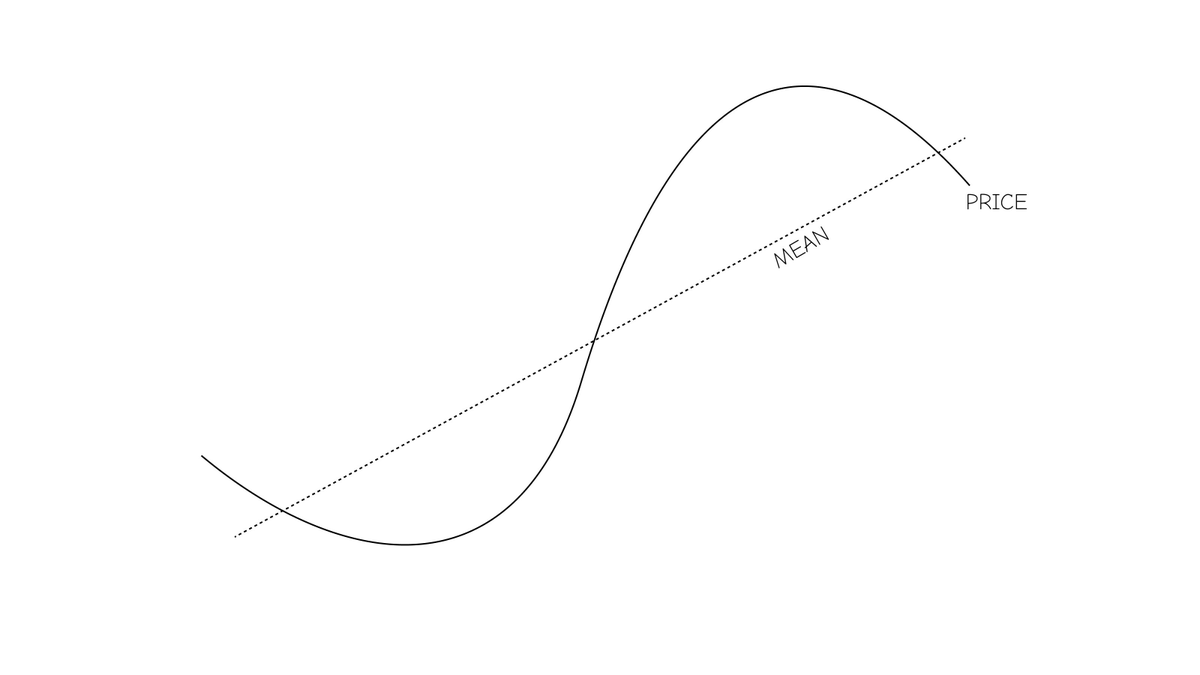
Now, when the price of security starts to reach a point that's too far away from the mean or the current value of the security in the short term, at this point.
some of the market participants start to book their positions just because they are sitting at decent gains, and the price starts to stall.
Seeing this, very short-term traders also start to close their positions, and we see some more selling. x.com
Seeing this, very short-term traders also start to close their positions, and we see some more selling. x.com
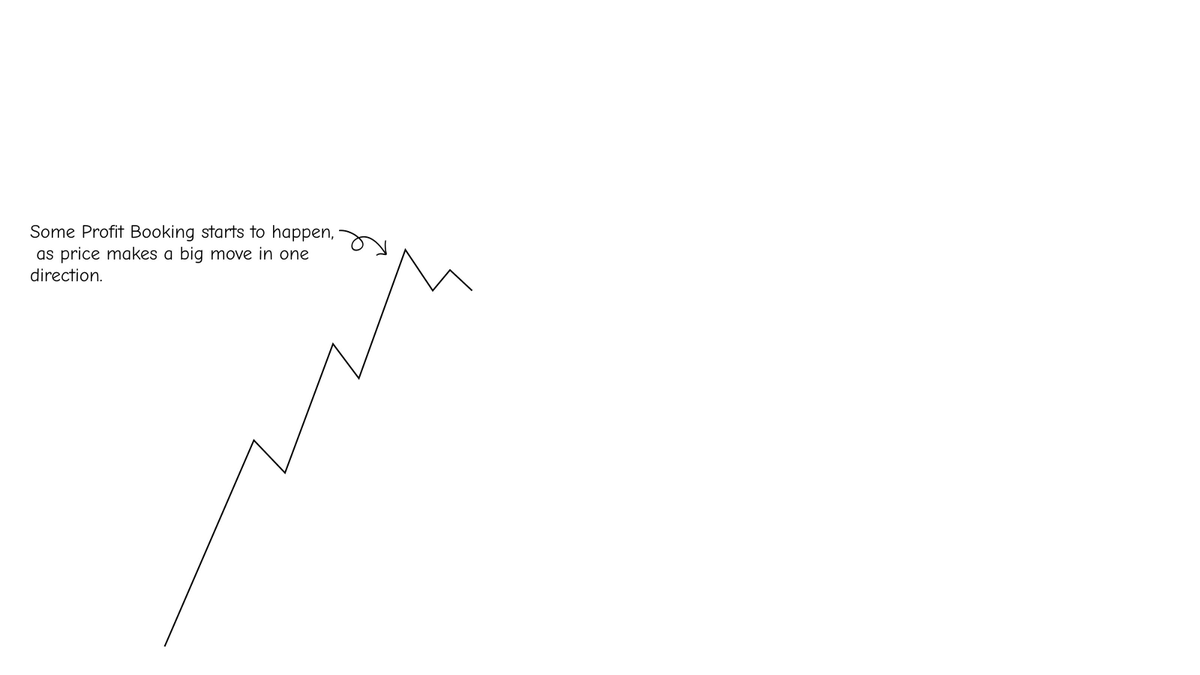
Now, it's not just selling going on (talking about the retracement move); the market doesn't work that way.
Every transaction consists of a buyer and a seller, if someone is selling, then there must also be someone who's buying, right?
Every transaction consists of a buyer and a seller, if someone is selling, then there must also be someone who's buying, right?
But, as we said before, prices go up and down when one side is prevalent and more eager to pay higher or lower prices.
So, in this retracement, the buyers were there, but they were much weaker than the sellers (those who are booking profits).
So, in this retracement, the buyers were there, but they were much weaker than the sellers (those who are booking profits).
This is where the concept of "weak hands" comes from. These buyers are mostly believed to be retail traders who are usually late to the party and start buying at the fag end of a swing. x.com
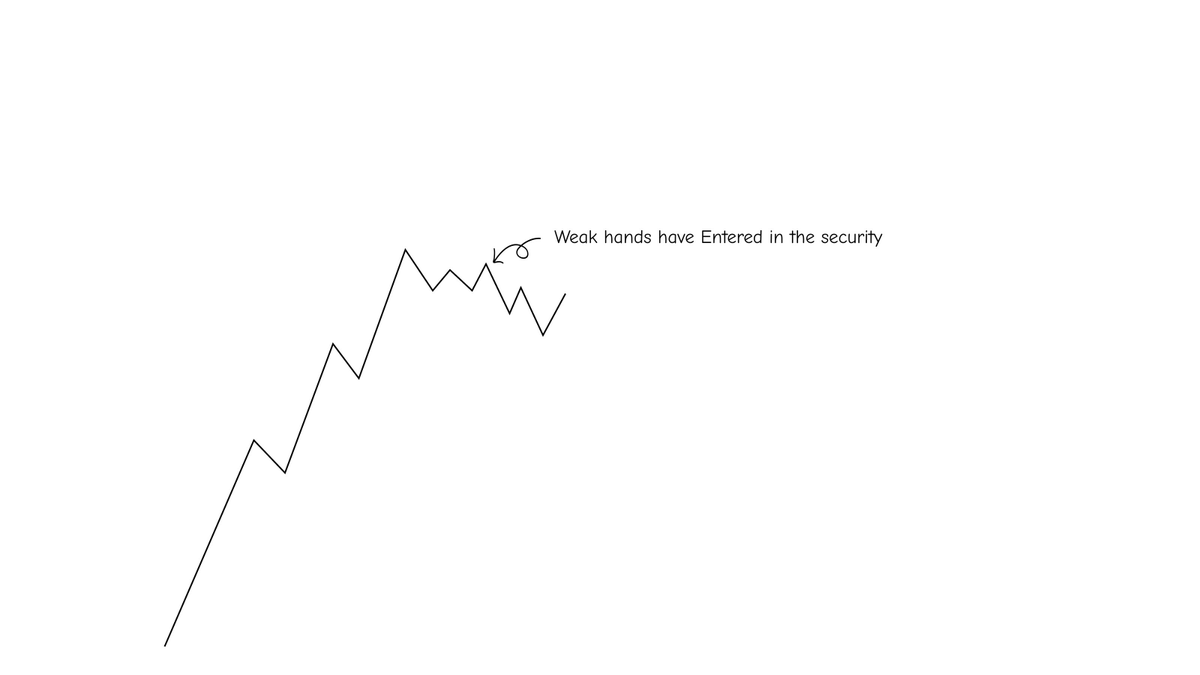
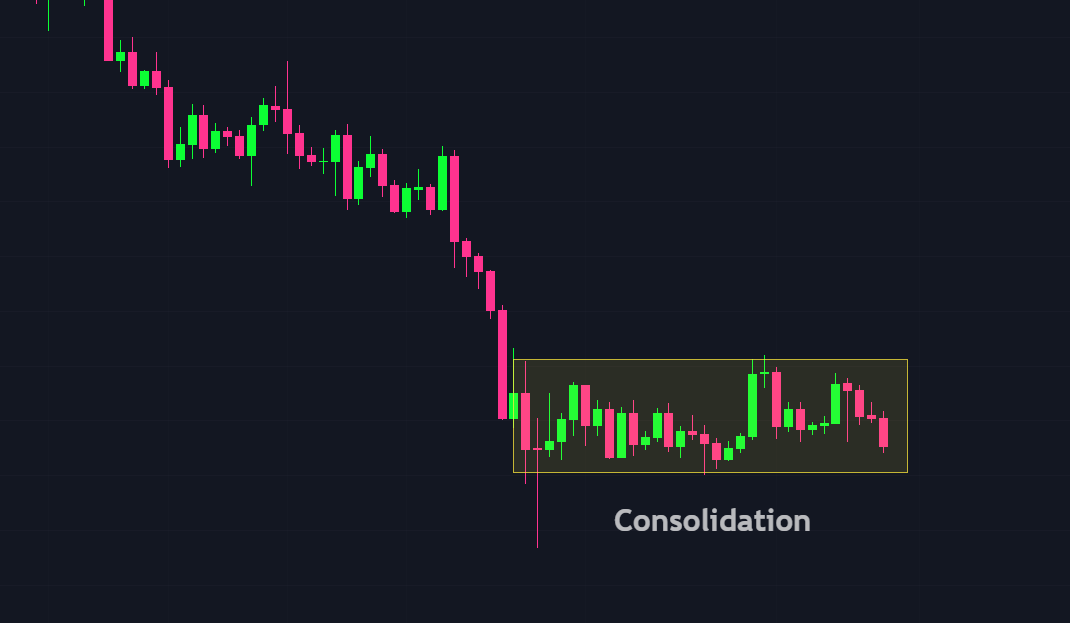
Now, after some days, the price finds a range where both the buyers and sellers have agreed to transact. It could be called a value zone. x.com
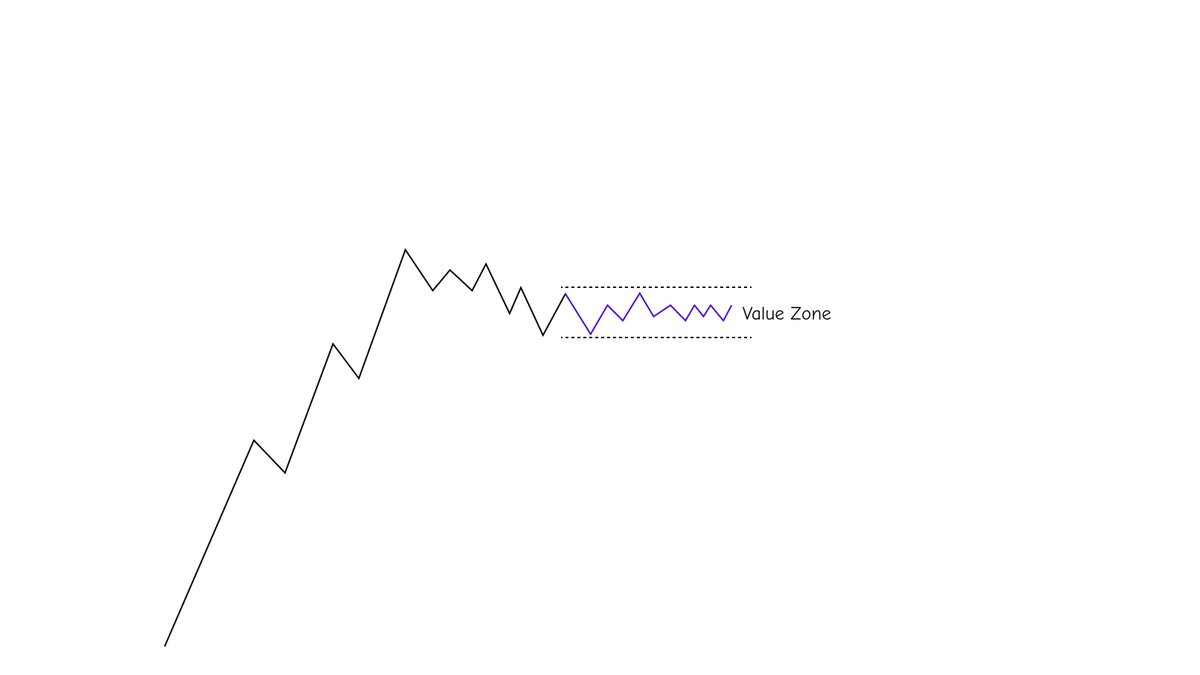
Remember, we now have long-term buyers (institutions) present in the security, who are in it from much lower, and we also have the "weak hands" who are sitting at slightly higher levels than the value zone.
Now, the market can just go higher from this point, unless the perceived value has gotten worse. But, sometimes there is too much supply at higher levels (weak hands tend to exit when the price is about to reach their cost).
Hence, the price couldn't go higher even after multiple attempts.
Now, we need to combine the concept of liquidity pools and this to see what happens next.
The institutions have passive orders to accumulate this security, at different price zones. And they wait. x.com
Now, we need to combine the concept of liquidity pools and this to see what happens next.
The institutions have passive orders to accumulate this security, at different price zones. And they wait. x.com
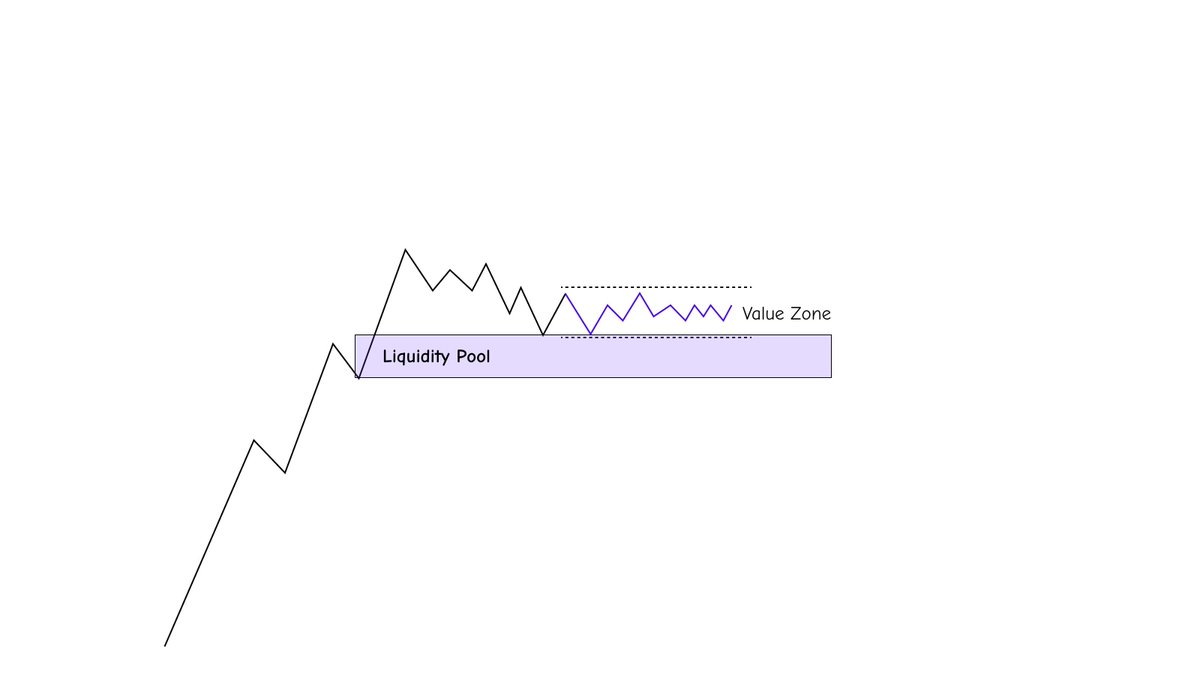
Now, the supply has grown even more during the consolidation. Now, what happens is that the price starts to plummet on a particular day without any news or any change in fundamentals.
Those weak hands start to sell, stop losses start to trigger (which are essentially sell orders), and the price starts to fall, which creates a cascading effect, and we see a rapid down-move in the security's price. x.com
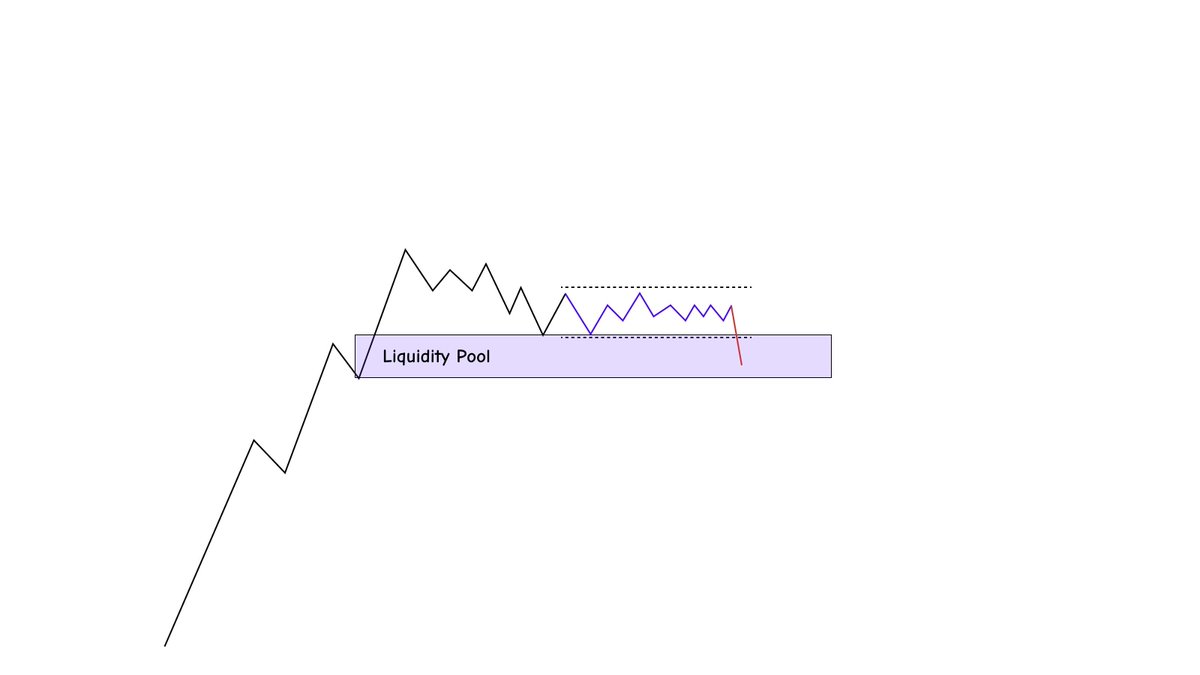
At the same point, the institutions are gobbling up all the sell orders (the price is still falling).
It's pretty easy for them to execute big orders at this point because there is huge sell-side liquidity in the market at this point.
It's pretty easy for them to execute big orders at this point because there is huge sell-side liquidity in the market at this point.
Now, if the institutions can absorb all that supply and still are left with some more ammo, we have almost negligible supply and decent demand at this point. So, the price jumps back up and closes higher at the end of the day, or in the next 2-3 sessions.
Weak hands are now out, hence supply is very low at higher levels. So, now even a slight push from the buyers' side is enough to drive the prices higher.
These shakeouts could also turn into full-fledged downtrends if we are in a bearish environment, and the supply grows too much.
So, that's why we don't just jump in when the prices are falling; we wait for the shake-out to happen and then for the price to show strength.
This is how shakeouts work.
Weak hands are now out, hence supply is very low at higher levels. So, now even a slight push from the buyers' side is enough to drive the prices higher.
These shakeouts could also turn into full-fledged downtrends if we are in a bearish environment, and the supply grows too much.
So, that's why we don't just jump in when the prices are falling; we wait for the shake-out to happen and then for the price to show strength.
This is how shakeouts work.
Loading suggestions...