

The other aspect of “structural transformation” is the composition of its labor force.
A large part of China’s labor force today is trained to build physical things (goods in a factory, buildings) or provide lower-level services.
A large part of China’s labor force today is trained to build physical things (goods in a factory, buildings) or provide lower-level services.
Its blue-collar migrant labor force still makes up a big part of its labor force.
Lower levels of formal education but strong work ethic and skills optimized for certain types of jobs.
Lower levels of formal education but strong work ethic and skills optimized for certain types of jobs.
Labor force evolution takes time, following long-term demographic trends.
The largest demographic cohort was born between 1985-90, the children of the last generation of large agrarian families born between 1965-70.
The largest demographic cohort was born between 1985-90, the children of the last generation of large agrarian families born between 1965-70.
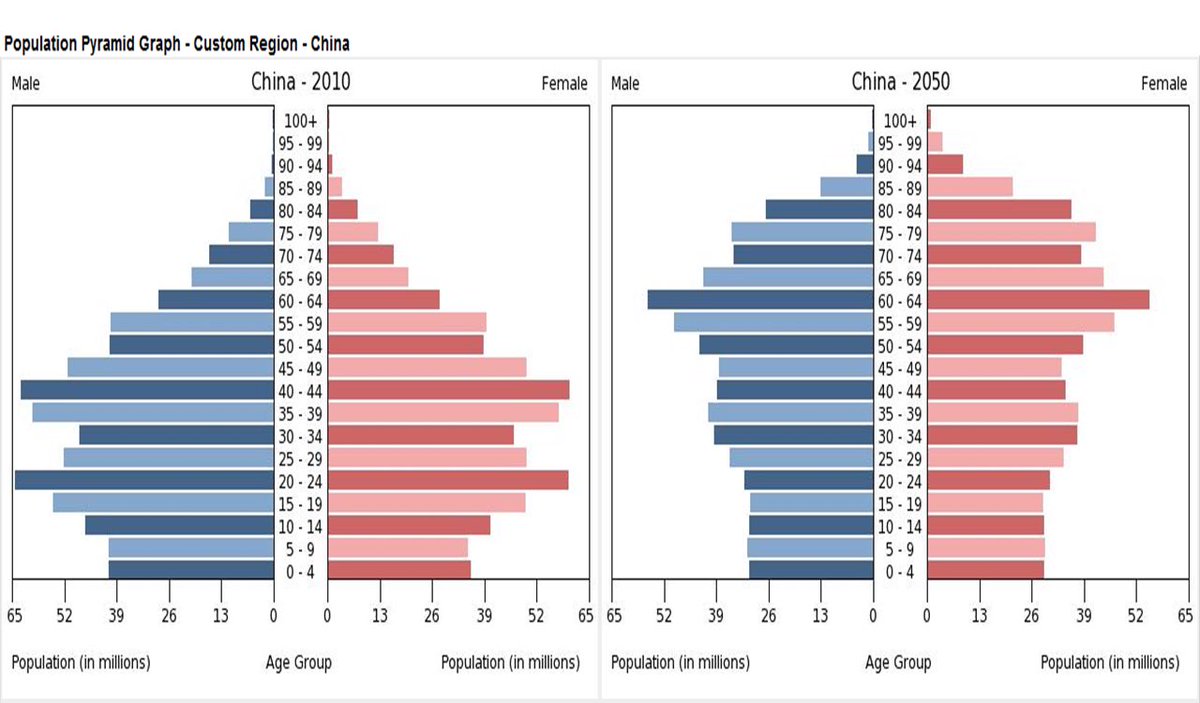
The 1965-70 cohort gave rise to the first generation of migrant workers, who moved out of rural farming villages into cities to work in factories, construction sites, and low-level service jobs.
This 1985-90 cohort also features large rural-to-urban migration migrant workers.
This 1985-90 cohort also features large rural-to-urban migration migrant workers.
The 1985-90 cohort also witnessed rapid expansion of tertiary education that took place in the early 2000s.
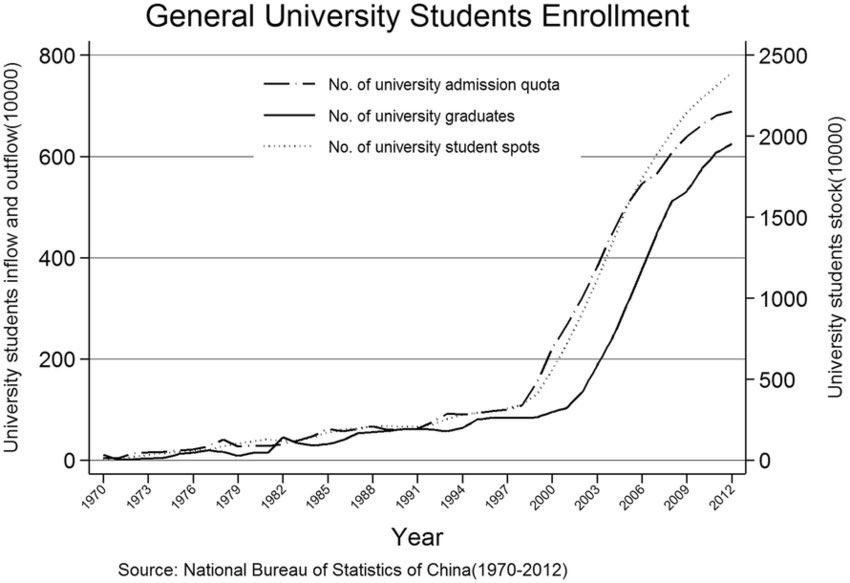
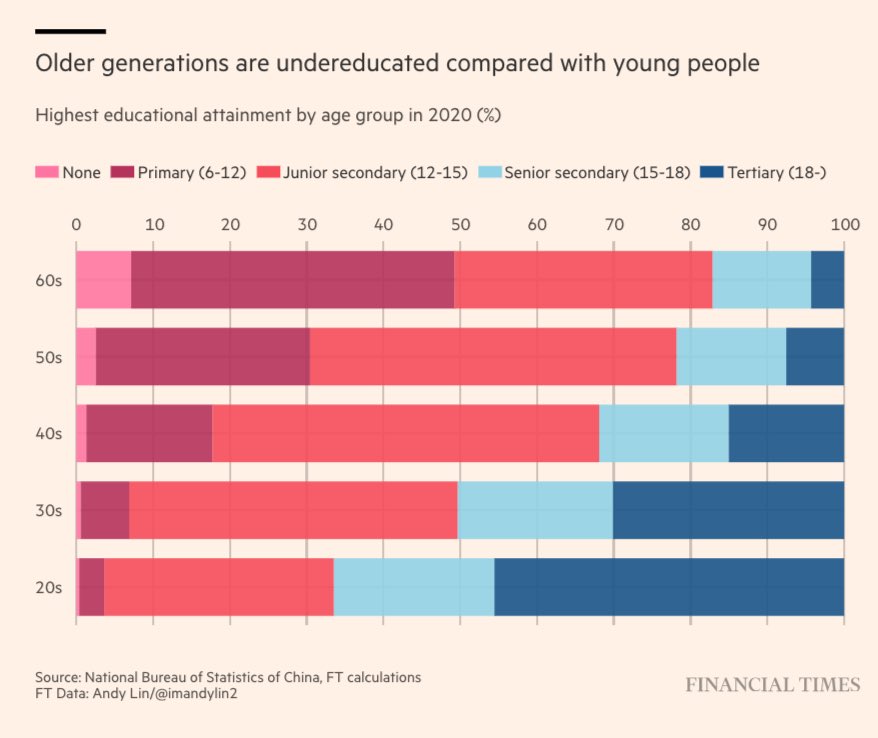
Many children of the first generation of migrant workers born in the 80s took advantage of the expansion in tertiary education and got themselves college degrees.
Most migrant workers aspire for their kids to get educated so they can have better jobs.
Most migrant workers aspire for their kids to get educated so they can have better jobs.
The combination of demographics and rapid rise in education means that the current generation of migrant workers will peak with this now 33-38yo cohort.
The first generation of migrant workers (born 1965-70) have already started retiring.
The first generation of migrant workers (born 1965-70) have already started retiring.
The blue-collar migrant labor force is already shrinking and this decline will accelerate as we head into the 2030s and 2040s.
When this 1985-90 cohort reaches retirement age in the 2040s, urbanization will be largely complete.
When this 1985-90 cohort reaches retirement age in the 2040s, urbanization will be largely complete.
The biggest obstacle to “structural transformation” is the relatively slow pace of demographic change.
Blue-collar migrant workers and poorly educated rural farmers cannot be trained to become healthcare workers overnight.
Their kids can, but generational change takes time.
Blue-collar migrant workers and poorly educated rural farmers cannot be trained to become healthcare workers overnight.
Their kids can, but generational change takes time.
The largest obstacles to “structural transformation of China’s economy” are not ideological but simply HH preferences and labor force evolution.
Much flawed analysis on this topic is because outside observers don’t spend enough time thinking about these powerful forces.
Much flawed analysis on this topic is because outside observers don’t spend enough time thinking about these powerful forces.
Loading suggestions...