

During my last webinar, someone asked me:
Are the many (AI) tools for research not overwhelming? What should I use?
Daily, I only use 5 free core tools for very distinct use cases. The rest is nice to have:
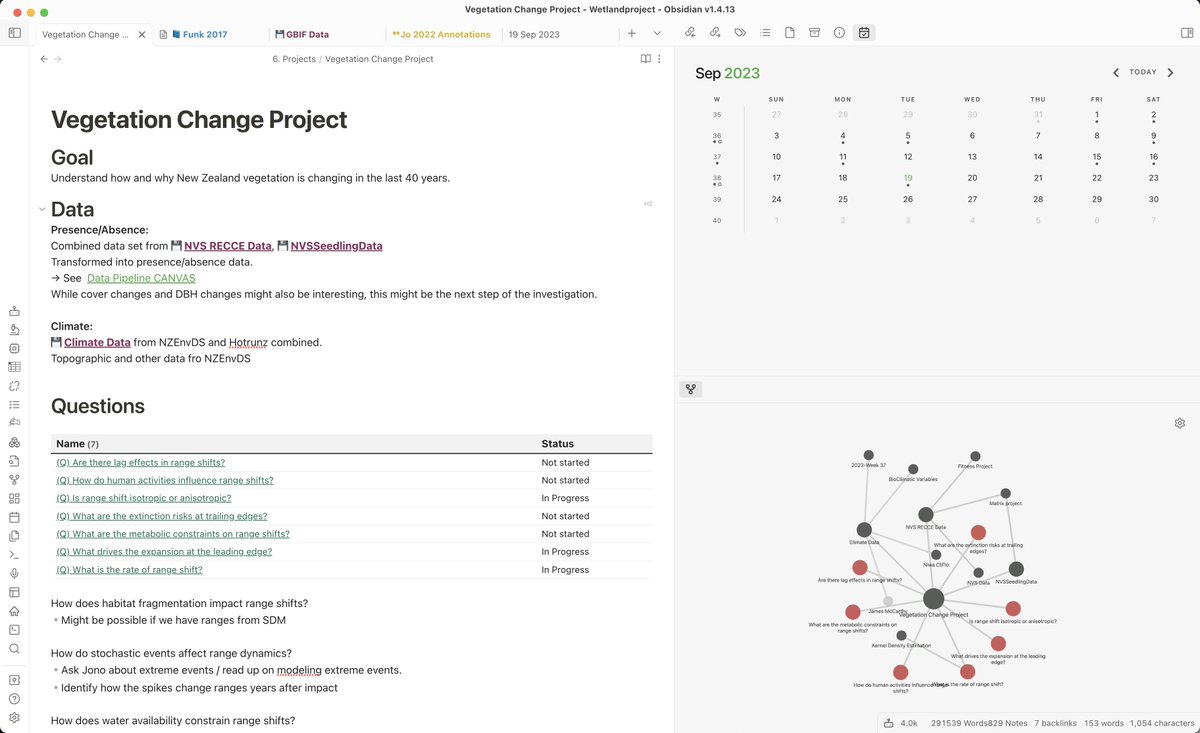
1. @obsdmd for Knowledge
"Your mind is for having ideas, not holding them." is a very famous quote by David Allen a productivity expert.
Obsidian is the perfect substrate for ideas to grow in:
- Findings & References I read
- Research questions I am working on
- Tasks and Ideas I need to explore
- Acts as a reference manager
- Documents big coding pipelines
- Storage for all the data I use in my research
2. @LitmapsApp for Discovery
Litmaps finds related papers to the papers in my collection. Think of it as a "Google for academic research" that is actually better than Google! No other tool leverages the visual representation of papers so well.
In one picture I can:
- Find the most cited papers
- Identify specific key authors
- Find impactful reviews
- Quickly see what is recent and what is foundational
3. @zotero for MetaData Collection
I use Zotero purely as a service. The browser plugin allows me to capture a paper and Zotero automatically downloads the PDF. Then I go to Obsidian and with one click import the newest paper into my library.
This means I never interact much with Zotero itself.
Why manage papers in Obsidian? Because I reference them in my notes and can leverage Obsidians canvas to create networks of papers.
This is how this might look:
4. @drawio for Knowledge Synthesis
Our minds are networks, not databases. That means the highest form of understanding is a network of connected ideas and concepts. A free and awesome tool to do this is drawio.
5. ChatGPT and Github Copilot
Coding without AI these days is a waste of time. Even with 15 years of coding experience I get more done using AI tools. ChatGPT is great for asking broad questions like "What are libraries that do X". However the results are often erroneous and the mistakes are hard to spot.
Github CoPilot on the other hand helps me code line by line directly inside the coding environment. (Use PyCharm for Python or R, free educational licenses). It forces me to comment on my code as well.
--
This is it. You don't need much more than these for 90% of your research. Master these and you will be ahead of everyone else.
Below are some threads if you want to learn more about some of the tools:
Are the many (AI) tools for research not overwhelming? What should I use?
Daily, I only use 5 free core tools for very distinct use cases. The rest is nice to have:
1. @obsdmd for Knowledge
"Your mind is for having ideas, not holding them." is a very famous quote by David Allen a productivity expert.
Obsidian is the perfect substrate for ideas to grow in:
- Findings & References I read
- Research questions I am working on
- Tasks and Ideas I need to explore
- Acts as a reference manager
- Documents big coding pipelines
- Storage for all the data I use in my research
2. @LitmapsApp for Discovery
Litmaps finds related papers to the papers in my collection. Think of it as a "Google for academic research" that is actually better than Google! No other tool leverages the visual representation of papers so well.
In one picture I can:
- Find the most cited papers
- Identify specific key authors
- Find impactful reviews
- Quickly see what is recent and what is foundational
3. @zotero for MetaData Collection
I use Zotero purely as a service. The browser plugin allows me to capture a paper and Zotero automatically downloads the PDF. Then I go to Obsidian and with one click import the newest paper into my library.
This means I never interact much with Zotero itself.
Why manage papers in Obsidian? Because I reference them in my notes and can leverage Obsidians canvas to create networks of papers.
This is how this might look:
4. @drawio for Knowledge Synthesis
Our minds are networks, not databases. That means the highest form of understanding is a network of connected ideas and concepts. A free and awesome tool to do this is drawio.
5. ChatGPT and Github Copilot
Coding without AI these days is a waste of time. Even with 15 years of coding experience I get more done using AI tools. ChatGPT is great for asking broad questions like "What are libraries that do X". However the results are often erroneous and the mistakes are hard to spot.
Github CoPilot on the other hand helps me code line by line directly inside the coding environment. (Use PyCharm for Python or R, free educational licenses). It forces me to comment on my code as well.
--
This is it. You don't need much more than these for 90% of your research. Master these and you will be ahead of everyone else.
Below are some threads if you want to learn more about some of the tools:


My courses on using these tools:
Academic project organization with Obsidian:
Annotating PDFs in Obsidian:
How to structure your academic notes in Obsidian:
Literature Review with Litmaps:
Link Zotero and Obsidian:
Drawio for building an argument:
Academic project organization with Obsidian:
Annotating PDFs in Obsidian:
How to structure your academic notes in Obsidian:
Literature Review with Litmaps:
Link Zotero and Obsidian:
Drawio for building an argument:
Loading suggestions...