

Apple's A17 Pro chip... I think I finally figured out why we're not seeing impressive efficiency improvements, even with 3nm from TSMC.
As you can see, Apple had to dramatically increase power usage in order to give us the A17 Pro's performance gains.
Here's the story:
1/13
As you can see, Apple had to dramatically increase power usage in order to give us the A17 Pro's performance gains.
Here's the story:
1/13


Remember when yields for TSMC's initial N3B chips were very low, around 55%? This is because Apple has high standards for efficiency or performance per watt.
Unfortunately, TSMC was unable to improve so Apple had to LOWER the efficiency standards across the board in order..
2/13
Unfortunately, TSMC was unable to improve so Apple had to LOWER the efficiency standards across the board in order..
2/13
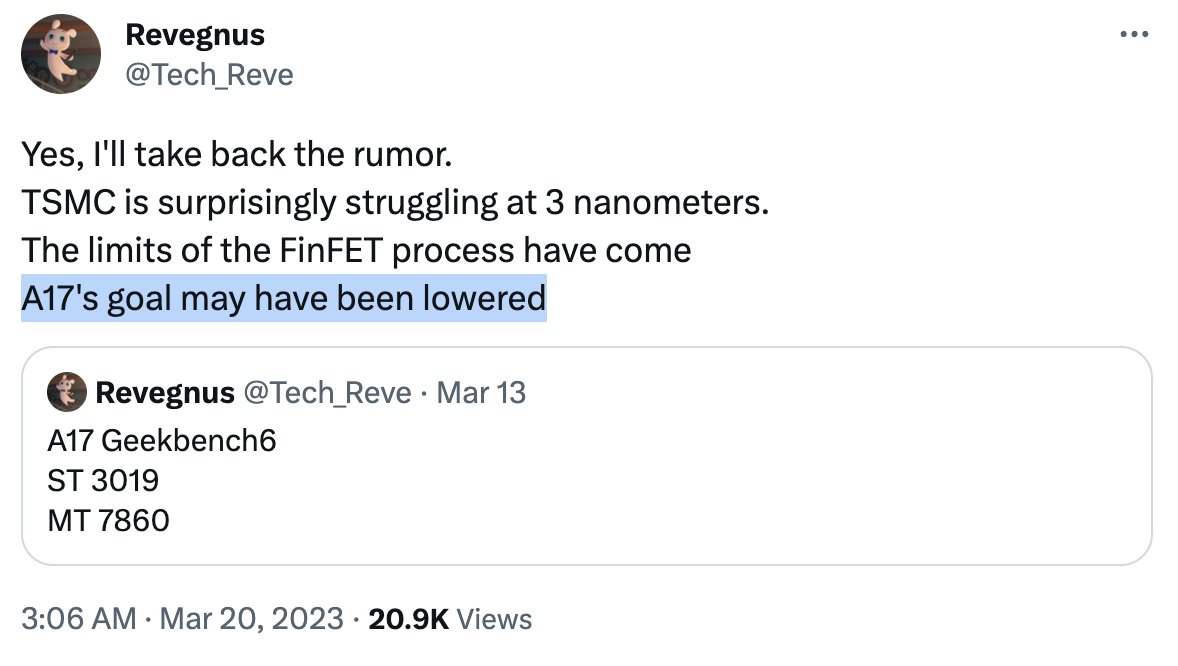
..to improve yields by accepting 3nm dies that they would have normally tossed due to having worse efficiency, in order to improve yields. See screenshots from @Tech_Reve
Apple lowered performance and efficiency goals to improve chip yields.
x.com
3/13
Apple lowered performance and efficiency goals to improve chip yields.
x.com
3/13


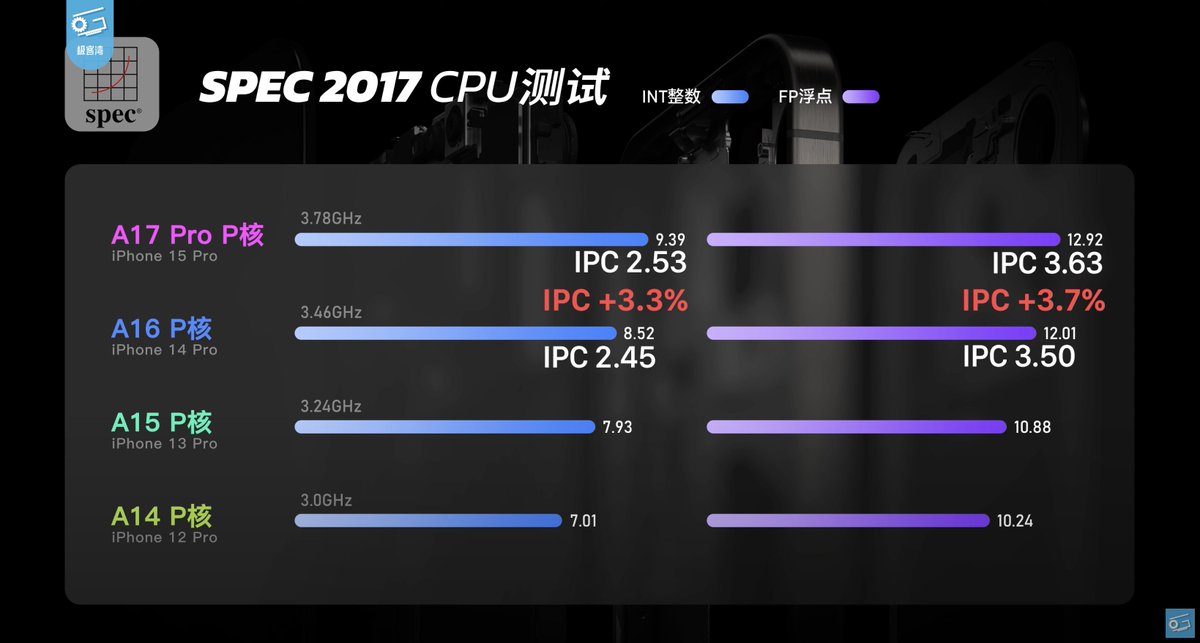
Because of this, the A17 Pro isn't that much more efficient than A16. As you can see, the IPC gain is only 3.3% for CPU's P-core.
So Apple turned to overclocking..
In order to improve P-core performance by 10% in SPEC2017, Apple had to push 36% more power! (2.71W to 3.68W)
4/13
So Apple turned to overclocking..
In order to improve P-core performance by 10% in SPEC2017, Apple had to push 36% more power! (2.71W to 3.68W)
4/13
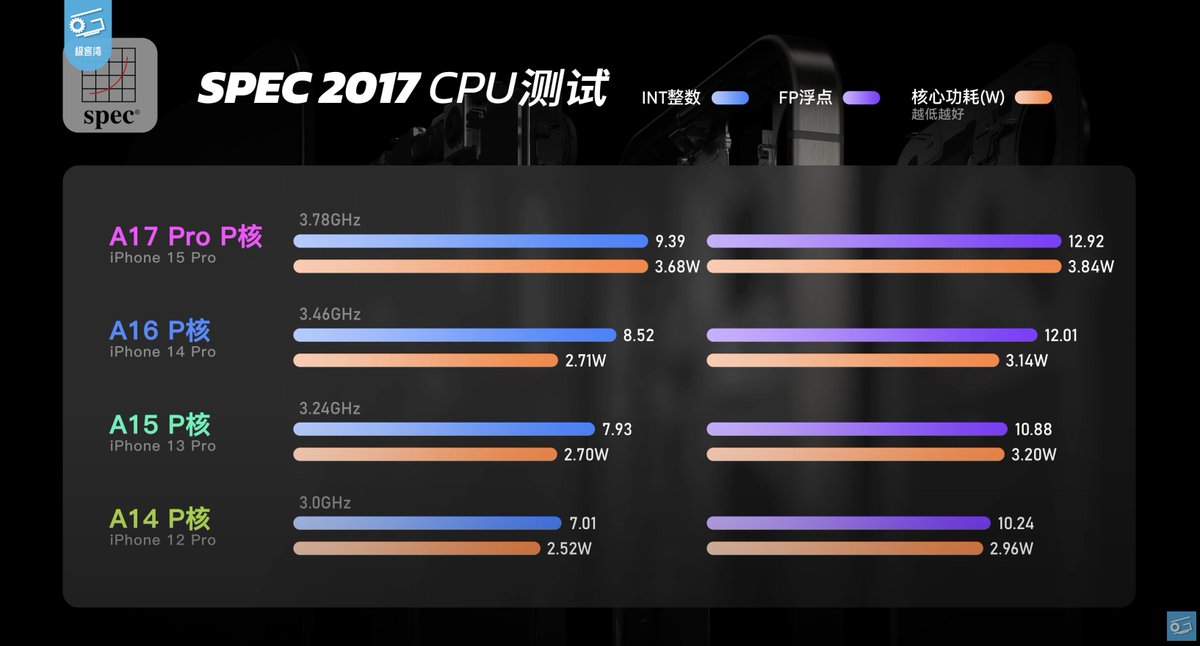
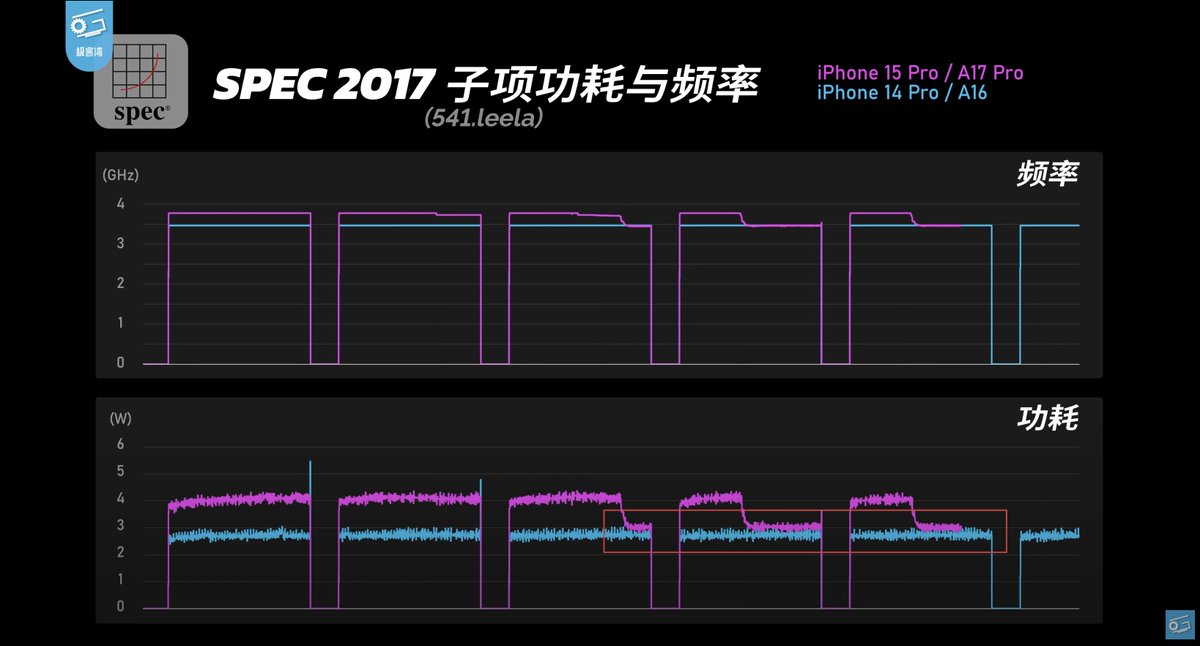
Unfortunately, the iPhone 15 Pro can't handle that much wattage, which makes the A17 Pro start to clock down and thermal throttle on the 3rd run of SPEC 2017, down to the SAME 3.46GHz clock-speed as the A16, but using slightly MORE wattage because it's not as efficient!
5/13
5/13
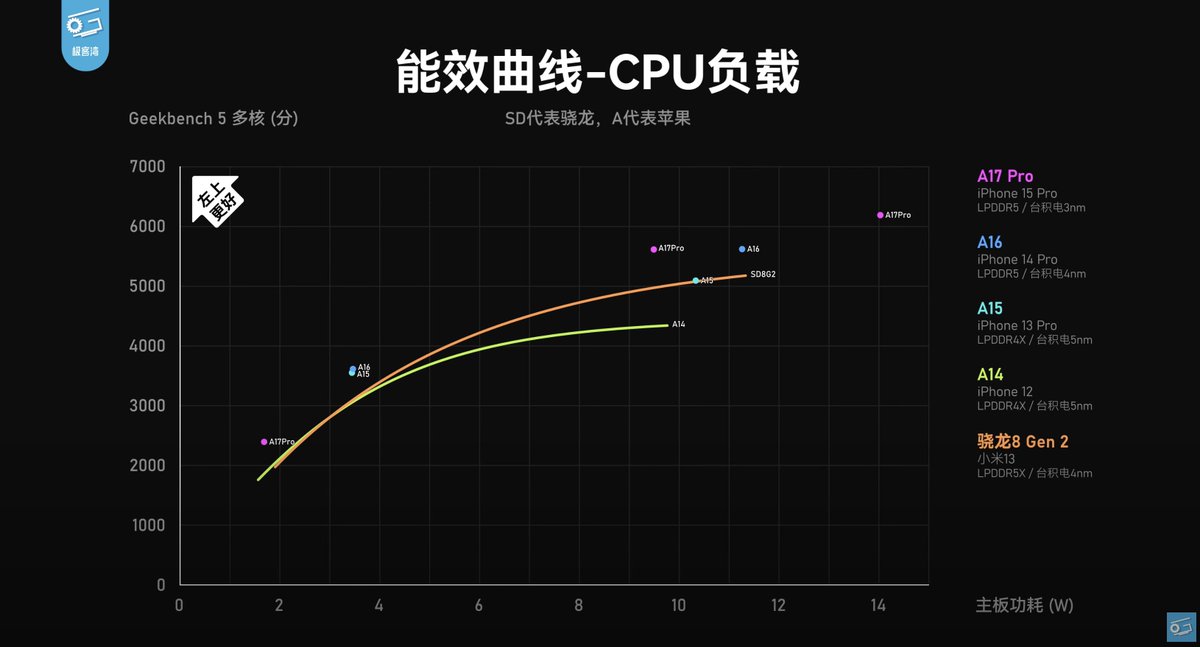
Because of all of these efficiency issues, Apple decided to the A17 Pro further than they ever have before in terms of maximum CPU wattage: up to 14 watts!
They did this in order to achieve their claimed Geekbench peak performance jump, requiring 14 watts of power!
6/13
They did this in order to achieve their claimed Geekbench peak performance jump, requiring 14 watts of power!
6/13
And now getting to the GPU, Apple once again had to push the maximum wattage of the A17 Pro up to 11.5W to power the additional GPU core, in order to achieve their 20% gain
However, we can see that the A15 is ever so slightly more efficient than A17 Pro during low power use
7/13
However, we can see that the A15 is ever so slightly more efficient than A17 Pro during low power use
7/13
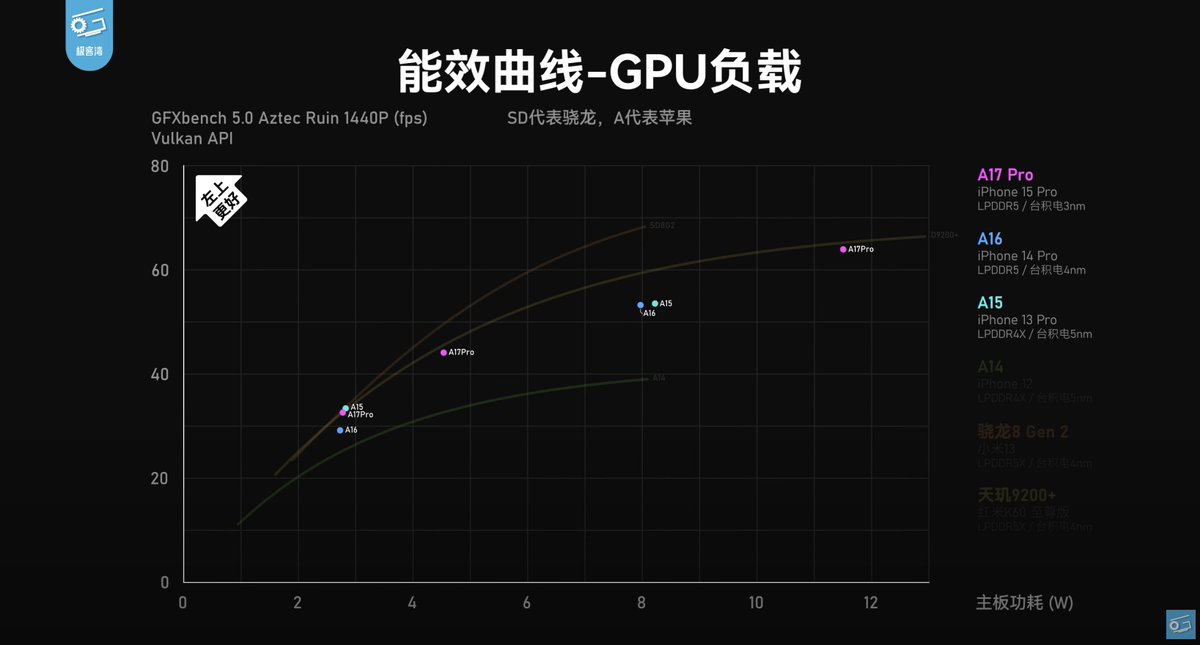
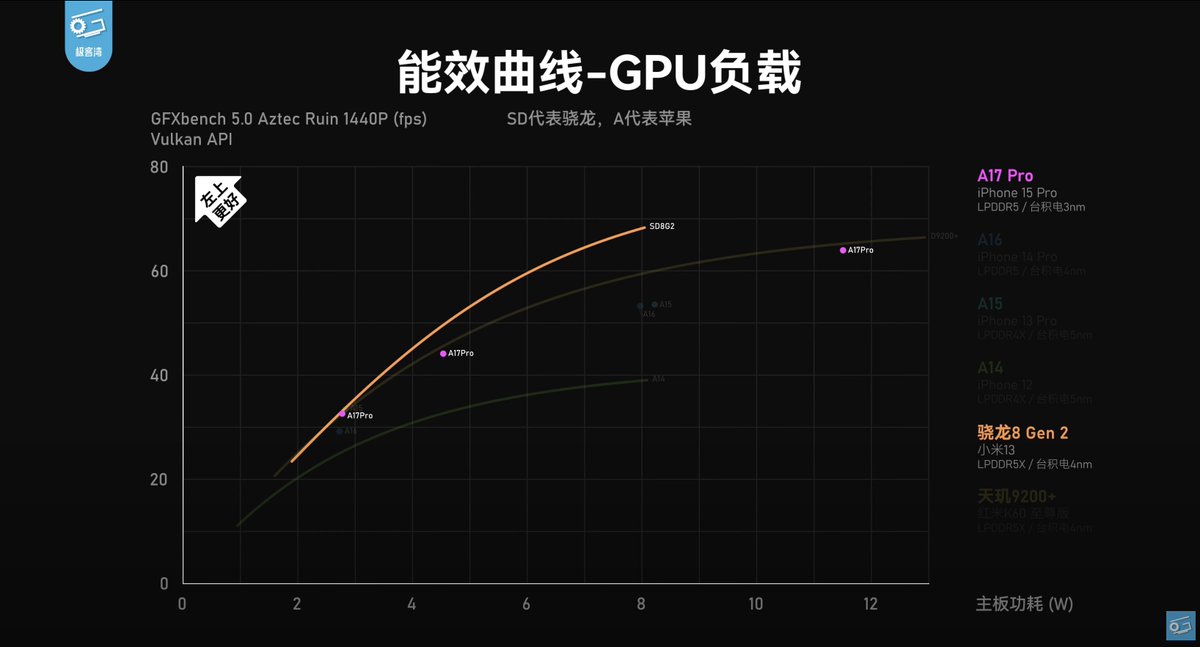
But the main story is that across the board, Apple's GPU is now less efficient and less performant than the 8-core Snapdragon 8 Gen 2, which only uses a maximum of 8W of power. Apple tried to push more but it didn't help due to bad efficiency of this N3B chip architecture.
8/13
8/13
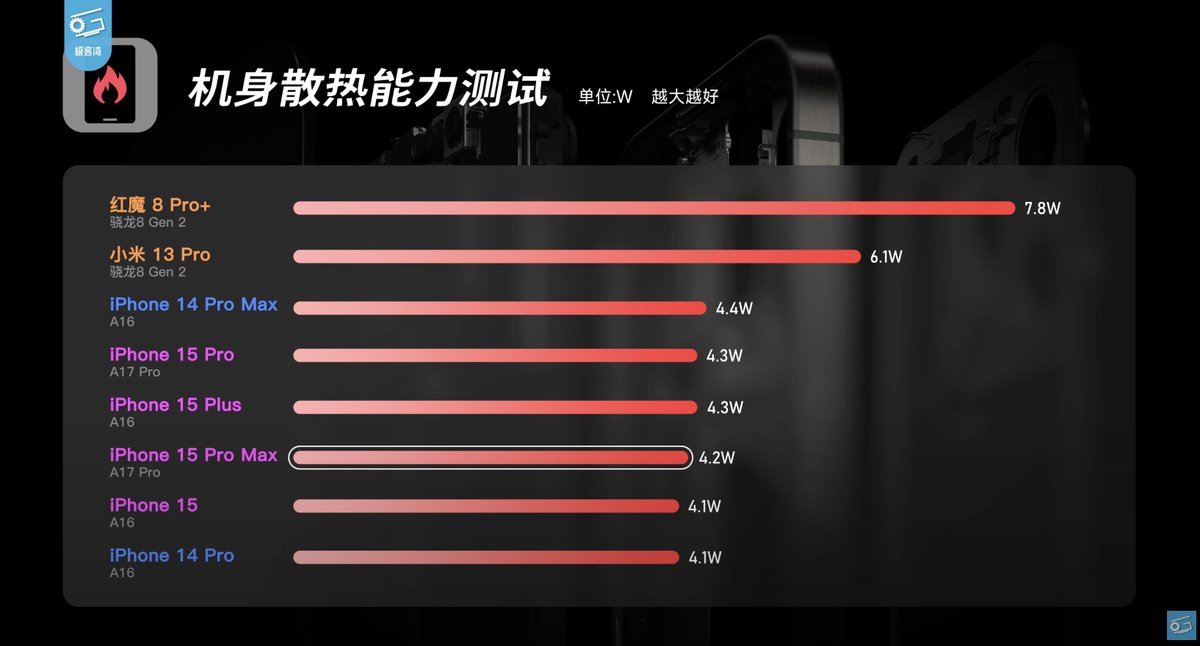
But the #1 issue is actually thermal throttling. The A17 Pro has slightly WORSE heat dissipation than the A16 chip in the 14 Pro Max, and much worse than the 8 Gen 2 which handle more heat due to their vapor chamber cooler designs which Apple seemingly refuses to uses??
9/13
9/13
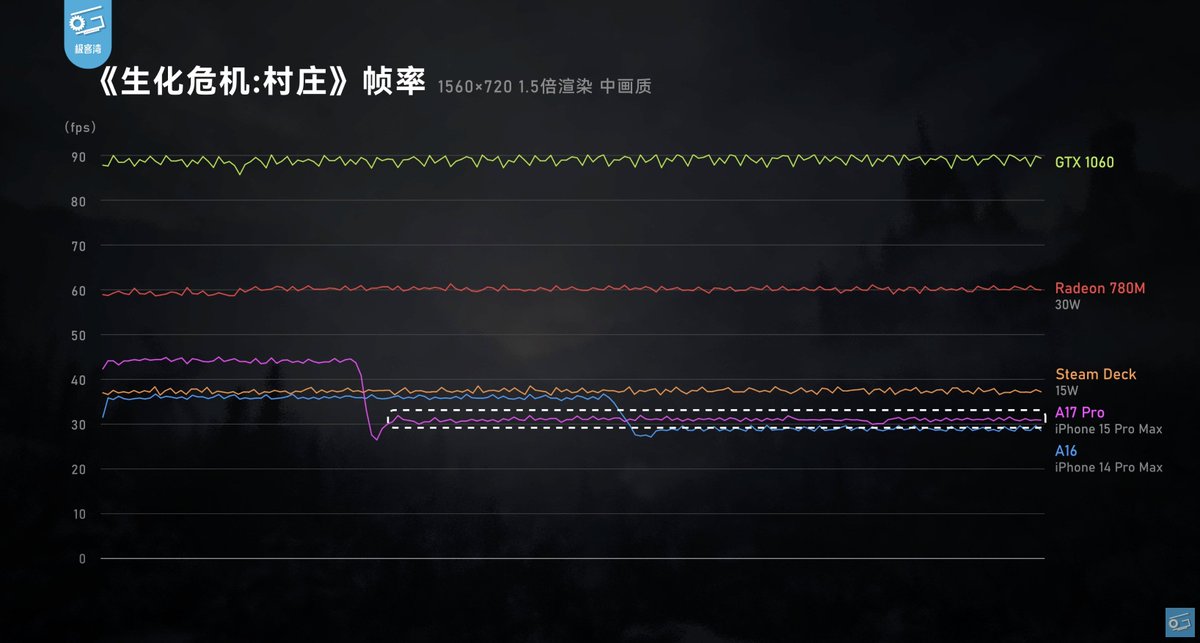
Because of thermal throttling, the A17 Pro goes from 44FPS in this Resident Evil Village gaming test to just about 30FPS, only slightly ahead of the A16. Thermal throttling is REALLY hampering the performance of the iPhone 15 Pro Max!
10/13
10/13
The saving grace for the A17 Pro is MetalFX upscaling which allows the 15 Pro Max to outperform the A16 while using less power, being basically as performant as the 8 Gen 2 chip while using MUCH less power.
The quality is actually even BETTER due to this upscaling effect!
11/13
The quality is actually even BETTER due to this upscaling effect!
11/13


All in all, it seems as it was the initial N3B process 3nm chip yields that messed with the A17 Pro, forcing Apple to lower performance per watt standards to improve yields.
Next year with N3E, we should get a BIG efficiency gain thanks to better yields alone, which..
12/13
Next year with N3E, we should get a BIG efficiency gain thanks to better yields alone, which..
12/13
..would ultimately allow Apple to raise their efficiency standards not just back to where they were supposed to be, but even further due to TSMC's experience and optimization of the new 3nm process.
This weak efficiency gain is just a blip in the Apple Silicon roadmap.
13/13
This weak efficiency gain is just a blip in the Apple Silicon roadmap.
13/13
Loading suggestions...