

Thread on the exploits of Shamsher Gazi – 18thcentury Bengali Muslim Folk Hero, Warrior and King.
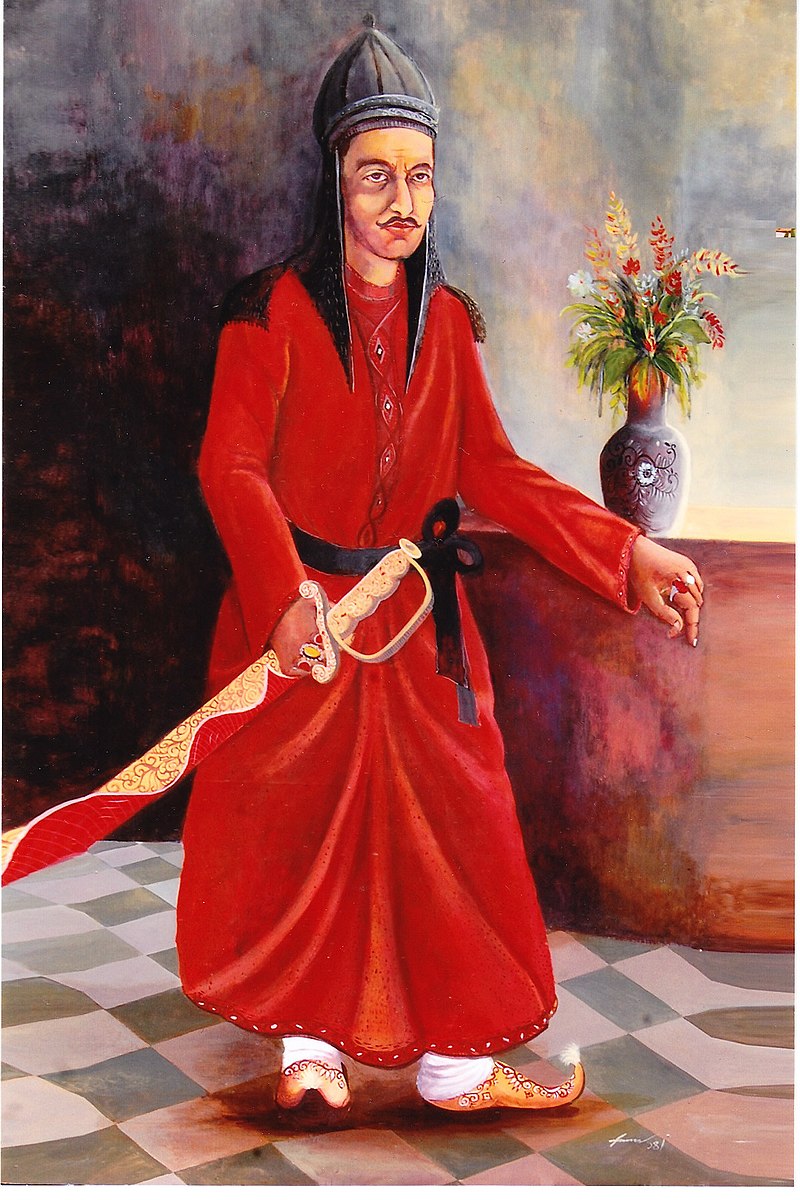
Eastern Bengal in the 18th century had devolved into a lawless frontier province, constantly switching ownership between the Mughal loyal Nawabs in Murshidabad (now West Bengal), and the Hindu Maharajas of Tripura to the East.

This constituted the region of Bengal east of Dacca, and north of the coast of Sandwip, till meeting the hills of Tripura proper.
This region was often dubbed Roshanabad, or Chakla Roshanabad, which would become home to the Gazi.
This region was often dubbed Roshanabad, or Chakla Roshanabad, which would become home to the Gazi.
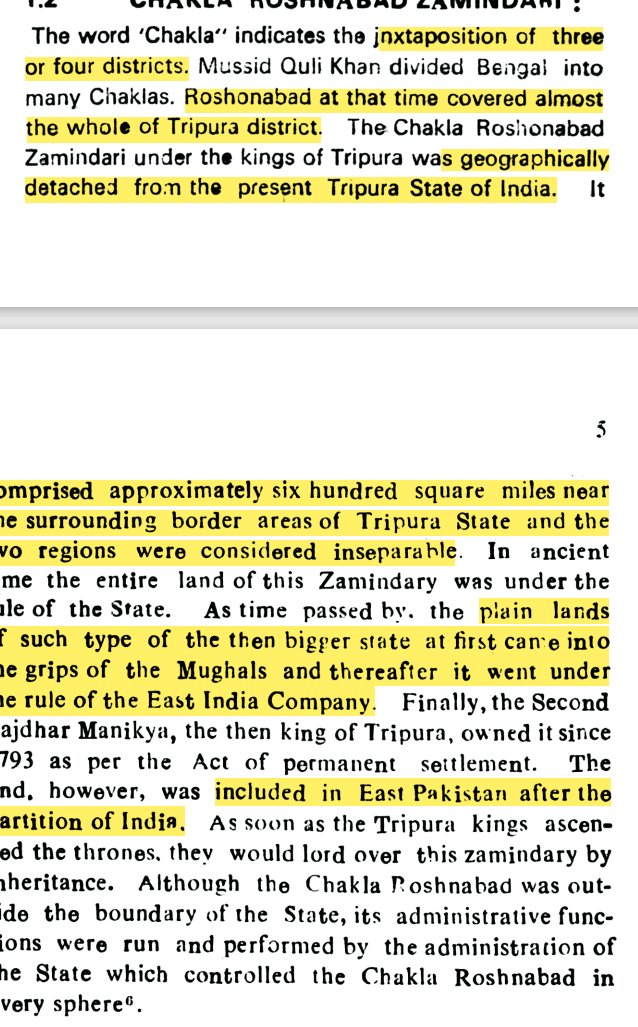
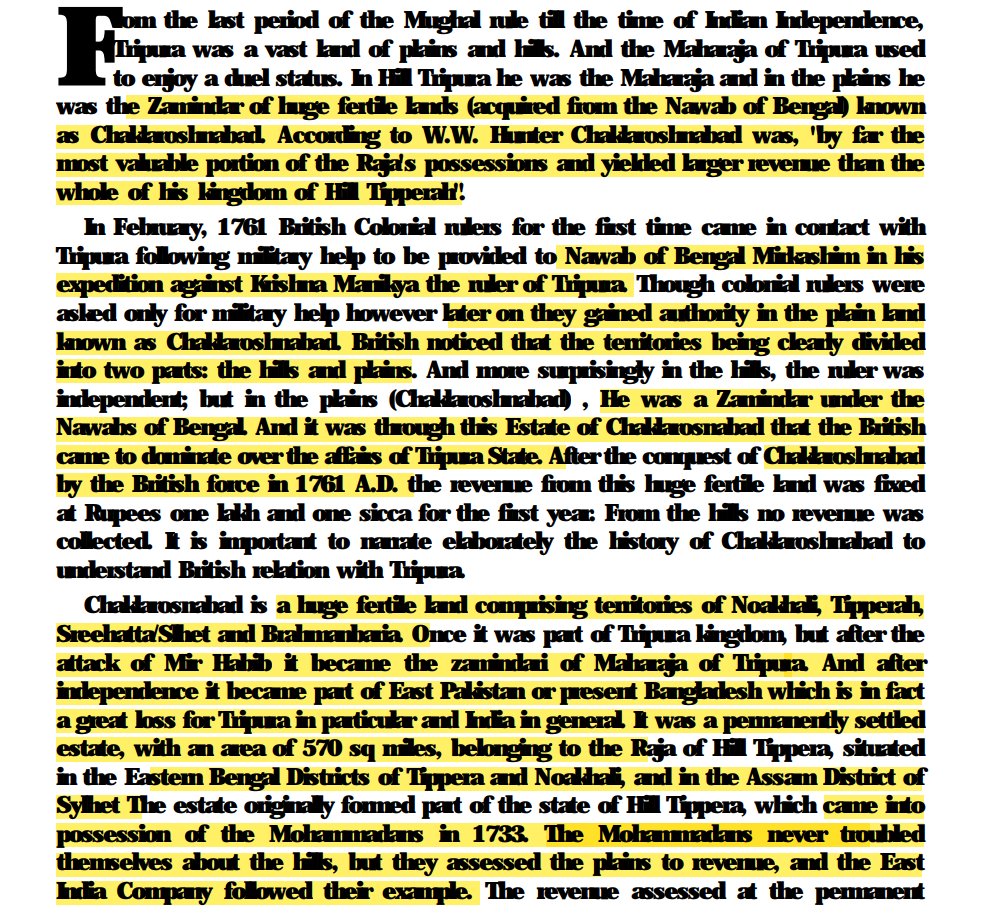
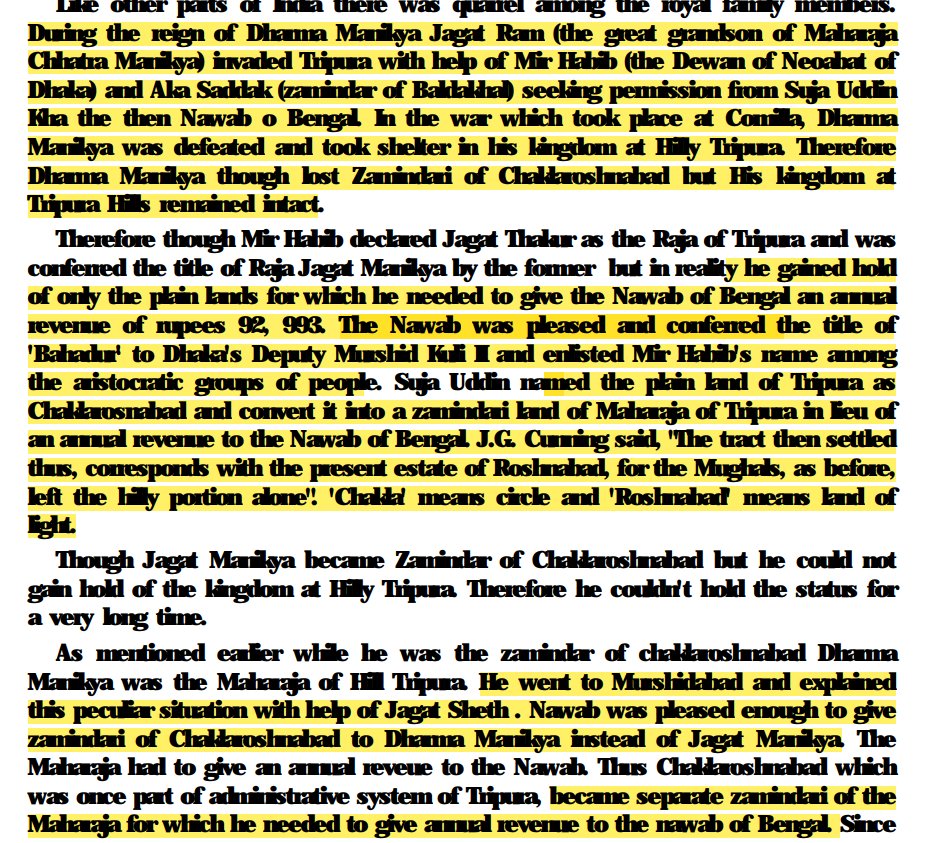
Tripura, a small kingdom in the hills east of Bengal proper, had long prided itself as a bastion of Hinduism. where their compatriots to the west and northern had fallen to invaders, Tripura retains an aloof independence.
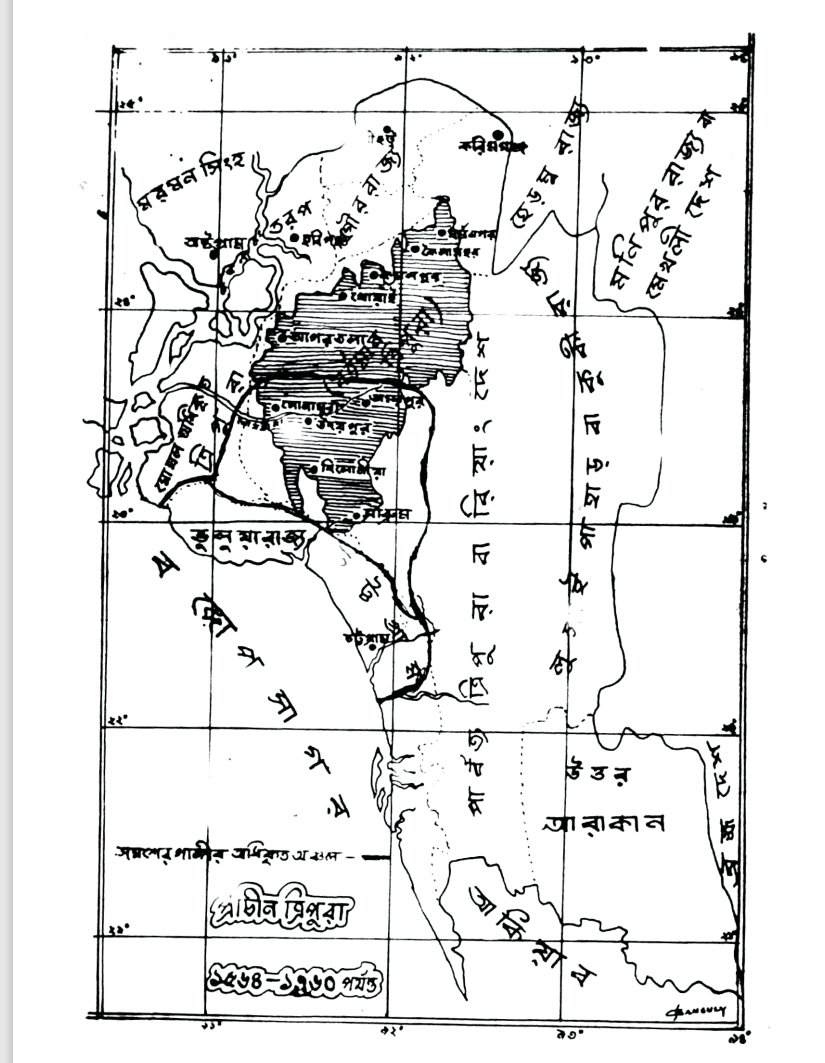
Bengali Muslims have been documented to have madeo Tripura their residence as early as the 13th century.
Much of their homeland would eventually fall under the Zamindari of Chakla Roshanabad, and therefore the Maharaja was their Zamindar, though technically still Mughal subjects.
Much of their homeland would eventually fall under the Zamindari of Chakla Roshanabad, and therefore the Maharaja was their Zamindar, though technically still Mughal subjects.
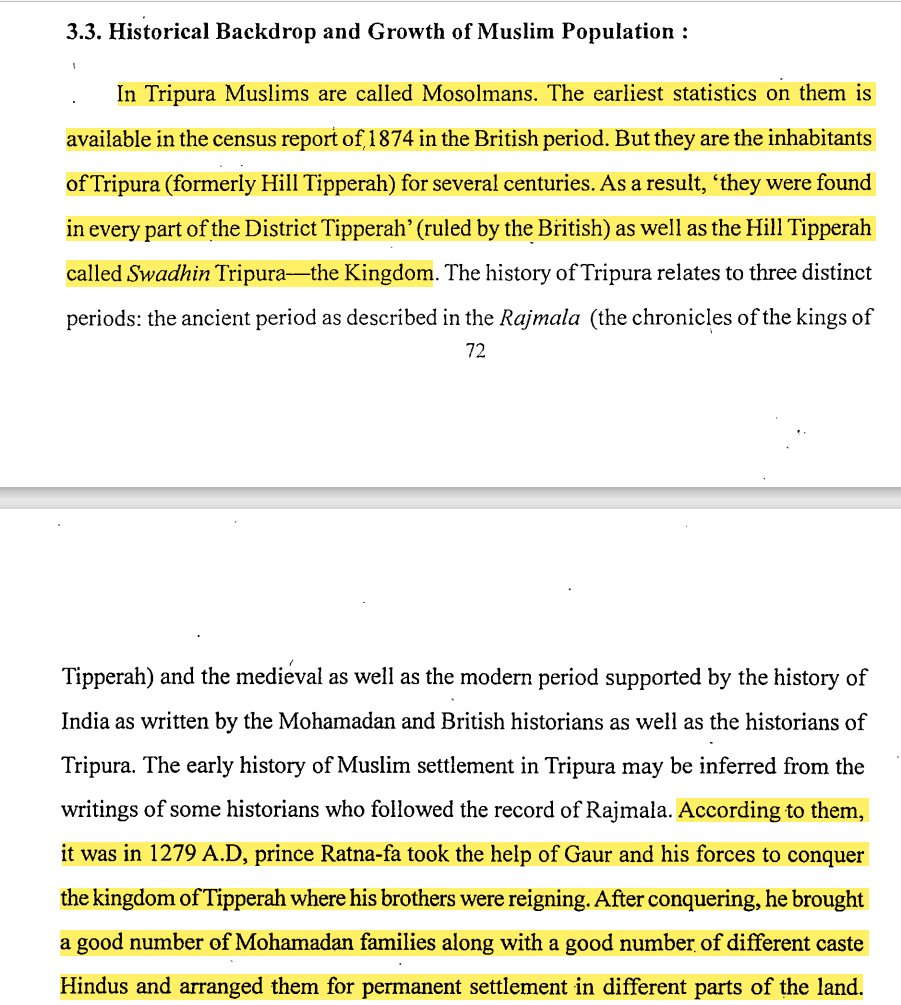

the Mughals were no longer the great imperial power of ages past.
problems arose across North India and the Deccan, and soon some of these problems, such as the Maratha invaders would be at Bengal’s door soon enough.
problems arose across North India and the Deccan, and soon some of these problems, such as the Maratha invaders would be at Bengal’s door soon enough.
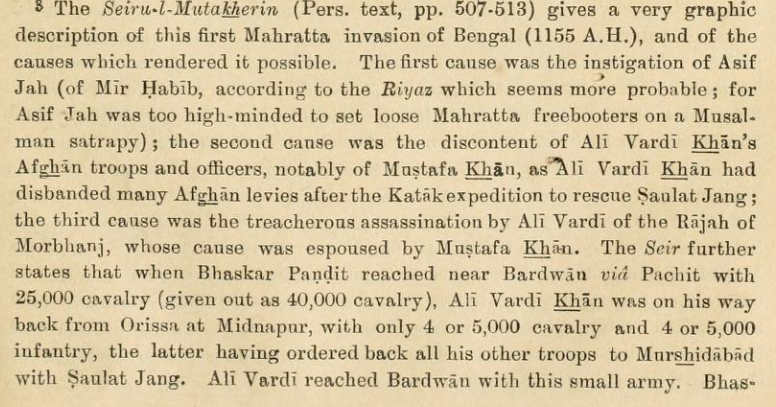
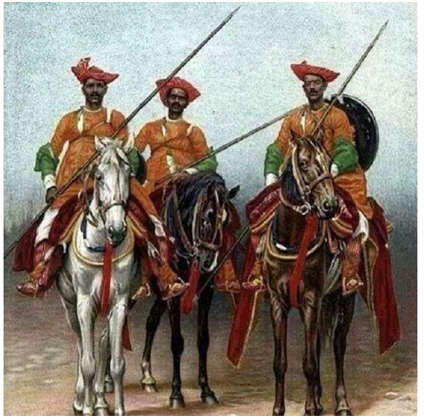
Ali Vardi Khan, the nawab himself, would launch a fierce campaign against them to the west and south. (West Bengal, Bihar and Odisha today).
However, the east meanwhile became hotbed of evil and wickedness, and neither the Nawabs nor Maharaja saw it their duty to bring justice.
However, the east meanwhile became hotbed of evil and wickedness, and neither the Nawabs nor Maharaja saw it their duty to bring justice.

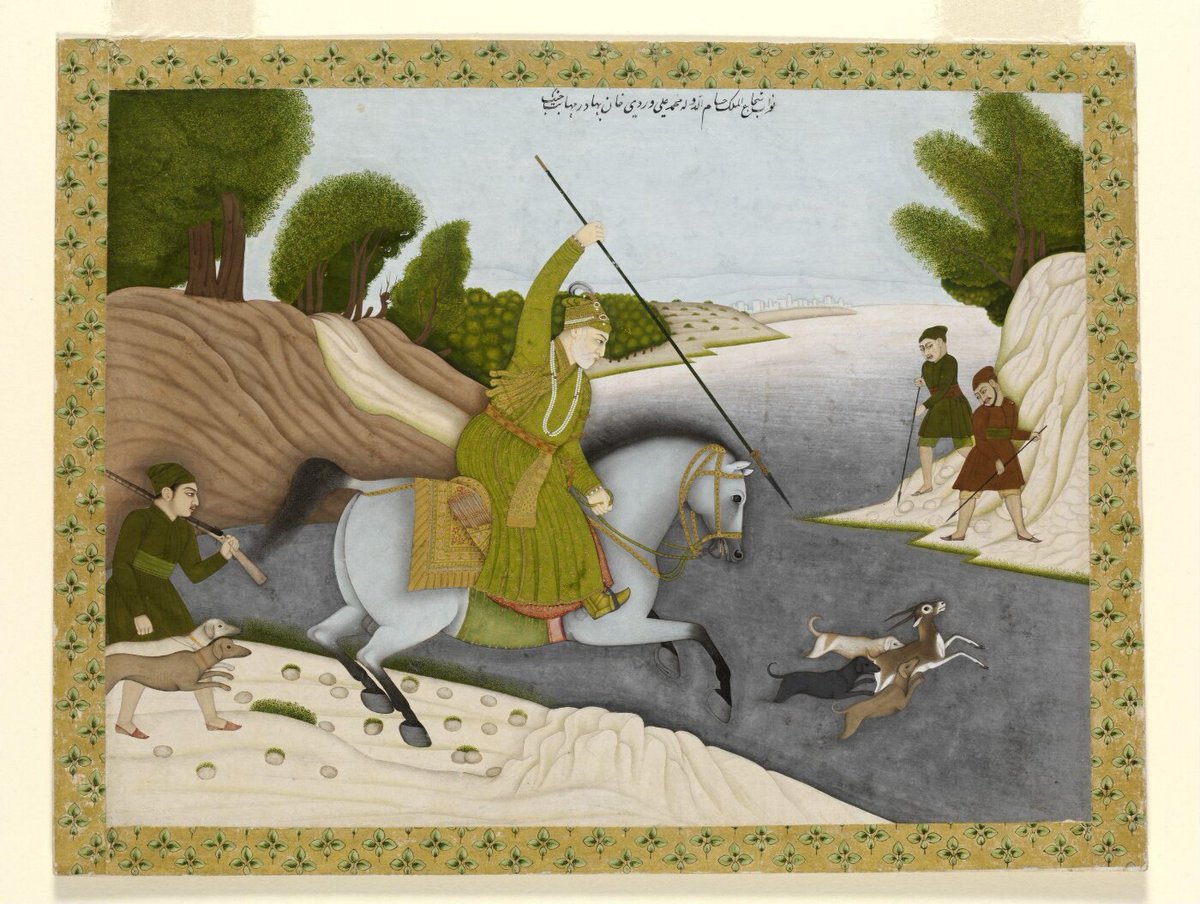
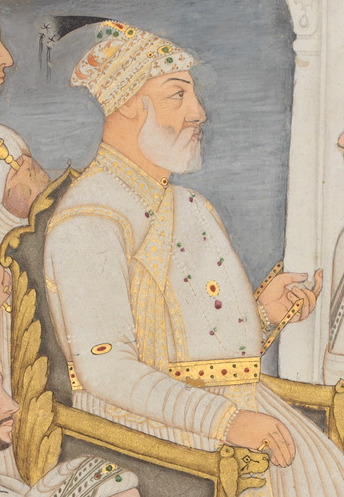
Piru, a Bengali Muslim Ryot (landless peasant)with th a family to feed, resorts to petty theft.
caught by the Zamindar of Daksinsik (current day Noakhali, Bangladesh), instead of being punished, fortune favoured the peasant, as the charitable Nasiruddin, took pity upon Piru.
caught by the Zamindar of Daksinsik (current day Noakhali, Bangladesh), instead of being punished, fortune favoured the peasant, as the charitable Nasiruddin, took pity upon Piru.
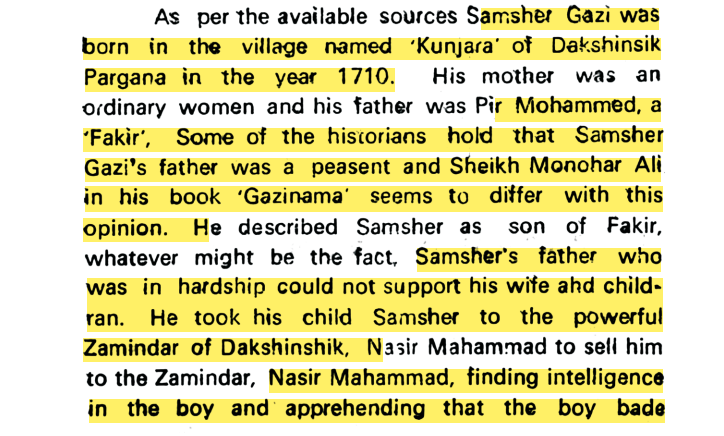
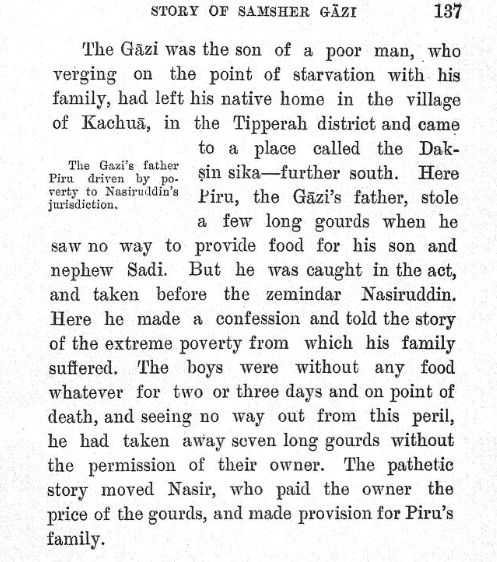
the Zamindar agreed to support the studies of his children, and raise them amongst his own.
These were two young boys, named Shamsher (his son) and Sadi (his nephew), already deemed as remarkable from an early age, as legends of their accolades even in their youth still persist.
These were two young boys, named Shamsher (his son) and Sadi (his nephew), already deemed as remarkable from an early age, as legends of their accolades even in their youth still persist.
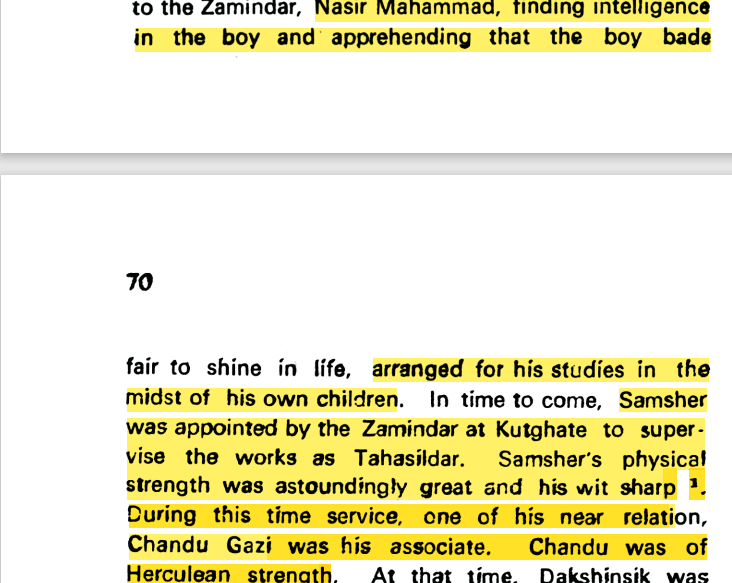
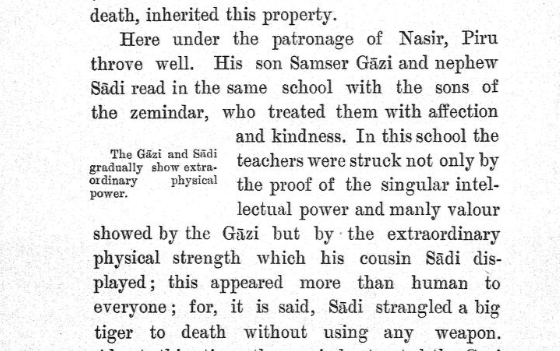
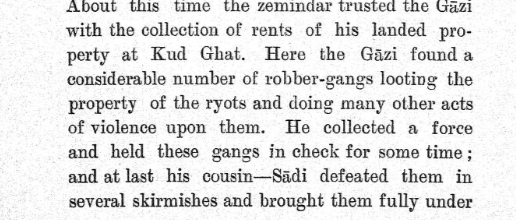
Shamsher would gain the trust of Nasiruddin, and earned a role as tax collector.
He saw the reality of his kinfolk. Poor and destitute, just like his father, made worse by an infestation of dacoits (robber bandits)
he and Sadi formed a militia to crush the roaming bandits.
He saw the reality of his kinfolk. Poor and destitute, just like his father, made worse by an infestation of dacoits (robber bandits)
he and Sadi formed a militia to crush the roaming bandits.
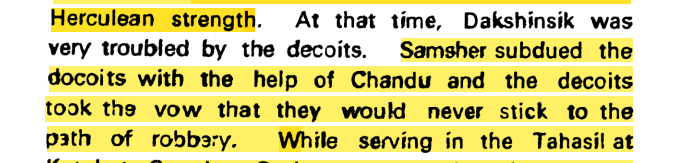
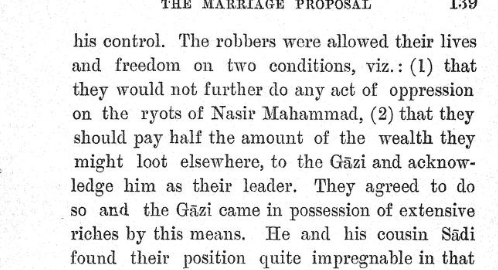
The dacoits were spared, upon two conditions.
Never again loot Daksinsik Pargana (district), and to give the two young men half their revenues from now on.
This agreement turned Shamsher and Sadi into the two most powerful men in Daksinsik overnight.
Never again loot Daksinsik Pargana (district), and to give the two young men half their revenues from now on.
This agreement turned Shamsher and Sadi into the two most powerful men in Daksinsik overnight.
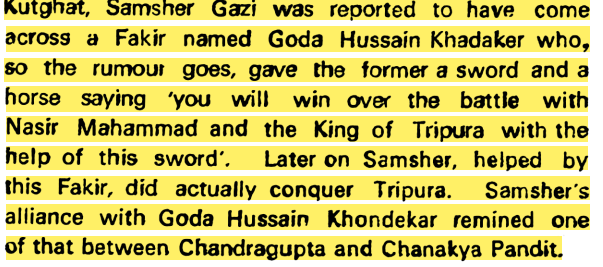
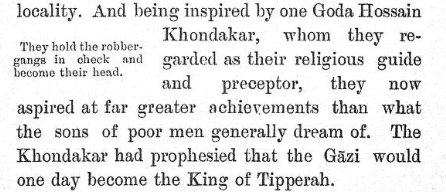
Their path to power would truly begin with their encounter with the mystic Ghoda Hossain Khondakar, a Bengali Muslim Faqir.
He gave Shamsher a sword and a white horse, needing both for his imminent conquest of the ancient kingdom of Tripura, whose throne they now their eyes on.
He gave Shamsher a sword and a white horse, needing both for his imminent conquest of the ancient kingdom of Tripura, whose throne they now their eyes on.
The two understood that before they could reach the throne of Tripura, they would need to be lords in their own right.
The first plot of ambition was Sadi’s plan to propose marriage between Shamsher and the daughter of Nasiruddin, which was outright rejected by the future Gazi.
The first plot of ambition was Sadi’s plan to propose marriage between Shamsher and the daughter of Nasiruddin, which was outright rejected by the future Gazi.
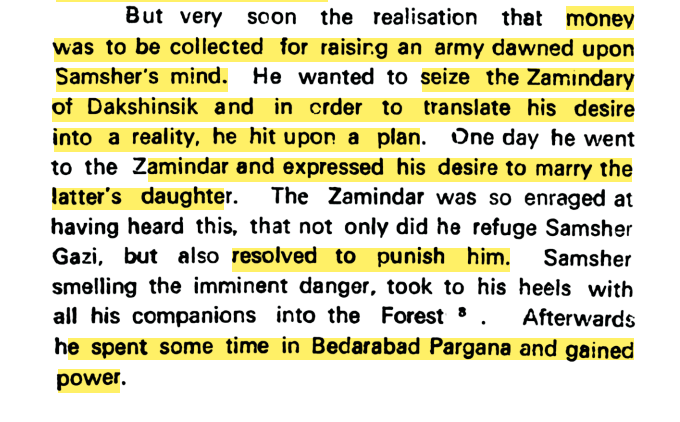

Despite his new found riches and status, Shamsher was aware that he was still the son of a Ryot, and to ask the hand of marriage from who had raised him out of a charity, would not only be unacceptable but offensive.
Shamsher relented to his cousins persistence, and as expected, this enraged Nasiruddin, who declared Shamsher and Sadi both enemies of his family, before sending his own men for their heads.
The two were forced to flee Daksinsik, and build a fort upon the lands nearby.
The two were forced to flee Daksinsik, and build a fort upon the lands nearby.
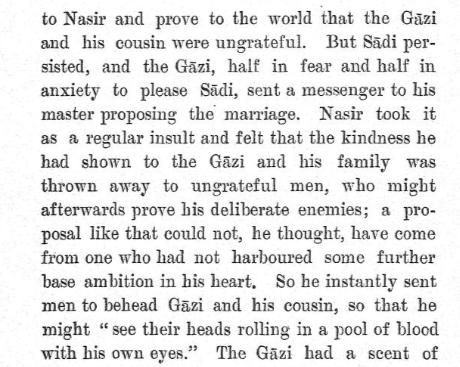
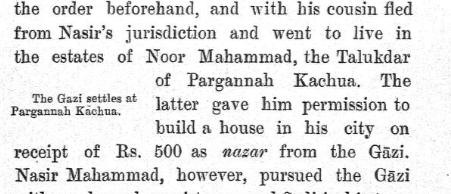
This conflict troubled the Gazi, finding it difficult waging war against a man who he owed so much to.
Sadi mean while began commanding troops in skirmishes against those sent by Nasiruddin.
Unbeknownst to Shamsher, Sadi sent a messenger to to lure them into a pitched battle.
Sadi mean while began commanding troops in skirmishes against those sent by Nasiruddin.
Unbeknownst to Shamsher, Sadi sent a messenger to to lure them into a pitched battle.
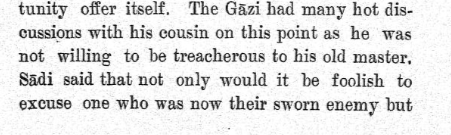
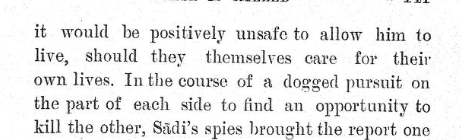
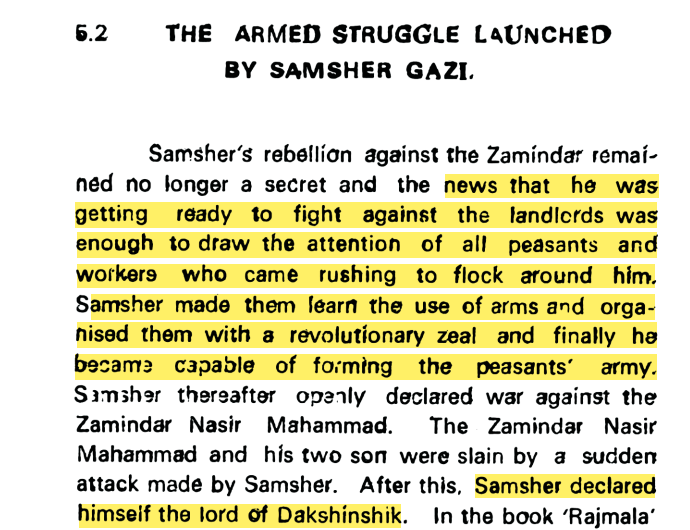
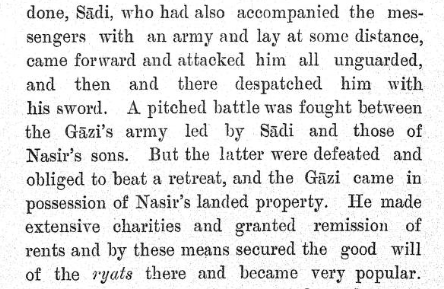
Shamsher joined the frey late, and was forced to slay Nasiruddin.
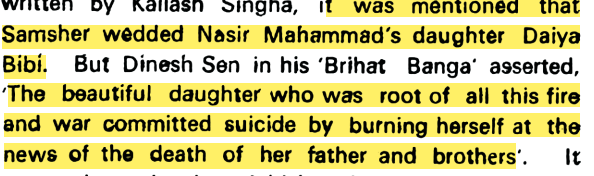
Narrations conflict on the fate of his daughter, some say they were wed, others say she committed suicide in grief for slain kin.
Word spread of the battle, and Shamsher could now declare himself its lord.
Narrations conflict on the fate of his daughter, some say they were wed, others say she committed suicide in grief for slain kin.
Word spread of the battle, and Shamsher could now declare himself its lord.
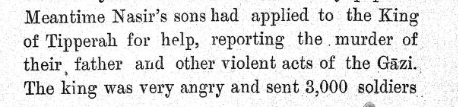
One of Nasiruddin’s sons survived to reach Udaipur, capital of the Rajas of Tripura, to plea with Bijoy Manikya, the reigning Maharaja.
An army of over 3,000 under Chief minister Jaydeva was sent to depose Shamsher and Sadi.
An army of over 3,000 under Chief minister Jaydeva was sent to depose Shamsher and Sadi.
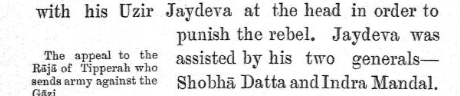
The army of Tripura, had a numerical advantage, and were professionally trained soldiers. Although Shamsher had gathered an army of several hundred loyal supporters, this battle would require a victory delivered not by the brawn, but the legendary wit of Shamsher.

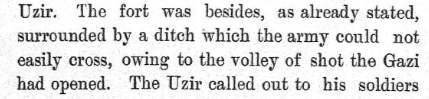
The pair had built a deep ditch around their fort, and when Jaydeva, his army had no choice but to camp there and engage in battle on Shamsher’s terms.
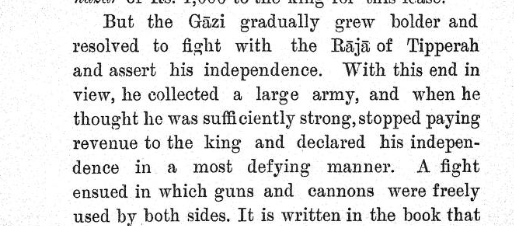
We are told that a great battle commenced, with cavalry, arms and artillery, and once again, the Gazi’s men stood triumphant.
We are told that a great battle commenced, with cavalry, arms and artillery, and once again, the Gazi’s men stood triumphant.
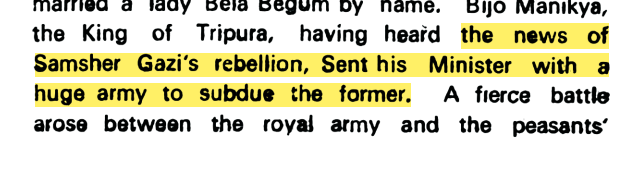
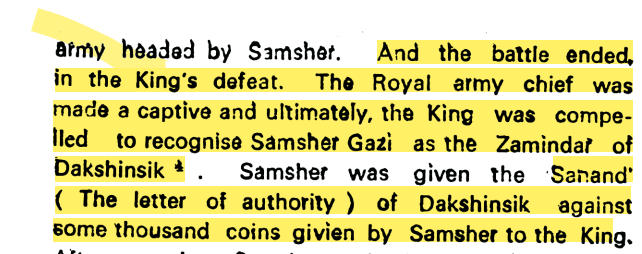
This unlikely victory is retold in Dinesh Chandra Sen’s ‘folk literature of Bengal’.
at the dead of night, the Gazi himself, along with some skilled locals, snuck into the enemy camp, and kidnapped Jaydeva, and hoisted him as public hostage.
at the dead of night, the Gazi himself, along with some skilled locals, snuck into the enemy camp, and kidnapped Jaydeva, and hoisted him as public hostage.
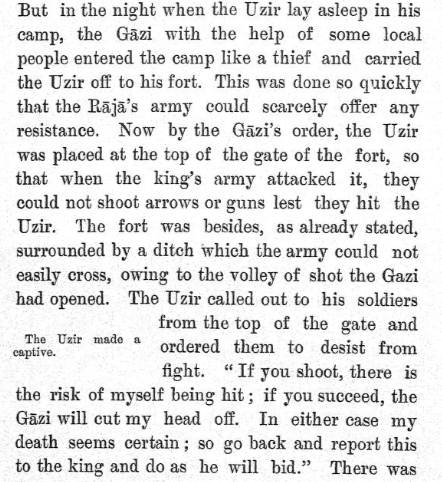
Jaydeva himself commanded his army to retreat and inform their Maharaja. and was treated as a respected guest by the Gazi, before being sent as his envoy to the Raja, to request his sanad (declaration).
This victory with minimal bloodshed speaks to the Gazi’s wisdom.
This victory with minimal bloodshed speaks to the Gazi’s wisdom.
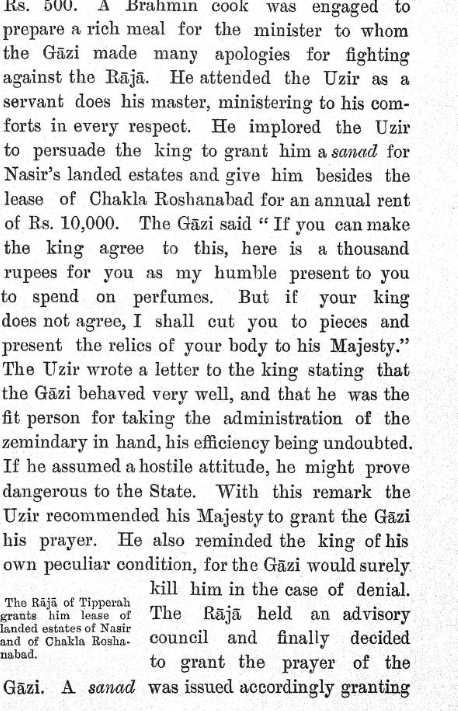
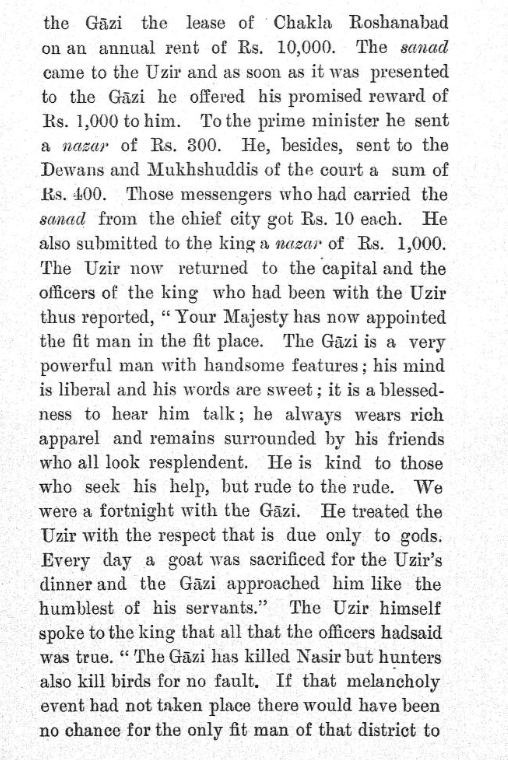
Despite becoming the rightful lord of Daksinsik, the prophecy was only half fulfilled, for Shamsher would declare himself Nawab (or king) of all Roshanabad, effectively laying claim over most the Maharaja’s territory.
.
.
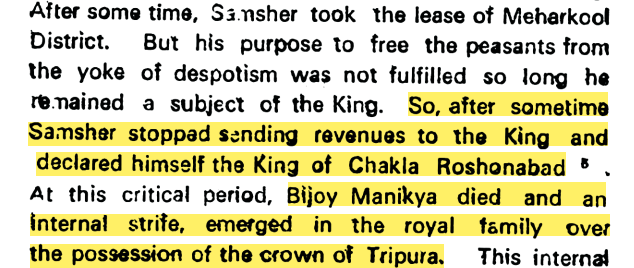
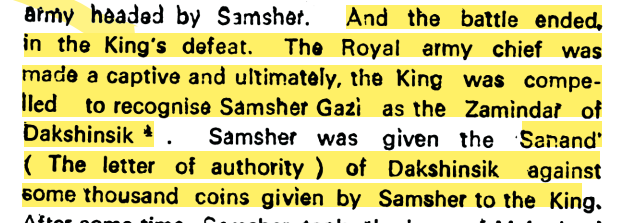
Fate would favour Shamsher again, as before Maharaja Bijoy could react, he would pass away, leaving a succession crisis that would not be solved for months.
Although Shamsher’s keen wit had won them the day against Jaydeva, it was not a long term strategy toward power.
Although Shamsher’s keen wit had won them the day against Jaydeva, it was not a long term strategy toward power.
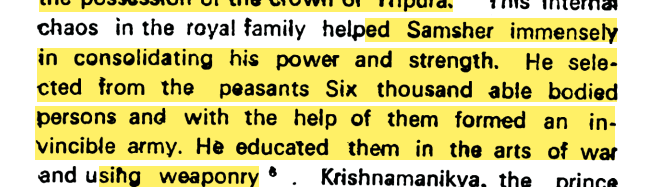
Thus, they began training their own professional military force, made up mostly of Bengali Muslims, lathials and former dacoits.
Before the battle, the Gazi had an of 6,000 handpicked elite troops under his command.
Before the battle, the Gazi had an of 6,000 handpicked elite troops under his command.
Loading suggestions...