

🧵regarding the packing of cavities for hemostasis during surgery:
Here I will discuss why using a precise technique for packing for hemostasis is important, what happens when you don't use a precise technique, and a pointer about packing newly drained abscess cavities.
(1/ )
Here I will discuss why using a precise technique for packing for hemostasis is important, what happens when you don't use a precise technique, and a pointer about packing newly drained abscess cavities.
(1/ )
Background:
Cantaloupe (L) and eggplant (R) have been featured in human cuisine for centuries, yet their utility for surgical education remains unexplored. This 🧵will use these models to explore why precise packing technique can facilitate hemostasis.
Cantaloupe (L) and eggplant (R) have been featured in human cuisine for centuries, yet their utility for surgical education remains unexplored. This 🧵will use these models to explore why precise packing technique can facilitate hemostasis.

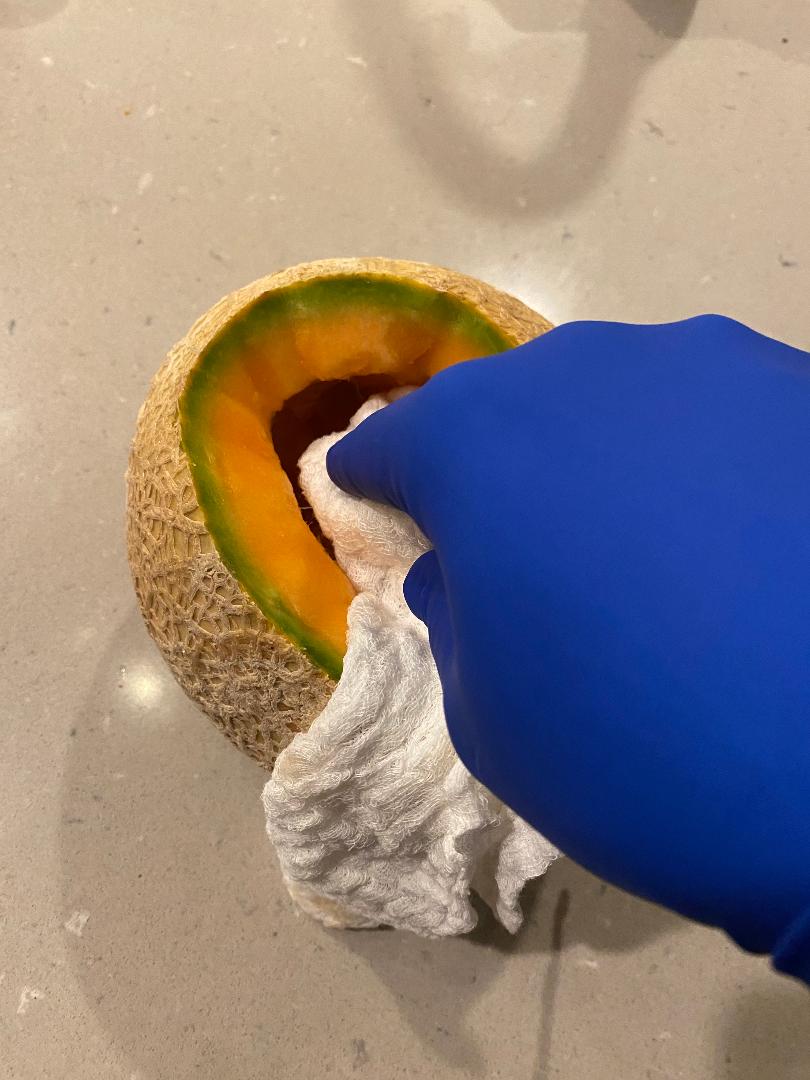
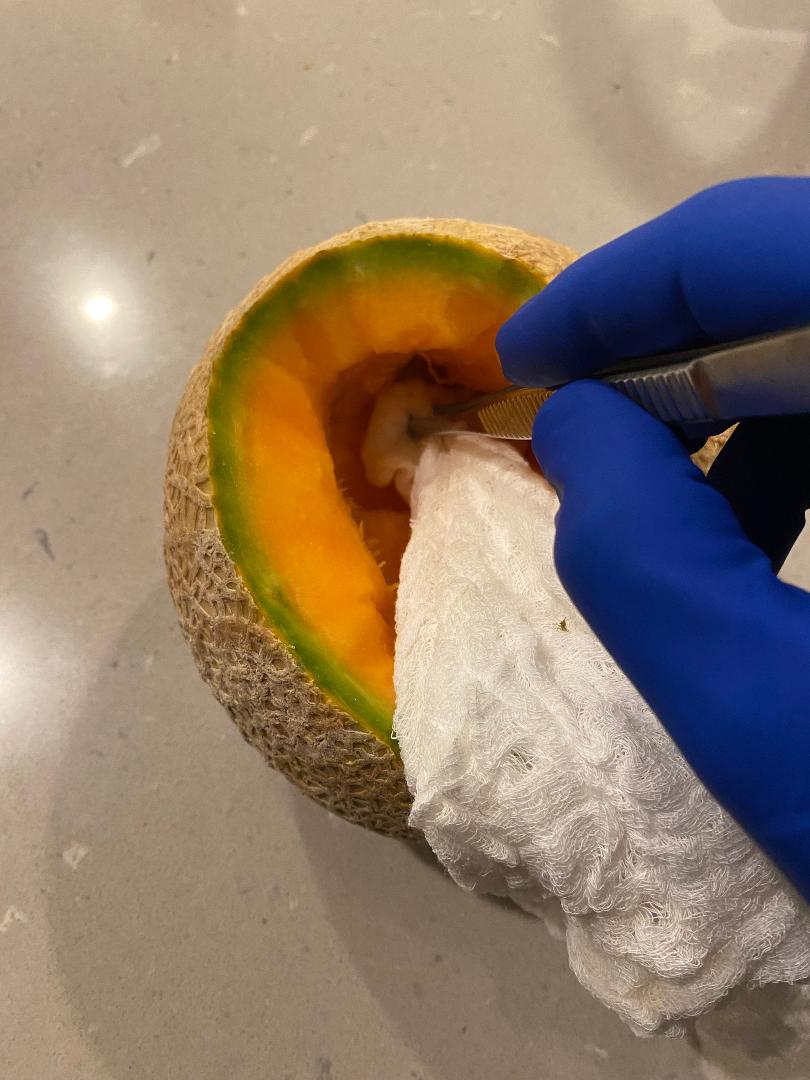
Packing of a cavity for hemostasis is commonly done either with one's hand (L picture) or with forceps (R picture).
This will depend on the size and depth of the cavity to be packed, but using forceps is generally more precise, at least when the area can be seen directly.
This will depend on the size and depth of the cavity to be packed, but using forceps is generally more precise, at least when the area can be seen directly.
But now it gets more complicated.
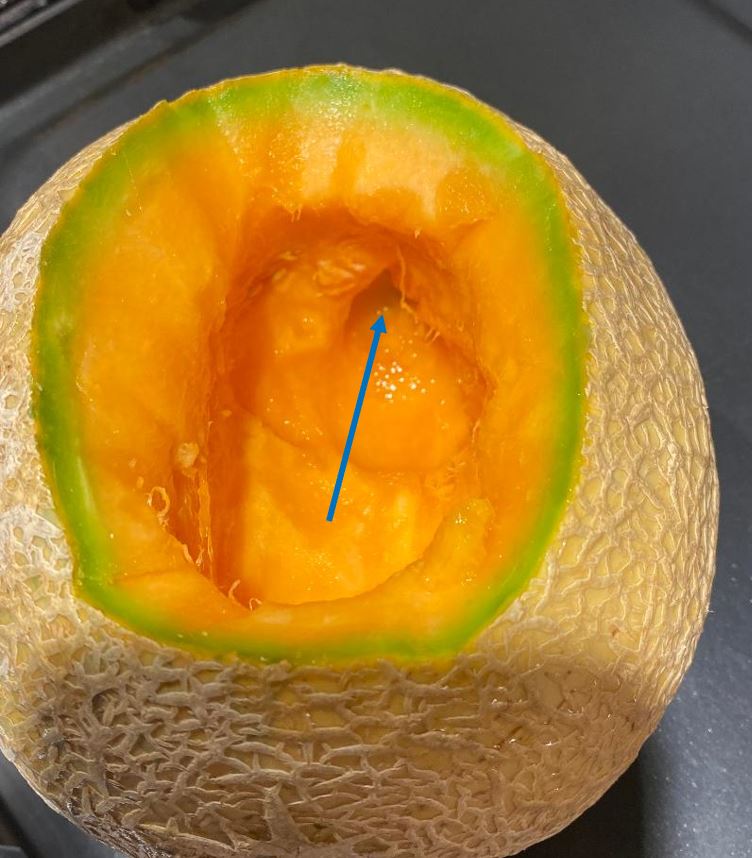
Here I have altered the model so that there is an irregular area in the depth of the cavity (blue arrow).
As we'll see, it is this area that can be missed if we pack too quickly and imprecisely.
Here I have altered the model so that there is an irregular area in the depth of the cavity (blue arrow).
As we'll see, it is this area that can be missed if we pack too quickly and imprecisely.
This video shows a hasty and imprecise packing technique in which I'm basically just shoving the pack in there and hoping for the best.
If there are any irregular pockets in the cavity (as I just showed) then those areas may not be tightly packed, and they may still bleed.
If there are any irregular pockets in the cavity (as I just showed) then those areas may not be tightly packed, and they may still bleed.

Let us see what can happen if I pack the cavity using a cursory and imprecise technique, as in the video I just showed.
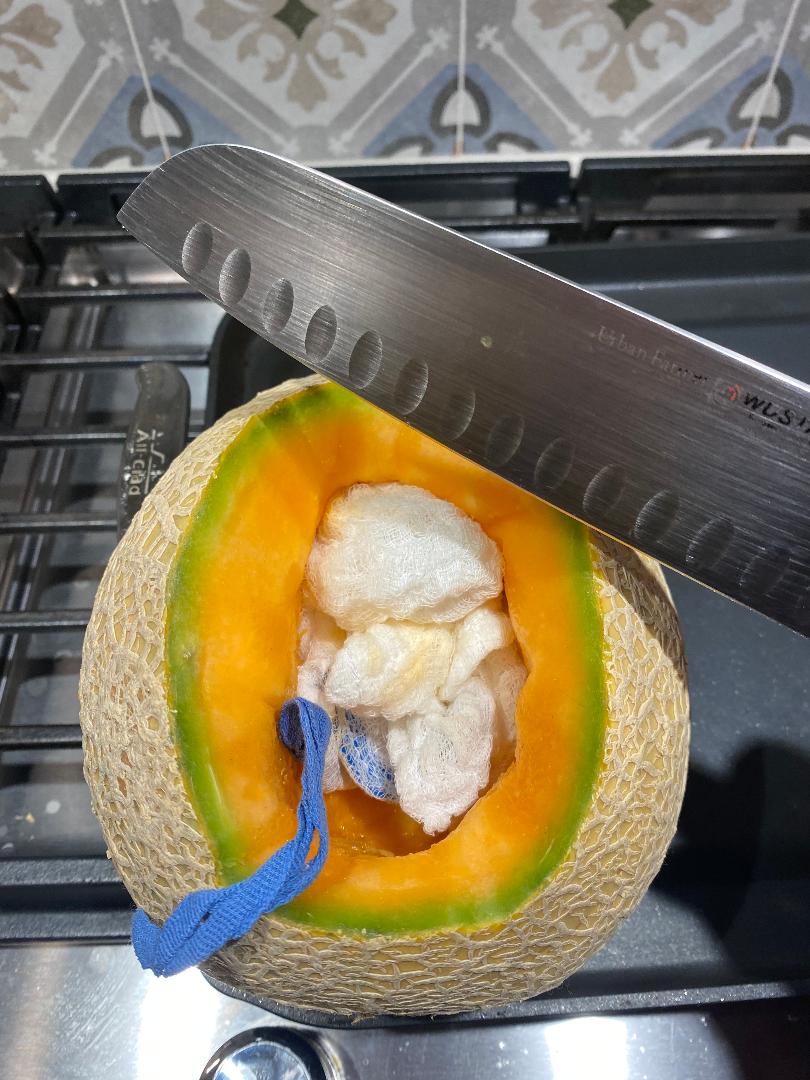
Here I have shoved a laparotomy pad ('swab') in there with little attention to technique.
Now I am going to section the cantaloupe and see what it looks like.
Here I have shoved a laparotomy pad ('swab') in there with little attention to technique.
Now I am going to section the cantaloupe and see what it looks like.
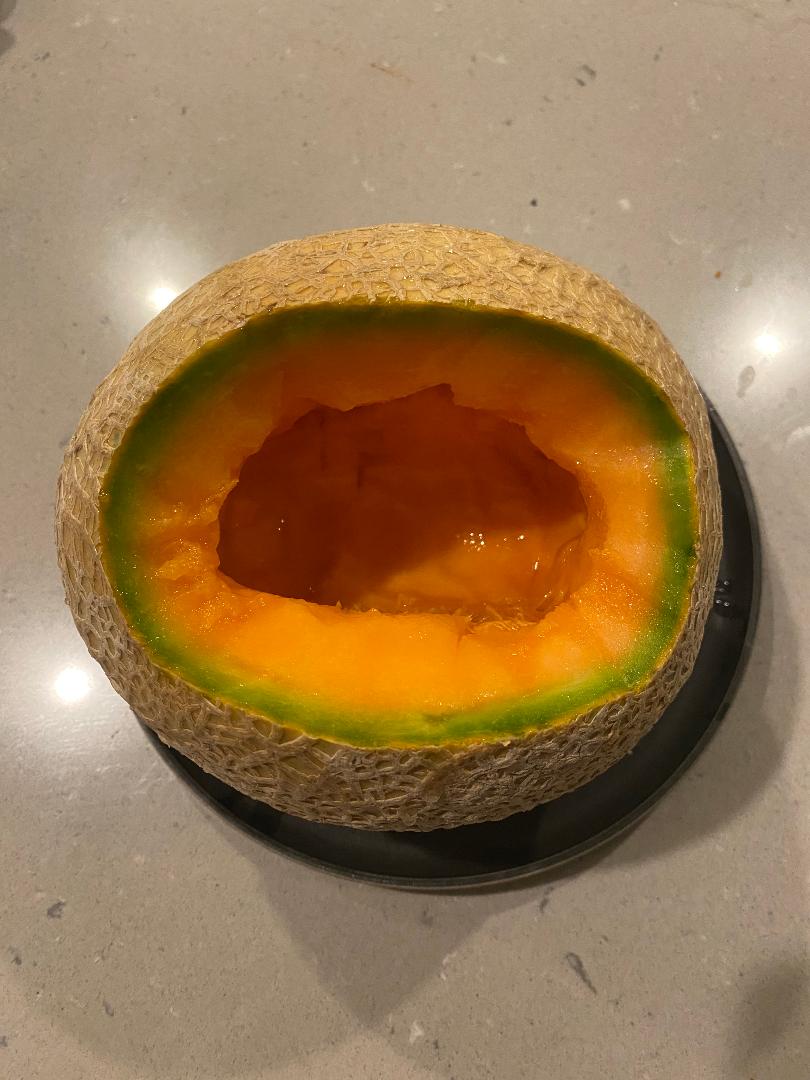
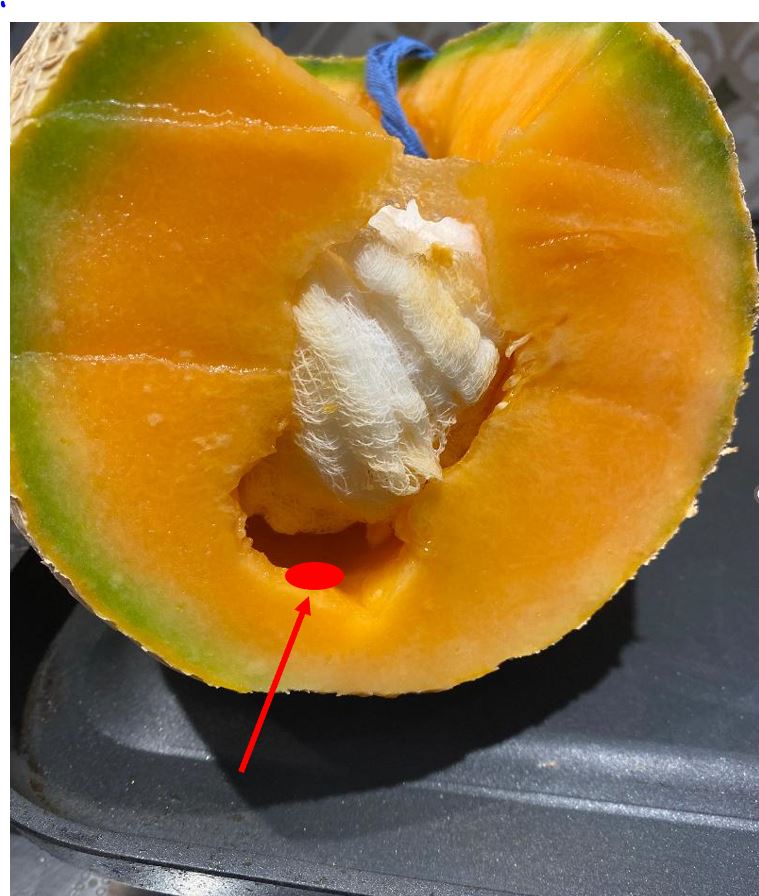
And here is the result.
The deep part of the cavity was not tightly packed. If there's a bleeder in there, it will continue to bleed, and this pocket will fill with blood. It may float that laparotomy pad right out of there. You may have to re-explore the wound for bleeding.
The deep part of the cavity was not tightly packed. If there's a bleeder in there, it will continue to bleed, and this pocket will fill with blood. It may float that laparotomy pad right out of there. You may have to re-explore the wound for bleeding.
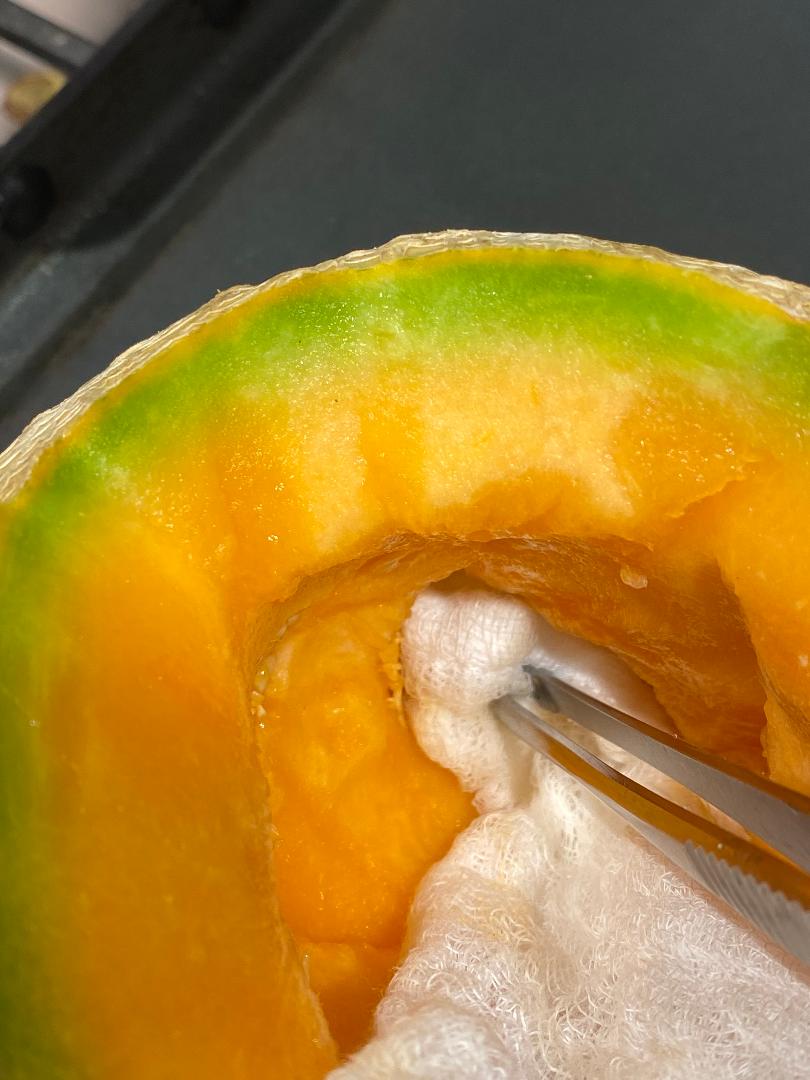
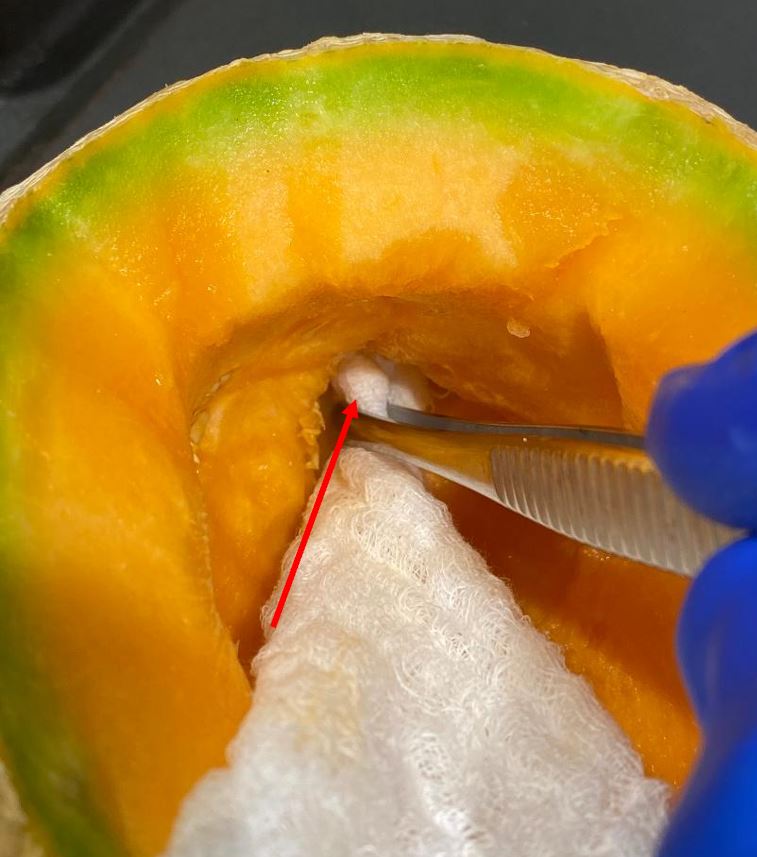
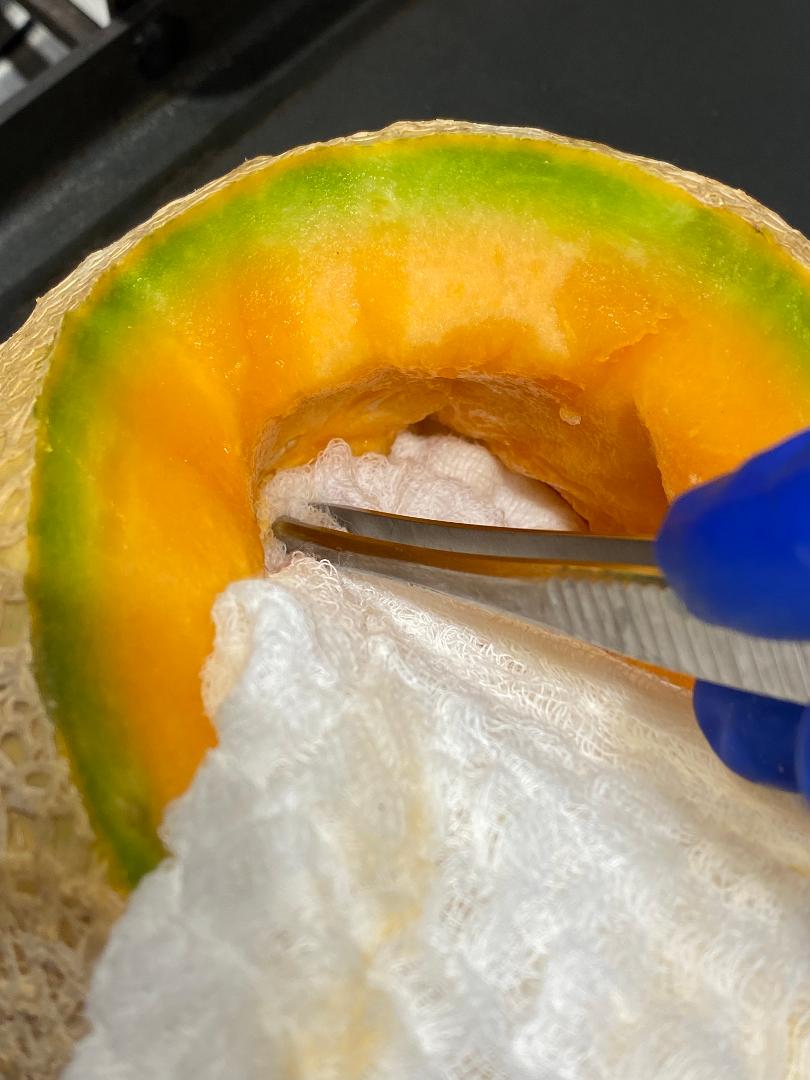
Here, I am now packing with more precision: instead of just shoving the pad in there, I am using the forceps to carefully pack the deepest part of the cavity first (L picture).
I then finish lining the rest of the deeper part with the pack (R picture). Now I can do the rest.
I then finish lining the rest of the deeper part with the pack (R picture). Now I can do the rest.
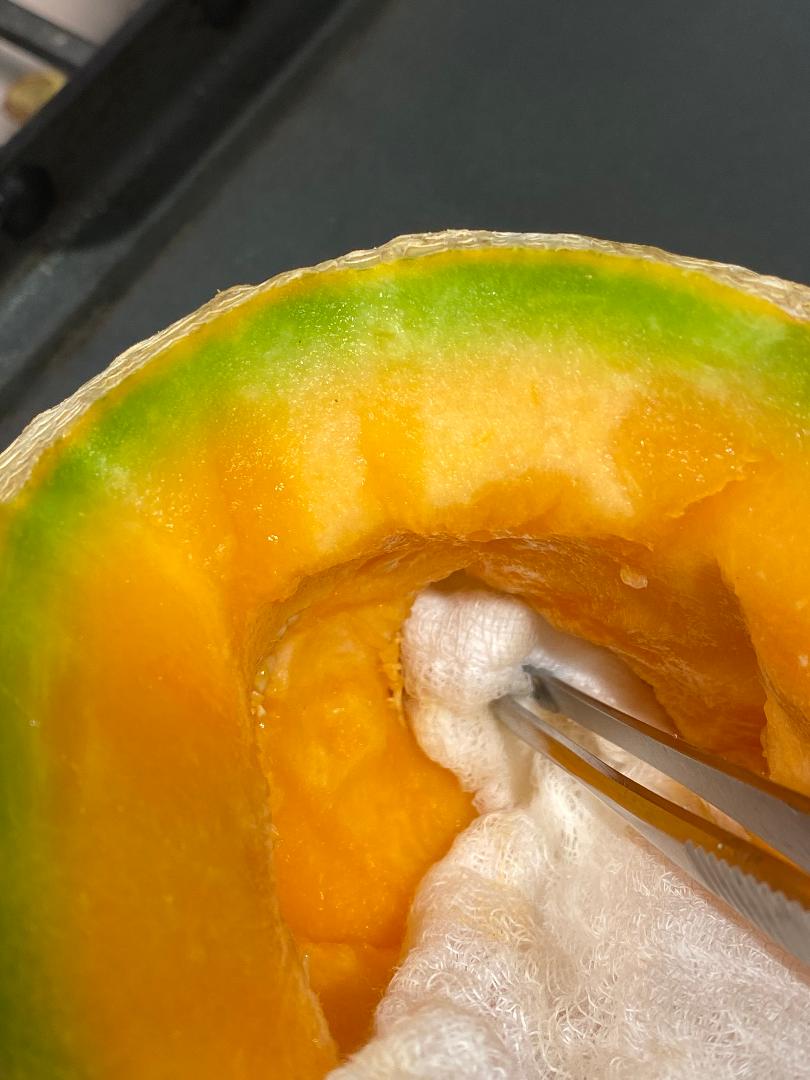
Again, having carefully lined the deepest pocket first, I may now fill in the rest of the cavity with the laparotomy pad.
This will be *much* more effective at hemostasis than the haphazard method I showed earlier in the thread.
This will be *much* more effective at hemostasis than the haphazard method I showed earlier in the thread.
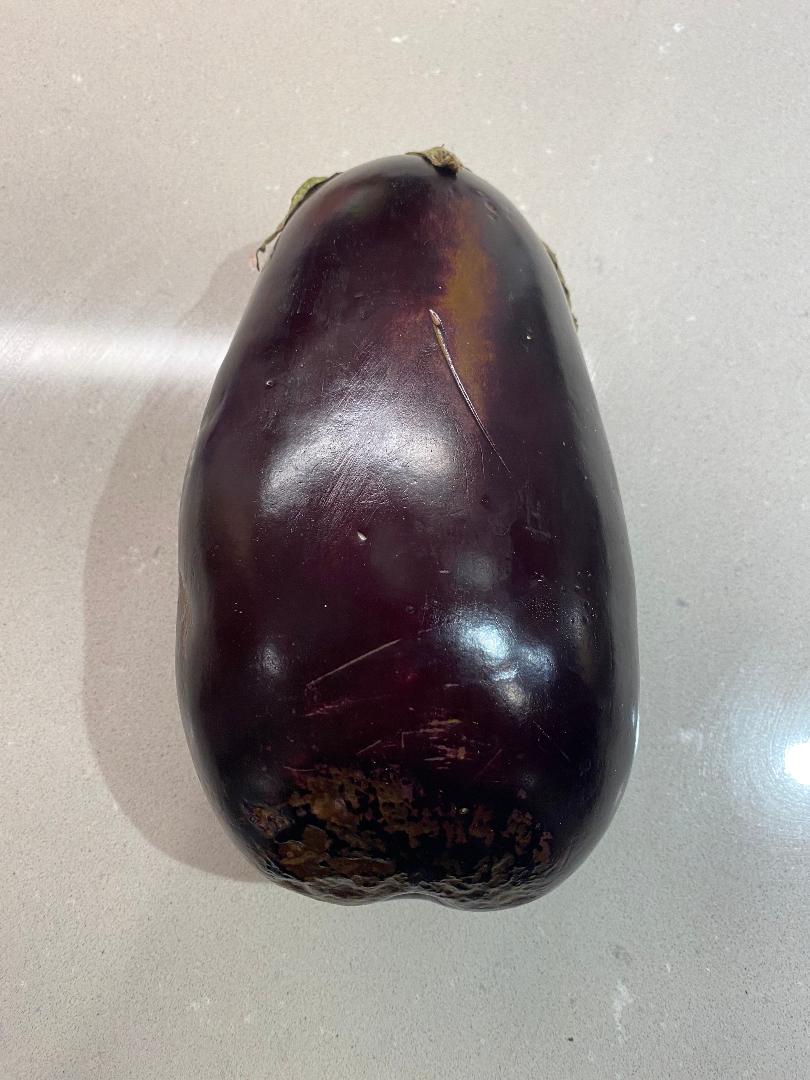
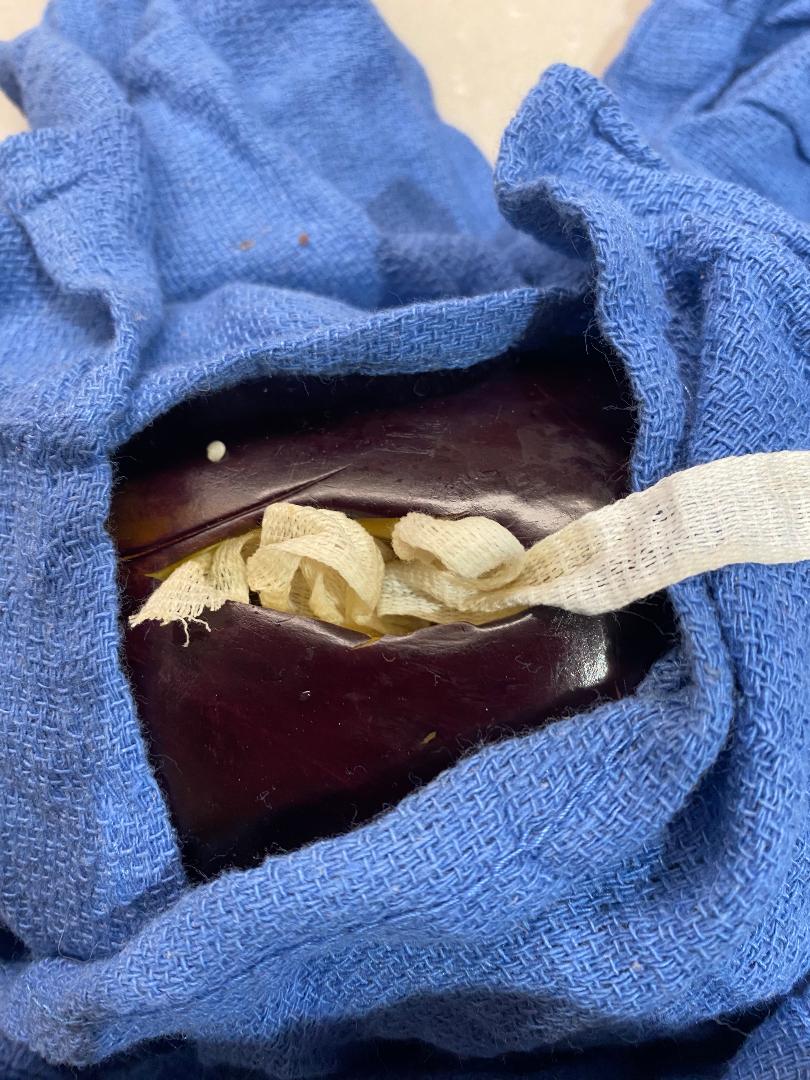
The same principle also applies to the initial packing of abscess cavities. Here I will use an eggplant model.
Abscesses are often fairly vascular, and may tend to bleed, so the very first packing may need to be fairly tight.
Elliptical incisions are favored (R picture).
Abscesses are often fairly vascular, and may tend to bleed, so the very first packing may need to be fairly tight.
Elliptical incisions are favored (R picture).
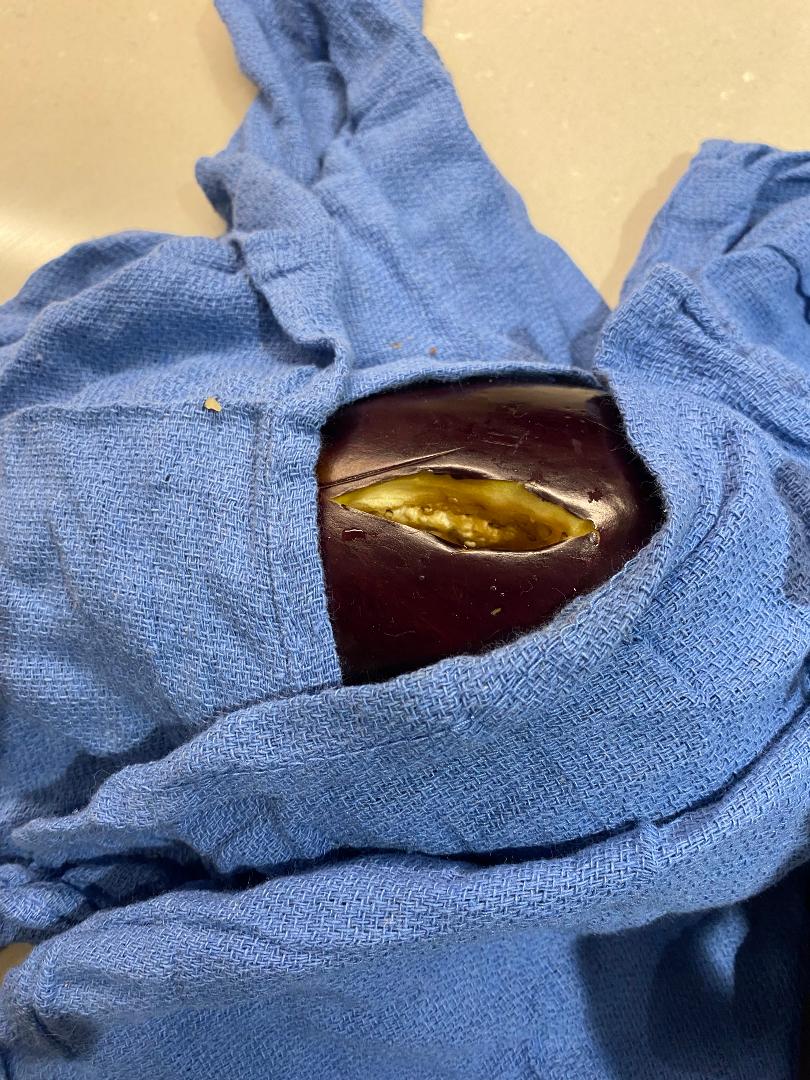
The same principle applies here. If you take a few extra seconds and pack the cavity in an orderly and precise manner, hemostasis will be better, and you are less likely to have to explore it later on for persistent bleeding.
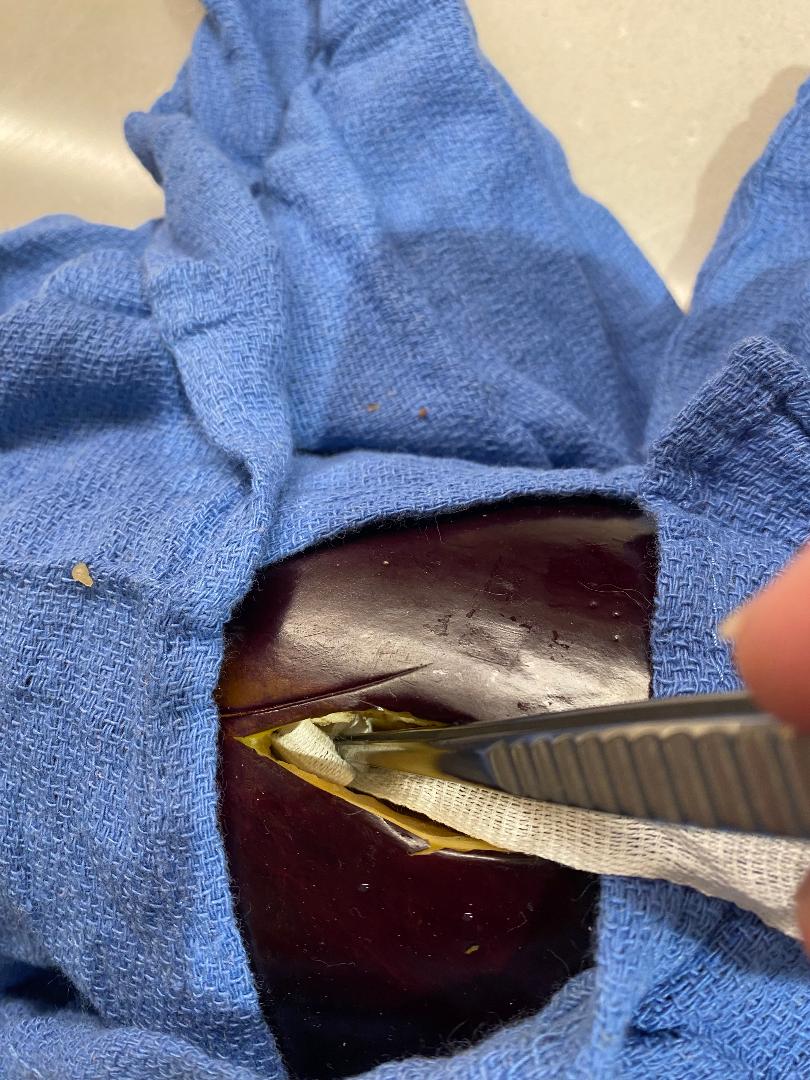
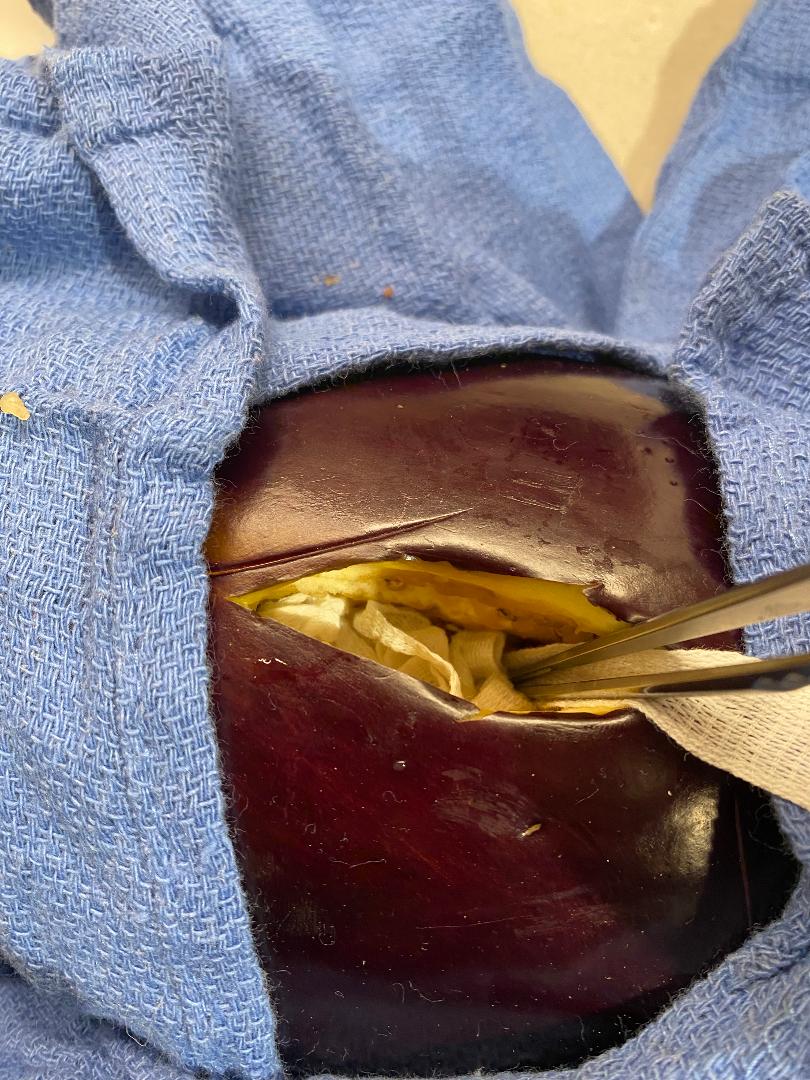
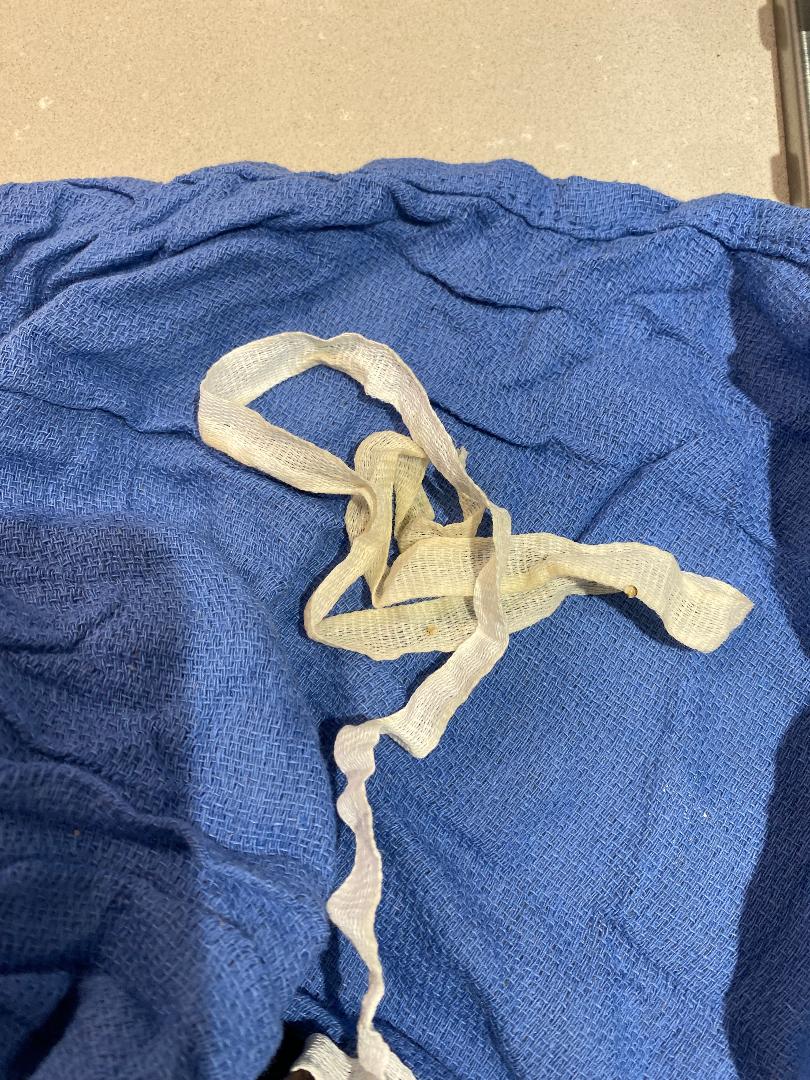
For abscesses, the first packing usually needs to be tight because you often need this tight packing to get hemostasis. Subsequent packings can be much looser (L picture).
The R pictures show the amount of packing I might use the first time (upper R) versus later on (lower R).
The R pictures show the amount of packing I might use the first time (upper R) versus later on (lower R).
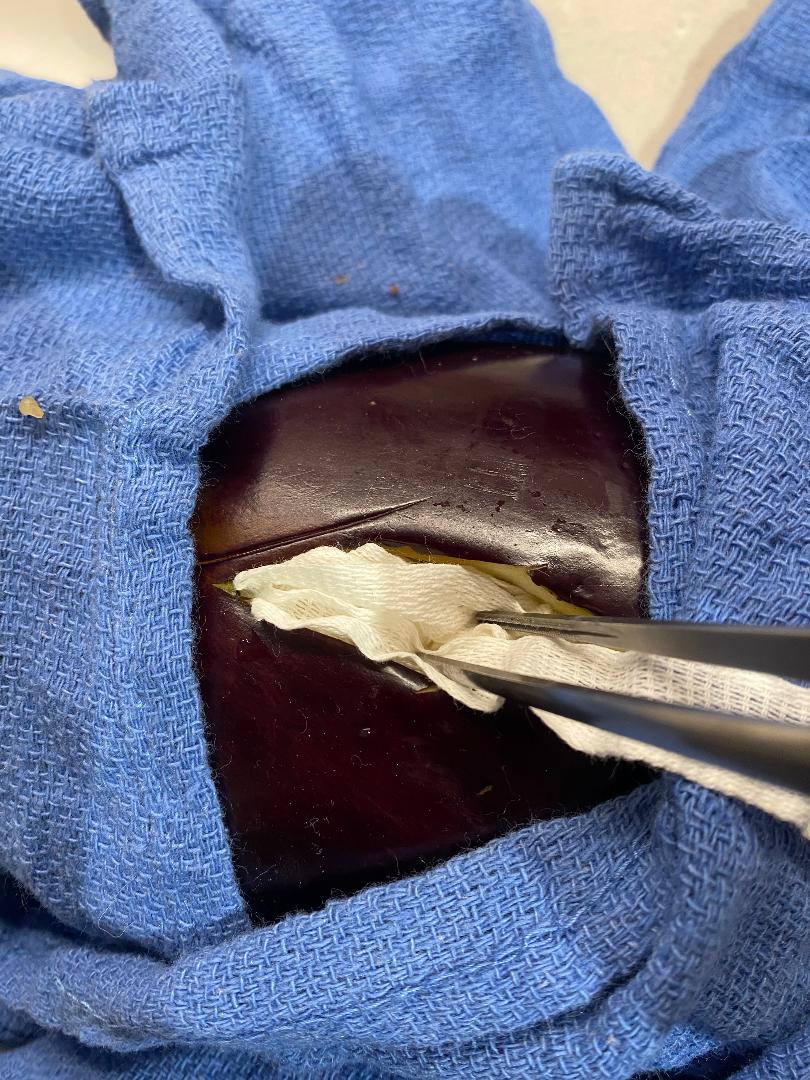
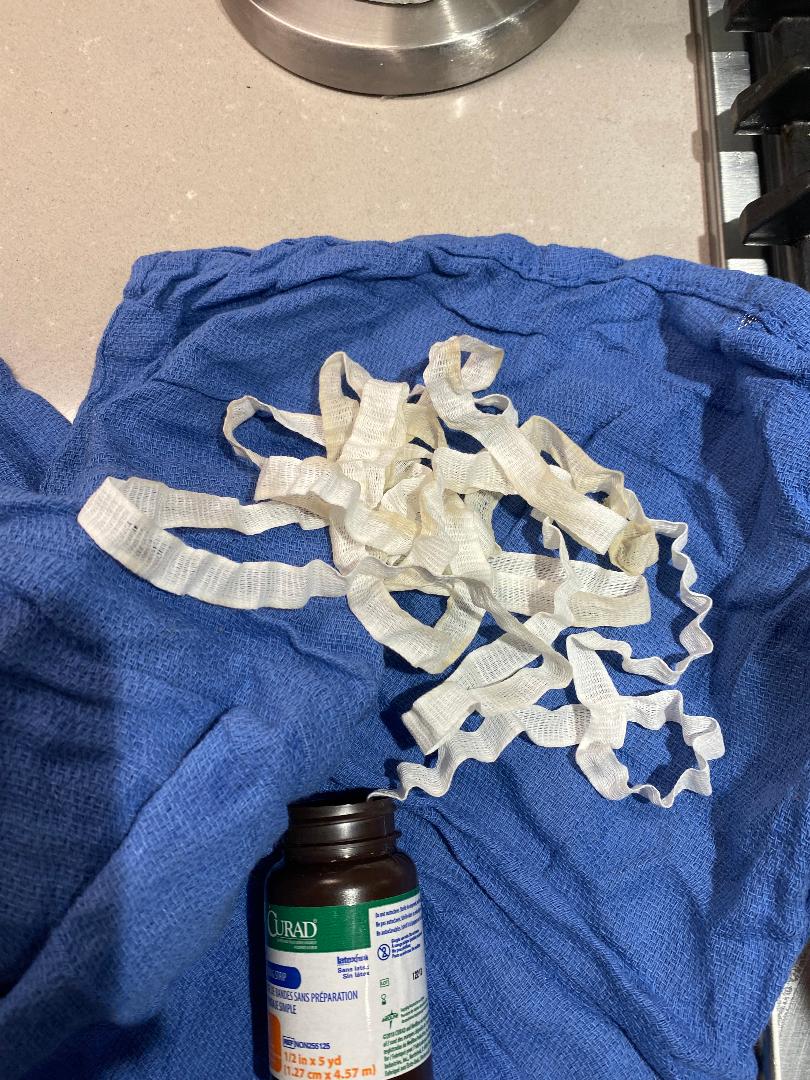
I'll cover other aspects of soft tissue debridement, abscess drainage, and packing in future 🧵s.
For now, remember that packing of cavities for hemostasis is something where you need to take the extra few seconds to use careful technique. It really does make a difference.
⬛️
For now, remember that packing of cavities for hemostasis is something where you need to take the extra few seconds to use careful technique. It really does make a difference.
⬛️
Loading suggestions...