

90% of people don't know this life hack:
I was binge-watching YouTube the other day, and I came across this TedTalk with 4 million views titled:
"Why You Should Define Your Fears Instead of Your Goals" by Tim Ferris.
Here are 6 lessons I learned, followed by an explanation (read until the end):
1. You're always on the verge of either success or self-destruction.
2. Embrace uncertainty as a motivator for self-improvement.
3. When dealing with depression, learning how to prevent self-destruction is more helpful than success recipients.
4. Stoicism helps prevent self-destruction by teaching you to focus on what you can control and reduce emotional reactions.
5. "We suffer more often in imagination than in reality."
6. A great exercise is using "premeditatio malorum": visualize worst case scenarios to motivate action and overcome paralysis.
↓ ↓ ↓ ↓
One way to do this exercise is to define your fears before taking action.
Writing down your fears and worst-case scenarios helps you visualize them so you can take necessary actions.
Tim calls this "fear-setting," similar to "goal-setting."
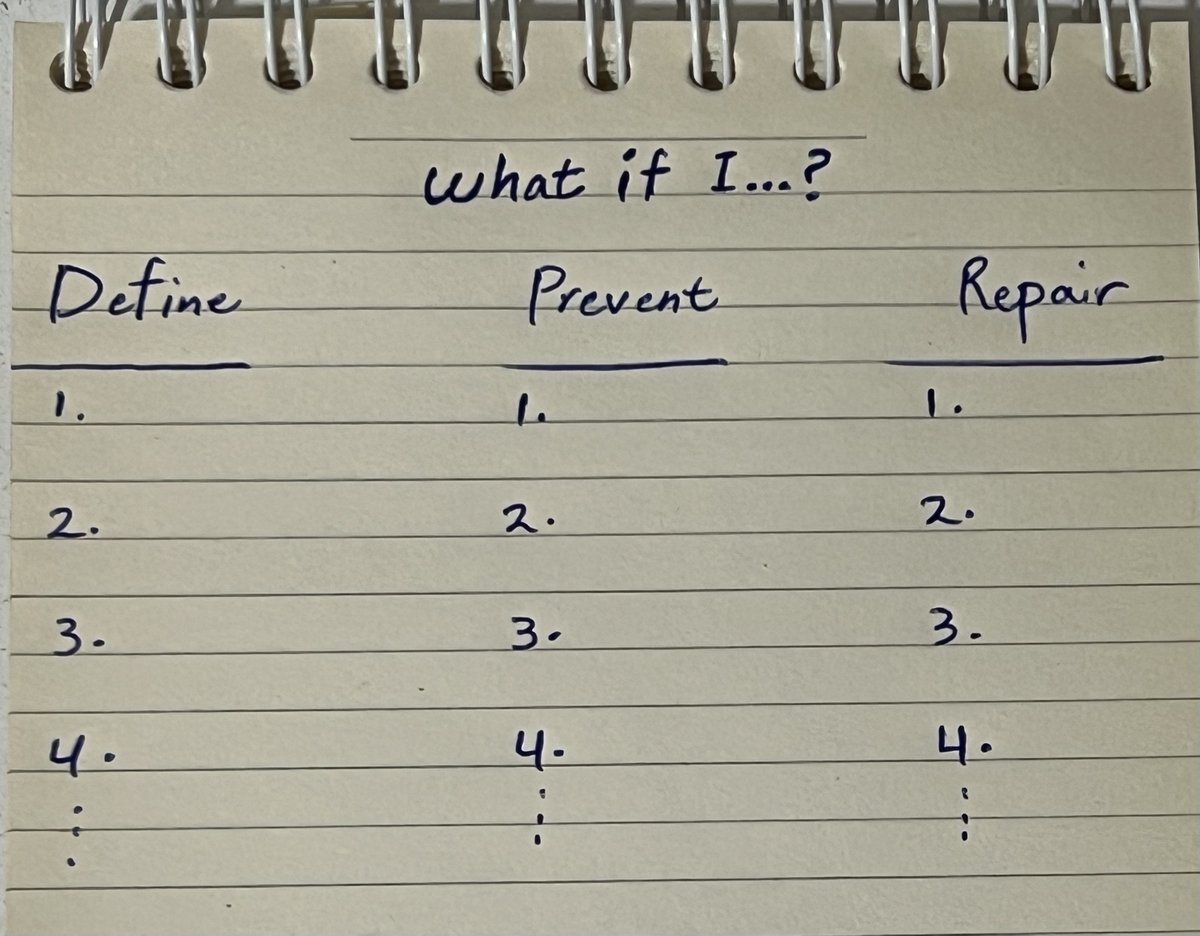
It consists of 3 pages (the most important is page 3):
- The first page is about whatever makes you fear. Break it down into three parts:
• Define: List the worst things that could happen if you take a particular action.
• Prevent: Brainstorm and write down steps you can take to prevent or reduce the likelihood of that fear becoming a reality.
• Repair: This is about planning for damage control if the worst-case scenarios become a reality.
Example Scenario: You're thinking about quitting smoking.
Define: I might have cravings when trying to quit and come back to smoking.
Prevent: Identifying what triggers me to smoke and remove them from my life. / Create a support system of friends and family.
Repair: If I experience a relapse, I need to review my quit plan. / Seek help from my support system. / Stay positive and know that this is common.
- On the second page, write about the benefits of taking action or your potential success.
Imagine what happens after you step out of your comfort zone and take action. What would you look like? What are the benefits? What can you achieve?
- The third page is about the cost of inaction. This is the most important part.
Ask yourself: If I avoid my fears, stay in my comfort zone, and don't take action, what would my life look like in the next 6 months, 1 year, or 5 years?
Go into full detail and imagine your situation emotionally, financially, and physically.
------------
Now, you can compare two different future versions of yourself:
- one who hasn't confronted this fear
- and the one who has.
Visualize and decide if it's worth taking this particular action you're thinking about or not.
You'll find that some of your fears are true, and the consequences aren't worth your focus, but you shouldn't conclude that without a detailed analysis.
Remember this Seneca quote: "We suffer more often in imagination than in reality."
Thank you for your attention,
Jay
I was binge-watching YouTube the other day, and I came across this TedTalk with 4 million views titled:
"Why You Should Define Your Fears Instead of Your Goals" by Tim Ferris.
Here are 6 lessons I learned, followed by an explanation (read until the end):
1. You're always on the verge of either success or self-destruction.
2. Embrace uncertainty as a motivator for self-improvement.
3. When dealing with depression, learning how to prevent self-destruction is more helpful than success recipients.
4. Stoicism helps prevent self-destruction by teaching you to focus on what you can control and reduce emotional reactions.
5. "We suffer more often in imagination than in reality."
6. A great exercise is using "premeditatio malorum": visualize worst case scenarios to motivate action and overcome paralysis.
↓ ↓ ↓ ↓
One way to do this exercise is to define your fears before taking action.
Writing down your fears and worst-case scenarios helps you visualize them so you can take necessary actions.
Tim calls this "fear-setting," similar to "goal-setting."
It consists of 3 pages (the most important is page 3):
- The first page is about whatever makes you fear. Break it down into three parts:
• Define: List the worst things that could happen if you take a particular action.
• Prevent: Brainstorm and write down steps you can take to prevent or reduce the likelihood of that fear becoming a reality.
• Repair: This is about planning for damage control if the worst-case scenarios become a reality.
Example Scenario: You're thinking about quitting smoking.
Define: I might have cravings when trying to quit and come back to smoking.
Prevent: Identifying what triggers me to smoke and remove them from my life. / Create a support system of friends and family.
Repair: If I experience a relapse, I need to review my quit plan. / Seek help from my support system. / Stay positive and know that this is common.
- On the second page, write about the benefits of taking action or your potential success.
Imagine what happens after you step out of your comfort zone and take action. What would you look like? What are the benefits? What can you achieve?
- The third page is about the cost of inaction. This is the most important part.
Ask yourself: If I avoid my fears, stay in my comfort zone, and don't take action, what would my life look like in the next 6 months, 1 year, or 5 years?
Go into full detail and imagine your situation emotionally, financially, and physically.
------------
Now, you can compare two different future versions of yourself:
- one who hasn't confronted this fear
- and the one who has.
Visualize and decide if it's worth taking this particular action you're thinking about or not.
You'll find that some of your fears are true, and the consequences aren't worth your focus, but you shouldn't conclude that without a detailed analysis.
Remember this Seneca quote: "We suffer more often in imagination than in reality."
Thank you for your attention,
Jay
Ready to grow your personal brand on 𝕏/Twitter?
For the past 3 years I've helped +40 individuals to grow +4 million audiences on 𝕏.
Now I want to share this journey with you for FREE.
Join my FREE Telegram channel for lessons:
t.me
For the past 3 years I've helped +40 individuals to grow +4 million audiences on 𝕏.
Now I want to share this journey with you for FREE.
Join my FREE Telegram channel for lessons:
t.me

Loading suggestions...