

Mauricio Pochettino and Mikel Arteta may be going head-to-head in an incredibly detailed tactical match-up this weekend, but so are Pep Guardiola & Roberto De Zerbi.
Below, in an in-depth thread, I break down their prior encounters to assess the tactical battle!
MEGA-THREAD! 🚨
Below, in an in-depth thread, I break down their prior encounters to assess the tactical battle!
MEGA-THREAD! 🚨

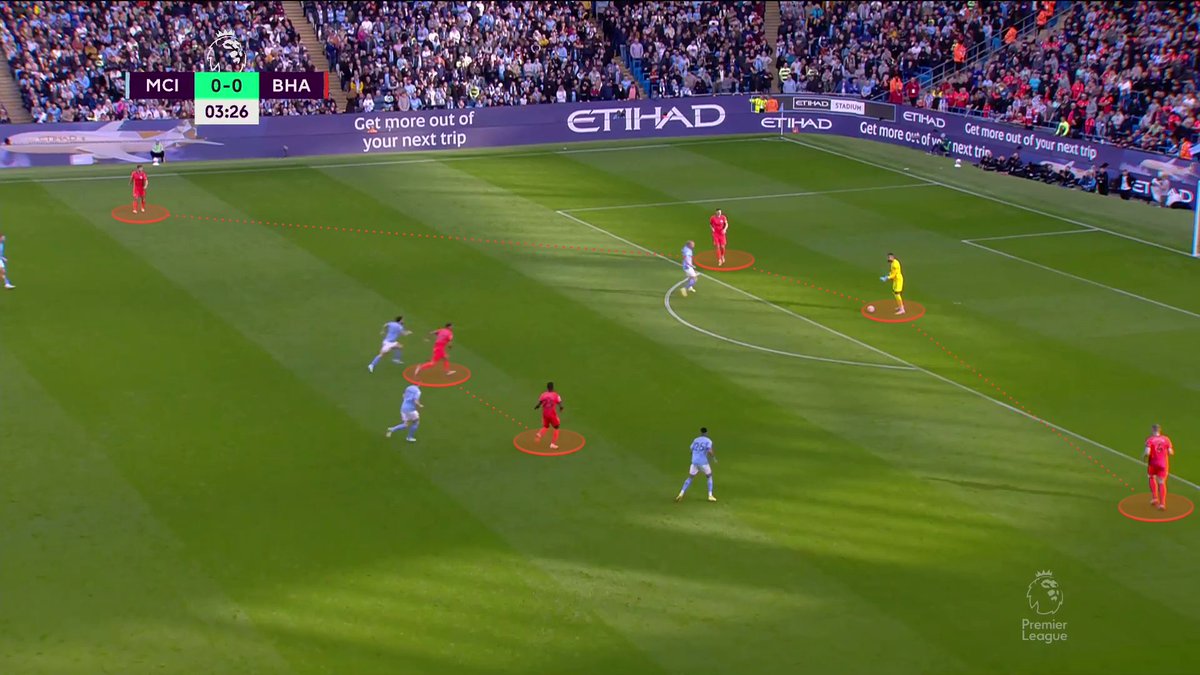
In Pep and De Zerbi's latest encounter, both teams mirrored each other in the build-up in a 4-2-4 shape but also out of possession in a man-to-man 4-4-2 press.
This meant that each goalkeeper had a key role in the build-up as they were the spare man in each circumstance.
This meant that each goalkeeper had a key role in the build-up as they were the spare man in each circumstance.
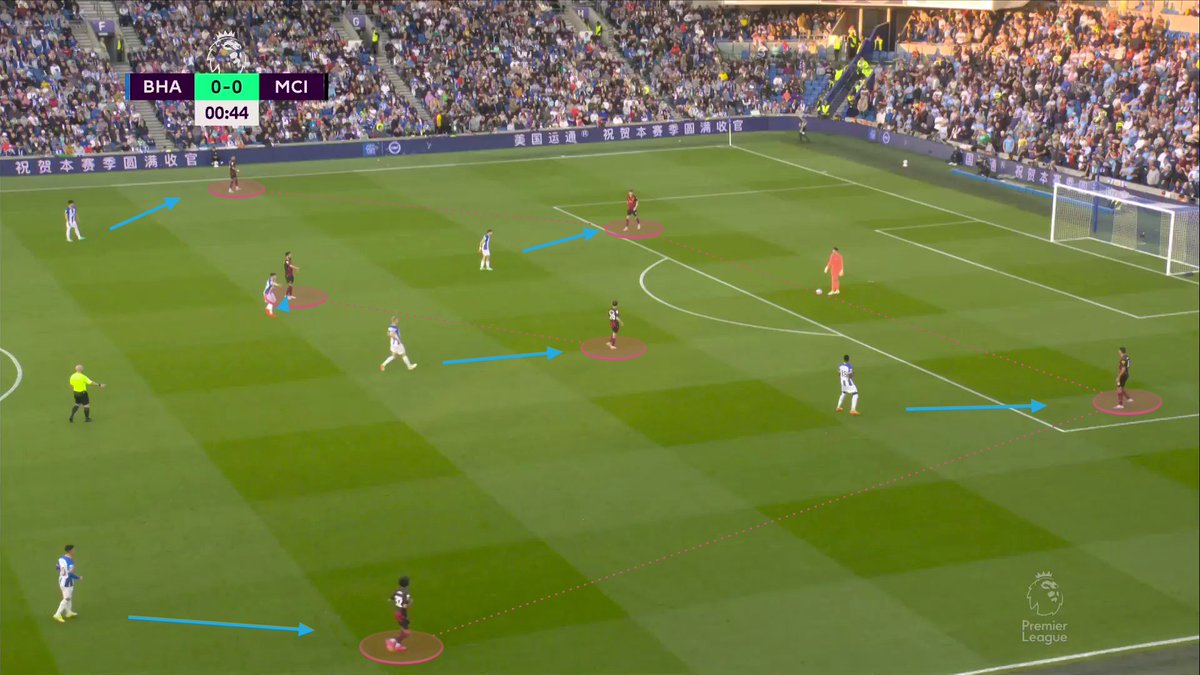
In settled play, City transitioned into a 3-2-5 with Rico Lewis inverting into midfield alongside Rodri with Bernardo pushed on in the pocket as a #8.
Brighton continued to press in man-to-man fashion against this shape, but it was deeper where City tried to create advantages.
Brighton continued to press in man-to-man fashion against this shape, but it was deeper where City tried to create advantages.
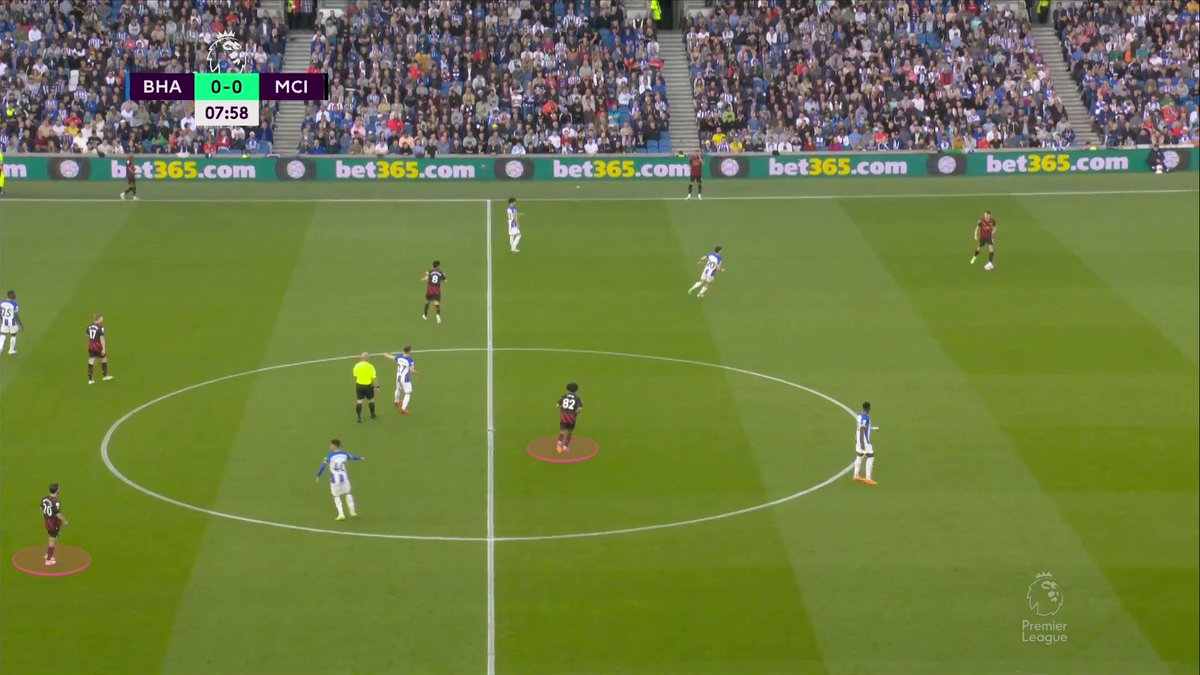
Ederson tried to step into the first line of the build-up to create a +1 in the first phase.
This saw City build in a 4-2-4 (+1) shape with Bernardo and KDB typically being the +1 who would try to lose their marker and find space between the lines, for example.
This saw City build in a 4-2-4 (+1) shape with Bernardo and KDB typically being the +1 who would try to lose their marker and find space between the lines, for example.
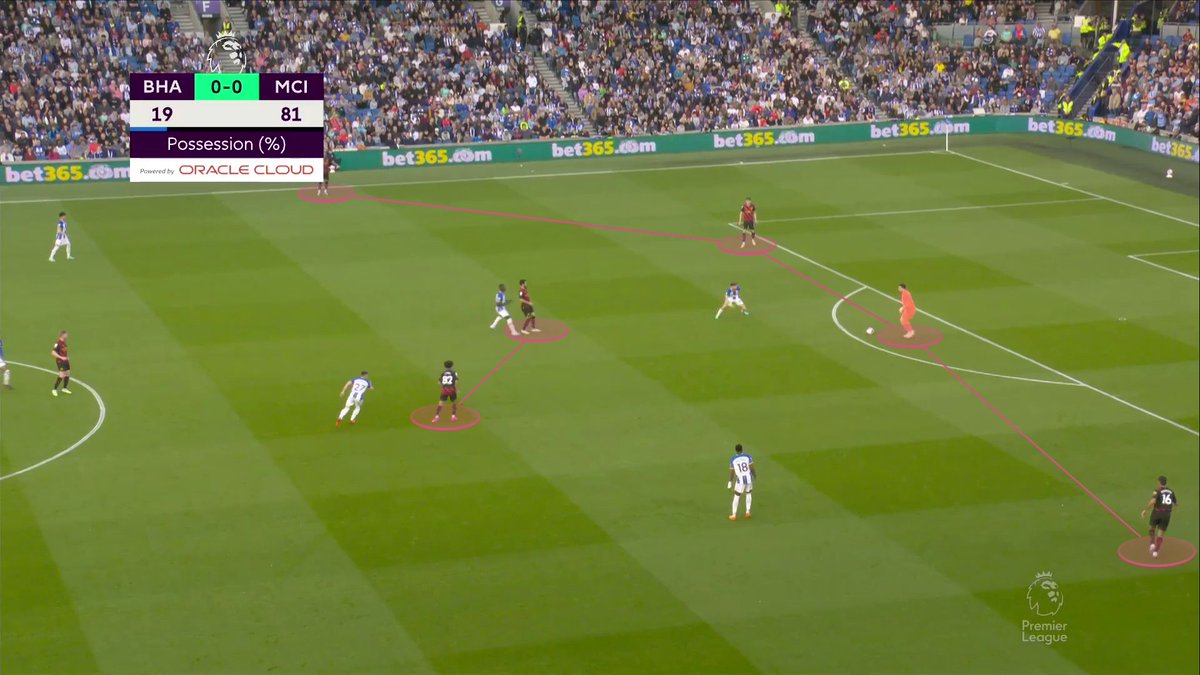
That approach encouraged Brighton's forwards to press Ederson, and although it was risky, Pep trusted the Brazilian to attract pressure before finding the spare man outfield.
This is what he reliably achieved even though Brighton tried to shadow mark the spare man when pressing.
This is what he reliably achieved even though Brighton tried to shadow mark the spare man when pressing.
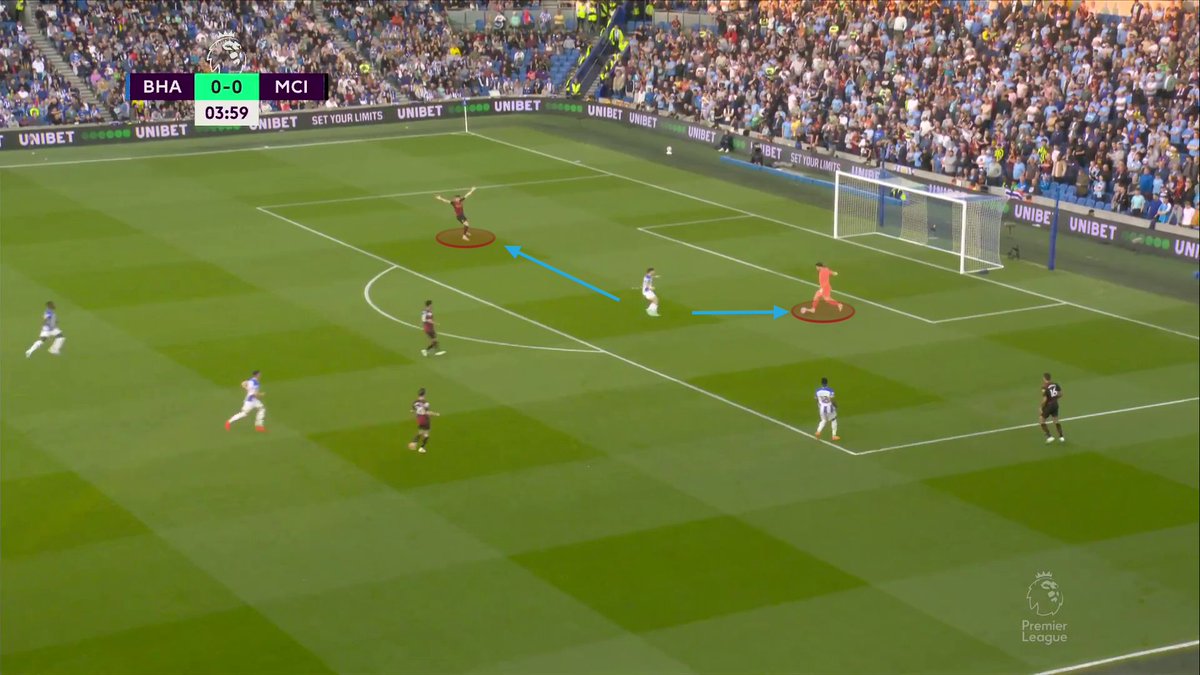
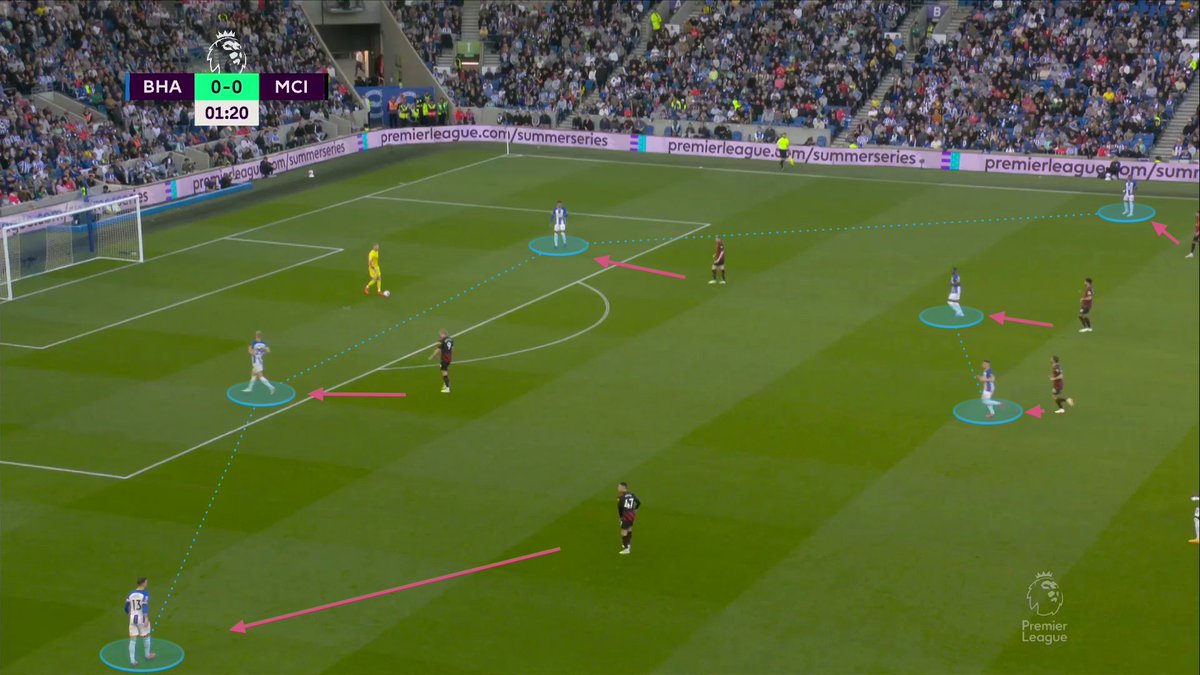
Brighton on the other hand, tried to attack in a 2-3-5 with both fullbacks inverting and one of the #8's joining the front 5.
This created a 5v4 in the last line of attack against City's back 4, but Brighton had little of the ball so rarely created this settled game theme.
This created a 5v4 in the last line of attack against City's back 4, but Brighton had little of the ball so rarely created this settled game theme.
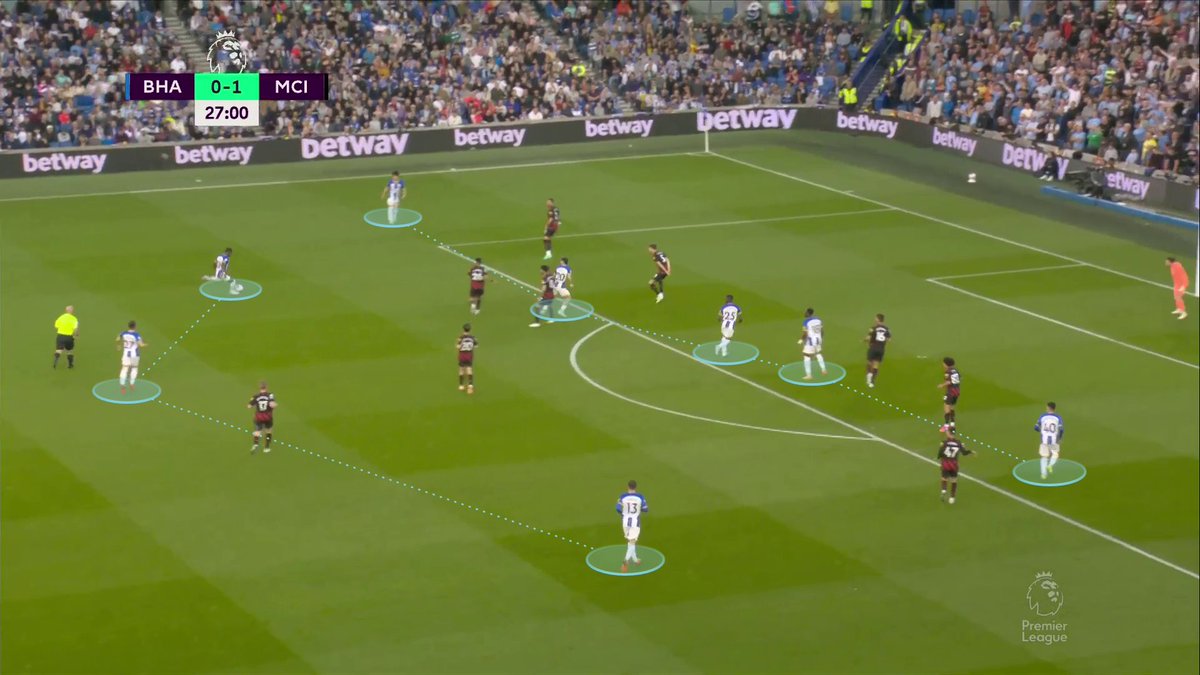
It was often transition-based due to the sheer pressure exerted on each teams respective build-up. Both goalkeepers reliably went long with both teams trying different strategies to manipulate the opposition's last line of defence.
Dropping movements to create space were common.
Dropping movements to create space were common.
We see that here as both of Brighton's #9's dropped into #10-type positions to drag both of City's centre backs out of their typical zones.
This created a gap centrally which Mitoma and Buonanotte regularly tried to exploit via out-to-in movements.
This created a gap centrally which Mitoma and Buonanotte regularly tried to exploit via out-to-in movements.
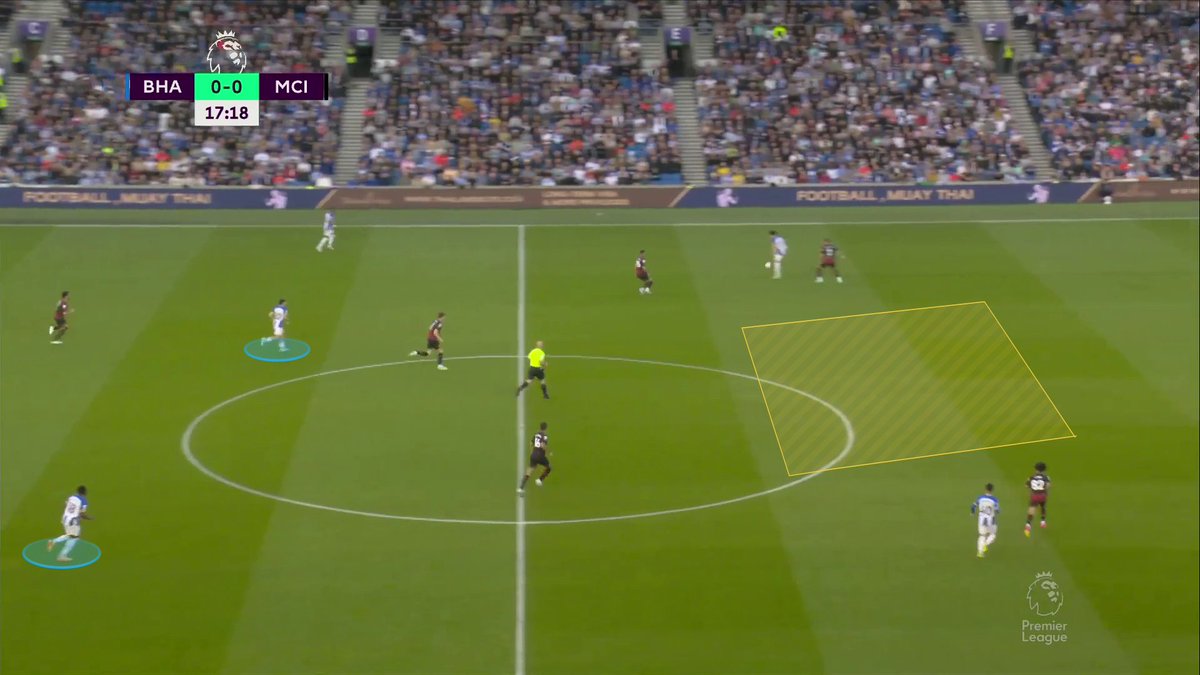
Steele would try to pump the ball into the space or he would try to directly pass into the feet of Mitoma or Buonanotte so they could attack their man in 1v1's.
Such a pass is incredibly difficult to execute, though, particularly when Walker, for example, is elite defensively.
Such a pass is incredibly difficult to execute, though, particularly when Walker, for example, is elite defensively.
Guys like Welbeck, Ferguson, and João Pedro are also particularly useful because of their height, physicality and close control in tight spaces to play over a man-to-man press, but none quite possess the threat of Erling Haaland who is a *NIGHTMARE* for such a defensive approach.
Haaland is a one man-attack in these situations, whether that in be in settled play or when Ederson has the ball at his feet.
He was a thorn in Brighton's side last season as he scored against them twice, most notably when he bullied their entire defence.
He was a thorn in Brighton's side last season as he scored against them twice, most notably when he bullied their entire defence.

When we think of target men, we think of focal points, but Haaland is a focal point with the speed of a winger..
This means that not only is he an option to use to win initial duels or as a point of contact for long balls, but he can also drop, link play, and spin in behind.
This means that not only is he an option to use to win initial duels or as a point of contact for long balls, but he can also drop, link play, and spin in behind.
We see that in full here.
It's a different goal to the initial goal he scored against Brighton last season, but the same principles apply as he drops, creates space for himself in behind, and uses his unstoppable speed to break away from his man.
It's a different goal to the initial goal he scored against Brighton last season, but the same principles apply as he drops, creates space for himself in behind, and uses his unstoppable speed to break away from his man.

Despite that advantage for City, though, Brighton drew with them 1-1 and actually accumulated more xG than them in their home game.
That is a direct consequence of the fine margins that exist in games where although teams have advantages, the overriding theme is very tight..
That is a direct consequence of the fine margins that exist in games where although teams have advantages, the overriding theme is very tight..
What is actually most interesting, though, is that Pep and De Zerbi actually matched up against each other *twice* last season.
The first match-up was similar to the second in the sense that each team pressed in man-to-man fashion and the goalkeeper was key as a result of that.
The first match-up was similar to the second in the sense that each team pressed in man-to-man fashion and the goalkeeper was key as a result of that.
Each team tried to use their goalkeeper as a left centre back in the build-up to create an overload in the first line of play.
However, both teams differed tactically.
City played an on-ball 3-2-5 with Cancelo inverted alongside Rodri.
Brighton also played a 3-2-5 (on paper)..
However, both teams differed tactically.
City played an on-ball 3-2-5 with Cancelo inverted alongside Rodri.
Brighton also played a 3-2-5 (on paper)..
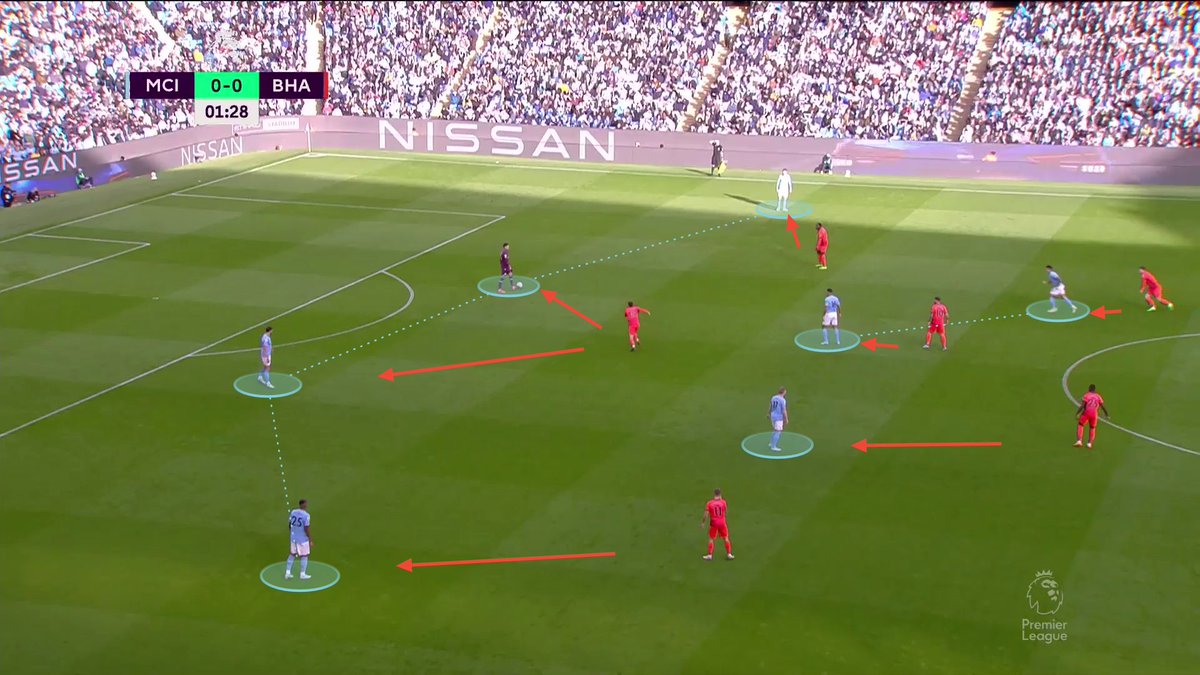
However, don't be fooled by the numbers on paper.
De Zerbi may have utilised a different system (which included no left back), but he created the usual 4-2-4 (+1) build-up dynamic with Sanchez stepping out to left centre back and Webster pushing out to left back.
De Zerbi may have utilised a different system (which included no left back), but he created the usual 4-2-4 (+1) build-up dynamic with Sanchez stepping out to left centre back and Webster pushing out to left back.
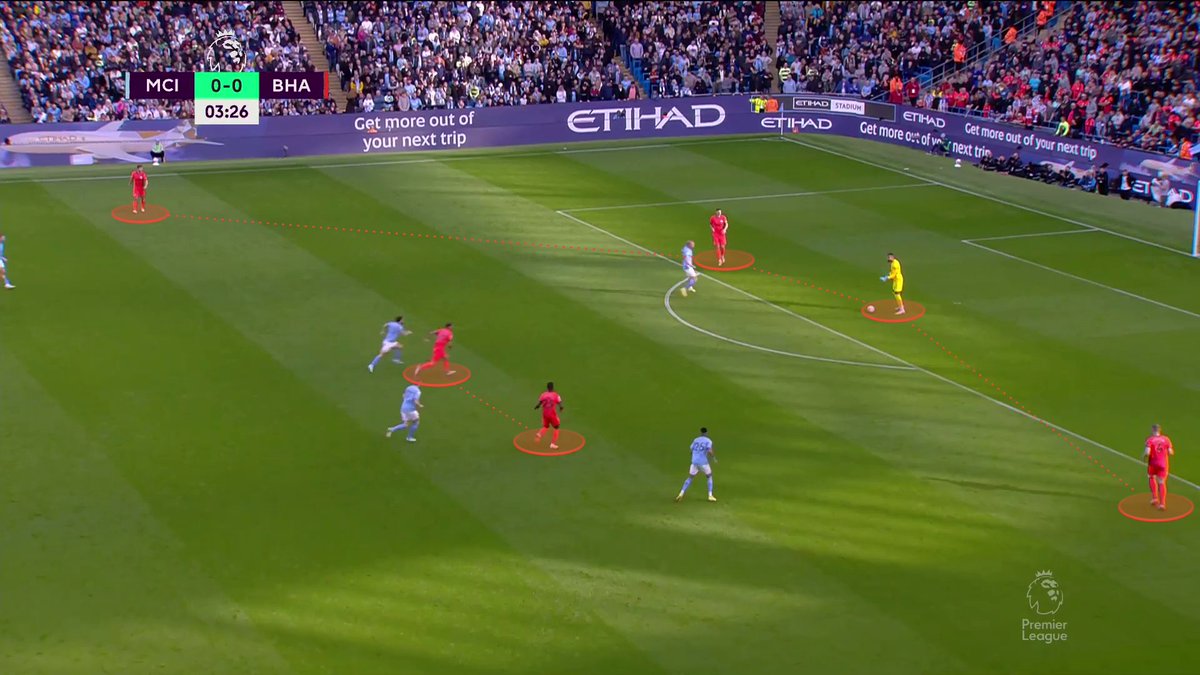
Trossard was the left winger on the day, and he positioned himself deeper than usual to act as a passing option for Brighton on that side of the pitch.
Trossard and March also had to recover positionally to defend in the last line which saw Brighton defend with 5 at times!
Trossard and March also had to recover positionally to defend in the last line which saw Brighton defend with 5 at times!
However, the emphasis on the zonal positioning of the players made little sense as it was the job of the centre backs to follow City's wide players in a man-marking scheme.
When De Bruyne dropped deep, Webster followed him.
When Bernardo dropped deep, Veltman followed him.
When De Bruyne dropped deep, Webster followed him.
When Bernardo dropped deep, Veltman followed him.
It may have been a back 5 on paper, but each centre back had to be aggressive to follow their man.
As the game wore on, though, this caused problems for Brighton.
A guy like Bernardo can drop deep a lot, and he's near impossible to press. It caused a fatigued Veltman problems.
As the game wore on, though, this caused problems for Brighton.
A guy like Bernardo can drop deep a lot, and he's near impossible to press. It caused a fatigued Veltman problems.
Here we see Bernardo overload Brighton's man-to-man press with Veltman passive in the last line.
Most notably, this was late on in the game & the sheer physical/mental turmoil required to track Bernardo was too much at that point.
It resulted in a goal.
Most notably, this was late on in the game & the sheer physical/mental turmoil required to track Bernardo was too much at that point.
It resulted in a goal.

It is unlikely that De Zerbi will utilise that approach again for that exact reason, but also because he almost exclusively sticks to his typical system (even if there has been iterations of that lately which you can read about in the thread attached).
x.com
x.com
Despite tactical variations being likely from what we have currently seen in the battle of Pep and De Zerbi, what is almost certain is that we will see both teams press in man-to-man fashion, utilise a mix of short and long balls, try to create space via dropping movements, etc.
In settled play is where each team can gain advantages by inverting the fullbacks, for example, which can present difficult challenges for the opposition man-markers to deal with as they have to either A) follow inside or B) switch markers with their teammates.
Such adaptions can create uncertainty for the defensive team which generates extra time and space for the team in possession.
Not only that, but it can also create a 5v4 in the last line of attack if the opposition don't react accordingly when one of the #8's move high..
Not only that, but it can also create a 5v4 in the last line of attack if the opposition don't react accordingly when one of the #8's move high..
There is a lot to consider, but one thing is for sure, and that's goals, risk-taking, brave play, & high quality football!
Watching these two go head-to-head one more time will undeniably result in tactical education for us all, so be sure to pay attention.
It's free education!
Watching these two go head-to-head one more time will undeniably result in tactical education for us all, so be sure to pay attention.
It's free education!
Loading suggestions...