

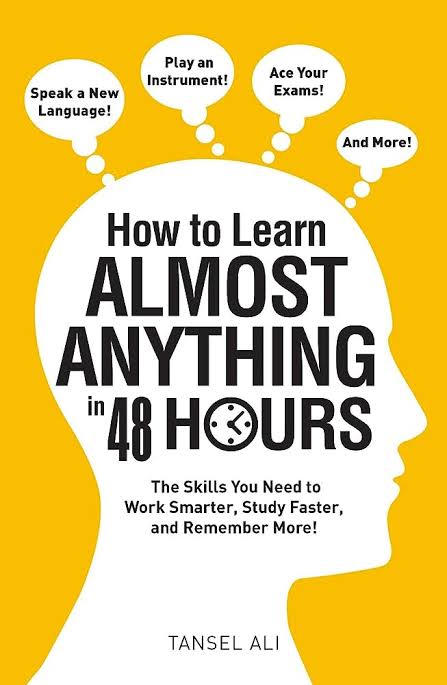
10 steps you can follow to learn Almost anything in 48 hours :
1). Define Clear Objectives:
"Determine precisely what you want to learn. "
Narrowing your scope provides direction and makes the learning process more manageable.
"Determine precisely what you want to learn. "
Narrowing your scope provides direction and makes the learning process more manageable.
2). Chunk It Down:
" Break the topic into digestible chunks or sections."
Our brains are better at handling small bits of information at once.
" Break the topic into digestible chunks or sections."
Our brains are better at handling small bits of information at once.
3). Use Mnemonic Devices:
Mnemonic devices, like rhymes or visual images, are powerful tools to make information stick.
Mnemonic devices, like rhymes or visual images, are powerful tools to make information stick.
4). Active Recall:
" Don't just passively review your material. Test yourself."
This process strengthens neural pathways and ensures that you've not just memorised but understood the topic.
" Don't just passively review your material. Test yourself."
This process strengthens neural pathways and ensures that you've not just memorised but understood the topic.
5). Mind Mapping:
"Visual representations can help in organising complex subjects."
Mind maps are especially useful as they mimic the brain's interconnected way of thinking, making recall easier.
"Visual representations can help in organising complex subjects."
Mind maps are especially useful as they mimic the brain's interconnected way of thinking, making recall easier.
6).Leverage the Pomodoro Technique:
Study in short bursts. The Pomodoro Technique suggests 25 minutes of intense focus followed by a 5-minute break.
This strategy helps maintain high levels of concentration and gives the brain time to assimilate information.
Study in short bursts. The Pomodoro Technique suggests 25 minutes of intense focus followed by a 5-minute break.
This strategy helps maintain high levels of concentration and gives the brain time to assimilate information.
7).Stay Physically Active:
Physical activity boosts cognitive function.
Taking short walks, stretching, or even doing a few jumping jacks can revitalise your mind and improve retention.
Physical activity boosts cognitive function.
Taking short walks, stretching, or even doing a few jumping jacks can revitalise your mind and improve retention.
8).Sleep on It:
Never underestimate the power of rest.
Sleep consolidates memories and clears out neural waste, making it essential for learning.
In a 48-hour period, ensure you get at least two good nights of sleep.
Never underestimate the power of rest.
Sleep consolidates memories and clears out neural waste, making it essential for learning.
In a 48-hour period, ensure you get at least two good nights of sleep.
9). Teach Someone Else:
The act of teaching reinforces your understanding and highlights areas that might need more attention.
The act of teaching reinforces your understanding and highlights areas that might need more attention.
10). Stay Curious and Positive:
Maintain a growth mindset.
Believe in your capacity to learn, and stay curious.
A positive mindset not only makes the process enjoyable but also reduces stress, which can inhibit memory formation.
Maintain a growth mindset.
Believe in your capacity to learn, and stay curious.
A positive mindset not only makes the process enjoyable but also reduces stress, which can inhibit memory formation.
Thanks for Reading
If you like this post pleas repost and share it with your friends
Follow my page(@leantolearn ) to get more similar threads
If you like this post pleas repost and share it with your friends
Follow my page(@leantolearn ) to get more similar threads
Loading suggestions...