

Let’s analyze the economics of Very Tall Bridges in Guizhou.
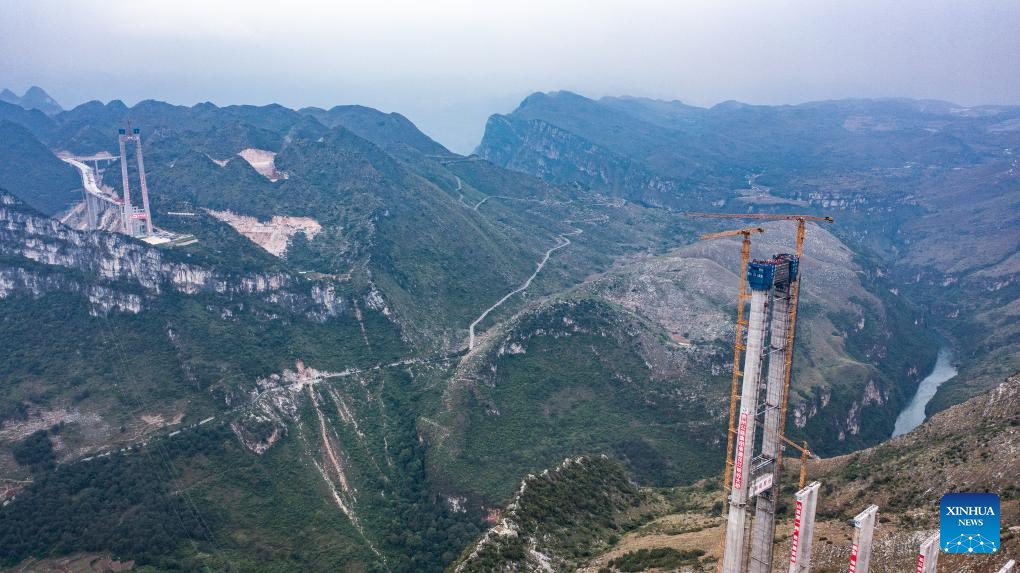
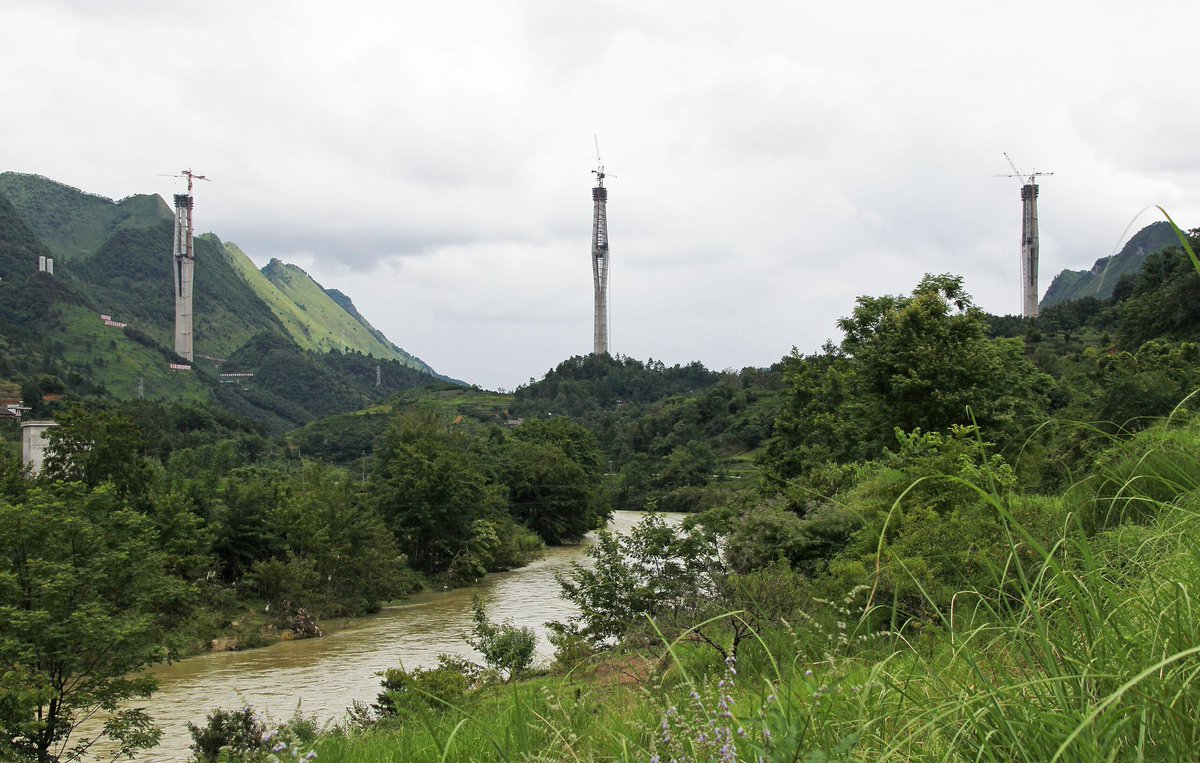
Huajiang Bridge measures 2,890 meters and sits 625 meters above the Beipanjiang River.
It cuts travel time from 70 minutes to 1 minute.
en.people.cn
Huajiang Bridge measures 2,890 meters and sits 625 meters above the Beipanjiang River.
It cuts travel time from 70 minutes to 1 minute.
en.people.cn
Cost estimates are not available but if we look at a similar Very Tall Bridge in Guizhou (Pingtang Bridge) we can get a good idea.
This one cost ¥1.5B, spans 2,100 meters, sits 310 meters above the river and opened in December 2019.
This one cost ¥1.5B, spans 2,100 meters, sits 310 meters above the river and opened in December 2019.
Based on this comparable, I estimate that Huajiang cost around double — ¥3B ($410M).
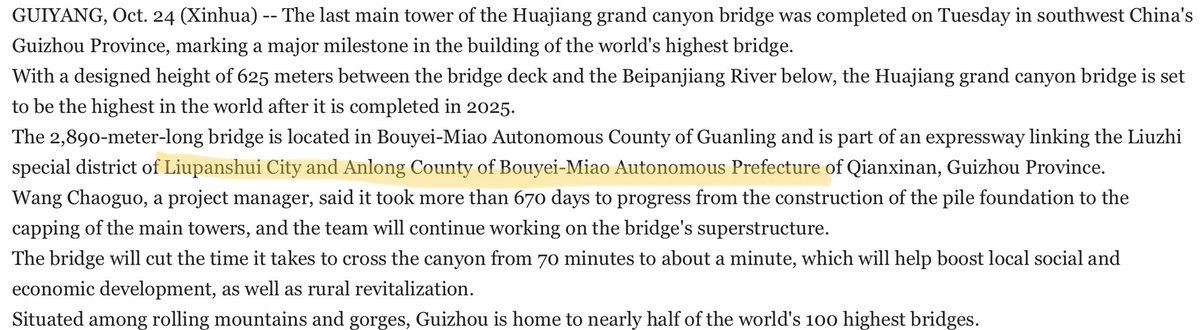
Huajiang connects Liupanshui with Qianxinan Buyei and Miao Autonomous Prefecture.
Each are ~3M in total population.
Huajiang connects Liupanshui with Qianxinan Buyei and Miao Autonomous Prefecture.
Each are ~3M in total population.
At a 5% cost of capital ➡️ ~$20M a year in financing costs.
There will also be maintenance costs, let’s call it around $1M per year, conservatively*
* HSR track costs around ¥1.2M per km to maintain annually.
There will also be maintenance costs, let’s call it around $1M per year, conservatively*
* HSR track costs around ¥1.2M per km to maintain annually.
Depreciation is also a real cost, even if the bridge is well-maintained per 👆
Assuming useful life of 70 years, that’s $6M per year.
Total economic cost of $27M per year.
Assuming useful life of 70 years, that’s $6M per year.
Total economic cost of $27M per year.
$27M per year amortized across 6M residents comes out to ~$4.50 economic cost per local resident.
Is that cost worth it? Let’s look at the benefits.
Is that cost worth it? Let’s look at the benefits.
Cutting down travel time from 70 minutes to 1 minute ➡️ fuel savings.
At 18 mpg (winding mountain roads), I estimate ~1.6 gallons of fuel saved per trip. EV would be ~1/2 the primary energy savings given higher efficiencies.
So fuel savings will be anywhere from $3-9/trip.
At 18 mpg (winding mountain roads), I estimate ~1.6 gallons of fuel saved per trip. EV would be ~1/2 the primary energy savings given higher efficiencies.
So fuel savings will be anywhere from $3-9/trip.
Time savings. 70 minutes saved per trip at local wage rates (~$4/hour) comes out to about $5/trip.
So the economic value is around $8-14 per trip.
But wait, wage rates are rising over time in real terms. In 50 years at 2% annual increases, the time savings is $13/trip.
So the economic value is around $8-14 per trip.
But wait, wage rates are rising over time in real terms. In 50 years at 2% annual increases, the time savings is $13/trip.
One of the benefits of ultra-long-lived infrastructure is the upfront costs dominate and are priced at the low wages of an earlier era — while the economic benefits rise in real terms over time.
I drive across the Brooklyn Bridge which was built using 19th-century labor rates.
I drive across the Brooklyn Bridge which was built using 19th-century labor rates.
At $10/trip of economic benefits, the break-even point today on an operational basis is 270k annual trips - 740 riders need to cross the bridge per day.
At $15/trip, the “payback” on the $410M bridge is ~27 million trips over the coming decades.
At $15/trip, the “payback” on the $410M bridge is ~27 million trips over the coming decades.
These economic benefits exist no matter what the actual revenue model of the bridge.
If the bridge charges tolls, it shifts some of the economic burden onto local residents.
If the bridge is free, this represents a value transfer to local residents from the state/LGFV.
If the bridge charges tolls, it shifts some of the economic burden onto local residents.
If the bridge is free, this represents a value transfer to local residents from the state/LGFV.
These are only the direct benefits. There are also all sorts of LT benefits that are hard to measure directly.
e.g. What is the value of lowering access barriers for local Miao minority residents … whereby 20 yrs later the next generation is more healthy and better educated?
e.g. What is the value of lowering access barriers for local Miao minority residents … whereby 20 yrs later the next generation is more healthy and better educated?
Ultimately the economic benefits of this bridge will be driven by utilization.
I don’t know what the usage projections are, but these framings can help you think it through.
This video will also help h/t @gonglei89
youtube.com
I don’t know what the usage projections are, but these framings can help you think it through.
This video will also help h/t @gonglei89
youtube.com
Correction: missed a zero. 2.7M trips/rides per year, 7,400 per day.
H/t @HongshenZhu
H/t @HongshenZhu
@gonglei89 Guizhou is home to 40 of the world’s tallest bridges. This is because it is a mountainous region that is also relatively densely populated.
Its population density (220/km2) is on par with Switzerland, another densely populated mountainous region.
Its population density (220/km2) is on par with Switzerland, another densely populated mountainous region.
@gonglei89 Guizhou has historically been poor because it was so difficult to get to many of these remote mountain regions and the quality of land is low and requires significant labor to extract yield.
@gonglei89 Bridges and other related infrastructure are the most efficient way to combat these geographic disadvantages.
In order for a mountainous region like Guizhou to develop, infrastructure is absolutely critical.
In order for a mountainous region like Guizhou to develop, infrastructure is absolutely critical.
@gonglei89 The difficulty and expense of building these tall bridges often correlates to the absolute time and fuel savings that they deliver.
They are expensive, but they also deliver huge benefits.
They are expensive, but they also deliver huge benefits.
@gonglei89 Switzerland is home to 40k bridges and an extensive rail network (@DavidFengTrains).
This infrastructure was critical in allowing Switzerland’s economy to develop into one of the most productive on the planet & serves as a model for landlocked mountainous regions like Guizhou.
This infrastructure was critical in allowing Switzerland’s economy to develop into one of the most productive on the planet & serves as a model for landlocked mountainous regions like Guizhou.
Loading suggestions...