

1/Following, the infamous Hamas attack of 7 October, the IDF are poised for a major ground offensive into Gaza. The Battle of Gaza approaches. @johnspencer, David Kilcullen, @Shashj have already posted some analysis. Perhaps, it would be useful to add my thoughts 🧵

2/In my book on Urban Warfare, I argued described the 21c urban battlescape. Because forces were much small than 20c, they can no longer hold dense fronts in the field. They converge on urban areas where the decisive strategic, operational, and tactical objectives are located.

3/ There, they engage in ‘inner-urban micro-sieges’. In 21st century, smaller forces concentrate on key objectives inside urban areas. Bitter attritional fighting follows; objectives are attacked and reduced in sequence.

4/ But even as, the fighting condenses into micro-sieges, the urban battle resonates out across a global urban archipelago via digital communications and social media. Diasporas are recruited into the fighting to support their combatants. The urban battle transnationalises.
5/ How does this urban battlescape apply to Gaza and the IDF? By contemporary standards, the IDF remains a large citizen force; 169,000 strong but expanding with the reserve call up to about 500,000. Does this mean that the IDF will fight differently to smaller 21c forces?
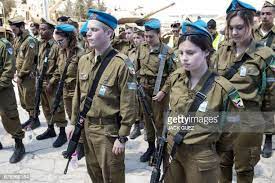
6/ This seems unlikely. Although large, the IDF is already committed to the north – where the armoured corps has been mobilised - and to the West Bank. It is difficult to be precise: might have 100,000 combat troops for the operation? It could be less .
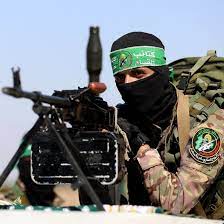
7/ Hamas force size is also difficult to determine: between 10,000 and 30,000 fighters? Force ratios might be 10:1 in the IDF’s favour; more likely closer to 3:1. Urban ops usually require a force ratio of 10:1. Therefore, the fighting will be slow, hard, and bloody.
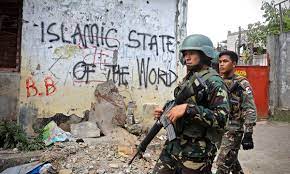
8/The operation echoes the recent Battles of Fallujah, Mosul, Aleppo, and Marawi, when state forces cleared non-state militias from an urban area. In each of these cases, the state force trying to clear the city enjoyed better combat ratios than Israel.
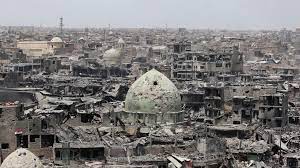
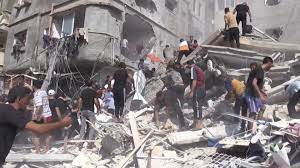
9/The Law: Civilians suffer terribly in urban fighting. Israel has already been accused of breaching LOAC and IHL. The Israelis claim the right to self-defence; and that their strikes have been consistent with the LOAC (necessity, humanity, proportion, discrimination) and IHL.
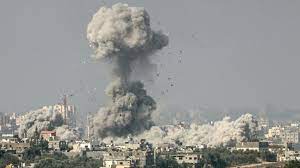
10/Their opponents have rejected these claims. The legal debate claims will become more strident as Palestinians civilians are harmed. Israel must operate with the Law. But that may be difficult.
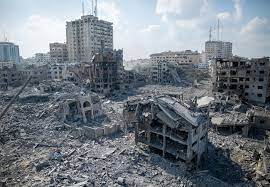
11/ The environment: Gaza is a complex urban area. It is densely populated. It has a population of 2.2 million in a 365 km square area: over 6000 people per square km. It also comprises a vast subterranean network of tunnels, ammunition dumps, headquarters, barracks, workshops.
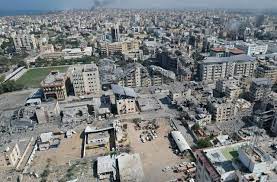
12/ Urban defence: Hamas will prepare defences, fortifying buildings, emplacing IEDs, using SVIEDs, SIEDs, weaponizing the civilian population. They will use drones, rockets and missiles to contest the air space above the city. Israeli hostages complicate the situation.
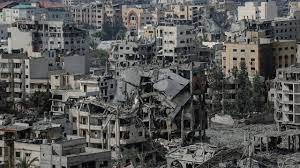
13/ In order to assault Gaza, the IDF will have to mount a joint and, indeed, multidomain operation.
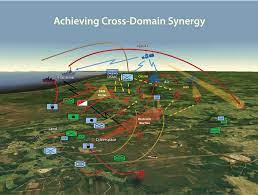
14/Air/Space: the IDF enjoy total air superiority, though Hamas will try to contest this where they can. Consequently, the IDF will need an elaborate air plan for the attack: a layered air operation, assigning platforms to conduct distinctive missions at different altitudes.
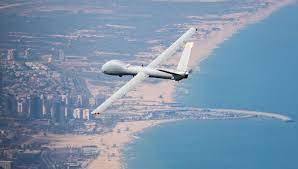
15/ At low altitude, small UAV, attack helicopters. Above them, winged aircraft and larger UAV. At the highest altitude about 65,000 ft, the Israeli’s are likely to deploy strategic intelligence aircraft. And beyond that, the IDF will draw on satellite imagery to target Hamas.
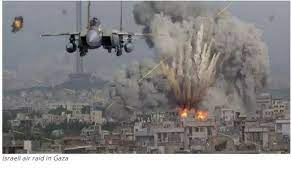
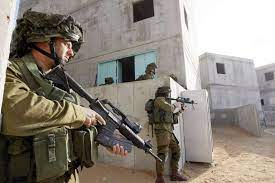
16/Surface: The IDF has started to probe into Gaza already. Eventually, they will either conduct a full clearance operation, or targeted clears: Hamas headquarters and leaders, hostages, weapons caches, strongpoints etc. The options here are not ideal.
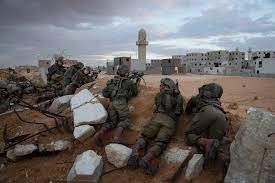
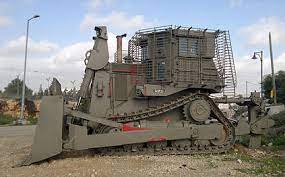
17/Even if they decide for targeted raids, the IDF will have to breach and clear objectives. This will require a heavy mechanised thrust, with bulldozers and armour, supported firepower. If Mosul or Marawi are any guide, it seems impossible to avoid massive collateral damage
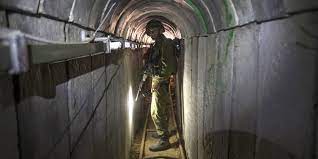
18/Subsurface: Hamas has a massive subterranean system. Reducing Hamas tunnels will be a gargantuan task. Simply blocking tunnels is not enough. The IDF’s specialist tunnel units are adept but too small. A large infantry force – paratroops? – are required for this task.
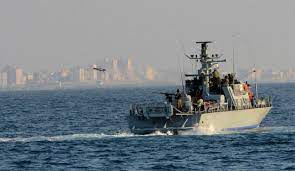
19/Maritime. The maritime element of urban warfare is often neglected but in Gaza it will be crucial. The US Navy has deployed ships to augment Israel’s missile defence system. Israeli ships may play an important role in this operation, acquiring targets and striking from the sea
20/The Battle of Gaza is likely to descend into a series of sieges, fought above and below ground, supported where possible from the air and from artillery.
21/ Information and Psychological Operations. Info and Psy Ops will be a key part of the IDF campaign. Hamas have already been engaged in an intense info operation. The IDF has specialists cyber outfits, like Unit 8200. They will address Hamas leaders, and Palestinian civilians
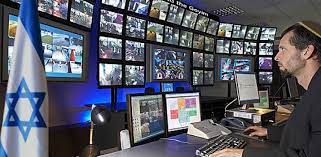
22/ The Information Campaign in Gaza is significant, but the wider regional and global information war will be decisive for Israel, the IDF – and Hamas.
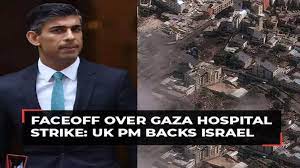
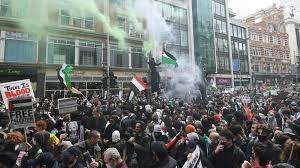
23/Israel and Hamas have already sought to mobilise supporters across the Middle East and beyond. While its method may be deplorable, Hamas has leveraged widespread support for the Palestinian cause. There have been major demonstrations in cities across the world.
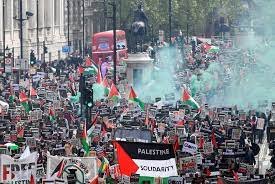
24/ The Battle of Gaza has already globalised across religious and ethnic diasporas, in some cases, polarising Jews and Israeli supporters, against Palestinians and their supporters. This polarisation will intensify as the battle starts.
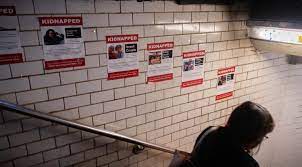
25/It is possible that demonstrations could escalate from protest into ethnic and political violence in other cities. The national and international political implications of such a proliferation be very serious indeed.
Loading suggestions...