

Xabi Alonso's Bayer Leverkusen are one of the most complete tactical teams in the SPORT!
Leverkusen are unbeaten, have won 12 out of 13 games, average more than 3 goals scored per game & concede less than a goal a game!
Below, I break down their ENTIRE tactical system!
THREAD!
Leverkusen are unbeaten, have won 12 out of 13 games, average more than 3 goals scored per game & concede less than a goal a game!
Below, I break down their ENTIRE tactical system!
THREAD!

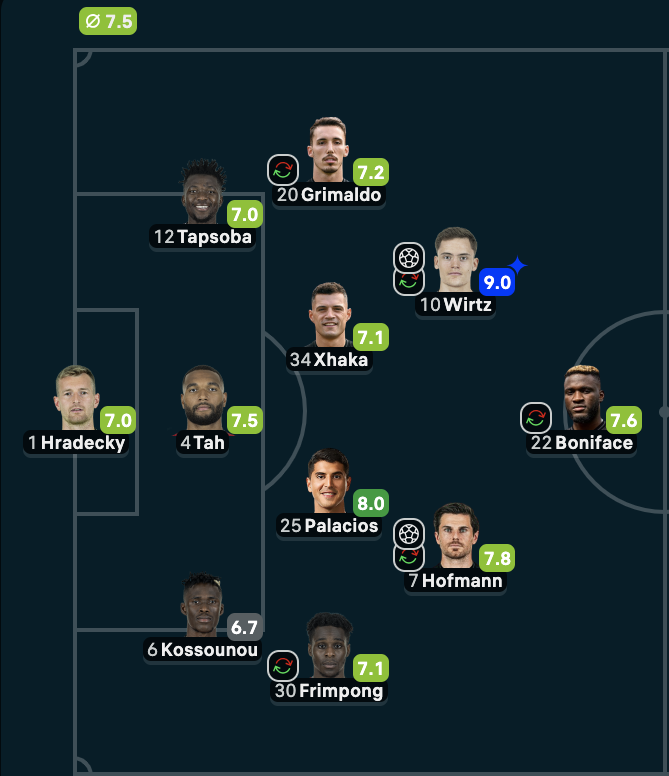
Xabi Alonso's Bayer Leverkusen typically line up with this set of players within a 3-4-3 base system.
However, much like many teams in the modern day, Alonso's team play a variety of different ways depending on the phase of play that they are in.
However, much like many teams in the modern day, Alonso's team play a variety of different ways depending on the phase of play that they are in.
Leverkusen start off in a 4-2-4 shape in the build-up with Grimaldo deep at left back, Kossounou pushed out to right back, and Frimpong high and wide on the right wing to form a front 4.
This is a common build-up structure for teams who transition into a 3-2-5 in settled play.
This is a common build-up structure for teams who transition into a 3-2-5 in settled play.
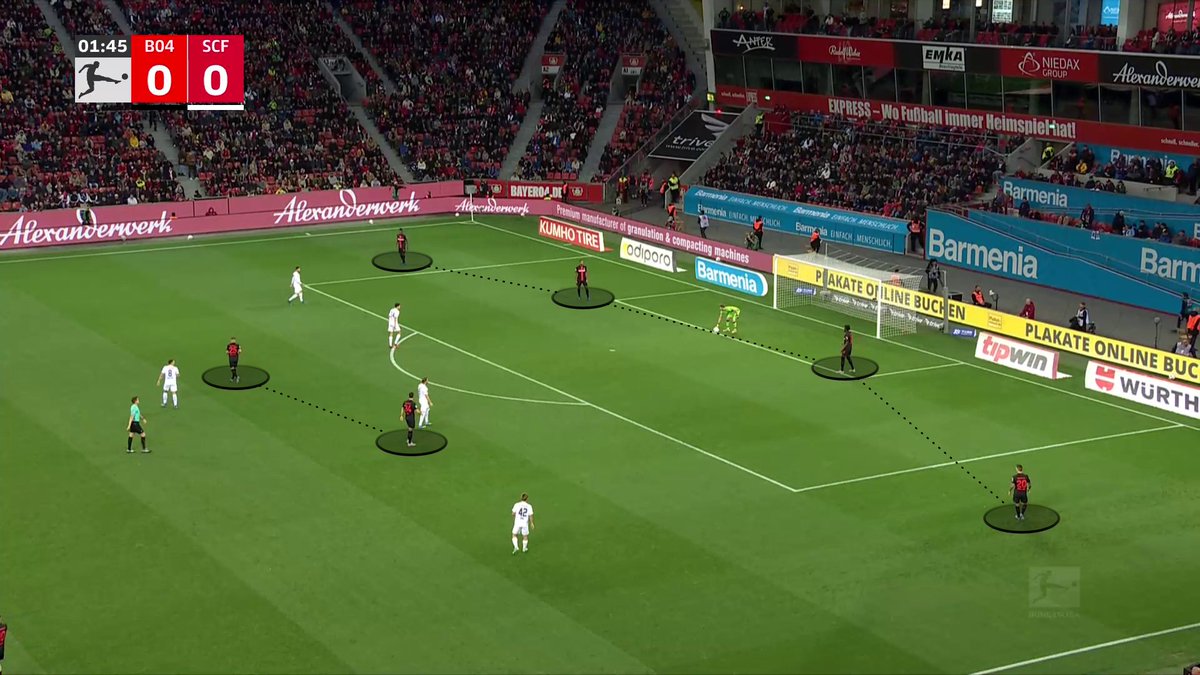
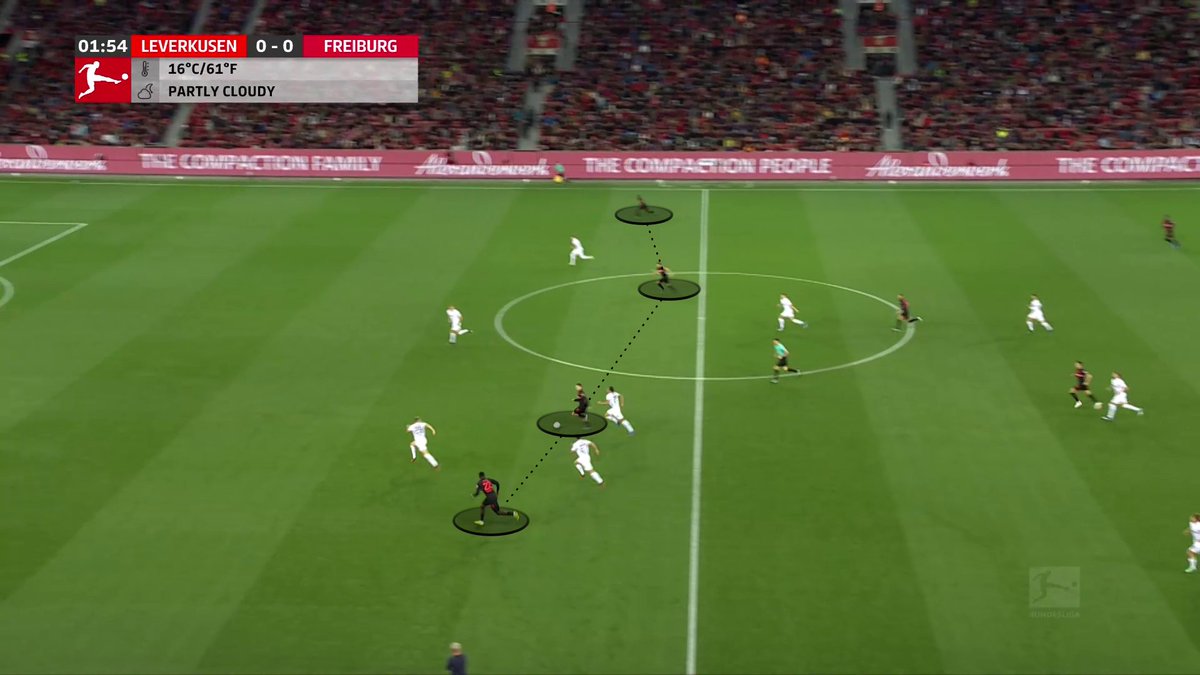
To form that 3-2-5 shape, Grimaldo pushes high and wide on the left wing to add to the initial 4 in attack with Kossounou tucking into the back 3.
The shape can often resemble a 4-2-4 in settled play too, though, as Grimaldo is sometimes deep with either Boniface or Wirtz wide.
The shape can often resemble a 4-2-4 in settled play too, though, as Grimaldo is sometimes deep with either Boniface or Wirtz wide.
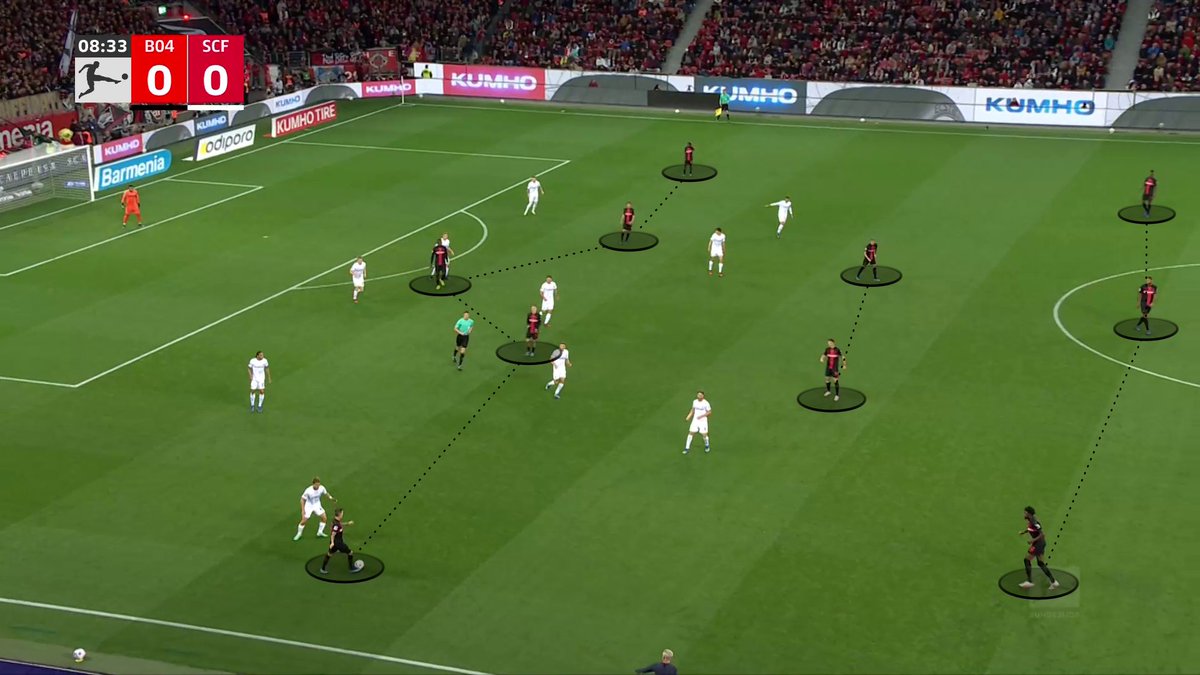
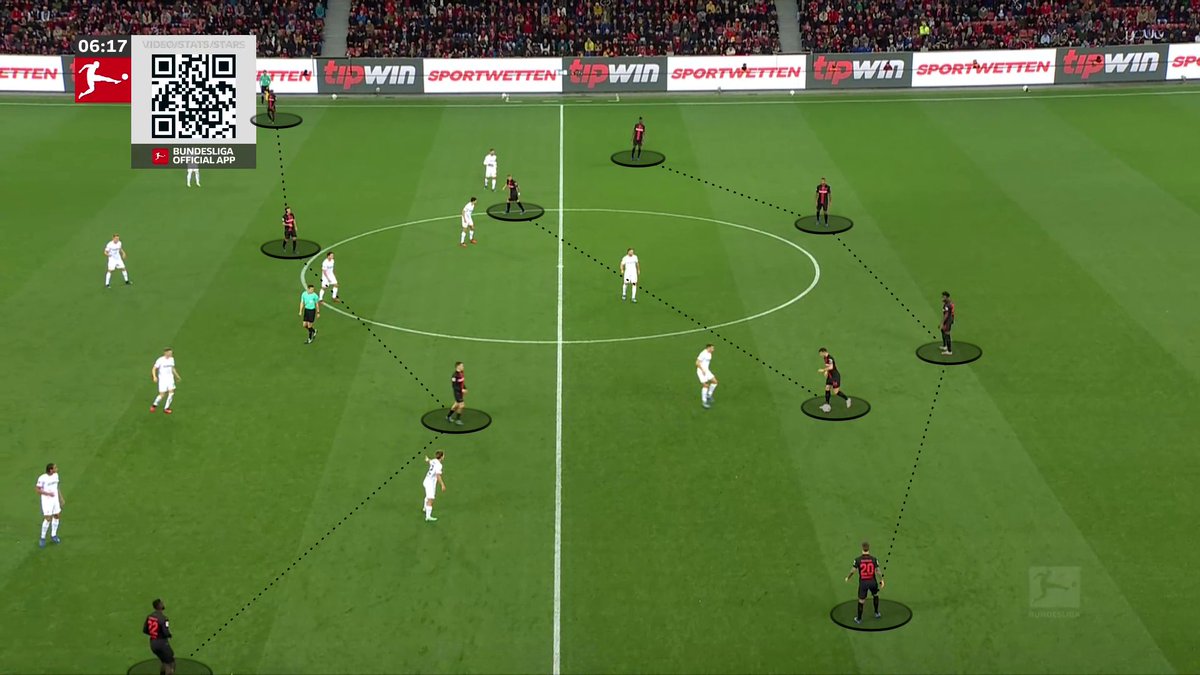
Such a style is most commonly associated with Antonio Conte or Thomas Tuchel (at Chelsea), and it is fair to group Xabi Alonso with that duo as a result of their similar on-ball approaches.
Out of possession, however, is where Alonso separates himself from Conte in style..
Out of possession, however, is where Alonso separates himself from Conte in style..
Conte's teams defend in a passive 5-4-1, and Leverkusen do too when defending deep, but the biggest difference between the off-ball approach centres around the aggressiveness of each team when the opposition has the ball in the build-up.
Alonso's Bayern press with aggression.
Alonso's Bayern press with aggression.
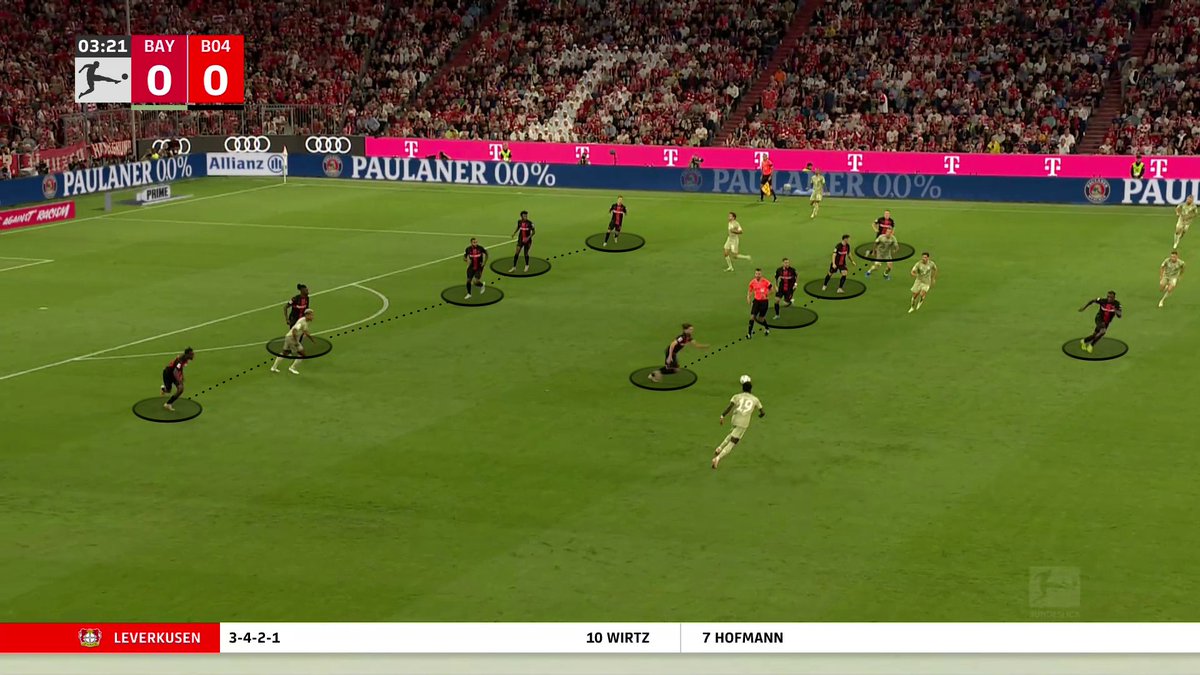
Instead of primarily staying passive within a 5-4-1 block, Leverkusen invert the wide players to press the opposition central defenders.
Then, behind that initial line of pressure the ball-side wingback pushes high to press the opposition fullback.
It's a very compact approach.
Then, behind that initial line of pressure the ball-side wingback pushes high to press the opposition fullback.
It's a very compact approach.
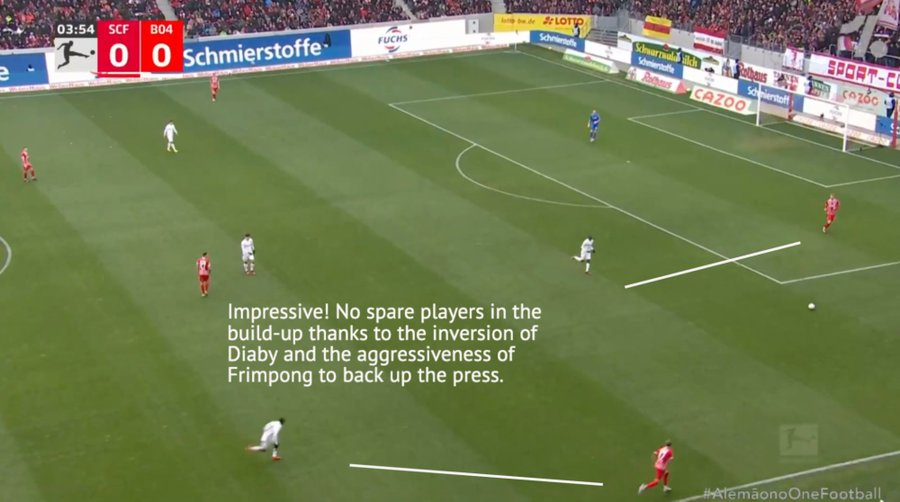
This often results in Leverkusen matching up in man-to-man situations all over the park making them incredibly difficult to play through.
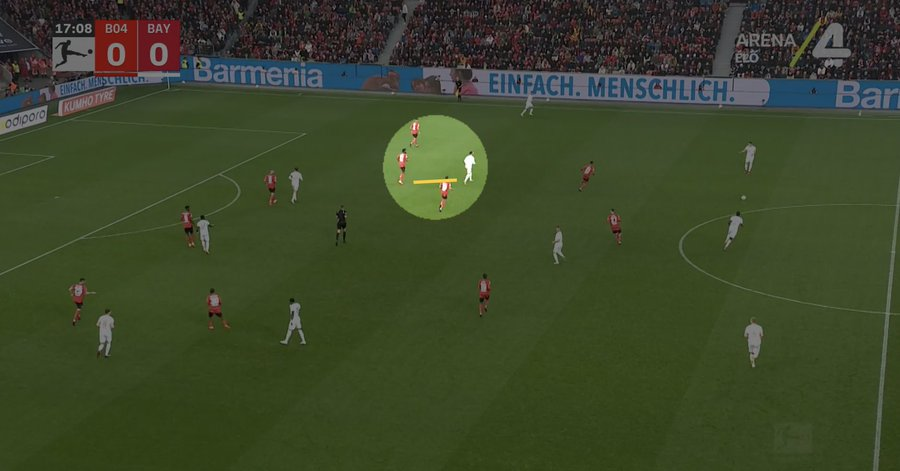
Then, behind that initial line of pressure, the centre backs are aggressive to man-mark opposition attackers dropping between the lines.
Then, behind that initial line of pressure, the centre backs are aggressive to man-mark opposition attackers dropping between the lines.
Alonso is not linear within his approach either.
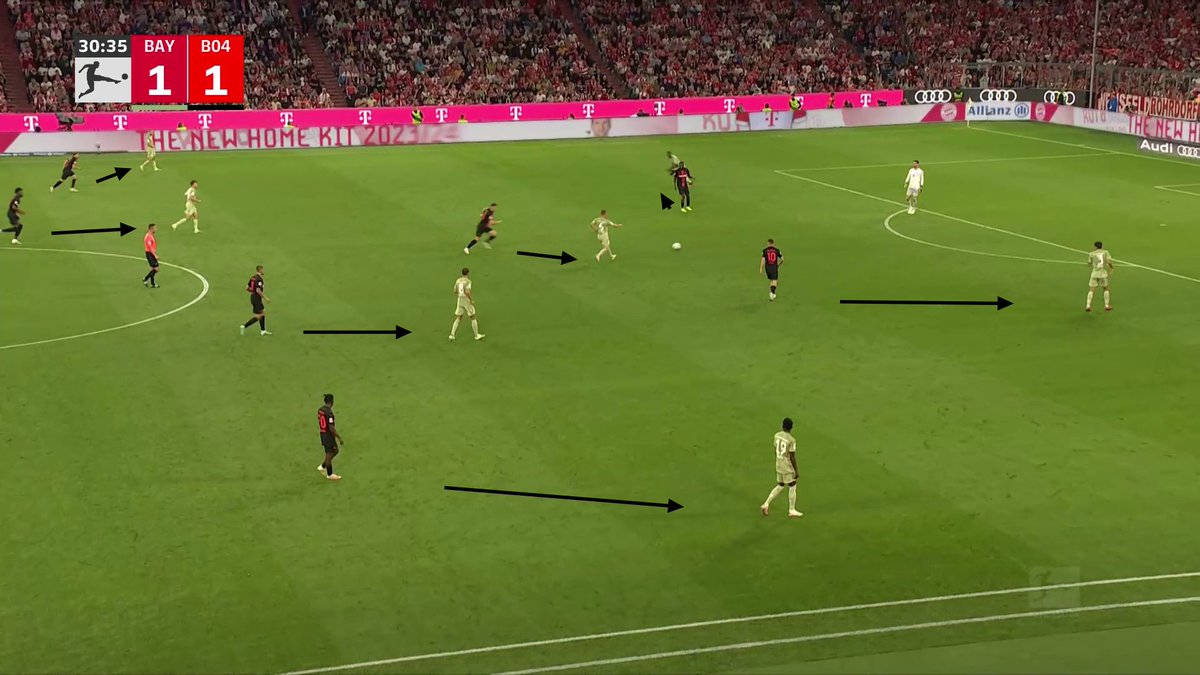
Against Bayern, Leverkusen lacked players high up the pitch to apply consistent pressure.
Alonso changed to a 4-4-2 to match up with Bayern's 4-3-3 as Xhaka pressed Kimmich in the pivot & Tapsoba marked Muller between the lines.
Against Bayern, Leverkusen lacked players high up the pitch to apply consistent pressure.
Alonso changed to a 4-4-2 to match up with Bayern's 4-3-3 as Xhaka pressed Kimmich in the pivot & Tapsoba marked Muller between the lines.
He also makes similar adaptions in possession to suit the individual qualities within his team.
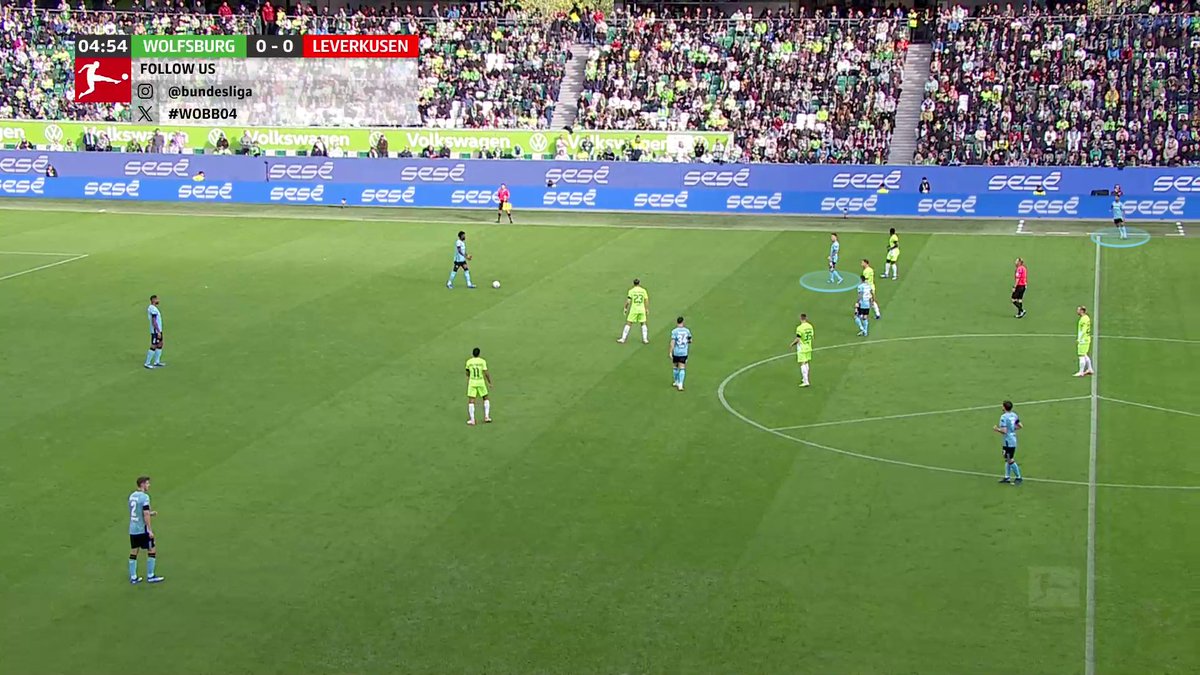
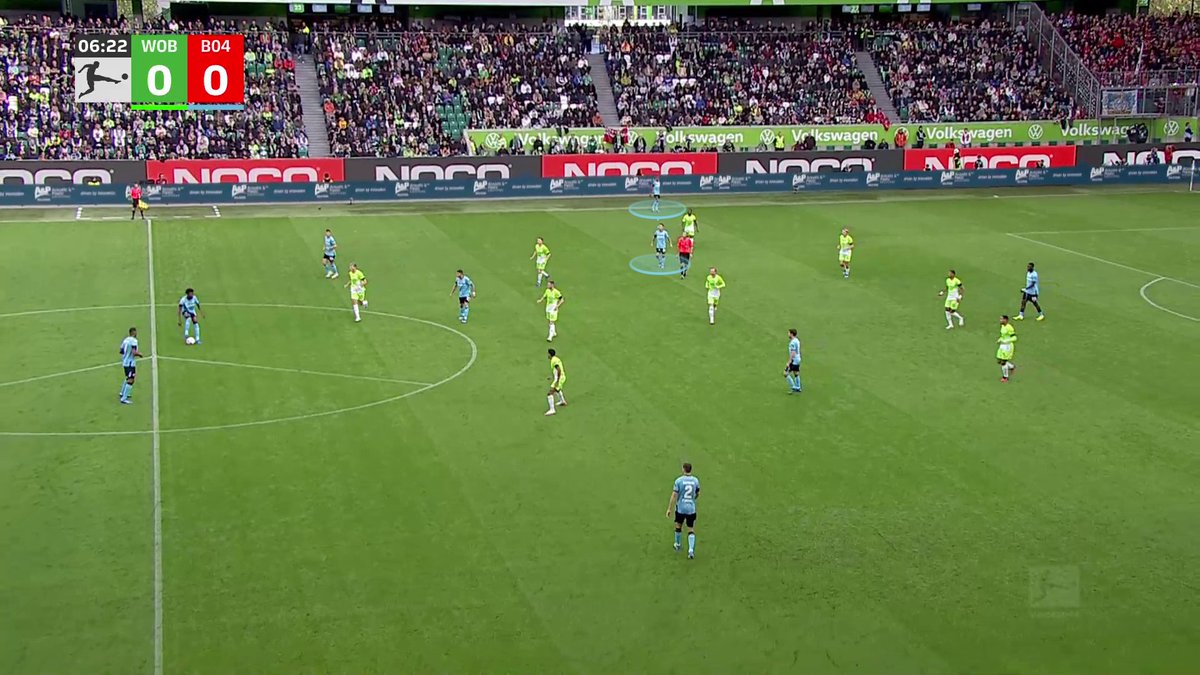
Wirtz, for example, excels between the lines, but when he was rested against Wolfsburg, Adli, a natural winger started.
Alonso subsequently changed the dynamics within his system..
Wirtz, for example, excels between the lines, but when he was rested against Wolfsburg, Adli, a natural winger started.
Alonso subsequently changed the dynamics within his system..
Grimaldo, a technically proficient fullback, inverted into the half space which allowed Adli to hold the width in the final third.
This suited the individual qualities of both players as Adli could use his traditional winger qualities on the flank with Grimaldo excelling inside.
This suited the individual qualities of both players as Adli could use his traditional winger qualities on the flank with Grimaldo excelling inside.
Alonso's understanding of balance is one of the reasons as to why Leverkusen are so successful.
He consistently utilises players in role that they are comfortable in like Xhaka in the double pivot, Frimpong high and wide, Wirtz between the lines, etc, etc.
The team is cohesive.
He consistently utilises players in role that they are comfortable in like Xhaka in the double pivot, Frimpong high and wide, Wirtz between the lines, etc, etc.
The team is cohesive.
Leverkusen aren't solely an aggressive possession-based team, though, as they're multifaceted in their approach.
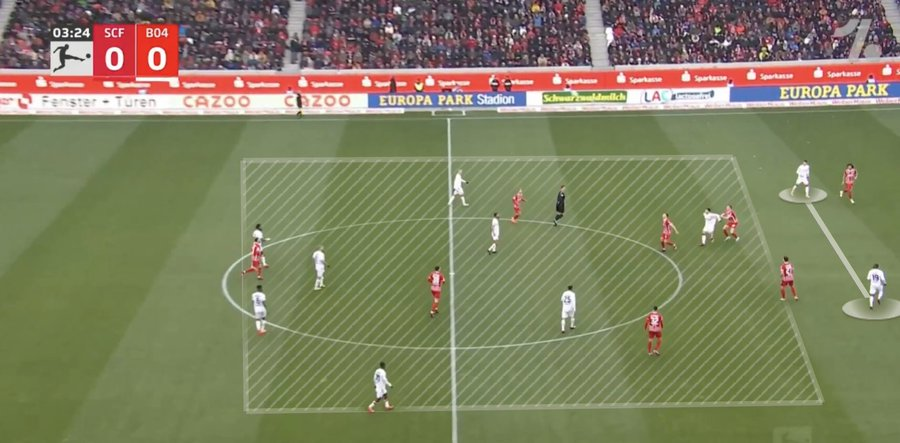
Alonso's team launch the ball from 33% of their goal kicks where they try to use Boniface's physicality to win the initial duel before being aggressive for 2nd balls.
Alonso's team launch the ball from 33% of their goal kicks where they try to use Boniface's physicality to win the initial duel before being aggressive for 2nd balls.
Not only that, but they are also comfortable defending deep where required, and Leverkusen are incredibly compact when they do so because they defend with 5 in the last line.
As far as tactically complete teams go, Alonso's Leverkusen are up there with the best in the world.
As far as tactically complete teams go, Alonso's Leverkusen are up there with the best in the world.
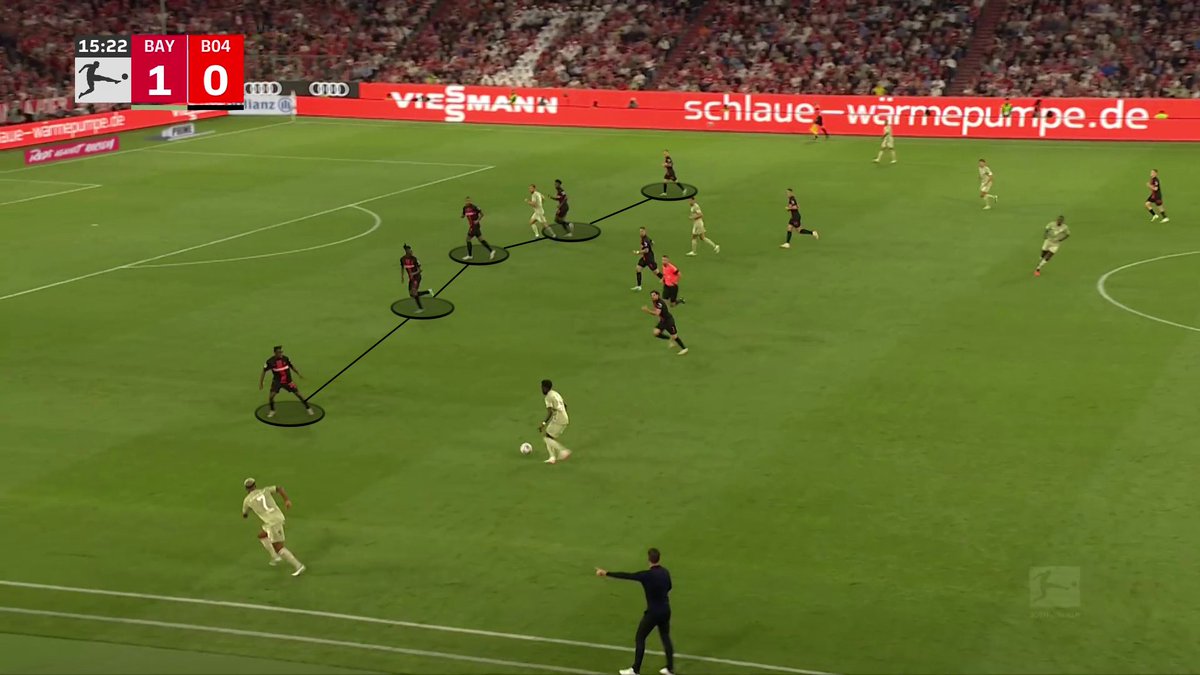
However, Alonso's system is not without its natural faults.
Sometimes, due to the distance they have to travel, the wingbacks cannot effectively back up the press which can see the opposition find the spare fullback when the wide player inverts to press the centre back.
Sometimes, due to the distance they have to travel, the wingbacks cannot effectively back up the press which can see the opposition find the spare fullback when the wide player inverts to press the centre back.
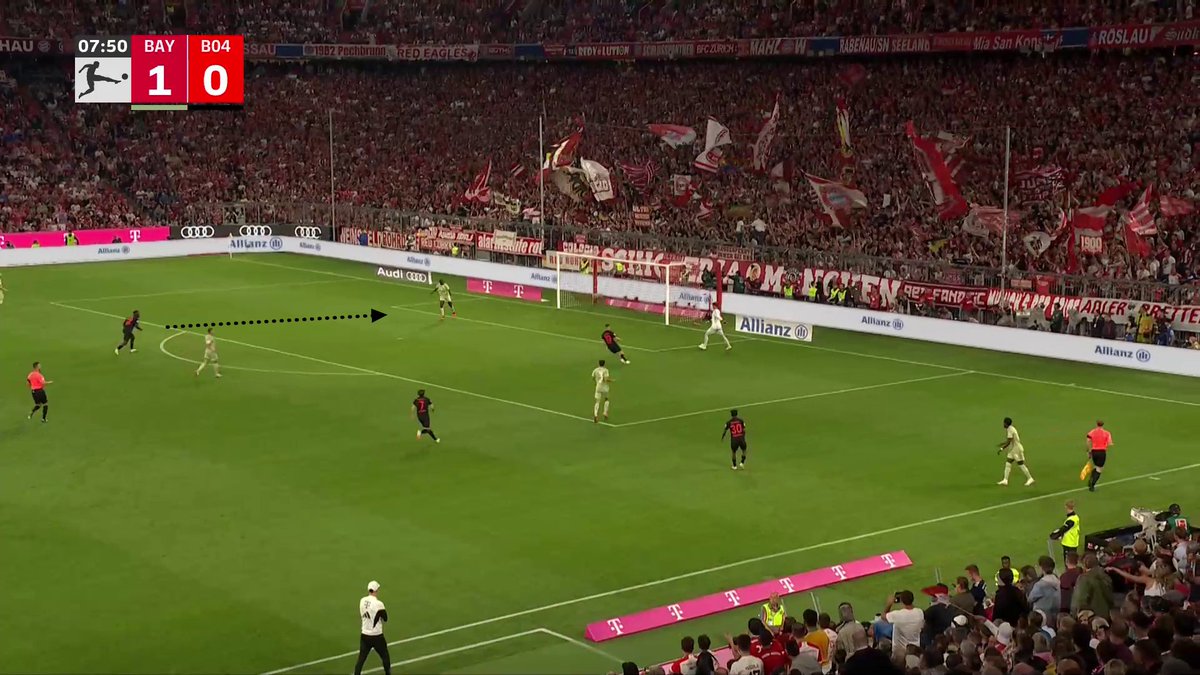
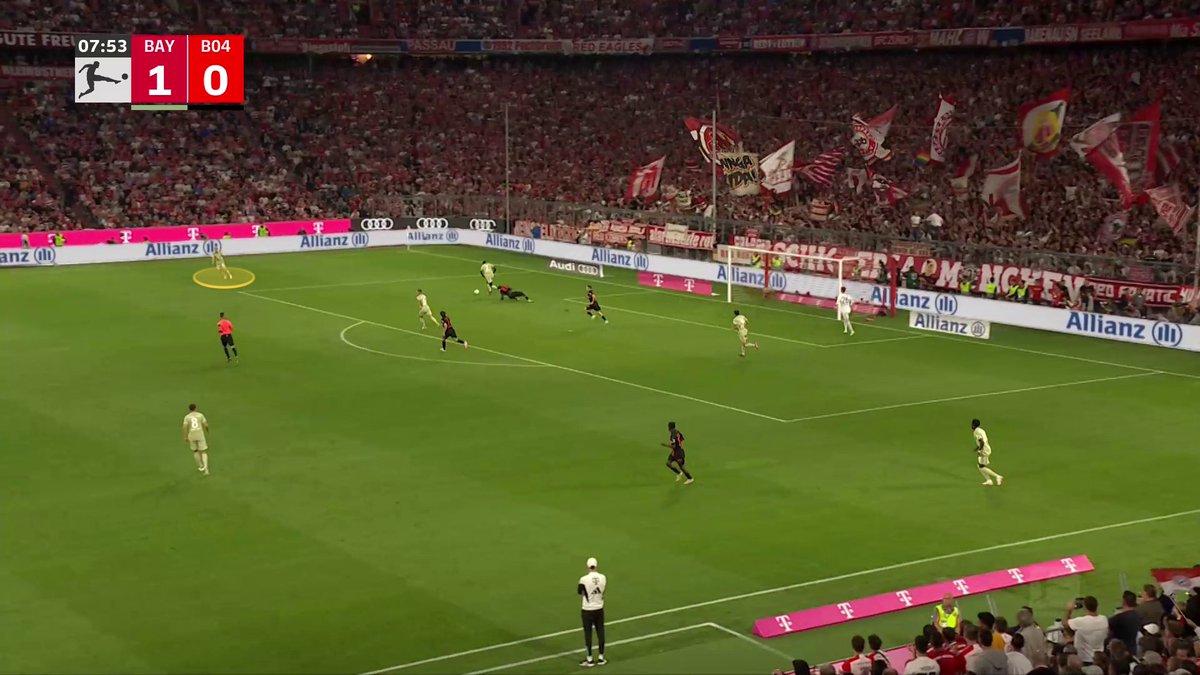
Alternatively, when the Leverkusen winger is passive, they leave the opposition centre back with time and space on the ball should they receive possession.
This is a consequence of defending with 5 in the last line - they can fail to get up the pitch to press in settled play.
This is a consequence of defending with 5 in the last line - they can fail to get up the pitch to press in settled play.
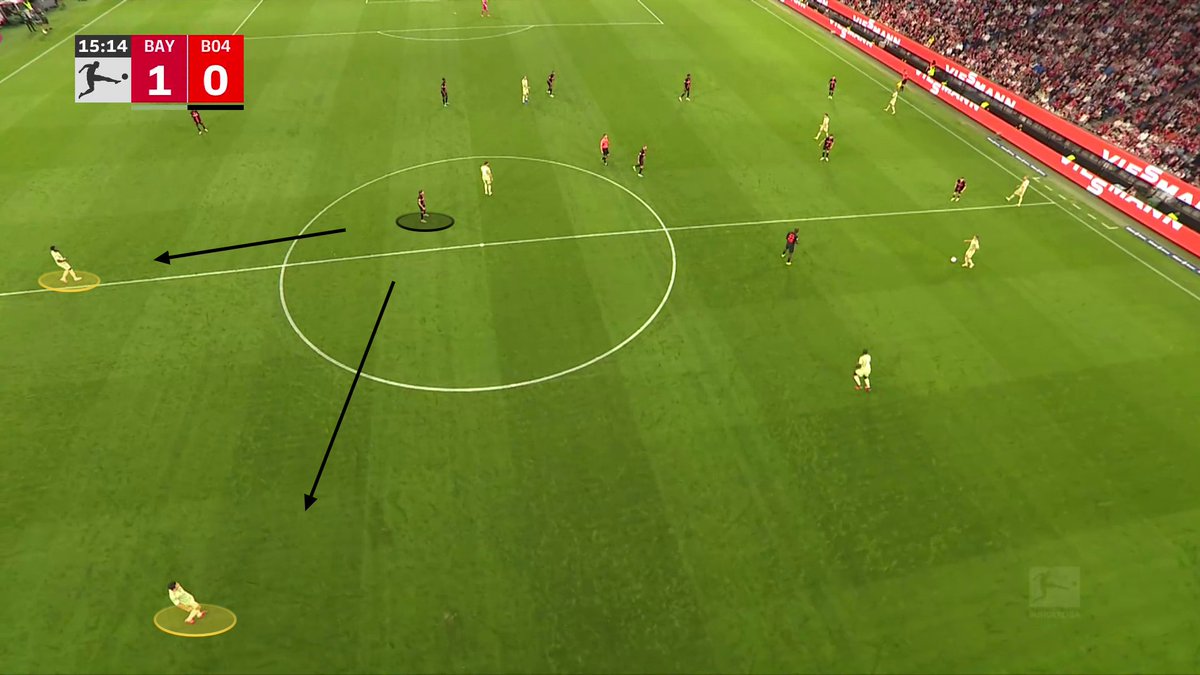
Leverkusen's front 3 defend narrowly within the mid-block to try and apply consistent pressure to the opposition's build-up, but there are scenarios in which simple circulation of play can result in Alonso's team being easily forced back into a deep low block.
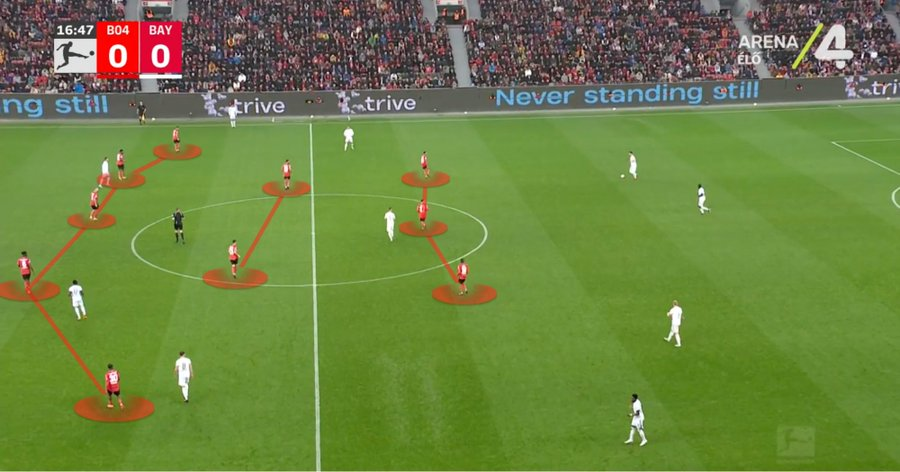
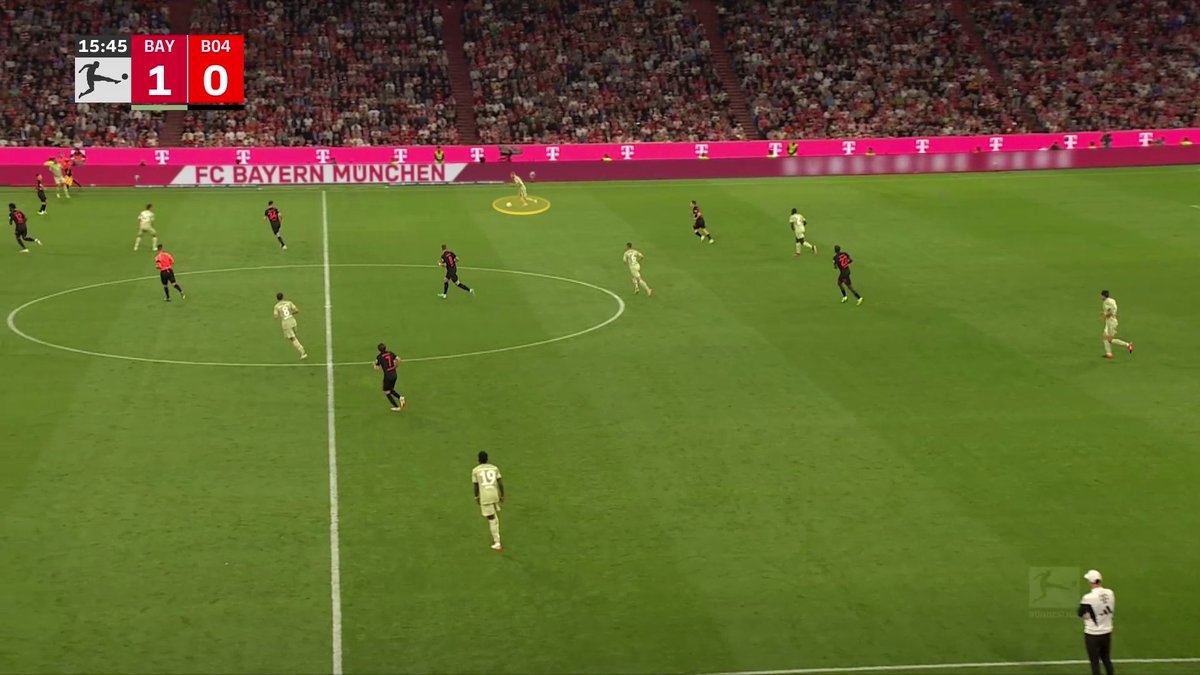
It is in these defensive circumstances where the centre backs cannot reliably press the opposition players dropping into midfield (as we saw with Tapsoba and Muller earlier).
This prevent Xhaka from pressing the opposition pivot which can give the opposition a central overload.
This prevent Xhaka from pressing the opposition pivot which can give the opposition a central overload.
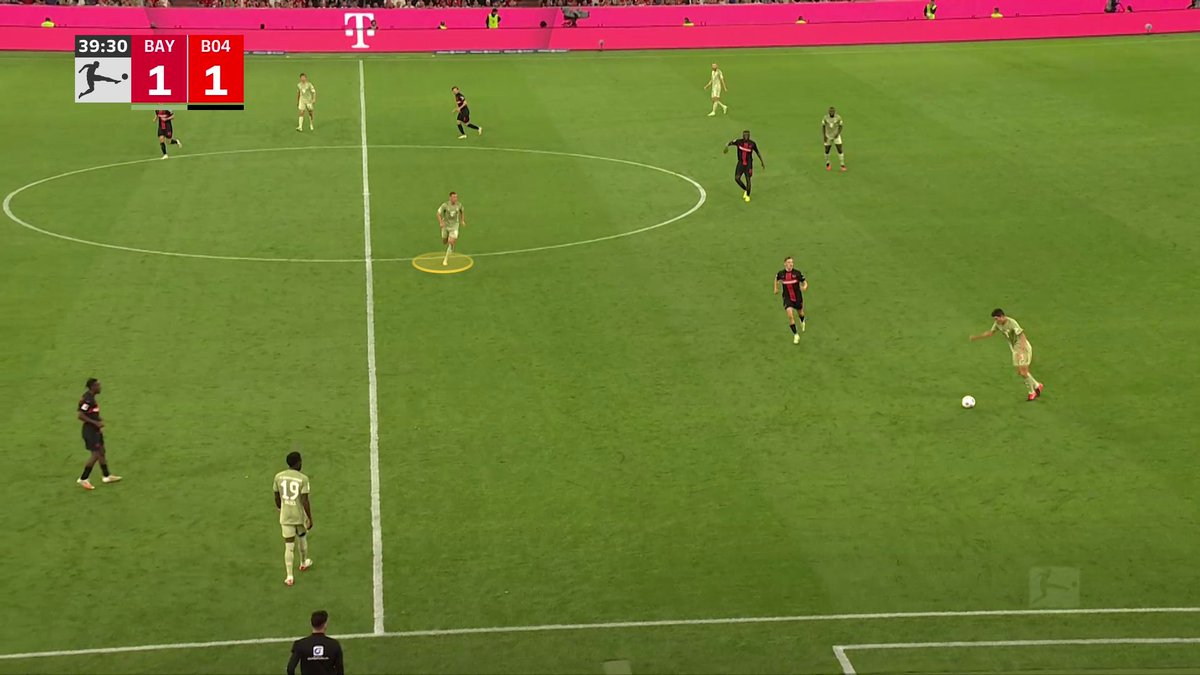
Leverkusen are largely compact within the deep block, but they can be prone to being pushed back as a result of the way Alonso sets his team up.
Then, on the break down of play, Leverkusen may lack players high in transition as a result of the wide players having to track back.
Then, on the break down of play, Leverkusen may lack players high in transition as a result of the wide players having to track back.
Tuchel's Chelsea faced the same problem against teams like Manchester City.
When they tried to counter-attack and 'get out', they often lacked players high up the pitch to enable them to reliably do so.
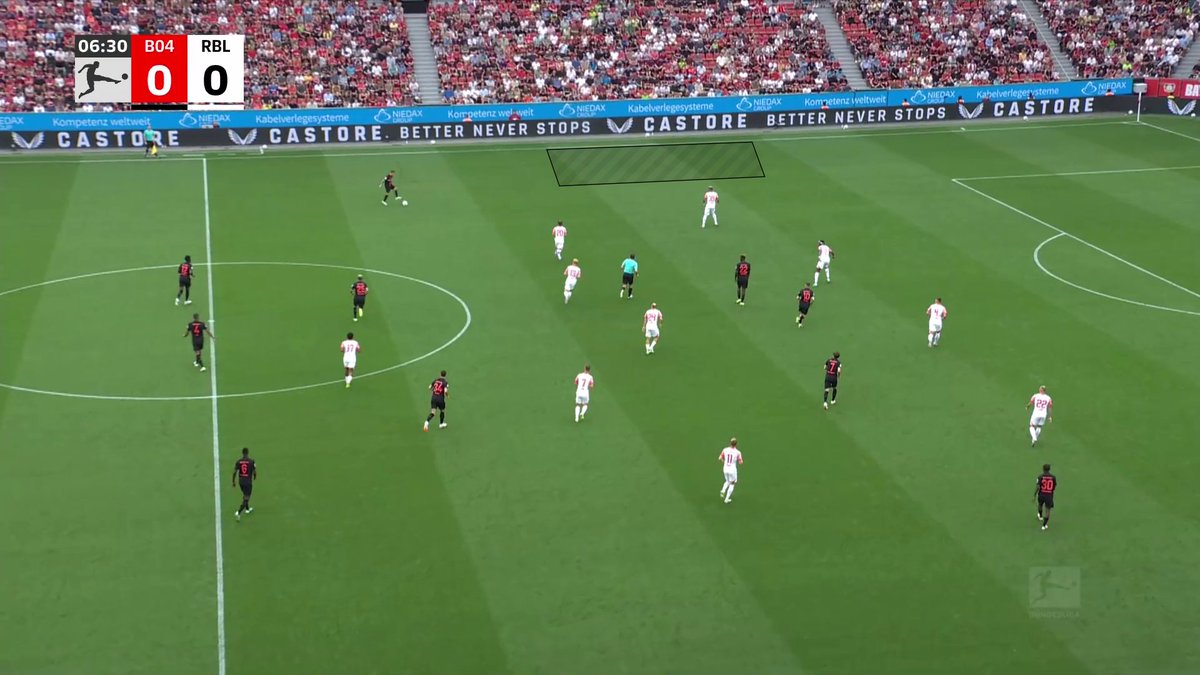
We see that here as the left wing is unoccupied because Wirtz was so deep.
When they tried to counter-attack and 'get out', they often lacked players high up the pitch to enable them to reliably do so.
We see that here as the left wing is unoccupied because Wirtz was so deep.
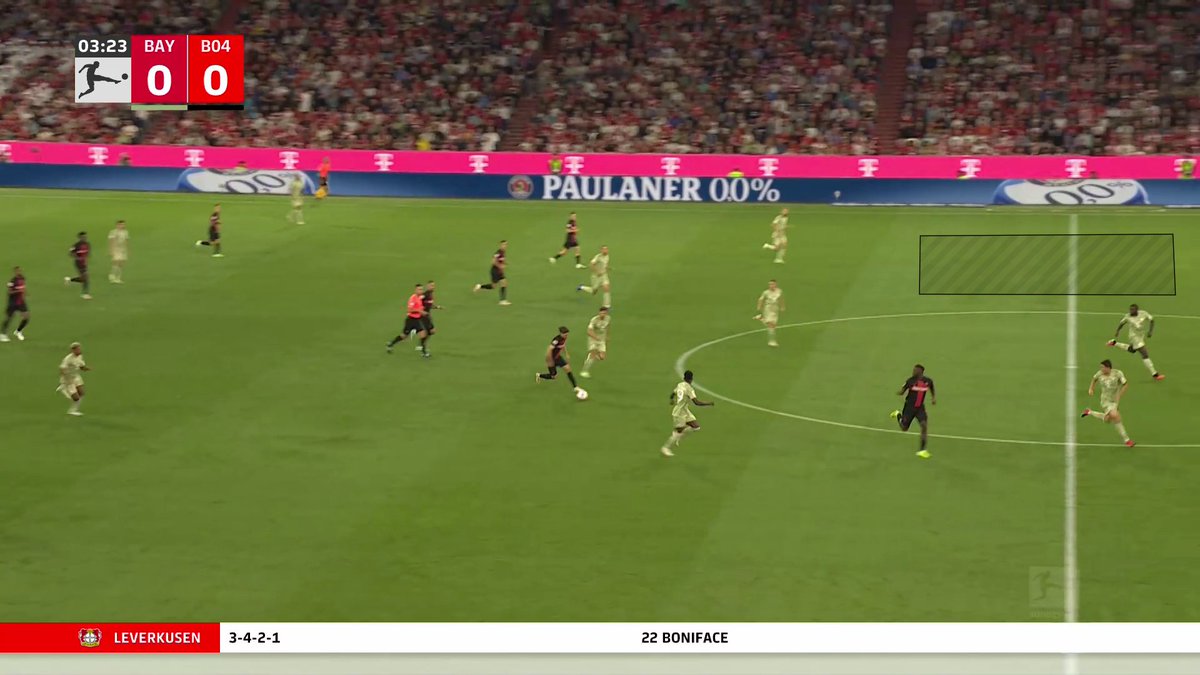
Most teams nowadays defend in a 4-4-2 & this enables them to have 4 players in advanced zones for transitional situations as opposed to the 3 that Leverkusen have.
The only way transitioning can work with 3 is if they possess 🔝 quality (Salah at Liverpool or Isak at Newcastle).
The only way transitioning can work with 3 is if they possess 🔝 quality (Salah at Liverpool or Isak at Newcastle).
Leverkusen have Boniface who excels in these situations, but Wirtz and Hoffman are not as accomplished as traditional outlets meaning Alonso's team can lack a threat in advanced areas.
This is also often true in settled play due to the demanding role on Grimaldo.
This is also often true in settled play due to the demanding role on Grimaldo.
Frimpong starts high and stays high as part of system dynamics.
Grimaldo, however, has to play as a traditional left back in the first phase of the build-up before travelling high to occupy the space in the last line.
It means Leverkusen sometimes lack width on that side.
Grimaldo, however, has to play as a traditional left back in the first phase of the build-up before travelling high to occupy the space in the last line.
It means Leverkusen sometimes lack width on that side.
However, despite these criticisms of the system, we have to ask ourselves one question and one question only:
"Does Alonso give his team, based on *their* qualities, the best possible chance of winning games reliably?"
The answer is nothing short of a resounding YES!
"Does Alonso give his team, based on *their* qualities, the best possible chance of winning games reliably?"
The answer is nothing short of a resounding YES!
This system is perfectly suited to Leverkusen's individuals and is complete in all phases tactically despite possessing *some* limitations.
However, those limitations are a direct consequence of the system Alonso uses to get the best out of his players.
Let me explain.
However, those limitations are a direct consequence of the system Alonso uses to get the best out of his players.
Let me explain.
Leverkusen don't possess elite quality.
It is not reasonable to expect them to consistently dominate the ball and control games like Manchester City, for example.
This is why Alonso has created an environment that enables them to defend with 5 in the last line, for example.
It is not reasonable to expect them to consistently dominate the ball and control games like Manchester City, for example.
This is why Alonso has created an environment that enables them to defend with 5 in the last line, for example.
Similar can be applied to their build-up structure, for example.
As discussed, Leverkusen build in a 4-2-4 from goal kicks and transition into a 3-2-5 in attack.
However, unlike complex systems that consistently invert fullbacks to play in the pivot, Alonso doesn't do that.
As discussed, Leverkusen build in a 4-2-4 from goal kicks and transition into a 3-2-5 in attack.
However, unlike complex systems that consistently invert fullbacks to play in the pivot, Alonso doesn't do that.
Alonso signed Granit Xhaka, an absolute master of the double pivot, to have a specialist in his team.
What's important to note here is how a double pivot is constant positionally whereas relying on a fullback to invert to form one requires dominance of possession and control.
What's important to note here is how a double pivot is constant positionally whereas relying on a fullback to invert to form one requires dominance of possession and control.
Leverkusen control most games they play, but the reason they can compete with *ALL* teams is because they don't play an overly complex style.
If they tried to reliably invert the fullbacks when transitions were common they would be too fluid. Instead they have a consistent base.
If they tried to reliably invert the fullbacks when transitions were common they would be too fluid. Instead they have a consistent base.
That rigid base may be more easy for the opposition to prepare to play against, but it suits the qualities of his players whilst still being excellent tactically.
There is absolutely no doubt in my mind that Xabi Alonso is doing the best job possible at Bayer Leverkusen.
There is absolutely no doubt in my mind that Xabi Alonso is doing the best job possible at Bayer Leverkusen.
Heck, they have played 13 games this season, won 11 of them, scored 46 goals, conceded 10, and only drew one game which was against Bayern at the Allianz Arena!
That, in tandem with the history of Alonso, is why he is rightly being linked to the Real Madrid role post-Ancelotti..
That, in tandem with the history of Alonso, is why he is rightly being linked to the Real Madrid role post-Ancelotti..
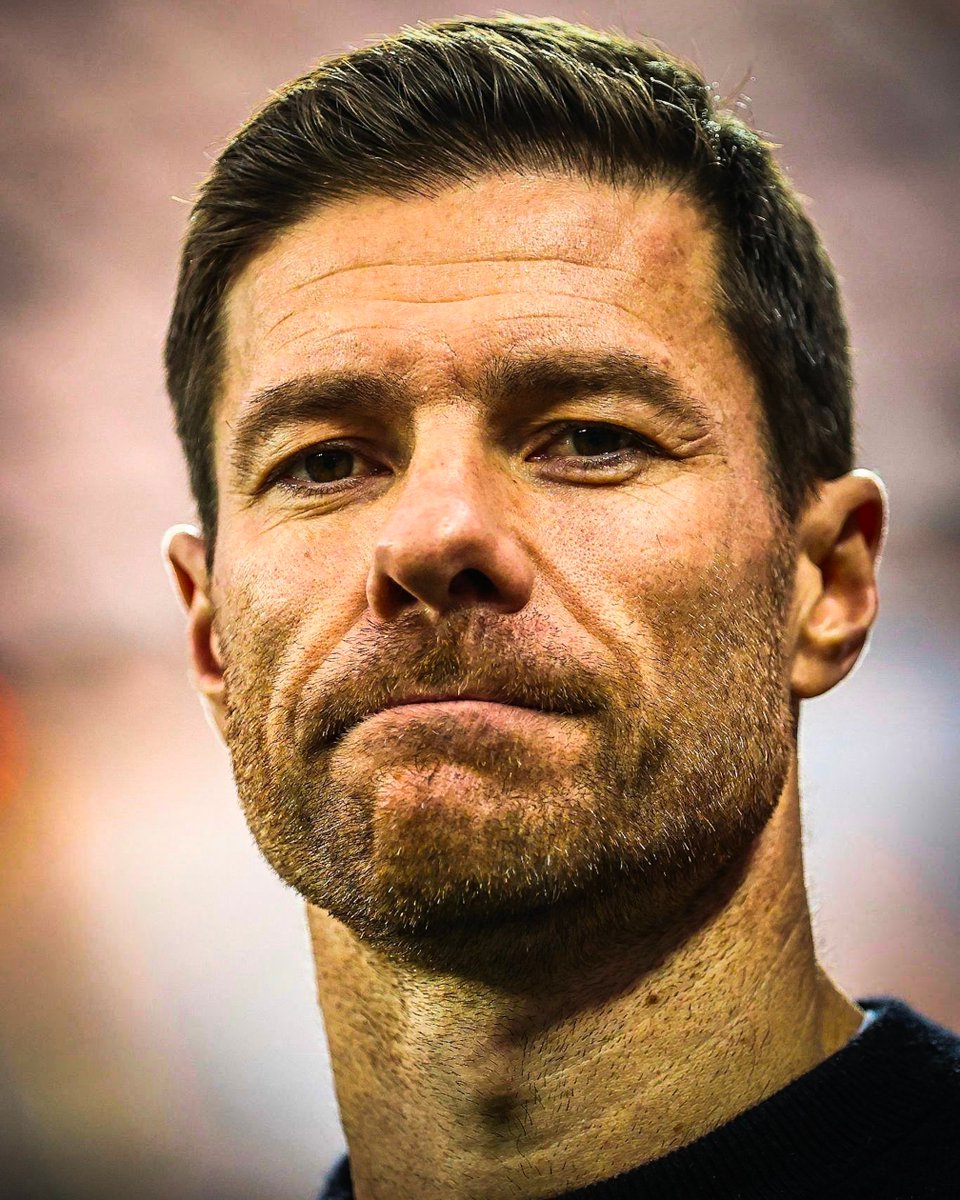
Alonso, thus far, is most similar in style to Thomas Tuchel at Chelsea, but would he try to implement such rigid tactics at Real Madrid? It's hypothetical, so we don't know, but the likelihood is that he wouldn't.
Based on his history, I think he would adapt to Madrid's culture.
Based on his history, I think he would adapt to Madrid's culture.
That culture is one that Alonso, in theory, fits optimally.
Real Madrid have never been a team to completely dominate games tactically.
They have been a team that use their elite individual qualities within a balanced environment and mix between all types of approaches..
Real Madrid have never been a team to completely dominate games tactically.
They have been a team that use their elite individual qualities within a balanced environment and mix between all types of approaches..
Real Madrid are the most successful team in the history of the Champions League because of that - the culture of the club and their inherent style is perfectly suited to winning in cup competitions.
They have elite quality, can dominate the games with a ball, AND defend deep..
They have elite quality, can dominate the games with a ball, AND defend deep..
Alonso's Leverkusen are similarly versatile.
They too try to dominate games with the ball but when that is not possible they have no problem adapting mid-game by changing their structure or even with defending deep to see out a game.
That's Real Madrid all over. That's culture.
They too try to dominate games with the ball but when that is not possible they have no problem adapting mid-game by changing their structure or even with defending deep to see out a game.
That's Real Madrid all over. That's culture.
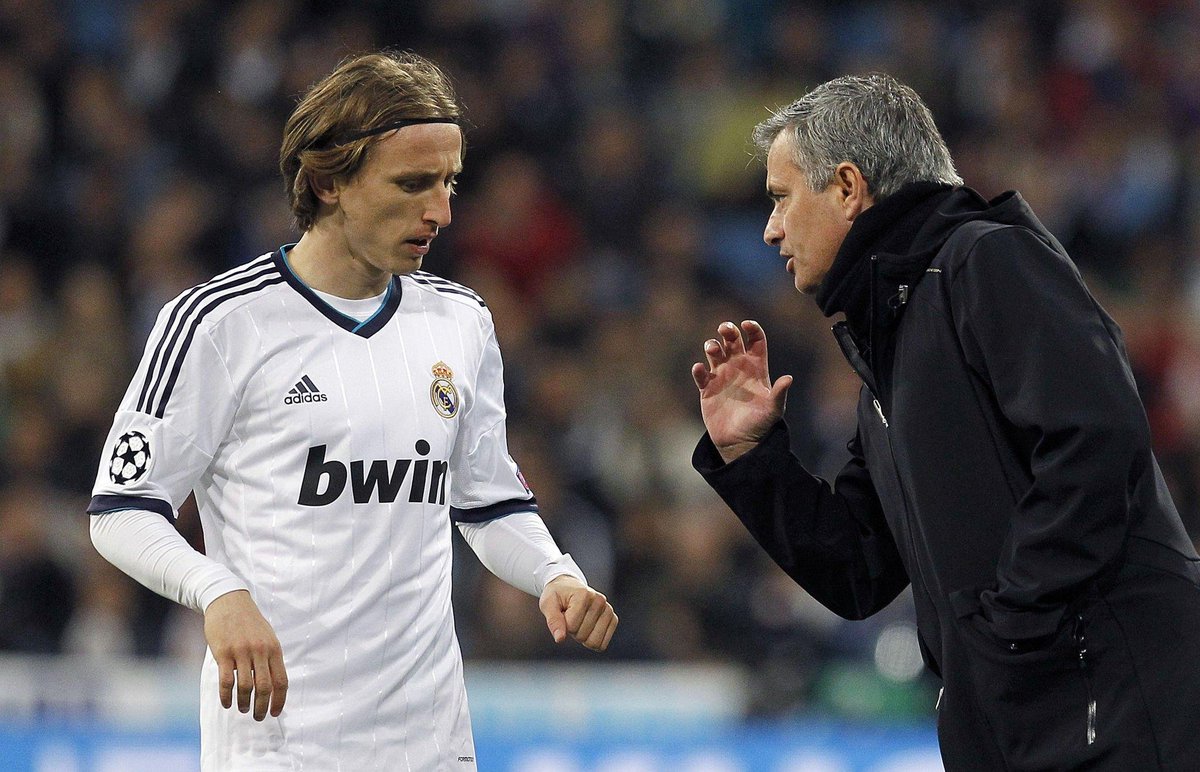
Now, let's not get it twisted, it is difficult to assess the future trajectory of coaches. Sometimes we see coaches maintain the same style in a new environment (Ange at Celtic and now at Spurs, for example) OR we see them change entirely (Poch at Chelsea with a brand new 3-1-6).
With Alonso, I think it is more likely that he changes systematically, & although that would be required at Madrid, we have to see if he achieves that successfully.
Similar can be said for Tuchel - he played the same way Leverkusen do with Chelsea but changed entirely at Bayern.
Similar can be said for Tuchel - he played the same way Leverkusen do with Chelsea but changed entirely at Bayern.
So far, that has resulted in mixed success, but he adapted to his players and time will tell whether that will work out or not.
Either way, though, Alonso is doing a flawless job at Leverkusen and despite many unknowns, he, on paper, looks like a potentially good fit at Madrid..
Either way, though, Alonso is doing a flawless job at Leverkusen and despite many unknowns, he, on paper, looks like a potentially good fit at Madrid..
Loading suggestions...