

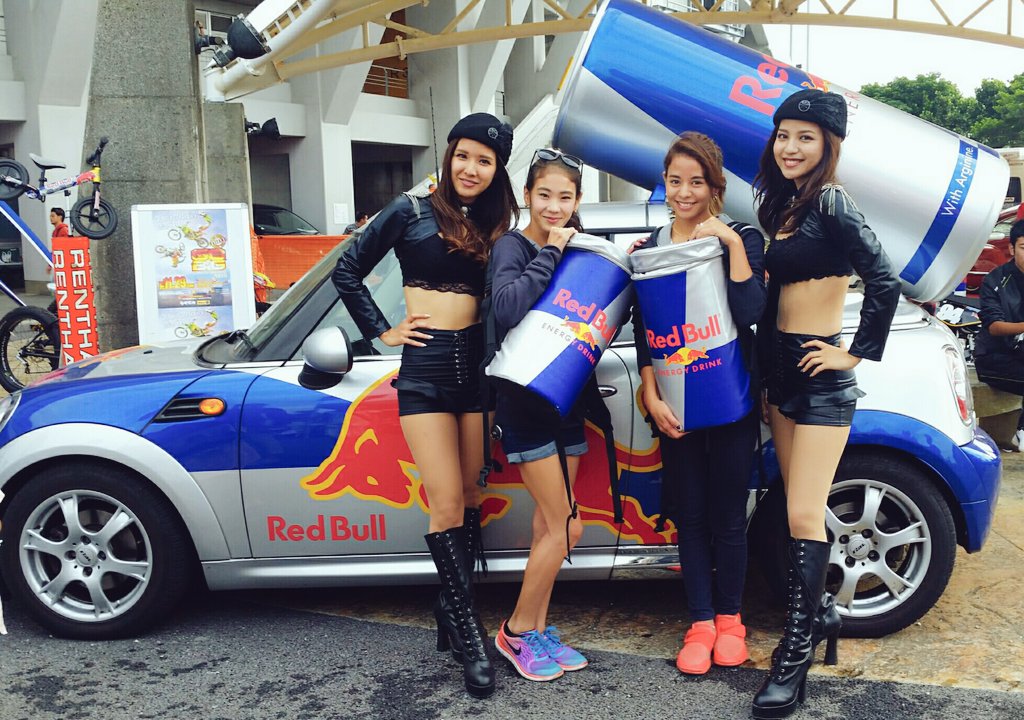
Red Bull has built a monopoly of in India with 61% market share
But Sting energy is on its way to destroy it!
The crazy part? 15-17 year olds are having 4 Stings a day while daily wage workers are switching it for their lunch
THREAD: How Sting is clipping Red Bull's Wiiings 🧵
But Sting energy is on its way to destroy it!
The crazy part? 15-17 year olds are having 4 Stings a day while daily wage workers are switching it for their lunch
THREAD: How Sting is clipping Red Bull's Wiiings 🧵
Before we dive into any details about the 2 companies or the industry, let us tell you a story.
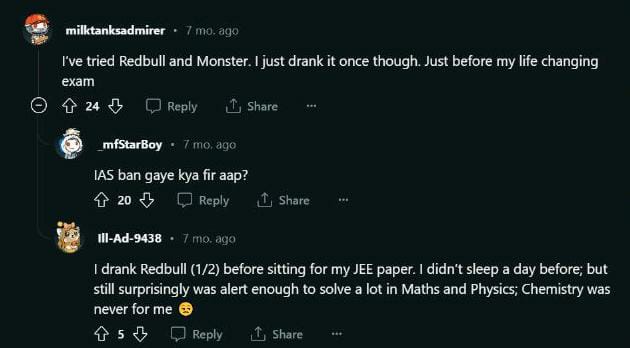
So a few days back, while scrolling Reddit we came across a question,
"Why is everyone drinking Sting Energy?"
So a few days back, while scrolling Reddit we came across a question,
"Why is everyone drinking Sting Energy?"
And then there was a string of comments where people wrote that they were consuming it before their "life-changing exams before their classes or even before workouts.
There was some comparison as well between Red Bull and Sting Energy based on their price.
There was some comparison as well between Red Bull and Sting Energy based on their price.
This caught our eye and we initiated our research work on the Energy Drink Market.
Energy drink is a beverage which contains a large amount of caffeine, added sugars, additives and legal stimulants
— to provide a boost of energy and enhanced alertness.
Energy drink is a beverage which contains a large amount of caffeine, added sugars, additives and legal stimulants
— to provide a boost of energy and enhanced alertness.
Now at first, let’s understand how caffeine and sugar boost our energy levels.
So once you consume caffeine, it crosses the blood-brain barrier and stimulates our neurons, indirectly.
Neurons induce a chemical called - Adenosine.
So once you consume caffeine, it crosses the blood-brain barrier and stimulates our neurons, indirectly.
Neurons induce a chemical called - Adenosine.
— which promotes sleep by slowing down the activities of our nerve cells.
Caffeine blocks the effects of adenosine, which makes us feel more energized.
And now let's turn to sugar and how it keeps us recharged?!
Caffeine blocks the effects of adenosine, which makes us feel more energized.
And now let's turn to sugar and how it keeps us recharged?!
So basically, there has been no evidence of a sugar rush or sugar high as per major research reports.
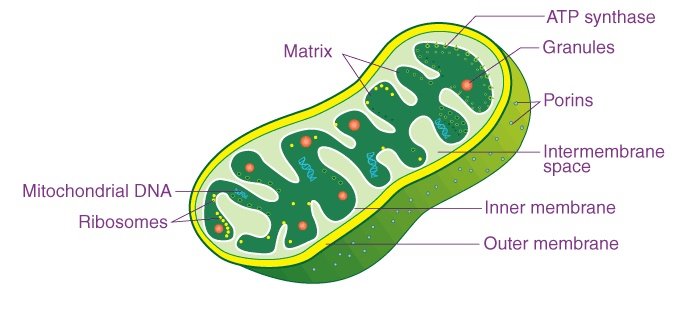
However simple sugar does get absorbed into our bloodstream and our cells feed it into mitochondria- the powerhouse of cells.👀
However simple sugar does get absorbed into our bloodstream and our cells feed it into mitochondria- the powerhouse of cells.👀
Now if we cast some light on the Indian energy drink market, so it has seen a CAGR of 8.5% from 2016 to 2021 and it is estimated that the market will further grow at 9.98% over the next 5 years!!
And can you guess which was the first co. To familiarise us with energy drinks?
And can you guess which was the first co. To familiarise us with energy drinks?
If you've guessed Red Bull, then you're right.👏
In 2009, the co. entered our Indian market and it was then targeting adults
— ranging from 21-35 years of age.
It priced its can at Rs.125 and made people aware of this new product with unconventional ways of marketing like
In 2009, the co. entered our Indian market and it was then targeting adults
— ranging from 21-35 years of age.
It priced its can at Rs.125 and made people aware of this new product with unconventional ways of marketing like
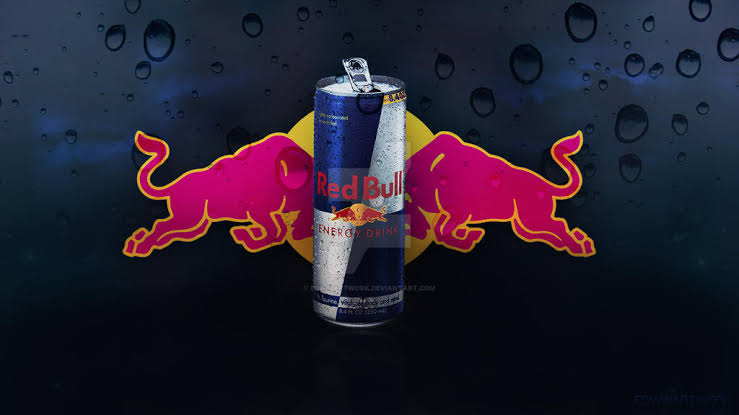
• guerrilla marketing and
• intriguing catchphrase- “RED BULL GIVES YOU WINGS.”
The company also offered free samples to students' parties for promotion.
For years, it commanded 80% of the market. But with time, different co.s launched new products.
• intriguing catchphrase- “RED BULL GIVES YOU WINGS.”
The company also offered free samples to students' parties for promotion.
For years, it commanded 80% of the market. But with time, different co.s launched new products.
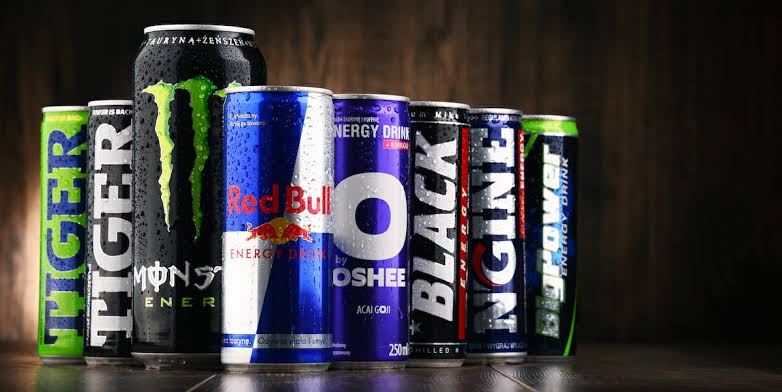
• Monster Drink
• Rockstar Energy Drink
• Tzinga
• Cloud 9
• Power House etc.
But they could only take away Red Bull’s 10% market share which couldn’t affect its business in a real sense.
• Rockstar Energy Drink
• Tzinga
• Cloud 9
• Power House etc.
But they could only take away Red Bull’s 10% market share which couldn’t affect its business in a real sense.
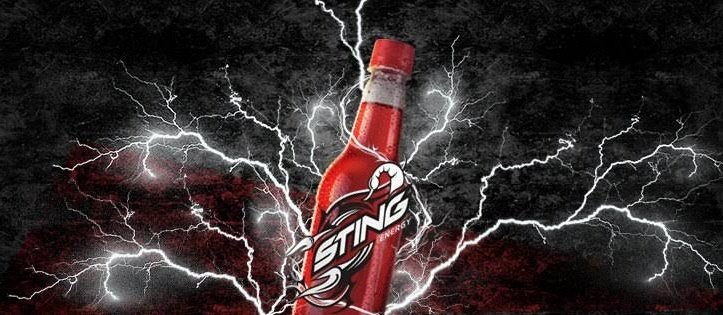
Finally, PepsiCo introduced Sting Energy in 2017 and changed the entire landscape of the Indian Energy Drinks Market.
It made a dent in Red Bull’s annual sales by 21% and created an entire niche for itself.
Let’s understand how?!!
It made a dent in Red Bull’s annual sales by 21% and created an entire niche for itself.
Let’s understand how?!!
👉 Safe Entry
Sting benefitted from its late entry as
• People were already aware of energy drinks, so Sting did not have to spend much on marketing.
• It was easier for Pepsi to conduct market research and it also had access to the strategies of the old players to work with.
Sting benefitted from its late entry as
• People were already aware of energy drinks, so Sting did not have to spend much on marketing.
• It was easier for Pepsi to conduct market research and it also had access to the strategies of the old players to work with.
👉 Target Customer Shift
Being a passionate set of audience, GenZ can adopt anything & everything that they resonate with.
So what Sting did was
— change the target demographic from millennials to GenZ, and the way they reach out to them which brings us to the next strategy.
Being a passionate set of audience, GenZ can adopt anything & everything that they resonate with.
So what Sting did was
— change the target demographic from millennials to GenZ, and the way they reach out to them which brings us to the next strategy.
👉 Creative Marketing:
A 2021 ad campaign by Sting was an instant hit among youth. In the ad, the male protagonist climbs a few floors carrying the female protagonist.
Impressed by this, she ends up giving him her phone number
A 2021 ad campaign by Sting was an instant hit among youth. In the ad, the male protagonist climbs a few floors carrying the female protagonist.
Impressed by this, she ends up giving him her phone number

— which turned out to be an actual number. Within 48 hours, they received 40,000 calls and used this opportunity to spread awareness about energy consumption.
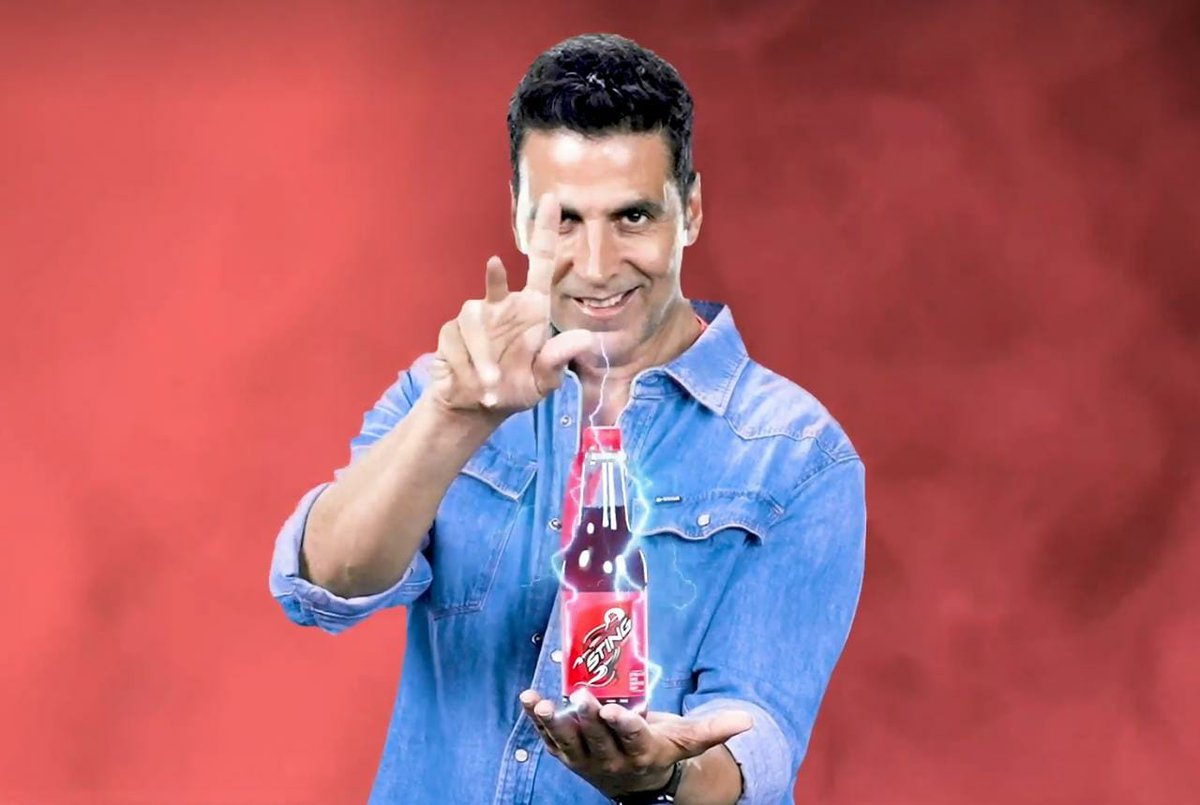
Even their first brand ambassador is Akshay Kumar, whose power-packed performances are known to energize his audiences.
Even their first brand ambassador is Akshay Kumar, whose power-packed performances are known to energize his audiences.
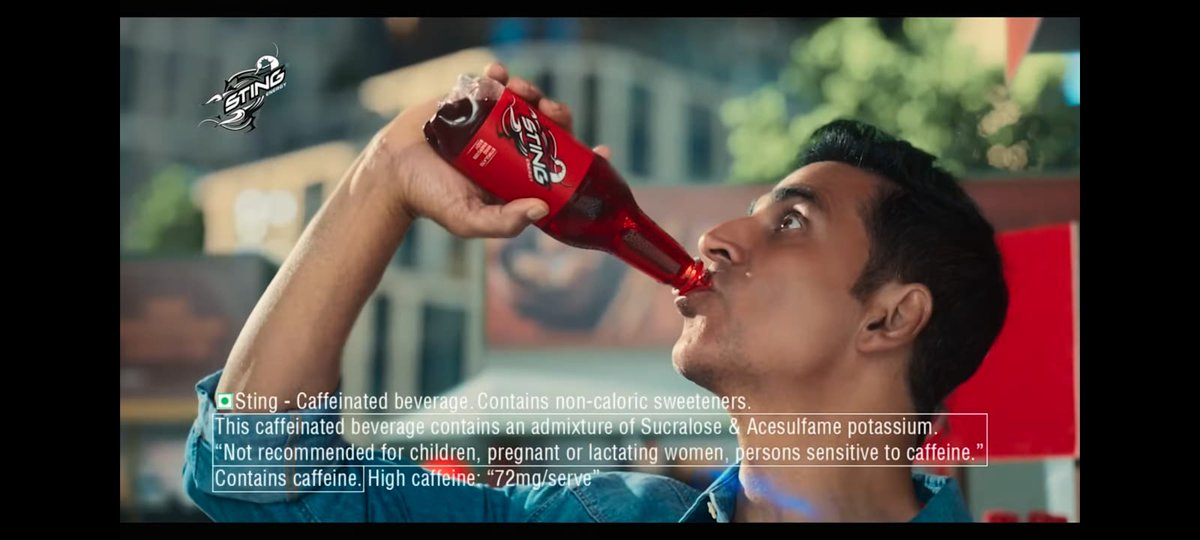
This partnership extended the brand’s ‘Energy Bole Toh Sting’ mantra among the audiences.
👉 Price Segmentation: Price is the main pain point in the energy market, especially when you’re targeting a different niche (GenZ).
👉 Price Segmentation: Price is the main pain point in the energy market, especially when you’re targeting a different niche (GenZ).
Pepsi noticed that all energy drinks were targeting the premium segment (₹80-125), where Red Bull already has a stronghold. So, Pepsi targeted an even bigger segment
— mass affordable (₹20-35) and enjoyed the first mover’s advantage.
— mass affordable (₹20-35) and enjoyed the first mover’s advantage.
Now also note one thing- as per Harvard’s report, a typical energy drink contains
- 40 grams of sugar and
- 160-300 mg or more caffeine.
But Sting started selling 76 mg of caffeine per bottle at Rs.20 which is like 1/2 the amount of caffeine at 1/4th the price.
- 40 grams of sugar and
- 160-300 mg or more caffeine.
But Sting started selling 76 mg of caffeine per bottle at Rs.20 which is like 1/2 the amount of caffeine at 1/4th the price.
That’s why students started buying 3-4 bottles under 100 Bucks to get the same rush.
Sting massified the energy drinks market by a great length and it seems that our teenagers have adopted these drinks already for various reasons like
Sting massified the energy drinks market by a great length and it seems that our teenagers have adopted these drinks already for various reasons like
• combat sleep during long hours of intense studying.
• to increase their energy levels through demanding schedules
• peer influence during parties and social engagements
• influential marketing based on increased performance, endurance, stamina and alertness.
• to increase their energy levels through demanding schedules
• peer influence during parties and social engagements
• influential marketing based on increased performance, endurance, stamina and alertness.
But we also need to address an important notion: increasing health risks like increased palpitation, hypertension, central nervous system stimulation, nausea, vomiting, and even death at times due to sudden surges in caffeine consumption.
So, there is a need to educate our youth regarding the rationale for consuming energy drinks.
If you liked this read do ReTweet🔄the 1st tweet and follow us @FinFloww for such threads every Monday, Wednesday and Friday!
If you liked this read do ReTweet🔄the 1st tweet and follow us @FinFloww for such threads every Monday, Wednesday and Friday!
Join the FinFloww channel on WhatsApp to receive such stories daily: whatsapp.com

Subscribe to WHAT THE FLOWW?, our weekly email newsletter where we dive deeper into such concepts:
finfloww.bio.link
finfloww.bio.link

Loading suggestions...