

Polymorphism in Object Oriented Programming (OOP)
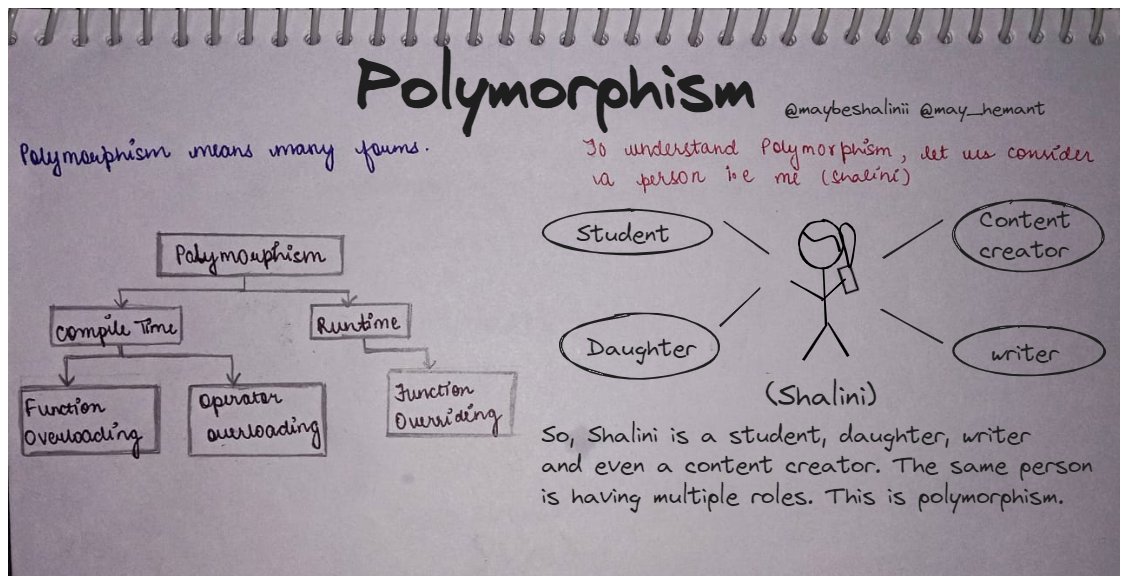
Polymorphism, in simple words, is like using a TV remote. You have different buttons on the remote, but they do different things based on the TV's brand or model. For example, the "power" button turns on different TVs, even though it's the same button on the remote. In the same way, in programming, polymorphism allows you to use the same name (like a button) for different functions (like turning on the TV) in different objects or classes. It lets you treat different things in a similar way, making your code more flexible and versatile.
Types of Polymorphism:
1. Compile time polymorphism
2. Runtime polymorphism
- Compile time polymorphism
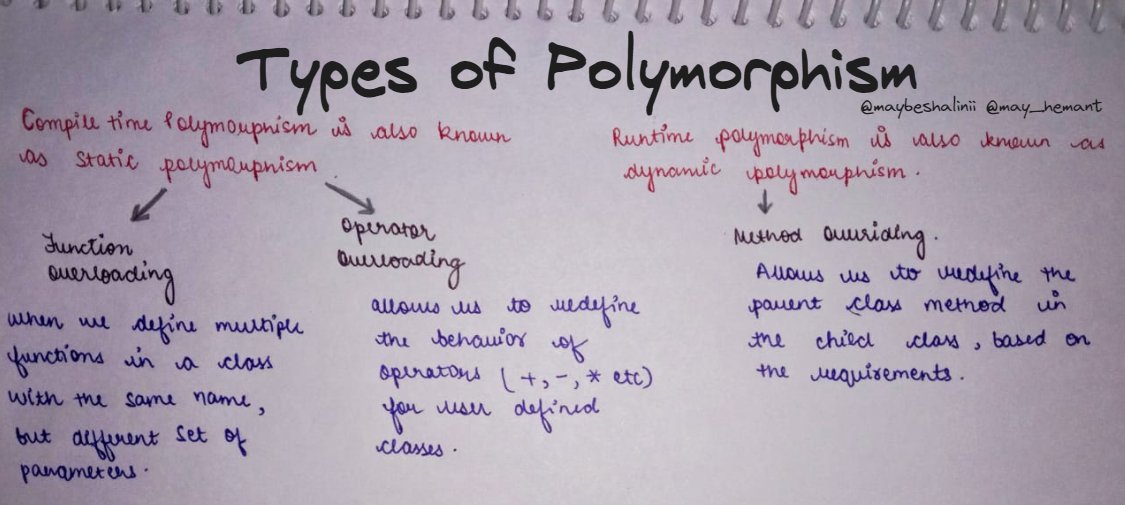
Also known as static polymorphism, is a concept in programming where the determination of which method or function to call is made by the compiler at compile time, based on the method's name and the number and types of its parameters.
-> Function overloading:
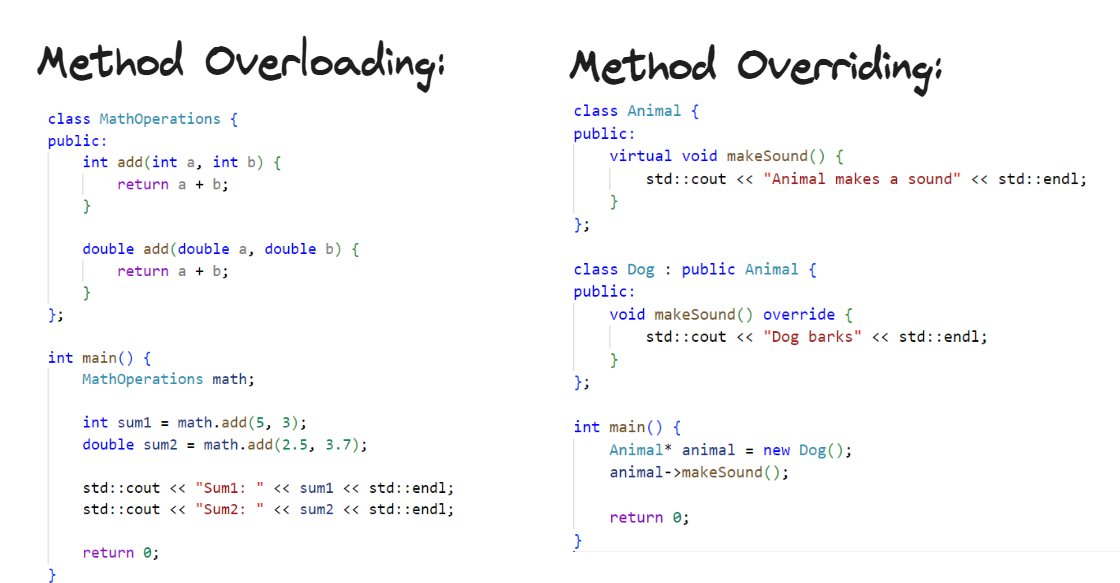
Function overloading is a form of polymorphism where you define multiple functions with the same name in the same class, but each of them has a different set of parameters (number, type, or order of parameters). The compiler determines which version of the function to call based on the arguments provided at the call site. Function overloading is often used to provide multiple ways of performing a similar operation.
-> Operator overloading:
Allows you to redefine or extend the behavior of operators (like +, -, *, /, etc.) for user-defined classes. It enables you to define how these operators should work with your custom objects. For example, you can use operator overloading to add two instances of a custom class in a meaningful way.
- Runtime Polymorphism
Also known as dynamic polymorphism, is a fundamental concept in object-oriented programming where the determination of which method to execute is made at runtime, based on the actual type of the object. This is typically achieved through method overriding and inheritance.
-> Method Overriding:
In runtime polymorphism, a subclass(child class) provides a specific implementation for a method that is already defined in its superclass(parent class).
The method in the subclass has the same name, return type, and parameters as the method in the superclass. This is known as method overriding.
Polymorphism, in simple words, is like using a TV remote. You have different buttons on the remote, but they do different things based on the TV's brand or model. For example, the "power" button turns on different TVs, even though it's the same button on the remote. In the same way, in programming, polymorphism allows you to use the same name (like a button) for different functions (like turning on the TV) in different objects or classes. It lets you treat different things in a similar way, making your code more flexible and versatile.
Types of Polymorphism:
1. Compile time polymorphism
2. Runtime polymorphism
- Compile time polymorphism
Also known as static polymorphism, is a concept in programming where the determination of which method or function to call is made by the compiler at compile time, based on the method's name and the number and types of its parameters.
-> Function overloading:
Function overloading is a form of polymorphism where you define multiple functions with the same name in the same class, but each of them has a different set of parameters (number, type, or order of parameters). The compiler determines which version of the function to call based on the arguments provided at the call site. Function overloading is often used to provide multiple ways of performing a similar operation.
-> Operator overloading:
Allows you to redefine or extend the behavior of operators (like +, -, *, /, etc.) for user-defined classes. It enables you to define how these operators should work with your custom objects. For example, you can use operator overloading to add two instances of a custom class in a meaningful way.
- Runtime Polymorphism
Also known as dynamic polymorphism, is a fundamental concept in object-oriented programming where the determination of which method to execute is made at runtime, based on the actual type of the object. This is typically achieved through method overriding and inheritance.
-> Method Overriding:
In runtime polymorphism, a subclass(child class) provides a specific implementation for a method that is already defined in its superclass(parent class).
The method in the subclass has the same name, return type, and parameters as the method in the superclass. This is known as method overriding.
tomorrow we will explore abstraction. :)
Loading suggestions...