

How to read a 10k like a pro 🧐
Here’s a primer on what metrics professional analysts focus on (using $MA as an example:)
Here’s a primer on what metrics professional analysts focus on (using $MA as an example:)
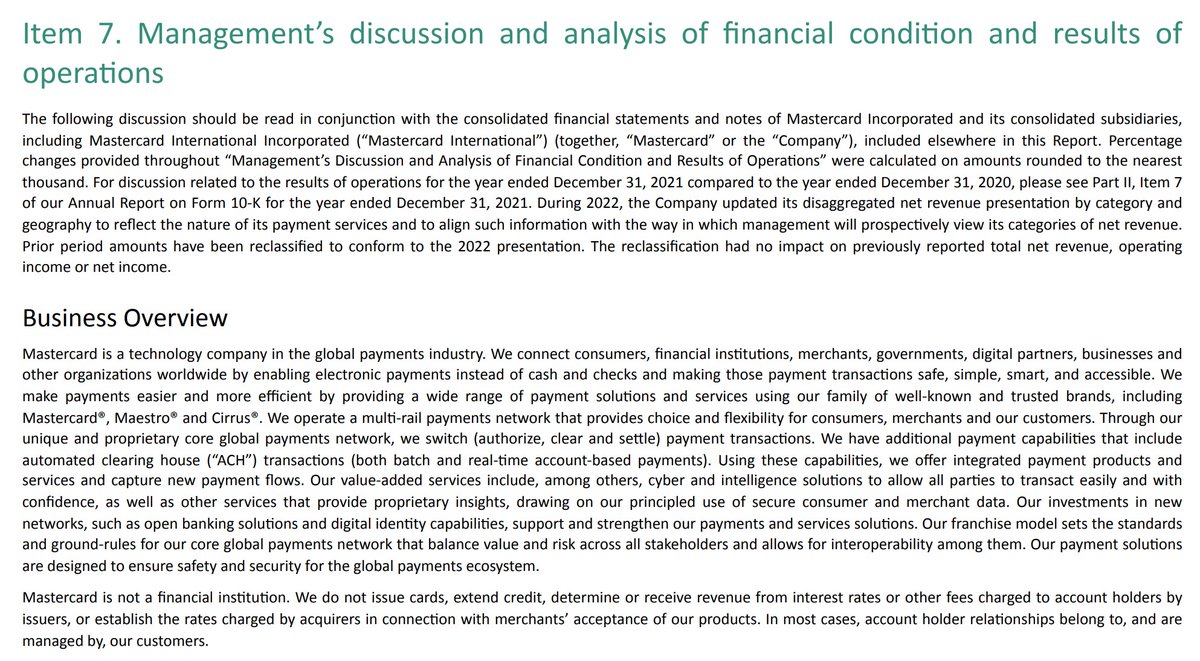
1: Business overview.
Understand everything about how the business works, like:
- What is the business model?
- Who are the key suppliers, distributors, partners?
- Revenue quality?(Recurring? Recession proof?)
- What is the revenue split from products / services?
Understand everything about how the business works, like:
- What is the business model?
- Who are the key suppliers, distributors, partners?
- Revenue quality?(Recurring? Recession proof?)
- What is the revenue split from products / services?
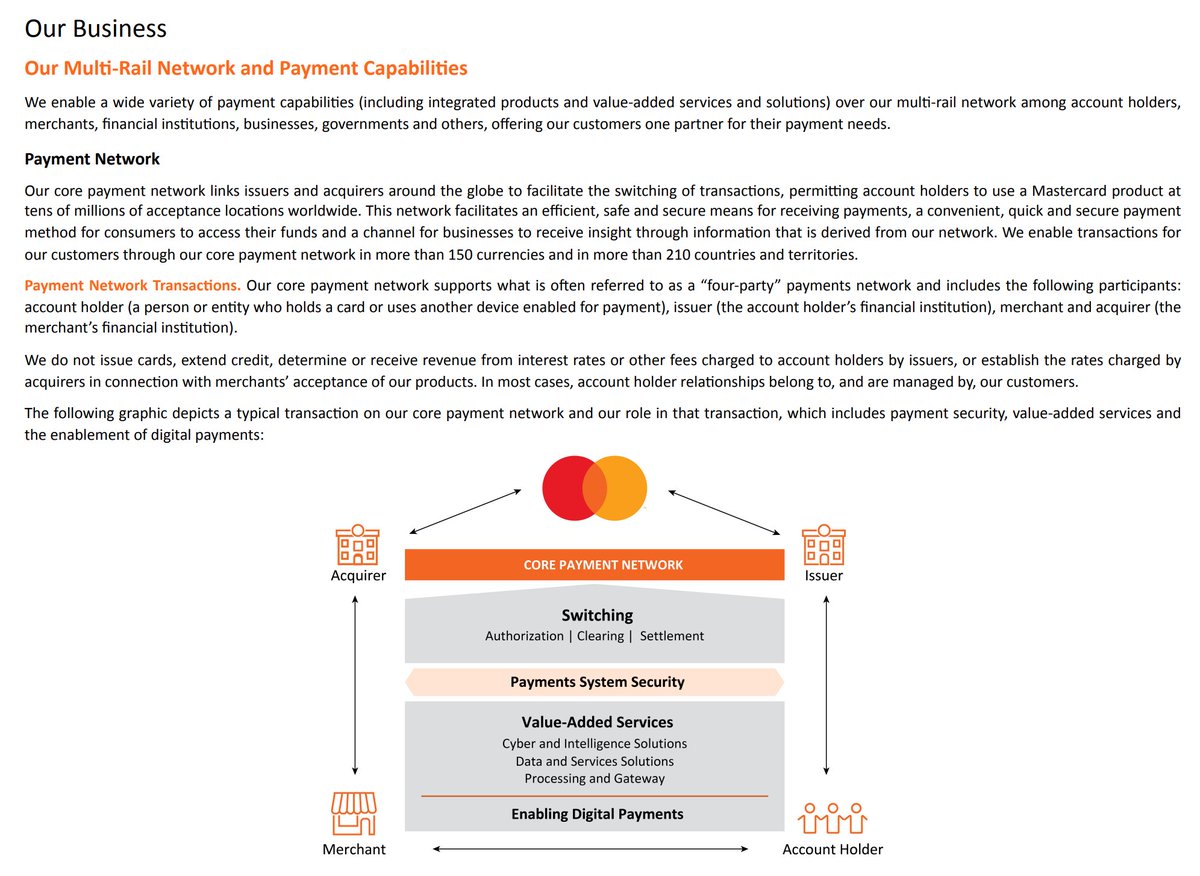
2: Risk Factors
Most of these are standard.
Identify the risks that are company-specific and make sure you understand them.
Most of these are standard.
Identify the risks that are company-specific and make sure you understand them.
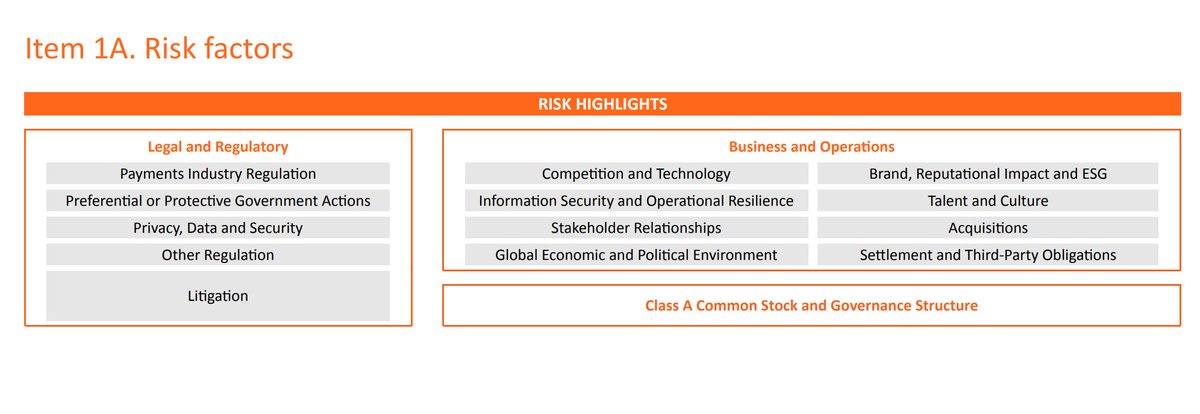
3: Unresolved Staff Comments
This is where management addresses comments it received from the SEC on previously filed reports.
This section is empty 99% of the time. If it has data, read it!
This is where management addresses comments it received from the SEC on previously filed reports.
This section is empty 99% of the time. If it has data, read it!
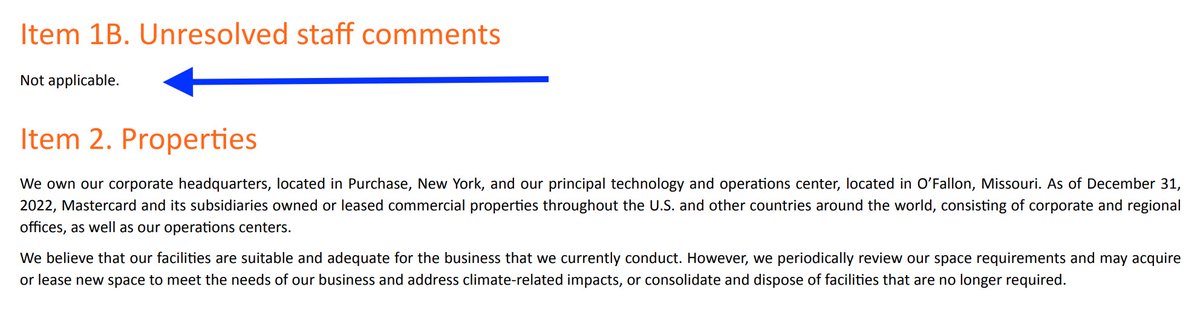
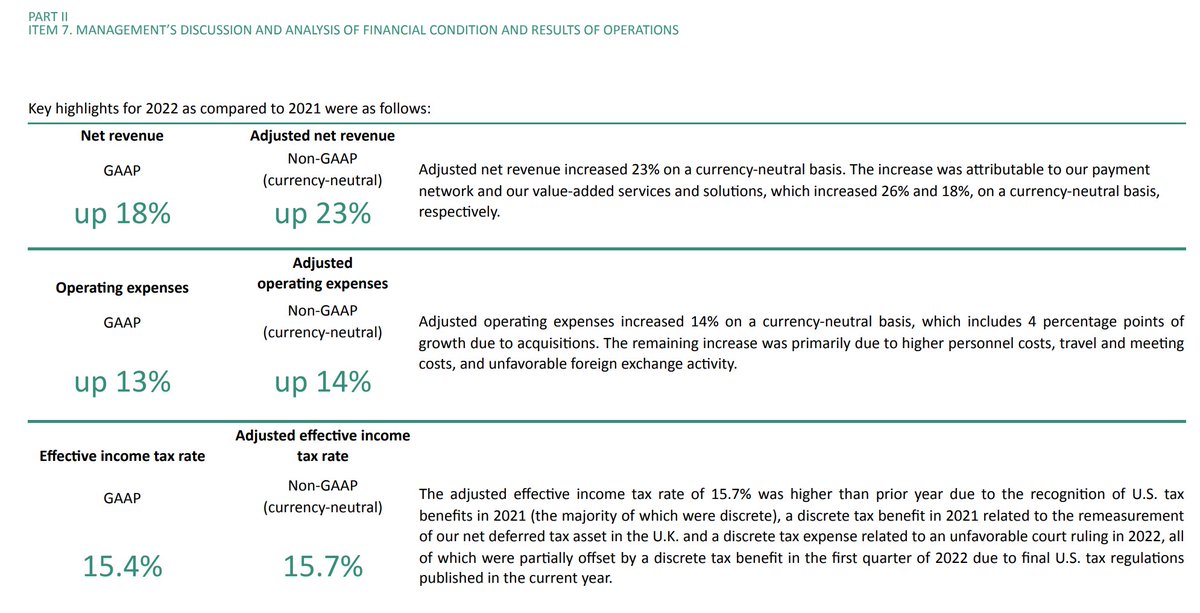
4: Management's Discussion & Analysis of Financial Conditions
READ THIS PART!
It contains detailed explanations on:
- Revenue trends & causes (if decelerating, why?)
- Near-term focus
- Key metrics to watch
- Competitive moat
- GAAP vs Non-GAAP
- Biggest risks
- Guidance
READ THIS PART!
It contains detailed explanations on:
- Revenue trends & causes (if decelerating, why?)
- Near-term focus
- Key metrics to watch
- Competitive moat
- GAAP vs Non-GAAP
- Biggest risks
- Guidance
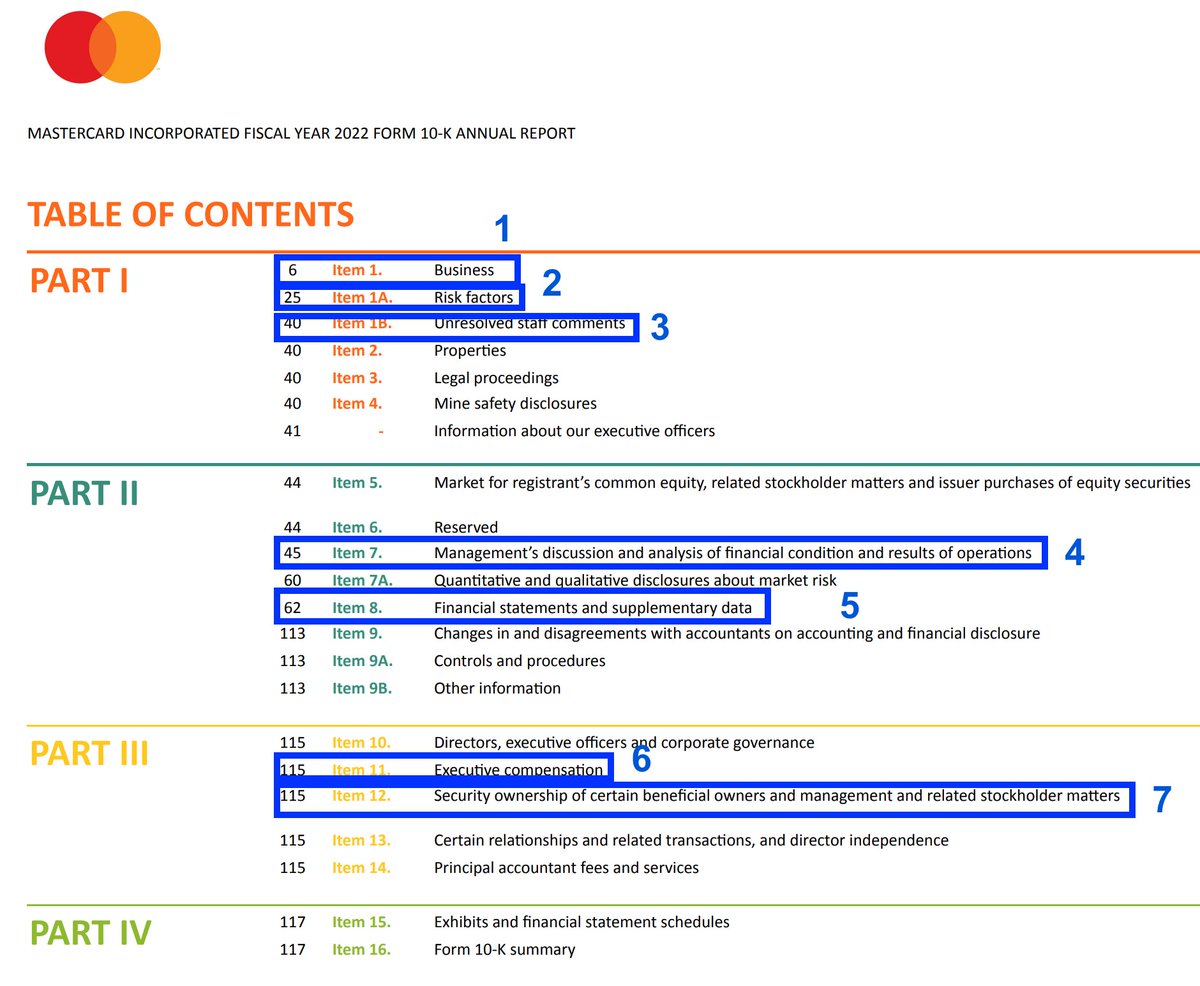
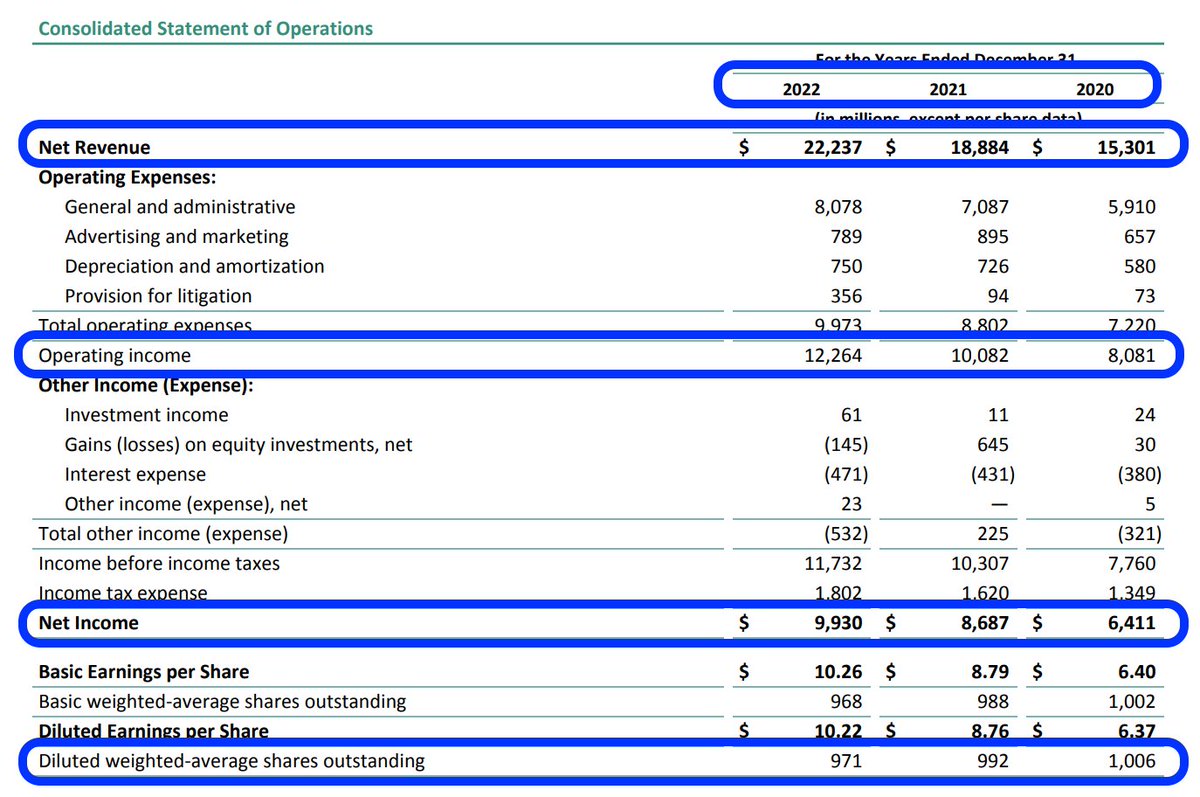
5A: Financial Statement Summary
Income Statement
Look for:
- Revenue Growth
- Margins (gross, operating, net)
- One-time expenses
- Net Income
- Shares Outstanding
- Discontinued operations
Income Statement
Look for:
- Revenue Growth
- Margins (gross, operating, net)
- One-time expenses
- Net Income
- Shares Outstanding
- Discontinued operations
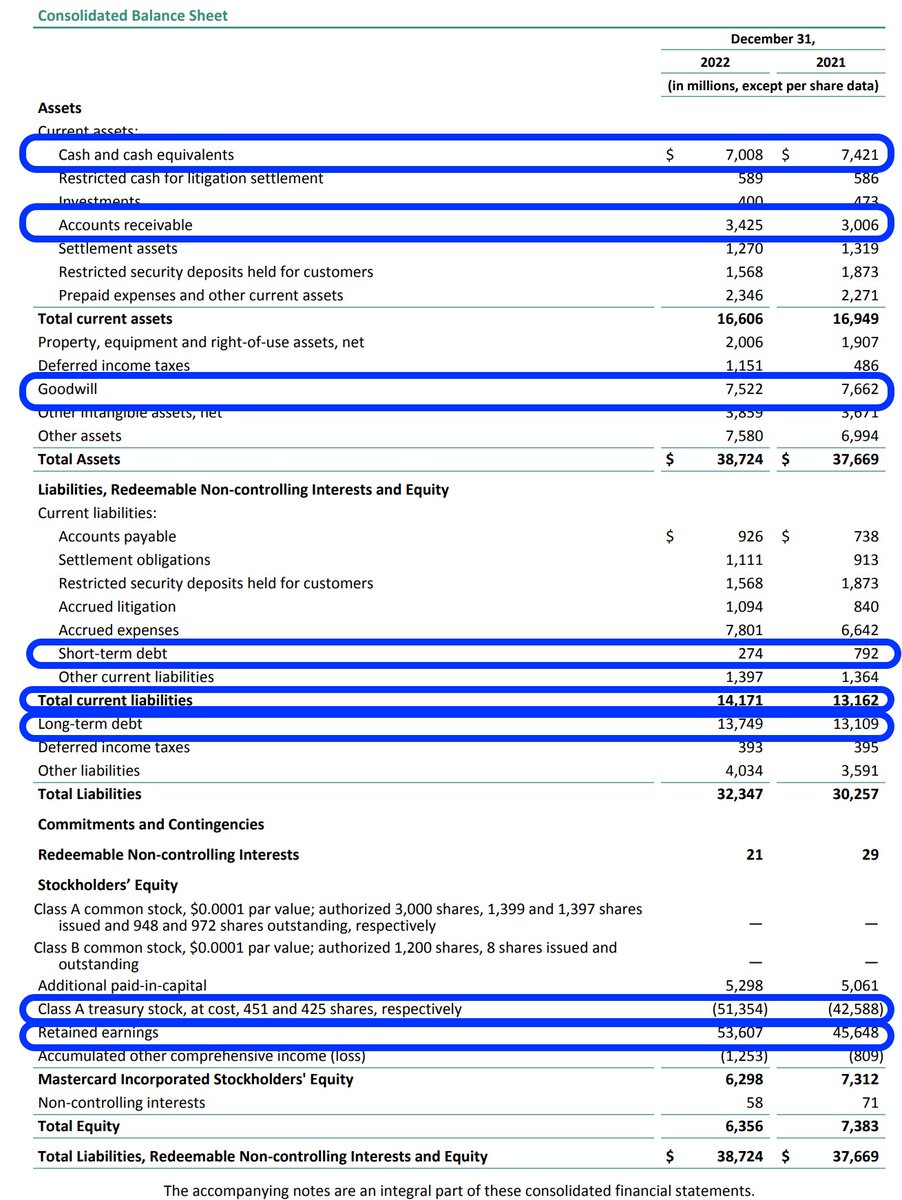
5B: Balance Sheet
Look for:
- Changes in cash
- Changes in receivables
- Liabilities
- Rising debt/equity
- Falling interest coverage
- Big change in cash w/out corporate action
- Goodwill changes
Look for:
- Changes in cash
- Changes in receivables
- Liabilities
- Rising debt/equity
- Falling interest coverage
- Big change in cash w/out corporate action
- Goodwill changes
5C: Cash Flow Statement
Look for:
- Changes in working capital
- Rising accounts receivable
- Stock-based compensation
- Negative CFFO (from operations)
- Free Cash Flow vs Net Income
- Stock repurchase
- Debt issuance / repayment
Look for:
- Changes in working capital
- Rising accounts receivable
- Stock-based compensation
- Negative CFFO (from operations)
- Free Cash Flow vs Net Income
- Stock repurchase
- Debt issuance / repayment

5D: Footnotes!
Aka the fine print
Look for:
- Revenue recognition explained
- GAAP vs non-GAAP
- Operating leases
- Legal actions
- Debt maturities
- Errors in previous filings
Aka the fine print
Look for:
- Revenue recognition explained
- GAAP vs non-GAAP
- Operating leases
- Legal actions
- Debt maturities
- Errors in previous filings
If you're enjoying this thread, you'll love my free course on how to read financial statements.
In 5 days, I'll break down the 3 statements in simple terms.
Click here to get started (its free)! financialstatements.school
In 5 days, I'll break down the 3 statements in simple terms.
Click here to get started (its free)! financialstatements.school


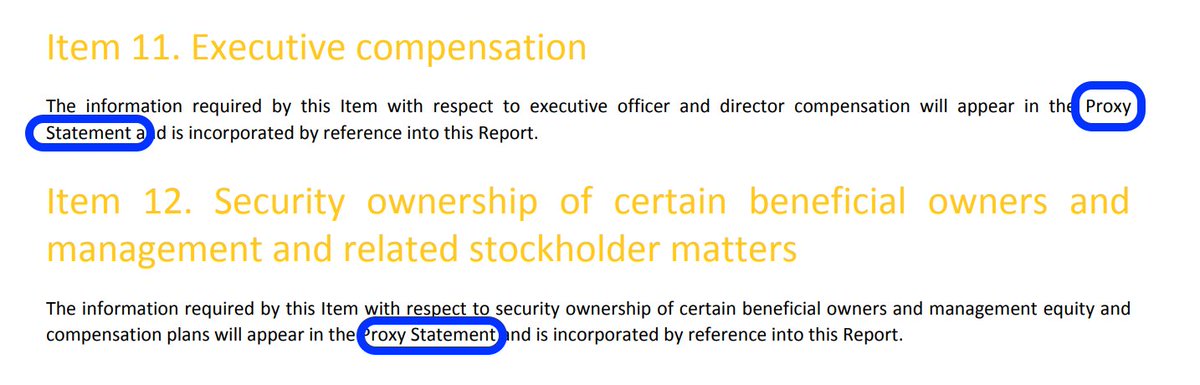
6A: Executive Compensation
Some companies list it in their annual report. Others only list it in the proxy statement (DEF 14A).
$MA forces you to look at the proxy statement
Some companies list it in their annual report. Others only list it in the proxy statement (DEF 14A).
$MA forces you to look at the proxy statement
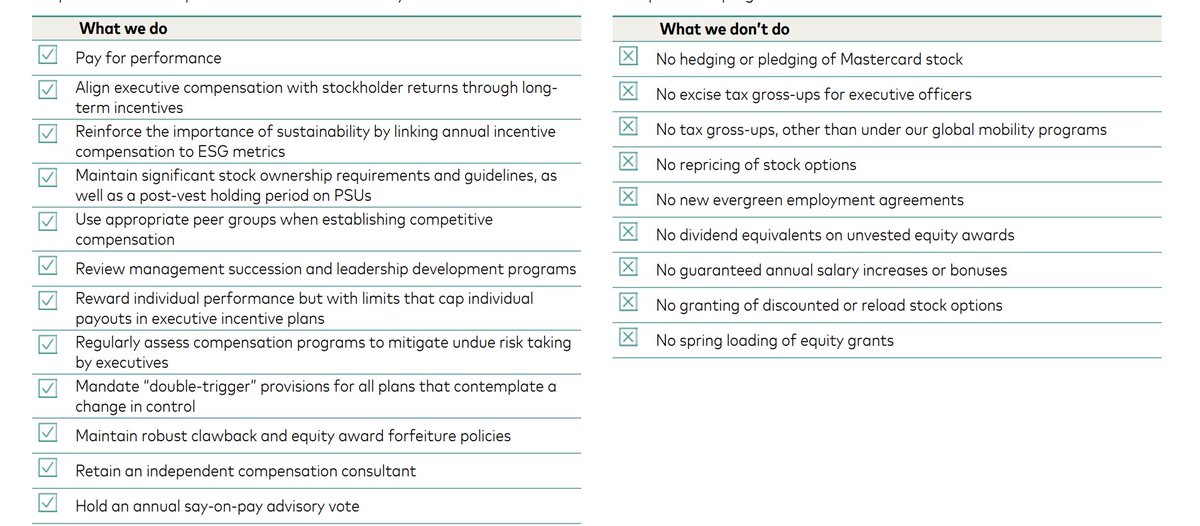
6B: Executive Compensation
CEO's goal is to maximize their compensation, so make sure their incentives align with yours!
Management is most commonly incentivized by:
- Revenue
- EPS
- Operating income
CEO's goal is to maximize their compensation, so make sure their incentives align with yours!
Management is most commonly incentivized by:
- Revenue
- EPS
- Operating income
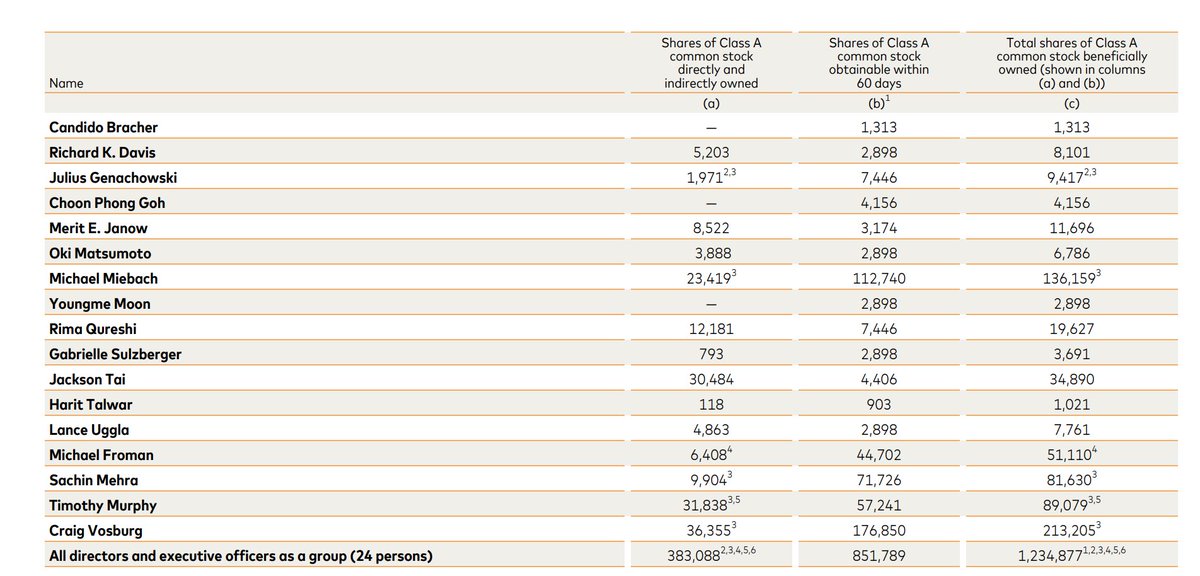
7: Beneficial Ownership
Look for:
- High % ownership by insider
- Insider buying
-insider sales
Look for:
- High % ownership by insider
- Insider buying
-insider sales
With some practice, you can analyze an annual report in less than an hour
I hope this thread will help you invest better.
If you want to share this with your followers, retweet the first tweet:
I hope this thread will help you invest better.
If you want to share this with your followers, retweet the first tweet:
Loading suggestions...