

RWA TVL has x4 in 2023 from $1.44bn to $5.8bn
Why? Attractiveness of US T.Bills and Private Credit due to Rising Interest Rates and Bear Market
In view of this, in this 🧵 we’ll go in-depth on RWA and one protocol that’ll benefit huge from this brewing sector
A thread 🧵0/42
Why? Attractiveness of US T.Bills and Private Credit due to Rising Interest Rates and Bear Market
In view of this, in this 🧵 we’ll go in-depth on RWA and one protocol that’ll benefit huge from this brewing sector
A thread 🧵0/42

1/ In this thread we’ll look at
- key RWA overview and why it’s sort after with Gud stats backing it up
- Indept on 3 Tradfi products. Protocols building on each. Uses etc
- Benefits of tokenized RWA for tradfi; defi; defi users & buildoors
- How @Entanglefi benefits huge
- key RWA overview and why it’s sort after with Gud stats backing it up
- Indept on 3 Tradfi products. Protocols building on each. Uses etc
- Benefits of tokenized RWA for tradfi; defi; defi users & buildoors
- How @Entanglefi benefits huge
2/ Key RWA Overview with stats
Before I proceed, you see this image and see that Current TVL in the fully established Defi categories DEXs, Lending and LSD have surpassed $10B+
RWA Coming in hot isn’t cemented yet, few RWA protocols are building on it. Can see in the image too
Before I proceed, you see this image and see that Current TVL in the fully established Defi categories DEXs, Lending and LSD have surpassed $10B+
RWA Coming in hot isn’t cemented yet, few RWA protocols are building on it. Can see in the image too
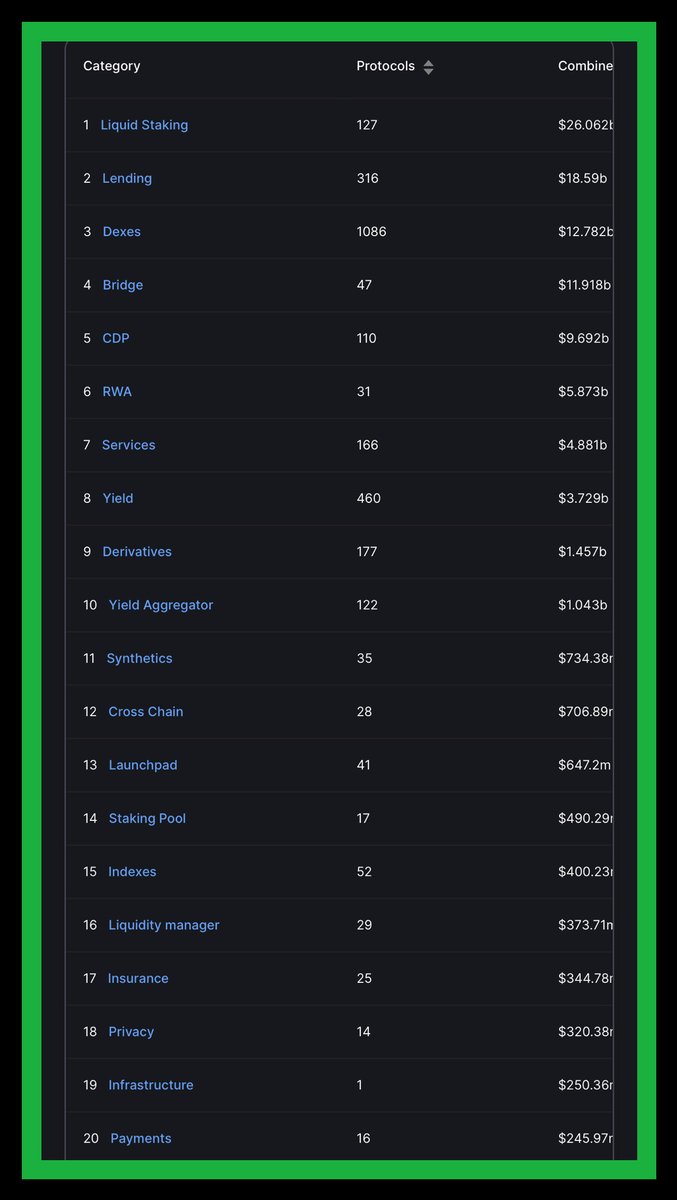
3/ Wen compared to others RWA has a shy 31 protocols building on it. Data from defi Llama
This us due to regulatory issues from greater macroeconomy and United States too plays a bigger role as it influences most other nations in crypto friendliness.
I expect in ‘24 things..
This us due to regulatory issues from greater macroeconomy and United States too plays a bigger role as it influences most other nations in crypto friendliness.
I expect in ‘24 things..
should turn around as election unfolds.
4/ Stats to look into:
Private Credit Market, Real Estate and Treasury Bills
- Size of Private credit market in 2023 is ~ $1.4T and $350B of capital is under management and awaiting to be deployed and expected to grow to $2.3T in 2027.
4/ Stats to look into:
Private Credit Market, Real Estate and Treasury Bills
- Size of Private credit market in 2023 is ~ $1.4T and $350B of capital is under management and awaiting to be deployed and expected to grow to $2.3T in 2027.
Data from Morgan Stanley.
5/ - Real Estate Market in US is projected to reach $113.6T in 2023 and residential Real Estate Market estimated to hit $88T.
Data from Statistia
- The gross amount of new T-bills issued in Dec ‘20 was $1.591B, while the average daily trading vol for
5/ - Real Estate Market in US is projected to reach $113.6T in 2023 and residential Real Estate Market estimated to hit $88T.
Data from Statistia
- The gross amount of new T-bills issued in Dec ‘20 was $1.591B, while the average daily trading vol for
T-bills on secondary market has exceeded $75B since 2001.
6/ You see offchain stats now we can project/estimate Onchain stats to be something more in x100 levels than were we at atm.
Reduced demand for crypto native yield-bearing assets and increased demand for offchain..
6/ You see offchain stats now we can project/estimate Onchain stats to be something more in x100 levels than were we at atm.
Reduced demand for crypto native yield-bearing assets and increased demand for offchain..
yield bearing products that distribute reward via onchain is another reason why RWA is sort after.
7/ The 3 tradfi profucts to be discussed are
- Treasury Bills
- Private Credit Investments
- Real Estate
7/ The 3 tradfi profucts to be discussed are
- Treasury Bills
- Private Credit Investments
- Real Estate
8/ • Treasury Bills
Treasury Bills are short-term financial instruments issued by the government and backed by the country’s treasury— that’s why their considered low risk.
They serve as a benchmark for determining short-term interest rates and are used to guide the pricing..
Treasury Bills are short-term financial instruments issued by the government and backed by the country’s treasury— that’s why their considered low risk.
They serve as a benchmark for determining short-term interest rates and are used to guide the pricing..
of other financial products.
9/ Now, it comes on-chain here as it—Treasury bills can be tokenized, converting the rights to the cash flows from the government securities into digital tokens
Problems T-Bills solved on-chain:
9/ Now, it comes on-chain here as it—Treasury bills can be tokenized, converting the rights to the cash flows from the government securities into digital tokens
Problems T-Bills solved on-chain:
10/ 1. Slow settlements: On-chain T-bill offers near-instant settlements, reducing wait times & counterparty risks, boosting capital efficiency
2. High entry barriers: Tokenization via DeFi enables fractional ownership of T-bills, democratizing access for a broader audience..
2. High entry barriers: Tokenization via DeFi enables fractional ownership of T-bills, democratizing access for a broader audience..
with minimal capital requirements.
11/ 3. Cost-effective transactions: Intermediaries, slashing transaction fees & administrative costs associated with T-bills are eliminated thereby making transactions more affordable for investors.
11/ 3. Cost-effective transactions: Intermediaries, slashing transaction fees & administrative costs associated with T-bills are eliminated thereby making transactions more affordable for investors.
12/ Use cases for T-Bills
1. Assurance and automation: Smart contracts automate T-bill funds upon maturity, ensuring transparency and it being claimed
2. Stablecoin issuance: T-bills as collateral back stablecoins like USDT maintaining a 1:1 USD peg.
1. Assurance and automation: Smart contracts automate T-bill funds upon maturity, ensuring transparency and it being claimed
2. Stablecoin issuance: T-bills as collateral back stablecoins like USDT maintaining a 1:1 USD peg.
13/ 3. Collateralization in lending: T-bills serve as collateral for borrowing in yield farming, enhancing capital efficiency.
4. Secondary market trading: Increased accessibility outside the US and easier selling options incentivize T-bill purchases.
4. Secondary market trading: Increased accessibility outside the US and easier selling options incentivize T-bill purchases.
14/ 5. Automated yield strategies: Tokenized T-bills offer automated yield optimization for investors who can't manage strategies manually in TradFi.
Protocols utilizing this:
- @_Fortunafi : It offers comprehensive liquidity solutions for stablecoin issuers, treasuries, and
Protocols utilizing this:
- @_Fortunafi : It offers comprehensive liquidity solutions for stablecoin issuers, treasuries, and
traditional entities, providing diverse investment options like private and public debt funds on major blockchains.
15/ @FluxFinance : Enables lending and borrowing of stablecoins against tokenized US Treasuries.
15/ @FluxFinance : Enables lending and borrowing of stablecoins against tokenized US Treasuries.
@maplefinance: An institutional capital network facilitating on-chain lending businesses for credit experts and linking institutional lenders with borrowers.
16/ Private Credit Investment
Private Credit enables higher yields via non-bank lending by providing loans to companies,
16/ Private Credit Investment
Private Credit enables higher yields via non-bank lending by providing loans to companies,
typically to small and medium size enterprises
17/ It’s On-chain Solutions:
1. Access to Private Credit: DeFi broadens participation by tokenizing debt, enabling fractional ownership, and lowering investment thresholds..
17/ It’s On-chain Solutions:
1. Access to Private Credit: DeFi broadens participation by tokenizing debt, enabling fractional ownership, and lowering investment thresholds..
18/ 2. Efficient Allocation: Smart contracts streamline borrower-lender matching, boosting capital allocation efficiency & reducing operational costs
3. Transparency by recording txns on-chain, offering clear audit trails & improving risk assessment in private credit investments
3. Transparency by recording txns on-chain, offering clear audit trails & improving risk assessment in private credit investments
19/ On-chain Private Credit Use Cases:
1. Unsecured Private Credit: Borrowing liquidity without full collateralization, enhancing capital efficiency through centralized vetting of borrowers, benefiting those without immediate access to their liquid capital.
1. Unsecured Private Credit: Borrowing liquidity without full collateralization, enhancing capital efficiency through centralized vetting of borrowers, benefiting those without immediate access to their liquid capital.
2. Asset-Backed Private Credit: Allows Real World Assets (RWA) as collateral beyond crypto assets, particularly beneficial for underserved borrowers or those lacking access to stable value stores in their native currency.
20/ Protocols building with this:
20/ Protocols building with this:
21/ @centrifuge : Infrastructure enabling decentralized financing of real-world assets directly on-chain, fostering a transparent market for borrowers and lenders without intermediaries.
@goldfinch_fi : A decentralized credit protocol allowing crypto borrowing without crypto
@goldfinch_fi : A decentralized credit protocol allowing crypto borrowing without crypto
22/ collateral, utilizing off-chain full collateralization for loans.
@ClearpoolFin: Permissionless single-borrower pools in a protocol enabling institutions to raise short-term capital while offering DeFi lenders risk-adjusted returns based on consensus-derived interest rates.
@ClearpoolFin: Permissionless single-borrower pools in a protocol enabling institutions to raise short-term capital while offering DeFi lenders risk-adjusted returns based on consensus-derived interest rates.
23/ Real Estate
It’s utilized for asset-backed lending, REITs, and exposure via Mortgage-Backed Securities (MBS), offering market exposure without direct property ownership. Tokenizing real estate typically involves:
It’s utilized for asset-backed lending, REITs, and exposure via Mortgage-Backed Securities (MBS), offering market exposure without direct property ownership. Tokenizing real estate typically involves:
24/ 1. Obtaining off-chain valuation from a trusted source.
2. Bridging this data to the blockchain via oracles.
3. Tokenizing the asset into ERC-721 or ERC-20 tokens, depending on the use case.
On-chain Solutions for Real Estate:
2. Bridging this data to the blockchain via oracles.
3. Tokenizing the asset into ERC-721 or ERC-20 tokens, depending on the use case.
On-chain Solutions for Real Estate:
25/ 1. Illiquidity: DeFi addresses high real estate illiquidity by fractionalizing and enabling smoother trading of property interests.
2. Txn Costs: for like T-bills earlier stated, intermediaries are eliminated, reducing fees, and streamlining buying and selling processes.
2. Txn Costs: for like T-bills earlier stated, intermediaries are eliminated, reducing fees, and streamlining buying and selling processes.
3. Global Access: DeFi offers a global real estate investment platform, breaking geographical barriers, and providing access to international property markets through a unified blockchain system.
26/ On-chain Real Estate Use Cases:
26/ On-chain Real Estate Use Cases:
27/ 1. NFT for Single Property Ownership: NFT ownership represents the property, simplifying buying/selling with transparent ownership records.
2. Fractionalized Ownership: Tokenized shares enable affordable property investments, bypassing high purchase costs.
2. Fractionalized Ownership: Tokenized shares enable affordable property investments, bypassing high purchase costs.
28/ 3. Tokenized Cash Flow: NFTs automate fund distribution transparently, providing direct rental income or profits to holders.
Protocols utilizing this:
Protocols utilizing this:
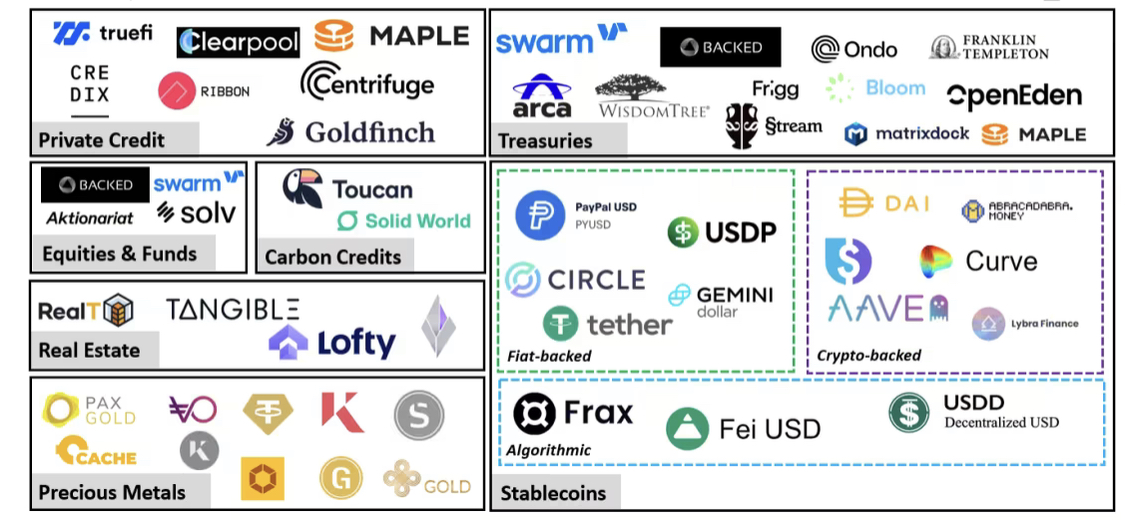
29/ 1. @tangibleDAO: Offers access to tokenized and fractionalized RWAs through their marketplace, using Real USD, a yield stablecoin backed by real estate.
2. @lofty_ai : Allows $50 investments in U.S. rental properties through their marketplace.
2. @lofty_ai : Allows $50 investments in U.S. rental properties through their marketplace.
3. @RealTPlatform: Facilitates compliant, fractional, tokenized ownership in the US real estate market
30/ Benefits of tokenized RWA
Traditional finance:
- Enhanced Liquidity: Tokenizing illiquid assets such as real estate or art facilitates easier trading, unlocking ..
30/ Benefits of tokenized RWA
Traditional finance:
- Enhanced Liquidity: Tokenizing illiquid assets such as real estate or art facilitates easier trading, unlocking ..
liquidity for traditionally locked-up assets
31/ - Operational Efficiency: Chains streamline transactions, reducing processing time & intermediary reliance
- Global Accessibility: RWAs transcend borders, providing global access & opening international markets for TradFi assets.
31/ - Operational Efficiency: Chains streamline transactions, reducing processing time & intermediary reliance
- Global Accessibility: RWAs transcend borders, providing global access & opening international markets for TradFi assets.
32/ DeFi Ecosystem:
1. Fresh Liquidity: RWA integration injects new capital into dApps, fueling their development.
2. User Base Growth: Familiar assets attract new users to DeFi, broadening adoption and understanding.
1. Fresh Liquidity: RWA integration injects new capital into dApps, fueling their development.
2. User Base Growth: Familiar assets attract new users to DeFi, broadening adoption and understanding.
33/ 3. New Collateral & Products: RWAs offer diverse collateral for DEXs and new product avenues, fostering economic growth.
Benefits for Users & Builders:
- Innovative Products: RWAs unlock new DeFi offerings, expanding investment portfolios.
Benefits for Users & Builders:
- Innovative Products: RWAs unlock new DeFi offerings, expanding investment portfolios.
34/ - Unique Yield Strategies: RWA enables distinctive yield farming methods for stable, real yield.
- Sustainable Liquidity: RWA methods like asset refinancing ensure consistent capital flow.
- Regulatory Alignment: It promotes DeFi recognition within regulatory frameworks
- Sustainable Liquidity: RWA methods like asset refinancing ensure consistent capital flow.
- Regulatory Alignment: It promotes DeFi recognition within regulatory frameworks
Risk Mitigation: Tangible RWAs stabilize DeFi, offering a hedge against market volatility.
35/ Now, Entanglefi’s role.
If new to entanglefi check this thread 👇🏻
35/ Now, Entanglefi’s role.
If new to entanglefi check this thread 👇🏻
36/ Let’s look at Entangle’s contribution to each of the 3 highlighted tradfi products:
Treasury Bills:
1. Real-time Price Feeds: Entangle provides accurate T-Bill values which will aid informed decisions, ensuring token representation matches T-Bill value.
Treasury Bills:
1. Real-time Price Feeds: Entangle provides accurate T-Bill values which will aid informed decisions, ensuring token representation matches T-Bill value.
2. Automated Lifecycle: Use of Smart contracts through Entangle will automate T-Bill processes, minimizing manual errors and delays in DeFi.
37/ Private Credit:
- Improved Borrower-Lender Matching: Entangle will use off-chain data such as credit scores, financial history to
37/ Private Credit:
- Improved Borrower-Lender Matching: Entangle will use off-chain data such as credit scores, financial history to
facilitate better decision making that’ll fosters efficient lending decisions, expanding private credit access.
38/ - Transparent Markets: By recording data on-chain, Entangle will foster transparency allowing investors see performance of their assets in real-time, offering
38/ - Transparent Markets: By recording data on-chain, Entangle will foster transparency allowing investors see performance of their assets in real-time, offering
real-time risk assessment in private credit markets.
39/ Real Estate:
- Accurate Valuations: Entangle will pull data from accurate sources to offer reliable real estate data on-chain that’ll ensure fair pricing for tokenized properties.
39/ Real Estate:
- Accurate Valuations: Entangle will pull data from accurate sources to offer reliable real estate data on-chain that’ll ensure fair pricing for tokenized properties.
- Simplified Trading: via tokenization Entangle simplifies property trading; makes it feel like trading stocks etc, reducing barriers and speed up Real Estate txns.
40/ Entangle's Core Benefits:
40/ Entangle's Core Benefits:
1. Custom Communication: It’s tailored data exchange btwn Tradfi and DeFi adapts to unique RWA requirements and regulations.
2. Security & Decentralization: It’ll balance off-chain data security with on-chain decentralization facilitating secure RWA integration into DeFi
2. Security & Decentralization: It’ll balance off-chain data security with on-chain decentralization facilitating secure RWA integration into DeFi
41/ 3. Data Oracles for Complexity: Entangle will provide oracles feeding real-world data to smart contracts enables sophisticated DeFi instruments backed by RWAs.
4. Cross-Chain Operations: Entangle will facilitate products spanning different blockchains widening collateral
4. Cross-Chain Operations: Entangle will facilitate products spanning different blockchains widening collateral
options for borrowing and lending.
42/ Entangle's infrastructure aims to seamlessly integrate RWAs into DeFi, enhancing liquidity, accessibility, and efficiency, fostering a more inclusive, transparent, and responsive financial ecosystem.
Ze end 🐍
42/ Entangle's infrastructure aims to seamlessly integrate RWAs into DeFi, enhancing liquidity, accessibility, and efficiency, fostering a more inclusive, transparent, and responsive financial ecosystem.
Ze end 🐍
Loading suggestions...