

You can make $3,000/week by selling Notion templates.
Here's how:
Here's how:

Step 1: Research what to sell.
• See what is already in the market.
• Check their reviews and ratings.
• Some people even show you their sales on Gumroad.
• See what is already in the market.
• Check their reviews and ratings.
• Some people even show you their sales on Gumroad.

Step 2: List down your ideas.
Once you have a glimpse of what people are creating, it's time for you to list down these ideas.
Answer these questions:
• Has this template already been created?
• Will there be a market for it?
• What price would people pay for it?
Once you have a glimpse of what people are creating, it's time for you to list down these ideas.
Answer these questions:
• Has this template already been created?
• Will there be a market for it?
• What price would people pay for it?
Step 3: Prioritize your ideas.
I use the RICE prioritization framework:
• Reach - How many customers will there be?
• Impact - How impactful will the template be?
• Confidence - How much do I believe in this?
• Effort - How much effort will it take?
I use the RICE prioritization framework:
• Reach - How many customers will there be?
• Impact - How impactful will the template be?
• Confidence - How much do I believe in this?
• Effort - How much effort will it take?
Step 4: Validate your idea.
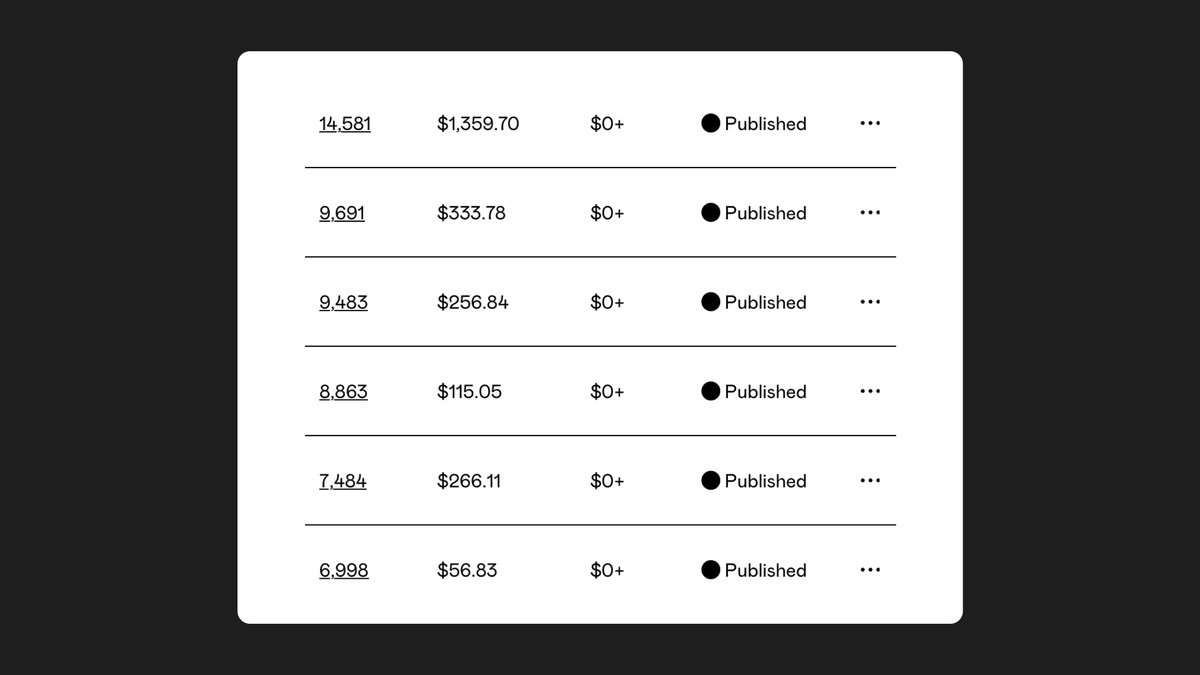
You don't know if people will pay money for your product, so instead of creating a paid product, create a free one.
This whole MVP shouldn't take you longer than 1 day.
If your free product is doing well, create a paid one.
You don't know if people will pay money for your product, so instead of creating a paid product, create a free one.
This whole MVP shouldn't take you longer than 1 day.
If your free product is doing well, create a paid one.
Step 5: Define your structure.
You have already validated your template.
Start defining which pages, databases, and relations will be in your template.
You have already validated your template.
Start defining which pages, databases, and relations will be in your template.
Step 6: Create your wireframes.
It's time to put a defined structure into Notion.
Keep in mind that it's still not about how good it looks.
Create your pages, databases, and connect them.
It must be simple and quick but should represent your entire template.
It's time to put a defined structure into Notion.
Keep in mind that it's still not about how good it looks.
Create your pages, databases, and connect them.
It must be simple and quick but should represent your entire template.
Step 7: Design your template.
Once you have your template backbone, it's time to add visual quality to it.
Go to each page and add additional value to it.
Maybe it's decorative icons, maybe it's a redesigned database layout - just keep adding value until you feel happy.
Once you have your template backbone, it's time to add visual quality to it.
Go to each page and add additional value to it.
Maybe it's decorative icons, maybe it's a redesigned database layout - just keep adding value until you feel happy.
Step 8: Do final checks.
Once your template is finally ready, it's time to do some final checks.
Go step by step through each page and check for any typos, broken links, broken databases, or other mistakes.
Once your template is finally ready, it's time to do some final checks.
Go step by step through each page and check for any typos, broken links, broken databases, or other mistakes.
Let's recap on these steps:
1. Research what to sell.
2. List down your ideas.
3. Prioritize your ideas.
4. Validate your idea.
5. Define your structure.
6. Create your wireframes.
7. Design your template.
8. Do final checks.
By doing these, you're ready to sell your template.
1. Research what to sell.
2. List down your ideas.
3. Prioritize your ideas.
4. Validate your idea.
5. Define your structure.
6. Create your wireframes.
7. Design your template.
8. Do final checks.
By doing these, you're ready to sell your template.
◑ One more important thing:
Let's change digital economics together.
Follow me @ModestMitkus for more.
Like/Repost the first post so more people can learn.
Let's change digital economics together.
Follow me @ModestMitkus for more.
Like/Repost the first post so more people can learn.
There's more to it, of course.
Discover the remaining steps in my FREE guide.
↓ Click below to get it now:
modestmitkus.com
Discover the remaining steps in my FREE guide.
↓ Click below to get it now:
modestmitkus.com

Loading suggestions...