

Indian contribution to Arabic science.
A thread 🧵
After the conquest of sindh, Arabs came in contact with indian scientific culture. Al-Biruni traveled widely in India in the early 11th century, thus his work has became the main source of knowledge about scientific transfer.
A thread 🧵
After the conquest of sindh, Arabs came in contact with indian scientific culture. Al-Biruni traveled widely in India in the early 11th century, thus his work has became the main source of knowledge about scientific transfer.
Since Sindh was under the rule of Caliph Mansur (753-774 AD), many scholars from the Sindh part of India came to Baghdad, along with books.
Alfazari and Yaqub Ibn Tariq translated them with the help of these scholars. Brahmagupta's works had a great influence on the Arab world.
Alfazari and Yaqub Ibn Tariq translated them with the help of these scholars. Brahmagupta's works had a great influence on the Arab world.

Al-Biruni discusses the Indian astronomical theories of Aryabhata, Brahmagupta and Varahamihira.
Source : Alberuni's India
archive.org
archive.org
Source : Alberuni's India
archive.org
archive.org


archive.org/details/alberu…
Alberuni's India. An account of the religion, philosophy, literature, geography, chronology, astronomy, customs, laws and astrology of India about A.D. 1030 : Biruni, Muhammad ibn Ahmad, 973?-1048 : Free Download, Borrow, and Streaming : Internet Archive
A reissue of the edition of 1888

archive.org/details/alberu…
Alberuni's India. An account of the religion, philosophy, literature, geography, chronology, astronomy, customs, laws and astrology of India about A.D. 1030 : Biruni, Muhammad ibn Ahmad, 973?-1048 : Free Download, Borrow, and Streaming : Internet Archive
A reissue of the edition of 1888
Al-Biruni explains information about the Earth's rotation, shape, axis and poles from Indian scientific texts.i
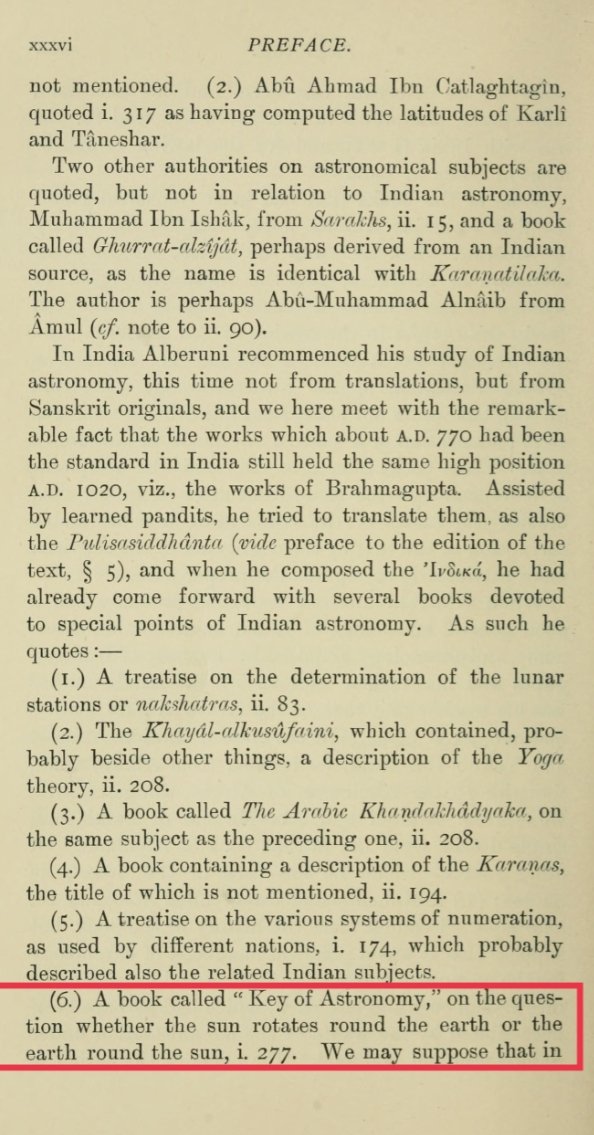
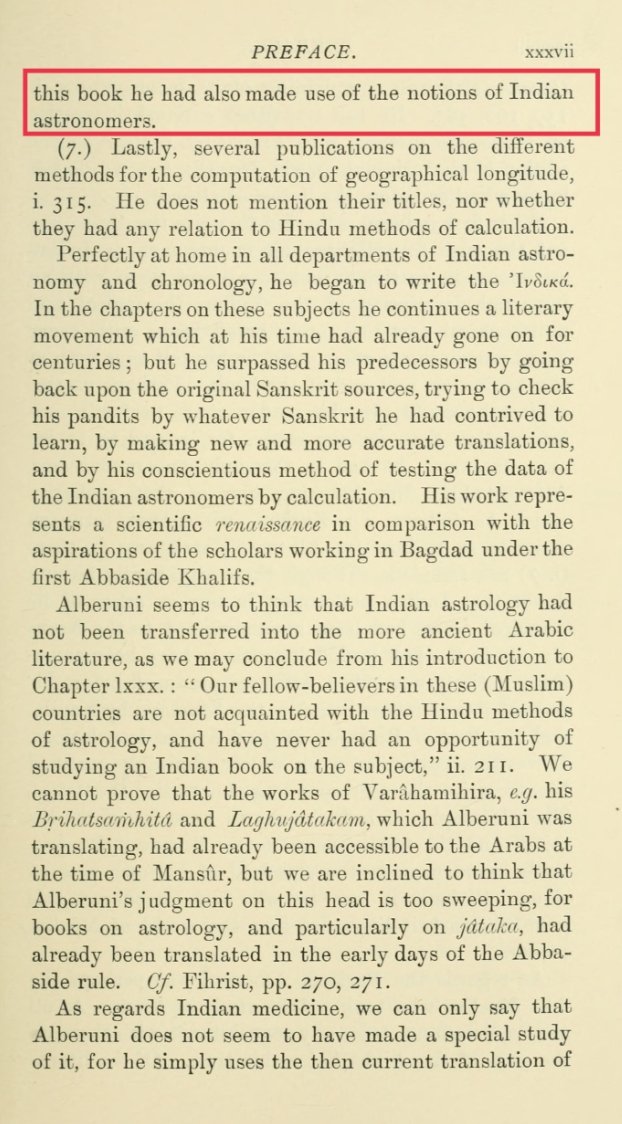
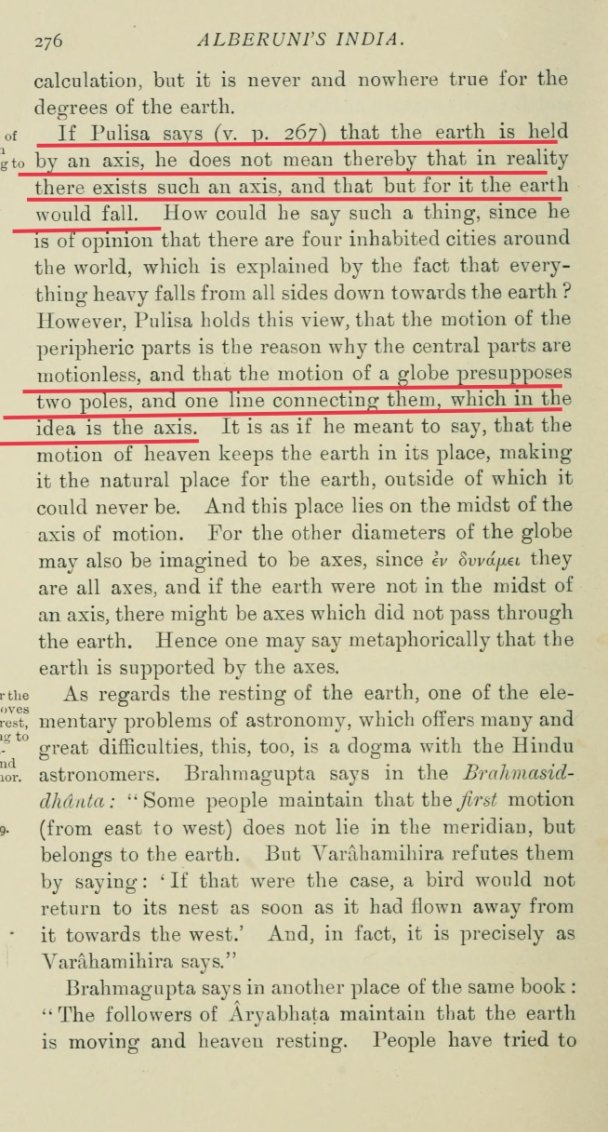
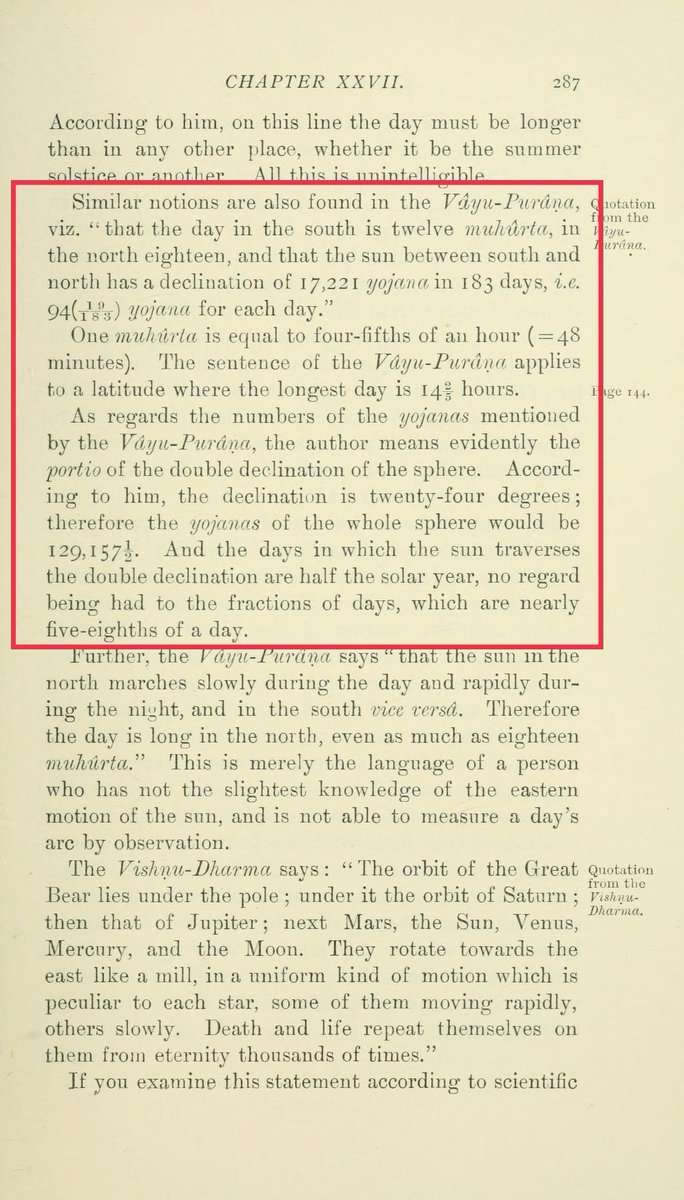
Indians knew about Solar year way before arabs.
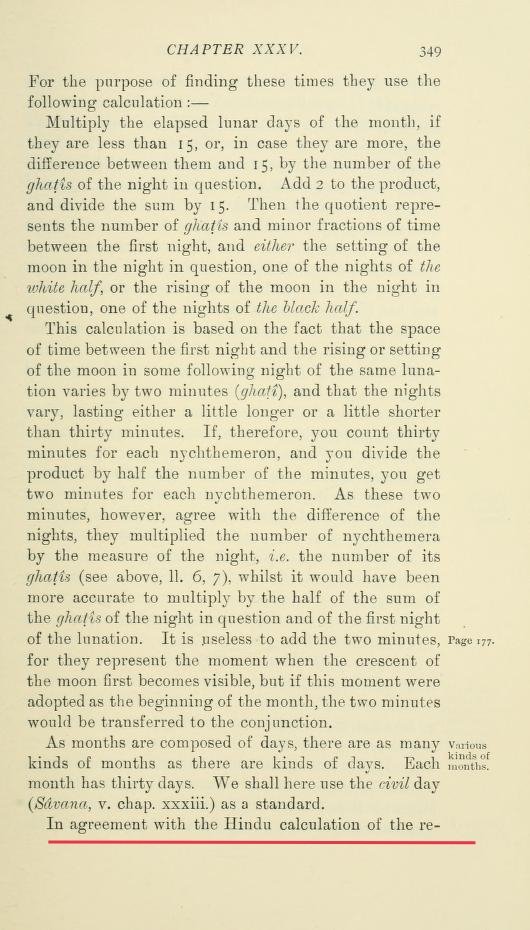
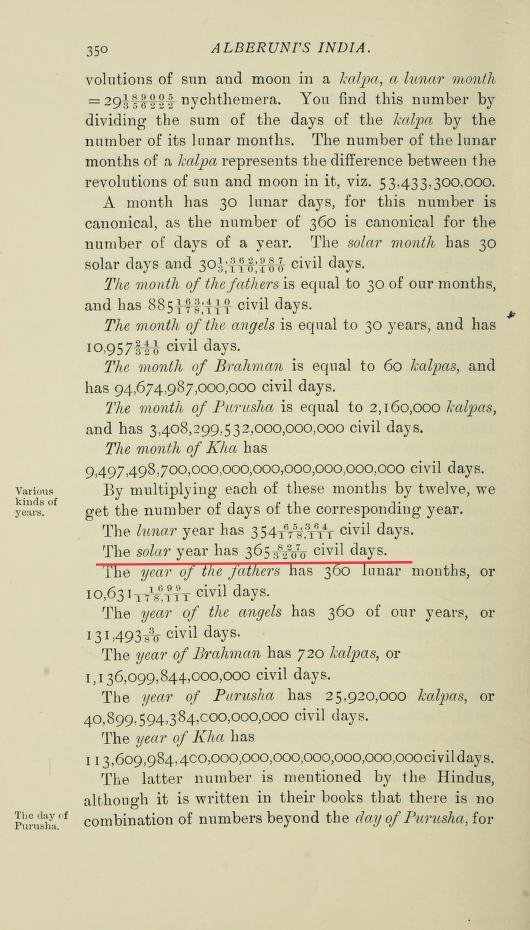
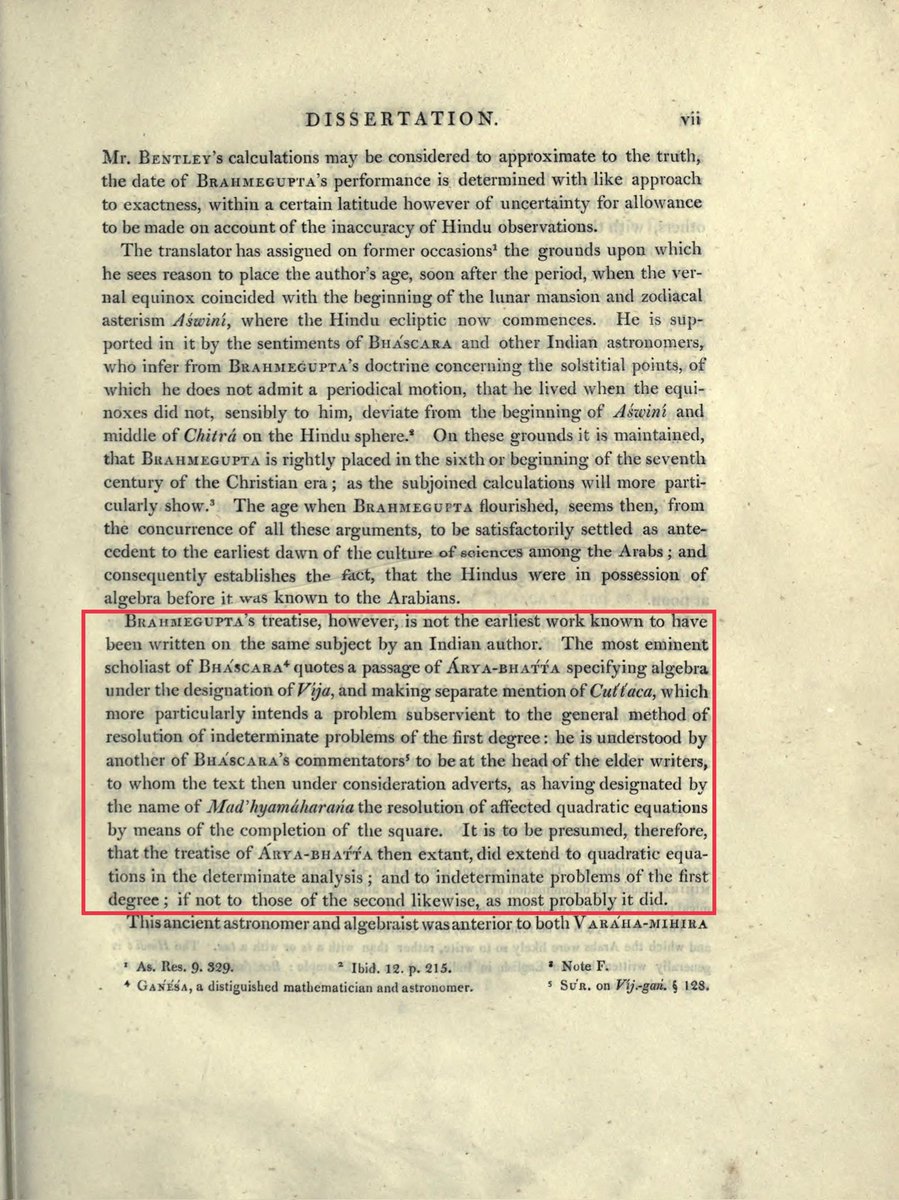
Also Indians knew quadratic equations much before arabs. From 2nd century Bakhshali manuscript to Brahmagupta's work in 7th century proves it.
Algebra,with Arithmetic and mensuration from the Sanscrit of Brahmegupta and Bháscara
archive.org
mathshistory.st-andrews.ac.uk
Algebra,with Arithmetic and mensuration from the Sanscrit of Brahmegupta and Bháscara
archive.org
mathshistory.st-andrews.ac.uk
mathshistory.st-andrews.ac.uk/Projects/Pearc…
The Bakhshali manuscript
A student project on Indian Mathematics - Redressing the balance by Ian G Pearce

archive.org/details/algebr…
Algebra, with Arithmetic and mensuration, from the Sanscrit of Brahmegupta and Bháscara. Translated by Henry Thomas Colebrooke : Brahmagupta, 7th cent : Free Download, Borrow, and Streaming : Internet Archive
14
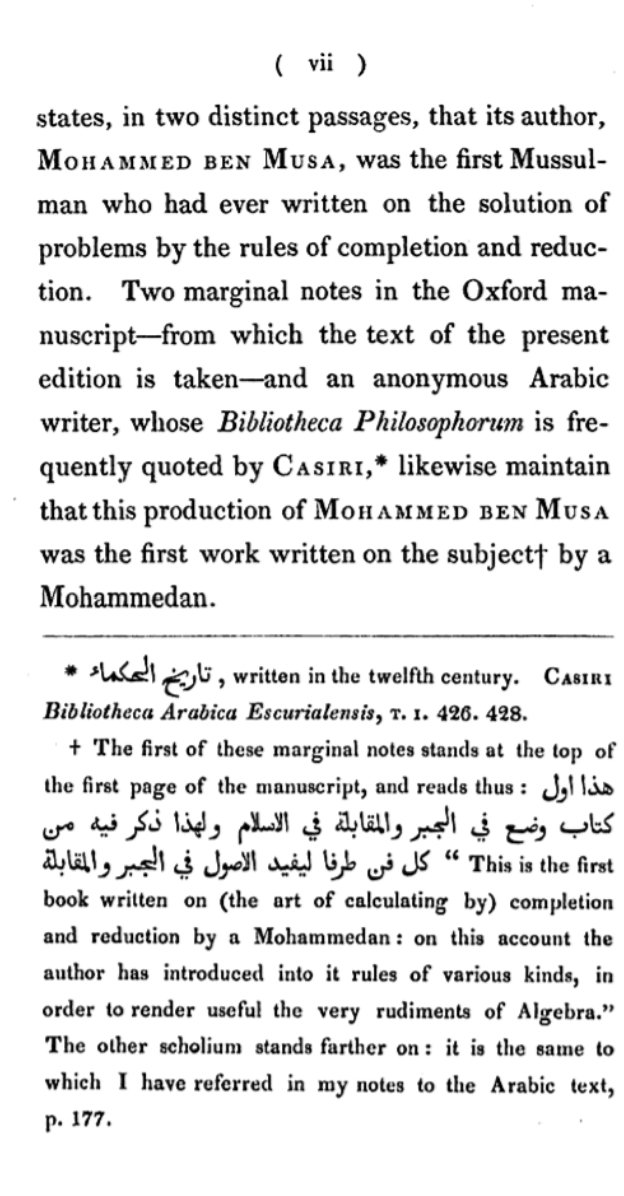
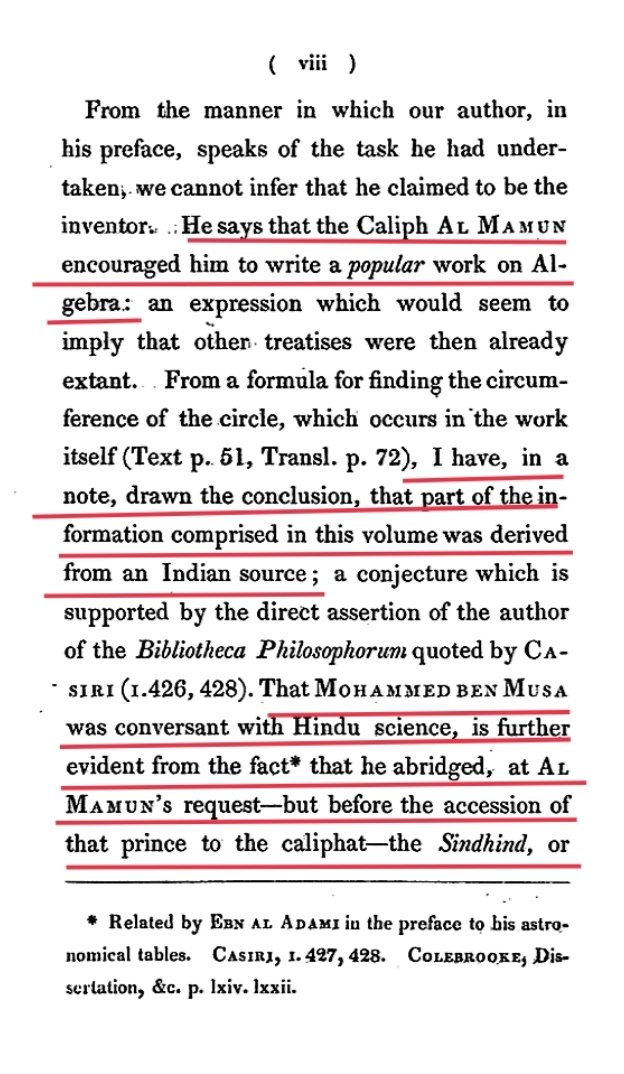
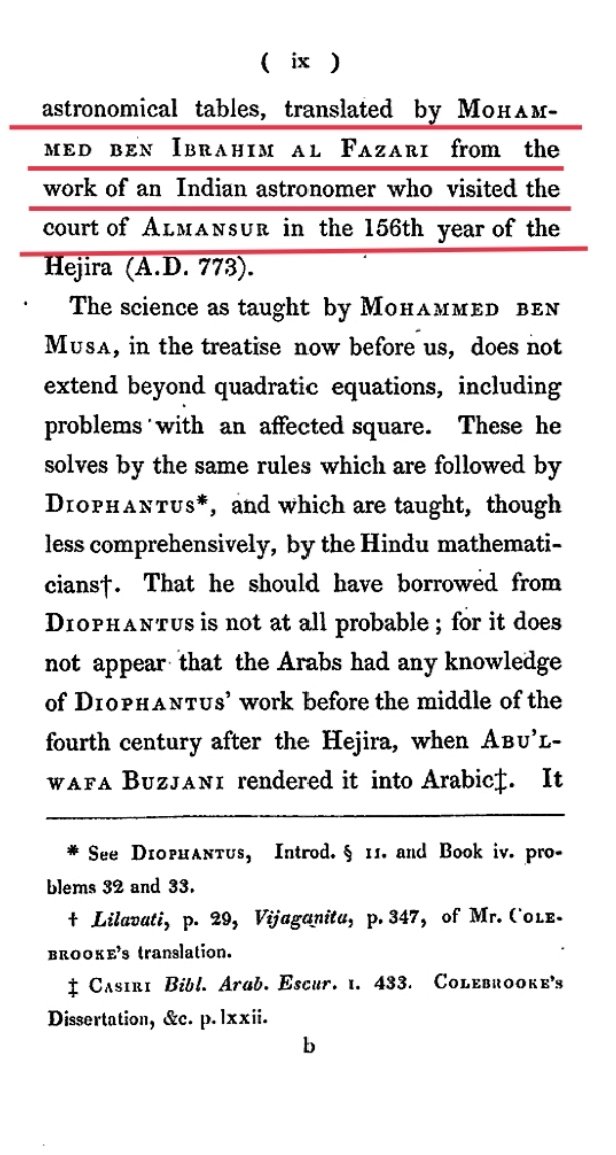
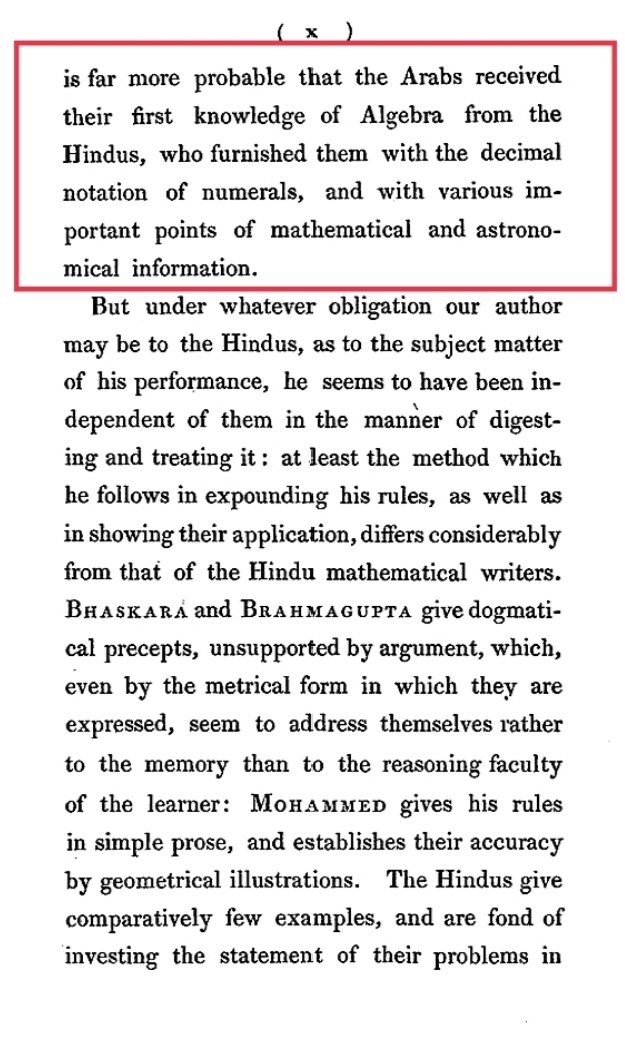
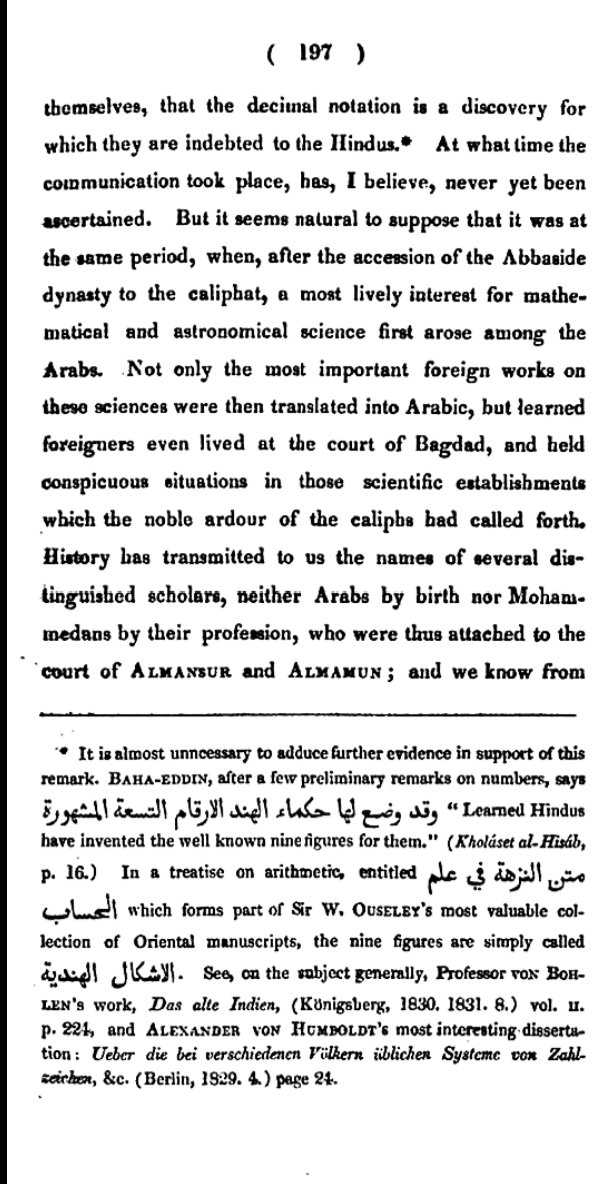
Algebra wasn't invented by Al Khwarizmi.
Source : The Algebra of Mohammed Ben Musa By Muḥammad ibn Mūsá Khuwārizmī
books.google.co.in
Source : The Algebra of Mohammed Ben Musa By Muḥammad ibn Mūsá Khuwārizmī
books.google.co.in

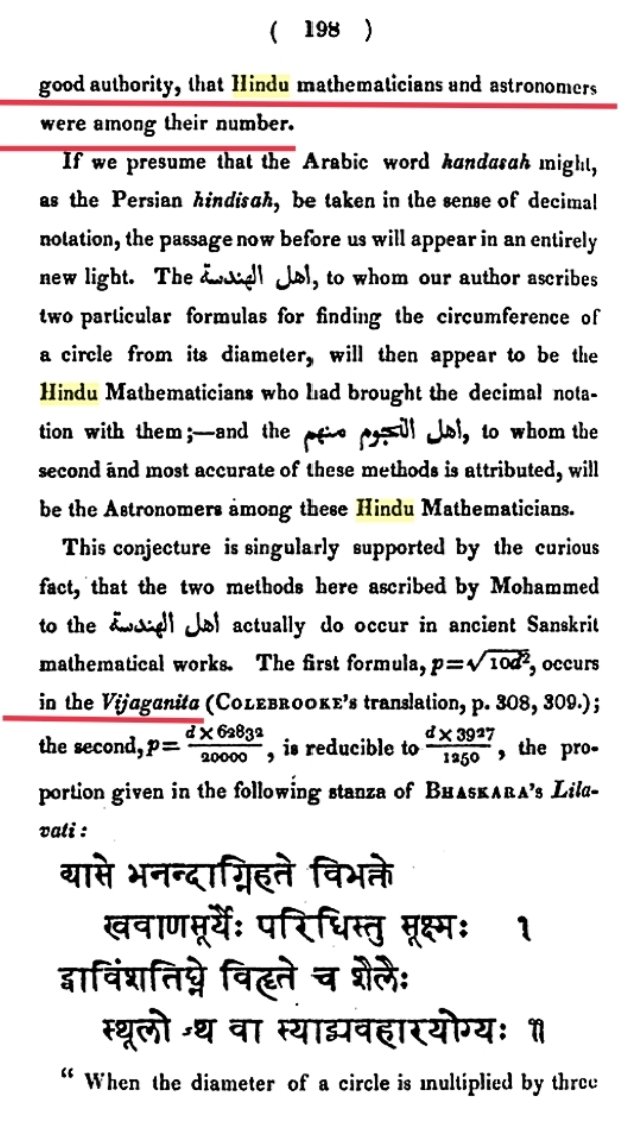
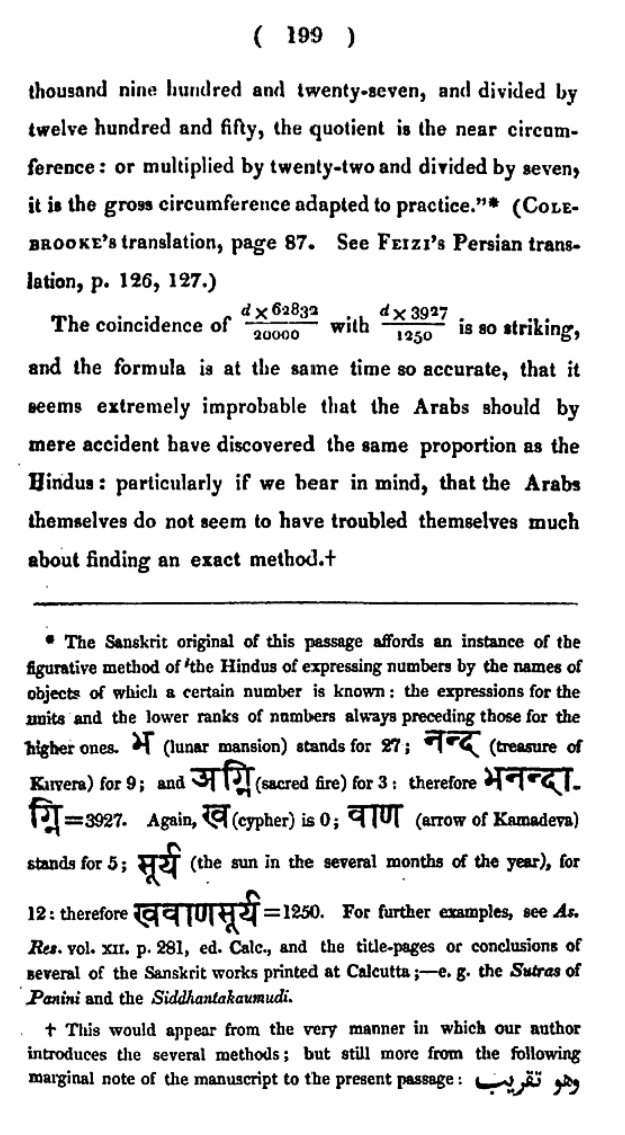
The etymology of the word “sine” comes from the incorrect Latin translation of the Arabic word Jiba, which is derived from the Sanskrit jya-ardha meaning chord – a straight line that joins two points on a curve
archive.org
archive.org


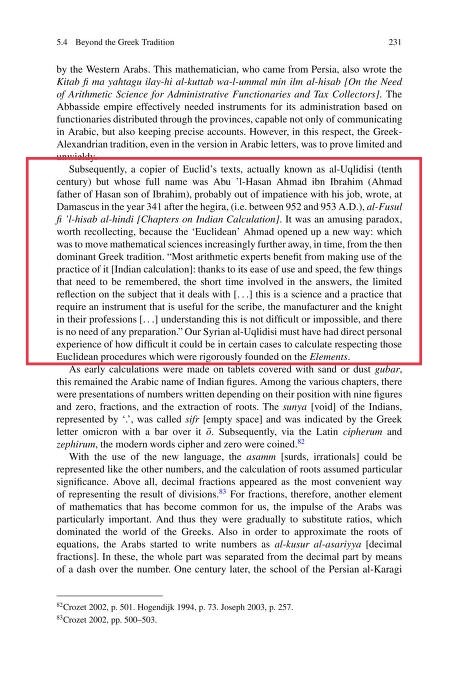
About geometry...Abul-Hasan al-Uqlidisi, a scholar of the Abbasid caliphate, wrote al-Fuzul fi al-Hisab al-Hindi (“Chapters on Indian Calculation”) to address the difficulties of calculating with Euclid's Elements.
Source :
archive.org
Source :
archive.org
![And Yet It Is Heard [electronic resource] : Musical, Multilingual and Multicultural History of the Mathematical Sciences - Volume 1 : Tonietti, Tito M., author : Free Download, Borrow, and Streaming : Internet Archive](https://pbs.twimg.com/news_img/1733421250809348096/nmR0UXPh?format=jpg&name=orig)
In 786, Yahya ibn Khalid ibn Barmak, tutor and mentor of Harun al-Rashid, ruler of the Abbasid Caliphate, established the first Islamic hospital (known as Bimaristan or Maristan) in Baghdad.
Source : A History of Medicine: Byzantine and Islamic medicine
#v=onepage&q&f=false" target="_blank" rel="noopener" onclick="event.stopPropagation()">books.google.co.in
Source : A History of Medicine: Byzantine and Islamic medicine
#v=onepage&q&f=false" target="_blank" rel="noopener" onclick="event.stopPropagation()">books.google.co.in
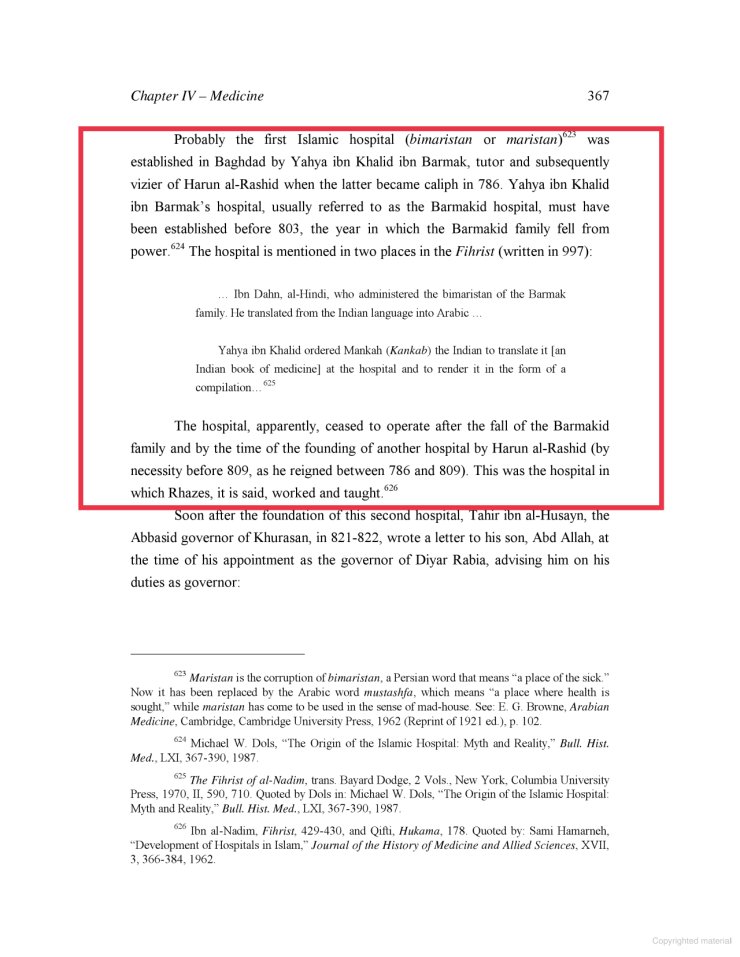

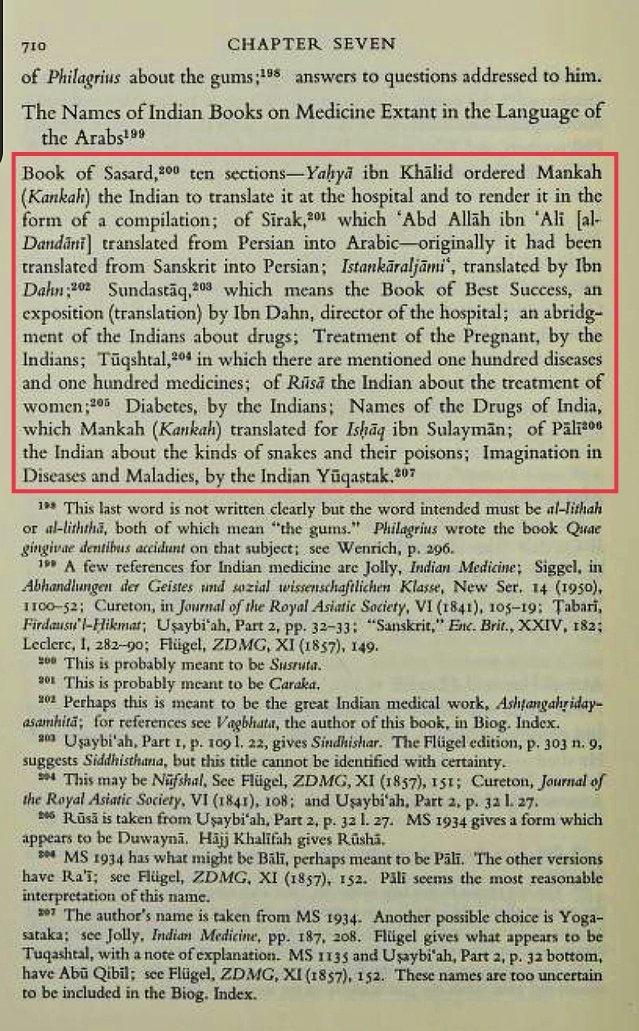
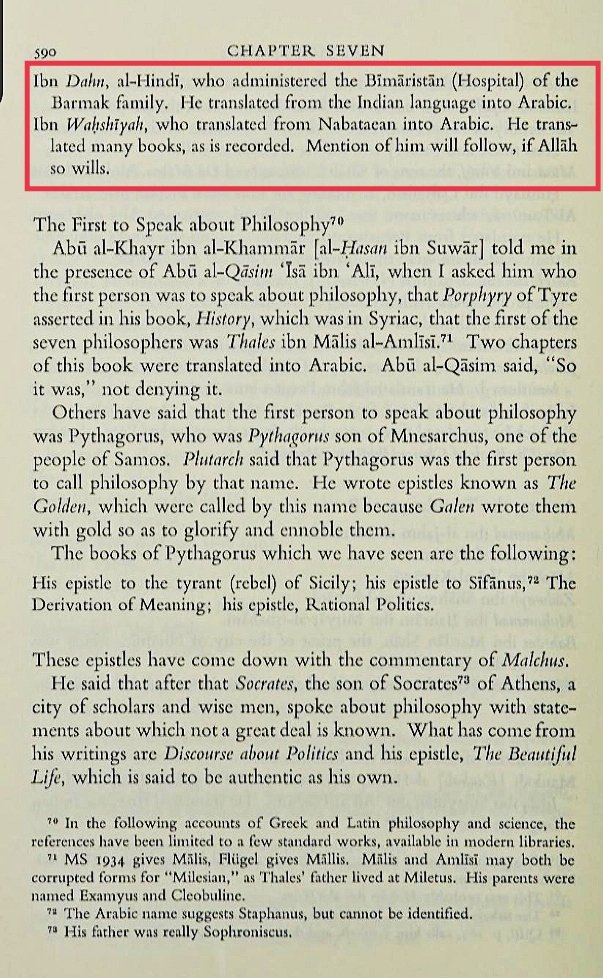
Ibn Dan, al-Hindi, the ruler of Bimaristan in Barmak, commissioned an Indian scholar
(Mankha) to translate the Sushruta Samhita (an Indian medical book) from Indian into Arabic.
Source : The Fihrist of al-Nadim; a tenth-century survey of Muslim culture
archive.org
(Mankha) to translate the Sushruta Samhita (an Indian medical book) from Indian into Arabic.
Source : The Fihrist of al-Nadim; a tenth-century survey of Muslim culture
archive.org


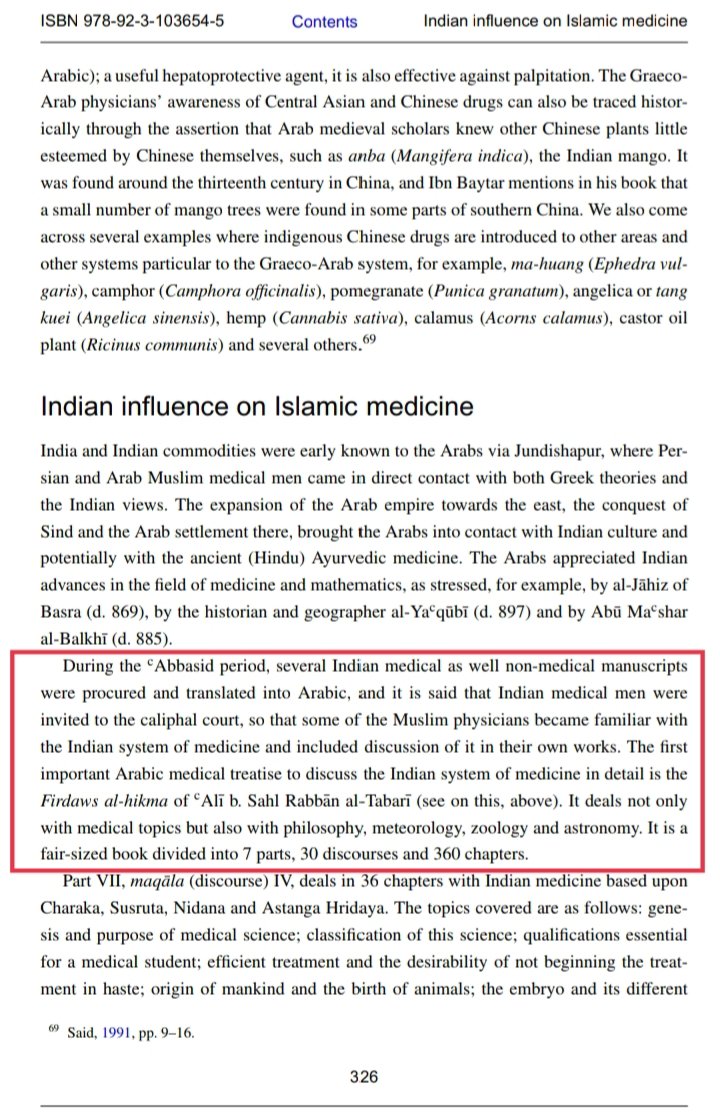
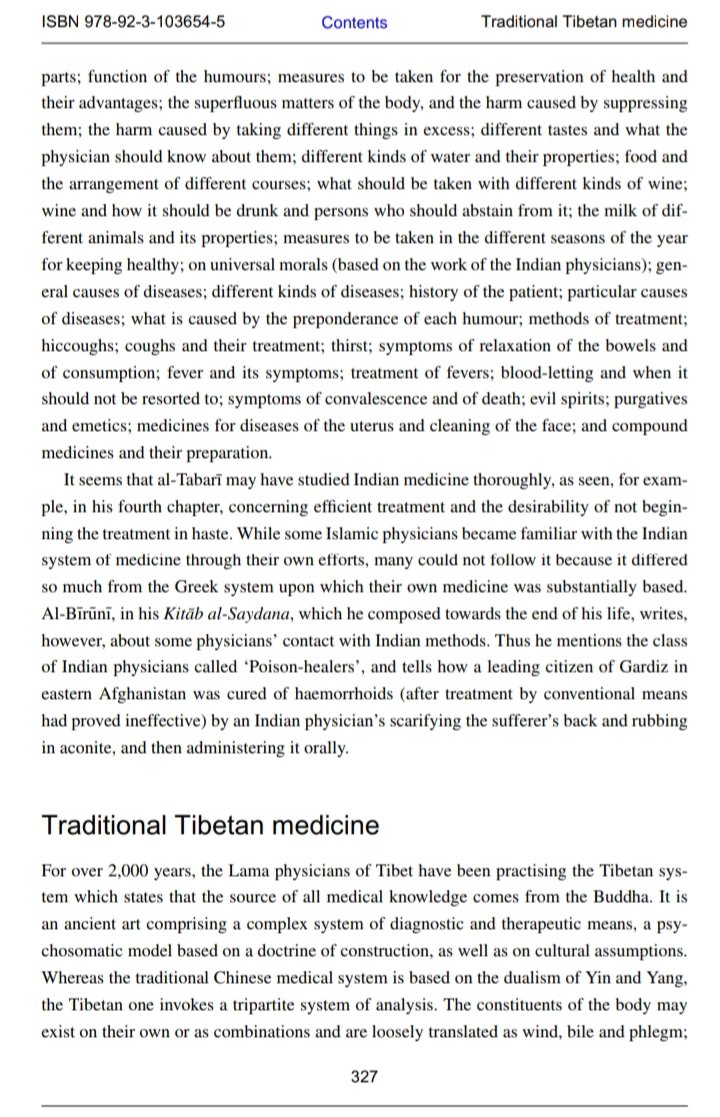
During the Abbasid Caliphate (750-1258) many Indian scientific texts were translated into Arabic.
Source : History of Civilizations of Central Asia, Volume 4, Part 2 By C. E. Bosworth, M.S.Asimov
unesdoc.unesco.org
Source : History of Civilizations of Central Asia, Volume 4, Part 2 By C. E. Bosworth, M.S.Asimov
unesdoc.unesco.org

The Golden Age, centered around Baghdad from the 8th to the 13th century, was a period of scientific, economic and cultural prosperity in the history of Islam. Indian mathematics, astronomy, literature and medicine played a commendable role in building the Arabian Golden Age.
Loading suggestions...