

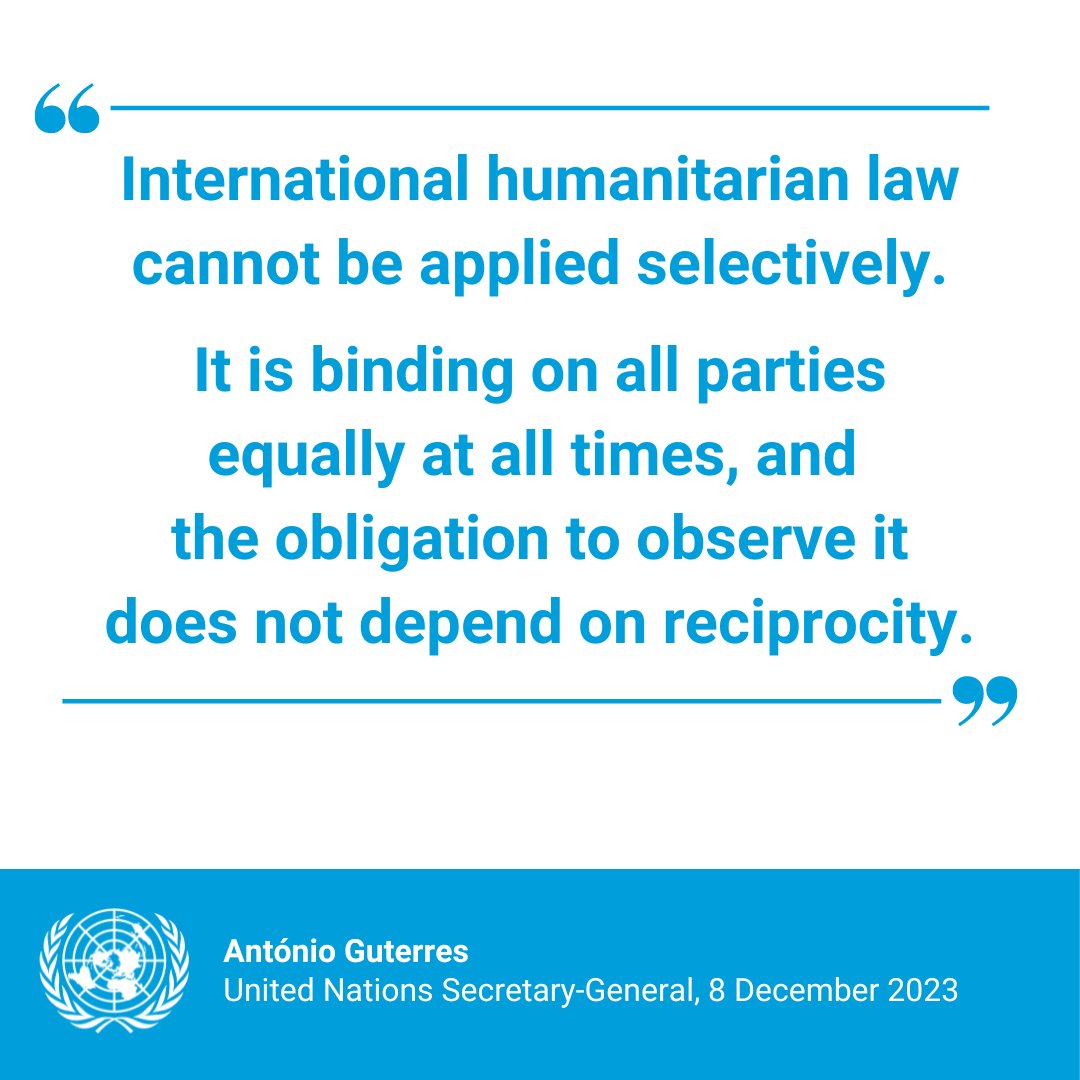
🟢"International Humanitarian Law Cannot Be Applied Selectively"
From the perspective of various theoretical frameworks:
🟢Liberalism:
🟢Supporting points:
👉Universalism: Liberalism emphasizes universal rights and values, which align with the universality of IHL.
Individual rights: IHL protects individual rights, which are core to liberalism.
👉Rule of law: IHL promotes adherence to international law, a key tenet of liberalism.
📍Example: The International Criminal Court (ICC) seeks to hold individuals accountable for violations of IHL, demonstrating the commitment to universal application.
🟢Critiques:
👉Realpolitik: Liberalism often prioritizes national interests over international law, potentially leading to selective application of IHL.
👉Power imbalances: More powerful states may have greater influence on the interpretation and implementation of IHL, potentially leading to its selective application.
From the perspective of various theoretical frameworks:
🟢Liberalism:
🟢Supporting points:
👉Universalism: Liberalism emphasizes universal rights and values, which align with the universality of IHL.
Individual rights: IHL protects individual rights, which are core to liberalism.
👉Rule of law: IHL promotes adherence to international law, a key tenet of liberalism.
📍Example: The International Criminal Court (ICC) seeks to hold individuals accountable for violations of IHL, demonstrating the commitment to universal application.
🟢Critiques:
👉Realpolitik: Liberalism often prioritizes national interests over international law, potentially leading to selective application of IHL.
👉Power imbalances: More powerful states may have greater influence on the interpretation and implementation of IHL, potentially leading to its selective application.
🟢Neo-Liberalism:
🟢Supporting points:
👉Market forces: Neo-liberalism promotes free markets, which can incentivize states to comply with IHL to maintain global economic stability.
👉Humanitarian intervention: Neo-liberalism supports humanitarian intervention to protect human rights, aligning with IHL's goals.
📍Example: The Responsibility to Protect (R2P) doctrine emerged in part from neo-liberal ideals, potentially promoting universal application of IHL.
🟢Critiques:
👉Privatization of security: Neo-liberalism's emphasis on private actors can lead to non-state actors violating IHL with minimal accountability.
👉Focus on economic interests: Neo-liberalism can prioritize economic benefits over humanitarian concerns, potentially leading to selective application of IHL.
🟢Supporting points:
👉Market forces: Neo-liberalism promotes free markets, which can incentivize states to comply with IHL to maintain global economic stability.
👉Humanitarian intervention: Neo-liberalism supports humanitarian intervention to protect human rights, aligning with IHL's goals.
📍Example: The Responsibility to Protect (R2P) doctrine emerged in part from neo-liberal ideals, potentially promoting universal application of IHL.
🟢Critiques:
👉Privatization of security: Neo-liberalism's emphasis on private actors can lead to non-state actors violating IHL with minimal accountability.
👉Focus on economic interests: Neo-liberalism can prioritize economic benefits over humanitarian concerns, potentially leading to selective application of IHL.
🟢Functionalism:
🟢Supporting points:
👉Problem-solving: IHL provides a framework for managing and resolving conflicts, fulfilling a functional role in maintaining international peace and security.
👉Cooperation: Functionalism emphasizes cooperation between states to address common problems, which is necessary for effective implementation of IHL.
📍Example: The International Committee of the Red Cross (ICRC) promotes cooperation among states to ensure IHL compliance, demonstrating its functional value.
🟢Critiques:
👉State-centric: Functionalism focuses on states as the primary actors in international relations, potentially neglecting the role of non-state actors in IHL violations.
👉Limited scope: Functionalism may focus on immediate practical solutions rather than addressing the root causes of conflict, potentially hindering the long-term effectiveness of IHL.
🟢Supporting points:
👉Problem-solving: IHL provides a framework for managing and resolving conflicts, fulfilling a functional role in maintaining international peace and security.
👉Cooperation: Functionalism emphasizes cooperation between states to address common problems, which is necessary for effective implementation of IHL.
📍Example: The International Committee of the Red Cross (ICRC) promotes cooperation among states to ensure IHL compliance, demonstrating its functional value.
🟢Critiques:
👉State-centric: Functionalism focuses on states as the primary actors in international relations, potentially neglecting the role of non-state actors in IHL violations.
👉Limited scope: Functionalism may focus on immediate practical solutions rather than addressing the root causes of conflict, potentially hindering the long-term effectiveness of IHL.
🟢Structuralism:
🟢Supporting points:
👉Power structures: Structuralism highlights inequalities in global power structures, which can influence the application of IHL.
👉Hegemony: Dominant powers can exert influence on the interpretation and implementation of IHL, potentially leading to its selective application.
📍Example: The dominance of Western powers in international institutions can lead to their interests being prioritized over those of weaker states, potentially hindering the universal application of IHL.
🟢Critiques:
👉Determinism: Structuralism can be seen as deterministic, suggesting that states have little agency in shaping international law, potentially neglecting their individual responsibility for IHL compliance.
👉Limited solutions: Structuralism may offer limited solutions for overcoming power imbalances and ensuring universal application of IHL.
🟢Supporting points:
👉Power structures: Structuralism highlights inequalities in global power structures, which can influence the application of IHL.
👉Hegemony: Dominant powers can exert influence on the interpretation and implementation of IHL, potentially leading to its selective application.
📍Example: The dominance of Western powers in international institutions can lead to their interests being prioritized over those of weaker states, potentially hindering the universal application of IHL.
🟢Critiques:
👉Determinism: Structuralism can be seen as deterministic, suggesting that states have little agency in shaping international law, potentially neglecting their individual responsibility for IHL compliance.
👉Limited solutions: Structuralism may offer limited solutions for overcoming power imbalances and ensuring universal application of IHL.
🟢Post-structuralism:
🟢Supporting points:
👉Deconstruction: Post-structuralism critiques universal narratives, revealing the constructed nature of IHL and its potential biases.
👉Discourses: IHL is shaped by dominant discourses and narratives, which can lead to its selective application based on cultural and political agendas.
📍Example: The use of humanitarian intervention as a tool for Western powers to advance their interests demonstrates how IHL can be employed selectively under certain discourses.
🟢Critiques:
👉Relativism: Post-structuralism's emphasis on multiple perspectives can lead to relativism, potentially undermining the universality of IHL and its effectiveness in protecting human rights.
👉Limited action: Post-structuralism may offer limited guidance for concrete actions to ensure the universal application of IHL.
🟢Supporting points:
👉Deconstruction: Post-structuralism critiques universal narratives, revealing the constructed nature of IHL and its potential biases.
👉Discourses: IHL is shaped by dominant discourses and narratives, which can lead to its selective application based on cultural and political agendas.
📍Example: The use of humanitarian intervention as a tool for Western powers to advance their interests demonstrates how IHL can be employed selectively under certain discourses.
🟢Critiques:
👉Relativism: Post-structuralism's emphasis on multiple perspectives can lead to relativism, potentially undermining the universality of IHL and its effectiveness in protecting human rights.
👉Limited action: Post-structuralism may offer limited guidance for concrete actions to ensure the universal application of IHL.
🟢Conclusion:
👉The statement "International humanitarian law cannot be applied selectively" is complex and requires nuanced consideration from various theoretical perspectives.
👉While each framework offers valuable insights, they also come with limitations.
👉Ultimately, achieving universal application of IHL requires addressing power imbalances, confronting dominant narratives, and fostering cooperation among all actors involved in international relations.
👉The statement "International humanitarian law cannot be applied selectively" is complex and requires nuanced consideration from various theoretical perspectives.
👉While each framework offers valuable insights, they also come with limitations.
👉Ultimately, achieving universal application of IHL requires addressing power imbalances, confronting dominant narratives, and fostering cooperation among all actors involved in international relations.
Loading suggestions...