

𝗜𝘀 𝘆𝗼𝘂𝗿 𝗰𝗼𝘂𝗻𝘁𝗿𝘆 𝘀𝘂𝗳𝗳𝗲𝗿𝗶𝗻𝗴 𝗳𝗿𝗼𝗺 𝗶𝗻𝗳𝗹𝗮𝘁𝗶𝗼𝗻?
True wealth means making money while you sleep.
Here's a new way to store money that won't get inflated:
(Even if you have little funds)
True wealth means making money while you sleep.
Here's a new way to store money that won't get inflated:
(Even if you have little funds)

𝗧𝗵𝗲 𝗔𝗴𝗲 𝗼𝗳 𝗦𝘁𝗲𝗲𝗹.
There was rapid industrial growth in the late 19th century.
Booming industries like steel, railroads, and manufacturing resulted in stock market volatility.
However, you couldn't measure how the overall market was doing.
So...
There was rapid industrial growth in the late 19th century.
Booming industries like steel, railroads, and manufacturing resulted in stock market volatility.
However, you couldn't measure how the overall market was doing.
So...

Charles Dow, along with his business partner Edward Jones, created the Dow Jones Industrial Average (DJIA).
The process involved:
· Selecting 12 leading American companies.
· Adding up their stock prices.
· And dividing by 12 to calculate the average.
This created an...
The process involved:
· Selecting 12 leading American companies.
· Adding up their stock prices.
· And dividing by 12 to calculate the average.
This created an...
...index that tracks the overall health of the market — just like DefiLlama.
Demand grew and the S&P 500 was introduced to track a broader array of industries.
Simple, yes. But easy, no.
Here's why...
Demand grew and the S&P 500 was introduced to track a broader array of industries.
Simple, yes. But easy, no.
Here's why...
𝗟𝗲𝘁'𝘀 𝗧𝗶𝗺𝗲 𝗧𝗿𝗮𝘃𝗲𝗹
It's the beginning of 1982, and only a few people see indices as a business.
There are two U.S. indices —S&P 500 and Dow Jones —plus one index fund.
The economy is in the second of two back-to-back recessions...
And nobody wants to buy stocks.
It's the beginning of 1982, and only a few people see indices as a business.
There are two U.S. indices —S&P 500 and Dow Jones —plus one index fund.
The economy is in the second of two back-to-back recessions...
And nobody wants to buy stocks.
All of a sudden, things turn dark.
You think it's a solar eclipse, but it's 𝗕𝗹𝗮𝗰𝗸 𝗠𝗼𝗻𝗱𝗮𝘆.
What happened?
October 19, 1987, the market crashes.
· S&P 500 loses 20%.
· The Dow loses 22%.
A one-day drop that's greater than the crash of 1929 which took two days.
How?
You think it's a solar eclipse, but it's 𝗕𝗹𝗮𝗰𝗸 𝗠𝗼𝗻𝗱𝗮𝘆.
What happened?
October 19, 1987, the market crashes.
· S&P 500 loses 20%.
· The Dow loses 22%.
A one-day drop that's greater than the crash of 1929 which took two days.
How?

Months before, there were concerns about rising interest rates and trade imbalances.
European markets faced challenges, alongside signs of weakness in the U.S. market.
Due to anxiety over the weekend, the Monday market opens up with a sharp decline.
Then it gets worse...
European markets faced challenges, alongside signs of weakness in the U.S. market.
Due to anxiety over the weekend, the Monday market opens up with a sharp decline.
Then it gets worse...
Investors, afraid of losing, start selling in large volumes.
Computerized program trading, designed to automatically execute orders based on certain conditions, sell off even faster.
You sell, I sell, we all sell...
...𝘵𝘰 𝘢𝘷𝘰𝘪𝘥 𝘣𝘦𝘪𝘯𝘨 𝘢 𝘴𝘤𝘢𝘱𝘦𝘨𝘰𝘢𝘵 😂.
Computerized program trading, designed to automatically execute orders based on certain conditions, sell off even faster.
You sell, I sell, we all sell...
...𝘵𝘰 𝘢𝘷𝘰𝘪𝘥 𝘣𝘦𝘪𝘯𝘨 𝘢 𝘴𝘤𝘢𝘱𝘦𝘨𝘰𝘢𝘵 😂.

We're in the 1980s, and the market becomes stable with the S&P 500 as the #1 benchmark & scorekeeper.
Investment banks hire analysts to track indices, and companies start asking...
"How can we join the S&P 500?"
In a few years, things start flourishing and it's...
Investment banks hire analysts to track indices, and companies start asking...
"How can we join the S&P 500?"
In a few years, things start flourishing and it's...
"Happy New Year"
Mid-year comes and no one is happy.
Recession hit from July to October 1990 as the market falls by 23%.
And the new products team of The American Stock Exchange start looking for ways to increase trading volume.
After digging into the SEC's report on the...
Mid-year comes and no one is happy.
Recession hit from July to October 1990 as the market falls by 23%.
And the new products team of The American Stock Exchange start looking for ways to increase trading volume.
After digging into the SEC's report on the...
...1987 crash, they find a secret.
Buried in the report is a comment that "a mechanism to execute a single trade for a basket of assets could've helped".
From that thought came the "Big SPDR"— the first U.S. ETF launched in 1993 that tracked the S&P 500.
SPDR stands for...
Buried in the report is a comment that "a mechanism to execute a single trade for a basket of assets could've helped".
From that thought came the "Big SPDR"— the first U.S. ETF launched in 1993 that tracked the S&P 500.
SPDR stands for...

...Standard and Poor's Depository Receipt.
"Why add 'poor' to the name? 😒"
· Henry Varnum Poor founded Poor's Publishing Company.
· Luther Lee Blake founded the Standard Statistics Bureau.
When they merged in 1941, it became Standard & Poor's Corporation.
Now...
"Why add 'poor' to the name? 😒"
· Henry Varnum Poor founded Poor's Publishing Company.
· Luther Lee Blake founded the Standard Statistics Bureau.
When they merged in 1941, it became Standard & Poor's Corporation.
Now...
SPDR (pronounced "spider") is an ETF that replicates the returns of an S&P index.
What did ETFs create?
In one word, magic.
But people didn't know, until the 1995 tech bull market which put indices on the radar.
Tech companies were pushing the market to new heights.
Until...
What did ETFs create?
In one word, magic.
But people didn't know, until the 1995 tech bull market which put indices on the radar.
Tech companies were pushing the market to new heights.
Until...
...the bull run ended on March 24, 2000.
Fast-forward to 2023, ETFs and Mutual funds, alongside other index products, have grown into a 108.6 trillion dollar industry.
Now...
𝗪𝗵𝘆 𝗱𝗶𝗱 𝗶𝗻𝗱𝗲𝘅 𝗶𝗻𝘃𝗲𝘀𝘁𝗶𝗻𝗴 𝗯𝗲𝗰𝗼𝗺𝗲 𝗽𝗼𝗽𝘂𝗹𝗮𝗿? 👇
Fast-forward to 2023, ETFs and Mutual funds, alongside other index products, have grown into a 108.6 trillion dollar industry.
Now...
𝗪𝗵𝘆 𝗱𝗶𝗱 𝗶𝗻𝗱𝗲𝘅 𝗶𝗻𝘃𝗲𝘀𝘁𝗶𝗻𝗴 𝗯𝗲𝗰𝗼𝗺𝗲 𝗽𝗼𝗽𝘂𝗹𝗮𝗿? 👇

1. 𝗟𝗼𝘄 𝗰𝗼𝘀𝘁𝘀.
You don't have to spend time to:
· Research.
· Analyse.
· Pick bonds.
· Or Write reports.
ETF fees go as low as 0.2 – 0.4%.
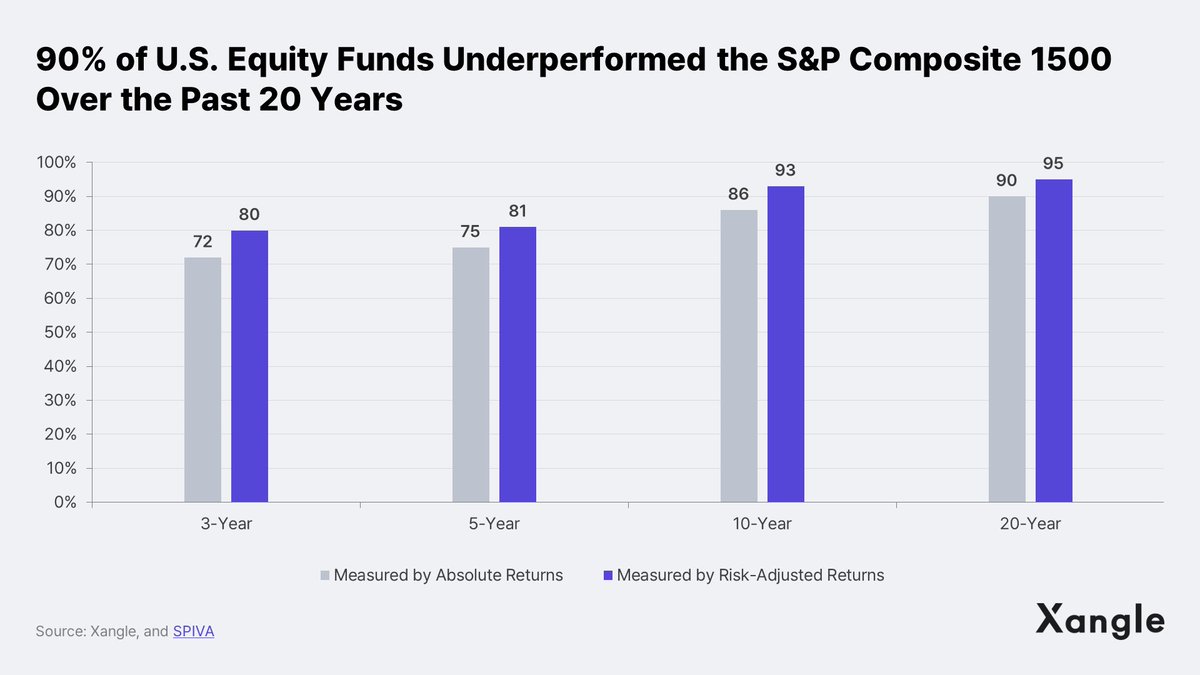
2. 𝗖𝗼𝗻𝘀𝗶𝘀𝘁𝗲𝗻𝘁 𝗽𝗲𝗿𝗳𝗼𝗿𝗺𝗮𝗻𝗰𝗲.
Passively managed funds outperform actively managed ones over time.
Thirdly...
You don't have to spend time to:
· Research.
· Analyse.
· Pick bonds.
· Or Write reports.
ETF fees go as low as 0.2 – 0.4%.
2. 𝗖𝗼𝗻𝘀𝗶𝘀𝘁𝗲𝗻𝘁 𝗽𝗲𝗿𝗳𝗼𝗿𝗺𝗮𝗻𝗰𝗲.
Passively managed funds outperform actively managed ones over time.
Thirdly...
3. 𝗧𝗿𝗮𝗻𝘀𝗽𝗮𝗿𝗲𝗻𝗰𝘆.
4. 𝗗𝗶𝘃𝗲𝗿𝘀𝗶𝗳𝗶𝗰𝗮𝘁𝗶𝗼𝗻.
5. 𝗛𝗶𝗴𝗵 𝗹𝗶𝗾𝘂𝗶𝗱𝗶𝘁𝘆.
6. 𝗦𝗶𝗺𝗽𝗹𝗶𝗰𝗶𝘁𝘆.
7. 𝗔𝗰𝗰𝗲𝘀𝘀.
Now...
If Bitcoin and ETH act as benchmarks — just like the S&P 500...
Why have crypto index products not taken off?
4. 𝗗𝗶𝘃𝗲𝗿𝘀𝗶𝗳𝗶𝗰𝗮𝘁𝗶𝗼𝗻.
5. 𝗛𝗶𝗴𝗵 𝗹𝗶𝗾𝘂𝗶𝗱𝗶𝘁𝘆.
6. 𝗦𝗶𝗺𝗽𝗹𝗶𝗰𝗶𝘁𝘆.
7. 𝗔𝗰𝗰𝗲𝘀𝘀.
Now...
If Bitcoin and ETH act as benchmarks — just like the S&P 500...
Why have crypto index products not taken off?
1. High fees.
2. Fear of hacks.
3. Limited liquidity.
4. Limited education.
5. Short-term investor mindset.
6. Fear of manipulation of small-cap assets.
7. Limited Integration with Traditional Finance.
But that's not all...
2. Fear of hacks.
3. Limited liquidity.
4. Limited education.
5. Short-term investor mindset.
6. Fear of manipulation of small-cap assets.
7. Limited Integration with Traditional Finance.
But that's not all...
𝗧𝗵𝗲 𝘀𝘁𝗶𝗻𝗴 𝗼𝗳 𝗶𝗻𝗳𝗹𝗮𝘁𝗶𝗼𝗻
The law of inflation says "Everything that goes up must not come down".
For example:
Since 2002, Venezuela has never had a year go by without inflation. 2018 was a shocking 65,374% 😳.
The law of inflation says "Everything that goes up must not come down".
For example:
Since 2002, Venezuela has never had a year go by without inflation. 2018 was a shocking 65,374% 😳.

𝗪𝗵𝗮𝘁 𝗰𝗮𝘂𝘀𝗲𝘀 𝗶𝗻𝗳𝗹𝗮𝘁𝗶𝗼𝗻?
During the late 1800s, paper money was backed by gold — which kept countries honest.
But...
After the Great Depression, huge debts made them rethink the gold standard, and by the 1970s, it was no longer tied to currency.
So...
During the late 1800s, paper money was backed by gold — which kept countries honest.
But...
After the Great Depression, huge debts made them rethink the gold standard, and by the 1970s, it was no longer tied to currency.
So...
They started printing money at will.
"Mr. President, our country is in debt and taxes aren't enough"
"Yikes 😬, just print some $$ to cover up"
— Repeat.
Excess money = High demand = Shortage in supply = Increased prices = Worthless currency.
It's not nice to fool nature.
"Mr. President, our country is in debt and taxes aren't enough"
"Yikes 😬, just print some $$ to cover up"
— Repeat.
Excess money = High demand = Shortage in supply = Increased prices = Worthless currency.
It's not nice to fool nature.

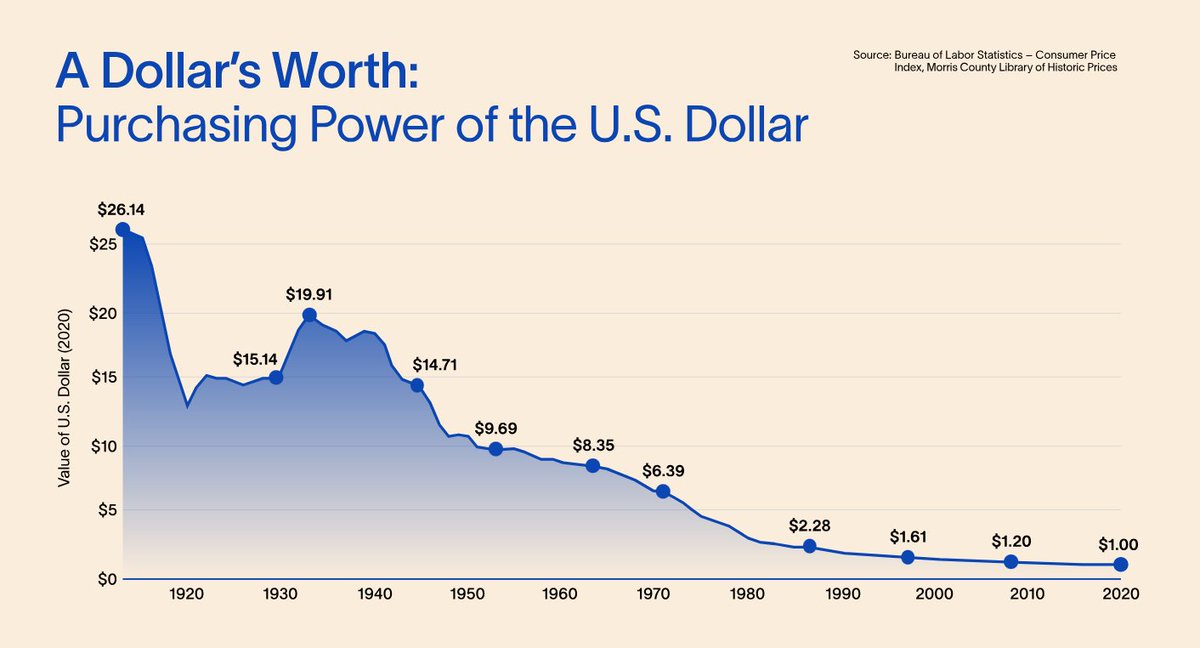
Fiat currencies are devaluing all the time.
I.e. If you do your hard work and get your paycheck but don't spend it right away, its purchasing power reduces.
But...
What if it doesn't work that way?
What if $1,000 today equals $1,000 in 5, 10, or 50 years?
I.e. If you do your hard work and get your paycheck but don't spend it right away, its purchasing power reduces.
But...
What if it doesn't work that way?
What if $1,000 today equals $1,000 in 5, 10, or 50 years?
𝗧𝗵𝗲 𝘀𝗼𝗹𝘂𝘁𝗶𝗼𝗻.
Have you noticed that wealthy people don't keep their money in currencies?
They use a diversified basket of assets like:
· Gold 🪙
· Bonds 💵
· Stocks 📈
· Or real estate 🏠
...and convert a little to fiat for expenses.
Why?
Have you noticed that wealthy people don't keep their money in currencies?
They use a diversified basket of assets like:
· Gold 🪙
· Bonds 💵
· Stocks 📈
· Or real estate 🏠
...and convert a little to fiat for expenses.
Why?
To beat inflation...
Price appreciation and revenue must be greater than inflation.
In DeFi, there are different tokenized ways to store wealth that either generate revenue / maintain value.
What if we combined these assets into one token like ETFs? 🤔
Price appreciation and revenue must be greater than inflation.
In DeFi, there are different tokenized ways to store wealth that either generate revenue / maintain value.
What if we combined these assets into one token like ETFs? 🤔
𝗥𝗲𝘀𝗲𝗿𝘃𝗲 𝗣𝗿𝗼𝘁𝗼𝗰𝗼𝗹
—Backstory—
@ReserveProtocol started in 2018 as a centralized company offering Venezuelans a stablecoin, RSV, to hedge against inflation.
Venezuelans would convert their bolívars to RSV since it was pegged to the U.S. dollar.
As expected...
—Backstory—
@ReserveProtocol started in 2018 as a centralized company offering Venezuelans a stablecoin, RSV, to hedge against inflation.
Venezuelans would convert their bolívars to RSV since it was pegged to the U.S. dollar.
As expected...
Reserve Mobile App (RPay), a stablecoin platform where you can hold and spend RTokens, was a success with:
· Over 1 million downloads on Android and iOS.
· $300M worth of monthly txns.
· And more.
RPay made Venezuelans to start saving again.
Then the worst thing happened...
· Over 1 million downloads on Android and iOS.
· $300M worth of monthly txns.
· And more.
RPay made Venezuelans to start saving again.
Then the worst thing happened...
Operation Choke Point
The government shut down all companies with crypto to banking operations due to bad actors 😔.
So...
RPay was suspended.
But...
How about going decentralized? 😃
The government shut down all companies with crypto to banking operations due to bad actors 😔.
So...
RPay was suspended.
But...
How about going decentralized? 😃
—Present day—
Reserve Protocol allows you or anyone to create synthetic assets called RTokens on Ethereum backed by predefined ERC 20 tokens.
An RToken could be a:
· Fiat-pegged.
· Yield-bearing.
· Highly decentralized token.
· Anything you choose.
The plan is to:
Reserve Protocol allows you or anyone to create synthetic assets called RTokens on Ethereum backed by predefined ERC 20 tokens.
An RToken could be a:
· Fiat-pegged.
· Yield-bearing.
· Highly decentralized token.
· Anything you choose.
The plan is to:
· Take tokenized versions of the same assets wealthy people use to protect wealth.
· Pool them together.
· And make a currency out of them called RTokens.
This way, you store your money like wealthy people already do.
But, 𝗪𝗵𝗮𝘁 𝗲𝘅𝗮𝗰𝘁𝗹𝘆 𝗮𝗿𝗲 𝗥𝗧𝗼𝗸𝗲𝗻𝘀?
· Pool them together.
· And make a currency out of them called RTokens.
This way, you store your money like wealthy people already do.
But, 𝗪𝗵𝗮𝘁 𝗲𝘅𝗮𝗰𝘁𝗹𝘆 𝗮𝗿𝗲 𝗥𝗧𝗼𝗸𝗲𝗻𝘀?
An RToken is a general name for asset-backed tokens created in Reserve Protocol.
They allow the token creator to decide on things like:
· Governance parameters.
· Revenue share.
· Token ticker.
· Etc.
An RToken will take the features of its underlying assets.
Plus...
They allow the token creator to decide on things like:
· Governance parameters.
· Revenue share.
· Token ticker.
· Etc.
An RToken will take the features of its underlying assets.
Plus...
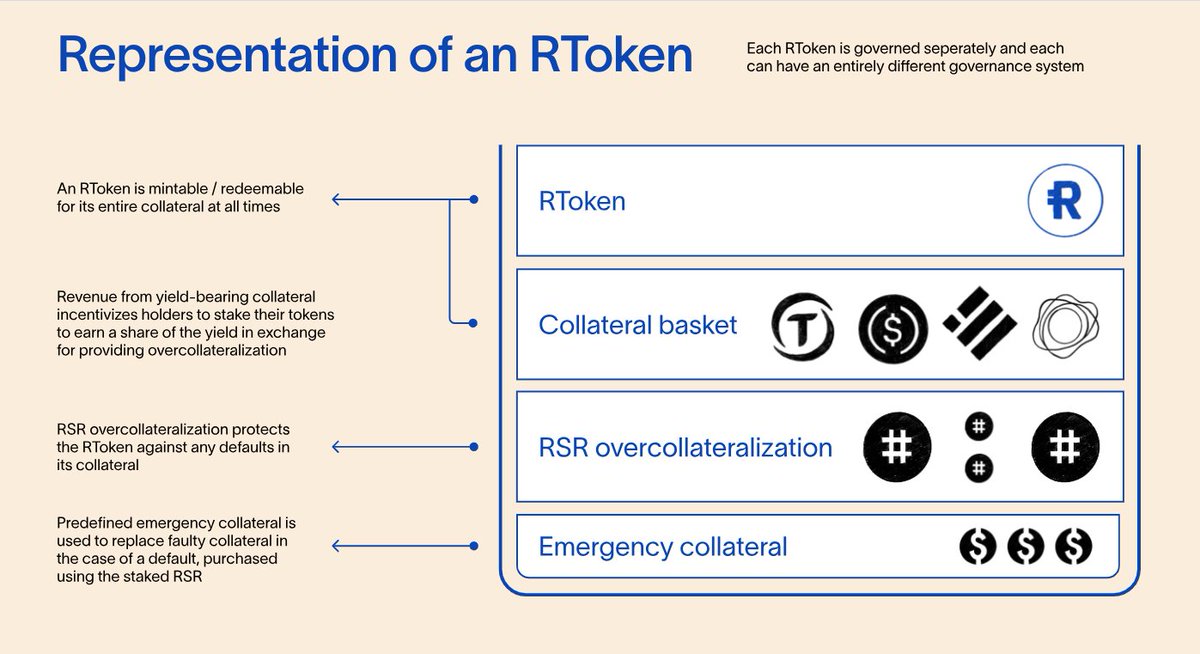
You don't need permission to launch an RToken.
The main ideas are that:
→Market adoption will show the best form of on-chain money.
→More assets will be tokenized.
→Decentralized governance will evolve.
However, here are 4 ways RTokens will boost crypto index products:
The main ideas are that:
→Market adoption will show the best form of on-chain money.
→More assets will be tokenized.
→Decentralized governance will evolve.
However, here are 4 ways RTokens will boost crypto index products:
1. 𝗢𝘃𝗲𝗿 𝗰𝗼𝗹𝗹𝗮𝘁𝗲𝗿𝗮𝗹𝗶𝘇𝗮𝘁𝗶𝗼𝗻
Reserve's team invested $20 million in:
· Curve.
· Convex.
· And Stake DAO.
...to increase liquidity and adoption of RTokens by redirecting LP incentives.
RSR holders are also rewarded to stake —which is used as backup liquidity.
Reserve's team invested $20 million in:
· Curve.
· Convex.
· And Stake DAO.
...to increase liquidity and adoption of RTokens by redirecting LP incentives.
RSR holders are also rewarded to stake —which is used as backup liquidity.

2. 𝗖𝗼𝗹𝗹𝗮𝘁𝗲𝗿𝗮𝗹 𝘁𝘆𝗽𝗲
Accepted collateral types follow the ERC 20 standard
Yield-bearing or stable tokens from platforms like Compound, AAVE, and Pax Gold are examples of ideal RToken collateral.
Thirdly...
Accepted collateral types follow the ERC 20 standard
Yield-bearing or stable tokens from platforms like Compound, AAVE, and Pax Gold are examples of ideal RToken collateral.
Thirdly...
3. 𝗘𝗱𝘂𝗰𝗮𝘁𝗶𝗼𝗻
The aim is for normal people to use crypto. To do that, you'd have to teach them the normal way.
Some nice videos & articles provided, make it easy to learn.
Lastly...
The aim is for normal people to use crypto. To do that, you'd have to teach them the normal way.
Some nice videos & articles provided, make it easy to learn.
Lastly...
4. 𝗦𝗲𝗰𝘂𝗿𝗶𝘁𝘆
DeFi suffered from terrible hacks this year.
So...
Reserve has launched a $5 million bug bounty program alongside undergoing audits from top auditors like:
· Halborn.
· Code4rena.
· & Trail of Bits.
DeFi suffered from terrible hacks this year.
So...
Reserve has launched a $5 million bug bounty program alongside undergoing audits from top auditors like:
· Halborn.
· Code4rena.
· & Trail of Bits.
𝗧𝗮𝗸𝗲𝗮𝘄𝗮𝘆𝘀
Remember how ETFs work? Reserve allows you to:
· Take tokenized versions of the same assets wealthy people use to protect wealth.
· Pool them together.
· And make a currency out of them called RTokens (which can change the world).
Remember how ETFs work? Reserve allows you to:
· Take tokenized versions of the same assets wealthy people use to protect wealth.
· Pool them together.
· And make a currency out of them called RTokens (which can change the world).
That's a wrap!
If you enjoyed this thread:
· Follow @enijoshua_ for more content.
· Join @Reserveprotocol's Discord: discord.com
If you enjoyed this thread:
· Follow @enijoshua_ for more content.
· Join @Reserveprotocol's Discord: discord.com
Loading suggestions...