

Discipline and non-discipline
Read this thread👇
1. Self-control: Discipline often involves the ability to control oneself, resisting impulses and distractions that may hinder the pursuit of a goal.
Disorder: Non-discipline often leads to disorderly and chaotic situations. Without established rules or guidelines, there is a lack of structure, and activities may become haphazard.
Read this thread👇
1. Self-control: Discipline often involves the ability to control oneself, resisting impulses and distractions that may hinder the pursuit of a goal.
Disorder: Non-discipline often leads to disorderly and chaotic situations. Without established rules or guidelines, there is a lack of structure, and activities may become haphazard.
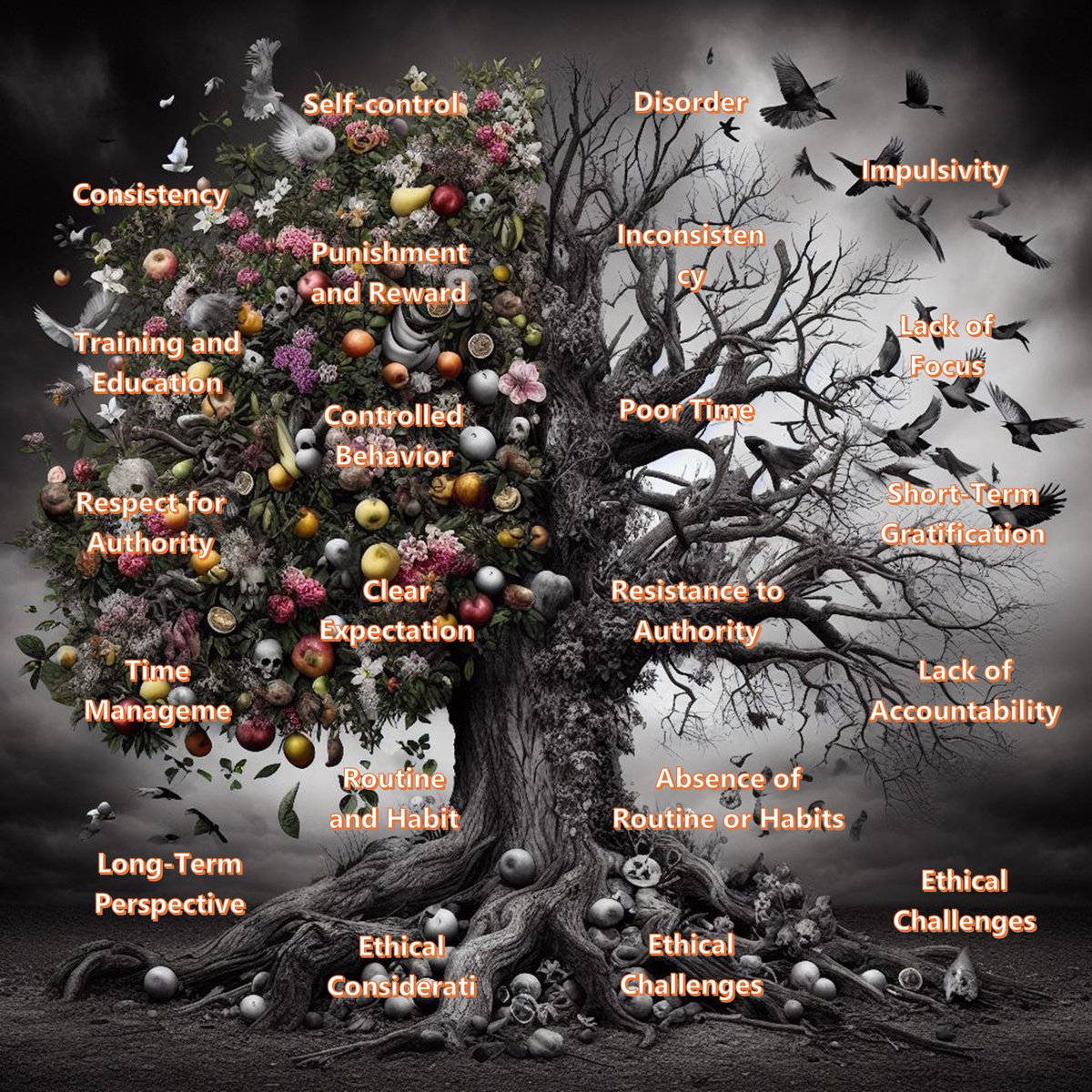
2. Consistency: Discipline requires consistent adherence to rules and standards. It is not a sporadic or occasional effort but a continuous commitment to follow a set of principles.
Impulsivity: Individuals lacking discipline may act on impulses without considering the consequences. This can lead to erratic behavior and poor decision-making.
Impulsivity: Individuals lacking discipline may act on impulses without considering the consequences. This can lead to erratic behavior and poor decision-making.
3. Inconsistency: Non-discipline is marked by inconsistency in behavior and actions. Without a commitment to following rules or standards, actions may vary widely from one instance to another.
Punishment and Reward: Discipline typically involves a system of consequences for actions. Positive actions may be rewarded, while negative actions may result in punishment. This helps in reinforcing desired behavior.
Punishment and Reward: Discipline typically involves a system of consequences for actions. Positive actions may be rewarded, while negative actions may result in punishment. This helps in reinforcing desired behavior.
4. Training and Education: Discipline often involves a process of training and education. Individuals need to understand the rules and expectations, and they may require guidance on how to meet them.
Lack of Focus: Without discipline, individuals may struggle to maintain focus on tasks or goals. Distractions can easily derail efforts, hindering progress and achievement.
Lack of Focus: Without discipline, individuals may struggle to maintain focus on tasks or goals. Distractions can easily derail efforts, hindering progress and achievement.
5. Controlled Behavior: Discipline aims to bring about controlled and orderly behavior. It helps individuals channel their actions in a way that is conducive to personal development, organizational success, or societal well-being.
Poor Time Management: Non-disciplined individuals may struggle with managing their time effectively. This can result in missed deadlines, incomplete tasks, and a general lack of productivity.
Poor Time Management: Non-disciplined individuals may struggle with managing their time effectively. This can result in missed deadlines, incomplete tasks, and a general lack of productivity.
6. Respect for Authority: Discipline often implies a respect for authority figures who establish and enforce rules. This can be relevant in various contexts, such as schools, workplaces, and societies.
Short-Term Gratification: Non-discipline is often associated with seeking immediate gratification without considering long-term consequences. This can lead to impulsive decisions that may be detrimental in the long run.
Short-Term Gratification: Non-discipline is often associated with seeking immediate gratification without considering long-term consequences. This can lead to impulsive decisions that may be detrimental in the long run.
7. Clear Expectations: For discipline to be effective, there must be clear expectations and standards. Individuals need to understand what is expected of them and the consequences of deviating from those expectations.
Resistance to Authority: Individuals lacking discipline may resist authority figures or established rules. This can create conflicts in various settings, such as schools, workplaces, or within societal structures.
Resistance to Authority: Individuals lacking discipline may resist authority figures or established rules. This can create conflicts in various settings, such as schools, workplaces, or within societal structures.
8. Time Management: Discipline often involves effective time management. This includes prioritizing tasks, meeting deadlines, and organizing one's schedule to optimize productivity.
Lack of Accountability: In non-disciplined environments, there is often a lack of accountability for one's actions. Without consequences, individuals may not feel responsible for their behavior.
Lack of Accountability: In non-disciplined environments, there is often a lack of accountability for one's actions. Without consequences, individuals may not feel responsible for their behavior.
9. Routine and Habit: Discipline often involves the development of routines and habits that support positive behavior. Consistent practice of certain actions can lead to the establishment of good habits.
Absence of Routine or Habits: Non-disciplined individuals often lack consistent routines or positive habits. The absence of regular patterns can contribute to a lack of stability and hinder personal or professional growth.
Absence of Routine or Habits: Non-disciplined individuals often lack consistent routines or positive habits. The absence of regular patterns can contribute to a lack of stability and hinder personal or professional growth.
10. Long-Term Perspective: Discipline is often associated with a long-term perspective. It involves sacrificing immediate gratification for the sake of long-term goals and benefits.
Ethical Challenges: In the absence of discipline, ethical considerations may be overlooked. Actions may be driven by personal desires without regard for moral or ethical principles.
Ethical Challenges: In the absence of discipline, ethical considerations may be overlooked. Actions may be driven by personal desires without regard for moral or ethical principles.
11. Ethical Considerations: Discipline is ideally guided by ethical principles. It involves doing what is right and fair, even when it may be difficult or inconvenient.
Stagnation: Without discipline, personal and professional development may be stunted. The lack of a structured approach to tasks and responsibilities can hinder progress and growth.
Stagnation: Without discipline, personal and professional development may be stunted. The lack of a structured approach to tasks and responsibilities can hinder progress and growth.
Loading suggestions...