

Thread on the bizarre and influential life of sci-fi author Cordwainer Smith, whose work incorporated strands of wildly different subjects from psychological warfare and Chinese culture to anti-communism and high church Christianity, and went on to impact other authors and anime:

Smith was born in 1913 as Paul Linebarger to a father working as lawyer in the Phillipines and as an advisor to Sun Yat-sen, the father of Chinese nationalism, who would later become Smith’s godfather and mentor. Smith’s mother travelled back to the US so he could be President.

Smith was blinded in his right eye at the age of 6 and almost lost the rest of his sight to infection. He was a professor at Duke and worked as a second lieutenant in WW2, helping create the Office of War Information and creation the army’s first psychological warfare section.

In 1943 Linebarger went to China to coordinate military intelligence and would later become a close confidant to Chiang Kai-shek. Drawing on his own experiences in psychological warfare, in 1948 he would write the classic textbook on the subject.

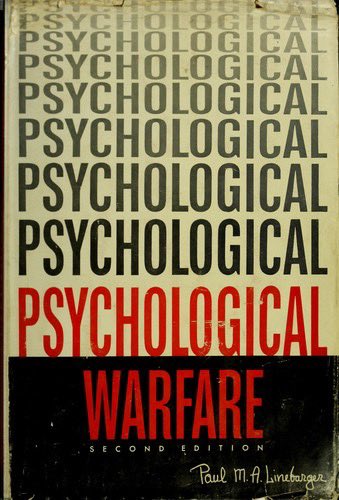
At this time he wrote fiction under the name Felix C. Forrest, which was inspired by his Chinese name Lin Bai-lo (Forest of Incandescent Bliss). In 1949, he published Atomsk, the first spy novel of the Cold War, which heavily drew from his knowledge of psychological warfare.

He would eventually rise to the rank of colonel in the army and assist in the Malayam Emergency and Korean war. Afterwards, he worked for the CIA and trained agents on psychological warfare as the world’s leading expert. Linebarger would later go on to become an advisor to JFK.


Eventually, Linebarger began to write sci-fi under the pen name Cordwainer Smith. His first story, Scanners Live in Vain, was written in 1945, but only Fantasy Book, an obscure publisher, would print it in 1950.
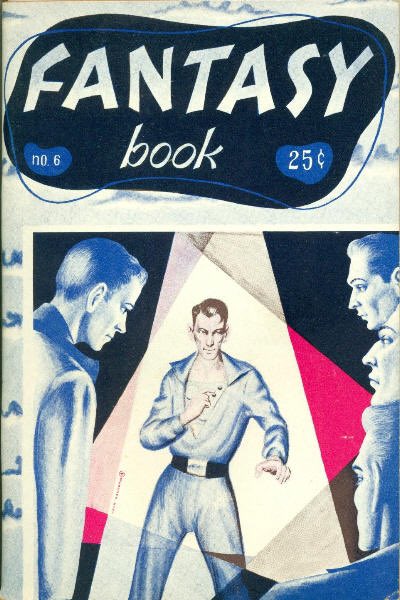
Frederick Pohl, the famous writer and editor, stumbled onto the story and heavily advocated for Smith. Fans thought it was so good that they assumed it was written by an established sci-do writer under a pseudonym. It’s now considered one of the best pre-1965 sci-fi stories.

Smith was rumored to be Kirk Allen, the subject of psychoanalyst Robert Linder’s “The Jet Propelled Couch”, who was a scientist obsessed with a series that had an MC with his name, to the point of hallucinating the books as his personal past. No actual proof has been found.

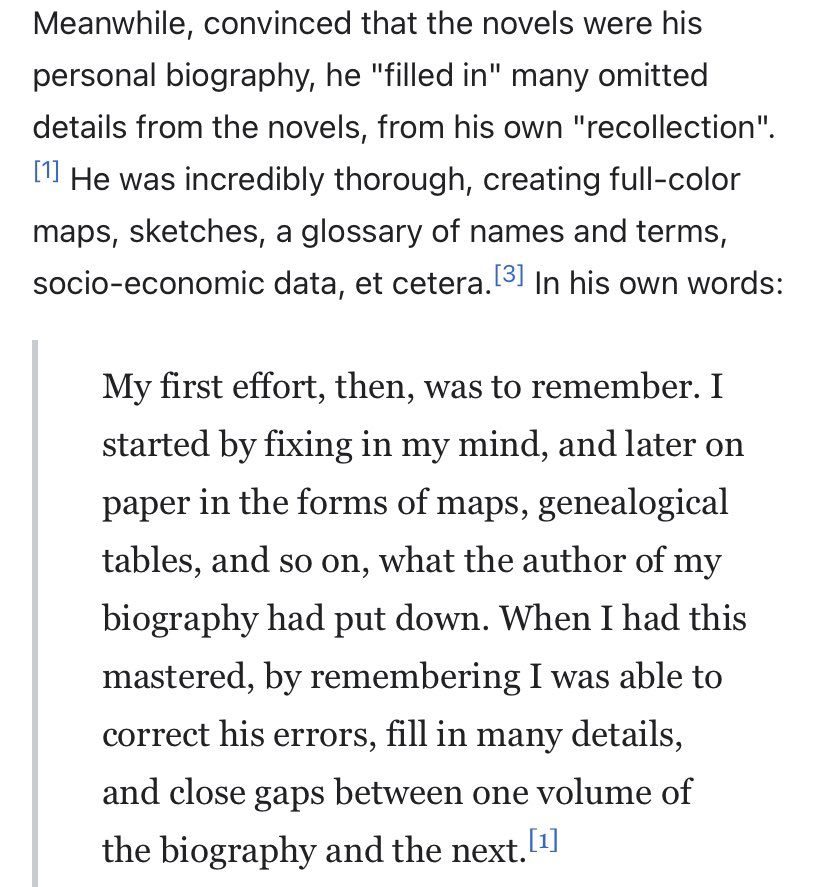

Cordwainer Smith had a unique style due to his familiarity with Chinese culture. His stories sometimes read more like Classical Chinese narratives recited by a folklorist thousands of years in the future. He’d also keep up with advances in psychology and psychiatry for his work.
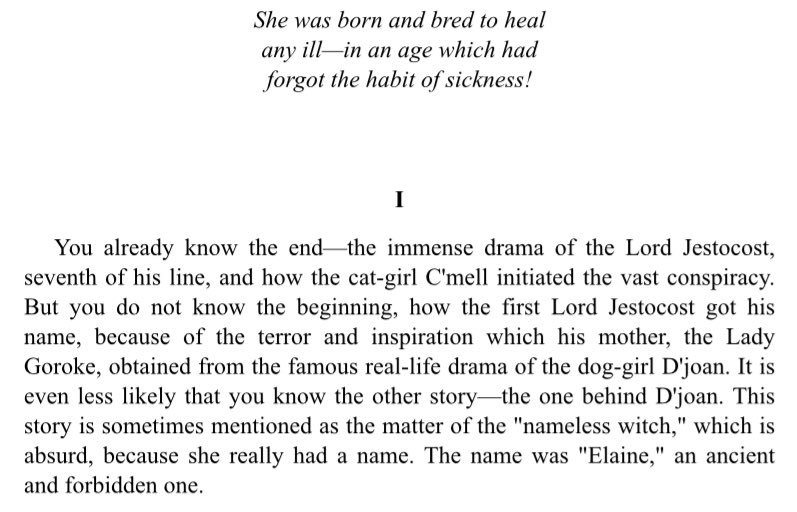
In the 1950s Smith would become a devout Anglican, and the religious themes started showing in his work. His stories took place 14,000 years in the future, where after a nuclear holocaust, the Instrumentality of Mankind rules over humanity to protect them from danger.
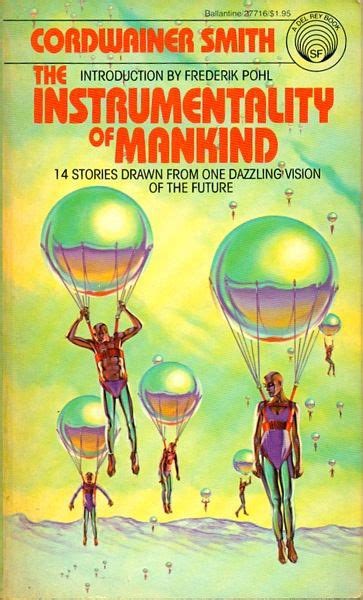
They have benevolent intentions: they get humanity into space, and through genetically engineering an underclass of animal people (yes, this includes cat girls) manage to create a quasi-socialist utopia free of danger, but life becomes sterile and meaningless for people while the
underclass of animal people still have vitality. Realizing there’s more to life than survival, this starts The Rediscovery of Man, attempts to revive old cultures, languages, and ways of life in order to make life worth living again. An undercurrent defying the Instrumentality

was also “the Old Strong Religion” (space Christianity). Smith included various theological themes and ideas in his work as his protagonists struggle with meaning. He intended to write more on the explicit return of Christianity to the Instrumentality, but died before he could.
Smith’s anti-communism also played a large role in his fiction. Horrified at what communism brought to China, he saw the worst aspect - not economic - but rather socially as a rejection of the role of struggle and human values to existence. His interest in psychological…
warfare came from his observations of the effectiveness of communist propaganda - he’d refer to it as “strong black magic” - and would note that “almost all of the best propagandists of almost all modern powers have been literary personalities”.
Throughout his work - most notably in “Scanners Live in Vain” - the capacity to feel pain is seen as needed for an authentic, human life, which is superior to numb detachment. Smith’s work was critical of the “pleasure revolution” - technology and social liberation to reduce pain
which was antithetical to mankind’s growth and role of dominion over the cosmos and world destroy society (and sometimes make it gay). Linebarger was in chronic pain for most of his life too, which made this more personal for him, but was still better than inhuman solutions.
Cordwainer Smith isn’t a very popular author, but his influence was massive. Harlan Ellison, Ursula K Leguin, and much of the New Wave of science fiction praised his work (while downplaying his religiosity). Frank Zappa would even list Smith as one of his favorite authors.

The “Human Instrumentality Project” in Neon Genesis Evangelion is a direct reference to Cordwainer Smith’s Instrumentality of Mankind. (Instrumentality as a term was chosen by Smith for its theological significance, which was most famously elaborated by Thomas Aquinas).

Log Horizon featured the Norstrilia Project, which created some animal races in the world and was a direct reference to Smith’s only novel No

Fafner in the Azure was supposedly influenced by Smith’s “The Game of Rat and Dragon”, which had similar concepts of telepathic war against unknown enemies. The Fafner Mark Elf mecha takes its name from another of Smith’s short stories.

Serial Experiments Lain also has a reference to Smith’s story “Think Blue, Count Two” (which was a popular award-winning story in Japan) in the form of a password used by Latin’s father - "Think Bule Count One Tow" - and maybe some direct thematic themes with regards to the show

I almost forgot too - Atomsk from FLCL has his name taken directly from the novel of the same name that I covered earlier in the thread.

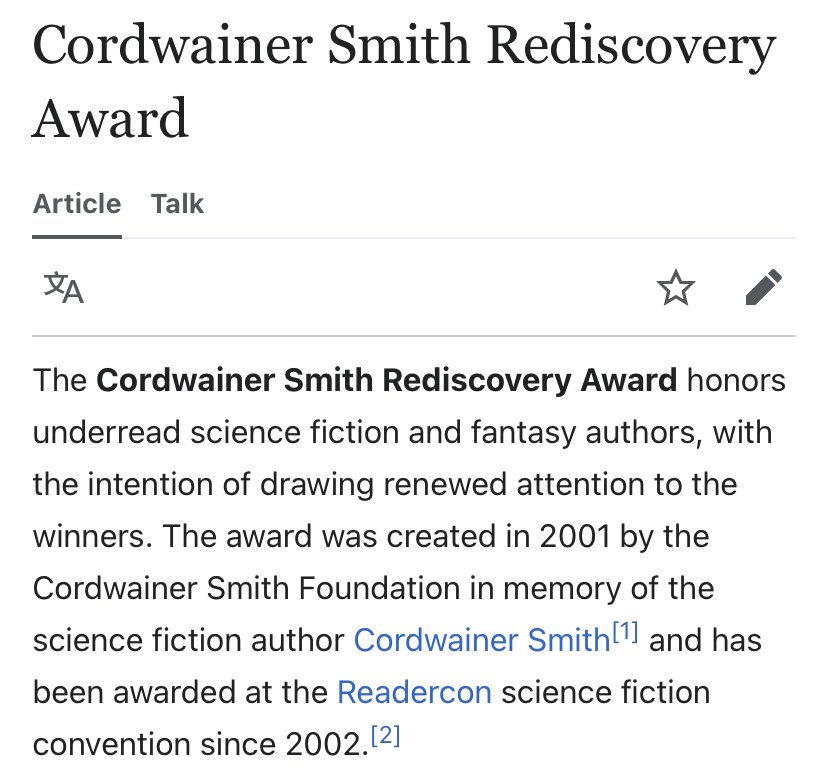
Funnily enough, Cordwainer Smith has been so universally agreed upon by his readers as an underlooked and neglected author that the Cordwainer Smith Rediscovery Award was established by his foundation in 2001 to highlight and promote underread sci-fi and fantasy writers.
*Norstrilia
Loading suggestions...