

76 years of Sikh Oppression
By Brahmincal system🧵
From 1947 to 1956, the Indian National Congress infiltrated Punjab with Brahiminstic chief ministers, like Bhim Sen Sachar who launched state wide programs to segregate Punjabi speaking Sikhs from Punjabi speaking Hindus.
By Brahmincal system🧵
From 1947 to 1956, the Indian National Congress infiltrated Punjab with Brahiminstic chief ministers, like Bhim Sen Sachar who launched state wide programs to segregate Punjabi speaking Sikhs from Punjabi speaking Hindus.
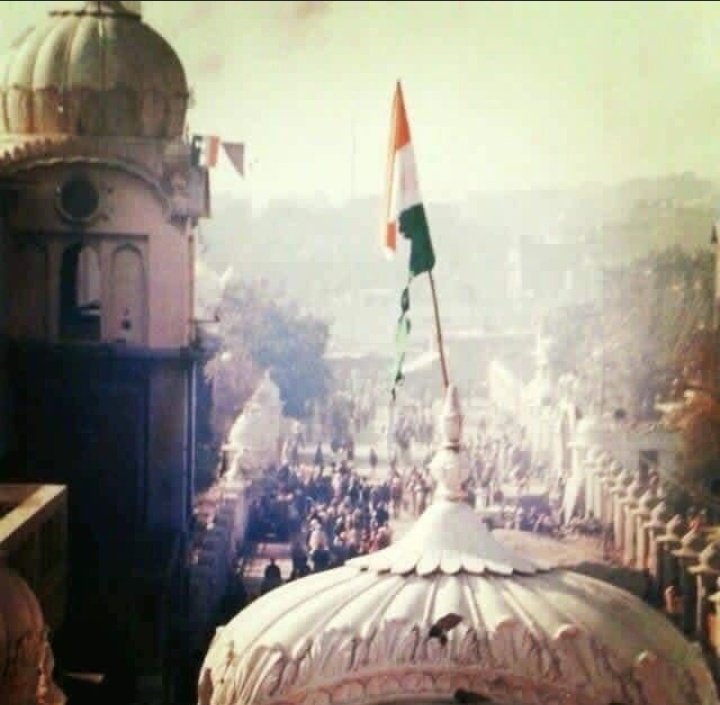
The implementation of the Sachar Formula took place on October 2, 1949, during the tenure of Bhim Sen Sachar’s government proposed to enforce the use of Punjabi as the sole medium of instruction up to the matriculation stage, limited to the “Punjabi zone”
area, while making Hindi compulsory only from the end of primary level onward, throughout Punjab for the “Hindi zone” areas to limit Punjabi and Sikh authority.
These atrocities led the Punjabi Suba movement a political movement that aimed to establish a separate state for Punjab
These atrocities led the Punjabi Suba movement a political movement that aimed to establish a separate state for Punjab
Indian Prime Minister Jawahar Lal Nehru issued a directive on July 4, 1955, to launch a military incursion into the revered Sikh sanctuary, Sri Harmandir Sahib, with the intention of suppressing the “Punjabi Suba” campaign. This unwarranted action resulted in the
martyrdom of over 200 Sikhs and the subsequent arrest of more than 12,000 Sikhs due to the unprovoked use of gunfire and shelling by the police.
The movement was shook to its core and on 18 September 1966, the Indian Parliament enacted the Punjab Reorganisation Act, leading to
The movement was shook to its core and on 18 September 1966, the Indian Parliament enacted the Punjab Reorganisation Act, leading to
to the dissolution of the former state of East Punjab. This resulted in the establishment of the modern state of Punjab and the creation of a new state called Haryana. Additionally, territory was transferred to Himachal Pradesh, which was then a Union territory.
Furthermore, the city of Chandigarh was designated as a temporary Union territory, serving as the provisional capital for both Punjab and Haryana. Since Punjab has always been a financial, social, economic and political hub every governmental party has always
tried to conquer Panjab, all of these events establish the reason why governments wanted to suppress Panjab. Now we shall look into how and why did the Indian government decide to wage war in 1984?
The 1960s and 1970s India shambled Economic inequalities, social marginalization
The 1960s and 1970s India shambled Economic inequalities, social marginalization
and lack of development opportunities have created public resentment, Groups and communities like the Maoists in the Northeast and West Bengali revolutionaries felt neglected or marginalized may resort to armed resistance as a means to address their grievances
Certain groups like the Tamils demanded greater autonomy or even secession from the Indian state.These demands arise from a desire to protect and promote their unique cultural, linguistic, or ethnic identities. An uproar of more than 19 movements arose in
India caused Indra Gandhi to declare a state of emergency in 1975 . But, what was happening in Punjab?
While the Sikhs of Panjab were impinged by Brahministic culture and traditions, the rise of deravaad peaked. The educated youth was enslaved by drug addiction and a superficial
While the Sikhs of Panjab were impinged by Brahministic culture and traditions, the rise of deravaad peaked. The educated youth was enslaved by drug addiction and a superficial
lifestyle. On August 25th, 1977 Sant Jarnail Singh Ji Bhindranwale was elected at the 13th Jathedar of the prestigious, Damdami Taksal.
Sant Bhindranwale went village to village spreading the Sikh ideology,encouraging the youth to quit drugs, alcohol and the pursuit of malice
Sant Bhindranwale went village to village spreading the Sikh ideology,encouraging the youth to quit drugs, alcohol and the pursuit of malice
for a Gursikhi wala jeevan. Sant Ji reprimanded societal oppressors and encouraged everyone not only Sikhs, to stay true to themselves and their faith. This religious movement became a political movement after Congress affiliated Nirankaris sect, mercilessly killed 11 members of
the Akhand Kirtani Jatha and 2 members of the Damdami Taksal who were protesting against the beadbi conducted by the Nirankaris on April 13th, 1978.
Stunned by this incident, Sant Bhindranwale declared a direct political protest against the Indian
Stunned by this incident, Sant Bhindranwale declared a direct political protest against the Indian
government to preserve Sikhi. Re-introduced Sardar Kapur Singh’s written Anandpur Sahib Resolution, in an attempt to legally instate the resolution Sant Ji launched the Dharm Yudh Morcha. Hundreds of thousands of Sikhs obliged to be arrested for this movement.
However some Sikh politicians had other plans.
Members of the Akali Dal, Prakash Singh Badal, Gurbachan Singh Tohra and Harchand Singh Longowal aligned themselves with the Indian National Congress to take Sant Bhindranwale out of an authoritarian position.
Members of the Akali Dal, Prakash Singh Badal, Gurbachan Singh Tohra and Harchand Singh Longowal aligned themselves with the Indian National Congress to take Sant Bhindranwale out of an authoritarian position.
Government operated comrades were actived in Punjab assigned to oppose sikhi and create a oppose naritive . there was another player "Soviet" that was operating political power .
The Indian government purposely chose to Sikhs against Sikhs by having General Kuldip Brar
The Indian government purposely chose to Sikhs against Sikhs by having General Kuldip Brar
and General Ranjit Singh Dayal, to propagate the false narrative of Sant Bhindranwale being a terrorist.
Unfortunately, since 1984 we’ve been falsely accused for being terrorist, we’ve been victims of inaccurate history and oppression, however that is not true.
Unfortunately, since 1984 we’ve been falsely accused for being terrorist, we’ve been victims of inaccurate history and oppression, however that is not true.
Because we fought back and we are still fighting back. We will never get justice because justice delayed is justice denied cause brahmins are siting on upmost positions of judiciary system, however we will attain sovereignty.
"ਅਕਾਲ ਸਹਾਇ"
"ਅਕਾਲ ਸਹਾਇ"
Loading suggestions...