

Arteta was right. Arsenal were OUTSTANDING between the two boxes against West Ham, and they were unlucky to lose.
However, against Fulham, Arsenal were NOT outstanding between the boxes. Arteta admitted this post-game.
Let's analyse the game to see what went wrong..
THREAD! 🚨
However, against Fulham, Arsenal were NOT outstanding between the boxes. Arteta admitted this post-game.
Let's analyse the game to see what went wrong..
THREAD! 🚨
With Zinchenko injured, Kiwior filled in at left back.
As much as Zinchenko gets justifiable criticism for his inability to defend, his inversions into midfield are crucial.
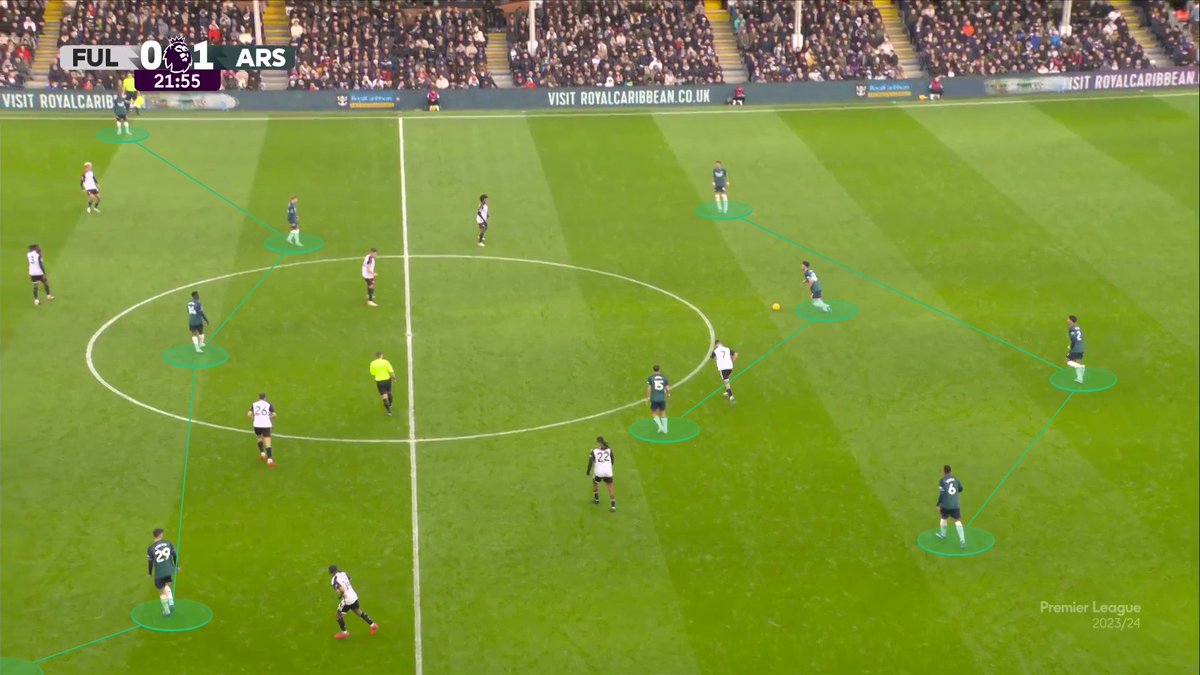
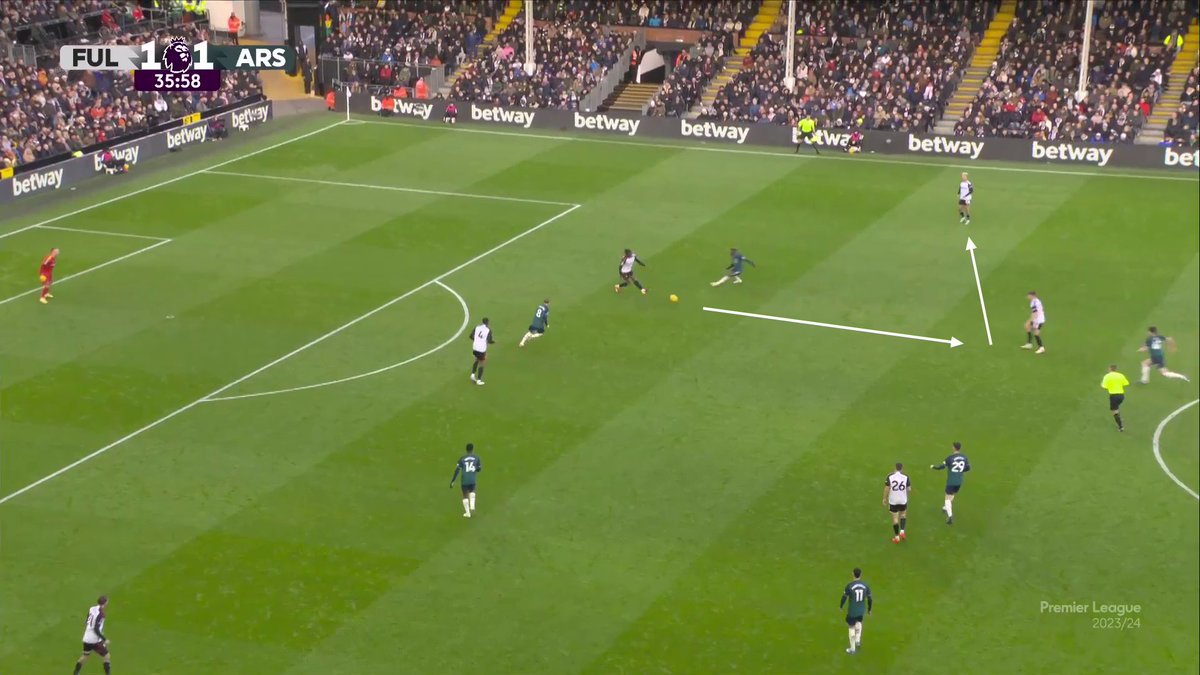
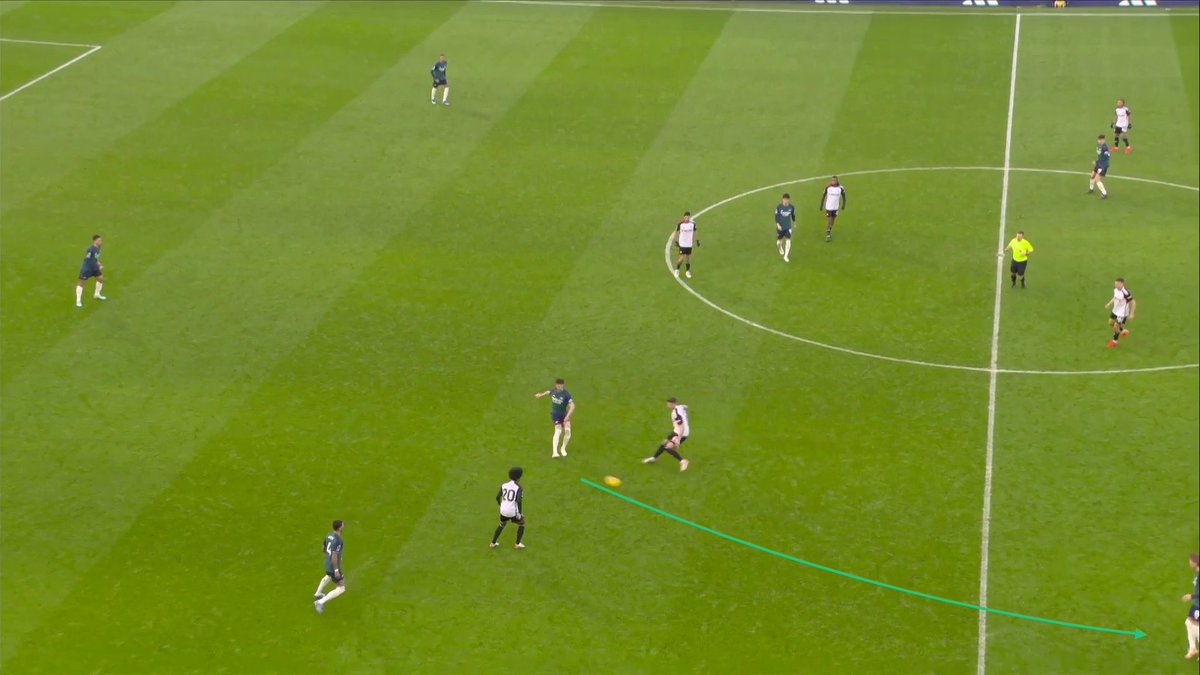
When Arsenal's left back does not invert into midfield they build in a disjointed 4-1 shape (see below).
As much as Zinchenko gets justifiable criticism for his inability to defend, his inversions into midfield are crucial.
When Arsenal's left back does not invert into midfield they build in a disjointed 4-1 shape (see below).
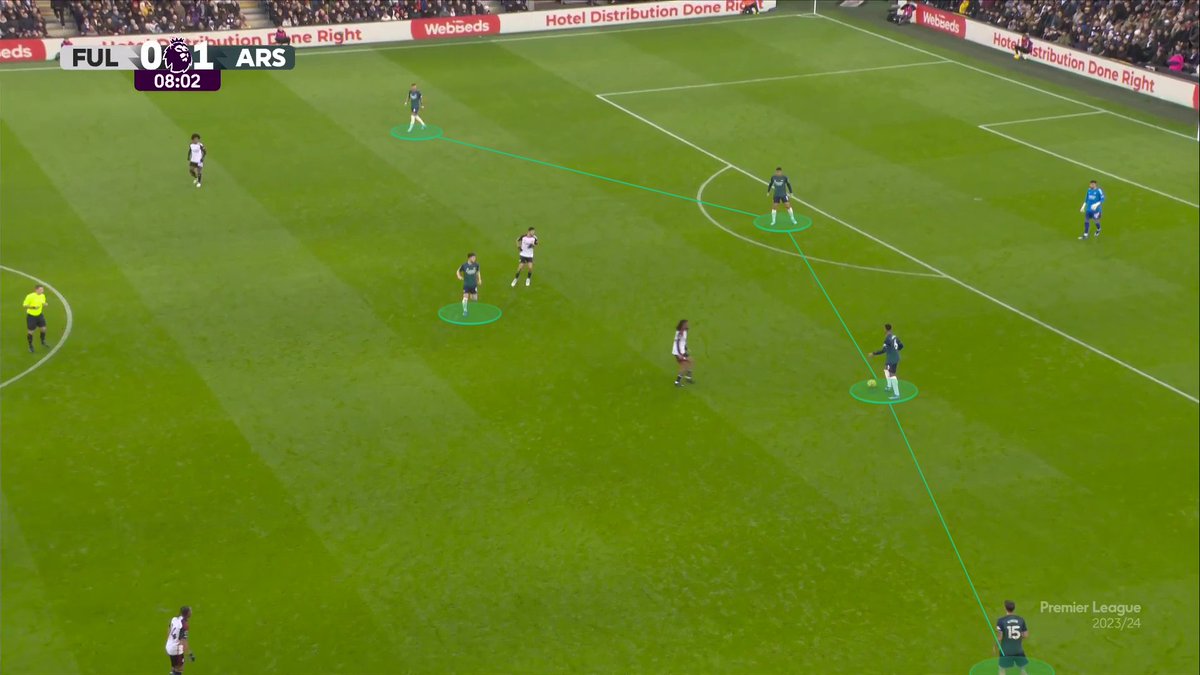
Arsenal did not solely build in this shape as Kiwior inverted into midfield when he felt comfortable to do so, but he often didn't.
This saw Arsenal either build in a disjointed 4-1 shape OR in a build-up with too many players in it because Ødegaard dropped deep alongside Rice.
This saw Arsenal either build in a disjointed 4-1 shape OR in a build-up with too many players in it because Ødegaard dropped deep alongside Rice.
So, when Arsenal did progress play, they lacked players high up the pitch as a result of Ødegaard's deep positioning (picture 1).
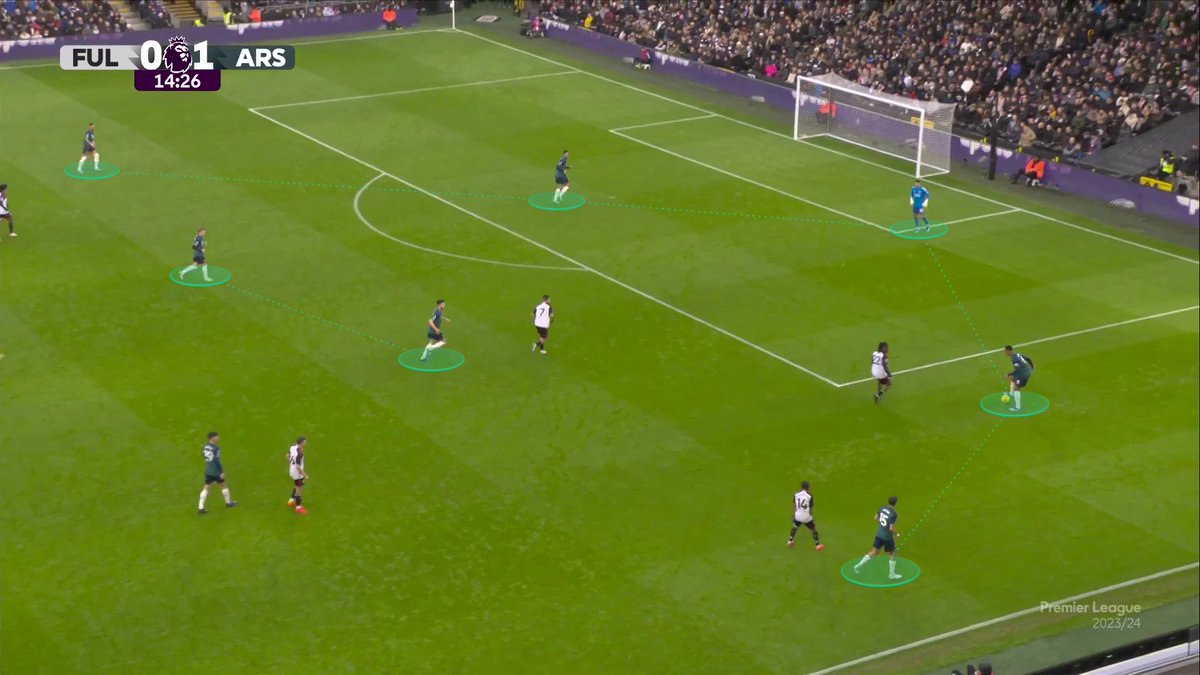
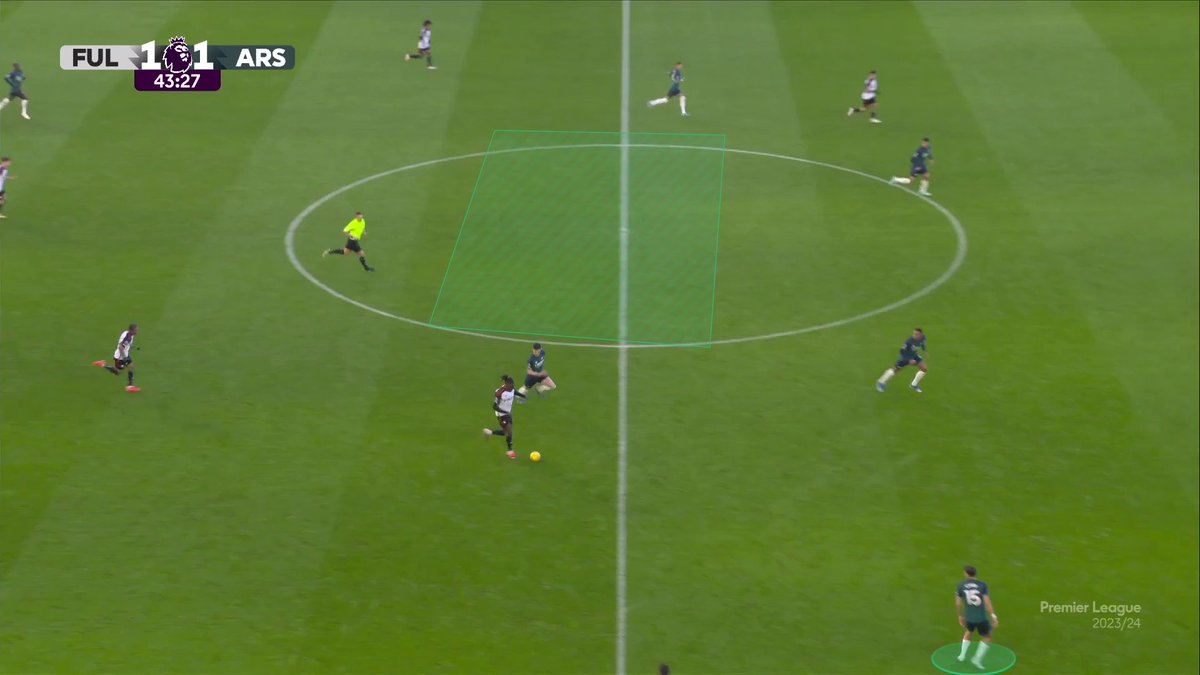
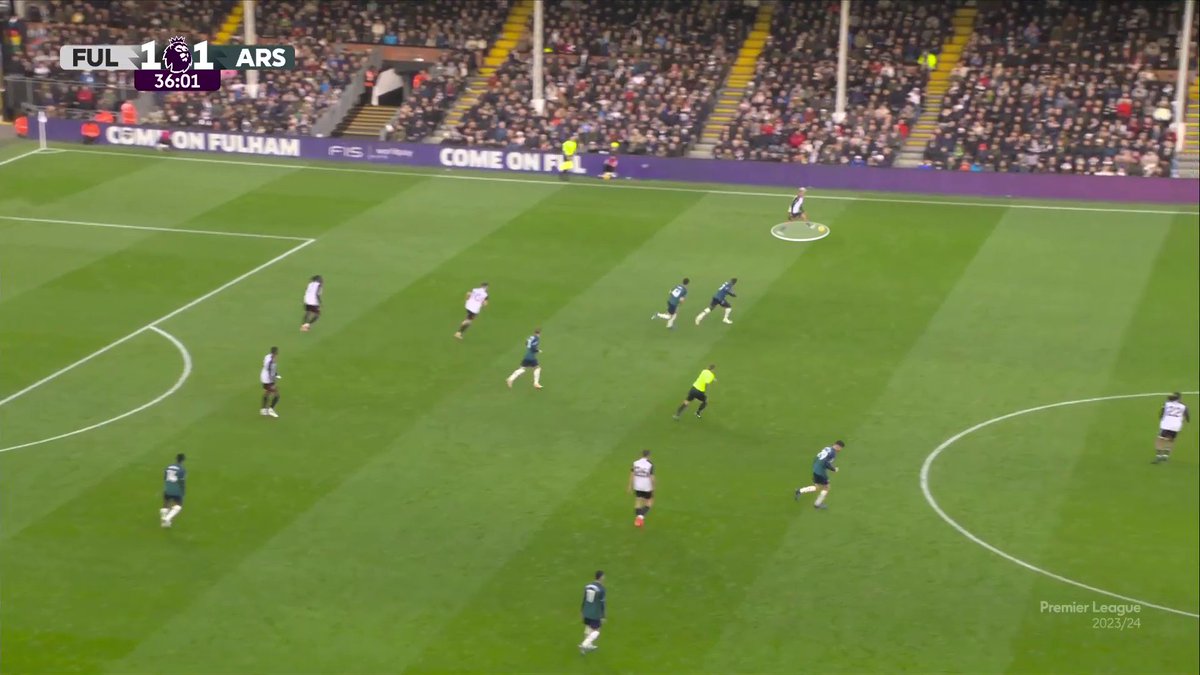
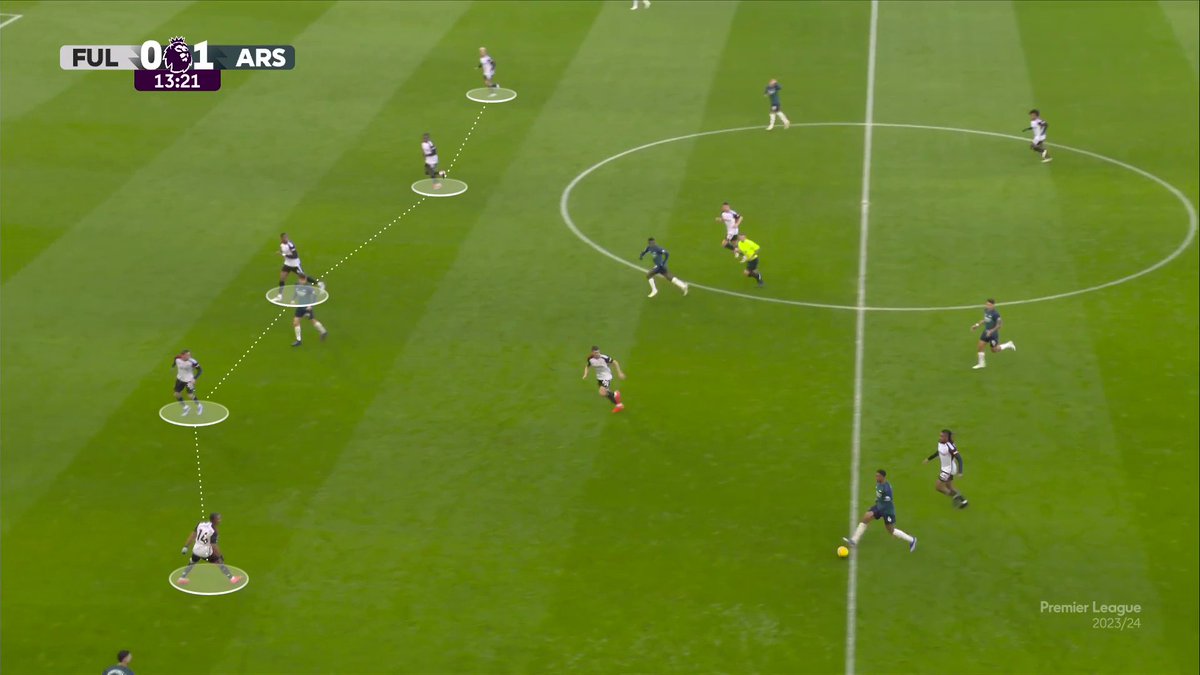
However, Kiwior *did* invert on occasion (picture 2).
When he did, it connected Arsenal's defence and attack as the unit was in close proximity.
However, Kiwior *did* invert on occasion (picture 2).
When he did, it connected Arsenal's defence and attack as the unit was in close proximity.
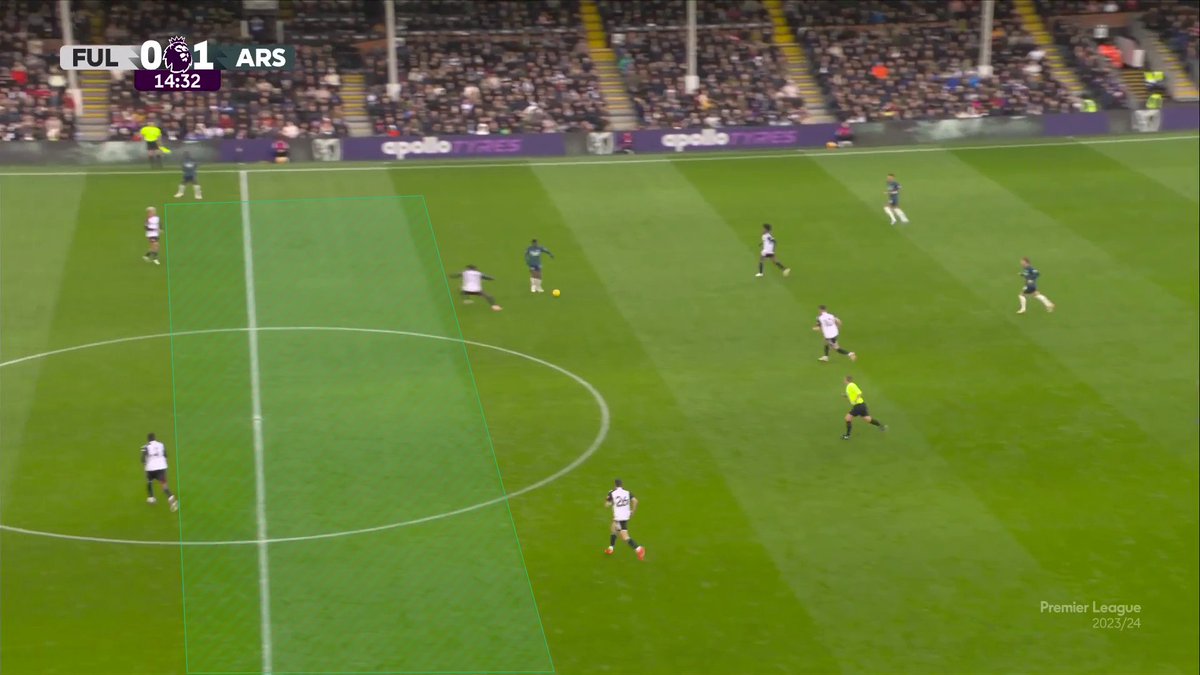
Not only that, but a key component of the inverted fullback is to keep the unit compact in defensive transition.
Because Kiwior only inverted on occasion, Arsenal's compactness in transition was inconsistent success-wise.
Rice often had to operate in isolation in midfield.
Because Kiwior only inverted on occasion, Arsenal's compactness in transition was inconsistent success-wise.
Rice often had to operate in isolation in midfield.
However, Kiwior was not Arsenal's only problem - Arsenal's press was uncharacteristically poor.
Marco Silva's Fulham typically build play in a 4-3-3 shape with the #8's high and in between the lines.
However, this was not the case against Arsenal are Cairney often dropped deep.
Marco Silva's Fulham typically build play in a 4-3-3 shape with the #8's high and in between the lines.
However, this was not the case against Arsenal are Cairney often dropped deep.
In settled play, Arteta expected Fulham to have a 3v2 overload with Adarabioyo, Bassey, and Palhinha outnumbering Nketiah and Ødegaard in Arsenal's 4-4-2.
However, Arteta's plan to address that consists of inverting Saka or Martinelli to create a 3v3.
Cairney made it a 4v3.
However, Arteta's plan to address that consists of inverting Saka or Martinelli to create a 3v3.
Cairney made it a 4v3.
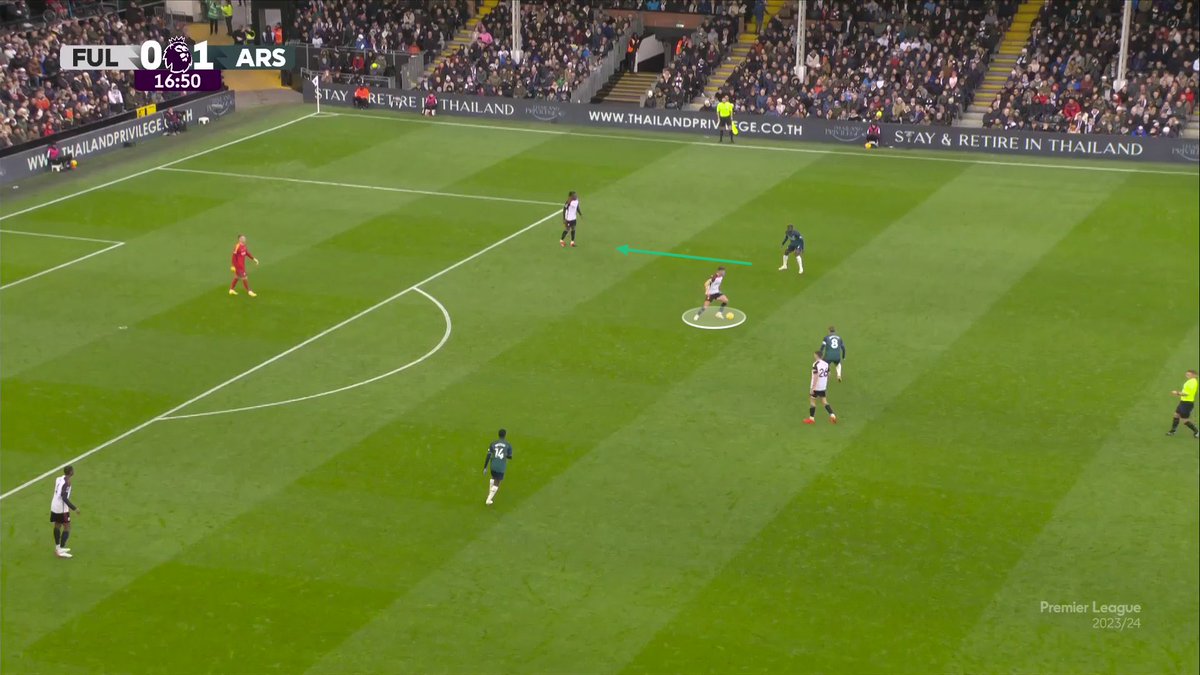
This caused Arsenal problems from goal kicks AND in settled play because they were not expecting Cairney to play deep.
Rice was supposed to mark him when high and between the lines, but it was not in the pre-match game plan for Rice to press as high as the opposition's build-up.
Rice was supposed to mark him when high and between the lines, but it was not in the pre-match game plan for Rice to press as high as the opposition's build-up.
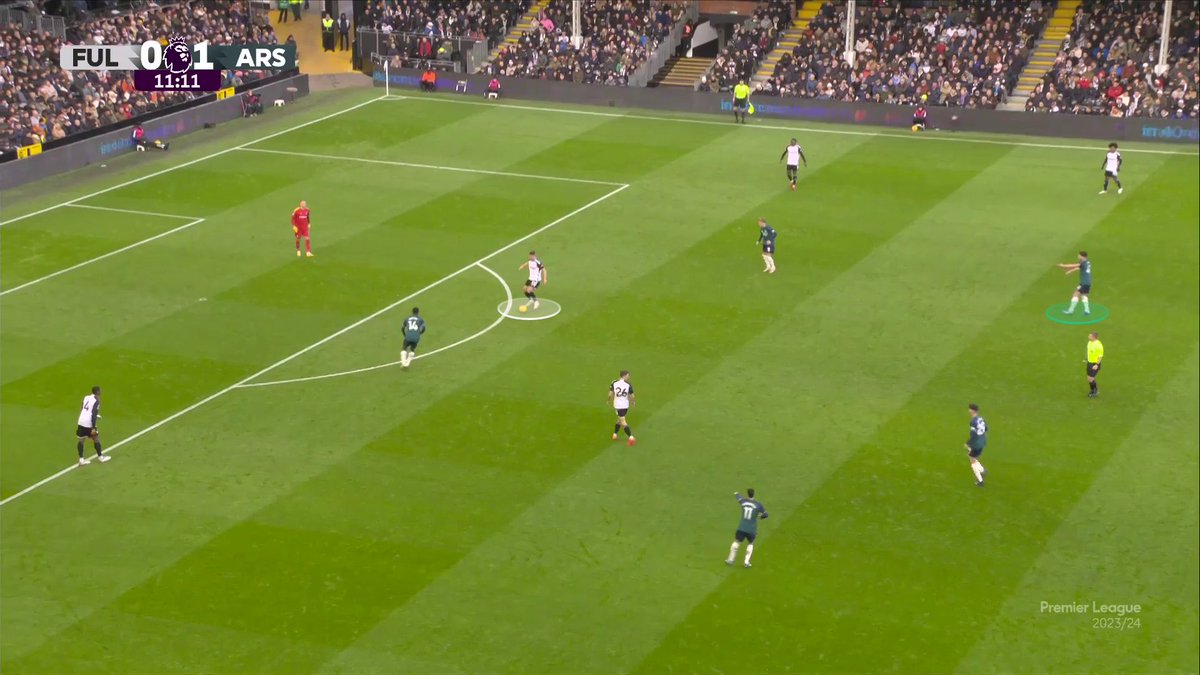
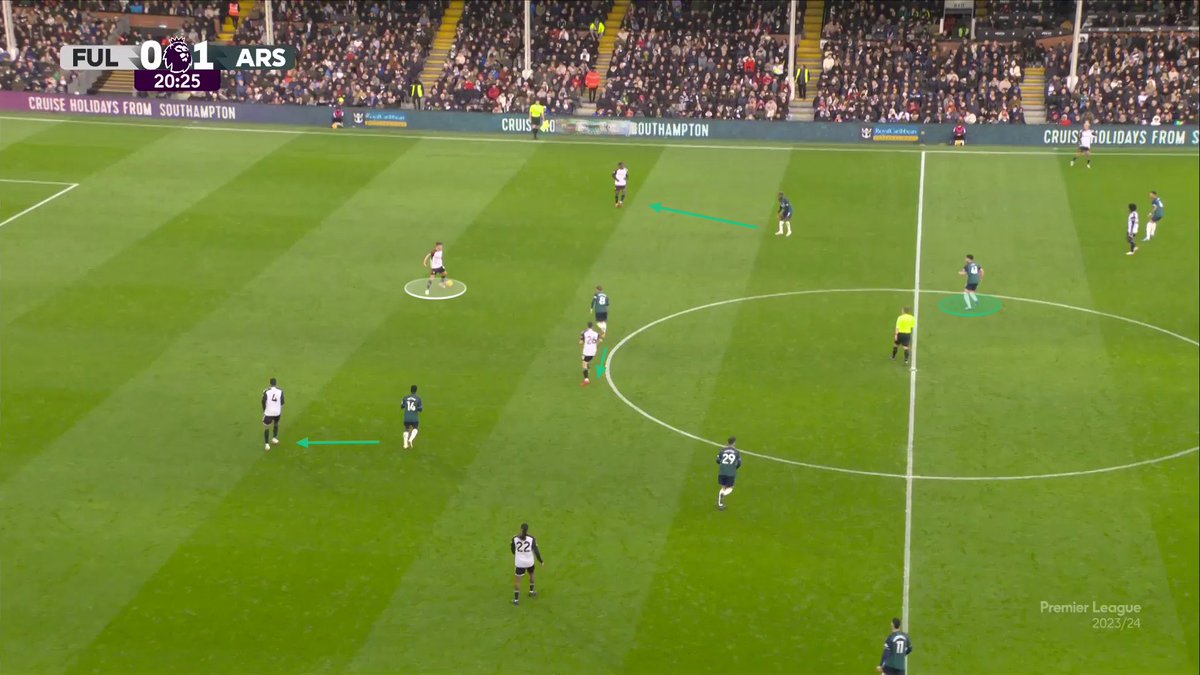
Also, because Arsenal could not keep the ball as well as they usually do, it negatively impacted their ability to counterpress high.
Arsenal lacked control in AND out of possession.
That led to Fulham being able to reliably get success as Arsenal failed to exert control.
Arsenal lacked control in AND out of possession.
That led to Fulham being able to reliably get success as Arsenal failed to exert control.
However, because Arsenal are a tactically intelligent team, they often adapted to Fulham's shape with success.
Ødegaard dropped to mark Cairney, Havertz pushed high to mark Palhinha, Saka inverted centrally, White pushed high on the side, and Saliba backed up the press out wide.
Ødegaard dropped to mark Cairney, Havertz pushed high to mark Palhinha, Saka inverted centrally, White pushed high on the side, and Saliba backed up the press out wide.
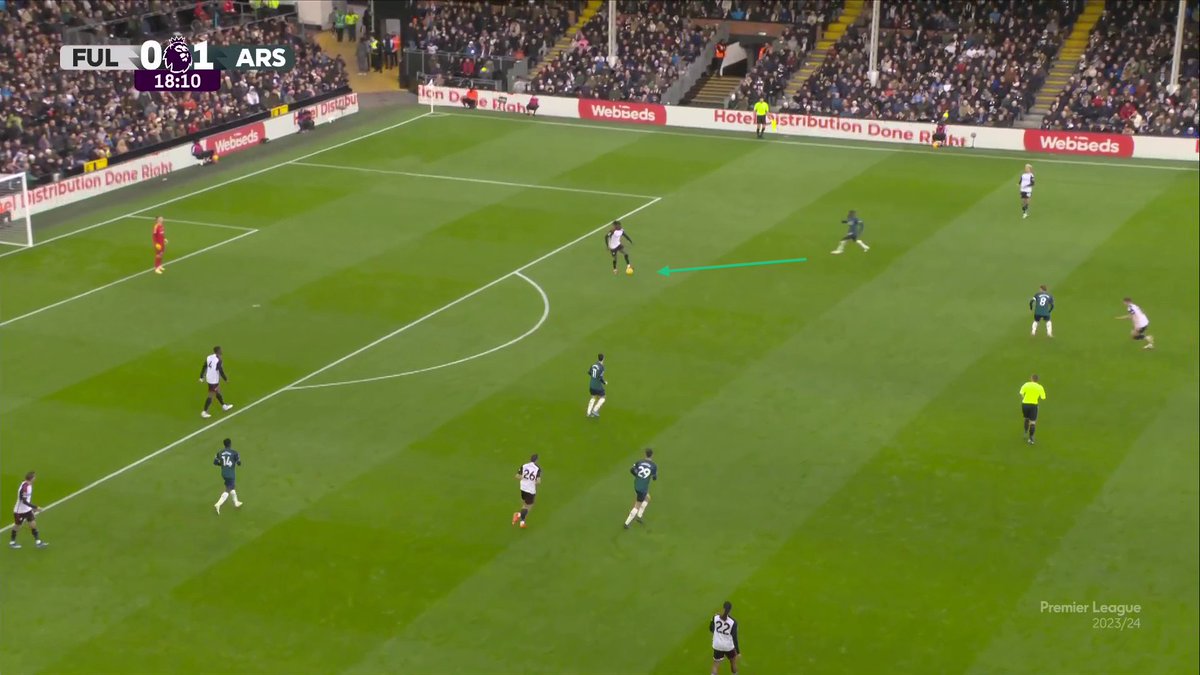
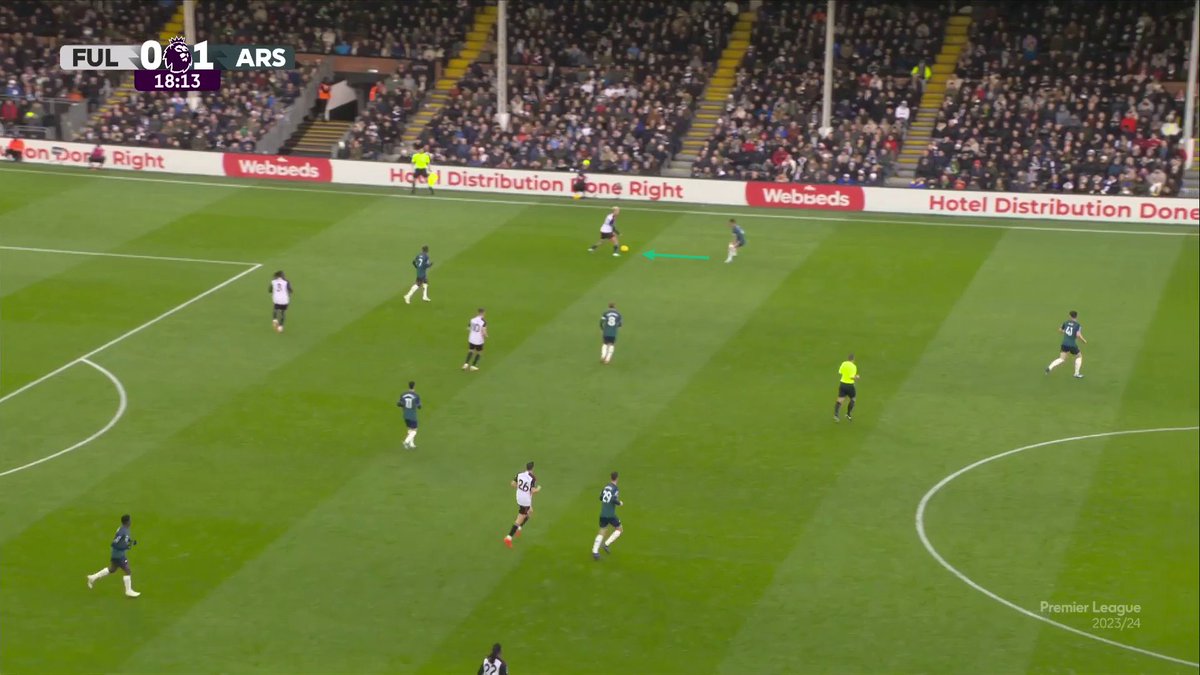

However, the effectiveness of this was inconsistent because it was not in line with the initial game plan.
It led to hesitancy and confusion from Arsenal which meant that Fulham often had a spare man in the build-up.
Arsenal struggled in particular with pressing down the sides.
It led to hesitancy and confusion from Arsenal which meant that Fulham often had a spare man in the build-up.
Arsenal struggled in particular with pressing down the sides.
Although they did time the press well on occasion, sometimes Saka failed to invert to press Bassey. Ødegaard tried to orchestrate the press but it did not work reliably.
Then, on other occasions, when Saka did invert, White and Saliba did not push high to back up the press.
Then, on other occasions, when Saka did invert, White and Saliba did not push high to back up the press.
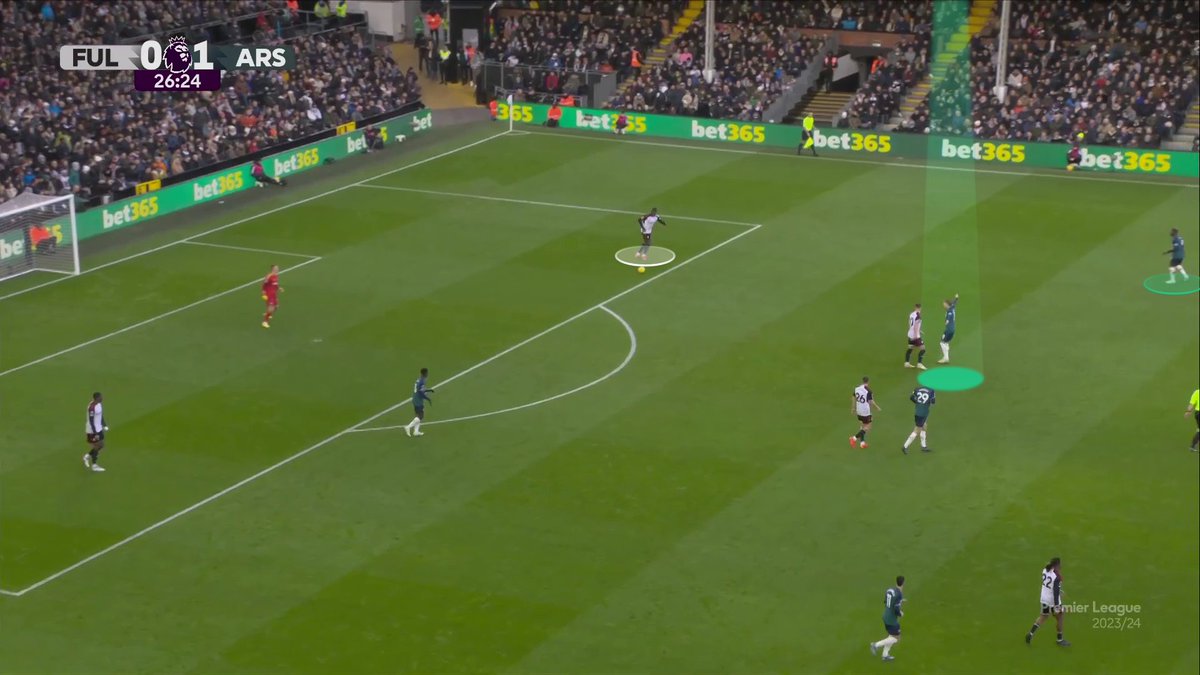
Arsenal were a shell of themselves in and out of possession, and even though they did have an overload in the build-up against Fulham's shadow-marking oriented 4-4-2 mid-block, they often failed to use it due to their struggles in the press & with Kiwior only sometimes inverting.
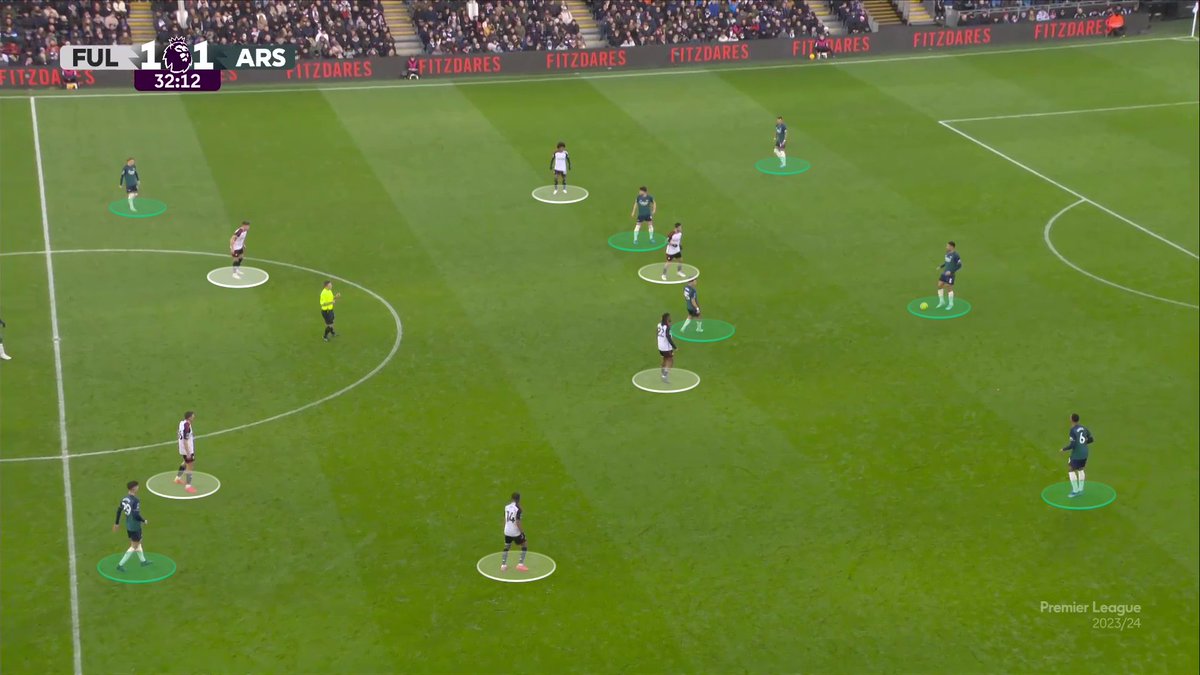
Arsenal did manipulate Fulham's press on occasion to attract pressure and find the spare man, but they did not do it reliably enough.
Rice in particular excelled in possession in this game (despite nonsensical narratives on social media), and he often broke lines for Arsenal.
Rice in particular excelled in possession in this game (despite nonsensical narratives on social media), and he often broke lines for Arsenal.
However, when Arsenal did progress play, Fulham often dropped De Cordova-Reid into the last line of defence to prevent their last line of 4 from being overloaded with Arsenal's line of 5 in attack.
This led to Fulham being tough to break down in both the first & the second half.
This led to Fulham being tough to break down in both the first & the second half.
It took until the second half for Arteta to restore some parity for Arsenal.
He took Kiwior off for the returning Tomiyasu who inverted into midfield straight away & consistently operated in central zones.
It saw Arsenal's typical dynamics return in their 4-2-5 ➡️ 3-2-5 shape.
He took Kiwior off for the returning Tomiyasu who inverted into midfield straight away & consistently operated in central zones.
It saw Arsenal's typical dynamics return in their 4-2-5 ➡️ 3-2-5 shape.
Then, out of possession, Arteta reinstated what needed to be done in the press against Fulham's new-look build-up shape.
The half started positively and Arsenal even began to push Fulham back and sustain some pressure high and use their overload against their mid-block.
The half started positively and Arsenal even began to push Fulham back and sustain some pressure high and use their overload against their mid-block.
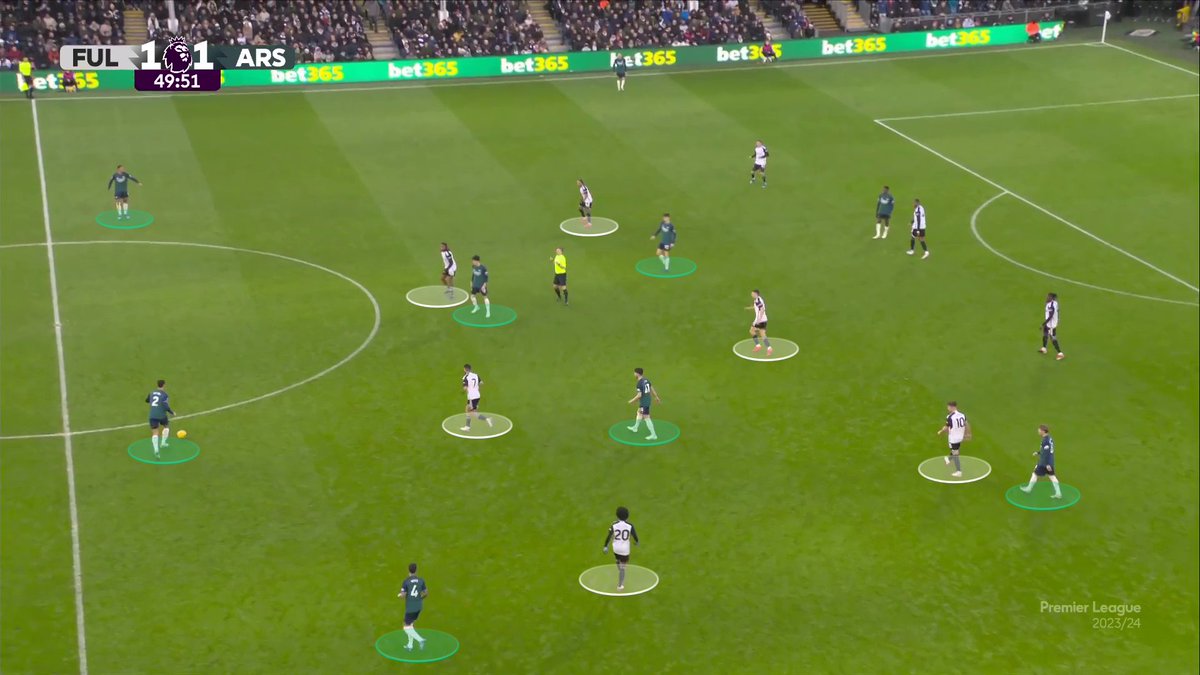
However, Arsenal's press waned.
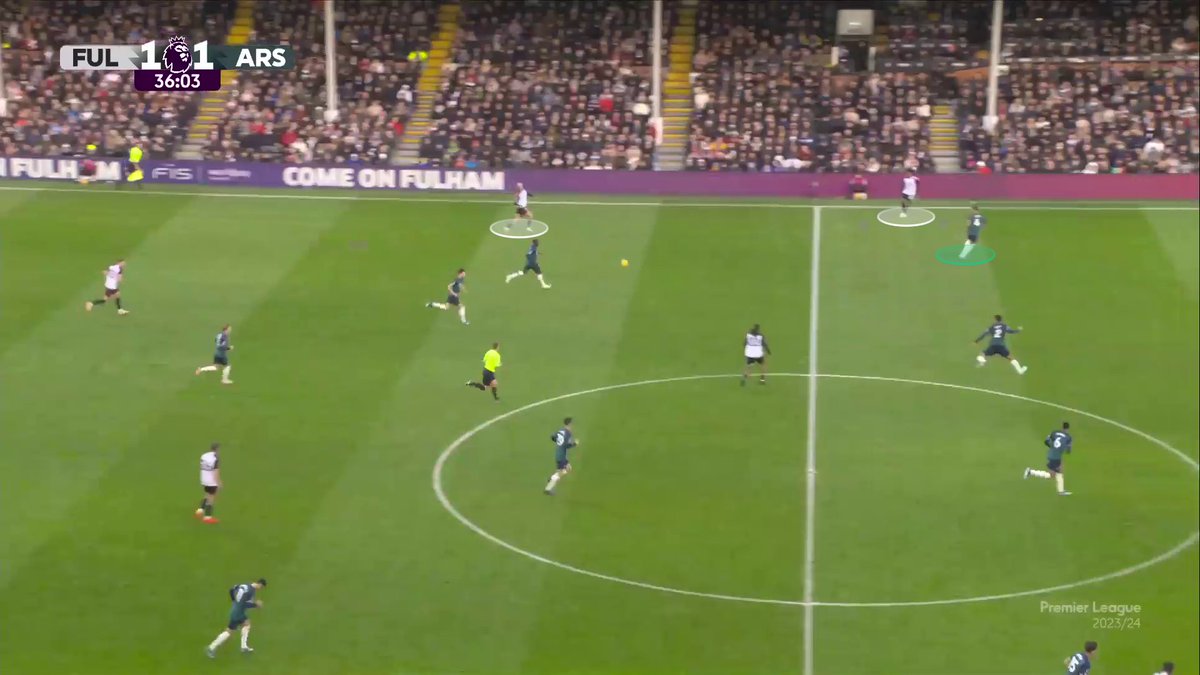
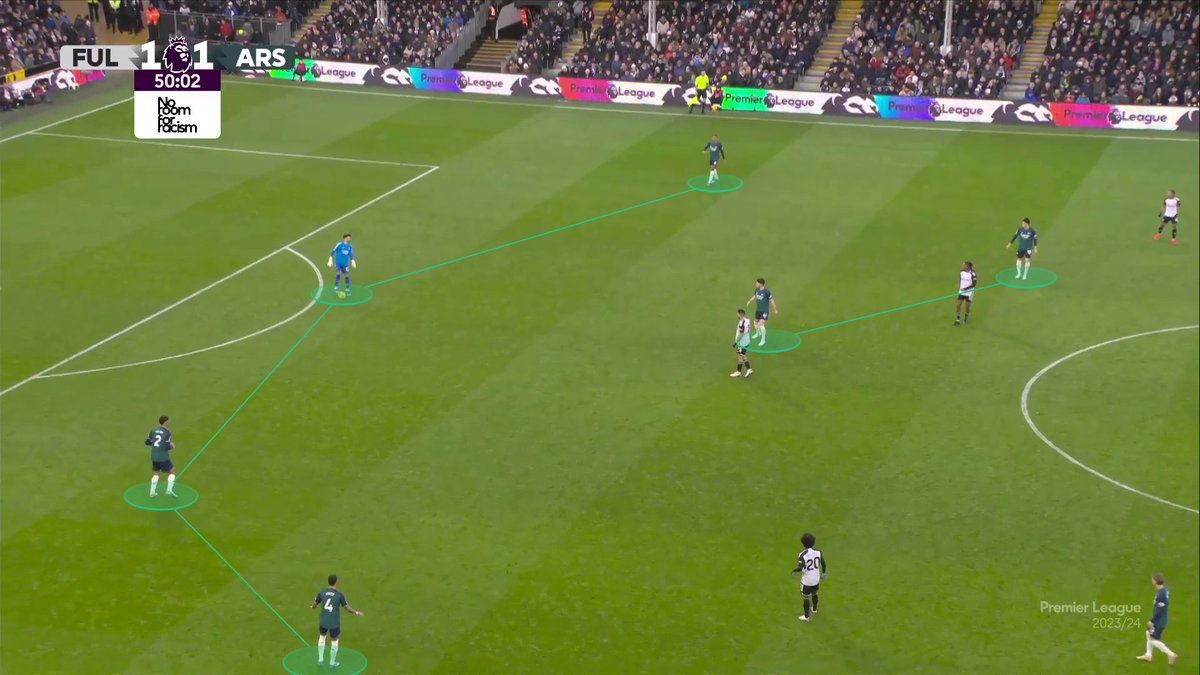
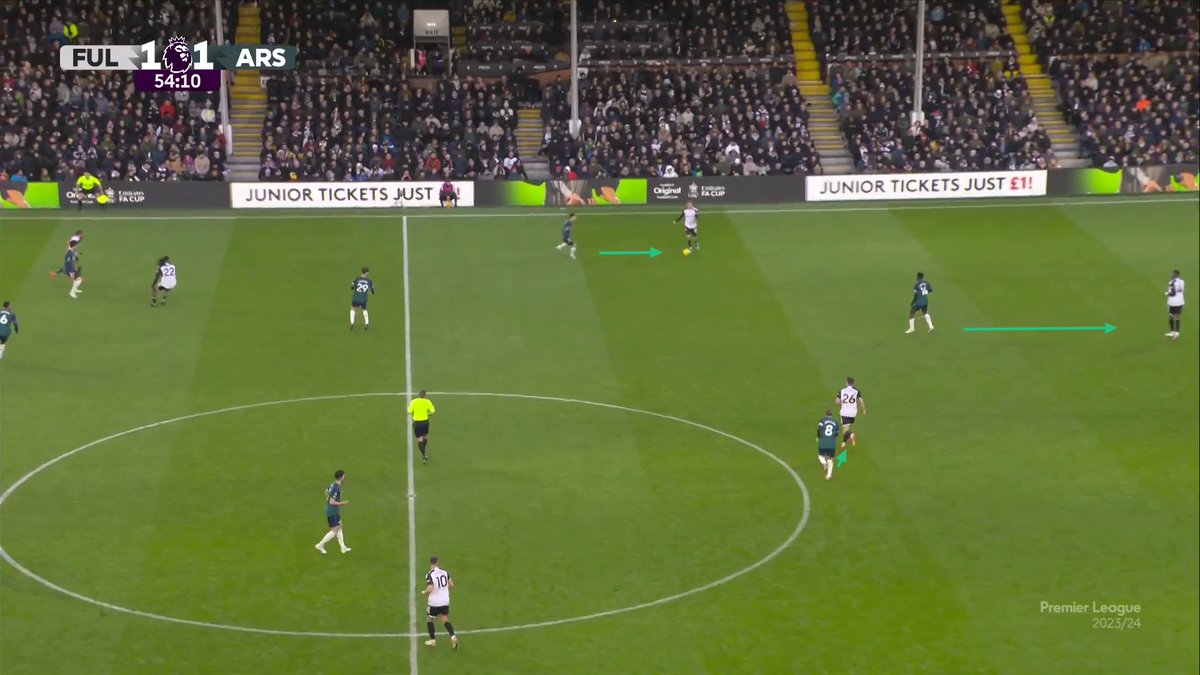
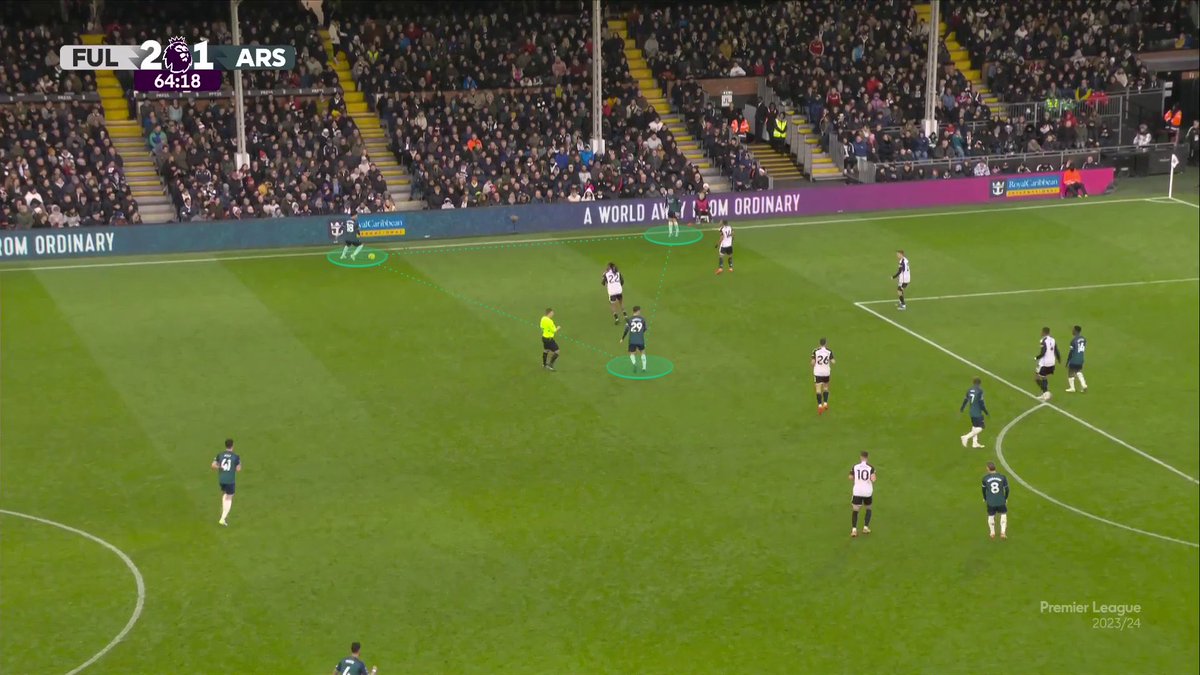
Arsenal tried to match up with Fulham on the left-hand side of their press, Fulham recycled & circulated, but Saka was nowhere to be seen to press Bassey (pic 2).
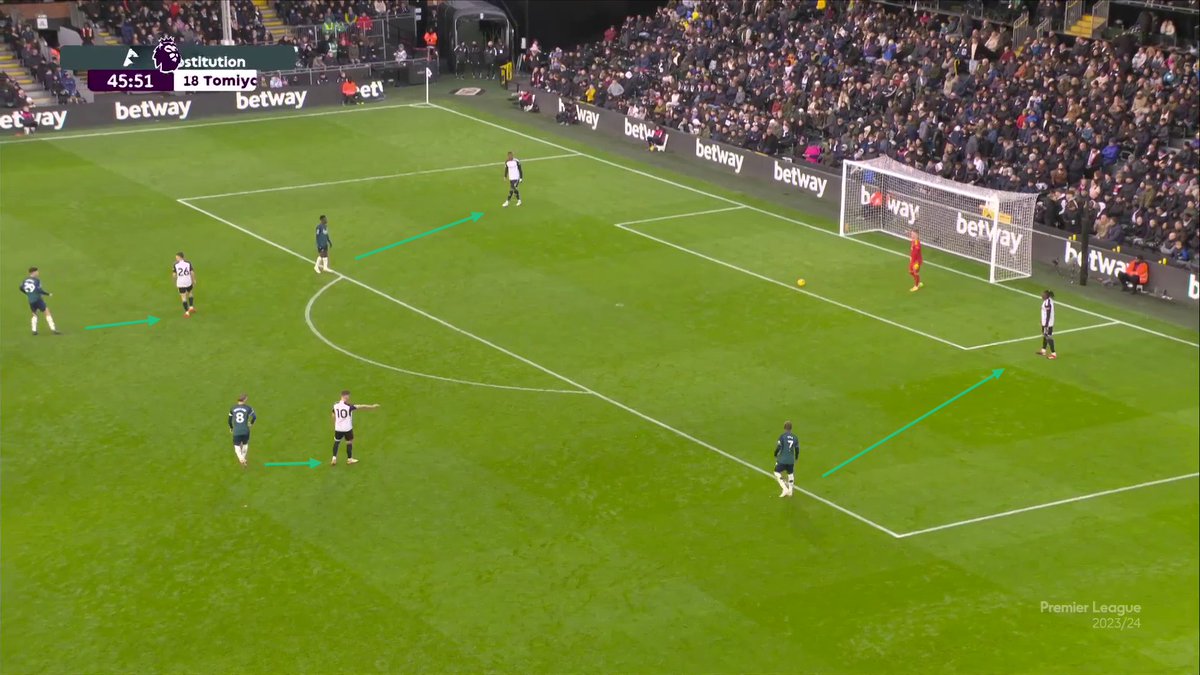
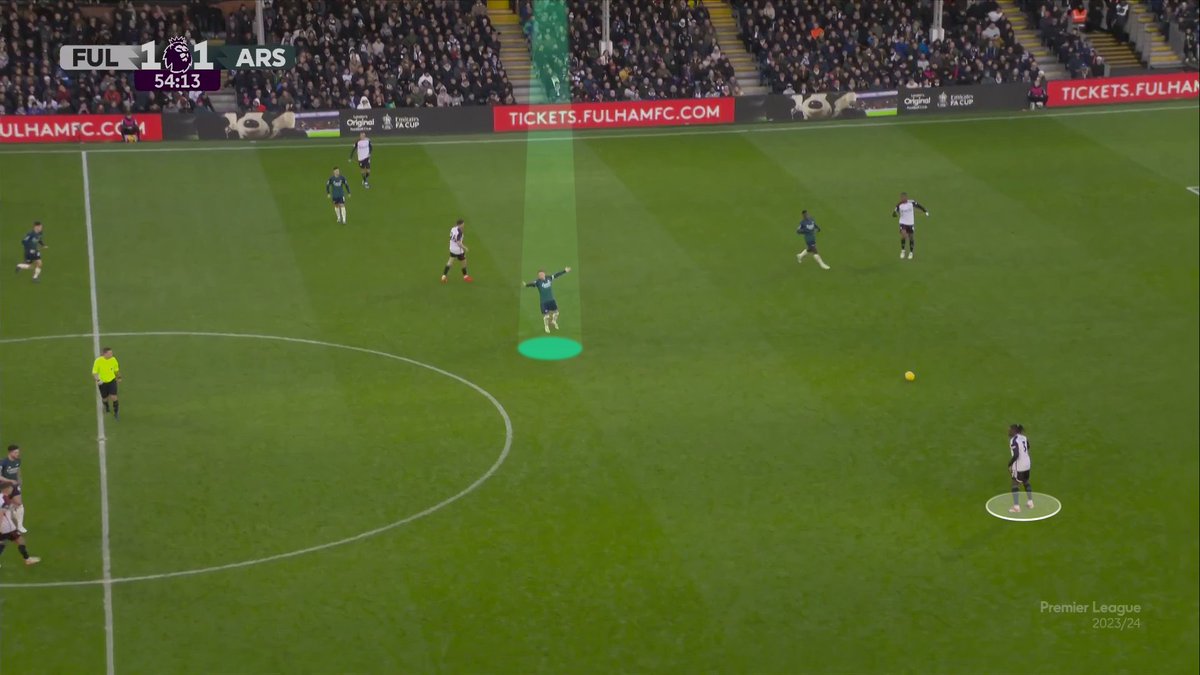
This also happened on Martinelli's side (pic 3).
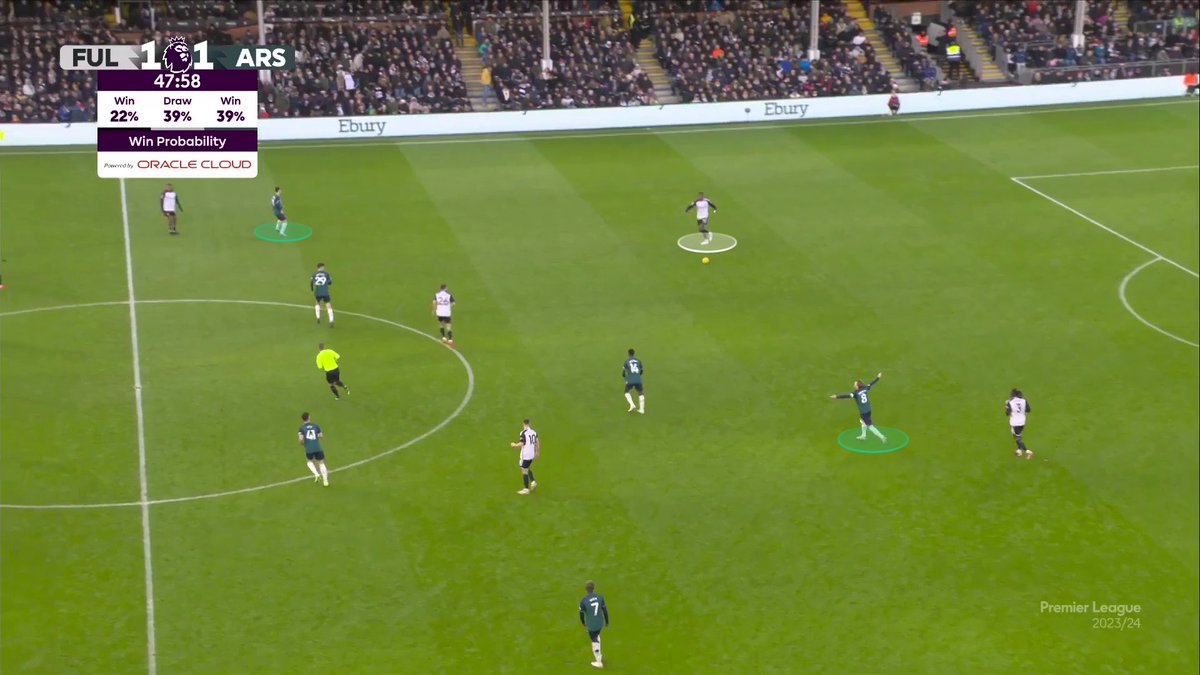
Ødegaard was visibly frustrated.
Arsenal tried to match up with Fulham on the left-hand side of their press, Fulham recycled & circulated, but Saka was nowhere to be seen to press Bassey (pic 2).
This also happened on Martinelli's side (pic 3).
Ødegaard was visibly frustrated.
Arsenal's control on the game was suboptimal yet again as a result of that.
They were unlucky to concede a scruffy goal from a corner to go 2-1 down, but it was a consequence of the lack of control exerted on the game.
Then, for the last 30 mins, they had to 'chase the game'.
They were unlucky to concede a scruffy goal from a corner to go 2-1 down, but it was a consequence of the lack of control exerted on the game.
Then, for the last 30 mins, they had to 'chase the game'.
The problem was Arsenal created little-to-nothing.
The trio of Tomiyasu, Havertz, and Martinelli struggled to create on the left (unsurprisingly so), and the dynamics on the right were suboptimal with Ødegaard constantly probing but never providing meaningful overlaps for Saka.
The trio of Tomiyasu, Havertz, and Martinelli struggled to create on the left (unsurprisingly so), and the dynamics on the right were suboptimal with Ødegaard constantly probing but never providing meaningful overlaps for Saka.
So, what is there to make from all of this?
Well, the first half is excusable because Fulham set up in a way that Arteta did not expect & although he could bring Tomiyasu on, he was not fully fit.
Arsenal were without THREE of their first-choice left-backs. Kiwior can't invert.
Well, the first half is excusable because Fulham set up in a way that Arteta did not expect & although he could bring Tomiyasu on, he was not fully fit.
Arsenal were without THREE of their first-choice left-backs. Kiwior can't invert.
Then, in the second half, Arteta adjusted tactically to mitigate Arsenal's issues, but football is a difficult game to swing momentum in when control is not exerted from early on.
The players are naturally more fatigued and the opposition have confidence in their game.
The players are naturally more fatigued and the opposition have confidence in their game.
Arteta's changes helped the team improve structurally in possession but the team were not in a position to press effectively due to the first half 'hangover'.
This saw them fail to exert optimal control & Fulham punished them.
Criticism is warranted in the last 30 mins, though.
This saw them fail to exert optimal control & Fulham punished them.
Criticism is warranted in the last 30 mins, though.
Ødegaard is a great player, but he hampers Saka because he does not provide a two-way threat which means he rarely pulls markers away from him so Saka has to operate in near-impossible conditions.
Ødegaard should have been moved to the left to add dynamism that that side needed.
Ødegaard should have been moved to the left to add dynamism that that side needed.
Arsenal have some legitimate issues offensively which Arteta needs to resolve, but their control will improve drastically.
Don't expect to see Arsenal play like that again (at least reliably), particularly as players begin to return from injury and the dynamics improve..
🛑
Don't expect to see Arsenal play like that again (at least reliably), particularly as players begin to return from injury and the dynamics improve..
🛑
Loading suggestions...