
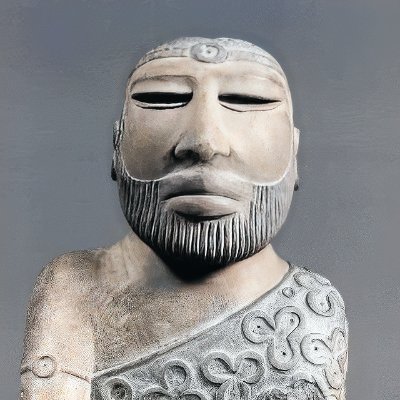
Get ready to be captivated as we unveil the incredible story of Draupadi Cheerharan and Krishna's intervention, dating back to the 12th and 13th centuries. 📚🔍
This will be a long #Thread, so make sure to bookmark it and retweet!
1/16
This will be a long #Thread, so make sure to bookmark it and retweet!
1/16

In the epic Mahabharata, specifically in the Sabhāparvan (61.35-38), there is a dramatic scene:
1. Draupadi is forcefully brought into the gaming hall.
2. Karṇa instructs Duḥśāsana to strip both the Pānḍavas and Draupadī of their garments (61.38).
3. The Pāṇḍavas respond by removing their upper garments.
4. Subsequently, Duḥśāsana attempts to remove Draupadī's single cloth in front of everyone present.
Interestingly, this attempted stripping is rarely mentioned thereafter. In this analysis, we will explore this contradiction in greater detail.
2/16
1. Draupadi is forcefully brought into the gaming hall.
2. Karṇa instructs Duḥśāsana to strip both the Pānḍavas and Draupadī of their garments (61.38).
3. The Pāṇḍavas respond by removing their upper garments.
4. Subsequently, Duḥśāsana attempts to remove Draupadī's single cloth in front of everyone present.
Interestingly, this attempted stripping is rarely mentioned thereafter. In this analysis, we will explore this contradiction in greater detail.
2/16

The Critical Edition (CE) of the Mahābhārata, published by the Bhandarkar Oriental Institute (BORI) in Pune from 1933 to 1966, is widely considered as the definitive source for establishing the textual canon of the epic. However, after half a century, there are valid reasons to critically examine its claim of being the best available manuscript version.
The BORI's critical affirmation of disrob and rerob is challenging in view of the following
-BORI referred to Oldest manuscript a 12th century, Nepali palm-leaf manuscript– yes a Nepali manuscript applied to Mbh of Bharat
-BORI didnt refer to older text by Abu Saleh’s Instruction of Princes (1026) (astonishing account of the Kurus and Pāṇḍavas as viewed from Sindh with no mention of Kr̥ṣṇa.)
-Oḍīya and Nandināgarī manuscripts examined. Edgerton, editor of the Sabhā Parva of the CE, refers to a complete manuscript, a continuous roll in Devanagari, in the Bharat Itihasa Sanshodhaka Mandal of Pune, which he could not obtain for study. 3 The National Mission for Manuscripts has to find and document it for the revised edition of the Mahābhārata.
-Razmnama (1584), the Persian version of the epic (including Harivaṁśa) that Akbar commissioned, although it was contemporaneous with the manuscripts depended upon for the CE
3/16
The BORI's critical affirmation of disrob and rerob is challenging in view of the following
-BORI referred to Oldest manuscript a 12th century, Nepali palm-leaf manuscript– yes a Nepali manuscript applied to Mbh of Bharat
-BORI didnt refer to older text by Abu Saleh’s Instruction of Princes (1026) (astonishing account of the Kurus and Pāṇḍavas as viewed from Sindh with no mention of Kr̥ṣṇa.)
-Oḍīya and Nandināgarī manuscripts examined. Edgerton, editor of the Sabhā Parva of the CE, refers to a complete manuscript, a continuous roll in Devanagari, in the Bharat Itihasa Sanshodhaka Mandal of Pune, which he could not obtain for study. 3 The National Mission for Manuscripts has to find and document it for the revised edition of the Mahābhārata.
-Razmnama (1584), the Persian version of the epic (including Harivaṁśa) that Akbar commissioned, although it was contemporaneous with the manuscripts depended upon for the CE
3/16

Akbar embarked on an ambitious endeavor and formed an editorial board that laid the foundation for the CE's.
The board consisted of notable individuals like Debi Misra (author of Bhārata artha dīpikā?), Chaturbhuja Misra (author of Bhārata upāya prakāsaka bhārata tātparya prakāśikā) from Bengal, Satavadana, Madhusudana Misra (editor of Mahānātakam), Rudra Bhattacaraj, and Sheikh Bhawan (a Dakhini Brahmin convert).
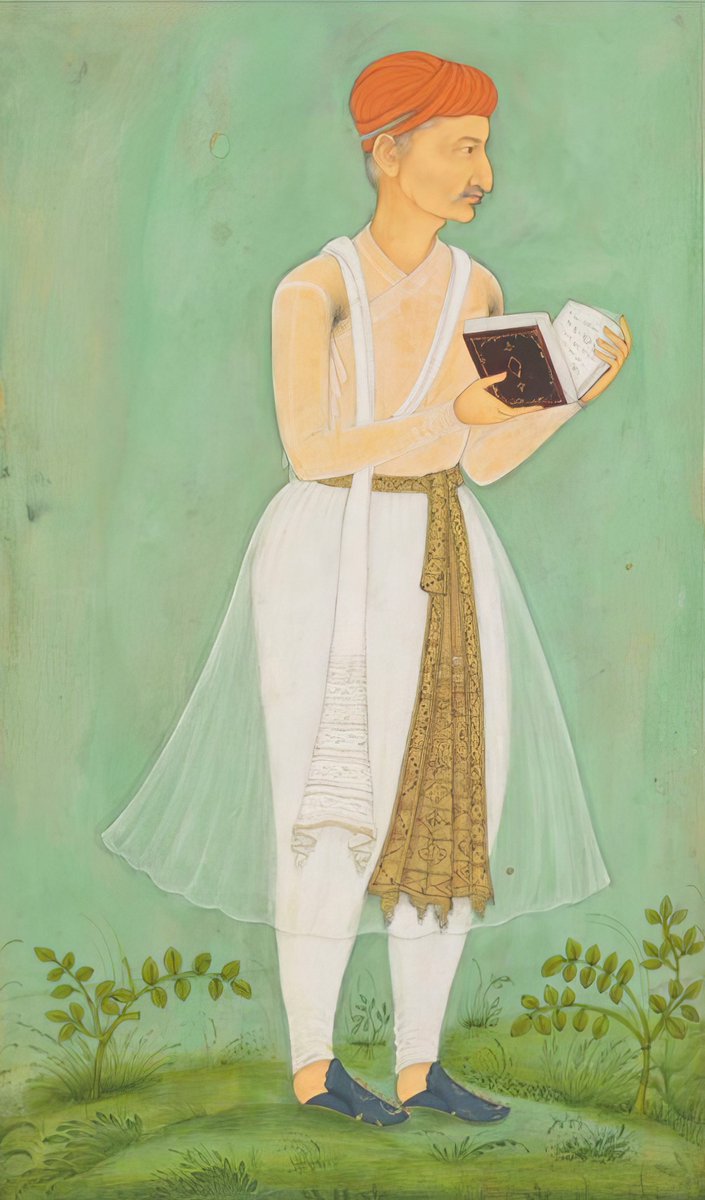
Naqib Khan supervised the translation of the #Sanskrit epic Mahabharata into Persian for Mughal Emperor Akbar. Sadly, Naqib Khan passed away on Friday, 23 May 1614, and was laid to rest within the Dargah at Ajmer Sharif.
For more information, visit: [royalcollection.org.uk]
4/16
The board consisted of notable individuals like Debi Misra (author of Bhārata artha dīpikā?), Chaturbhuja Misra (author of Bhārata upāya prakāsaka bhārata tātparya prakāśikā) from Bengal, Satavadana, Madhusudana Misra (editor of Mahānātakam), Rudra Bhattacaraj, and Sheikh Bhawan (a Dakhini Brahmin convert).
Naqib Khan supervised the translation of the #Sanskrit epic Mahabharata into Persian for Mughal Emperor Akbar. Sadly, Naqib Khan passed away on Friday, 23 May 1614, and was laid to rest within the Dargah at Ajmer Sharif.
For more information, visit: [royalcollection.org.uk]
4/16
Hiltebeitel (2001) argues that Krishna's intervention to protect Draupadi's modesty, as described in the CE, is supported by two verses from the Udyogaparvan exhorting Keśava (V.80.26), and Kr̥ṣṇa speaking to Saṁjaya (V.58.21). In these verses, Draupadi appeals to Krishna for rescue, using the phrase "O Govinda." However, it is worth noting that neither Draupadi nor Krishna explicitly mention the attempted stripping. This raises the question of why Krishna would intervene miraculously if Draupadi was not being stripped.
Furthermore, when Draupadi and Krishna meet for the first time after the dice-duel during their forest exile, Draupadi mentions being manhandled kr̥ṣyeta (III.13.60), dragged around the hall with her one piece of clothing while menstruating, and molested. She also refers to being held by her hair kacagrahamanuprāptā (III.13.107, 109). However, she does not specifically mention any attempt to strip her.
Krishna responds by stating that had he been present, he would have prevented the fraudulent dice-game, but he was away battling Shalva Dvārakā (III.14.1), who had attacked Dwaraka. He does not mention any knowledge of an attempt to strip Draupadi or any telepathic communication from her.
5/16
Furthermore, when Draupadi and Krishna meet for the first time after the dice-duel during their forest exile, Draupadi mentions being manhandled kr̥ṣyeta (III.13.60), dragged around the hall with her one piece of clothing while menstruating, and molested. She also refers to being held by her hair kacagrahamanuprāptā (III.13.107, 109). However, she does not specifically mention any attempt to strip her.
Krishna responds by stating that had he been present, he would have prevented the fraudulent dice-game, but he was away battling Shalva Dvārakā (III.14.1), who had attacked Dwaraka. He does not mention any knowledge of an attempt to strip Draupadi or any telepathic communication from her.
5/16
Collateral evidence:
In the prose passage preceding sloka 7, Duḥśāsana is depicted as seizing Draupadī's hair. Kr̥ṣṇa exclaims, draupadī keśadharṣaṇam, which translates to "Draupadī's hair being violated!" In 1916, Winternitz compared Bhāsa's Dūtavākyam with the Mahābhārata and demonstrated that Kr̥ṣṇa's act of reclothing Draupadī was an interpolation added after the 4th century CE.
In the second play, Ghaṭotkaca reproaches Duryodhana, stating,
śirasi na tathā bhrātuḥ patniṁ spr̥ śanti niśācarāḥ, meaning "nor do night-wanderers (Rākṣasas) ever touch the brother's wife on the head" (sloka 47), referring to Draupadī being dragged by her hair. This echoes what he says in the Bhīṣmaparvan VI.87.26.
In the third play, Duryodhana mentions how Draupadī was dragged by the hair during the dicing, expressed as yat kr̥ṣ
kr̥ṣṭā karanigrahāñcitakacā dyūte tadā draupadī, “How Draupadī was dragged by the hair in the dicing” (sloka 63)
6/16
In the prose passage preceding sloka 7, Duḥśāsana is depicted as seizing Draupadī's hair. Kr̥ṣṇa exclaims, draupadī keśadharṣaṇam, which translates to "Draupadī's hair being violated!" In 1916, Winternitz compared Bhāsa's Dūtavākyam with the Mahābhārata and demonstrated that Kr̥ṣṇa's act of reclothing Draupadī was an interpolation added after the 4th century CE.
In the second play, Ghaṭotkaca reproaches Duryodhana, stating,
śirasi na tathā bhrātuḥ patniṁ spr̥ śanti niśācarāḥ, meaning "nor do night-wanderers (Rākṣasas) ever touch the brother's wife on the head" (sloka 47), referring to Draupadī being dragged by her hair. This echoes what he says in the Bhīṣmaparvan VI.87.26.
In the third play, Duryodhana mentions how Draupadī was dragged by the hair during the dicing, expressed as yat kr̥ṣ
kr̥ṣṭā karanigrahāñcitakacā dyūte tadā draupadī, “How Draupadī was dragged by the hair in the dicing” (sloka 63)
6/16
Rājaśekhara’s Bālabhārata (c. 10th century CE) is unaware of the re-clothing of Draupadī by Kr̥ṣṇa.
Rājaśekhara's Bālabhārata is a 10th-century Sanskrit play based on the Mahābhārata. It is also known as Pracandapāṇḍava. The play is incomplete and is considered a companion Nāṭaka to the Mahābhārata story.
Neither the Vaishnava Bhakti cult’s Bhāgavata, nor the appendix to the epic, Harivaṁṣa, mentions any attempted stripping, despite their focus on the miraculous deeds of Kr̥ṣṇa. The former refers only to the heinous act of the Kuru lady being dragged by her hair (keśabhimarśam) in the assembly hall but not to Kr̥ṣṇa rescuing her miraculously from being stripped (I. 86; I. 15.10; III.1.7; XI.1.2.)
In the Devi Bhāgavata Purāṇa Janamejaya refers twice only to Draupadī being dragged by her hair (IV.1.36 and 17.38), using the word dharṣitā (IV.1.38), which also means “violated”, for what Kīcaka did to her. Yudhiṣṭhira uses the same word while giving Saṁjaya his message, keśeṣv adharṣayat (Mahābhārata, V.31.16).
7/16
Rājaśekhara's Bālabhārata is a 10th-century Sanskrit play based on the Mahābhārata. It is also known as Pracandapāṇḍava. The play is incomplete and is considered a companion Nāṭaka to the Mahābhārata story.
Neither the Vaishnava Bhakti cult’s Bhāgavata, nor the appendix to the epic, Harivaṁṣa, mentions any attempted stripping, despite their focus on the miraculous deeds of Kr̥ṣṇa. The former refers only to the heinous act of the Kuru lady being dragged by her hair (keśabhimarśam) in the assembly hall but not to Kr̥ṣṇa rescuing her miraculously from being stripped (I. 86; I. 15.10; III.1.7; XI.1.2.)
In the Devi Bhāgavata Purāṇa Janamejaya refers twice only to Draupadī being dragged by her hair (IV.1.36 and 17.38), using the word dharṣitā (IV.1.38), which also means “violated”, for what Kīcaka did to her. Yudhiṣṭhira uses the same word while giving Saṁjaya his message, keśeṣv adharṣayat (Mahābhārata, V.31.16).
7/16
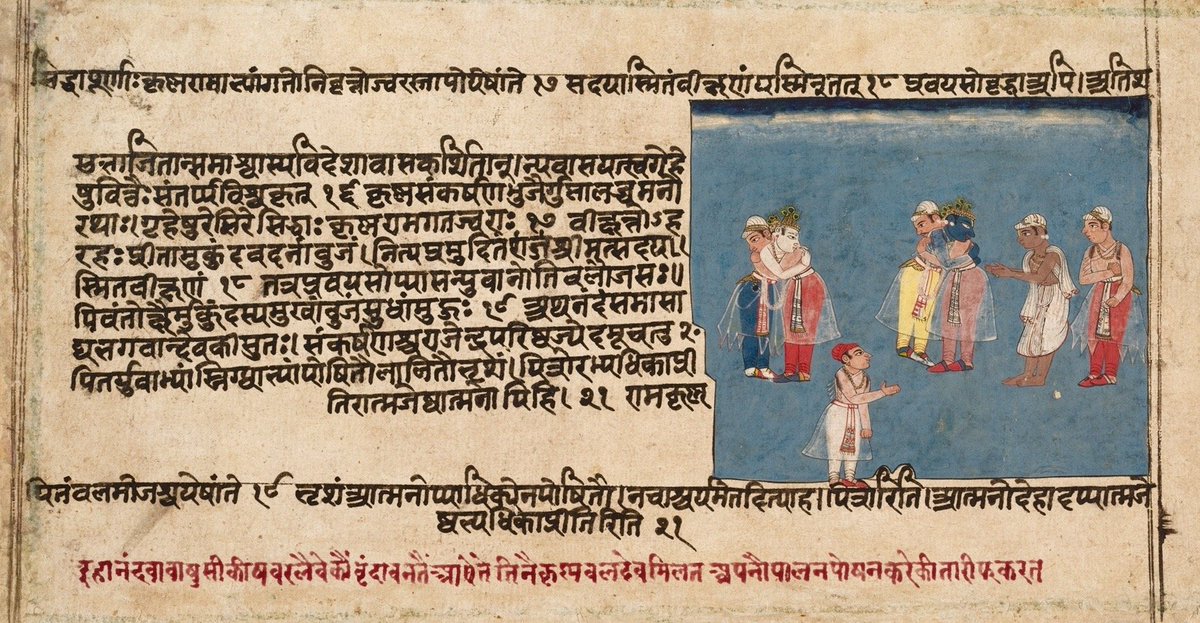
Śiva Purāṇa (c. 11th century CE) that we find a reference to the incident (III.19.63-66). Here the stream of garments is the result of Durvāsā’s boon to Draupadī for having torn off part of her dress to protect the sage’s modesty when his loincloth was swept away in the Ganga.43 Kr̥ṣṇa plays no role in this. There is also the popular tale of Draupadī binding up his bleeding finger with a strip of her garment because of which he provides her an endless stream of cloth in the dicing hall.
8/16
8/16
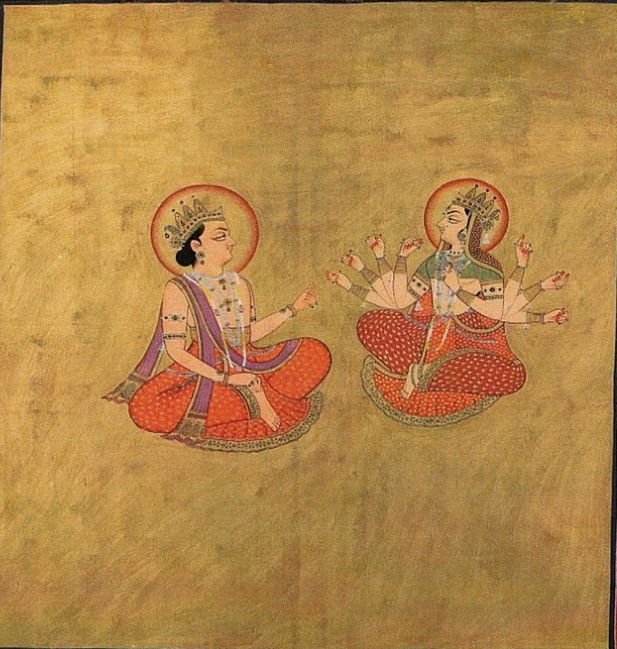
In the Jaiminīya Aśvamedhaparvan, which is believed to be a late work from the 10th-12th century AD, there is a reference to the disrobing incident (2.62). In this text, Krishna pays the Pandavas an unexpected visit while they are contemplating how to proceed with the horse-sacrifice. Draupadi reminds them that they should not be surprised because Krishna had previously appeared to save them from Durvasa's wrath, and "Before that, Hari appeared in the form of clothes in the assembly (vastrarūpī sabhāmadhye) to save me from shame."
9/16
9/16
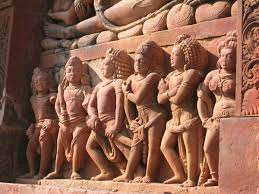
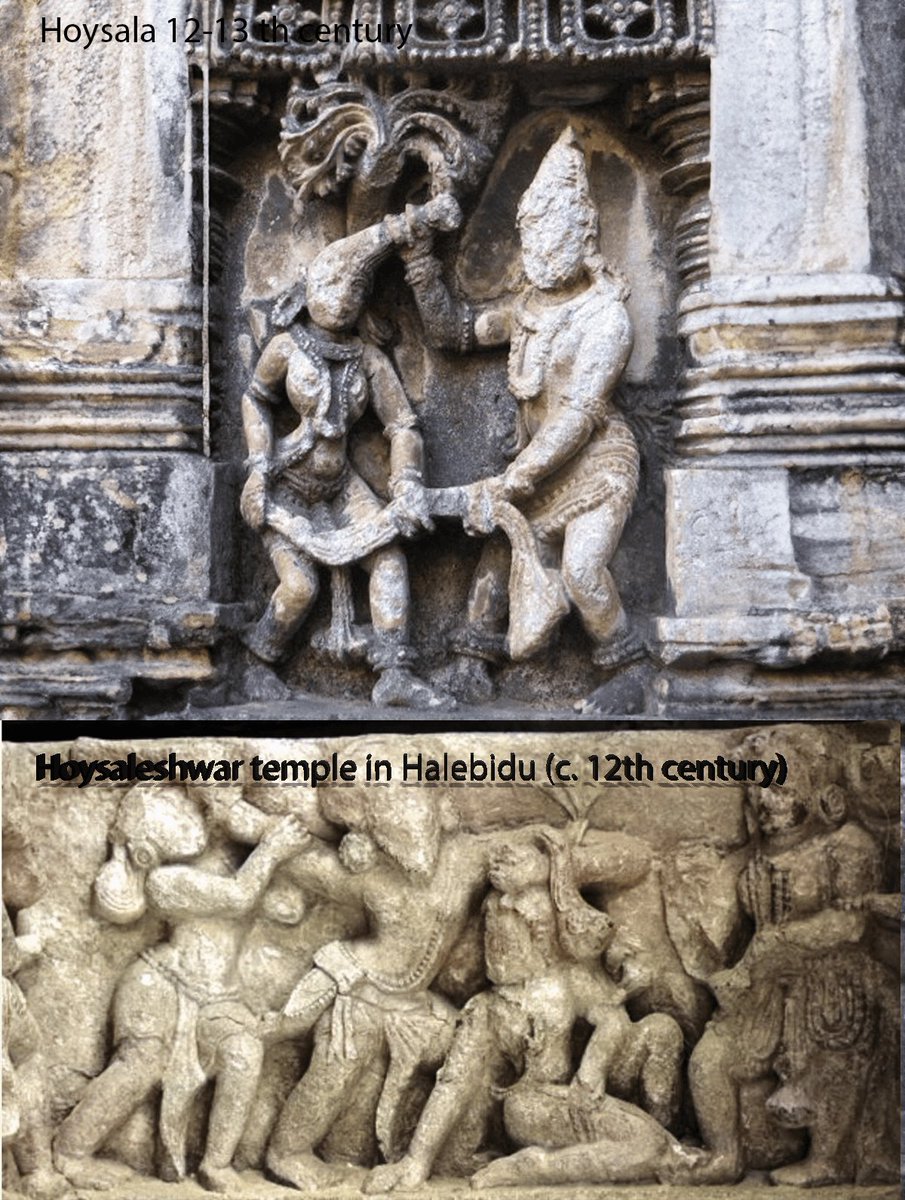
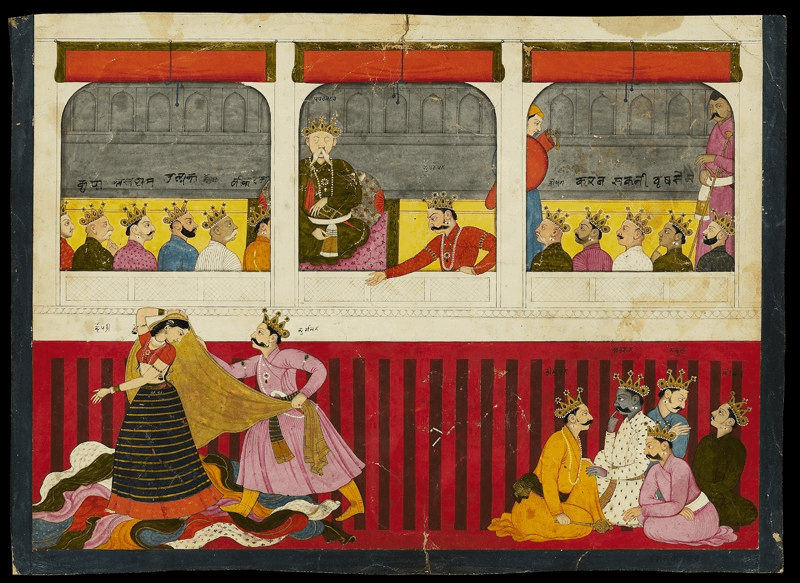
Adluri and Hiltebeitel have attempted to support their argument in favor of the disrobing episode by referencing a painting, possibly by Nainsukh (c. 1760/65), depicting the incident. However, the much older sculpture in the Hoysaleshwar temple in Halebidu (c. 12th century) only shows Draupadī being held by her hair, with one person approaching her while another restrains the male tormentor.
The second picture, showing Dushashana holding Draupadi by her hair and seemingly attempting to remove her robe, also dates back to the 12th-13th century.
In both images, Draupadi is not depicted as submissive. Instead, she appears to resist with pride.
10/16
The second picture, showing Dushashana holding Draupadi by her hair and seemingly attempting to remove her robe, also dates back to the 12th-13th century.
In both images, Draupadi is not depicted as submissive. Instead, she appears to resist with pride.
10/16
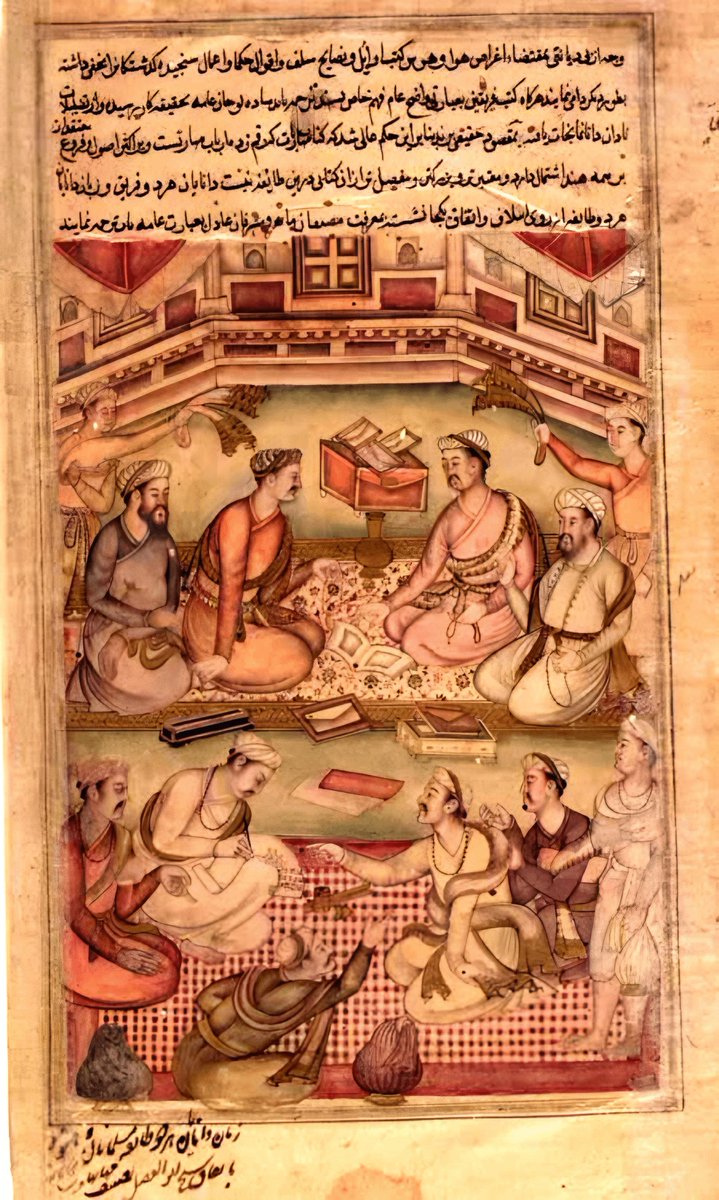
The depiction of the dice game is absent in sculpture and painting until we reach Akbar's Razmnama (1598-99). It is in this work that the stripping of Draupadi is portrayed for the first time. This is why it is crucial to compare its text with the Sanskrit manuscripts.
Check out Pic 2 by Basawan and Dhanu: [link](commons.wikimedia.org)
11/16
Check out Pic 2 by Basawan and Dhanu: [link](commons.wikimedia.org)
11/16
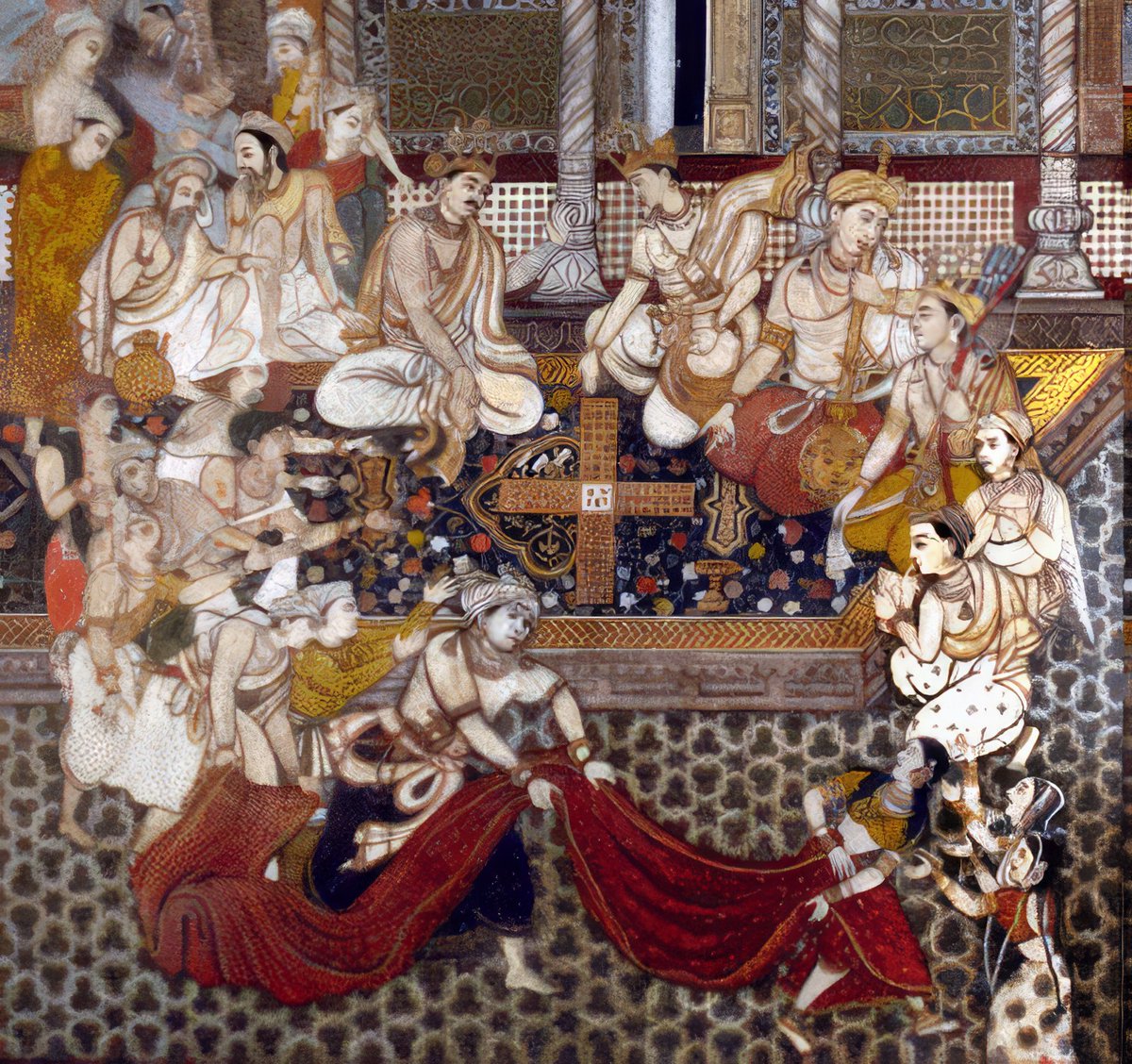
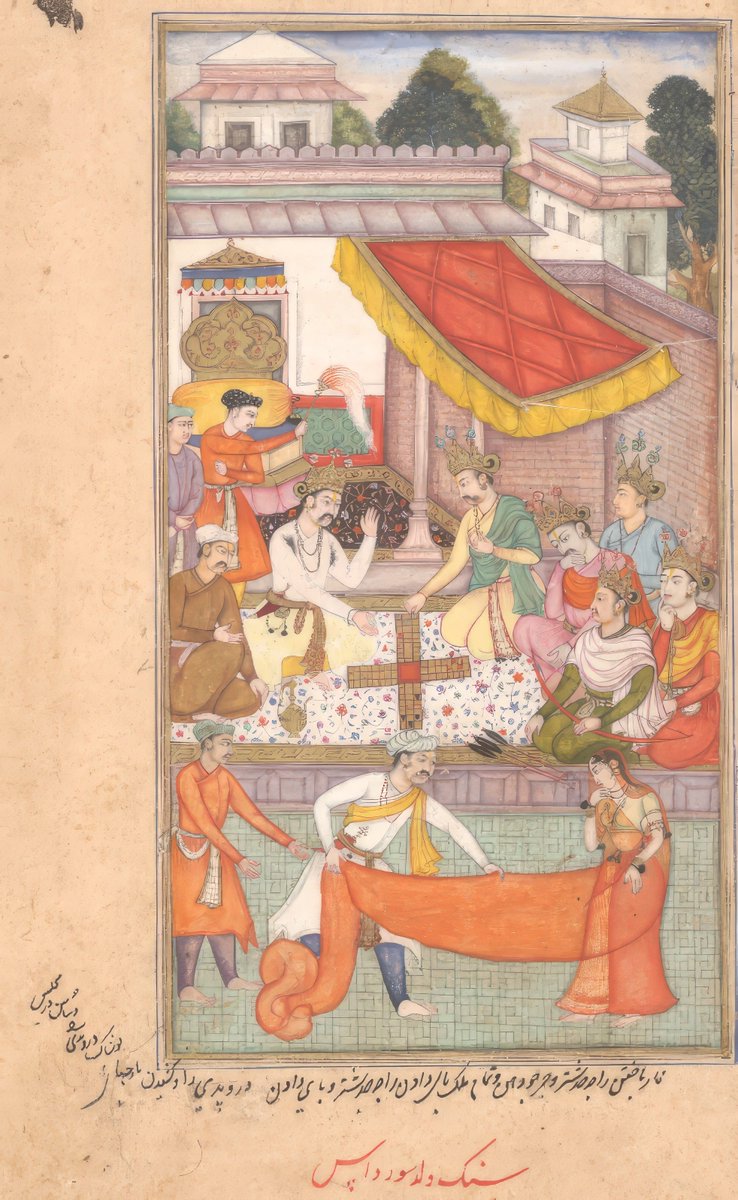
In summary, there is limited intra-textual evidence to support the claim of Draupadī's attempted disrobing. The Śalyaparvan provides only two passages (IX.4.16-17 and IX.58.10), with the former having a more consistent variant reading. However, these passages do not mention her being re-clothed, whether by Kr̥ṣṇa or otherwise. Hiltebeitel's argument relies on Draupadī invoking Govinda in her distress, but does not address the act of disrobing and re-robing.
Throughout the text (mentioned at least 27 times), Draupadī is described as being dragged by her hair into the royal assembly-hall while menstruating, wearing a single bloodstained cloth, and enduring insults. She leaves for exile still wearing the same garment. Additionally, early Sanskrit literature does not mention the attempted disrobing; it is only mentioned in a couple of late texts, highlighting how the attempt was miraculously aborted.
12/16
Throughout the text (mentioned at least 27 times), Draupadī is described as being dragged by her hair into the royal assembly-hall while menstruating, wearing a single bloodstained cloth, and enduring insults. She leaves for exile still wearing the same garment. Additionally, early Sanskrit literature does not mention the attempted disrobing; it is only mentioned in a couple of late texts, highlighting how the attempt was miraculously aborted.
12/16
Questioning the CE is important. Rather than simply accepting it, the German philological approach took the lead by categorizing others as "Vulgate". The main challenge lies in mapping the inter-relationships among different manuscripts. Wendy Phillips-Rodriguez introduces a unique "uprooted trees" schema to address this issue. Interestingly, the Southern manuscripts demonstrate more dispersion, suggesting an independent evolution. These variations hold significant cultural value on their own. By delving into each interpretation, we can uncover the cultural origins of this epic in a profound manner.
13/16
13/16
"The Disrobing of Draupadi" plagiarism continued after Razmnama
This painting, attributed to Nainsukh (active ca. 1735–78), is believed to have been created around 1760-65 in the Guler region of Himachal Pradesh, India.
For more information and to view the painting, visit: [jameelcentre.ashmolean.org]
14/16
This painting, attributed to Nainsukh (active ca. 1735–78), is believed to have been created around 1760-65 in the Guler region of Himachal Pradesh, India.
For more information and to view the painting, visit: [jameelcentre.ashmolean.org]
14/16
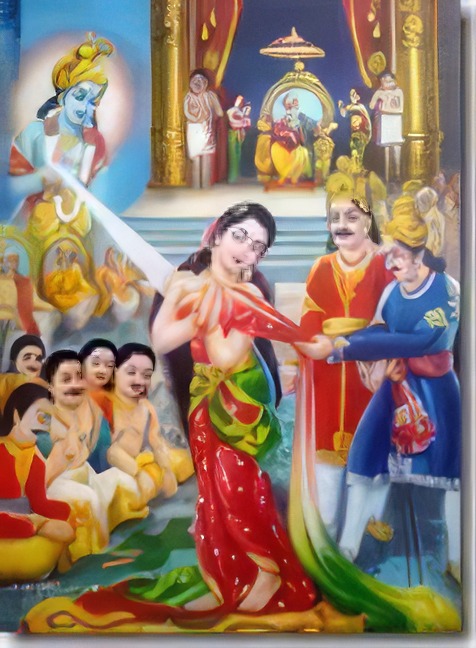
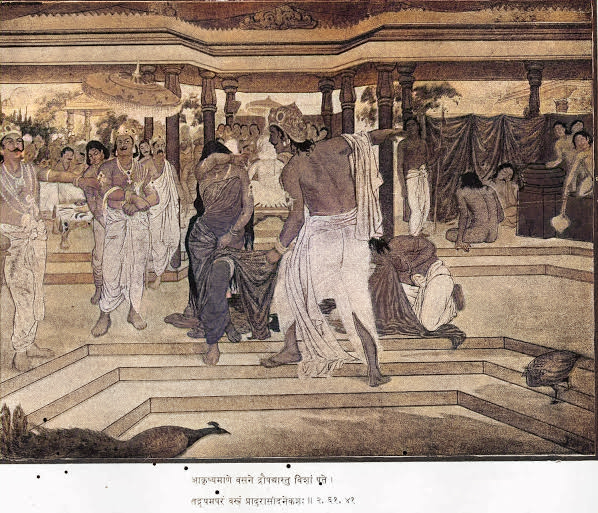
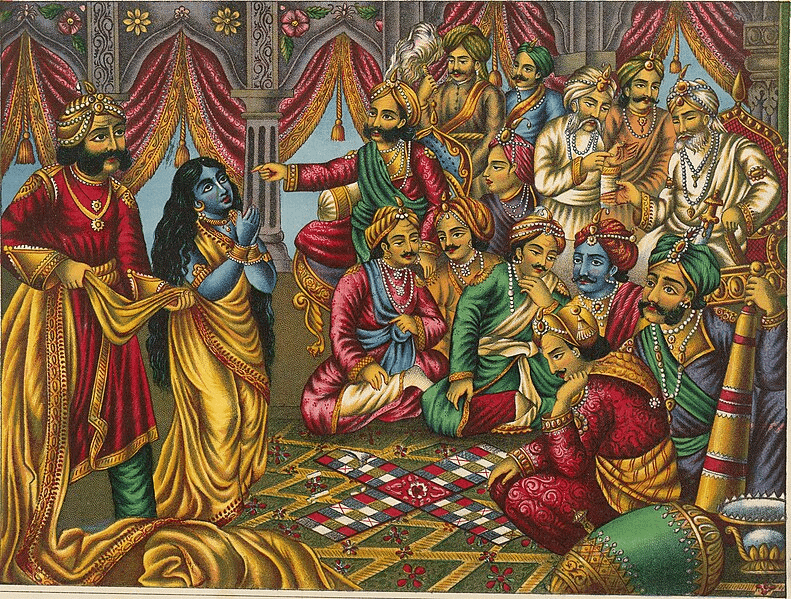
In the Mahabharata, Draupadi, the wife of all five Pandava brothers, finds herself in a pachisi game. Yudhishthira, the king of Hastinapura, had gambled away all his material wealth and even offered Draupadi as a bet. In this tense moment, Draupadi prays to Krishna for protection while a court attendant tries to remove her sari. This event played a significant role in instigating the Mahabharata war.
Circa 1895
Source: [British Museum](britishmuseum.org)
Printed by Chore Bagan Art Studio
15/16
Circa 1895
Source: [British Museum](britishmuseum.org)
Printed by Chore Bagan Art Studio
15/16
For more details, check out this link where the information is gathered in neat way.
asiainstitutetorino.it
16/16
asiainstitutetorino.it
16/16
Loading suggestions...