


It looks like they had suspended the youth unemployment rate to adjust its methodology.
It’s back and significantly lower (14.9%) after these adjustments.
It’s back and significantly lower (14.9%) after these adjustments.
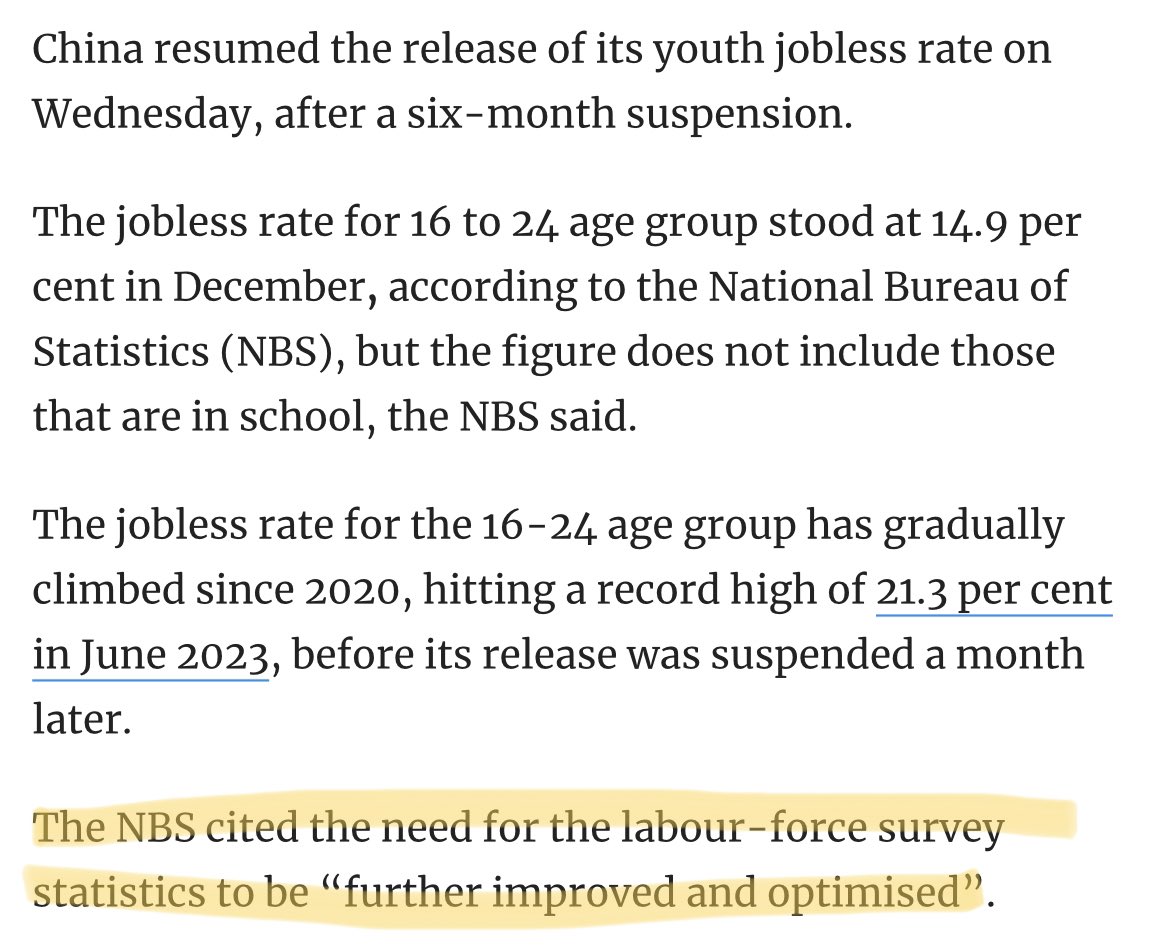
Did they adjust it to be more in line with the OECD’s methodology?
Would be good to see more details of this survey methodology adjustment.
And even better to see how older data would have looked calculated under the new methodology.
asia.nikkei.com
Would be good to see more details of this survey methodology adjustment.
And even better to see how older data would have looked calculated under the new methodology.
asia.nikkei.com
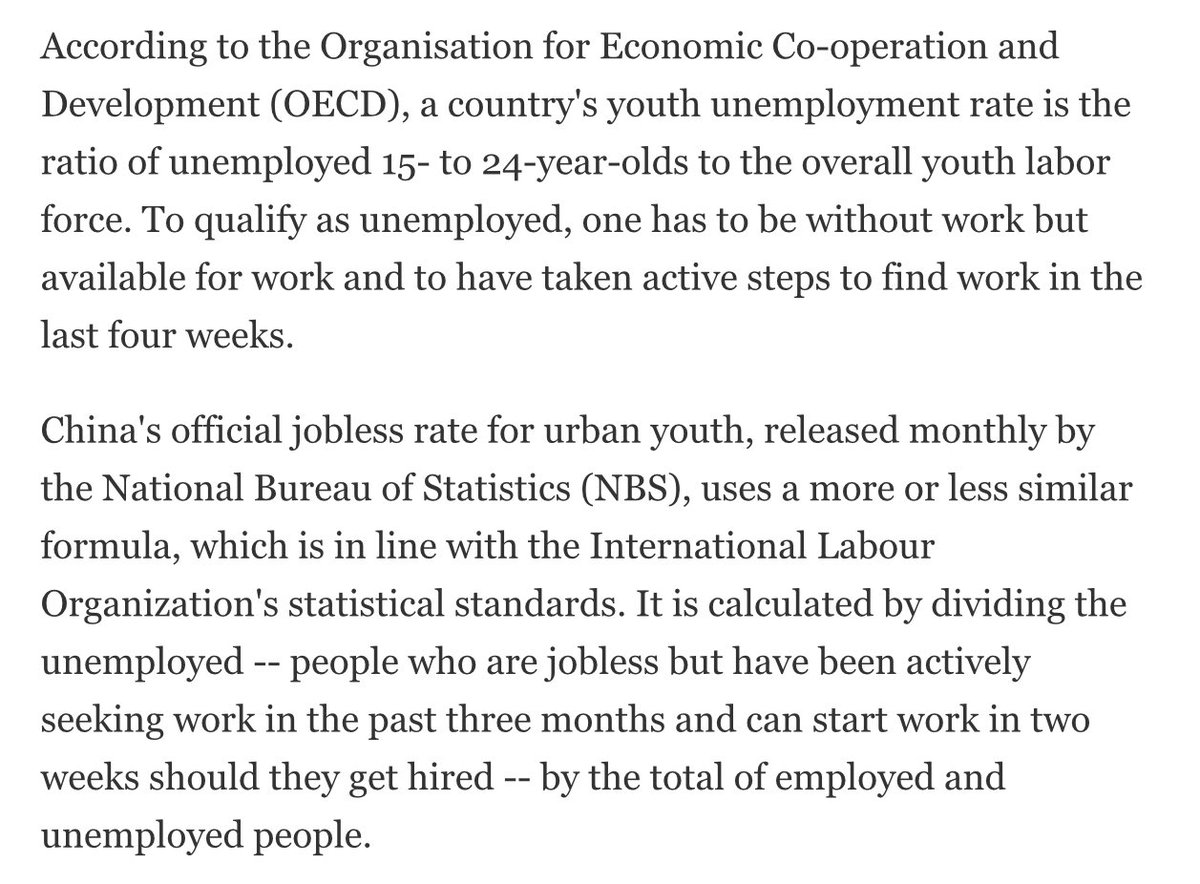

Does this reflect change in methodology or actual improvement in the job market for youths?
My strong hunch is more the former — a decline from 21% to 15% is large and noticeable and we haven’t seen anything like that in the job market the past half-year.
My strong hunch is more the former — a decline from 21% to 15% is large and noticeable and we haven’t seen anything like that in the job market the past half-year.
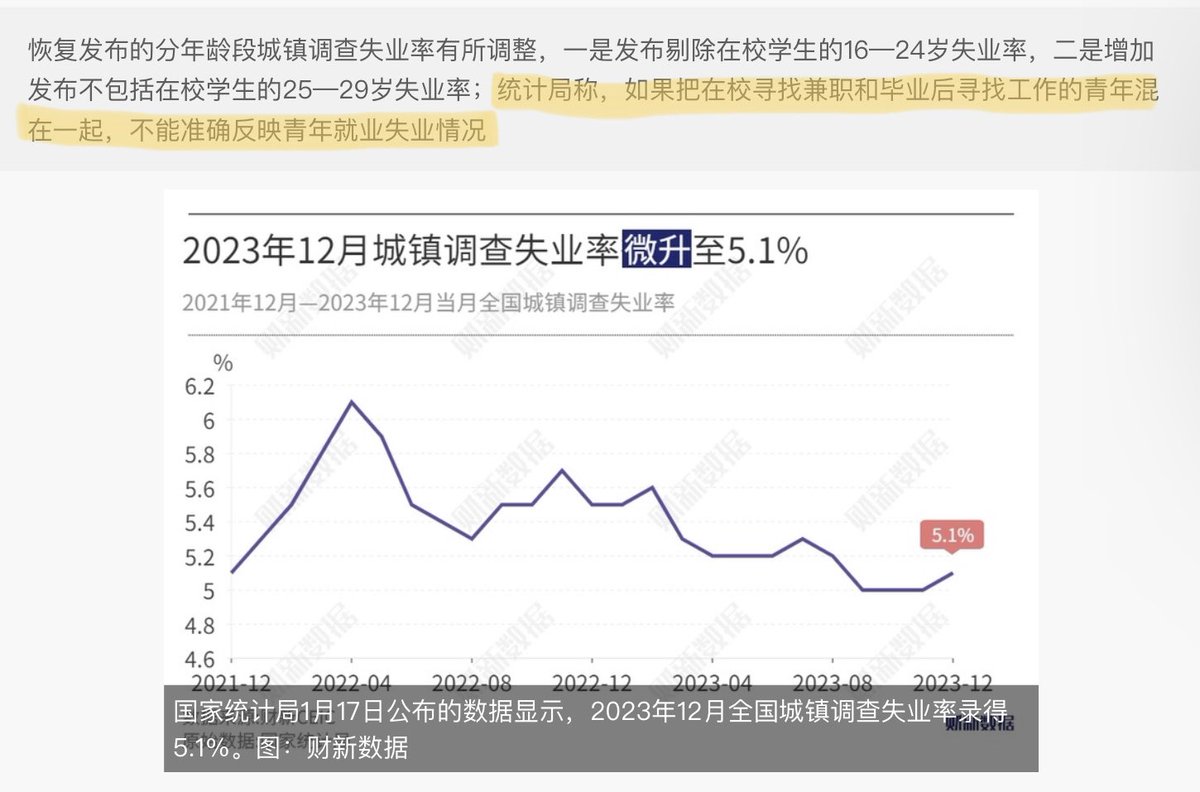
More details on the adjustment.
The previous methodology counted college students looking for part-time jobs.
The new one excludes them from the denominator.
Honestly, this seems reasonable and is in line with standard unemployment methodologies.
The previous methodology counted college students looking for part-time jobs.
The new one excludes them from the denominator.
Honestly, this seems reasonable and is in line with standard unemployment methodologies.
Under the old youth unemployment methodology, the steady and rapid rise in the measured rate coincided with the rapid rise in college admissions.
This chart 👇 shows college enrollments through 2010; since 2010 it has continued to rise, breaching 36M last year.
This chart 👇 shows college enrollments through 2010; since 2010 it has continued to rise, breaching 36M last year.
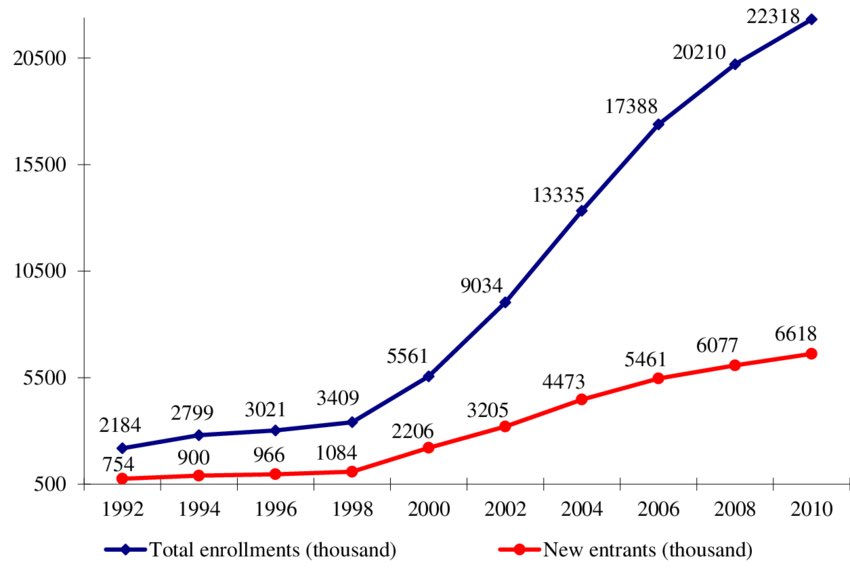
It is reasonable to conclude that the rise in the youth unemployment rate from 2018 when it was first released, to 2022, was mainly driven by a larger pool of full-time college students that had answered “yes” to looking for part-time jobs in employment surveys.
This adjusted methodology presumably uses new employment surveys that can differentiate between full-time college students looking for part-time jobs and recent graduates that are looking for full-time jobs.
As an aside, I think it’s quite instructive to look back at this whole youth unemployment saga and the various speculative narratives certain folks weaved around both the rising numbers and the suspension of the metric back in July.
In my experience, more often than not the explanation for the weird and hard-to-explain in Chinese statistics is something boring & mundane vs. grand conspiracy theories based on speculative narratives.
Flawed methodologies, misinterpreted data series, etc.
Flawed methodologies, misinterpreted data series, etc.
In this case, some mid-level NBS employee revised employment surveys to be able to come up with the youth unemployment metric in 2017-2018 and didn’t think about excluding full-time college students looking for part-time work.
The data series gets added to the regular monthly reporting.
Nobody really cares much about until 2022 when local and Weatern media start reporting on this troubling rise, and draw all sorts of conclusions on what it means for society and the economy at large.
Nobody really cares much about until 2022 when local and Weatern media start reporting on this troubling rise, and draw all sorts of conclusions on what it means for society and the economy at large.
This shines a spotlight on the metric and puts pressure on higher-ups at NBS to explain the rising rates.
They look into the methodology and realize these flaws, suspend the metric, and task the mid-level NBS workers to implement changes.
They look into the methodology and realize these flaws, suspend the metric, and task the mid-level NBS workers to implement changes.
*excludes them from the numerator and denominator.
Loading suggestions...