

I've been #daytrading the $EURUSD for 14 years.
Here are 10 key day trading insights that have kept me in the game.
Learn strategies, ways to improve, position-sizing, making rapid trades on the fly, and more.
A thread👇
Here are 10 key day trading insights that have kept me in the game.
Learn strategies, ways to improve, position-sizing, making rapid trades on the fly, and more.
A thread👇
2. Use an ECN broker for day trading.
The spread should be under 0.5 pips & the commissions under $5/standard lot.
$0 to $3 commissions and under 0.4 pip spread is much better.
Bigger spreads and commissions create a disadvantage...
The spread should be under 0.5 pips & the commissions under $5/standard lot.
$0 to $3 commissions and under 0.4 pip spread is much better.
Bigger spreads and commissions create a disadvantage...
I do know #daytraders using 1 pip+ spread (no commissions). Or a high commission and small spread.
It can be done.
You just need to be more selective on trades and make sure there's enough movement for price to reach your target when factoring in the spread.
It can be done.
You just need to be more selective on trades and make sure there's enough movement for price to reach your target when factoring in the spread.
3. Set yourself up for making quick trades.
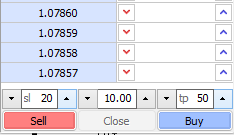
A stop loss & target should go out with each entry. It's too time-consuming to put out orders manually.
MT4/5 has a handy tool.
Right-click the chart. Select "Market Depth"...
A stop loss & target should go out with each entry. It's too time-consuming to put out orders manually.
MT4/5 has a handy tool.
Right-click the chart. Select "Market Depth"...
Input SL and target in fractional pips.
20 is 2 pips, 80 is 8 pips, etc.
Input position size in standard lots.
1 is a standard lot of 100K
0.1 is a mini lot (10K)
0.01 is a micro lot (1K)
Click buy or sell (market) and SL and target are auto-deployed.
20 is 2 pips, 80 is 8 pips, etc.
Input position size in standard lots.
1 is a standard lot of 100K
0.1 is a mini lot (10K)
0.01 is a micro lot (1K)
Click buy or sell (market) and SL and target are auto-deployed.
4. Set the y-axis every day before trading.
I set mine to the daily average range for the last 5 weeks. I check this # on Monday and keep it for the week.
I do this because I want to see, at a glance, how today's movement compares to average. Patterns look the same day to day.
I set mine to the daily average range for the last 5 weeks. I check this # on Monday and keep it for the week.
I do this because I want to see, at a glance, how today's movement compares to average. Patterns look the same day to day.
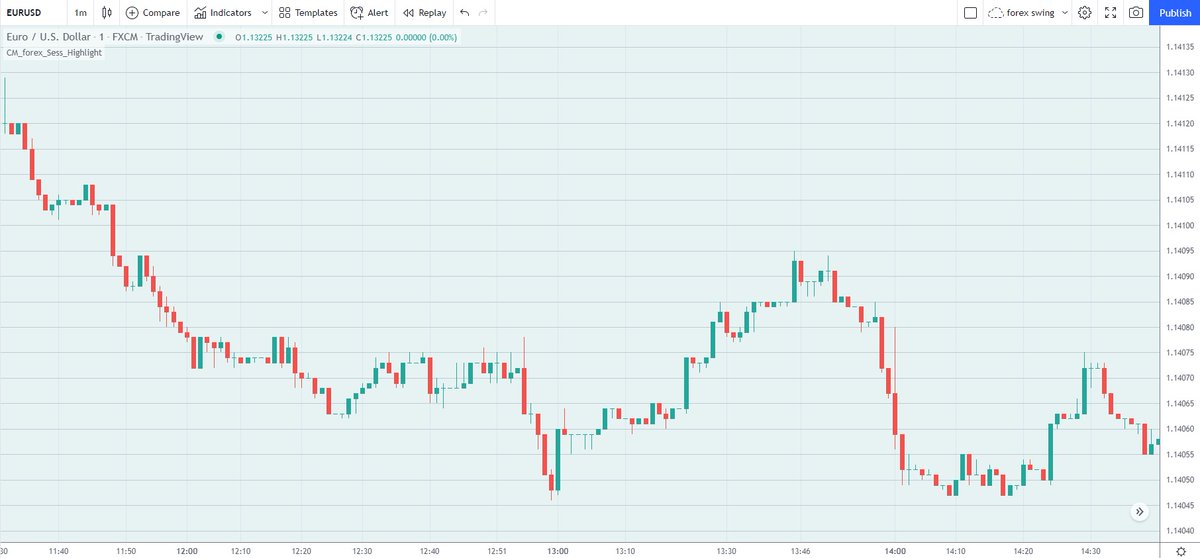
One chart shows the price action unscaled. The chart fills the screen with the price action.
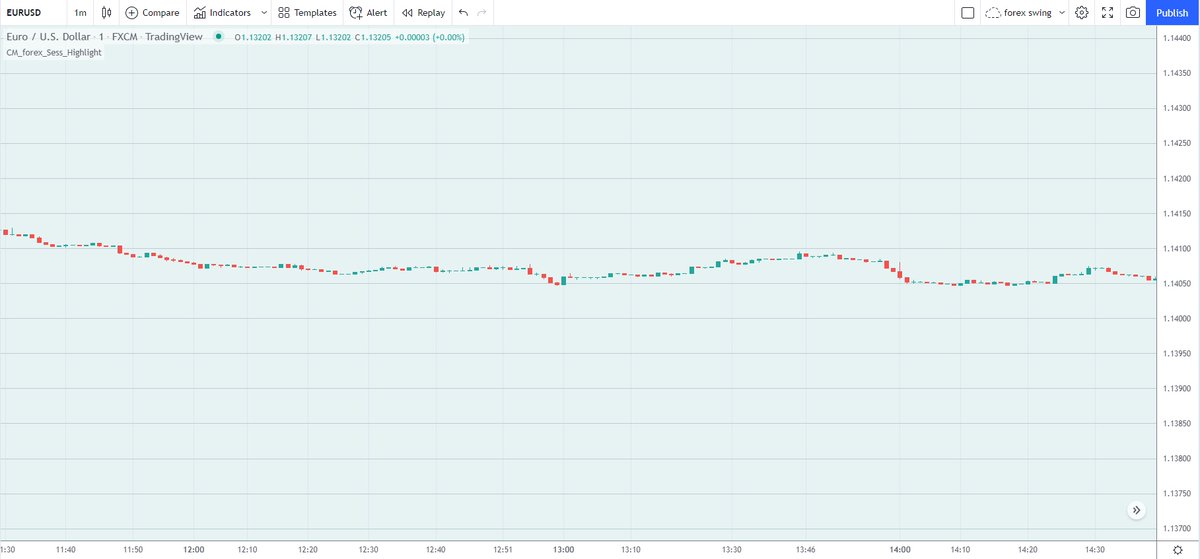
The other chart shows the price action with the y-axis scaled to daily average range. Barely any movement at all! Scaling helps avoid impulsive trades by ignoring tiny movements.
The other chart shows the price action with the y-axis scaled to daily average range. Barely any movement at all! Scaling helps avoid impulsive trades by ignoring tiny movements.
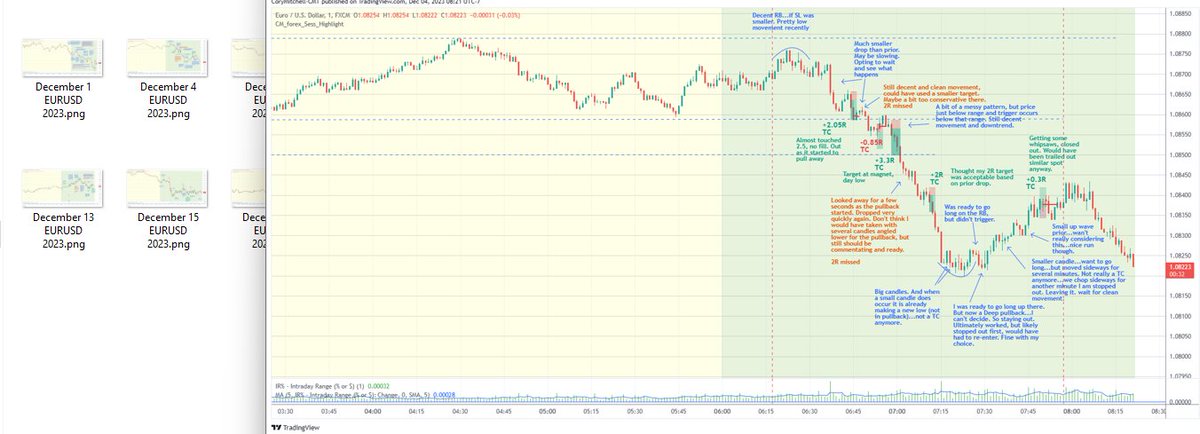
5. Take daily screenshots of your trades. After trading, write notes and highlight mistakes, etc.
Take a screenshot every day. Save them. Review them weekly/monthly or at scheduled times.
Keep them. Having a historical database of trades and market conditions comes in handy.
Take a screenshot every day. Save them. Review them weekly/monthly or at scheduled times.
Keep them. Having a historical database of trades and market conditions comes in handy.
6. Risk 1% or less of the ACCOUNT BALANCE on each trade.
As SL changes our position size changes, yet risk to the account stays the same.
Calculate position sizes for common SL sizes based on your account value, write them down before trading...
As SL changes our position size changes, yet risk to the account stays the same.
Calculate position sizes for common SL sizes based on your account value, write them down before trading...
I write down position sizes based on 0.5 pip SL increments.
I want to know what my position size is for a 2, 2.5, 3, 3.5, 4, 4.5, 5, 5.5, and 6 pip stop loss, BASED ON MY ACCOUNT VALUE WHEN I START TRADING FOR THE DAY. I use those position sizes all day depending on SL size...
I want to know what my position size is for a 2, 2.5, 3, 3.5, 4, 4.5, 5, 5.5, and 6 pip stop loss, BASED ON MY ACCOUNT VALUE WHEN I START TRADING FOR THE DAY. I use those position sizes all day depending on SL size...
For example, 1% of $5000 account means we can lose up to $50/trade.
If your SL is going to be 4 pips, calculate your position size:
$Account Risk / Trade Risk x Pip Value = Position Size
$50 / (4pips x $10) = 1.25 lots
Can also use an online position size calculator...
If your SL is going to be 4 pips, calculate your position size:
$Account Risk / Trade Risk x Pip Value = Position Size
$50 / (4pips x $10) = 1.25 lots
Can also use an online position size calculator...
Leverage is used here: 5K in the account but trading a 125K position. Use smaller positions if desired.
Leverage is a double-edged sword. An SL must be used to keep the loss to less than 1% of the account.
DON'T hold day trades through med. or high-impact news announcements.
Leverage is a double-edged sword. An SL must be used to keep the loss to less than 1% of the account.
DON'T hold day trades through med. or high-impact news announcements.
7. Less than 15 pips of movement in the last 2 hours means I'm very cautious.
Less than 10 pips in last 2 hours, I'm likely not even watching.
Knowing when not to trade is as important as knowing when to take a trade. Don't trade in crap conditions when the price isn't moving.
Less than 10 pips in last 2 hours, I'm likely not even watching.
Knowing when not to trade is as important as knowing when to take a trade. Don't trade in crap conditions when the price isn't moving.
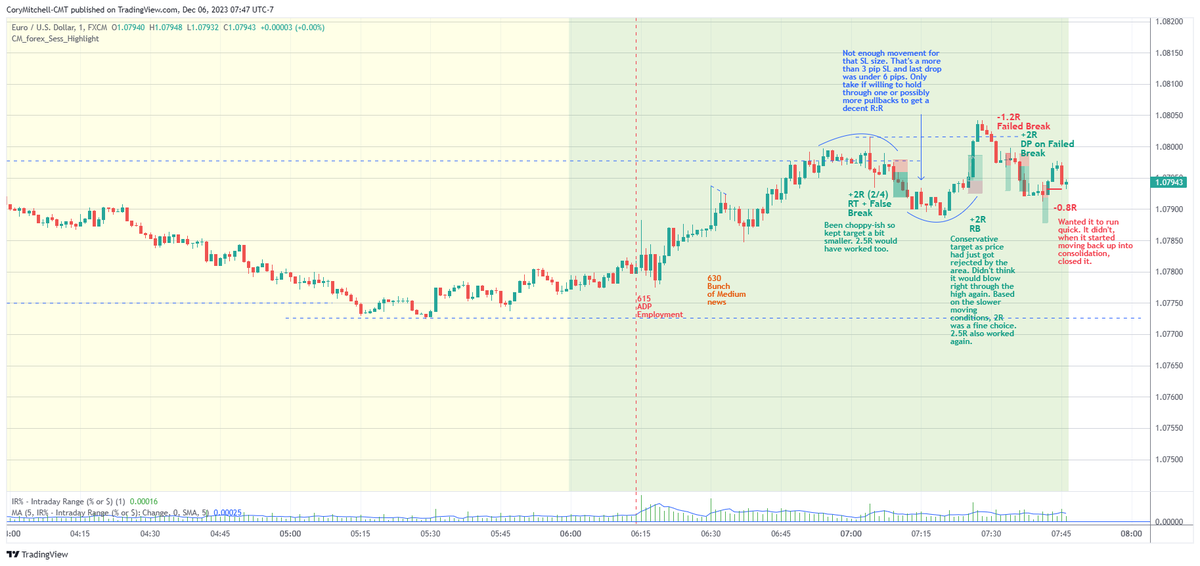
8. Strategies: Rounded Top and Bottom (RB, RT on chart) One of my favorites.
Covered in this thread:
Here is are recent examples (first two trades):
Covered in this thread:
Here is are recent examples (first two trades):
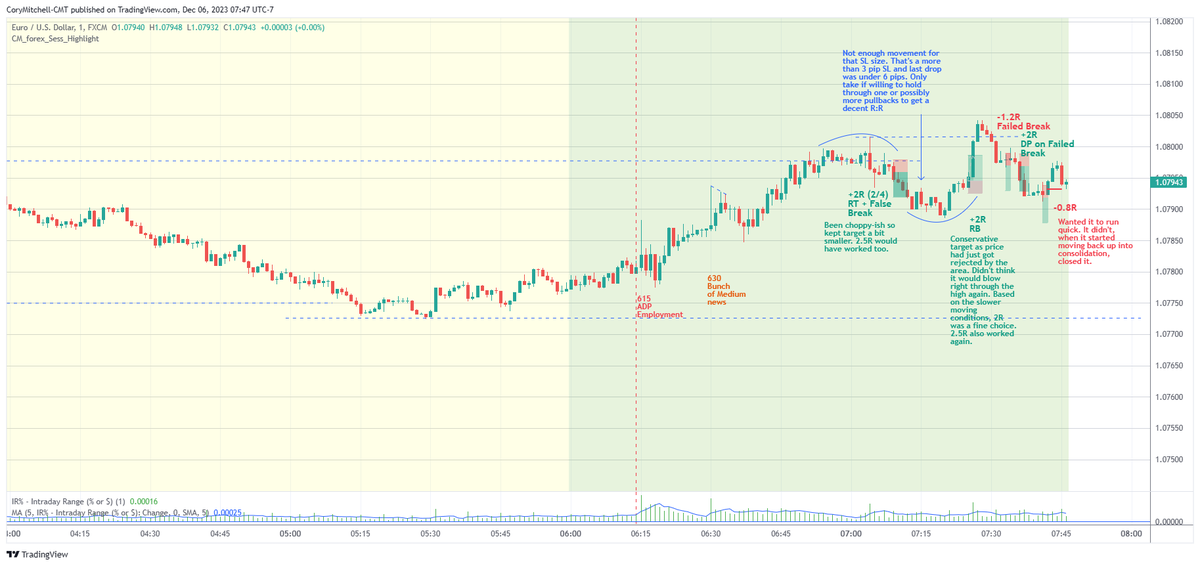
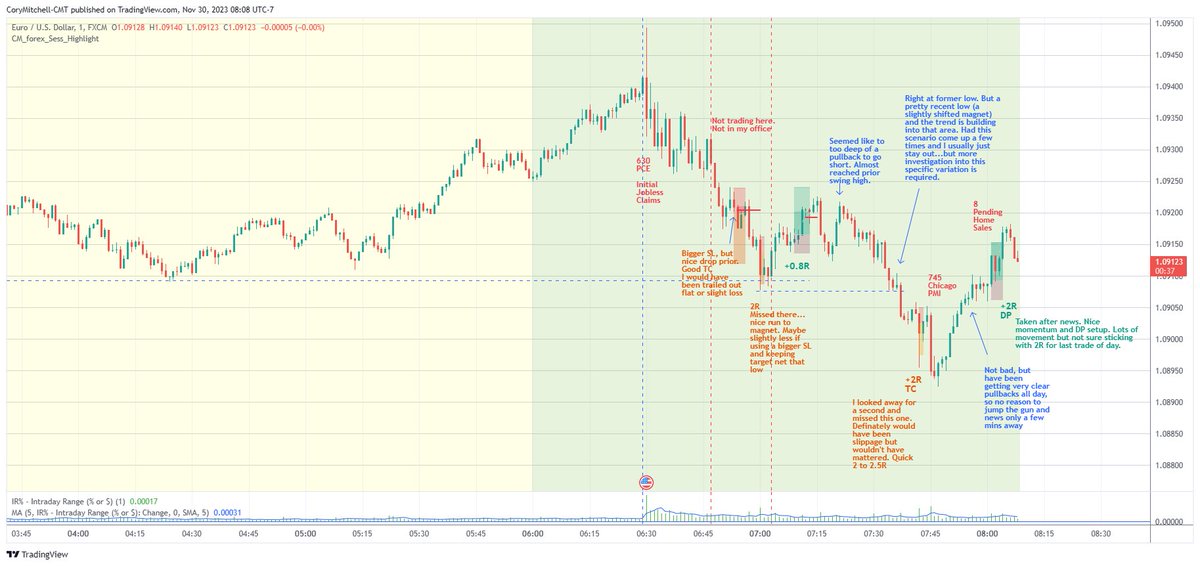
9. Strategies: Double Pump (DP) Relatively simple trending strategy. The charts show DP examples based on the article below. tradethatswing.com
If risking 1% per trade (that's 1R), making 2R means making 2% on the account.
If risking 1% per trade (that's 1R), making 2R means making 2% on the account.

10. When trading, "commentate" the price action.
I verbalize what has to happen to take a trade, or why there are no trades right now.
This gets me ready to pounce on good trades and stay out when conditions aren't ideal. I'm constantly reiterating what I need to do/not do...
I verbalize what has to happen to take a trade, or why there are no trades right now.
This gets me ready to pounce on good trades and stay out when conditions aren't ideal. I'm constantly reiterating what I need to do/not do...
Here are some things I commentate:
-What strategy could setup?
-How is overall movement?
-Is there enough movement for the target?
-Is this a valid setup forming?
-Does the movement (reward) justify the SL size (risk)?
-Any red flags?
-Ranging, stuck, or trending?
And so on.
-What strategy could setup?
-How is overall movement?
-Is there enough movement for the target?
-Is this a valid setup forming?
-Does the movement (reward) justify the SL size (risk)?
-Any red flags?
-Ranging, stuck, or trending?
And so on.
Hopefully, you got something out of this. If you did, give me a follow @corymitc for more insights. There is loads of free info on my website (tradethatswing.com).
And check out my EURUSD Day Trading Course to learn more.
tradethatswing.com
And check out my EURUSD Day Trading Course to learn more.
tradethatswing.com

tradethatswing.com/product/the-eu…
The EURUSD Day Trading Course - Trade That Swing
The EURUSD Day Trading Courses teaches you methods and strategies you can use to trade price pattern...

tradethatswing.com
TradeThatSwing - Stock Trading Education and Market Analysis
No BS day trading, swing trading, and investing strategies.
Loading suggestions...