

If RBI's circular on unsecured lending,
Did not hit Paytm hard😅😅
RBI has now asked Paytm Payments Bank to stop accepting deposits😱😱
This is a big blow to Paytm!
How does this move by the RBI hurt Paytm?
A thread🧵on how RBI's latest move will affect Paytm?
Lets go👇
Did not hit Paytm hard😅😅
RBI has now asked Paytm Payments Bank to stop accepting deposits😱😱
This is a big blow to Paytm!
How does this move by the RBI hurt Paytm?
A thread🧵on how RBI's latest move will affect Paytm?
Lets go👇
What is a payment Bank?
Payments banks are a new model of banks, conceptualized by the Reserve Bank of India (RBI), which cannot issue credit.
These banks can accept a restricted deposit, which is currently limited to ₹200,000 per customer.
Both current account and savings accounts can be operated by such banks
Payments banks are a new model of banks, conceptualized by the Reserve Bank of India (RBI), which cannot issue credit.
These banks can accept a restricted deposit, which is currently limited to ₹200,000 per customer.
Both current account and savings accounts can be operated by such banks
Payment Banks are regulated by Reserve Bank of India
They must follow the rules laid down by the regulator
Onboarding rules and functioning rules have been set by the regulator
They must follow the rules laid down by the regulator
Onboarding rules and functioning rules have been set by the regulator
Paytm Payments Bank:-
Paytm provides banking services through Paytm Payments Bank.
Paytm owns 49% stake in the company
Vijay Shekhar Sharma owns the rest of the company(Curious enough)
The Paytm digital wallet, Fastag and domestic transfers are all done thru the Paytm Payments Bank
Paytm provides banking services through Paytm Payments Bank.
Paytm owns 49% stake in the company
Vijay Shekhar Sharma owns the rest of the company(Curious enough)
The Paytm digital wallet, Fastag and domestic transfers are all done thru the Paytm Payments Bank
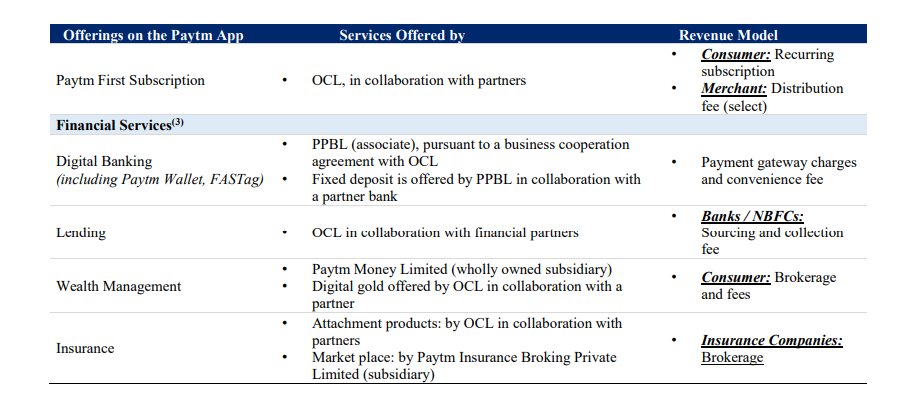
Product offering of Paytm Payments Bank
1.Paytm Wallet
2. Savings accounts
3.Paytm UPI
4.Fixed deposits
5.Corporate salary accounts
6. Domestic Money Transfer
7. Fastag
8.National Automated Clearing House
The money that you keep in Paytm is housed under Paytm payments bank
The fastag money is also housed under Paytm Payments Bank
1.Paytm Wallet
2. Savings accounts
3.Paytm UPI
4.Fixed deposits
5.Corporate salary accounts
6. Domestic Money Transfer
7. Fastag
8.National Automated Clearing House
The money that you keep in Paytm is housed under Paytm payments bank
The fastag money is also housed under Paytm Payments Bank
RBI warning to Paytm Payments Bank
In a recent RBI audit in 2022:-
RBI observed certain regulatory lapses and directed Paytm Payments bank to stop onboarding clients with immediate effect.
In a recent RBI audit in 2022:-
RBI observed certain regulatory lapses and directed Paytm Payments bank to stop onboarding clients with immediate effect.
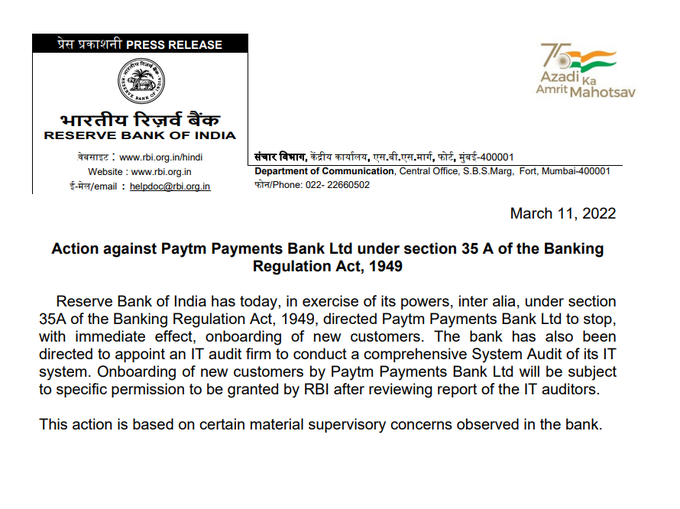
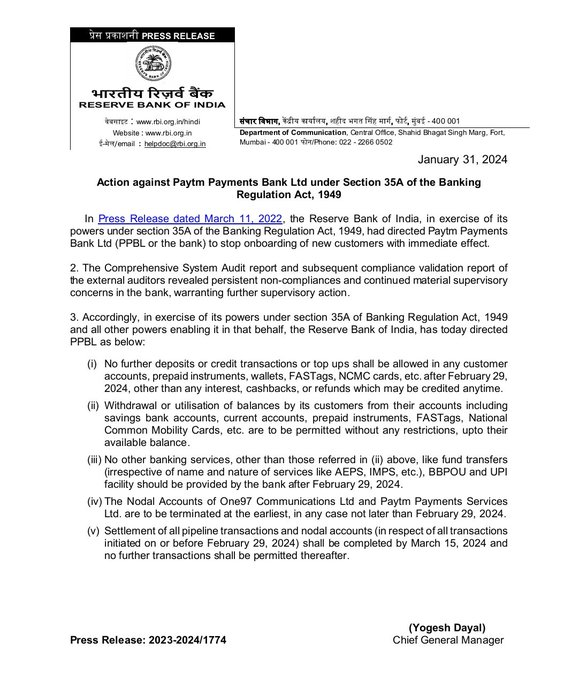
RBI action yesterday:-
After an audit by external auditor
RBI found that there were repeated non compliances by Paytm Payment Banks
RBI then directed Paytm to
1. Stop accepting deposits
2. Allowed customers to withdraw deposits
This effectively means RBI has directed Paytm Payments banks to stop core payment banking operations effective Feb 29.
Effectively Paytm cannot keep the money you deposit with them.
They will now have to tie up with banks to keep this money with Banks
After an audit by external auditor
RBI found that there were repeated non compliances by Paytm Payment Banks
RBI then directed Paytm to
1. Stop accepting deposits
2. Allowed customers to withdraw deposits
This effectively means RBI has directed Paytm Payments banks to stop core payment banking operations effective Feb 29.
Effectively Paytm cannot keep the money you deposit with them.
They will now have to tie up with banks to keep this money with Banks
How does this affect Paytm?
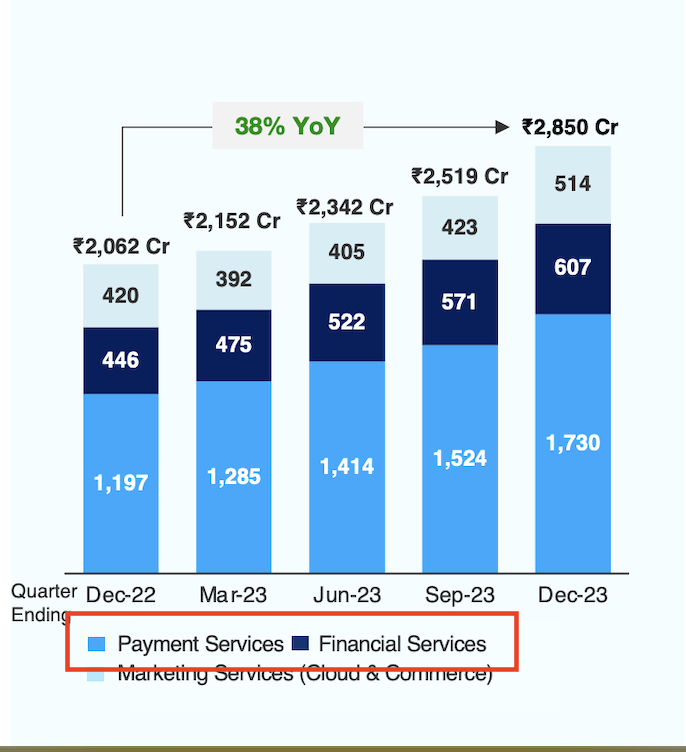
Payments business makes up nearly 60% of the EBIDTA for Paytm.
Paytm will now have to migrate all the payment business to other Banks and UPI.
This will mean an erosion of profitability for Paytm.
The exact nature will be clear with time
Payments business makes up nearly 60% of the EBIDTA for Paytm.
Paytm will now have to migrate all the payment business to other Banks and UPI.
This will mean an erosion of profitability for Paytm.
The exact nature will be clear with time
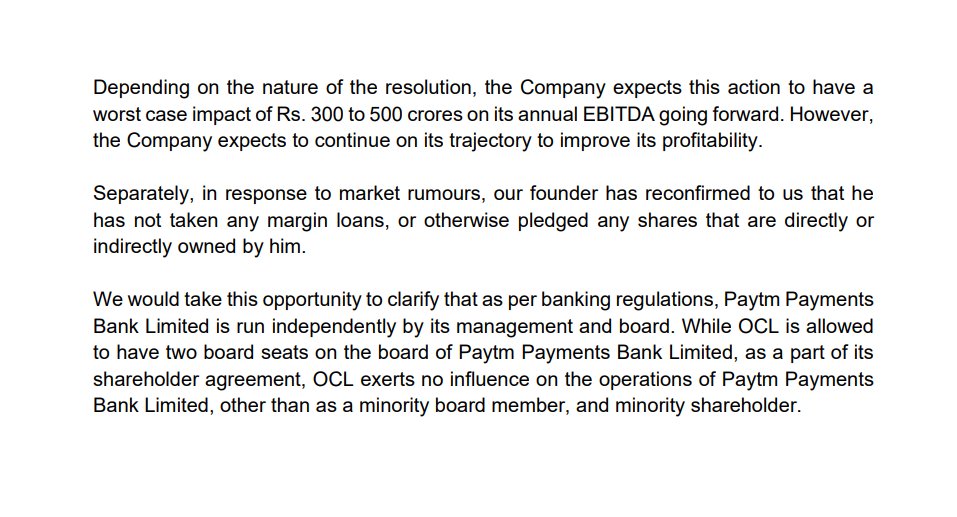
The company estimates an erosion of 300-500cr.
Paytm will now have to rework its entire business model and work with third-party banks.
The payments business will now have to be completely reworked
Paytm will now have to rework its entire business model and work with third-party banks.
The payments business will now have to be completely reworked
This could not have come at a worse time for Paytm.
The RBI circular on unsecured lending has already meant tat they need to scale down the sub 50,000 loans
x.com
The RBI circular on unsecured lending has already meant tat they need to scale down the sub 50,000 loans
x.com
Valuation:-
Paytm is still valued at 48,000cr.
Federal bank which made 1,000cr profits last 12 months is valued at 28,000cr.
It is hard to give a concrete valuation to Paytm
But the valuation is not cheap
Paytm is still valued at 48,000cr.
Federal bank which made 1,000cr profits last 12 months is valued at 28,000cr.
It is hard to give a concrete valuation to Paytm
But the valuation is not cheap
So what next for Paytm?
RBI's decision on Paytm Payments Banks is a severe blow to Paytm.
The company will have to rework its entire payments business model
The company is already facing a rework of its lending business.
Given the headwinds,
Times are not easy for Paytm
RBI's decision on Paytm Payments Banks is a severe blow to Paytm.
The company will have to rework its entire payments business model
The company is already facing a rework of its lending business.
Given the headwinds,
Times are not easy for Paytm
Keep following me -@AdityaD_Shah as I write daily to make you aware around:
📈Personal Finance
📈Investing
📈Stock Analysis
Go to my profile and hit the bell icon🔔to always stay updated
📈Personal Finance
📈Investing
📈Stock Analysis
Go to my profile and hit the bell icon🔔to always stay updated
Disclaimer:-
This is my own study.
Not an investment recommendation
Please consult your own financial advisor before making any investment decisions
This is my own study.
Not an investment recommendation
Please consult your own financial advisor before making any investment decisions
Loading suggestions...