

Ever wondered why strangers become 'us' vs. 'them' in seconds?
The minimal group paradigm uncovers the wild truth behind our instant tribes!
You are defining yourself through your social identity, more than you believe.
Here is what you need to know... (🧵)
The minimal group paradigm uncovers the wild truth behind our instant tribes!
You are defining yourself through your social identity, more than you believe.
Here is what you need to know... (🧵)
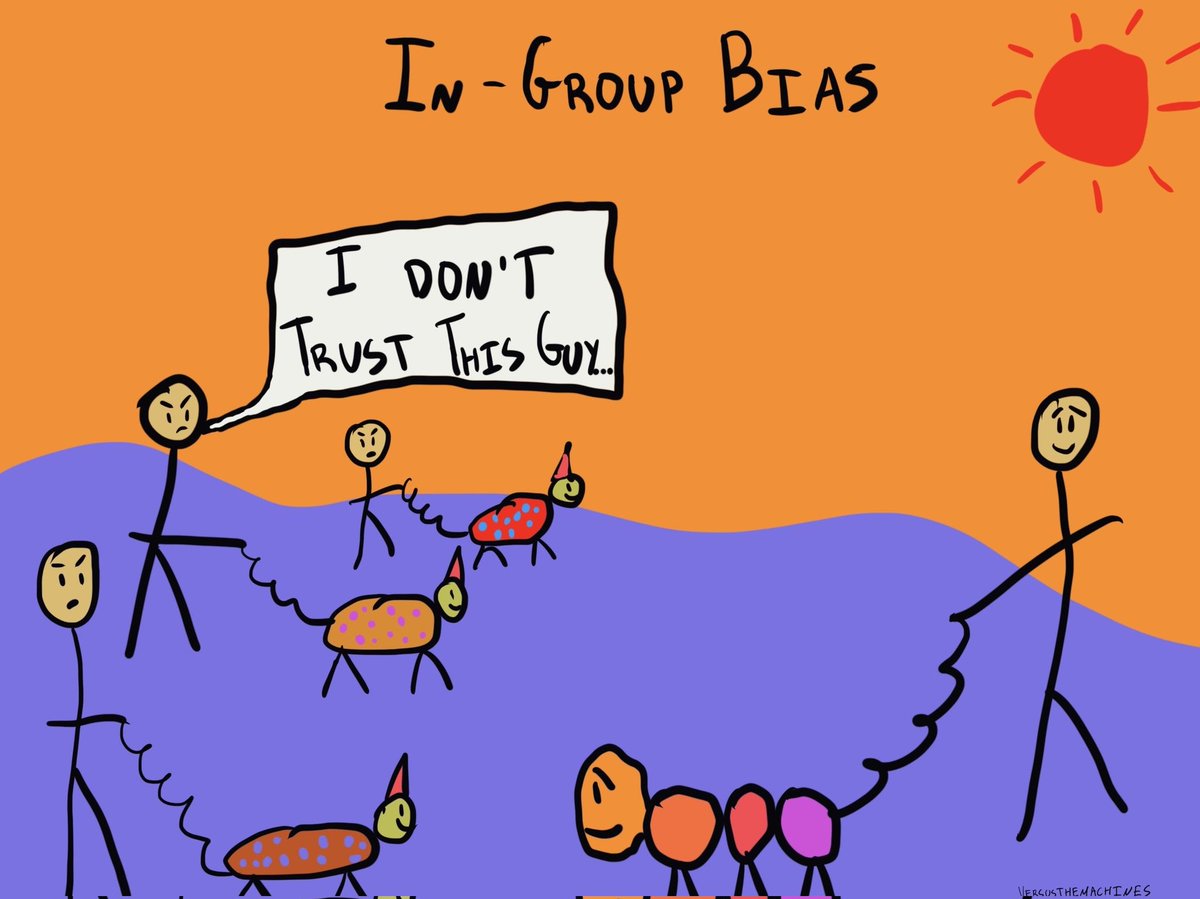
If you share a groups Identity you:
• have shared perspectives and beliefs with them.
• coordinate your behavior according to the groups norm.
• work in favor of the groups goal and interest.
• see yourself as a relatively replaceable group-member.
• have shared perspectives and beliefs with them.
• coordinate your behavior according to the groups norm.
• work in favor of the groups goal and interest.
• see yourself as a relatively replaceable group-member.
It depends on what you know about the group and how emotionally invested you are.
The main differentiation is between:
a) the in-group
b) the out-group
It is important to note, that you have more than one in-group/social identity.
The main differentiation is between:
a) the in-group
b) the out-group
It is important to note, that you have more than one in-group/social identity.
Here is what makes it very interesting:
Just the fact alone, that you belong to one group changes how you behave (Minimal group paradigm).
In a study, participants were split up randomly into two groups based on some arbitrary criteria.
Then they did a random task.
The participants knew they belonged to their group.
In a study, participants were split up randomly into two groups based on some arbitrary criteria.
Then they did a random task.
The participants knew they belonged to their group.
Later on they were supposed to allocate resources to all the participants (money).
What happened was, that they gave their "in-group" much more money, even though the group formation was arbitrary in the beginning.
What happened was, that they gave their "in-group" much more money, even though the group formation was arbitrary in the beginning.
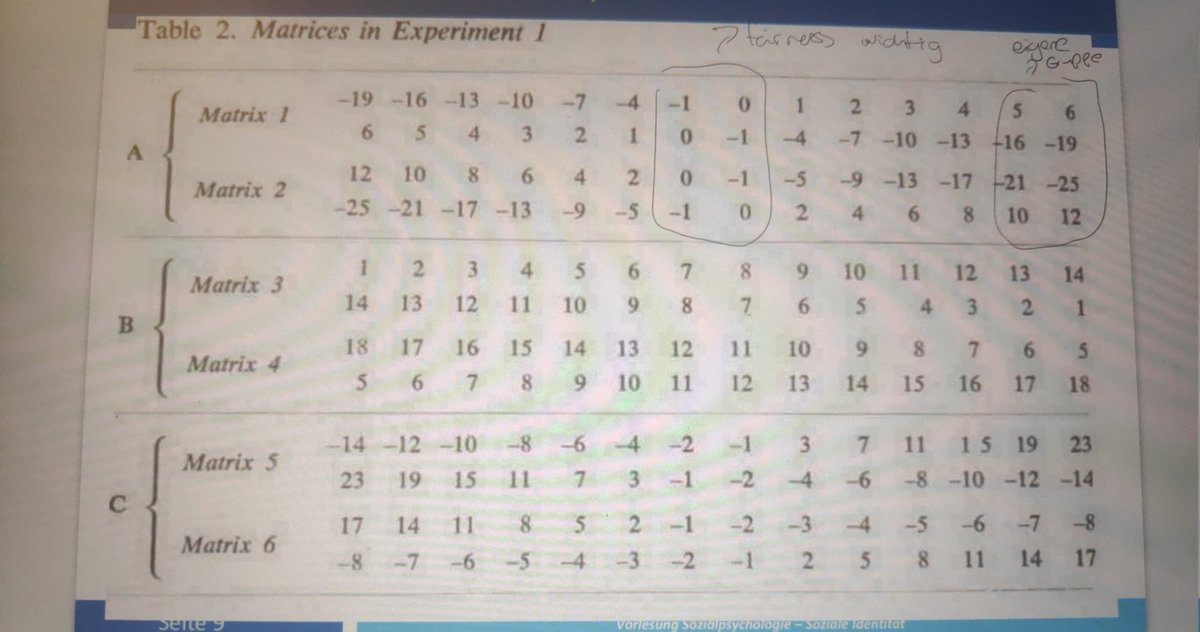
The minimal group paradigm leads to in-group favoritism.
Most participants didn't maximize the joint outcome of every participant by a fair money distribution.
One theory for this might be evolution, and the higher survival chances of using in-group favoritism.
Most participants didn't maximize the joint outcome of every participant by a fair money distribution.
One theory for this might be evolution, and the higher survival chances of using in-group favoritism.
Click follow to get smarter by learning more about human nature and psychology.
Loading suggestions...