

Uttarakhand Cabinet clears final Uniform Civil Code draft
Uniform Civil Code (UCC) -What you know so far?
Uniform Civil Code (UCC) -How it started?
What changes brought in by the UCC?
What is Article 44 of Indian Constitution i.e. Uniform Civil Code?
Article 44 of the Indian Constitution:
which says: “The State shall endeavour to secure for the citizens a uniform civil code throughout the territory of India.”
The introduction of the UCC was a key campaign promise made by the BJP in the general elections.
The BJP promised to create a uniform set of personal laws, regardless of religion, to govern subjects like marriage, inheritance, divorce, and adoption.
Uniform Civil Code (UCC) -What you know so far?
Uniform Civil Code (UCC) -How it started?
What changes brought in by the UCC?
What is Article 44 of Indian Constitution i.e. Uniform Civil Code?
Article 44 of the Indian Constitution:
which says: “The State shall endeavour to secure for the citizens a uniform civil code throughout the territory of India.”
The introduction of the UCC was a key campaign promise made by the BJP in the general elections.
The BJP promised to create a uniform set of personal laws, regardless of religion, to govern subjects like marriage, inheritance, divorce, and adoption.
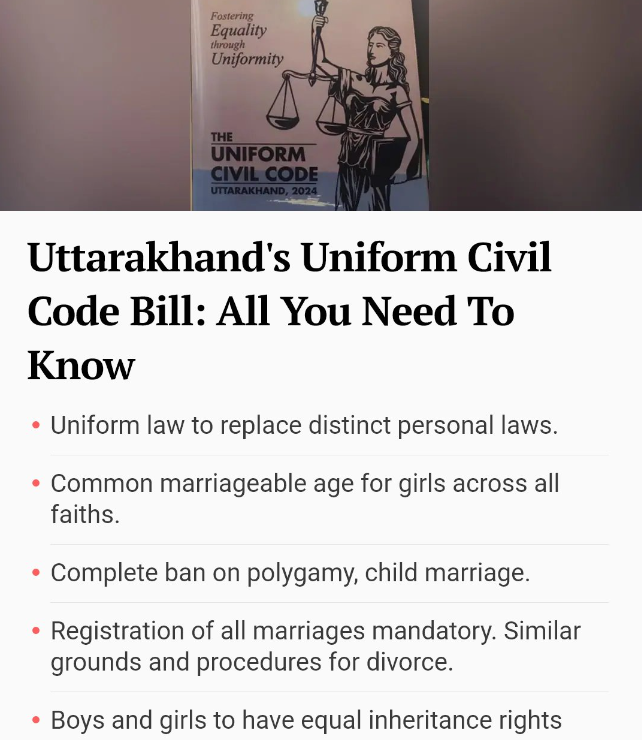
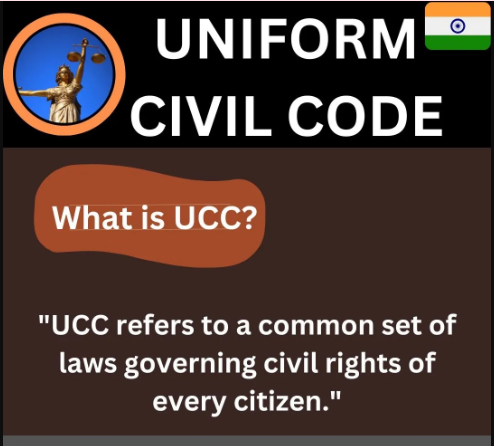
Uniform Civil Code (UCC) is the part of the Directive Principles of State Policy(DPSP) (Part IV of the Constitution).
DPSP are not enforceable by any court, but the principles laid under them are to be considered as “fundamental in the governance of the country and it shall be the duty of the State to apply these principles in making laws.
DPSP are not enforceable by any court, but the principles laid under them are to be considered as “fundamental in the governance of the country and it shall be the duty of the State to apply these principles in making laws.

The Uttarakhand government and the committee have stated that gender equality was one of the key considerations when preparing the report. Along with uniform personal laws for all people residing in the state, the UCC will introduce provisions that treat men and women equally in issues relating to inheritance.

The UCC will also reject the practices of polygamy, iddat, and halal in response to strong demands from Muslim women in the state.
However, the minimum age for marriage for both men and women will likely remain the same as it was previously (18 years for women and 21 years for men).
The UCC will also regulate live-in relationships and require a mandatory declaration to start and terminate live-in relationships.
However, the minimum age for marriage for both men and women will likely remain the same as it was previously (18 years for women and 21 years for men).
The UCC will also regulate live-in relationships and require a mandatory declaration to start and terminate live-in relationships.

Loading suggestions...