

Xabi Alonso's Bayer Leverkusen epitomise everything that is so useful about the 3-2-5.
The close proximity of the 3-2 base in the build-up entices teams to jump & close the ball down but the short passing distances enables the team to quickly progress play & get out.
THREAD! 🔴
The close proximity of the 3-2 base in the build-up entices teams to jump & close the ball down but the short passing distances enables the team to quickly progress play & get out.
THREAD! 🔴
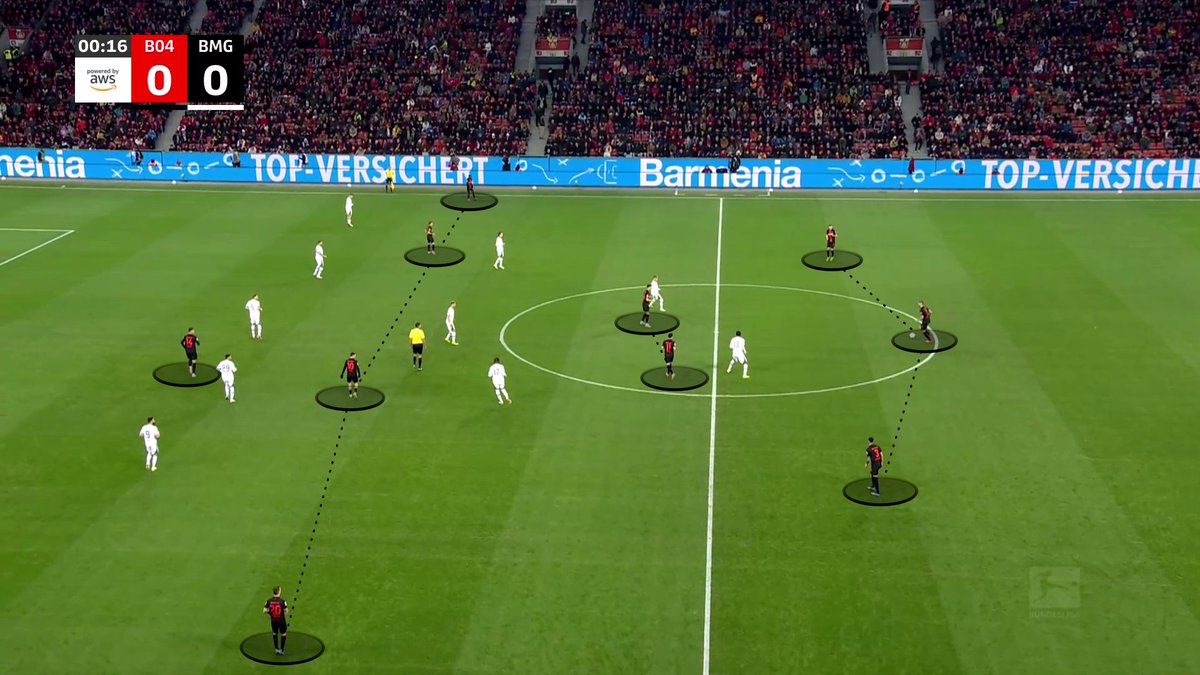
Then, as a result of the occupation of each lane in attack (both wings, both half spaces, and the #9) in tandem with the close proximity of the 3-2 base, the team can combine & interchange on the sides, whether that be in 3 man or 4 man sequences, with numbers attacking the box.
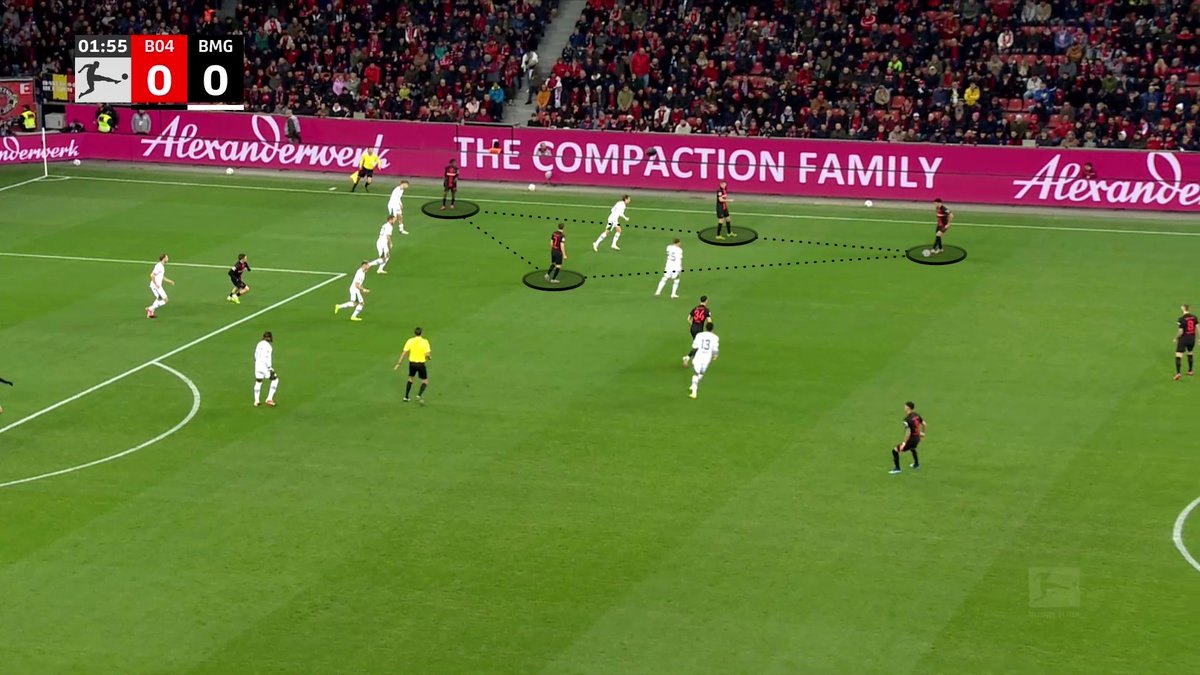
However, one of the main reasons the shape is so impactful is because of the natural compactness it brings out of possession.
Once possession is lost in the final third Leverkusen are in a position to effectively counterpress irrespective of where play breaks down.
Once possession is lost in the final third Leverkusen are in a position to effectively counterpress irrespective of where play breaks down.
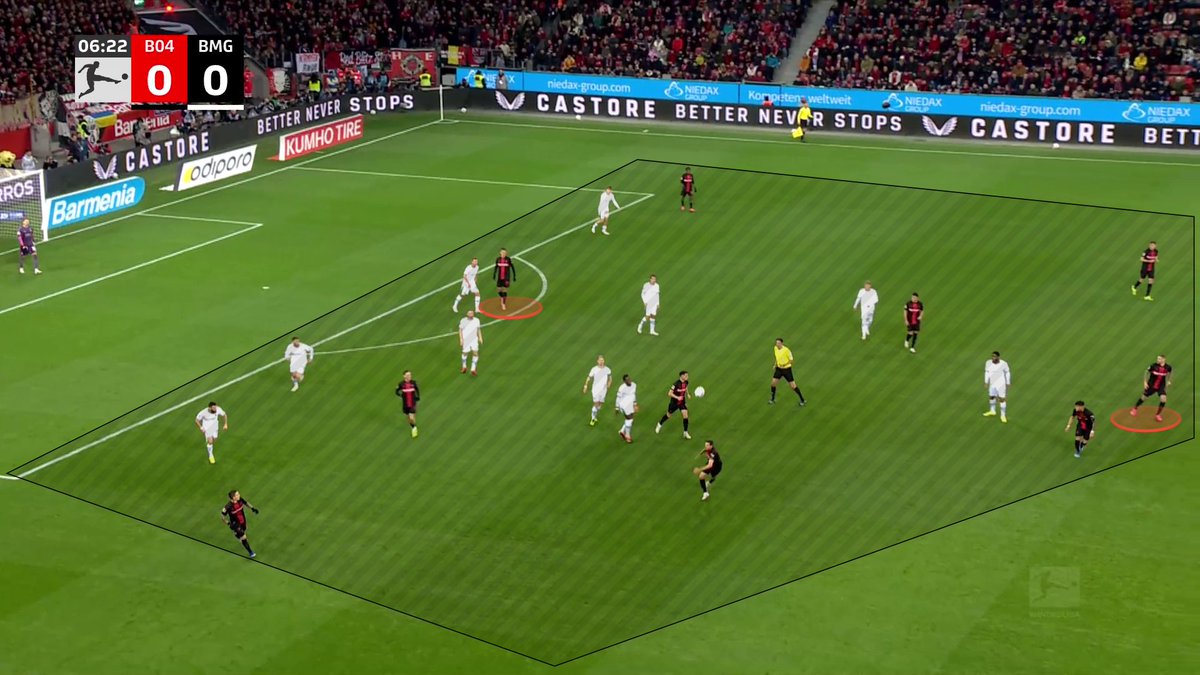
We can see that in the first image below as they have 5 players evenly distributed across the front line and they condense pressure together.
Then, behind that initial line of counterpressing, the close proximity of the 3-2 build-up keeps the unit compact in midfield & defence.
Then, behind that initial line of counterpressing, the close proximity of the 3-2 build-up keeps the unit compact in midfield & defence.
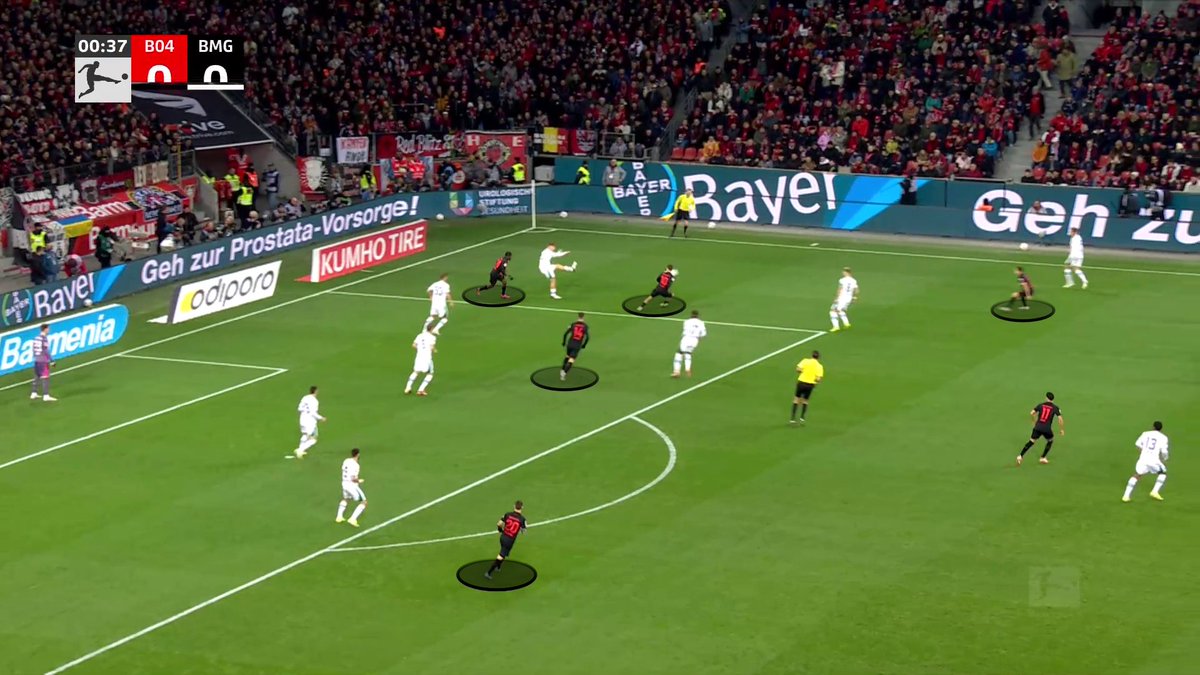
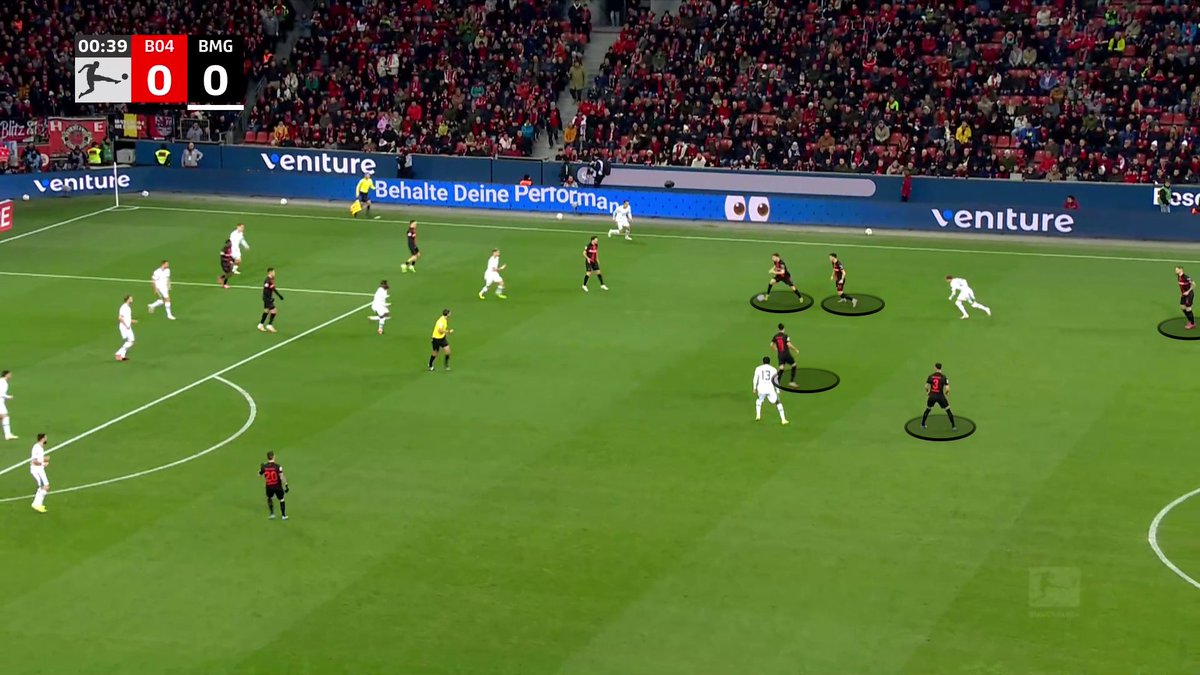
Look at the vertical compactness of the block here.
There is no more than 20 yards separating Leverkusen's #9 with their deepest player in defence.
Although the natural dynamics in the 3-2-5 enable effective counterpressing, Alonso has fine-tuned Leverkusen's off-ball dynamics.
There is no more than 20 yards separating Leverkusen's #9 with their deepest player in defence.
Although the natural dynamics in the 3-2-5 enable effective counterpressing, Alonso has fine-tuned Leverkusen's off-ball dynamics.
Again, in relation to the close proximity of the unit, we see the benefits of it when circulating play.
The spacing of the system means that Leverkusen can combine on one side but also circulate effectively to the underloaded side when needed.
The passing distances are short.
The spacing of the system means that Leverkusen can combine on one side but also circulate effectively to the underloaded side when needed.
The passing distances are short.
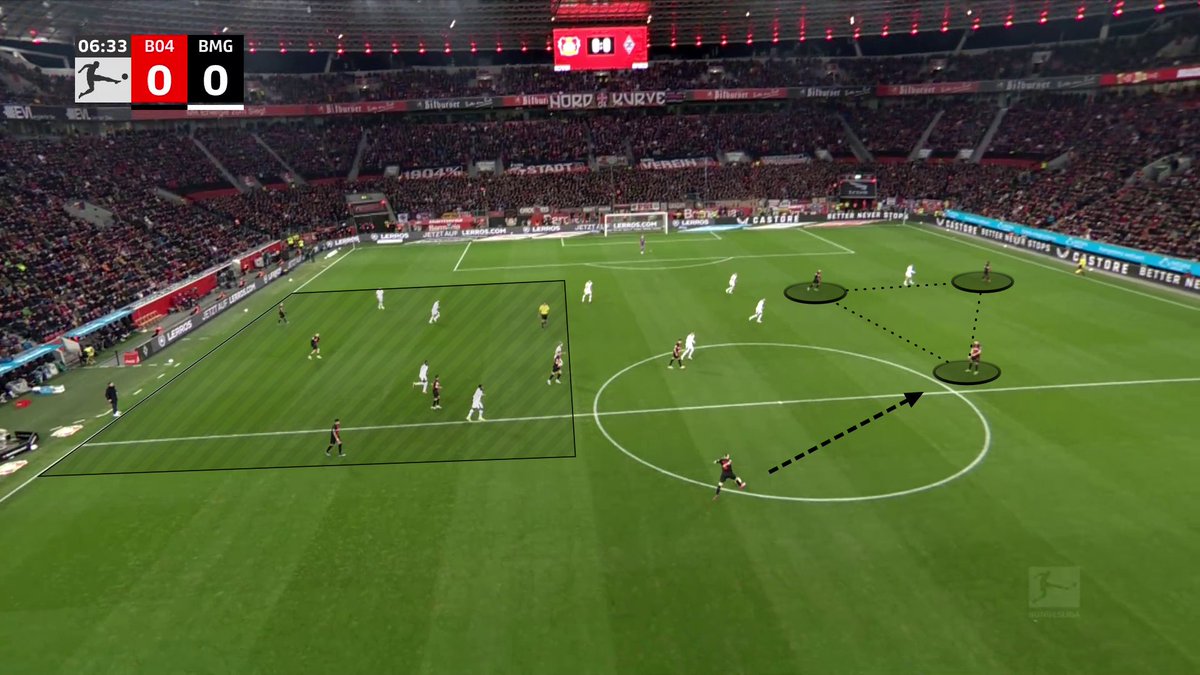
A key feature in Alonso's Leverkusen is the short and snappy combinations & circulation across the park.
He simplifies the game for his team. When Leverkusen players receive possession, they typically have plenty of short passing options to choose from.
That's all Xabi's work..
He simplifies the game for his team. When Leverkusen players receive possession, they typically have plenty of short passing options to choose from.
That's all Xabi's work..
Leverkusen are also mighty impressive in settled defensive situations.
Here we see them match-up in man-to-man fashion against Gladbach's 3-2-5.
However, an issue that often presents itself with 5 at the back off-ball systems is applying pressure high to the opposition's block.
Here we see them match-up in man-to-man fashion against Gladbach's 3-2-5.
However, an issue that often presents itself with 5 at the back off-ball systems is applying pressure high to the opposition's block.
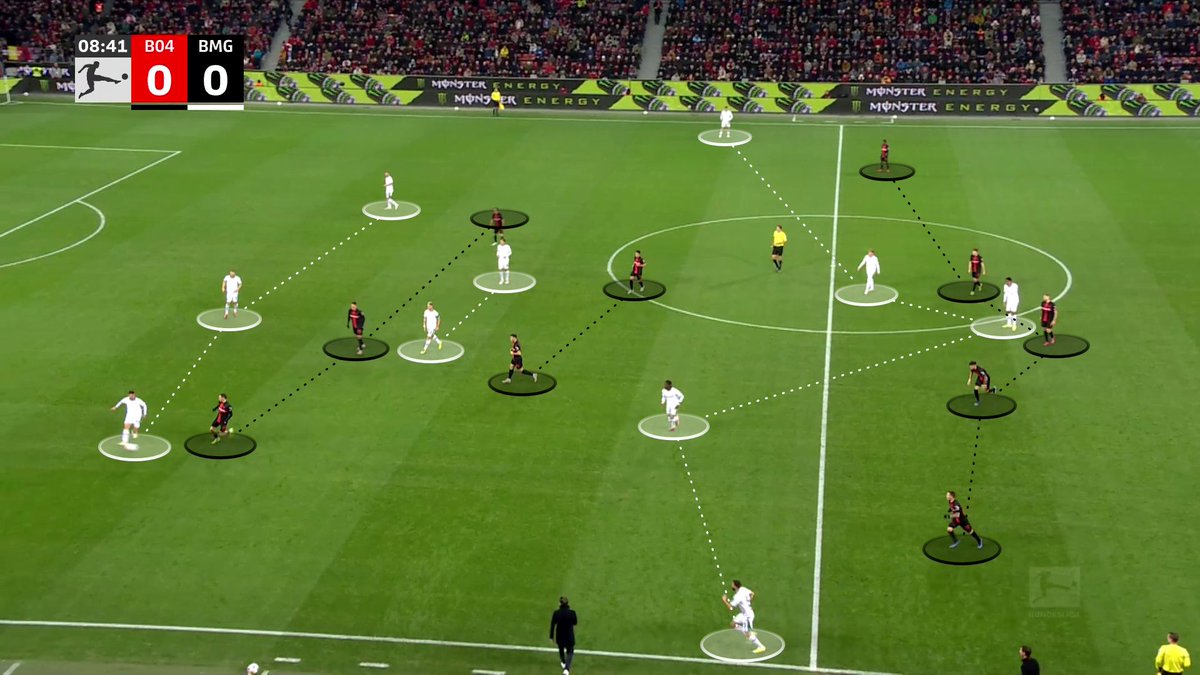
This did not prove to be an issue against Gladbach, and Alonso prevented it from being an issue against Darmstadt who built in a 4-2-4 shape from goal kicks.
Leverkusen pressed in a partly zonal and a partly man-to-man shape in those moments.
Let's discuss that in detail.
Leverkusen pressed in a partly zonal and a partly man-to-man shape in those moments.
Let's discuss that in detail.
Borja drops to mark the #6, their #10's push high to mark the opposition centre backs, Andrich marks one of the pivot, Frimpong pushes high against the left back, and the back four match up with Darmstadt's front 4.
Darmstadt's right back is free, and Xhaka is spare in the #6.
Darmstadt's right back is free, and Xhaka is spare in the #6.
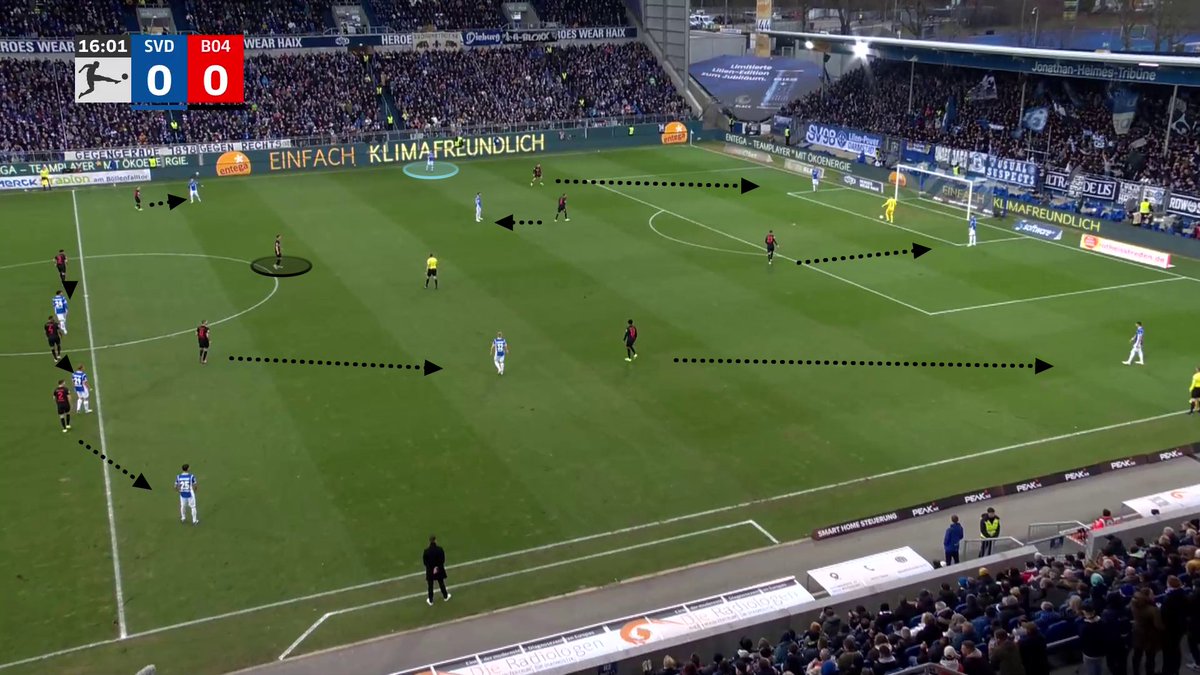
Darmstadt play short and Borja decides to leave the opposition #6 and press.
Wirtz responds by positioning himself in the half space so he keeps the tight centrally by preventing balls through the lines whilst being ready to press the #6 or the fullback.
Xhaka also steps high.
Wirtz responds by positioning himself in the half space so he keeps the tight centrally by preventing balls through the lines whilst being ready to press the #6 or the fullback.
Xhaka also steps high.
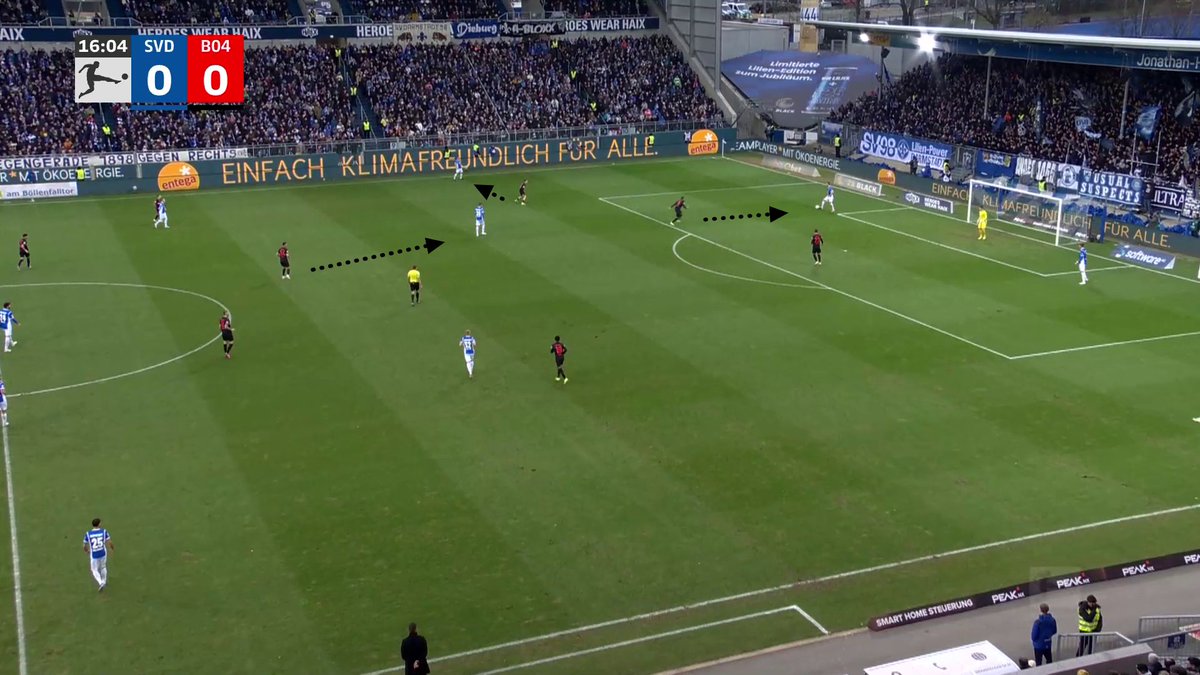
In the space of 3 seconds, Leveruksen went from a zonal difference approach to a man-to-man defensive approach, both of which utilised elements of shadow marking and emphasised the condescension of central spaces (with Wirtz covering space centrally to prevent vertical balls).
As a whole, the principles that Xabi Alonso utilises at Leverkusen represent that of the elite coaches in the sport.
His system gets the absolute best out of his players 💯
He may have to evolve in future away from the back 5, but at Leverkusen it is the perfect approach!
🛑
His system gets the absolute best out of his players 💯
He may have to evolve in future away from the back 5, but at Leverkusen it is the perfect approach!
🛑
Loading suggestions...