
I'm 18.
I’m obsessed with learning how to learn.
So, I spent 200+ hours studying how geniuses, prodigies, and high performers master their disciplines.
Here's what I found on how to master anything faster:
I’m obsessed with learning how to learn.
So, I spent 200+ hours studying how geniuses, prodigies, and high performers master their disciplines.
Here's what I found on how to master anything faster:

Steve Job dropped out
Nikola Tesla never graduated
Albert Einstein got bad grades
Thomas Edison was self-taught
Abraham Lincoln was homeschooled
In the academic setting, NONE of them were supposed to be anything but average.
But what made them so special?
Nikola Tesla never graduated
Albert Einstein got bad grades
Thomas Edison was self-taught
Abraham Lincoln was homeschooled
In the academic setting, NONE of them were supposed to be anything but average.
But what made them so special?

The obsession for mastery.
"Mastery — the feeling that we have a greater command of reality, other people, and ourselves." Robert Greene
Aristotle, Plato, Feynman, Edison...
When analyzing these talents, this is the one theme that keeps on appearing.
"Mastery — the feeling that we have a greater command of reality, other people, and ourselves." Robert Greene
Aristotle, Plato, Feynman, Edison...
When analyzing these talents, this is the one theme that keeps on appearing.

You see a master at work when you see their eyes, focus, simplicity, and elegance.
Masters turn the impossible into the ordinary.
These subtle patterns help you identify masters, but I've found a better mental model to spot the exceptional:
Masters turn the impossible into the ordinary.
These subtle patterns help you identify masters, but I've found a better mental model to spot the exceptional:

The 4 stages of mastery
To gain mastery, first define mastery.
The 4 stages of mastery are a good mental model that provides you the path to learn faster.
Let me explain:
To gain mastery, first define mastery.
The 4 stages of mastery are a good mental model that provides you the path to learn faster.
Let me explain:
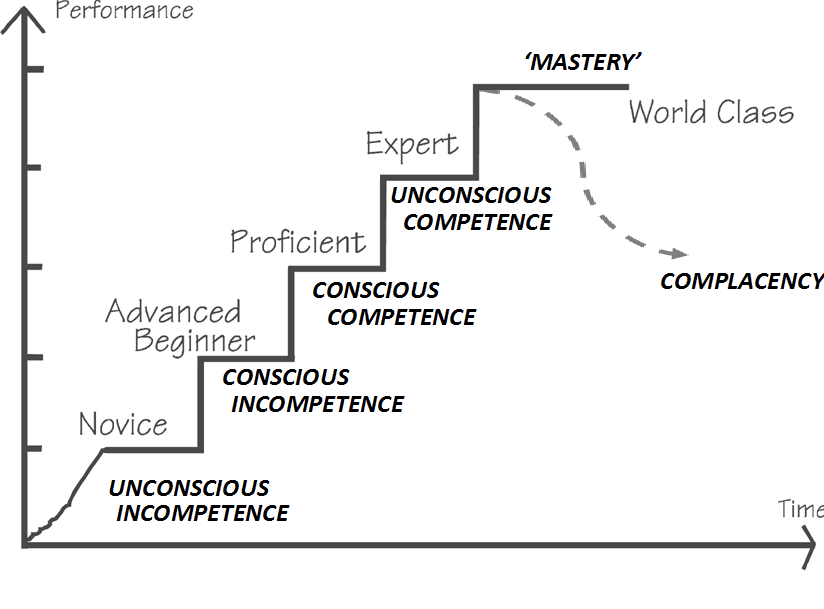
Unconscious Incompetence (Ignorance)
We start here. The dangerous land of unknown unknown.
You are unaware of problems and don't recognize the importance of improving.
We start here. The dangerous land of unknown unknown.
You are unaware of problems and don't recognize the importance of improving.
Conscious Incompetence (Awareness)
Usually, the most frustrating stage where 90% will quit.
This is the first awakening call.
You gained self-awareness of your limitations and understand the difficulty of the skill.
Usually, the most frustrating stage where 90% will quit.
This is the first awakening call.
You gained self-awareness of your limitations and understand the difficulty of the skill.
Conscious Competence (Learning)
The enlightenment phase.
If mastery was climbing a mountain, this would be the last but steepest rise. One hiccup can undo hours of effort.
You perform tasks well but still require effort to execute.
The enlightenment phase.
If mastery was climbing a mountain, this would be the last but steepest rise. One hiccup can undo hours of effort.
You perform tasks well but still require effort to execute.
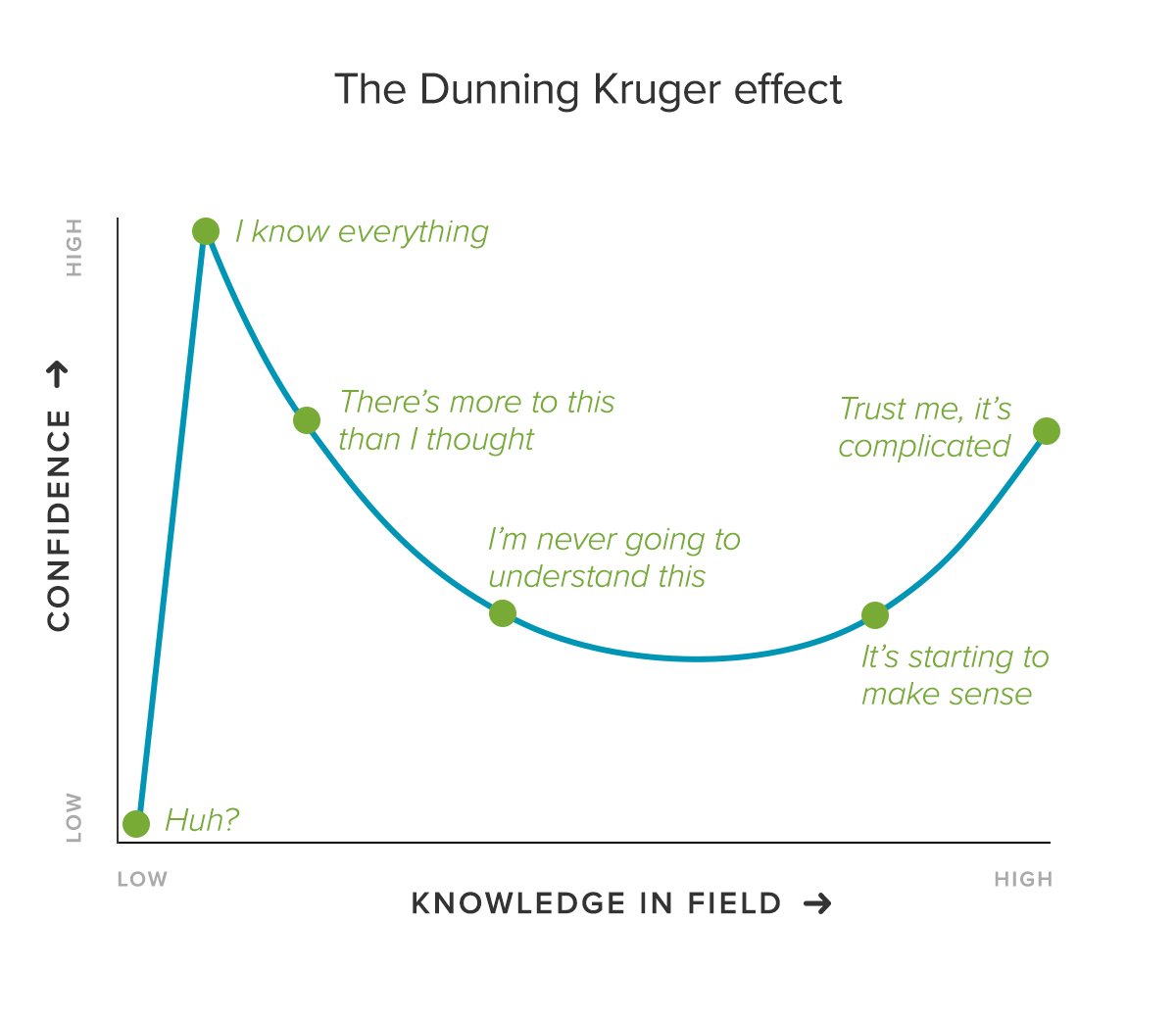
Unconscious Competence ( True Mastery)
Mozart with piano, Stephen Curry with 3pts, Feynman with physics.
Associated with the state of flow and peak performance. The skill is wired in your subconscious. It now takes more effort to do it WRONG.
This is mastery.
Mozart with piano, Stephen Curry with 3pts, Feynman with physics.
Associated with the state of flow and peak performance. The skill is wired in your subconscious. It now takes more effort to do it WRONG.
This is mastery.

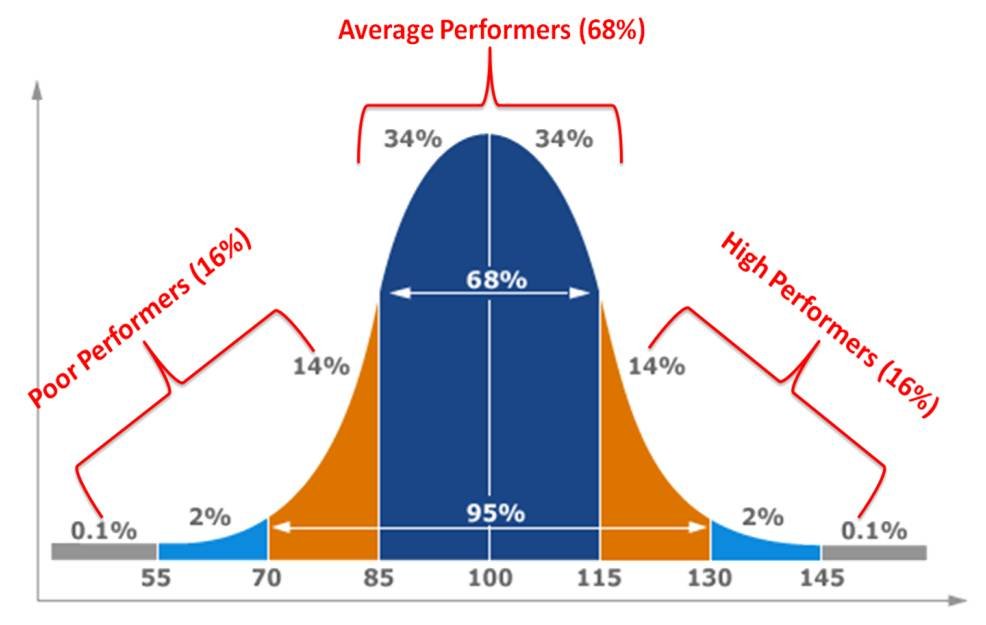
Most people are average.
It's hard to get past the first 2 stages of confusion and hopelessness. But if you've read this far, I know this is not you.
So if you want to become a master at anything faster, here's how:
It's hard to get past the first 2 stages of confusion and hopelessness. But if you've read this far, I know this is not you.
So if you want to become a master at anything faster, here's how:
Be obsessed with truth:
Your north star for learning.
Human beings are born with a thirst for knowledge. The objective of knowledge is truth.
This was our compass as kids, but sadly a skill as adults.
Your north star for learning.
Human beings are born with a thirst for knowledge. The objective of knowledge is truth.
This was our compass as kids, but sadly a skill as adults.

Develop a radar for learning.
When faced with a challenge, we blame it on something or someone or run away. We fear it affects our ego and end up in a life of escaping the discomfort.
But that same discomfort and struggle are the keys to growth (cognitive load theory).
When faced with a challenge, we blame it on something or someone or run away. We fear it affects our ego and end up in a life of escaping the discomfort.
But that same discomfort and struggle are the keys to growth (cognitive load theory).

Plant your tree of knowledge
Think of knowledge as a tree. 80% of details are leaves attached to branches and multiple branches glued to the 20% trunk.
Most people pick up leaves, while experts strengthen the chunks.
A strong trunk can withstand any challenge.
Think of knowledge as a tree. 80% of details are leaves attached to branches and multiple branches glued to the 20% trunk.
Most people pick up leaves, while experts strengthen the chunks.
A strong trunk can withstand any challenge.

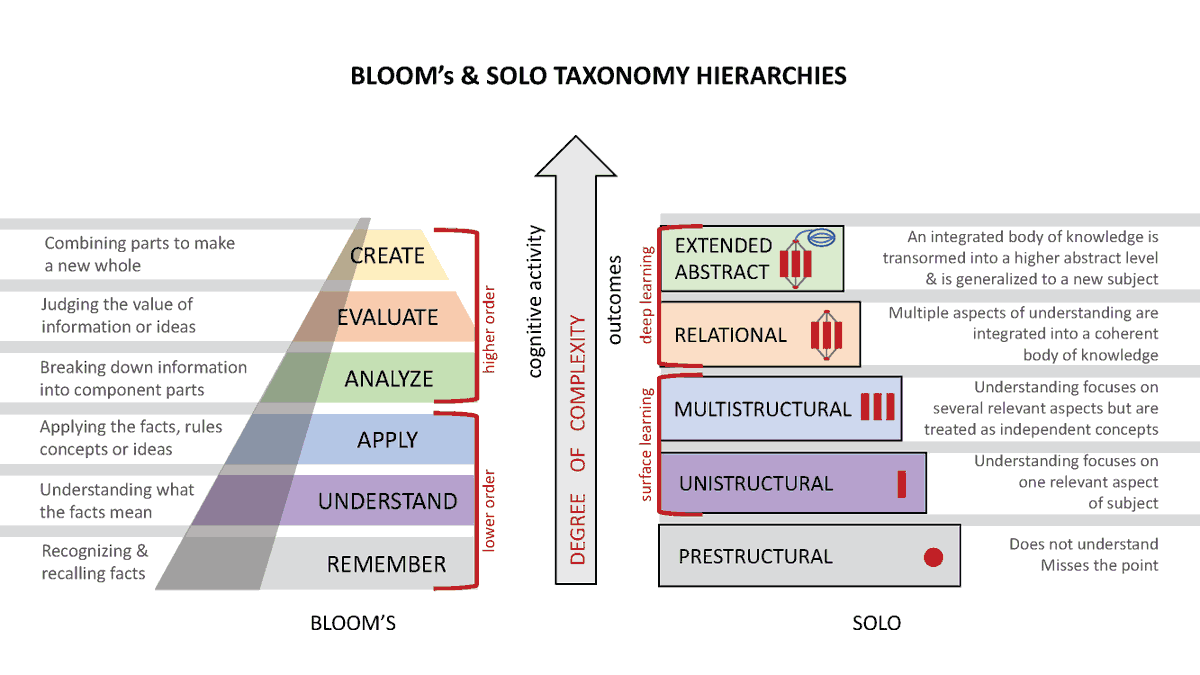
Higher order thinking
There are 2 types of thinking:
• Lower order: memorization, understanding, applying.
• Higher order: analyzing, evaluating, creating.
In simplest form, the more you connect and test relationships between ideas, the more you remember.
There are 2 types of thinking:
• Lower order: memorization, understanding, applying.
• Higher order: analyzing, evaluating, creating.
In simplest form, the more you connect and test relationships between ideas, the more you remember.

When focused on higher-order thinking, we automatically fill the lower order.
Instead of:
• rereading → use more analogy
• flashcards → map out the big picture
• rote memorization → teach it to an imaginary friend
Never confuse studying with real learning.
Instead of:
• rereading → use more analogy
• flashcards → map out the big picture
• rote memorization → teach it to an imaginary friend
Never confuse studying with real learning.
Zoom in and zoom out.
Your brain is a selfish forgotten machine. If something doesn't "make sense," it's cleared.
So focus on details but DON'T forget the bigger picture.
Big picture = "it make sense"
Small details = "dense knowledge web"
Your brain is a selfish forgotten machine. If something doesn't "make sense," it's cleared.
So focus on details but DON'T forget the bigger picture.
Big picture = "it make sense"
Small details = "dense knowledge web"

Follow the curiosity rabbit.
Curiosity makes learning fun and memorable. It naturally creates "relevancy," which improves your memory.
Most will hop on the highest trends; dive into the deepest rabbit holes.
Curiosity makes learning fun and memorable. It naturally creates "relevancy," which improves your memory.
Most will hop on the highest trends; dive into the deepest rabbit holes.

Inquiry-based learning
If curiosity is the GPS, your question is the car to navigate the journey.
Never fear looking dumb because of a question. Sooner or later, it will happen, so why wait, what is the risk?
This is your growth season.
If curiosity is the GPS, your question is the car to navigate the journey.
Never fear looking dumb because of a question. Sooner or later, it will happen, so why wait, what is the risk?
This is your growth season.

Reward the effort not the outcome.
A study in 2018 showed kids rewarded based on outcome performed much worse when the difficulty increased.
But those rewarded for effort excelled.
Reframe: "You got an A+, great job!" → "I can tell you worked hard for that; great job!"
A study in 2018 showed kids rewarded based on outcome performed much worse when the difficulty increased.
But those rewarded for effort excelled.
Reframe: "You got an A+, great job!" → "I can tell you worked hard for that; great job!"

Embracing Failures
The fear of failure has ended more dreams than any alarm clock.
When tackling novelty, expect failure by default. It's not your fault; it is natural.
“Pain + reflection = progress”
Every mistake paired with reflection is a step closer to your goal.
The fear of failure has ended more dreams than any alarm clock.
When tackling novelty, expect failure by default. It's not your fault; it is natural.
“Pain + reflection = progress”
Every mistake paired with reflection is a step closer to your goal.

Have an eye for reflection:
"Insanity is doing the same thing over and over again and expecting different results" - Albert Einstein
Mistakes are useless without reflection.
When analyzing the process, find the hidden patterns, train of thoughts, and beliefs that control the outcome.
"Insanity is doing the same thing over and over again and expecting different results" - Albert Einstein
Mistakes are useless without reflection.
When analyzing the process, find the hidden patterns, train of thoughts, and beliefs that control the outcome.

Some of my favorite reflection questions:
• What were my expectations vs reality?
• How did I feel, what triggered this feeling?
• How do I tend to behave under ... situation, why so?
Go deep, be specific, and repeat multiple cycles.
Reflection is your free therapy session.
• What were my expectations vs reality?
• How did I feel, what triggered this feeling?
• How do I tend to behave under ... situation, why so?
Go deep, be specific, and repeat multiple cycles.
Reflection is your free therapy session.
Patterns tell stories.
Success leaves clues. You don't have to reinvent the wheel. Seek people a few steps ahead, and shadow them.
Learn their:
• beliefs
• behaviours
• characteristics
• thought process
This is the quickest shortcut to 100s hrs of trial and errors.
Success leaves clues. You don't have to reinvent the wheel. Seek people a few steps ahead, and shadow them.
Learn their:
• beliefs
• behaviours
• characteristics
• thought process
This is the quickest shortcut to 100s hrs of trial and errors.

Seeking mentors
Kobe had Michael Jordan
Beethoven had Joseph Haydn
Leonardo Da Vinci had Andrea del Verrocchio
Mentors are people 2 steps ahead of who you want to become.
Some characteristics include humility, critical thinking, and understanding human psychology and EQ.
Kobe had Michael Jordan
Beethoven had Joseph Haydn
Leonardo Da Vinci had Andrea del Verrocchio
Mentors are people 2 steps ahead of who you want to become.
Some characteristics include humility, critical thinking, and understanding human psychology and EQ.

Set your standards.
Stanard is a double-edged sword.
When on you, it may holds you back (imposter syndrome); when it's on your goal, it pushes you forward.
You set the standards. Embody it.
Stanard is a double-edged sword.
When on you, it may holds you back (imposter syndrome); when it's on your goal, it pushes you forward.
You set the standards. Embody it.

That's a wrap!
If you found this thread valuable, I would appreciate:
1. Follow @LearningToan for more learning, and education content
2. Retweet the tweet below so the algorithm can recommend my content to even more people.
If you found this thread valuable, I would appreciate:
1. Follow @LearningToan for more learning, and education content
2. Retweet the tweet below so the algorithm can recommend my content to even more people.
Every Saturday, I send you a newsletter with 1 idea to help you learn faster, become more productive, and live a meaningful life.
Subscribe here:
learninglab.beehiiv.com
Subscribe here:
learninglab.beehiiv.com

Loading suggestions...