

1. These days everyone is talking about decoupling and de-risking, but as is often the case with big economic questions no one has really assessed whether such moves are even viable. In this new study with @hiia_budapest we investigate just this - the results are stark. 🧵

2. When it comes to overall imports, the developing world is no longer more dependent than the developed. After an initial period of high imports to get their economies up and running, the BRICS+ are now less dependent than the West.
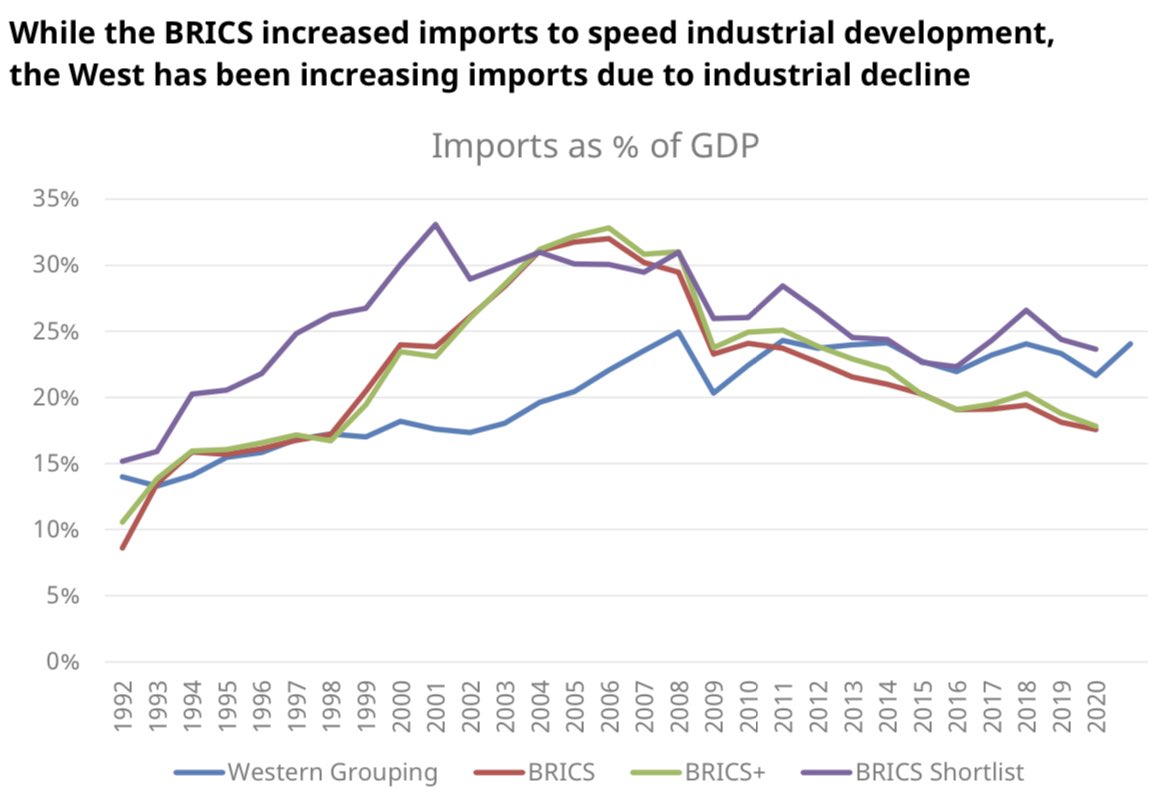
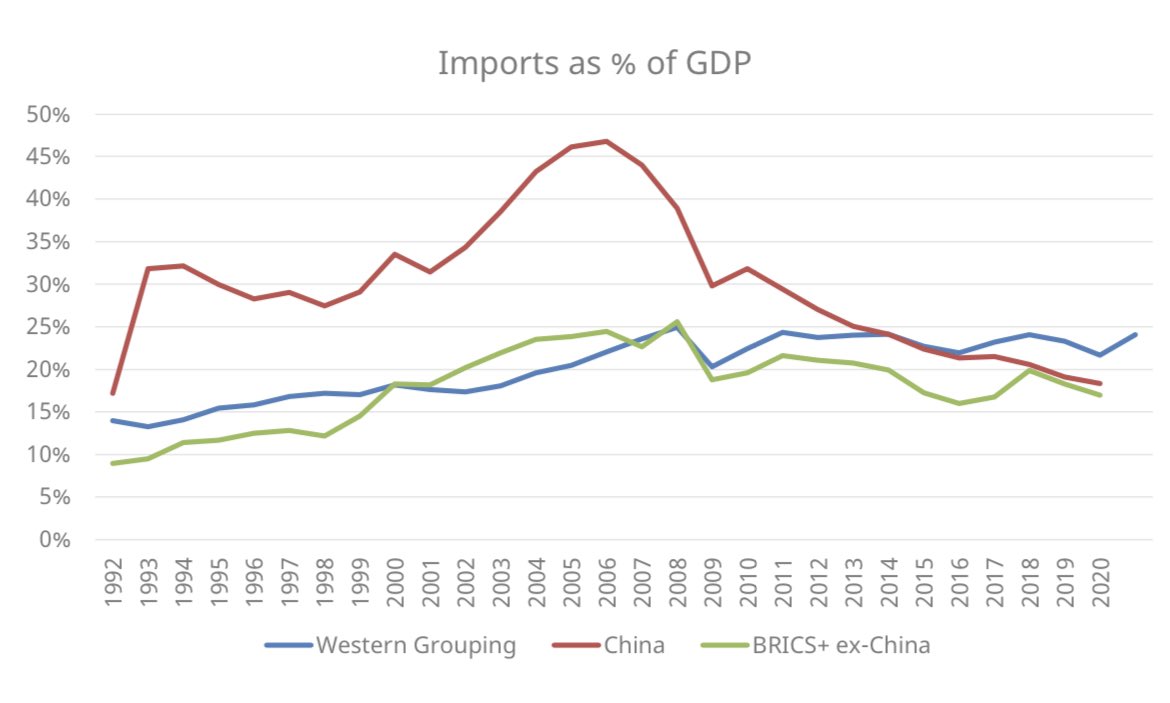
3. This is the case whether we include or exclude China from the BRICS+. Either way, the West is now more import-dependent than the rest.
4. If we look at who is dependent upon who, a similar pattern emerges. China used to be far more dependent on the EU and the US than vice versa. But over time this dependency receded - our dependence on China continues to grow.
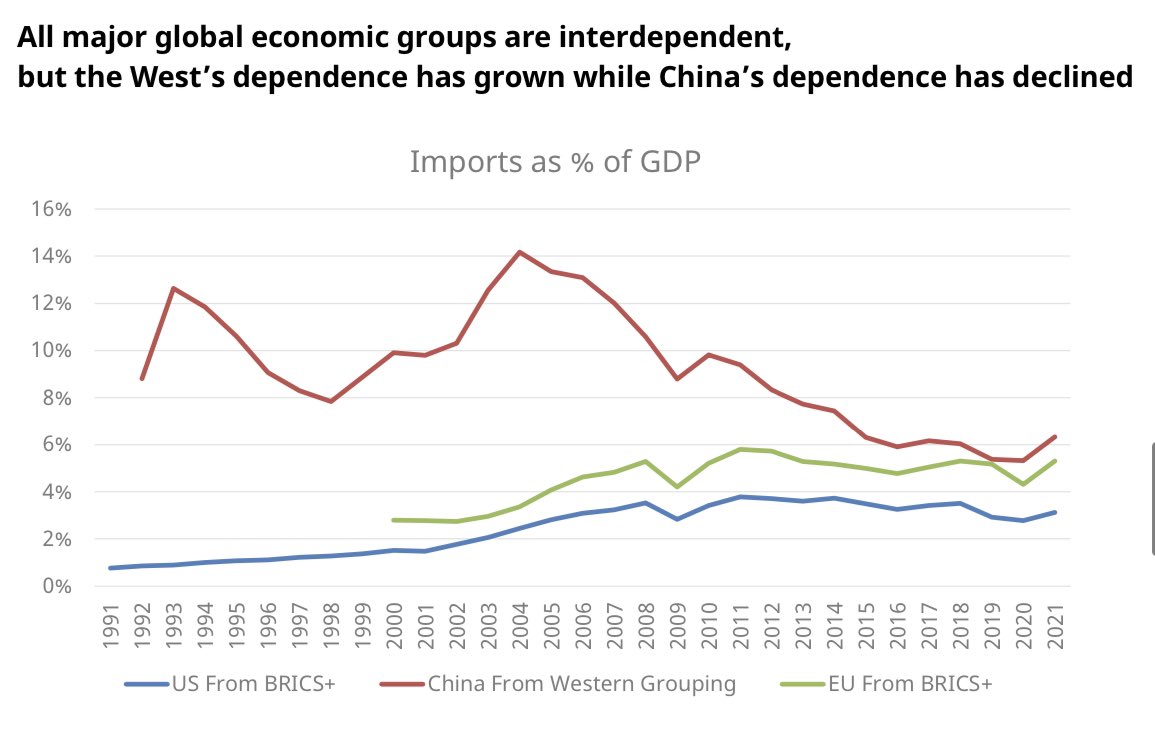
5. “This is why we need to cut off trade and decouple!” we are told. Easier said than done. We don’t import trinkets anymore. Rather we import components that are utterly essential for our domestic economies - and even our domestic manufacturing bases.
6. Take capital goods for example. This is machinery - the stuff that makes stuff. The West is now substantially more dependent than the BRICS+ in terms of capital goods imports. Shutting off these imports would grind our economies to a halt. Hyperinflation would likely emerge.
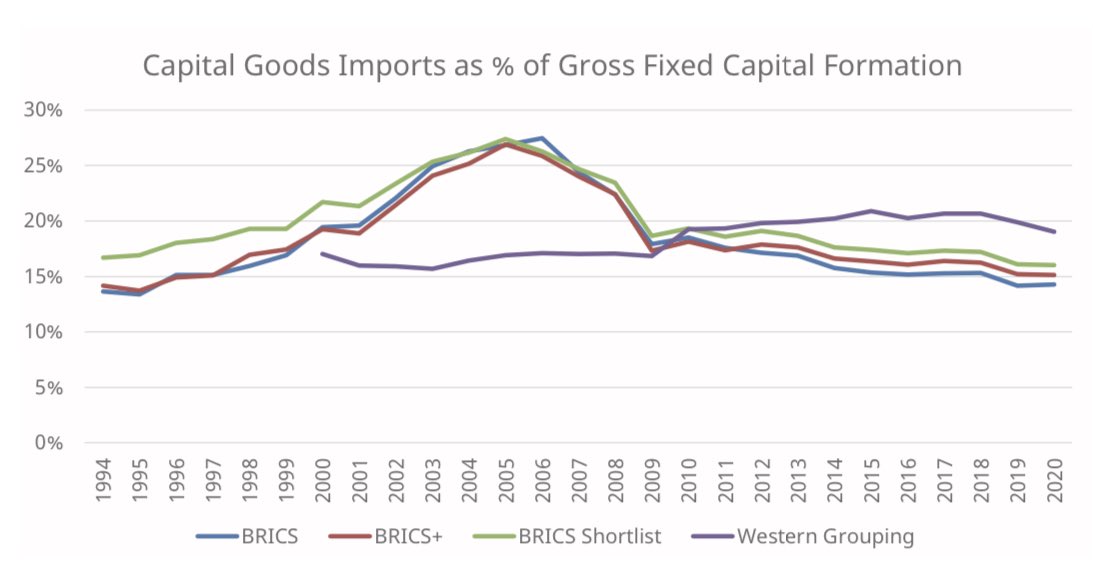
7. Nor does this picture change if we look at where the West is importing its capital goods from. The EU is extremely reliant on China, the US slightly less so - but its still very, very dependent.
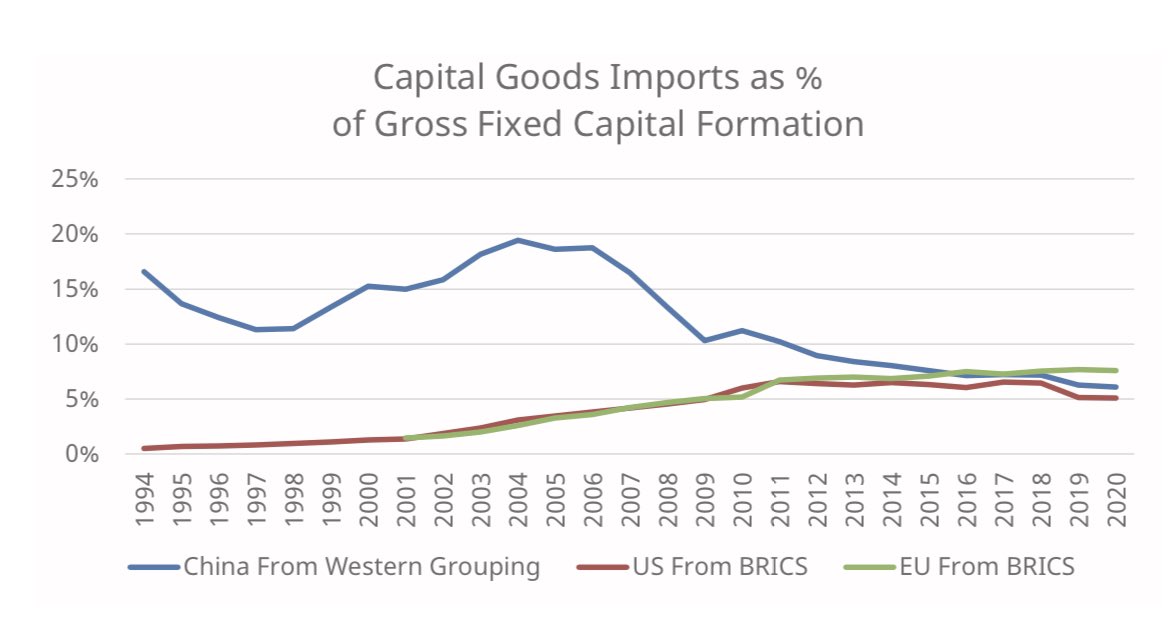
8. “Well then we need to replace these foreign capital goods with domestic ones!” we are told. Okay and what’s the plan to do that? These dependencies have taken 35 to develop. Massive changes to the structure of our economies. Can we reverse it overnight? Not a chance.
9. Reversing this would take careful policy and likely decades to achieve. No serious economist would tell you otherwise. And so, we’re stuck. For better or for worse globalisation has embedded deep dependencies in the world economy.
10. We may wish this wasn’t the case, but we can’t wish it isn’t the case. And so we will just have to deal with. We advocate a strategy of Connectivity moving forward where each nation pursues its strategic objectives pragmatically with the rest of the world.
LINK TO STUDY 👇
LINK TO STUDY 👇

Loading suggestions...