

The Decline of Pātaliputra
The present thread is on the decline of the city of Pātaliputra.
It would detail on the possible reasons, which made the 'Greatest City of India' disappear for at least a thousand years.
🧵
The present thread is on the decline of the city of Pātaliputra.
It would detail on the possible reasons, which made the 'Greatest City of India' disappear for at least a thousand years.
🧵
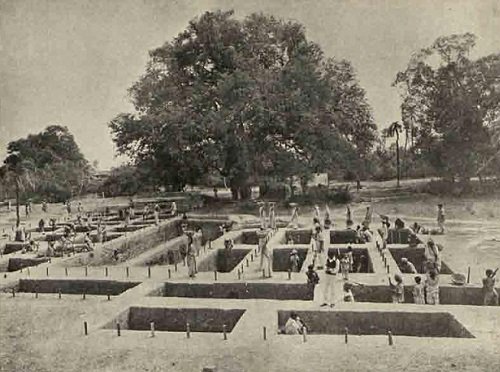
" And among famous places of residence & haunts of busy men, this will become the chief, O Ananda, the city of Pataliputra, a centre for interchange of all kinds of ware, & will be threatened only by floods, fire and civil discord."
-- Buddha on Pātaliputra in 'Patali-sutta'
-- Buddha on Pātaliputra in 'Patali-sutta'
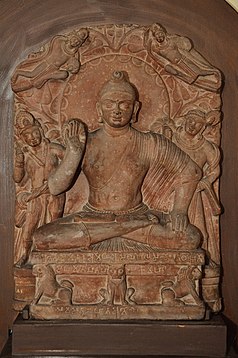
So did the Buddha's prophecy came true?
Was Patāliputra engulfed with civil discord and environmental factors, which struck the city at the same time, after the demise of Guptas?
Lets go into a bit of details.
Was Patāliputra engulfed with civil discord and environmental factors, which struck the city at the same time, after the demise of Guptas?
Lets go into a bit of details.
The city was established by the name of 'Pataligrama' by Ajatshatru during 16 year war with the Vajjis.
After Ajatshatru's death, the capital of Magadha was shifted by his son to Pātaliputra.
For nearly a thousand years after that, the city remained virtually India's capital.
After Ajatshatru's death, the capital of Magadha was shifted by his son to Pātaliputra.
For nearly a thousand years after that, the city remained virtually India's capital.
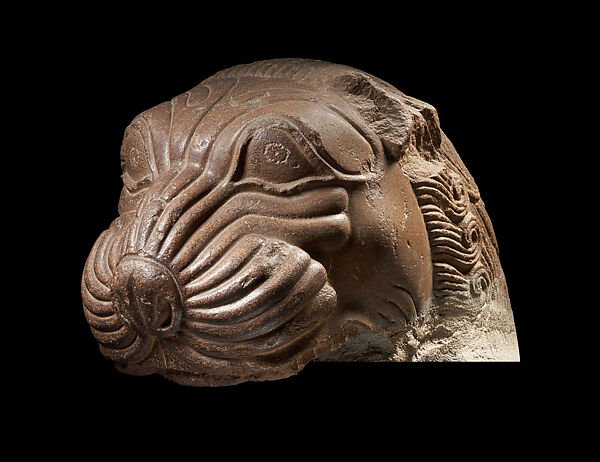
Megasthenes lived here for some time and has described it's palisade walls, it's 570 towers and 64 gates.
It had a population of roughly 400,000 inhabitants in c. 300 BCE.
It was possibly the greatest and richest city in the world during ancient times.
It had a population of roughly 400,000 inhabitants in c. 300 BCE.
It was possibly the greatest and richest city in the world during ancient times.
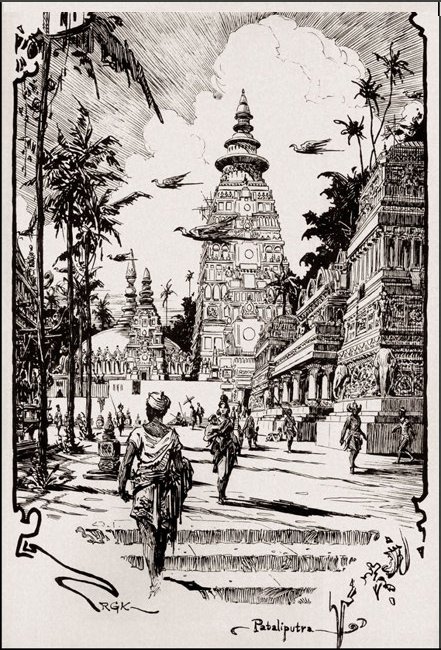
Ancient sources describe the city on the confluence of Ganga & Son rivers.
However, in reality, the city was surrounded by four rivers:
1) Ganga;
2) Son;
3) Gandhaka; and
4) Punpun
No other place in India has this unique distinction of being encircled by four perennial rivers.
However, in reality, the city was surrounded by four rivers:
1) Ganga;
2) Son;
3) Gandhaka; and
4) Punpun
No other place in India has this unique distinction of being encircled by four perennial rivers.
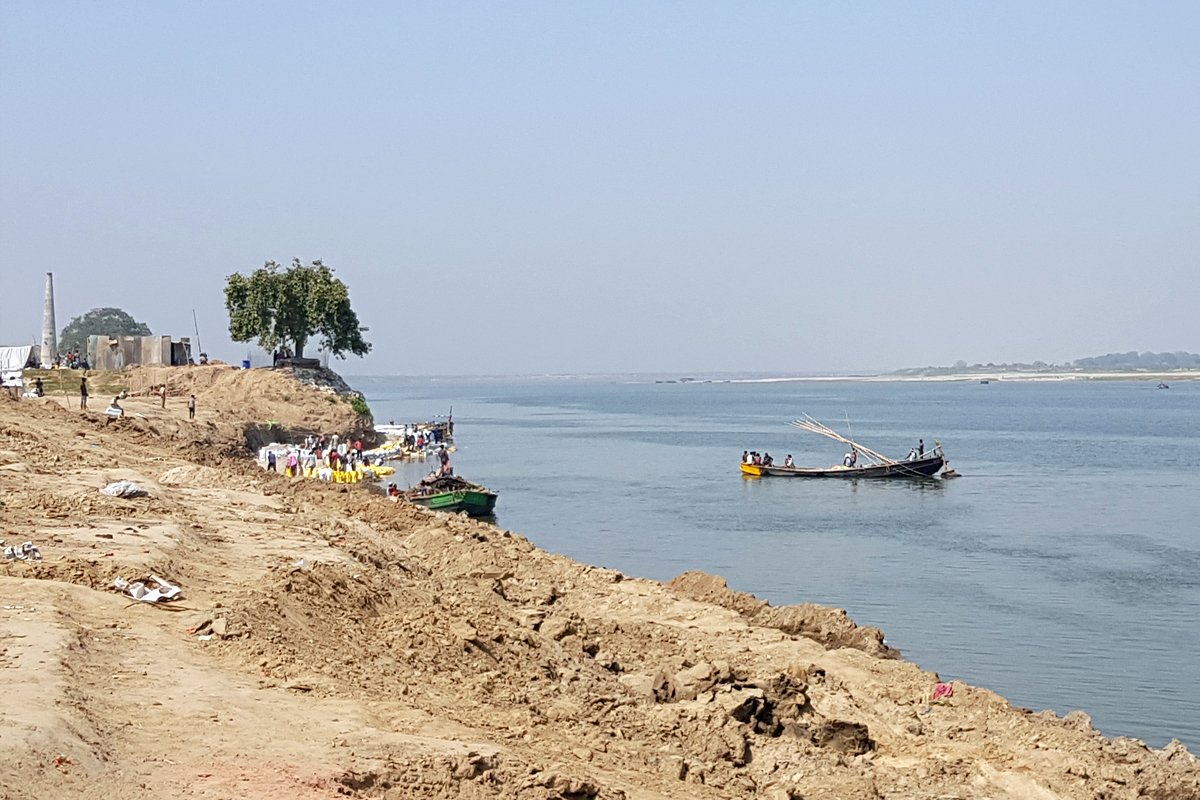
Of the above four, Son river united with Ganges in the western suburbs of the city till the 14th century and is described as a very turbulent river.
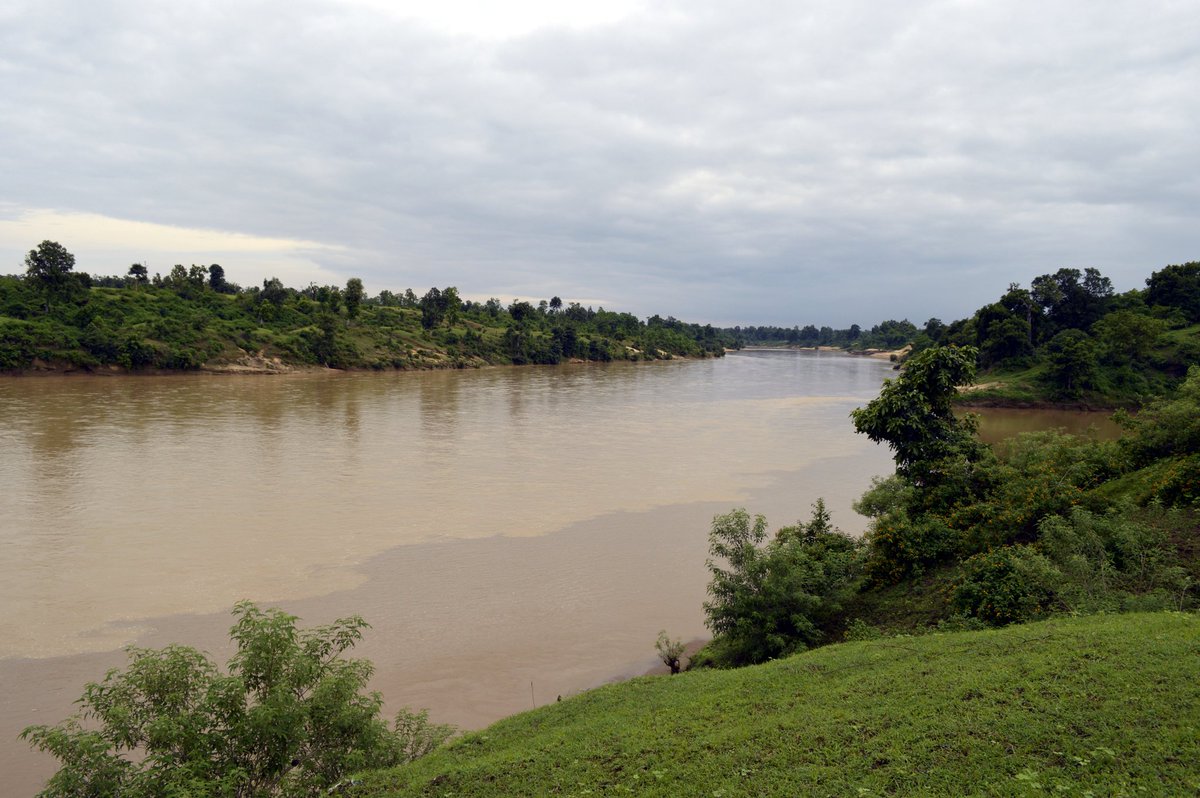
Punpun river flowed to the south and east of the city and is quite turbulent during rains.
It is called 'Punpun' because it gets frequently flooded during the monsoons.
It is called 'Punpun' because it gets frequently flooded during the monsoons.
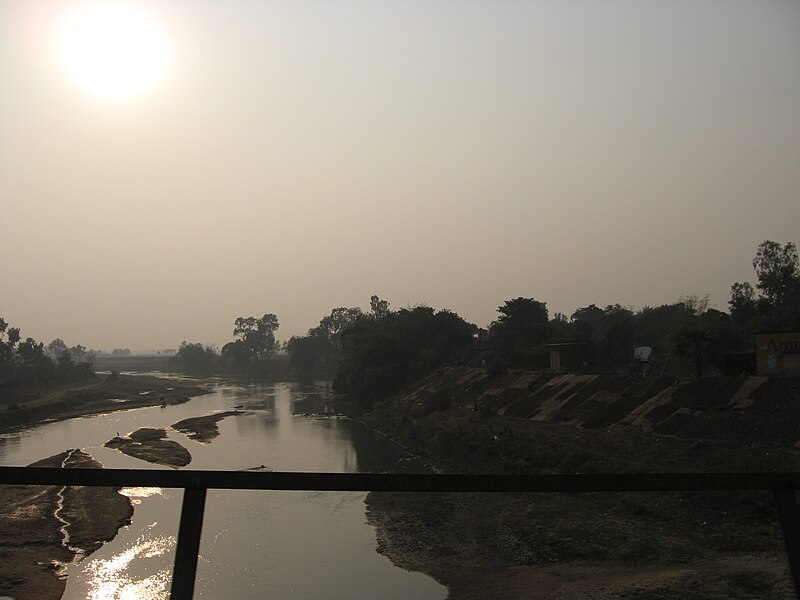
Because of being situated at the confluence of 3 rivers & 4th nearby, the city became very prosperous due to trade & became a great center of commerce.
The city was fairly dependent on commerce & decline of Guptas, invasions, snapped the trade connection leading to it's decline.
The city was fairly dependent on commerce & decline of Guptas, invasions, snapped the trade connection leading to it's decline.
The decline of the city is placed between 550-750 AD.
Cunningham had suggested, based on some Chinese annals that a good portion of the city was washed away by floods in 8th century.
Cunningham had suggested, based on some Chinese annals that a good portion of the city was washed away by floods in 8th century.
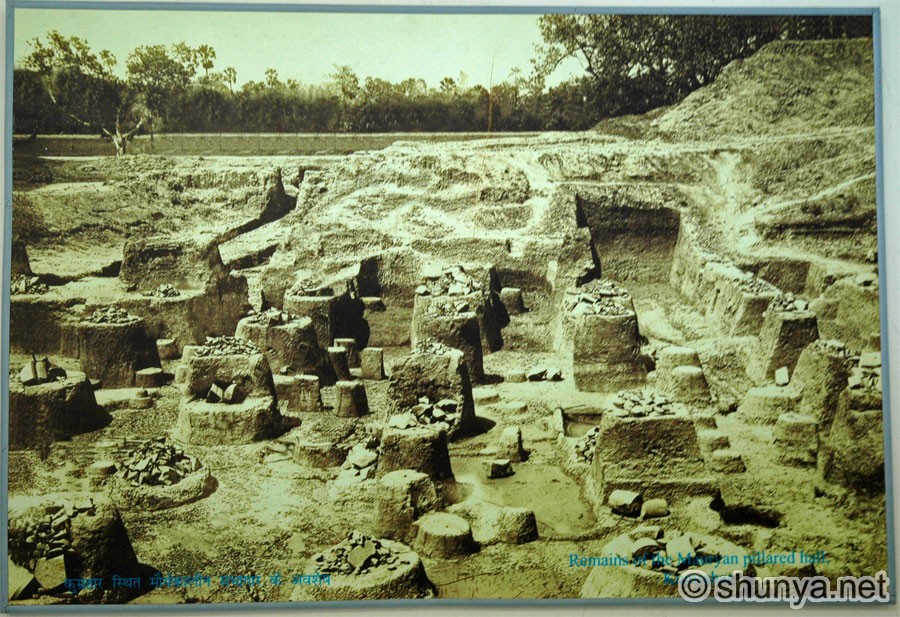
The discovery of ashes 20-30 feet below the surface at Kumhrar, suggests that possibly the Huns torched many buildings with a large cavalry force in 513/514 AD.
Xuanzang mentions that Mihirkula destroyed 1600 stupas & temples in the city and killed thousands of its inhabitants.
Xuanzang mentions that Mihirkula destroyed 1600 stupas & temples in the city and killed thousands of its inhabitants.
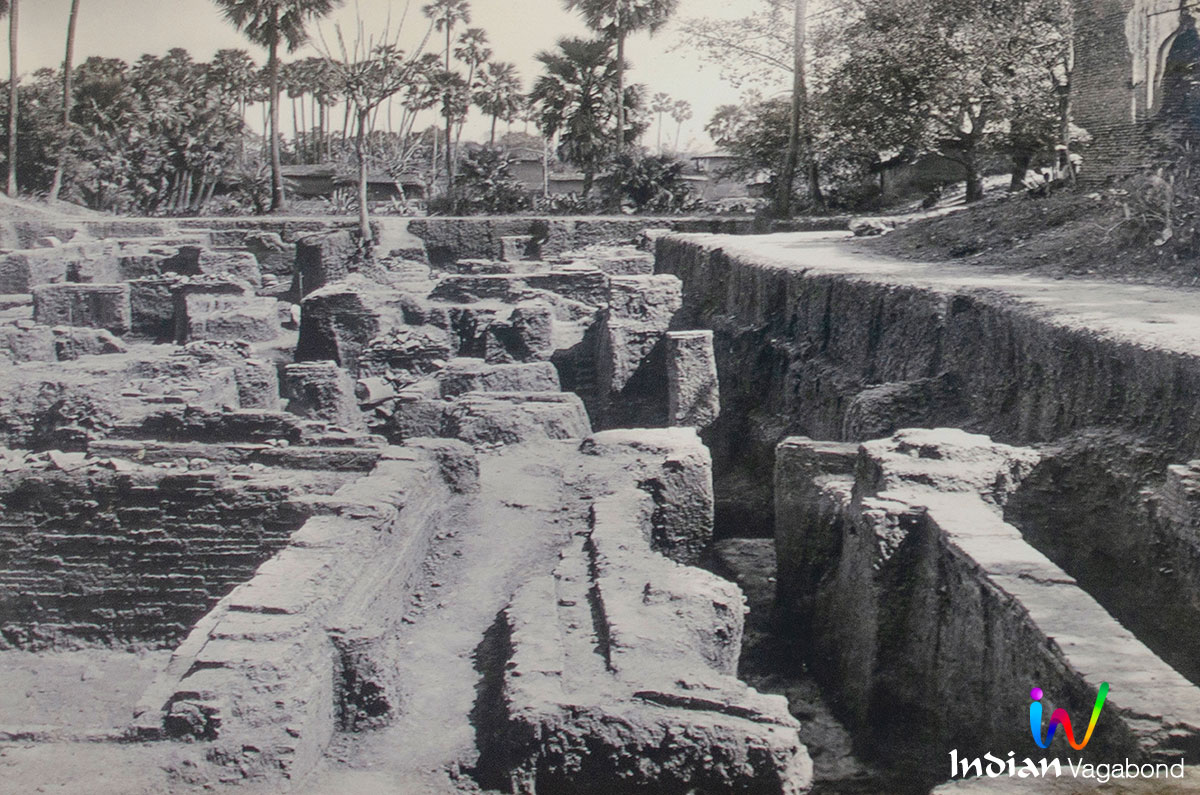
The regions also comes under seismic zone and it is possible that a major earthquake may have shifted the course of city's rivers, leading to it's disappearance.
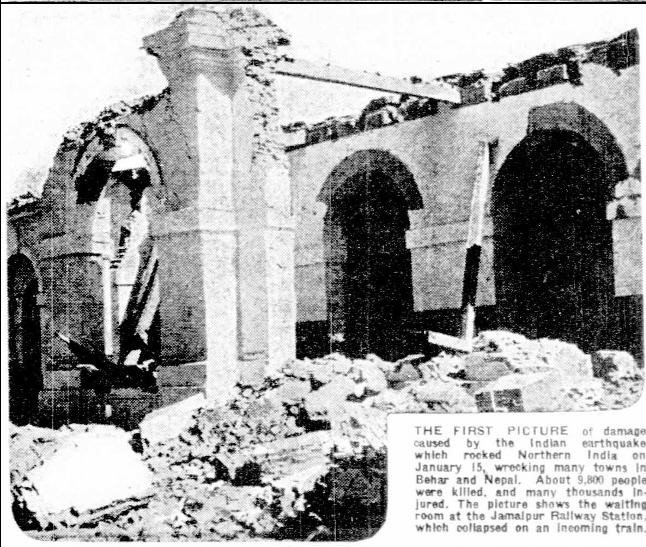
In modern times, earthquakes of 1934-35, 2013-14 led to major devastation in the area.
Pic of Bihar earthquake 1934
In modern times, earthquakes of 1934-35, 2013-14 led to major devastation in the area.
Pic of Bihar earthquake 1934
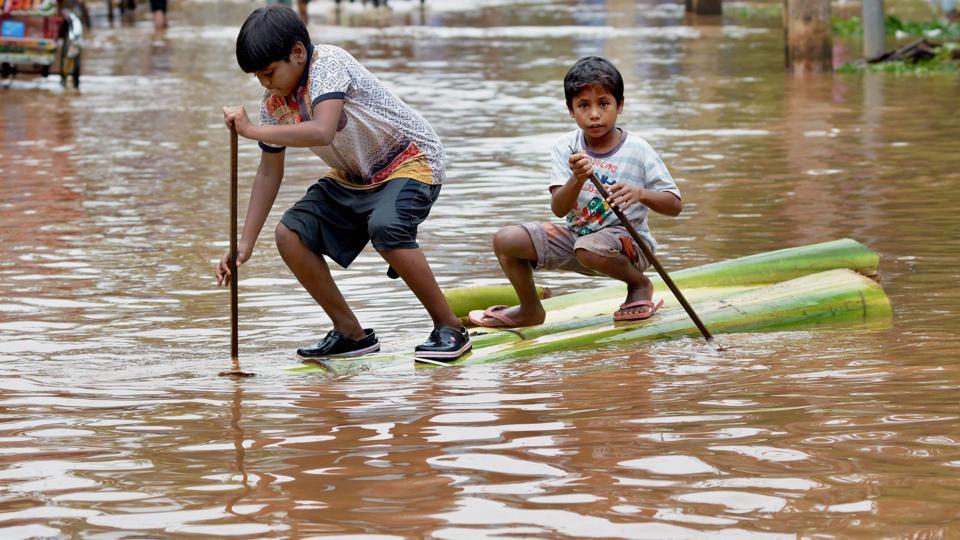
Taking the flood theory further, a Jain document named 'Tithlogali Painniya' mentions a horrible flood in the 2nd half of 6th century AD.
It mentions 17 consecutive days of rains which flooded the city & only people who escaped were those who could get boats or wooden rafts.
It mentions 17 consecutive days of rains which flooded the city & only people who escaped were those who could get boats or wooden rafts.
From the graphic details recorded by Xuanzang in 637 AD, it seems that a big flood devastated the city.
Xuanzang saw the city in ruins, it's stupas, temples, palaces in a heap of ruin & only 300 houses remained, which accomodated not more than a thousand people.
Xuanzang saw the city in ruins, it's stupas, temples, palaces in a heap of ruin & only 300 houses remained, which accomodated not more than a thousand people.
Thus, civil strife (fire & invasions), and environmental factors ( flooding), led to the decline and ultimate disappearance of ancient Pātaliputra.
Perhaps, Buddha's prophecy did come true!
Perhaps, Buddha's prophecy did come true!
References:
1) 'Decay of Gangetic towns in Gupta and Post-Gupta Times' (1973, pp 135-150) ;
2) 'Proceedings of Indian History Congress' (1975, vol 76) ;
3) 'Antiquarian Remains in Patna' (1973, pp 379)
End
1) 'Decay of Gangetic towns in Gupta and Post-Gupta Times' (1973, pp 135-150) ;
2) 'Proceedings of Indian History Congress' (1975, vol 76) ;
3) 'Antiquarian Remains in Patna' (1973, pp 379)
End
Loading suggestions...