

1. Indentured labour was how former slave masters in British colonies retained their power. Indian indentured labour was first tried in Mauritius in 1834, British Guiana in 1838, and then Trinidad. Subsequently it was used in Jamaica, Ceylon, Burma, Malaya and South Africa.
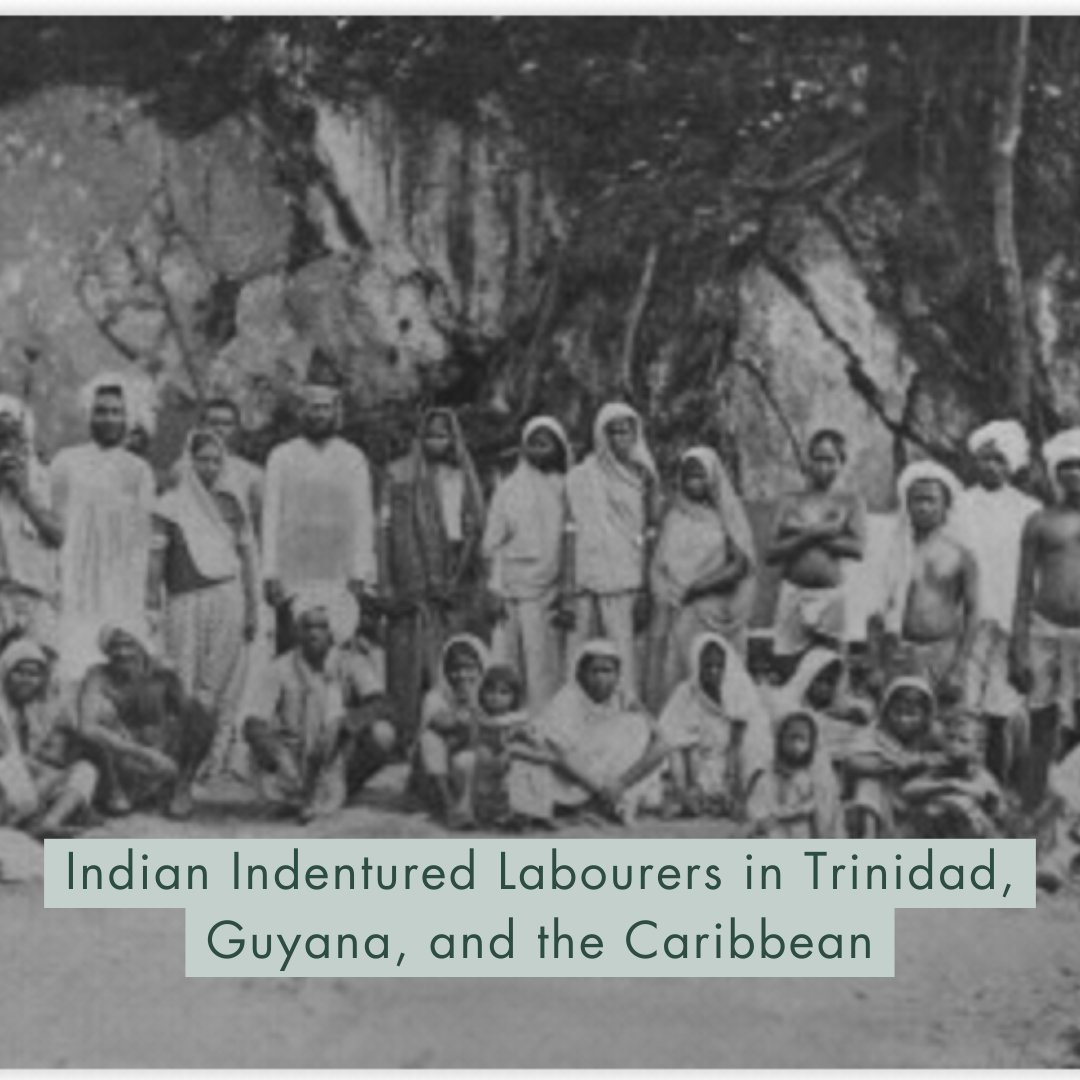
2. Because the ex-slaves preferred to become small independent farmers, the plantations became starved of labour. Emancipation of slaves in the British West Indies coincided with a soaring population, rising plantation costs and falling sugar prices.
3. Britain was compelled to use African slaves freed from captured slave vessels as free wage labourers. By 1865 there were 23,000 working in Jamaica, Trinidad and Windward Islands, tied into 5 year contracts, known as indenture, after which they were free to return to Africa.
4. Before 1893 about 8000 Chinese were imported as indentured labourers into Jamaica and Trinidad. Most bought out the final years of their contracts in order to leave the plantations and set up small shops or farms.
5. But above all the main source to replace slave labour would be from India. Between 1850 and 1865 Cuba imported 35,600 African slaves, while the British imported 41,390 Indians into Guiana and 23,862 into Trinidad.
thewire.in
thewire.in
6. From 1854 to 1865 the French imported 12,504 Indian indentured labourers into Guadaloupe. With the Emancipation Act of 1833, Gladstone persuaded the Secretary of State for the Colonies to let him import Indian labour for his plantations in Guiana.
7. These ‘coolies’ were treated little better than slaves. Flogging was commonplace with slat rubbed into the wounds. On Gladstone’s estate of Vreed-en-Hoop, nine out of sixty-five imported Indian workers died within eighteen months of their arrival.
8. An outcry by the Anti-Slavery Society led to an official investigation into the treatment of indentured Indian labour on his estates. Indentured Indian labour was the reason why Trinidad’s sugar estates prospered, while it collapsed in Jamaica.
9. Steady growth in tax revenues allowed Trinidad to have higher living standards and improve its economic infrastructure and public institutions. 1838 and 1917 almost 144,000 Indian indentured labourers were imported into the island.
10. Jamaica imported 39,000 contracted workers from India, while smaller numbers were taken to St. Lucia, Grenada, St. Vincent and St. Kitts. If Indian labour was free, it had certain very severe constraints. Fines and imprisonments were used for drunkenness, negligence, or
11. hindering work. Indians were bound to the plantation to which they were indentured and could not leave without a warrant or could be sentenced to hard labour, imprisonment and fines. They were overworked and underpaid. Violence and suicide rates were frequent.
12. In India meanwhile unscrupulous agents paid £3 to £5 in order to recruit desperate and gullible peasants with promised of free land in order to lure them into plantation indentured slavery.
13. @nfergus writes:
"Between the 1820s and the 1920s, close to 1.6 million Indians left India to work in a variety of Caribbean, African, Indian Ocean and Pacific colonies, ranging from the rubber plantations of Malaya to the sugar mills of Fiji.
"Between the 1820s and the 1920s, close to 1.6 million Indians left India to work in a variety of Caribbean, African, Indian Ocean and Pacific colonies, ranging from the rubber plantations of Malaya to the sugar mills of Fiji.
14. The conditions in which they travelled and worked were often little better than those which had been inflicted on African slaves in the century before."
youtube.com
youtube.com
Loading suggestions...