

Thread:
Manish & Shazi are both atheists, living together in Banaras. Except for a small catch: her family is a Muslim one, while his parents are upper-caste Hindus. This March, the Allahabad HC held that the draconian anticonversion law applies to even a live-in relation (1/n)
Manish & Shazi are both atheists, living together in Banaras. Except for a small catch: her family is a Muslim one, while his parents are upper-caste Hindus. This March, the Allahabad HC held that the draconian anticonversion law applies to even a live-in relation (1/n)
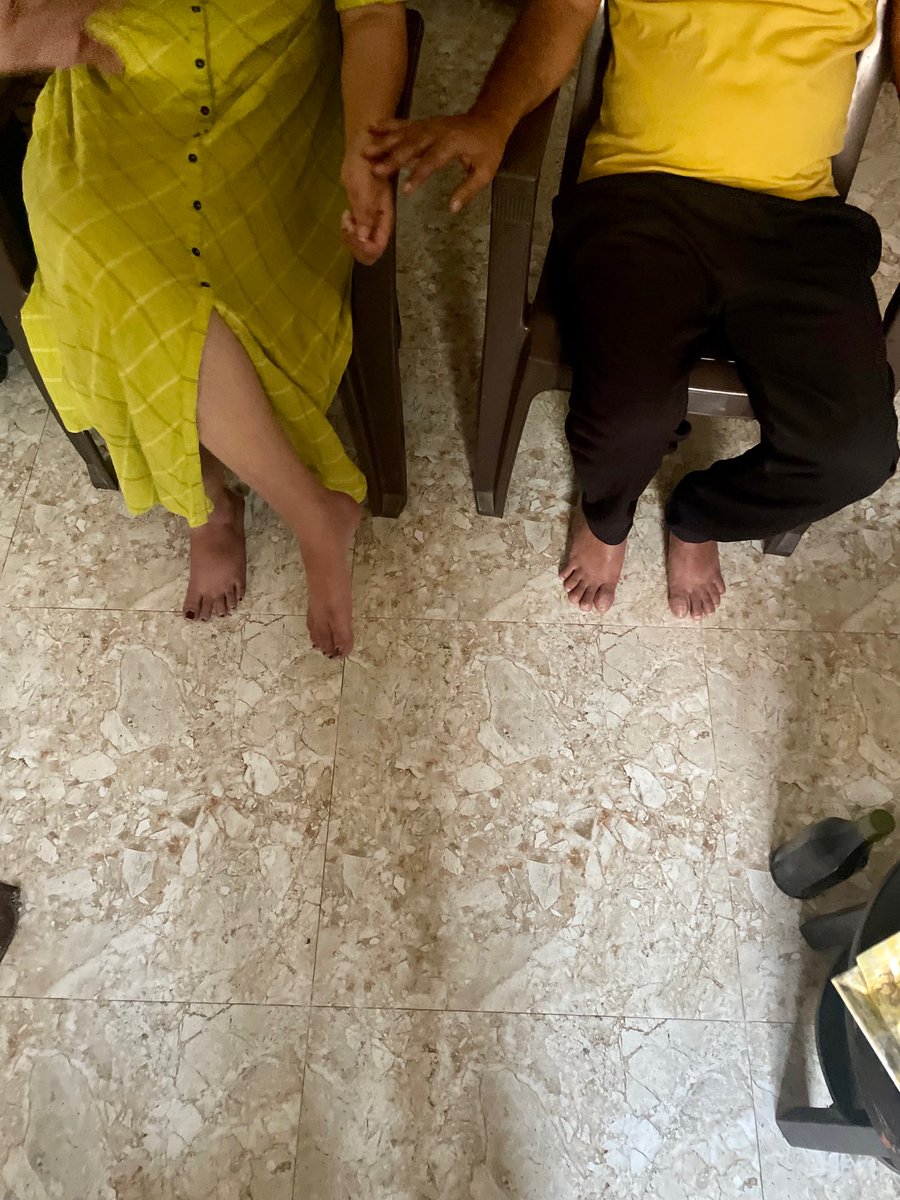
Their present landlord has come to terms with differences in religious backgrounds, but still thinks they’re married. As do many of their activist comrades and friends.
They’ve changed homes 4 times in 4 years, navigating what Shazi calls “Taarak Mehta ka Ulta Chasma” neighbors.
They’ve changed homes 4 times in 4 years, navigating what Shazi calls “Taarak Mehta ka Ulta Chasma” neighbors.
But they’re also not alone, particularly in a smaller city like Varanasi.
Across India’s smaller cities and towns – from Varanasi to Vadodara, Aligarh to Alwar and beyond – live-in relationships are on the rise, and so too are the social pressures, diktats & even legislation.
Across India’s smaller cities and towns – from Varanasi to Vadodara, Aligarh to Alwar and beyond – live-in relationships are on the rise, and so too are the social pressures, diktats & even legislation.


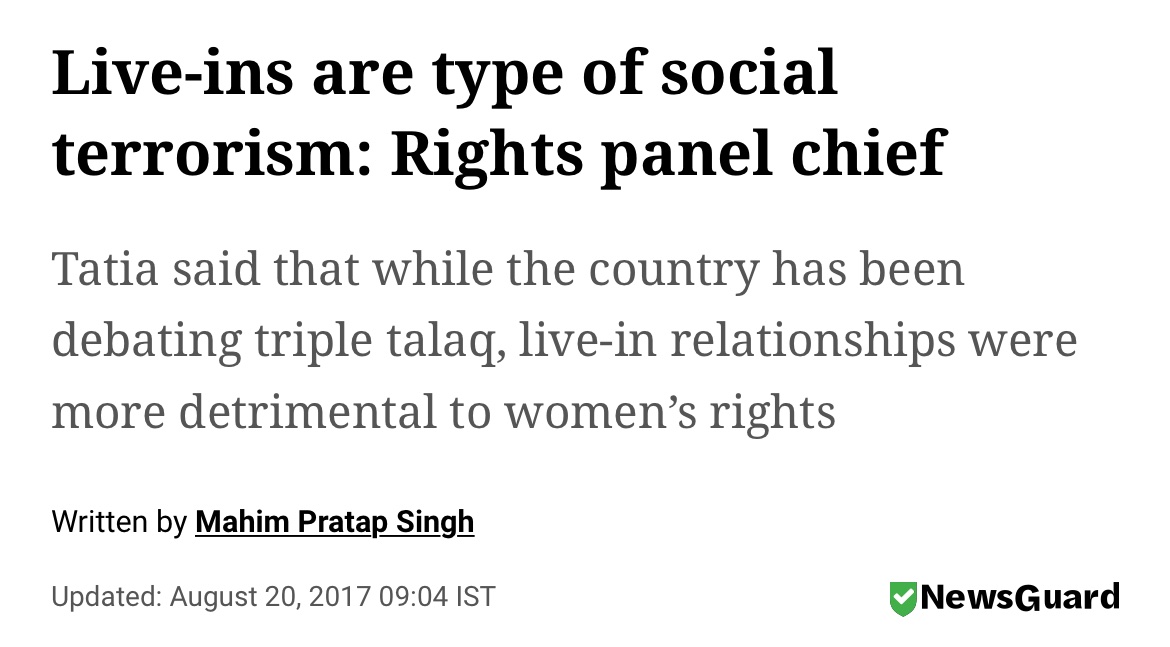
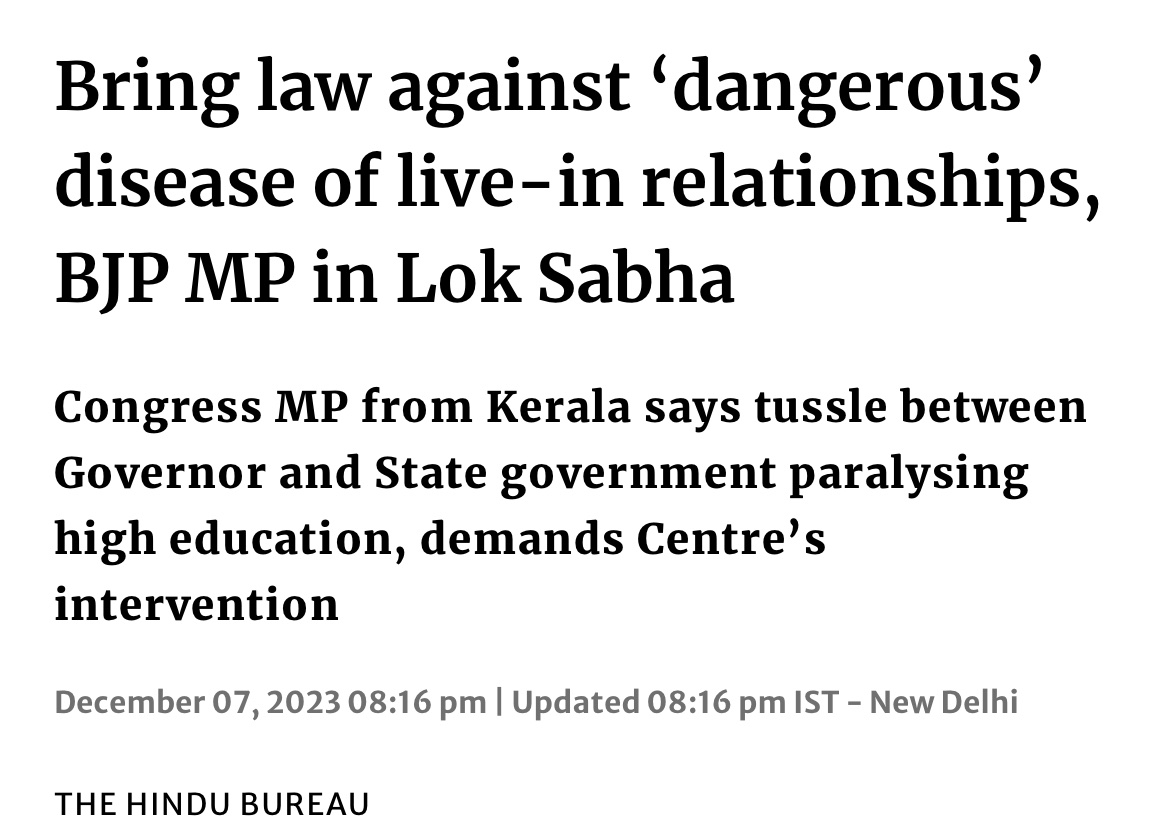
But back to Manish & Shazi. Both have been trying to get married because being in a live-in, especially in what they feel is “small town mentality” is very hard.
Now the secular Special Marriage Act means their hostile families — who oppose their relationship — getting word.
Now the secular Special Marriage Act means their hostile families — who oppose their relationship — getting word.
And the anticonversion law makes it worse for both of them. They also tried to convert to Buddhism for the purpose of a marriage certificate but the certificate didnt come through.
Now they remain in a live-in, while others’ hostility into the nature of the relationship escalates
Now they remain in a live-in, while others’ hostility into the nature of the relationship escalates
Elsewhere in Guj, Saddam & his now-wife, constable Maniben recently got married under the SMA. This comes after Maniben was kidnapped by her family twice — after Gujarat Police arbitrarily posted her back to her home district.
The two were then in a live-in in Dabhoi in Vadodara.
The two were then in a live-in in Dabhoi in Vadodara.
One of the most important things that helped Saddam make the case to get back his then live-in partner, was a notarised pact, known as the “maitri karar”.
A maitri karar is a legal practice specific to Gujarat, which allows for a notarised status to live-in relationships.
A maitri karar is a legal practice specific to Gujarat, which allows for a notarised status to live-in relationships.
After the Hindu Marriage Act 1956 made polygamy was made illegal, this custom came about to legally allow men to give support to their mistresses, and children borne out of wedlock
Today, queer & interfaith couples use it to safeguard their relationships.
(Image: Agents of Ishq)
Today, queer & interfaith couples use it to safeguard their relationships.
(Image: Agents of Ishq)
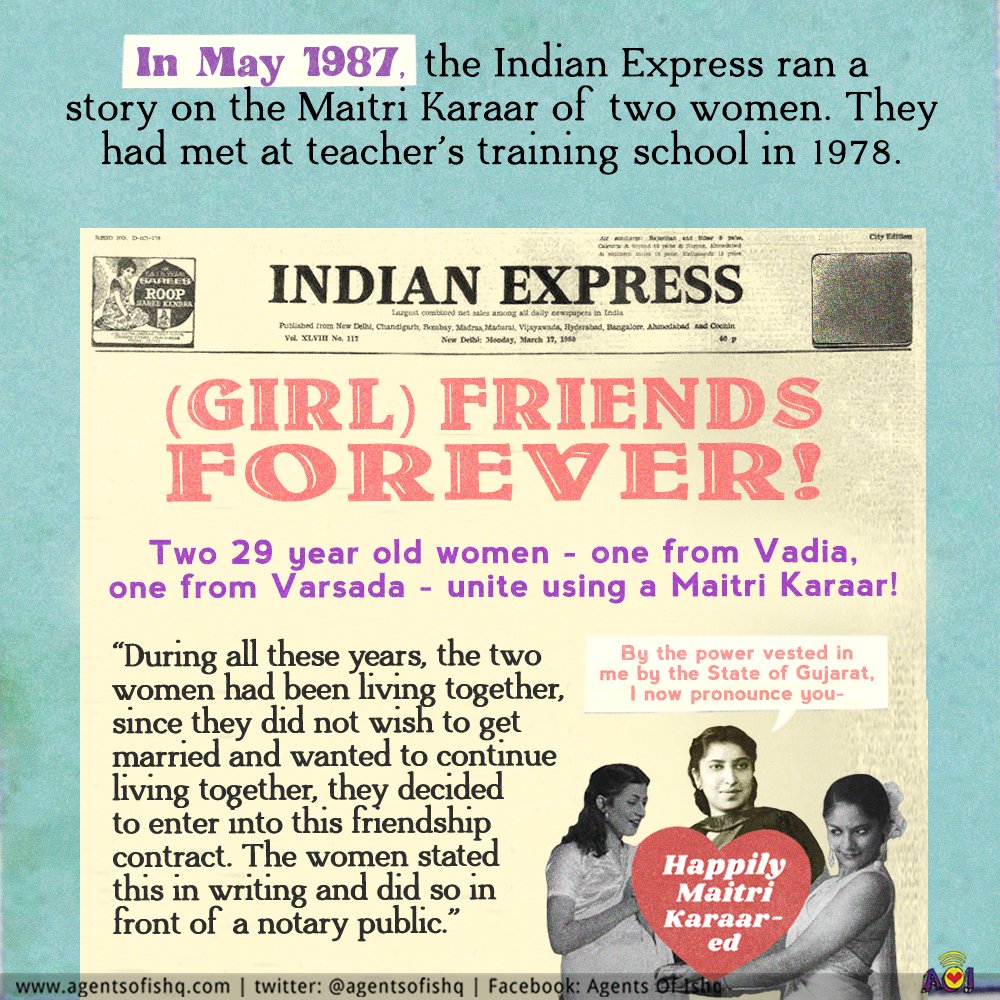
In 2016, adv. Jigar G used this to help his client - a young Muslim on the cusp of turning 21 (legal age for marriage), to stop his Hindu partner from being taken by her family via habeas corpus. The two couldnt get married given his age, but they managed to be in a Maitri Karar.
And then there’s live-in couples like Neha & Diya, for whom being a lesbian couple, particularly in small town India, has meant families, society, landlords convinced “we can just get them married off to other men”. Finding a flat always means lying abt being friends or sisters
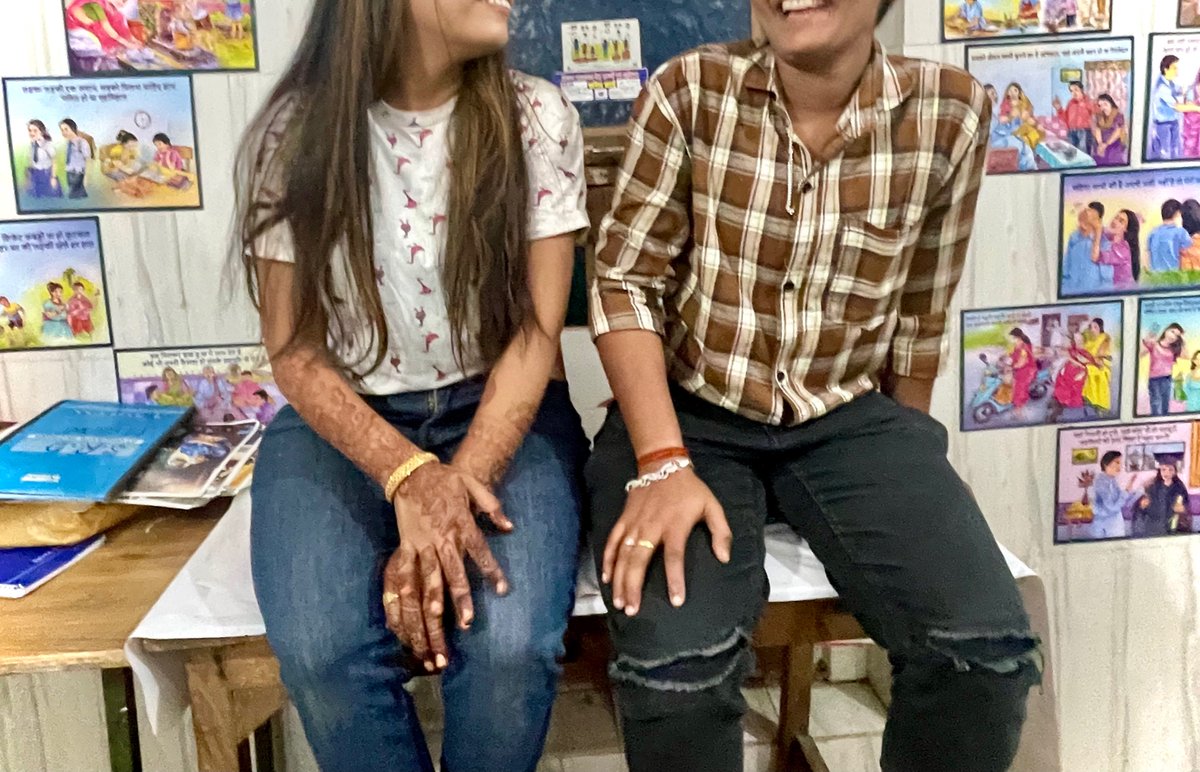
Live-in couples not only face the generic burden of societal stigmas around premarital sex implied in such relationships, theres also breaking away from families, fending for financial independence, and the intimate partner + gendered violence common to any domestic relationship.
And the State, families, landlords collude to stop them.
But there’s another common thread to these instances & more such stories of live-ins: Assertion of women’s agency, not just in breaking away from her natal family, but also in terms of economic independence and education.
But there’s another common thread to these instances & more such stories of live-ins: Assertion of women’s agency, not just in breaking away from her natal family, but also in terms of economic independence and education.
Activist Kavita Srivastava of @PUCLindia points particularly to the number of young women & couples who seek refuge in the Jaipur office-cum-“Safe Home” of her organisation.
The office — which is also her residence — frequently offers many across Rajasthan a temporary refuge.
The office — which is also her residence — frequently offers many across Rajasthan a temporary refuge.
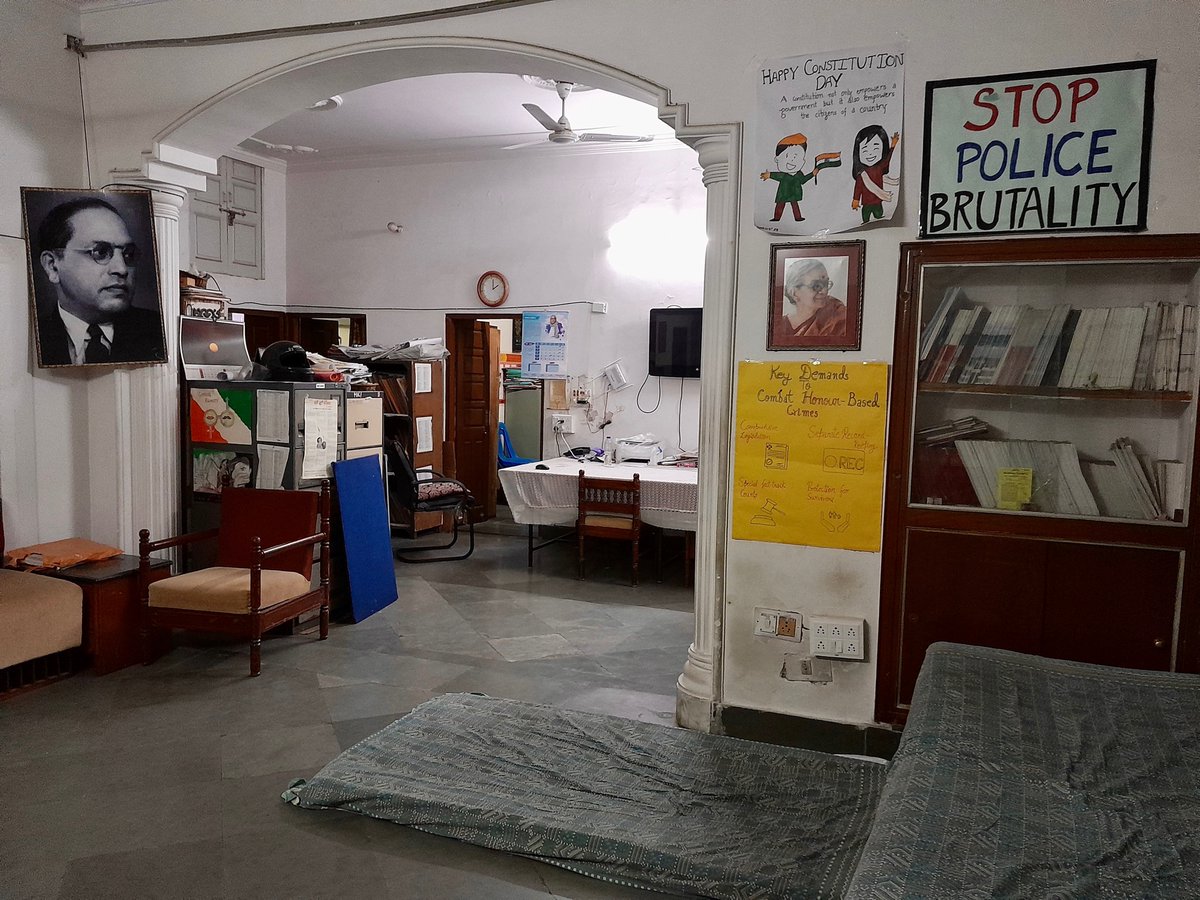
@PUCLindia Anjaly, an independent artist from Sikar is a case in point in such assertion of this agency. The 24 yr old cut off ties w her parents after their silence when a relative sexually assaulted her.
Landlords in Jaipur refused her a flat owing to her not being in touch with family +
Landlords in Jaipur refused her a flat owing to her not being in touch with family +
@PUCLindia She finally managed to find a place and was living with another friend and getting into an alternative commune way of life or a kind of community living.
But then her family found out, and colluded with the landlord to throw them out.
But then her family found out, and colluded with the landlord to throw them out.
@PUCLindia In sum, there’s a lot to this —mostly patriarchy, others’ imposed ideas of religion, morality, & a v hostile State.
I delve into it more in this piece which details how small town India is navigating live-ins, without wanting to be lionised for all this:
theprint.in
I delve into it more in this piece which details how small town India is navigating live-ins, without wanting to be lionised for all this:
theprint.in
@PUCLindia Oh and if u made it this far, you might enjoy these movies — tho Kartik Aryan’s one is p bad, and at least Shuddh Desi Romance was cooler about an alternative to marriage. “Small town” live-ins (Gwalior, Jaipur, Bareilly), albeit minus hurdles of religion, sexuality, & the state.


Loading suggestions...