

Structure has always been a crucial aspect of football right from the very beginning.
Different structures pose different benefits but they also have their drawbacks.
Elite managers like Mikel Arteta and Diego Simeone are able to control games without having the ball. But what part does structure play and why is it integral in football.
This thread will focus on the out of possession aspect.
🧵🧵🧵✍🏾✍🏾✍🏾
Different structures pose different benefits but they also have their drawbacks.
Elite managers like Mikel Arteta and Diego Simeone are able to control games without having the ball. But what part does structure play and why is it integral in football.
This thread will focus on the out of possession aspect.
🧵🧵🧵✍🏾✍🏾✍🏾

This thread will focus on
-Structure out of possession •Pressing
•Counter pressing
•Mid-block & low-block
-Structure out of possession •Pressing
•Counter pressing
•Mid-block & low-block
PRESSING
The aim of structure when pressing is to create a coordinated and suffocating environment for the opponent. This structured approach allows your team to win the ball back quickly and efficiently, leading to several advantages
The aim of structure when pressing is to create a coordinated and suffocating environment for the opponent. This structured approach allows your team to win the ball back quickly and efficiently, leading to several advantages
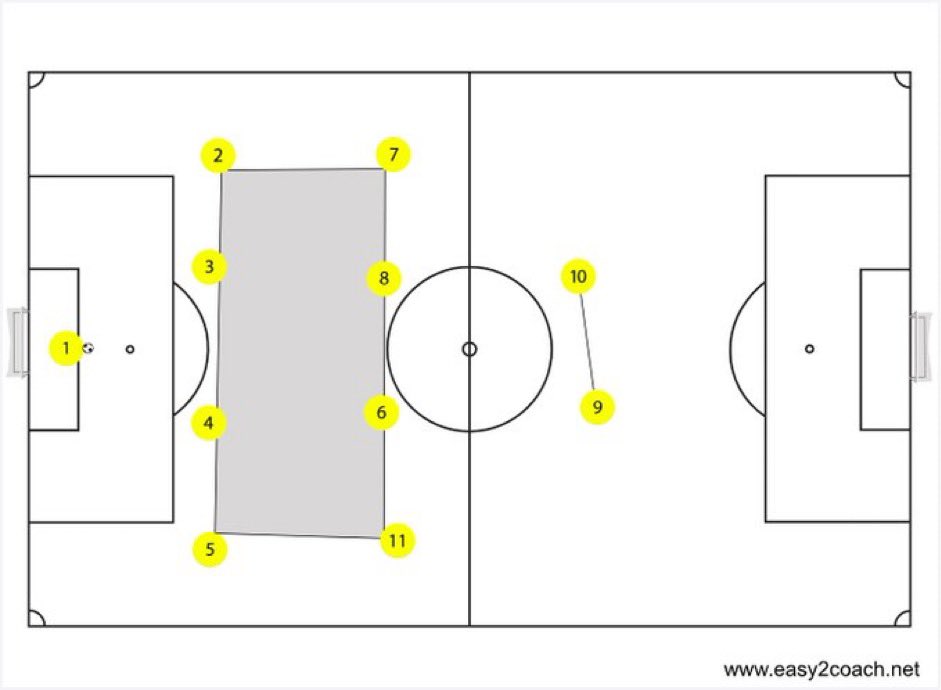
• Coordinated Pressure: A structured press ensures all players are on the same page, applying pressure simultaneously and in designated zones and areas. This makes it harder for the opponent to find space or escape easily. This greatly increases the chances of winning the ball up higher to create chances or sustain pressure.
• Minimise Passing Options: Structure positions players strategically to close down passing lanes for the opponent. This forces them into mistakes like rushed passes or long balls, increasing your chances of winning possession back.
• Maintain Compactness: A well-structured press prioritizes maintaining a compact shape. This minimizes gaps between players, reducing the space the opponent has to operate in and making it harder for them to break your lines. This forces them to play out-wide where the touchline can be used as an extra defender to your advantage. Alternatively, it forces them long causing a 50/50 chance of your team regaining possession.
• Minimise Passing Options: Structure positions players strategically to close down passing lanes for the opponent. This forces them into mistakes like rushed passes or long balls, increasing your chances of winning possession back.
• Maintain Compactness: A well-structured press prioritizes maintaining a compact shape. This minimizes gaps between players, reducing the space the opponent has to operate in and making it harder for them to break your lines. This forces them to play out-wide where the touchline can be used as an extra defender to your advantage. Alternatively, it forces them long causing a 50/50 chance of your team regaining possession.

Importance of Structure in Pressing:
• Increased Effectiveness: A coordinated press is much more effective than individual efforts. Structure allows all players to contribute, forcing the opponent into mistakes and disrupting their rhythm.
It also affects the opponent mentally. By being aggressive and imposing your self on them, it causes them to loose confidence making more rash decisions and mistake.
• Faster Ball Recovery: Structure facilitates a quicker transition from losing possession to winning it back. This minimizes the time the opponent has to build an attack and puts you back in control of the game.
{more on the above in counter pressing}
• Creates Scoring Opportunities: By regaining possession high up the pitch through a structured press, you win the ball back closer to the opponent's goal. This creates dangerous attacking situations and significantly increases your chances of scoring.
• Maintaining Momentum: A successful press can shift the momentum of the game in your favor. Regaining possession quickly keeps you on the front foot and disrupts the opponent's confidence. It also creates a sense of frustration for the opposition. They tend to become desperate and rash forcing the “route 1” pass rather than regaining composure and control.
A vicious cycle.
• Increased Effectiveness: A coordinated press is much more effective than individual efforts. Structure allows all players to contribute, forcing the opponent into mistakes and disrupting their rhythm.
It also affects the opponent mentally. By being aggressive and imposing your self on them, it causes them to loose confidence making more rash decisions and mistake.
• Faster Ball Recovery: Structure facilitates a quicker transition from losing possession to winning it back. This minimizes the time the opponent has to build an attack and puts you back in control of the game.
{more on the above in counter pressing}
• Creates Scoring Opportunities: By regaining possession high up the pitch through a structured press, you win the ball back closer to the opponent's goal. This creates dangerous attacking situations and significantly increases your chances of scoring.
• Maintaining Momentum: A successful press can shift the momentum of the game in your favor. Regaining possession quickly keeps you on the front foot and disrupts the opponent's confidence. It also creates a sense of frustration for the opposition. They tend to become desperate and rash forcing the “route 1” pass rather than regaining composure and control.
A vicious cycle.

COUNTER PRESSING.
The aim of structure when counter-pressing in football is to create an immediate and coordinated response to win the ball back after losing possession. This structured approach allows your team to regain possession quickly and capitalize on the opponent's vulnerability, leading to several advantages
The aim of structure when counter-pressing in football is to create an immediate and coordinated response to win the ball back after losing possession. This structured approach allows your team to regain possession quickly and capitalize on the opponent's vulnerability, leading to several advantages
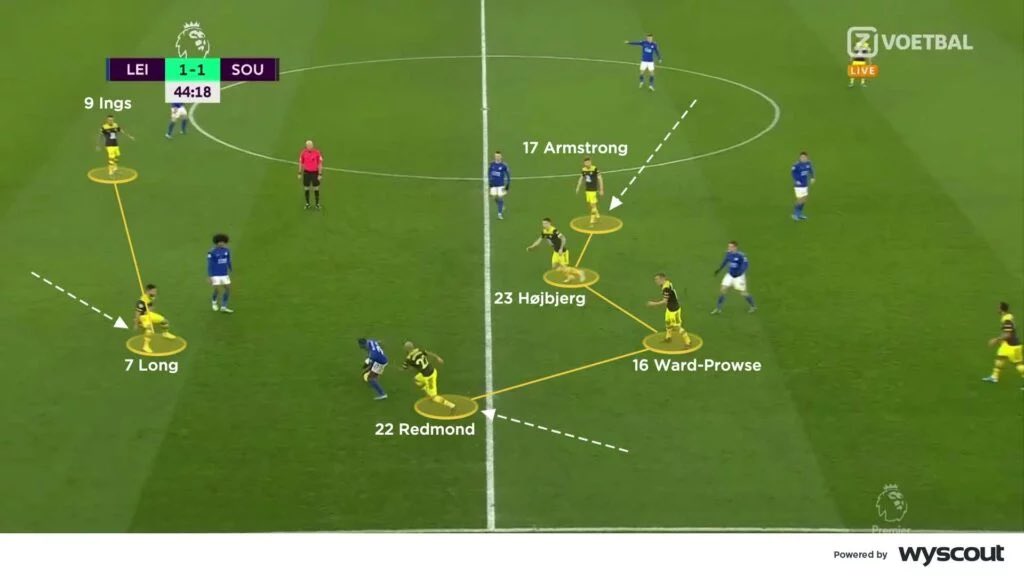
• Instant Reaction: Structure ensures all players react quickly and collectively after losing the ball. They know their roles and responsibilities, allowing for an immediate press to regain possession before the opponent can settle into an attack.
• Maintain Shape: Even when transitioning from attack to pressing, structure ensures the team maintains a compact shape. This prevents the opponent from exploiting gaps left behind by attacking players.
• Target the Ball Winner: Structured positioning helps the team quickly identify and press the player who wins the ball from you. This disrupts their ability to control the ball or launch an attack, increasing your chances of winning it back.
• Win Possession in Dangerous Areas: By regaining possession quickly through a structured counter-press, you win the ball back closer to the opponent's goal. This creates a dangerous attacking situation with the opponent potentially out of position.
• Maintain Shape: Even when transitioning from attack to pressing, structure ensures the team maintains a compact shape. This prevents the opponent from exploiting gaps left behind by attacking players.
• Target the Ball Winner: Structured positioning helps the team quickly identify and press the player who wins the ball from you. This disrupts their ability to control the ball or launch an attack, increasing your chances of winning it back.
• Win Possession in Dangerous Areas: By regaining possession quickly through a structured counter-press, you win the ball back closer to the opponent's goal. This creates a dangerous attacking situation with the opponent potentially out of position.

Importance of Structure in Counter-Pressing:
• Increased Effectiveness: A coordinated counter-press is much more effective than individual chasing. Structure ensures everyone works together, maximizing the chance of winning the ball back quickly.
• Minimise Threat: A quick counter-press prevents the opponent from building momentum or launching a dangerous attack. It minimizes the threat they pose after winning possession from you.
• Exploit Vulnerability: After winning the ball, the opponent might be slightly disorganized. A structured counter-press exploits this vulnerability, creating a scoring opportunity.
• Maintain Control: Regaining possession quickly through a counter-press allows you to maintain control of the game and dictate the tempo. It keeps you on the offensive and disrupts the opponent's rhythm.
Chaos: Counter pressing also causes panic among the opposition. The lack of time on the ball in a constricted area causes panic and miscommunication. Decision are rash and the chances of the opposing team keeping the ball become slim.
• Increased Effectiveness: A coordinated counter-press is much more effective than individual chasing. Structure ensures everyone works together, maximizing the chance of winning the ball back quickly.
• Minimise Threat: A quick counter-press prevents the opponent from building momentum or launching a dangerous attack. It minimizes the threat they pose after winning possession from you.
• Exploit Vulnerability: After winning the ball, the opponent might be slightly disorganized. A structured counter-press exploits this vulnerability, creating a scoring opportunity.
• Maintain Control: Regaining possession quickly through a counter-press allows you to maintain control of the game and dictate the tempo. It keeps you on the offensive and disrupts the opponent's rhythm.
Chaos: Counter pressing also causes panic among the opposition. The lack of time on the ball in a constricted area causes panic and miscommunication. Decision are rash and the chances of the opposing team keeping the ball become slim.

MID BLOCK
The aim of structure in a mid-block is to create a balanced and organised defensive unit that effectively controls the central area of the pitch. This structure allows your team to
The aim of structure in a mid-block is to create a balanced and organised defensive unit that effectively controls the central area of the pitch. This structure allows your team to
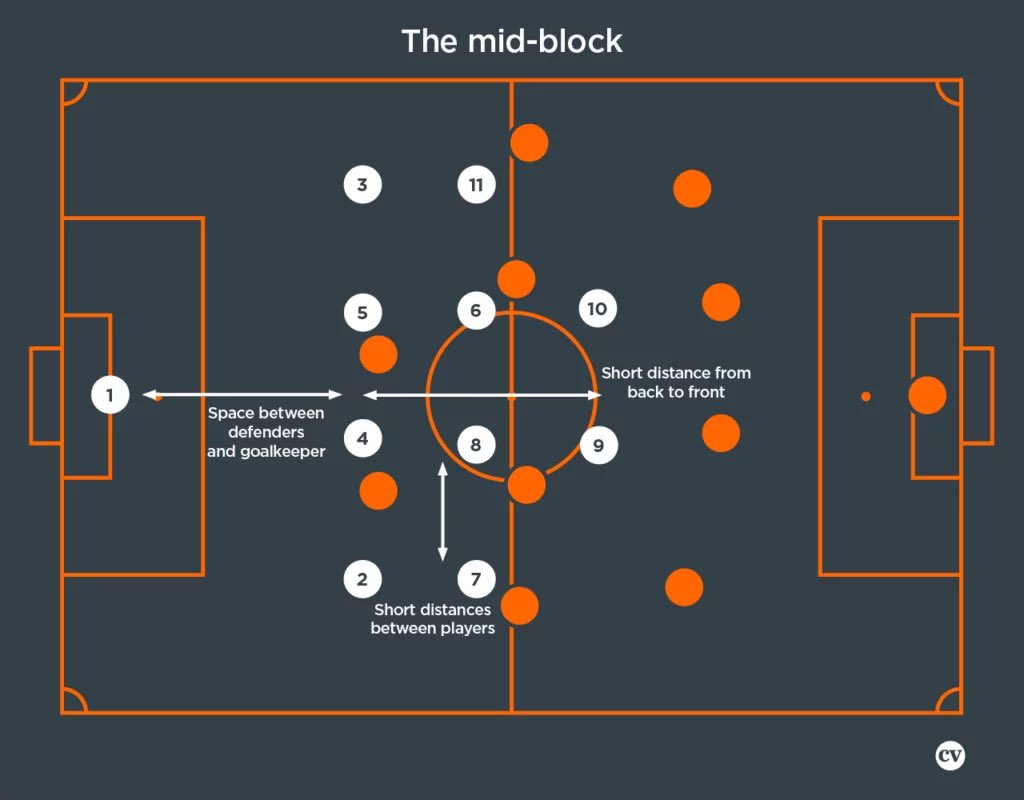
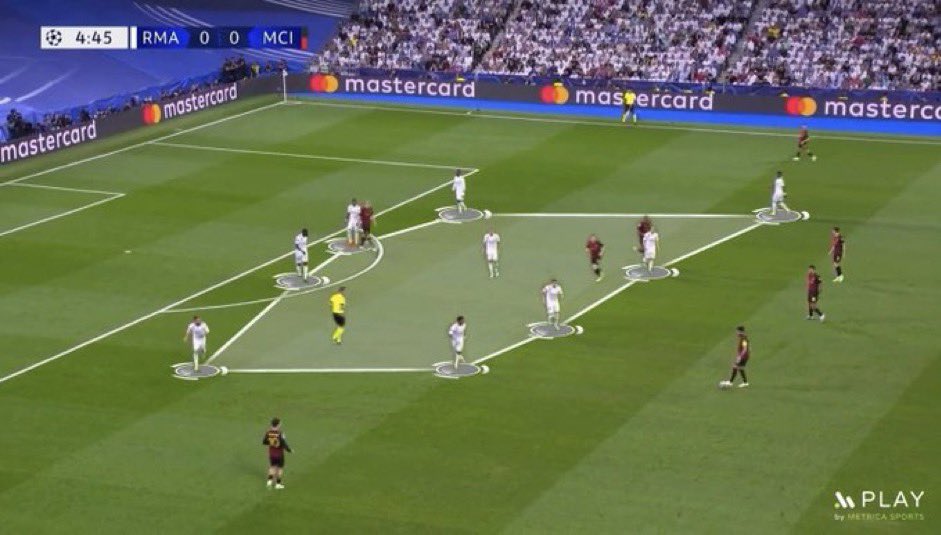
• Deny Space in Central Areas: The primary aim is to minimize the space available for the opponent to operate in, particularly through the middle of the pitch. By maintaining compact positioning and coordinated movements, you prevent them from playing through balls incisive passes or dribbling centrally, forcing them towards the flanks. This makes crossing their only viable option towards goal where 2 or 3 attacks go against 4 or 5 defenders and a keeper to challenge a header. Teams are hesitant to commit bodies forward as they would be left vulnerable on the counter.
• Control the Tempo: A structured mid-block allows you to control the tempo of the game. You can choose to engage in a higher press to win the ball back quickly or drop slightly deeper to lure the opponent into attacking areas where they become predictable. They also leave space in behind that can be exploited.
• Facilitate Organized Pressing: The structure serves as a platform for launching coordinated pressing tactics. Players know their triggers and responsibilities, allowing them to press the opponent collectively when the opportunity arises. This disrupts their build-up play and increases your chances of winning possession back in midfield.
• Control the Tempo: A structured mid-block allows you to control the tempo of the game. You can choose to engage in a higher press to win the ball back quickly or drop slightly deeper to lure the opponent into attacking areas where they become predictable. They also leave space in behind that can be exploited.
• Facilitate Organized Pressing: The structure serves as a platform for launching coordinated pressing tactics. Players know their triggers and responsibilities, allowing them to press the opponent collectively when the opportunity arises. This disrupts their build-up play and increases your chances of winning possession back in midfield.

Importance of Structure in a Mid-Block:
• Improved Defensive Stability: A structured mid-block provides a strong defensive foundation.
By minimizing space centrally, you limit the opponent's clear-cut opportunities and make it harder for them to break through your lines.
• Flexibility and Adaptability: Structure allows for flexibility within the mid-block. The team can adjust its positioning and pressing intensity based on the opponent's strengths and weaknesses. This adaptability makes it harder to exploit and keeps the opponent guessing.
• Faster Transition to Attack: Regaining possession in the mid-block allows for a quicker transition to attack. You're already positioned in a good attacking area to launch counter-attacks and exploit the opponent's disorganization after losing the ball.
• Reduced Individual Errors: Clear roles and responsibilities within the structure minimize confusion and individual mistakes. Players know their positions and understand how they should react to different situations, leading to a more disciplined and consistent defensive performance.
• Improved Defensive Stability: A structured mid-block provides a strong defensive foundation.
By minimizing space centrally, you limit the opponent's clear-cut opportunities and make it harder for them to break through your lines.
• Flexibility and Adaptability: Structure allows for flexibility within the mid-block. The team can adjust its positioning and pressing intensity based on the opponent's strengths and weaknesses. This adaptability makes it harder to exploit and keeps the opponent guessing.
• Faster Transition to Attack: Regaining possession in the mid-block allows for a quicker transition to attack. You're already positioned in a good attacking area to launch counter-attacks and exploit the opponent's disorganization after losing the ball.
• Reduced Individual Errors: Clear roles and responsibilities within the structure minimize confusion and individual mistakes. Players know their positions and understand how they should react to different situations, leading to a more disciplined and consistent defensive performance.

Key point to remember:
A mid-block isn't a rigid formation; it's a strategic approach. The structure allows players to move and adjust within the framework to effectively control the central area and react to the opponent's positioning and movements.
A mid-block isn't a rigid formation; it's a strategic approach. The structure allows players to move and adjust within the framework to effectively control the central area and react to the opponent's positioning and movements.
LOW BLOCK
The aim of structure in a low block defensive strategy in football is to create a deep and compact defensive unit that prioritizes minimizing the risk of conceding goals. This structured approach allows your team to:
The aim of structure in a low block defensive strategy in football is to create a deep and compact defensive unit that prioritizes minimizing the risk of conceding goals. This structured approach allows your team to:
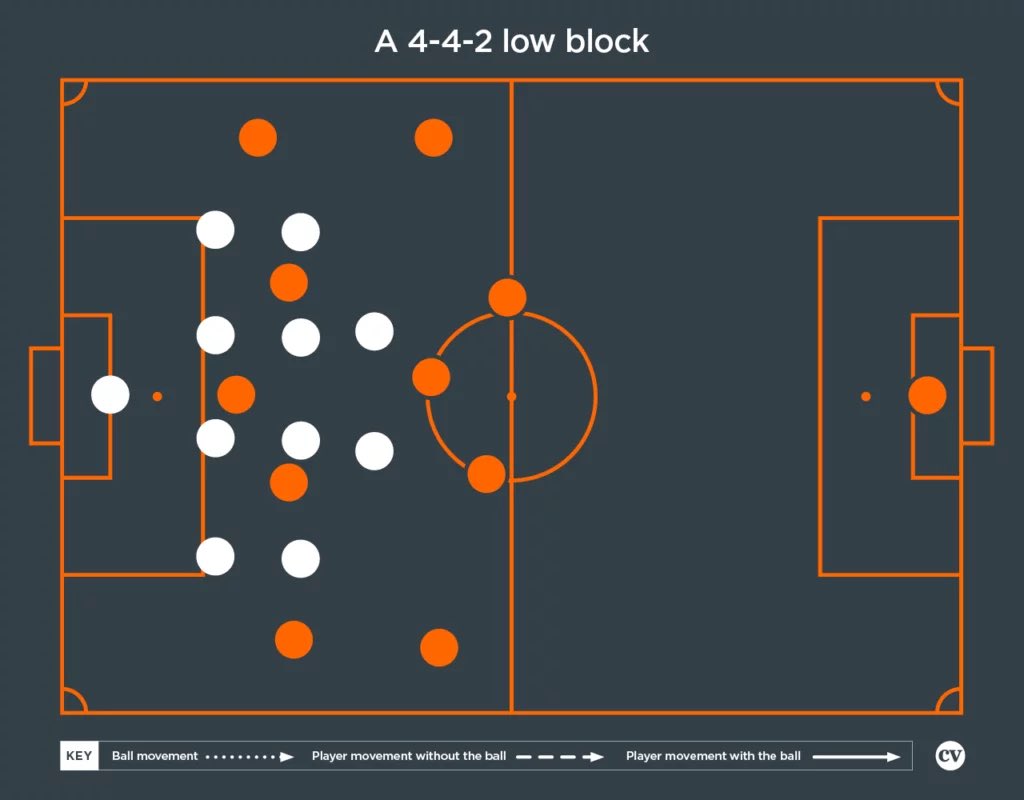
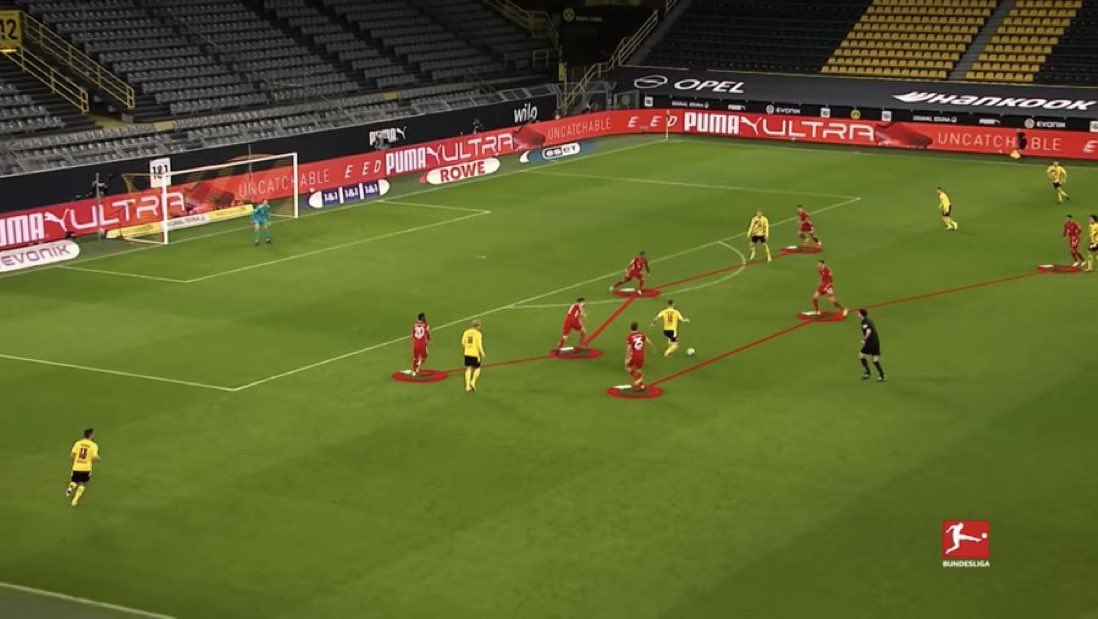
• Minimise Space Behind the Defense: The primary aim is to congest the space in and around your penalty area. Players maintain a low defensive line and minimize gaps between themselves, making it difficult for the opponent to penetrate through balls or exploit space behind the defense.
• Reduce Clear-Cut Chances: By minimizing space and forcing play wide, a structured low block limits the opponent's opportunities to create high-quality scoring chances. You aim to funnel them towards the flanks where they are generally less dangerous.
• Facilitate Effective Counter-Attacking: The structure allows for launching quick counter-attacks. By sitting deep and compact, you can absorb pressure and then exploit any gaps left behind by the opponent's attacking players when they lose possession. This is often seen as parking the bus or called terrorist football for being un-imaginative and stale but the fact is, it works and it’s a lethal weapon in football.
• Reduce Clear-Cut Chances: By minimizing space and forcing play wide, a structured low block limits the opponent's opportunities to create high-quality scoring chances. You aim to funnel them towards the flanks where they are generally less dangerous.
• Facilitate Effective Counter-Attacking: The structure allows for launching quick counter-attacks. By sitting deep and compact, you can absorb pressure and then exploit any gaps left behind by the opponent's attacking players when they lose possession. This is often seen as parking the bus or called terrorist football for being un-imaginative and stale but the fact is, it works and it’s a lethal weapon in football.
Importance of Structure in a Low Block:
• Defensive Stability: A structured low block prioritizes defensive solidity. It makes it harder for the opponent to break through and score, minimizing the risk of conceding goals.
• Organised Defense: Structure ensures organized defending even when under pressure. Players understand their roles and responsibilities, allowing them to collectively cover spaces and react effectively to opponent movements.
• Discipline and Concentration: A low block demands discipline and concentration from all players. The structure helps maintain focus and ensure everyone fulfills their defensive duties effectively.
• Adaptability: While prioritizing deep defending, a structured low block can be adaptable. The team can adjust its pressing intensity and positioning to counter specific threats posed by the opponent.
• Defensive Stability: A structured low block prioritizes defensive solidity. It makes it harder for the opponent to break through and score, minimizing the risk of conceding goals.
• Organised Defense: Structure ensures organized defending even when under pressure. Players understand their roles and responsibilities, allowing them to collectively cover spaces and react effectively to opponent movements.
• Discipline and Concentration: A low block demands discipline and concentration from all players. The structure helps maintain focus and ensure everyone fulfills their defensive duties effectively.
• Adaptability: While prioritizing deep defending, a structured low block can be adaptable. The team can adjust its pressing intensity and positioning to counter specific threats posed by the opponent.
key point to remember:
A low block is not a passive strategy.
While sitting deep, the team should still be actively looking to win the ball back and launch counter-attacks. The structure provides a platform for this by ensuring players are positioned effectively to defend and transition to attack when the opportunity arises.
A low block is not a passive strategy.
While sitting deep, the team should still be actively looking to win the ball back and launch counter-attacks. The structure provides a platform for this by ensuring players are positioned effectively to defend and transition to attack when the opportunity arises.
I have now covered the importance of structure in all major aspects of football. I hope to have broadened your understanding about how important it is. I would like to re iterate my gratitude for the continued support it truly means a lot.
Loading suggestions...