

One of the greatest MYTHS in cultural psychology is collectivists (e.g. Asians) don't compete––they are a kumbaya/harmonious/lovey dovey bunch who prioritize interpersonal relationships, unlike those individualistic Americans who are self-serving and competitive. 1

This couldn't be farther from the truth. In a new chapter, @ThomasTalhelm and I show collectivists are MORE competitive than individualists. They just compete more covertly than up front. 2

Studies show collectivists (Chinese, Japanese, Indians, Thai, Ghanians) are more likely to withhold information during negotiations, have frenemies than real friends, hold zero-sum beliefs, compare themselves to others, feel bad about themselves when their friends succeed. 3

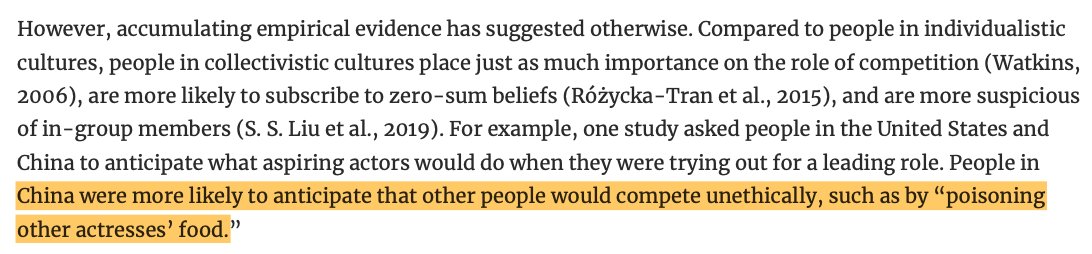
In one study, @shlulu asked Americans and Chinese to imagine themselves competing for an acting role, and anticipate what other actors would do. 38% of Chinese responses fell in unethical/gray areas ("poison other actresses' food", "sleep with the director") vs. 16% Americans. 4

Why then are there so much competition and in-group vigilance in collectivistic cultures? One possibility is they are less relationally mobile: 5
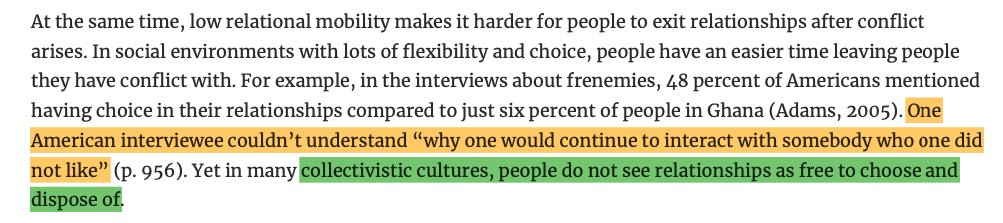
Collectivistic cultures also have a more singular, "common standard" definition of success (e.g. "the only way to achieve success is to become a doctor") and are more likely to believe the world is zero-sum (e.g. "your success = my failure"). 6

The field of psychology has long been, and still is, WEIRD (Western, Educated, Industrialized, Rich, Democratic). But painting collectivists as friendly, cooperative, harmony-seeking not only doesn't do cultural psych justice. It does more harm than good. 7
In cultures that demand social harmony, people use tacit strategies to compete against others. This social vigilance is a consequence of collectivism, rather than the exception. 8
💚/ retweet if you find the data interesting. Follow @kaidi_wu for more research nuggets! 9

Loading suggestions...