

1. Russia claims to be a #superpower and demands the world tremble at their petulant utterances. Sadly, many powerful people dutifully comply. Let’s have a closer look at a weapon deployed by the mighty Russian military. Specifically, a fixed-wing kamikaze #drone.
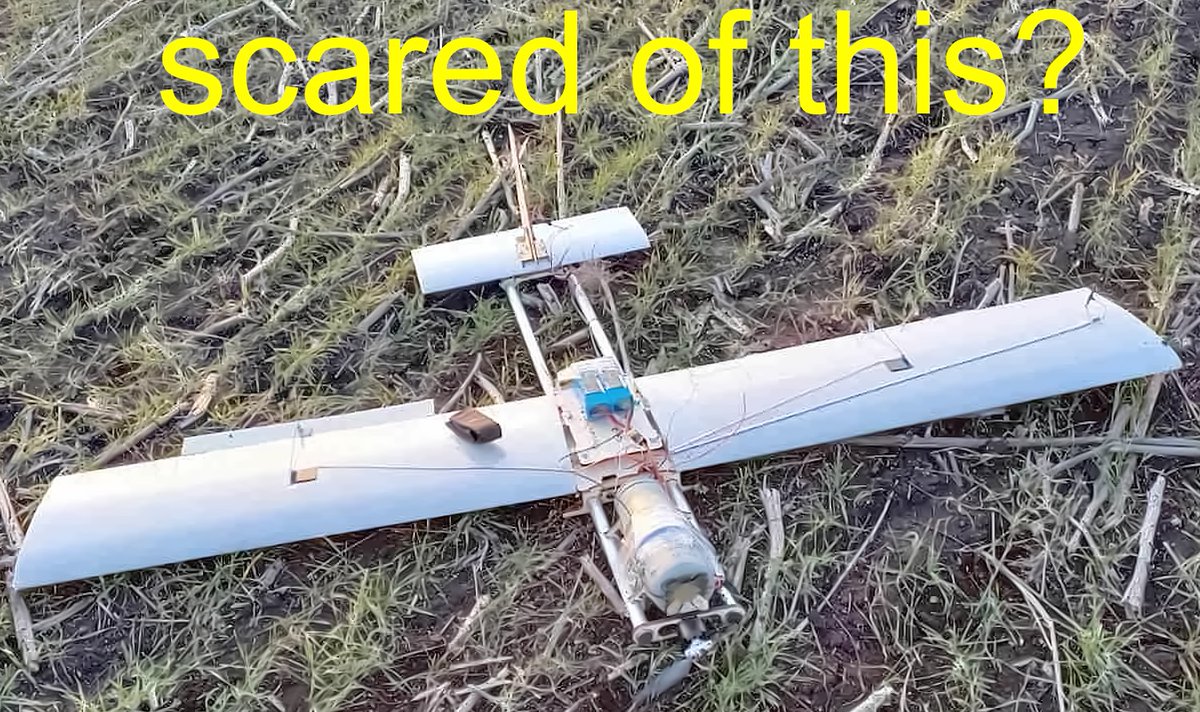
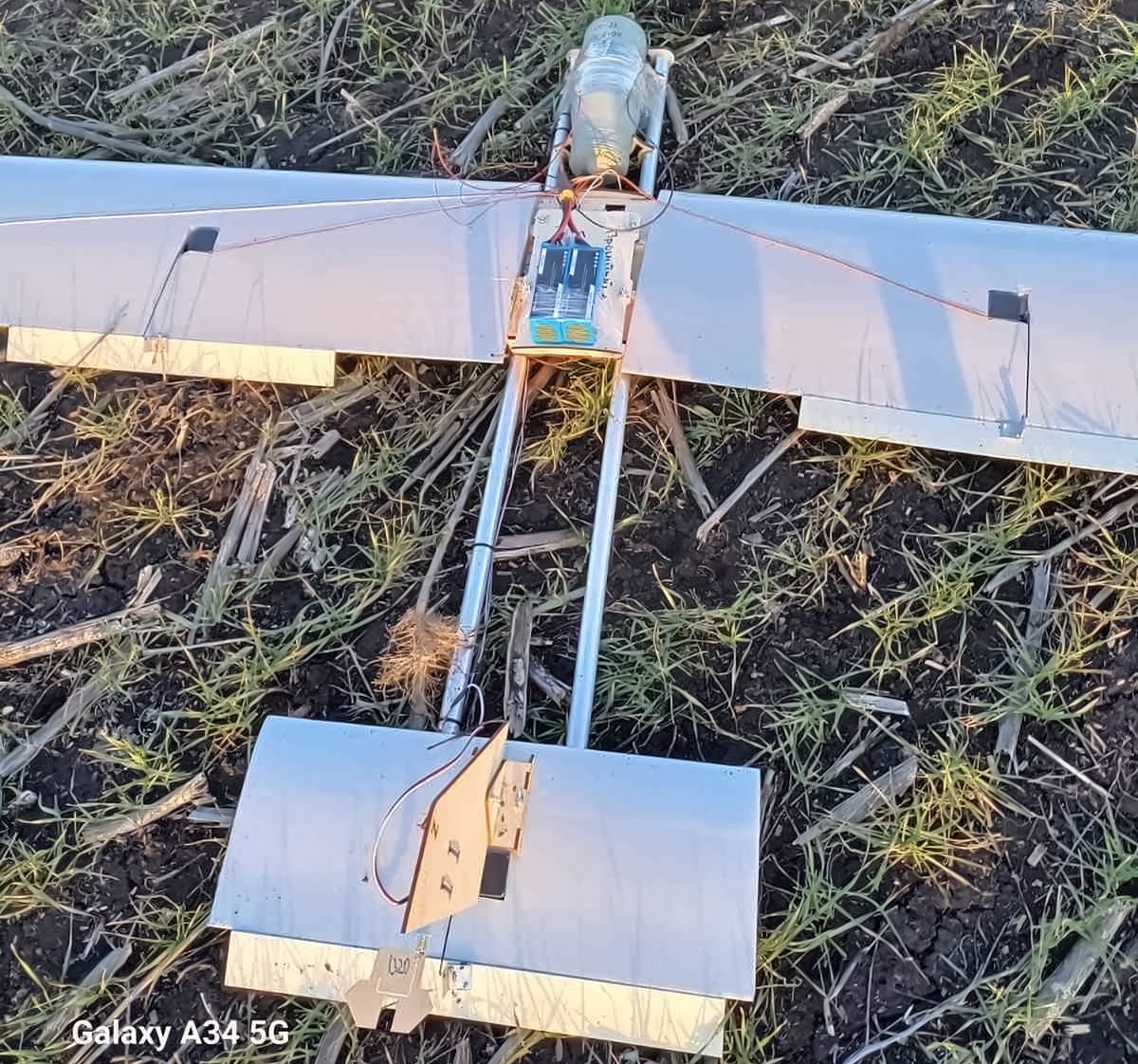
2. An interesting feature is the fuselage formed from two aluminum tubes. The wing is made from foam with a span of roughly 2 m. The wings are very simple with parallel leading and trailing edges (constant chord).
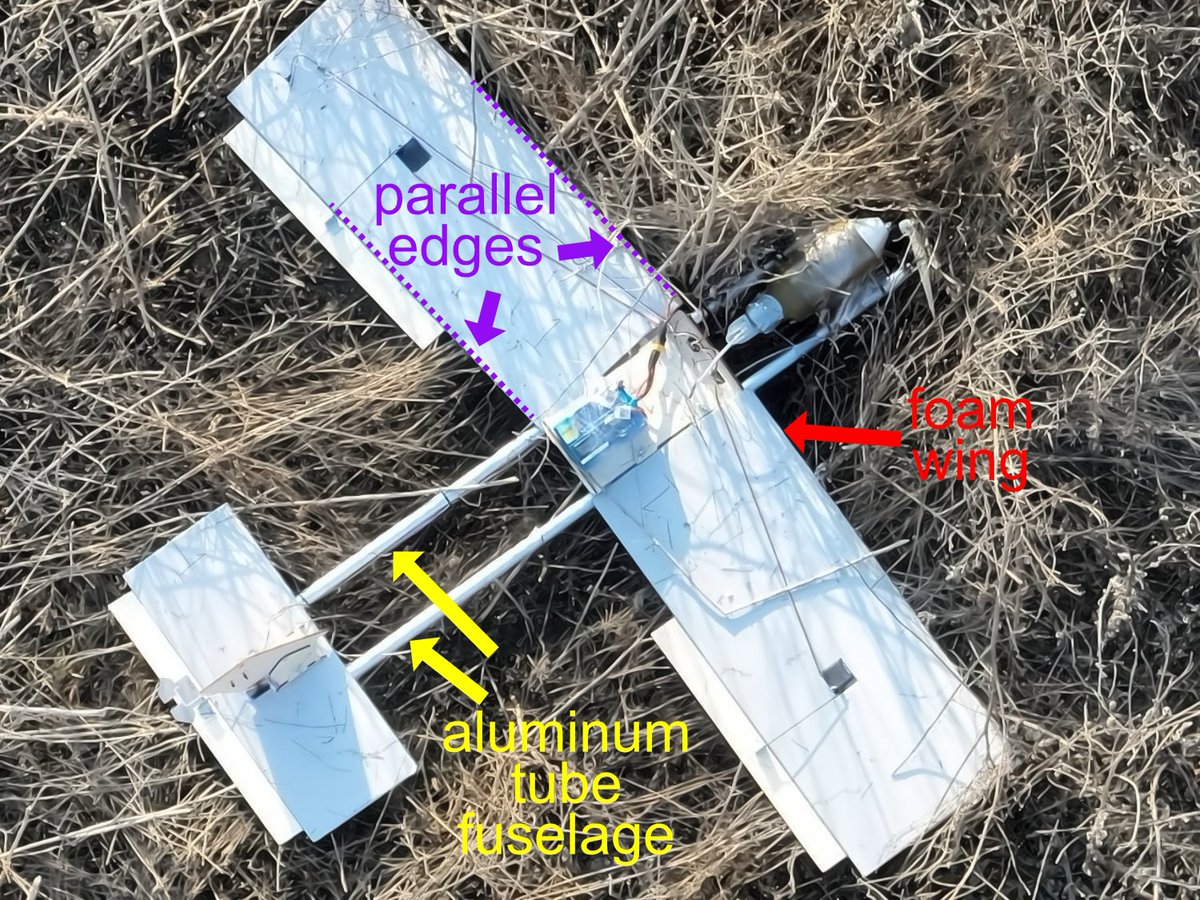
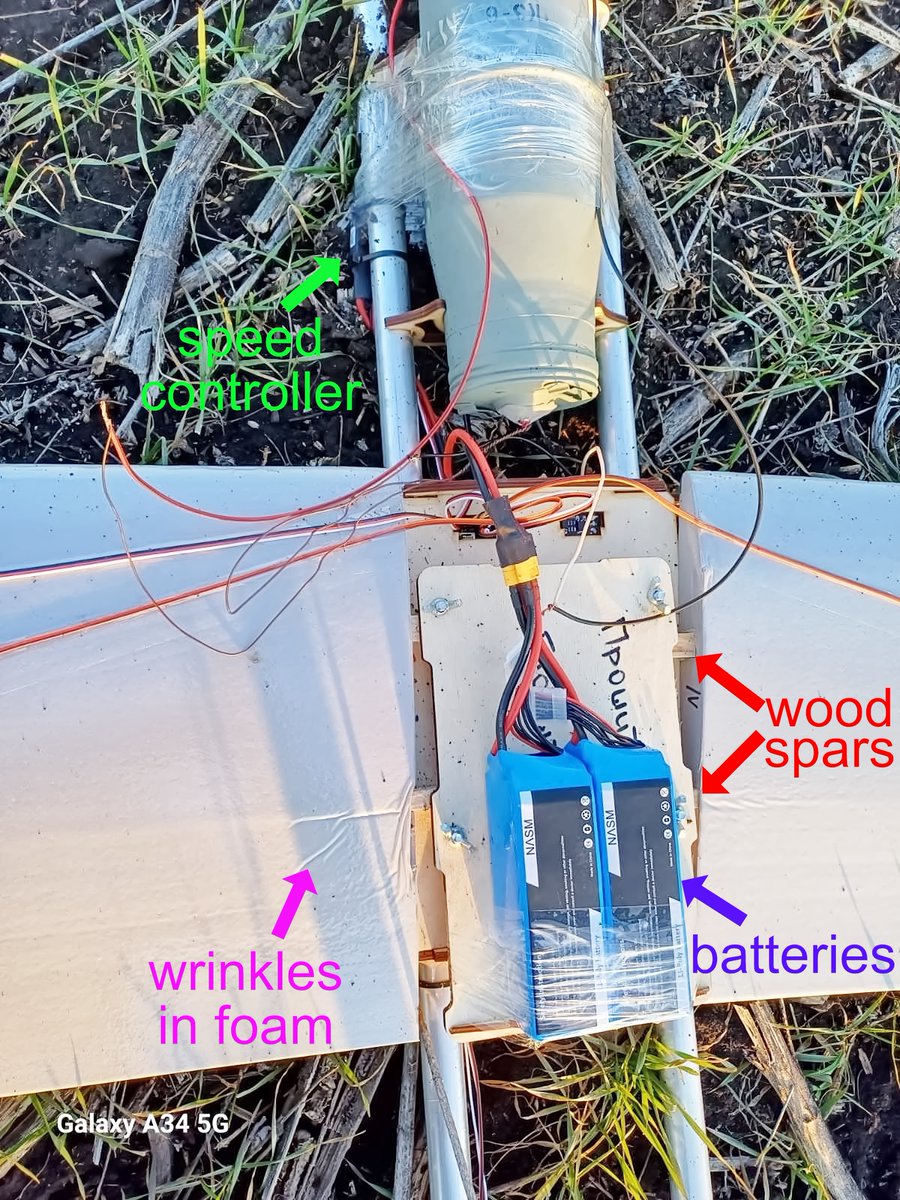
3. The wing contains two wood spars and wrinkles confirm it is made from foam. Possibly cut with hot wire and then coated with heat-shrink film (RC plane builders, please comment). Note the motor speed controller attached with zip-ties and batteries taped down.
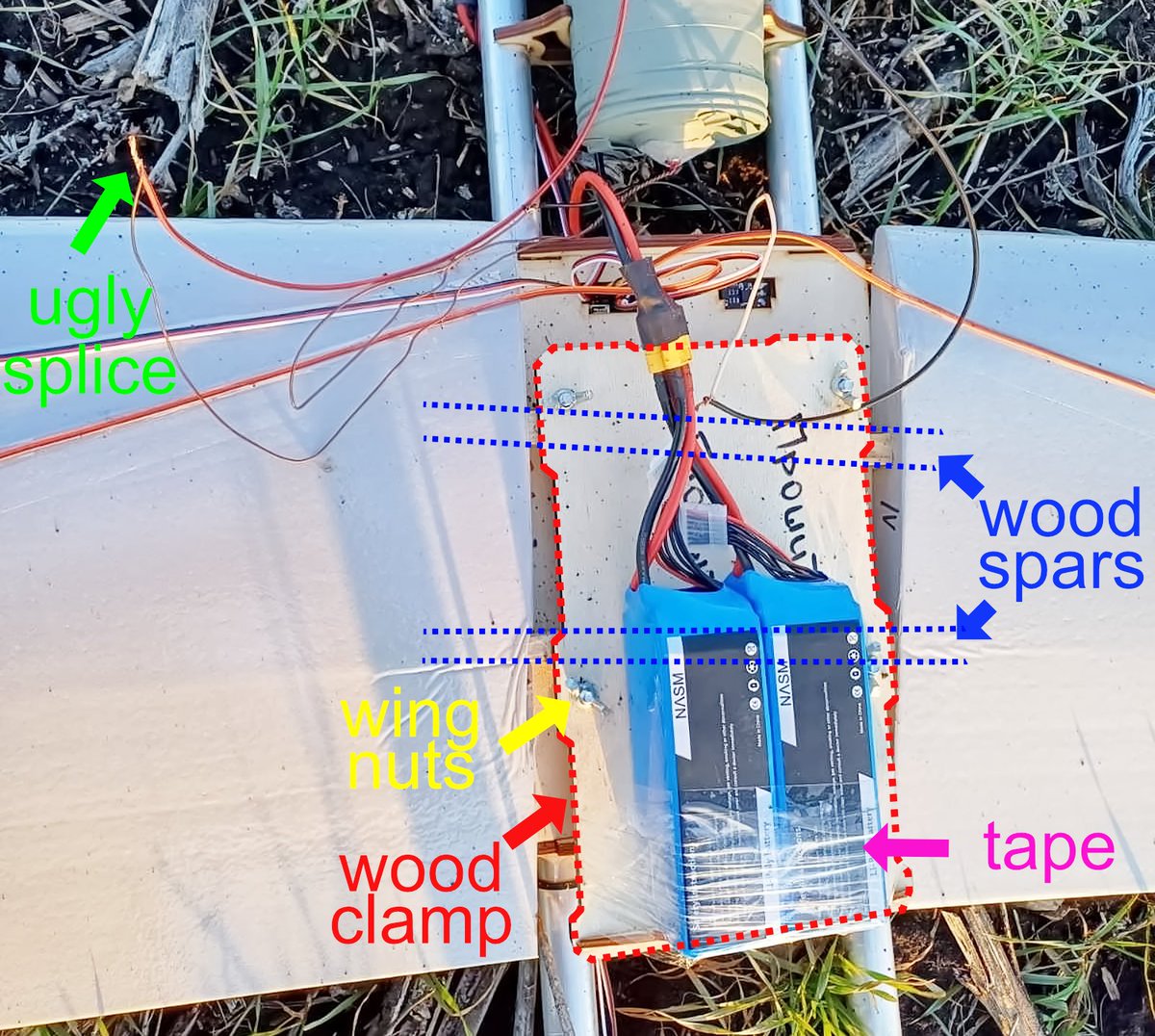
4. The wings are clamped to the fuselage by a piece of plywood held in place by 4 wingnuts. The 2 spars (bent in crash) pass under the clamp. This clamp also acts as a rudimentary battery tray relying on tape to hold the batteries in place.
5. The ailerons are (strangely) tacked onto the trailing edge of the wing, and located well inboard of the wing tips reducing their effectiveness. A radio control receiver & antenna are located near the left wing tip. Note the boot for scale.
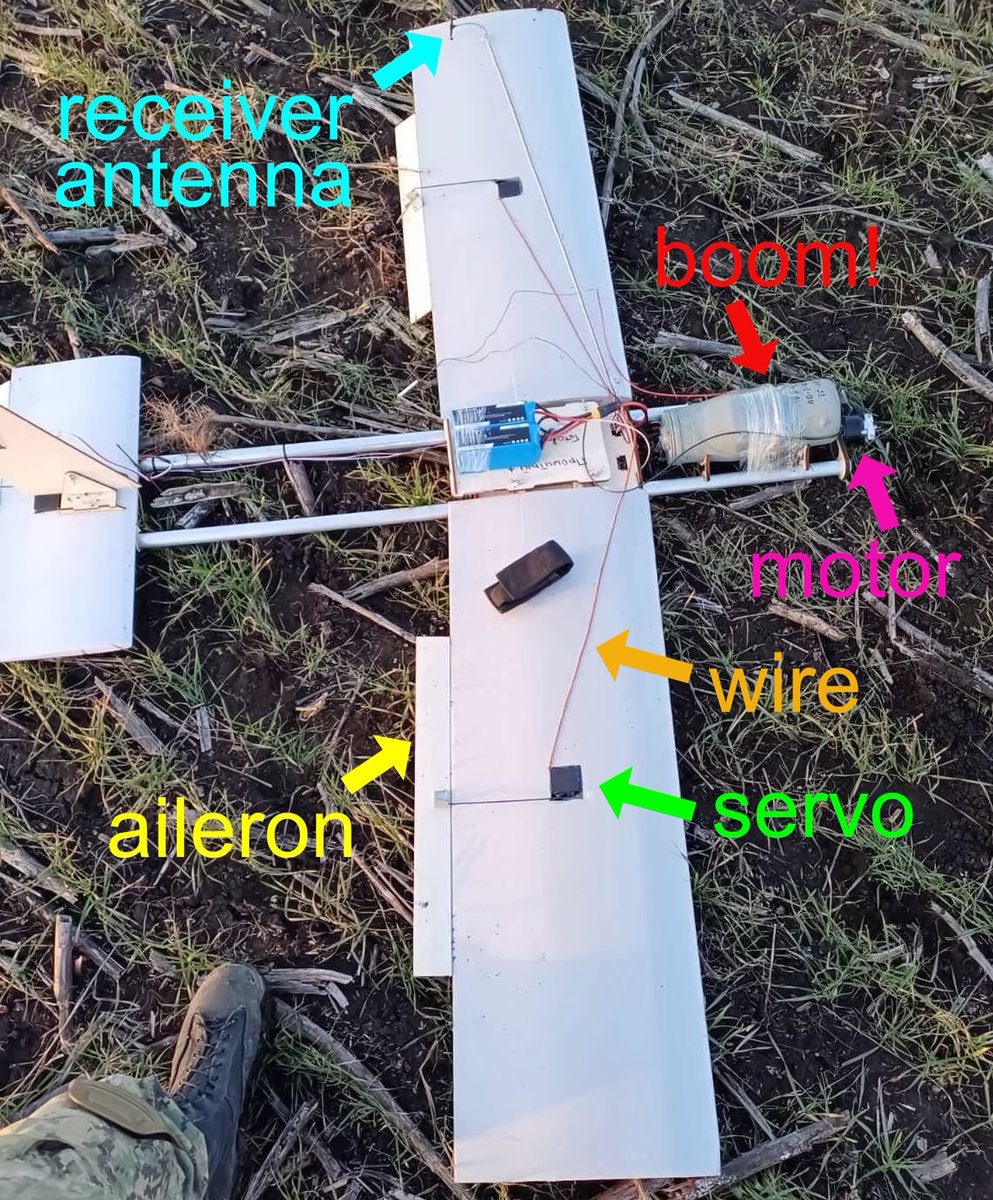
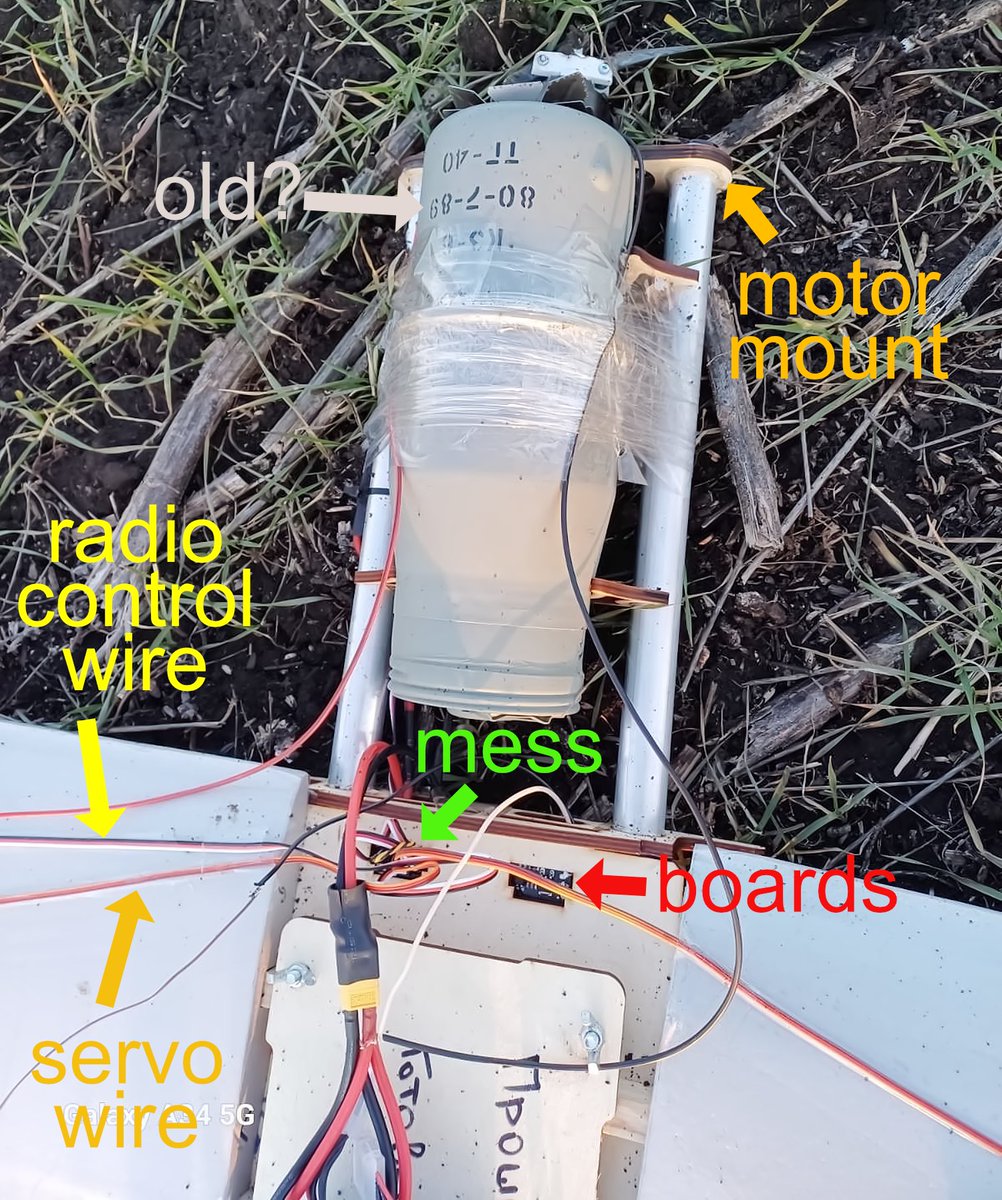
6. Wires are taped diagonally across the top surface of the wing (something a builder of RC planes would never do). Wiring is generally messy and the splices for the munition are inferior. Boards are contained in a central plywood box.
7. A Kamikaze drone must be agile but oddly this one has no rudder. Mounting the video transmitter in the centre of the vertical stabilizer also seems a curious choice. Loose wires indicate a lack of thought and care.

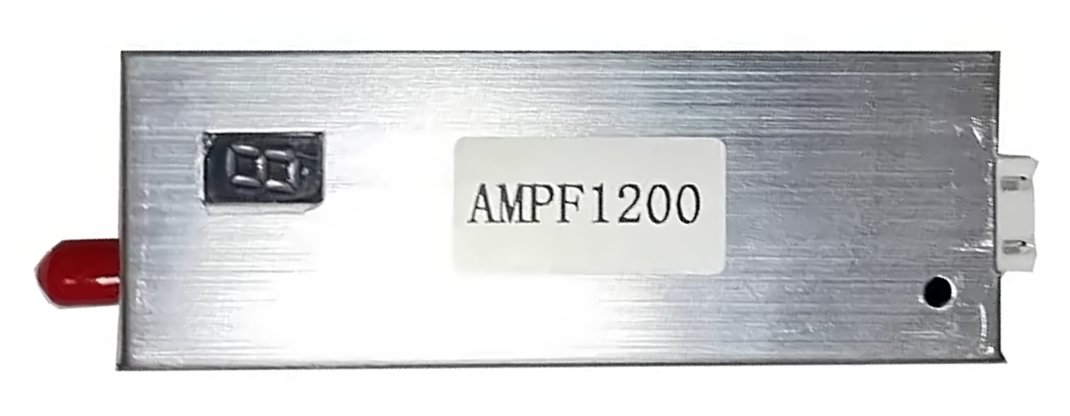
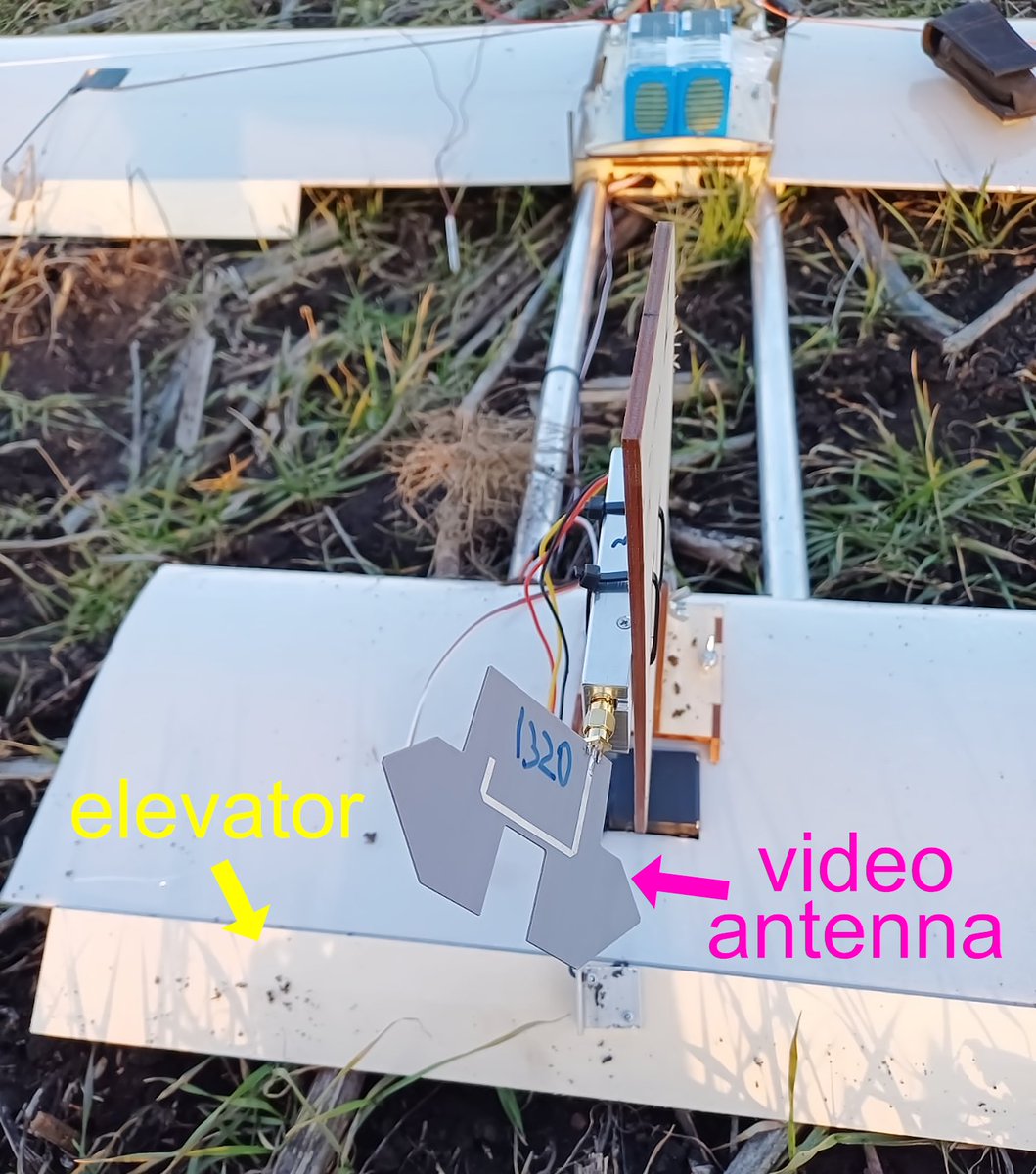
8. The video transmitter is available from Alibaba. Transmit power is 3 to 5 W and the manufacturer claims a range 10 km. These can be bought in very large quantities for about US$30, i.e., they are cheap.
9. The same video antenna appears on various Russian drones including these captured quadcopters.
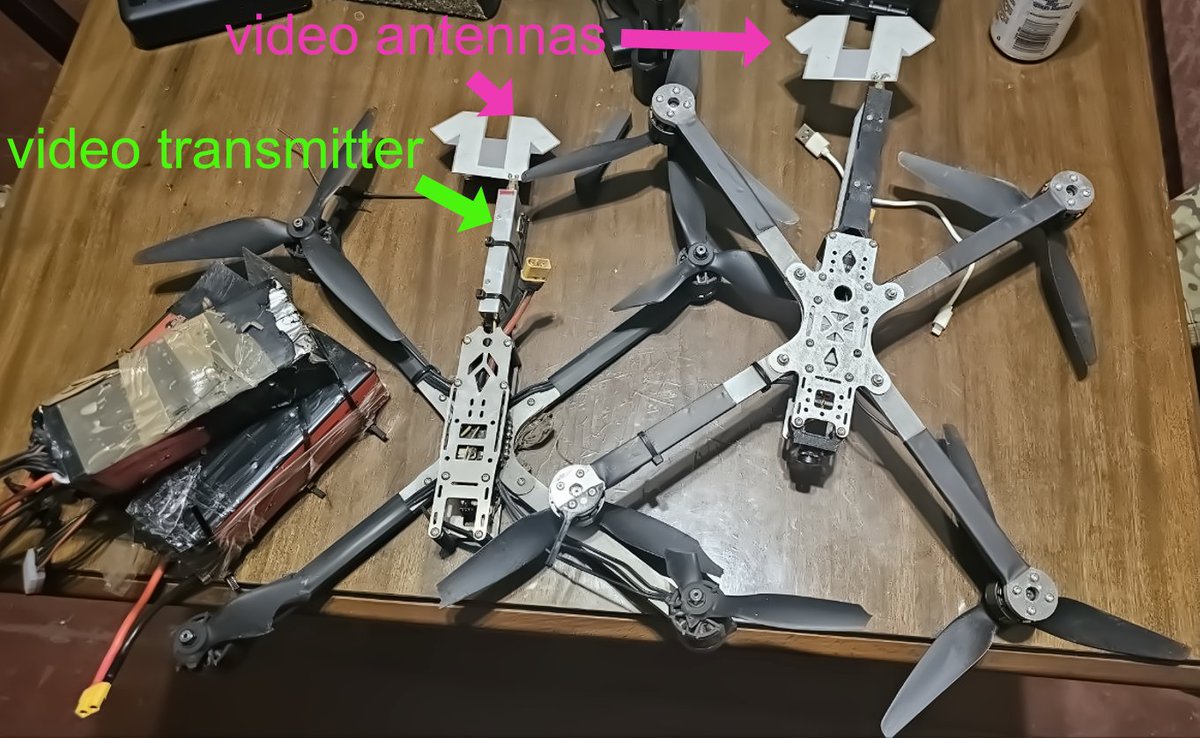
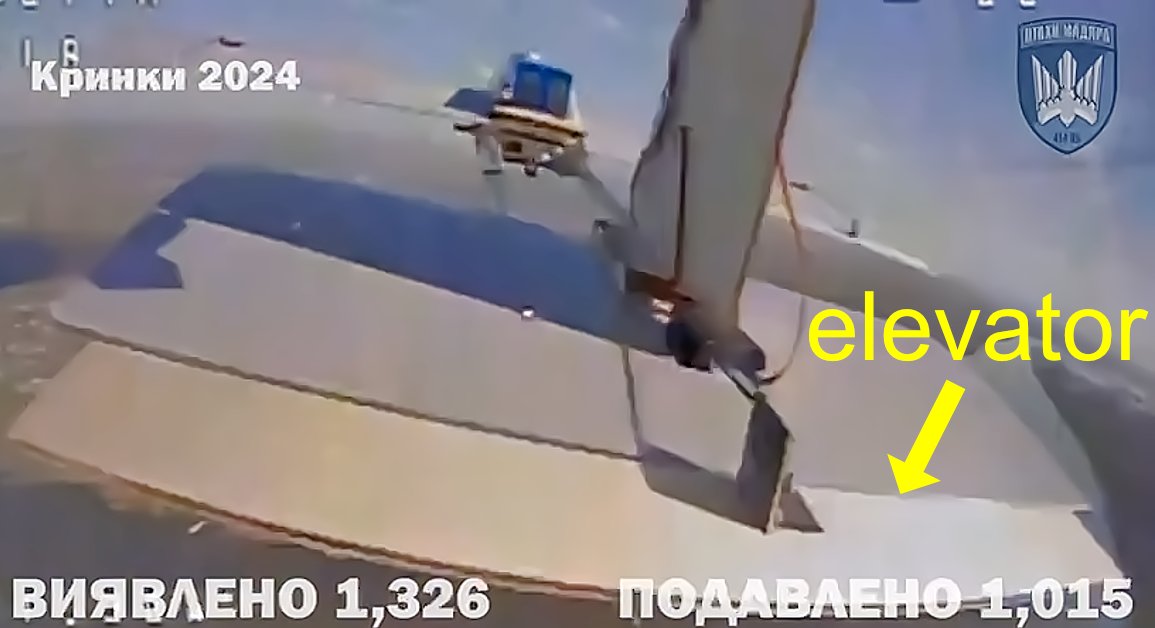
10. The video antenna is tuned for 1320 MHz. The elevator is probably hinged on the lower side using tape but it is hard to be certain. Both the elevator and antenna are vulnerable to attack by Ukrainian drones.
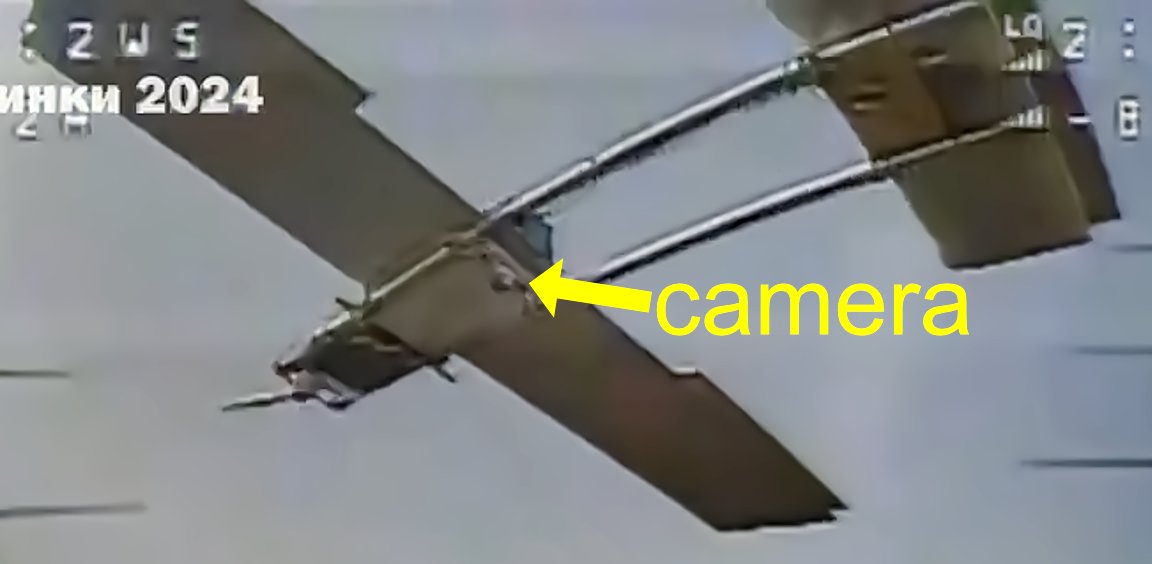
11. The video camera is mounted under the fuselage near the trailing edge of the wing. This is a really strange location because the field of view is very limited.
t.me
t.me

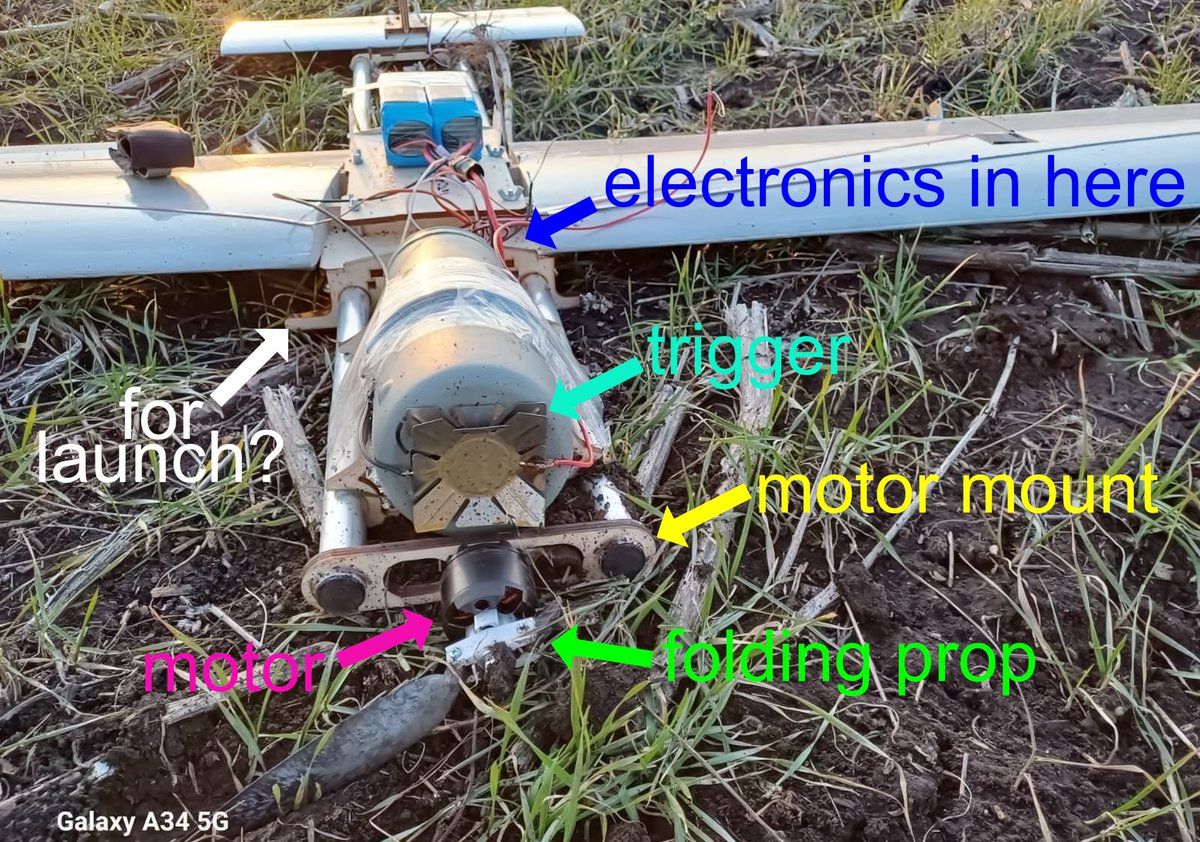
12. The motor looks small for a drone of this size & weight. It is not clear what holds the motor mount to the aluminum tubes (it looks flimsy). Tabs under the central fuselage may be for launching. A folding prop might be vulnerable to attack.
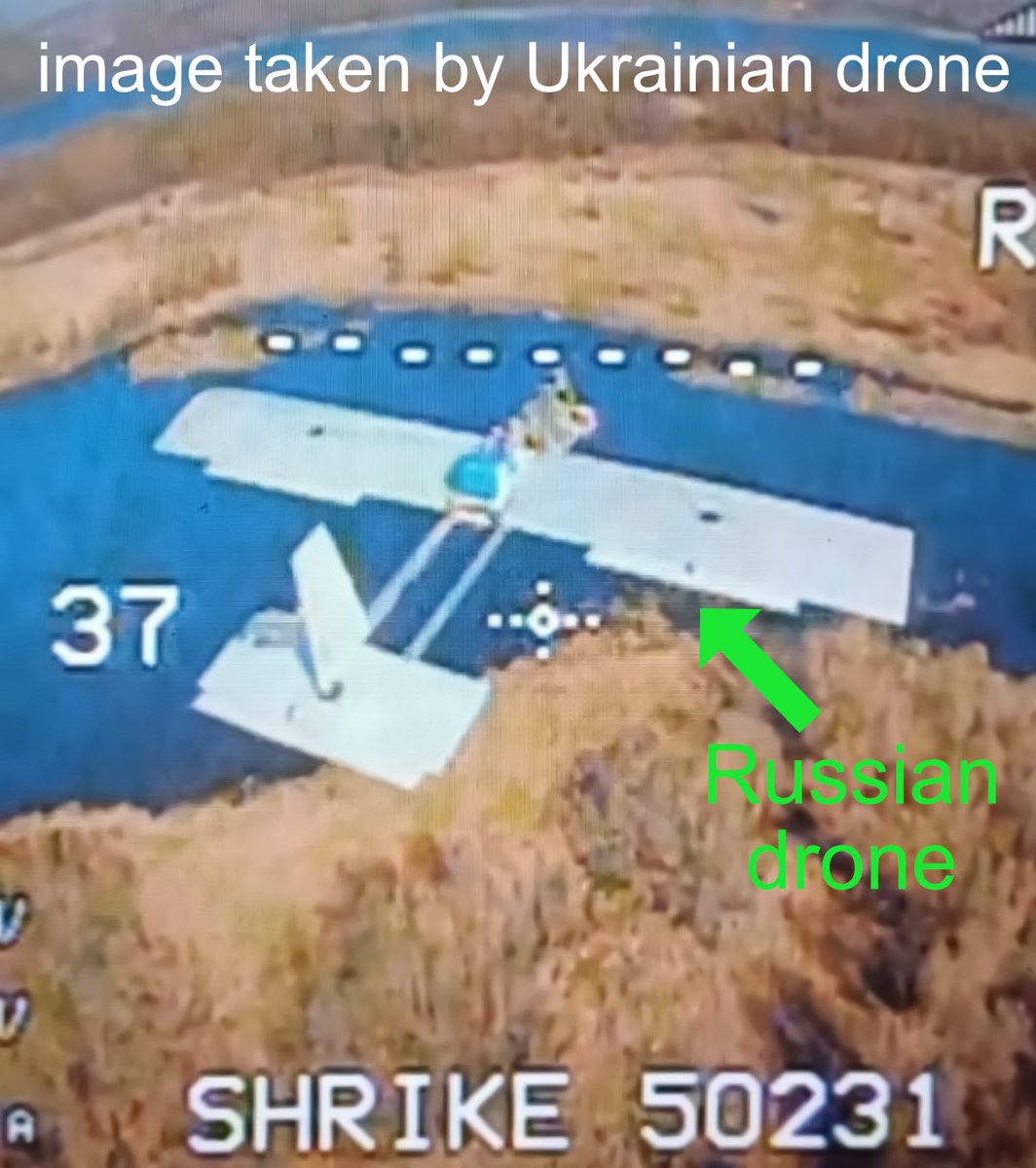
13. This drone is slow and can be attacked by crashing a quadcopter into it. An iconic image is this one taken by a Russian drone that is being attacked by a Ukrainian drone. This image is from the Russian drone’s video feed that is also being watched by the Ukrainians.
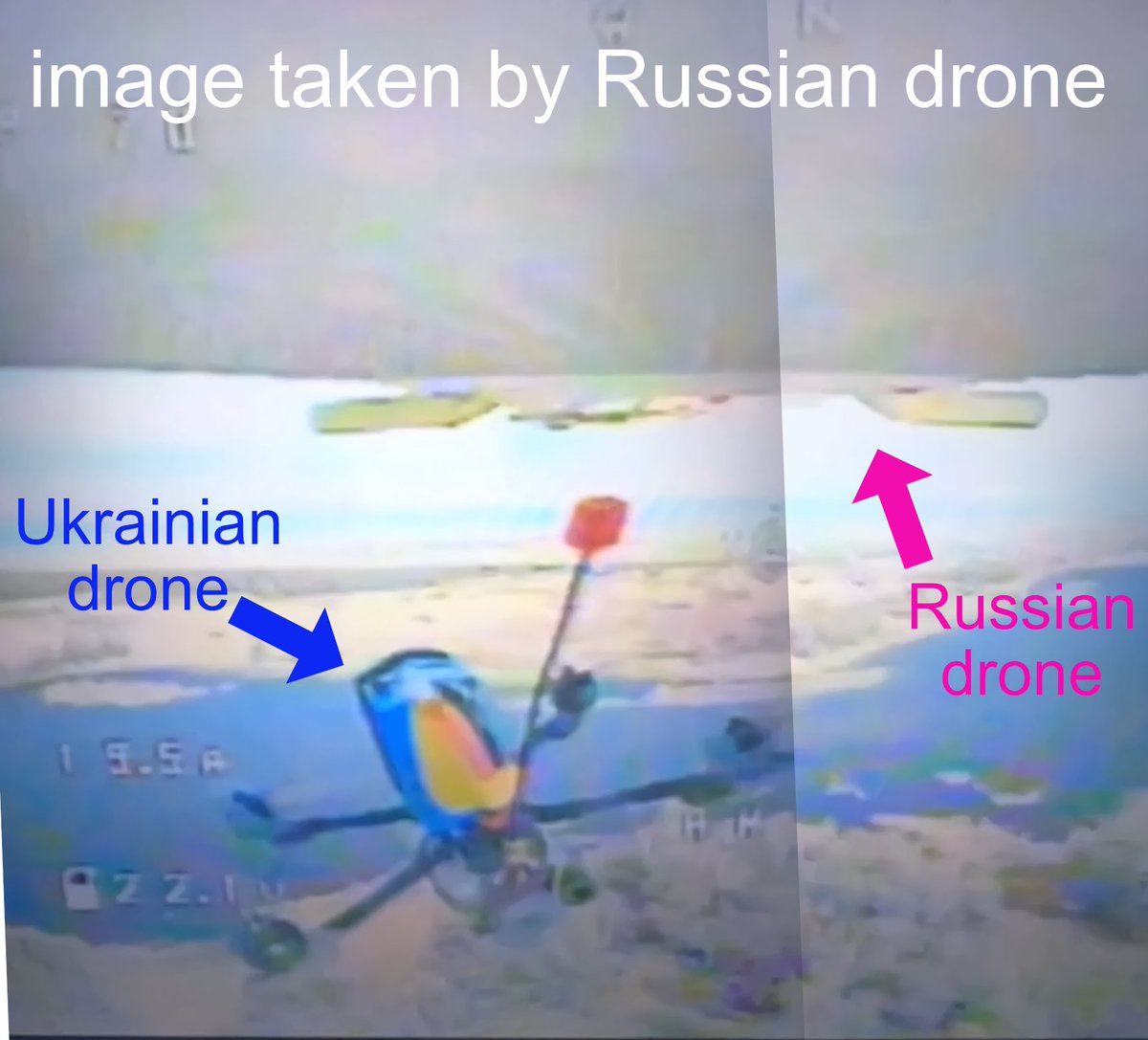
14. Ukraine often has video from both drones during an attack (very cool). This image shows the Russian drone in flight as it is being attacked by the Ukrainian drone shown in 13.
15. The elevator is vulnerable. Ukraine defends against these drones by flying much faster FPV quadcopters into them (explosives help). Here is a photo taken from a Ukrainian drone as it collides with the tail of the Russian drone.
16. This Russian drone is not a design one expects from a professional military but is more akin to the drones cobbled together by terrorists. Folks will counter that it is dangerous (as if we overlooked the munition taped to the nose) and appearances do not matter.
17. However, appearances do matter as they indicate a lot about the people who put this thing together. It is crude and weird. Overall, this drone has a whiff of desperation.
18. There are powerful people in the west who are scared of a military where this passes as a drone. Why? What is wrong with them?
Please consider reposting as a quote: your comments are appreciated.
Please consider reposting as a quote: your comments are appreciated.
Loading suggestions...