

REST API explained:
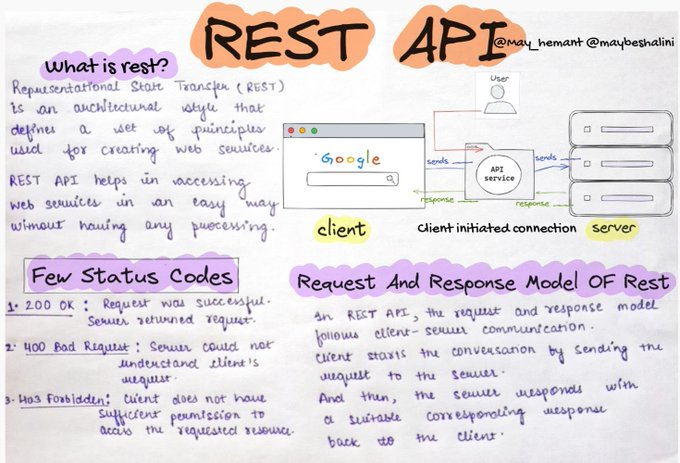
A REST API, or Representational State Transfer Application Programming Interface, is a set of rules and conventions for building and interacting with web services. It is a popular architectural style for designing networked applications, particularly web services.
In simpler words, think of web services as a way for different computer programs or systems to talk to each other over the internet. For example, when you use a weather app on your phone to get the weather forecast, it's talking to a web service to get that information. So, this set of rules (REST API) helps developers create these web services and make sure they work well together. It's like a common language that different programs can understand and use to share data.
In simpler words, think of web services as a way for different computer programs or systems to talk to each other over the internet. For example, when you use a weather app on your phone to get the weather forecast, it's talking to a web service to get that information. So, this set of rules (REST API) helps developers create these web services and make sure they work well together. It's like a common language that different programs can understand and use to share data.

The client-server model is like a blueprint for how RESTful APIs work.
It explains how information travels between the programs you use (the clients, like your web browser or mobile app) and the big computers that store and manage data (the servers).
This model is important because it keeps things organized. It means different groups of people can work on the programs you use and the big computers separately, as long as they follow the same set of rules for how they talk to each other.
This separation of responsibilities makes it easier to build and maintain programs, and it's one of the reasons why RESTful APIs are so popular for making websites and mobile apps. They work well because everyone knows how to follow the same set of rules.
Client: Initiates requests for data or actions.
Server: Listens for and processes client requests.
It explains how information travels between the programs you use (the clients, like your web browser or mobile app) and the big computers that store and manage data (the servers).
This model is important because it keeps things organized. It means different groups of people can work on the programs you use and the big computers separately, as long as they follow the same set of rules for how they talk to each other.
This separation of responsibilities makes it easier to build and maintain programs, and it's one of the reasons why RESTful APIs are so popular for making websites and mobile apps. They work well because everyone knows how to follow the same set of rules.
Client: Initiates requests for data or actions.
Server: Listens for and processes client requests.
That's a wrap!⚡️Thank you so much for reading. If you enjoyed this thread:
1. Follow me @maybeshalinii for more of these.
2. RT the tweet to share this thread with your audience.🫶🌻
1. Follow me @maybeshalinii for more of these.
2. RT the tweet to share this thread with your audience.🫶🌻
Loading suggestions...