
International Relations
Economics
Health
Infrastructure Development
Economic Development
Infrastructure

Why infrastructure is important to developing countries.
Spending $508 on transport to get $384 back in wages is almost as bad as corn-based ethanol (in the age of inexpensive clean energy) where for every unit of energy (mostly fossil fuels!) you put in, you get net 20% back.
Much criticism re: China’s heavy investment in infrastructure was based on the idea that it is “funded by transfers from households”
But per above, we should consider how HHs benefit from lower travel costs, allowing them to spend/save more of their gross income.
But per above, we should consider how HHs benefit from lower travel costs, allowing them to spend/save more of their gross income.
There is still such a thing as “too much infrastructure” but the analysis above suggests that it is better for developing countries to err on the side of too much rather than too little.
Compounding matters further are disincentives to work.
Over half of households receive direct transfers from the state. Working and earning that level of income would disqualify him from some or all of these subsidies.
Over half of households receive direct transfers from the state. Working and earning that level of income would disqualify him from some or all of these subsidies.
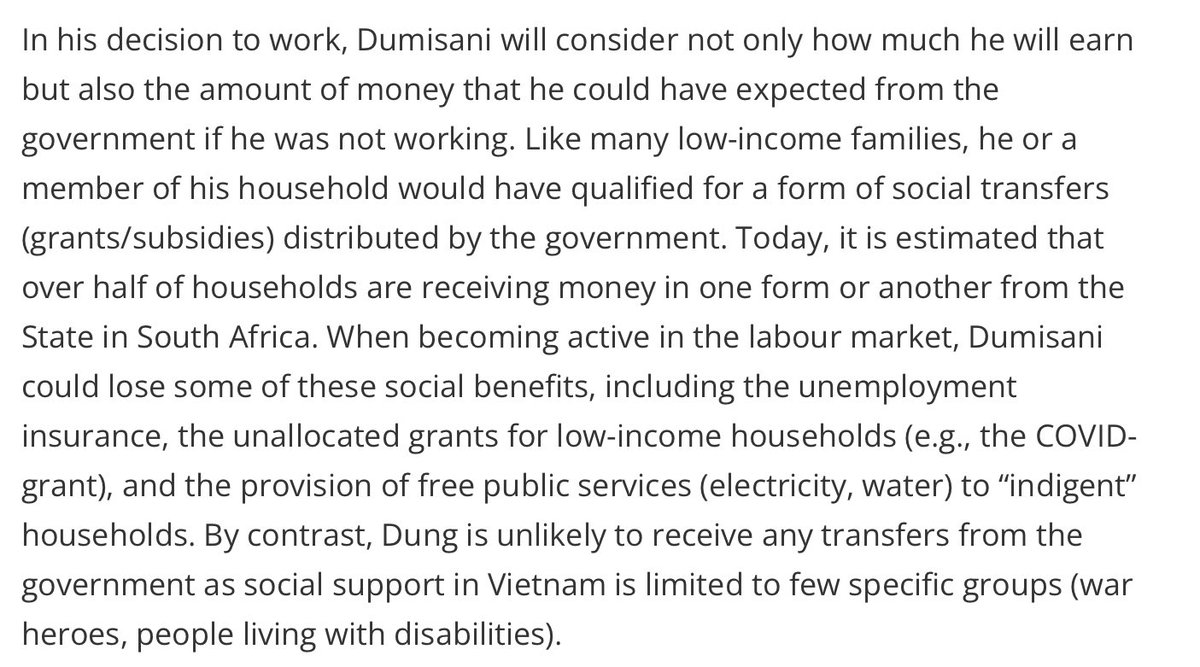
If the S. African person could make more (on a net basis) by not working, then the dominant incentive will be to not work, or work in an informal part of the economy.
It’s extremely difficult for a country to develop economically if half the population is not working.
It’s extremely difficult for a country to develop economically if half the population is not working.
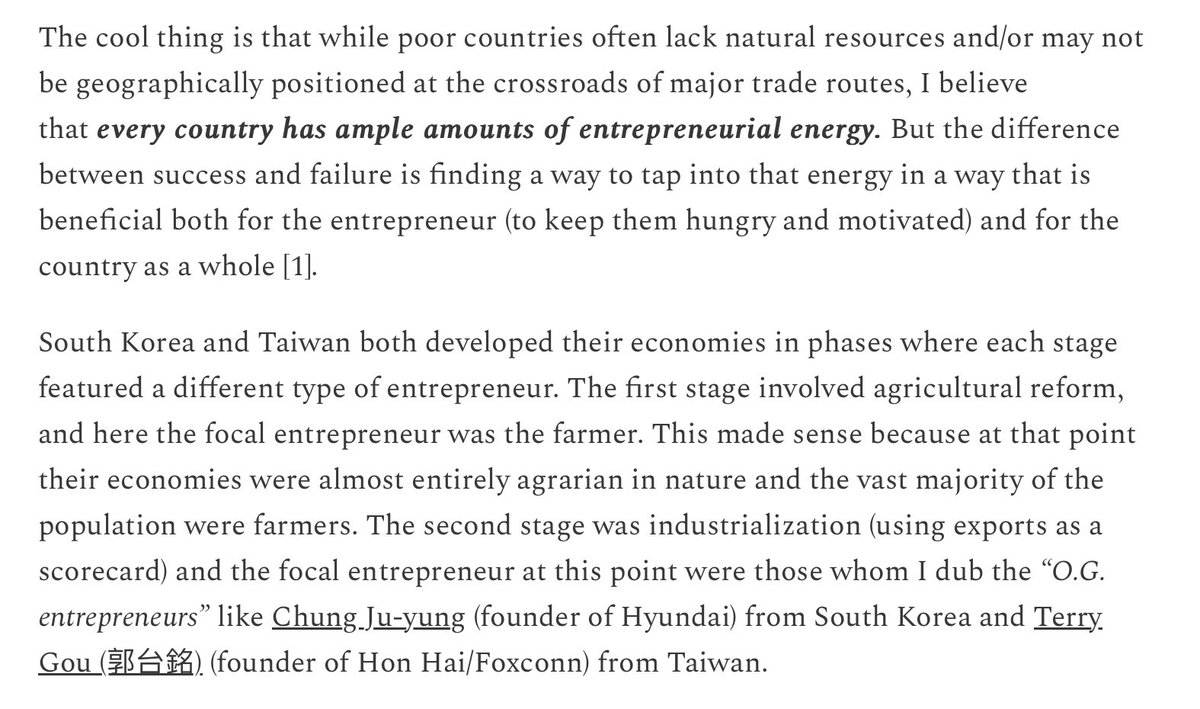
The dominant theme of successful developmental economies is creating motivation for people to work hard.
It’s good for them and it is good for society. See below for the stories of South Korea and Taiwan.
readwriteinvest.com
It’s good for them and it is good for society. See below for the stories of South Korea and Taiwan.
readwriteinvest.com

In the essay, I wrote about how every country has ample entrepreneurial energy.
It is just a matter of how you organize society and incentives to tap into it most efficiently.
Getting people to work in ways that are beneficial to both them and society is the secret trick.
It is just a matter of how you organize society and incentives to tap into it most efficiently.
Getting people to work in ways that are beneficial to both them and society is the secret trick.
The problem with large social welfare programs in developing countries is the opportunity cost to economic development.
Instead of precious dollars or rand spent on direct transfer programs that disincentivize work, why not spend it on infrastructure investment that both (i) provide gainful employment and (ii) improve quality of life for everyone?
Instead of precious dollars or rand spent on direct transfer programs that disincentivize work, why not spend it on infrastructure investment that both (i) provide gainful employment and (ii) improve quality of life for everyone?
The money spent on infrastructure ultimately gets to households anyway through wages instead of direct transfers.
You’re just doing it in a way that also benefits society with improved public goods that lower the costs of living for all.
You’re just doing it in a way that also benefits society with improved public goods that lower the costs of living for all.
Loading suggestions...